CARI Captures Issue 534: Cambodia places high hopes on the RCEP and CCFTA

CAMBODIA
Cambodia places high hopes on the RCEP and CCFTA

(26 December 2021) Cambodia is looking forward to the Regional Comprehensive Economic Partnership (RCEP) and the Cambodia-China Free Trade Agreement (CCFTA) coming into force in 2022. The government expects the RCEP to boost the country’s GDP by 2%, increase exports by 7.3%, and increase investment inflows by 23.4% as the agreement will give Cambodian businesses preferential access to all 15 RCEP markets. Nevertheless, companies are also urged to adapt to capitalize on the RCEP’s benefits, especially since said benefits would also be available to neighboring Vietnam and Thailand who are also major agricultural exporters.

THE PHILIPPINES
RCEP expected to provide farmers access to more markets

(25 December 2021) The Philippines’ assistant trade secretary responded to concerns raised by farmer associations regarding the RCEP saying that the agreement would provide the agricultural sector with greater market access and preferential trade arrangements while still protecting certain groups of agricultural products such as swine meat, poultry meat, potatoes, onions, garlic, cabbages, sugar, carrots and rice. He added that membership in the RCEP also indicates to investors that the country is able to offer a stable and predictable business environment, with terms that remain certain regardless of political changes.

THAILAND
Thailand targets 3-4% growth for 2022

(28 December 2021) Thailand’s commerce ministry expects the country’s economy to grow by only 3-4% in 2022, up from 2021’s estimated US$268.3 billion, as it expects another wave of pandemic restrictions if the Omicron variant takes a more severe turn. These numbers are also based on the RCEP’s expected entry into force, a favorable THB/USD exchange rate, rising Dubai crude oil and agricultural goods prices, increased container production, and the economic recovery of Thailand’s top trading partners. The ministry also expects cross-border trade to grow by 5-7% in 2022, with exports worth around US$32 billion.

VIETNAM  
Vietnam confirms flight resumption on five International routes

(28 December 2021) Vietnam will resume regular international flights to Japan, Taiwan, Singapore, Cambodia and the United States starting 1 January 2022 after grounding most international flights since March 2020. National carrier Vietnam Airlines has been cleared to cover all five routes while Vietjet Air, All Nippon Airways and Bamboo Airways have been granted permission to cover specific routes. This first reopening phase is slated to last two weeks, during which there will be four flights per week on each route in each direction. The government is also in talks to resume flights with Thailand, Laos, South Korea and China.

MALAYSIA  
Malaysia lifts travel ban on eight African countries

(28 December 2021) Malaysia has removed its travel ban on South Africa, Zimbabwe, Mozambique, Malawi, Botswana, Eswatini, Lesotho and Namibia given the rapid spread of the Omicron variant, though these countries are still among the 18 countries on Malaysia’s list of high-risk countries. Travelers from these countries must undergo a polymerase chain reaction (PCR) test two days before departure and another upon arrival, after which fully vaccinated travelers will be quarantined for seven days while unvaccinated travelers will be quarantined for 10 days. Travelers can choose to be quarantined at home or at designated facilities.

CAMBODIA, EU
EU rice tariffs to expire on 18 January 2022
(27 December 2021) The European Commission’s three-year safeguard measures on Indica rice exports from Cambodia and Myanmar which started on 18 January 2019 will expire on 18 January 2022, after which Cambodian rice exporters will be able to enjoy zero tariffs under the European Union’s Everything But Arms (EBA) trade preference scheme. Under the safeguard clause, Cambodia was required to pay US$200 per tonne in 2019, US$170 per tonne in 2020, and US$140 per tonne in 2021 when exporting to the EU. Nevertheless, supply chain issues such as a shortage of empty shipping containers threaten to dampen export growth.

SINGAPORE, CHINA
14 deals signed at annual Singapore-China bilateral meeting

(29 December 2021) Singapore and China signed 14 memoranda of understanding and agreements at their annual high-level forum co-chaired by the countries’ vice premiers. Notable deals include an agreement between custom authorities from both sides that will see the establishment of a blockchain-based platform for the exchange of customs and trade information, an agreement between the Singapore Exchange and Shenzhen Stock Exchange to develop a cross-border exchange-traded funds (ETF) product link, as well as agreements to deepen cooperation on the CCI-New International Land-Sea Trade Corridor and the Sino-Singapore Tianjin Eco City.


RCEP Monitor


CHINA  
China unveils curbs on foreign IPOs in restricted sectors

(28 December 2021) Chinese companies in industries that are off limits to foreign investment will now also be barred from offshore listings effective 1 January 2022, unless they are able to obtain a waiver from the government. Should the waiver be approved, foreign ownership in these companies will be capped at 30% with each investor allowed to hold no more than 10%. Foreign investors will also be barred from participating in management. The requirements will not be applied retrospectively and will only apply to new listings. The move comes after a debacle involving ride-hailing giant Didi’s listing in New York and concerns over new US securities laws.

JAPAN  
Japan’s cabinet approves US$940 billion budget

(24 December 2021) Japan’s cabinet approved a US$941.55 billion budget—the country’s biggest spending plan yet—for the fiscal year 2022-2023, days after the parliament passed a US$315 billion COVID-19 stimulus package. The budget is based on projected real economic growth of 3.2% for the next fiscal year, up from the previous 2.2% estimate. The government plans to borrow US$323 billion to meet these expenses, down from this year’s US$381.6 billion, and it also expects higher tax revenues as pandemic restrictions are rolled back.

SOUTH KOREA
South Korea to cut tariff rates on 90 products in 2022

(29 December 2021) South Korea will reduce tariffs on 90 products in 2022, up from 83 products in 2021, to help bolster small businesses and stabilize the prices of raw goods. Products on next year’s list include crude oil, liquefied natural gas, liquefied petroleum gas, corn, sugar, chicken eggs, and materials for battery production. Most notably, tariffs on crude oil to produce naphtha will be reduced to 0.5% from 3%, while oil to produce liquefied natural gas and liquefied petroleum gas will be lowered by one percentage point from 3% to 2%.

CARI Captures Issue 533: US plans ASEAN summit, weighs new sanctions against Myanmar


ASEAN, US
US plans ASEAN summit, weighs new sanctions against Myanmar

(15 December 2021) US Secretary of State Antony Blinken said that ASEAN was “essential to the architecture of the Indo-Pacific region” and reiterated President Joe Biden’s plans to host a special summit with the bloc in 2022 which would cover topics such as investment, infrastructure, climate change, and the pandemic. When asked about the country’s stance on Myanmar during his stop in Malaysia, Blinken said that the US was looking at additional steps that could be taken against Myanmar’s military regime including possible sanctions on oil and gas revenues. He also repeated calls for the release of those who have been “unjustly detained” and for Myanmar to be restored “to its democratic path”.
 

INDONESIA, US
US, Indonesia sign MOUs on maritime and social development cooperation

(14 December 2021) US Secretary of State Antony Blinken started the first leg of his three-country visit to Southeast Asia in Jakarta where he signed three agreements — one on maritime cooperation, the second for social and economic development assistance, and the third to expand youth leadership exchange programmes. The US has so far donated over 25 million vaccine doses and US$77 million in pandemic relief assistance to Indonesia. However, Blinken’s four-day tour of the region was cut short when a journalist in his travelling party was tested positive for COVID-19. Bangkok was meant to be his third and final stop after Jakarta and Kuala Lumpur.

MALAYSIA, US
Malaysia exploring solar energy tie-ups with the US

(16 December 2021) Malaysian energy and natural resources minister said during the US-Malaysia Renewable Energy Roundtable with US Secretary of State Antony Blinken that the country was exploring potential areas of cooperation with the US, particularly in renewable energy, given solar energy's increasingly significant role in the country’s electricity supply. According to him, the government has been rolling out initiatives to meet the country’s climate targets, including plans to introduce a utility-scale battery energy storage system with 500MW capacity in Peninsular Malaysia from 2030 to 2034 to ensure supply reliability.
 

SINGAPORE, SOUTH KOREA  
Singapore and South Korea conclude digital trade deal negotiations

(15 December 2021) Singapore and South Korea announced the conclusion of talks on the Korea-Singapore Digital Partnership Agreement (KSDPA), a deal that sets rules and norms for bilateral cross-border data flows and deepens cooperation in the digital economy between the countries. Among other measures, the KSDPA allows businesses to decide where to process and store data involved in their daily operations and prohibits governments from requiring such activities to be conducted solely within their borders. The agreement will also promote the development of interoperable systems and standards in digital payments and data protection, as well as identify areas of collaboration in artificial intelligence innovation.
 

CAMBODIA  
Cambodia unveils goals for its term as ASEAN Chair

(15 December 2021) Cambodian Prime Minister Hun Sen shared his administration’s two top priorities as ASEAN Chair in 2022. The first is for the Code of Conduct (COC) in the South China Sea to be fully adopted by all parties involved at next year’s ASEAN Summit. The second is for the situation in Myanmar to improve, beginning with the appointment of Cambodian deputy prime minister and foreign minister Prak Sokhonn as the new ASEAN Envoy for Myanmar. Hun Sen also stressed that ASEAN can only act as a mediator in this crisis and that real solutions would have to come from within Myanmar.
 

THE PHILIPPINES
Senate approves bill allowing 100% foreign ownership of public services
(15 December 2021) Philippine senators passed a bill that would allow full foreign ownership and control of companies in key industries should it come into law, up from the present 40% foreign ownership limit. The country’s Constitution currently requires 60% Filipino ownership in “public utility” companies and the bill hopes to circumvent this requirement by limiting the definition of “public utility” to electricity, water, sewerage, airports, seaports, and public utility vehicles. This would exempt other industries such as telecommunications, airlines, shipping, railways, and subways from the foreign ownership cap, thus allowing more foreign investment and greater competition.
 

VIETNAM
Lego to build first carbon neutral factory in Vietnam

(14 December 2021) Denmark’s Lego Group announced plans to build a US$1 billion factory in Vietnam, its second factory in Asia after China, on the strength of double-digit growth in the region for three consecutive years. The factory will be located in Binh Duong province with production set to start in 2024. Lego plans to make the factory carbon neutral by powering the facility with solar energy, planting 50,000 trees, and meeting the LEED Gold standard. The factory will be developed in collaboration with Singaporean developer Sembcorp and Vietnamese state-owned developer Becamex IDC.


RCEP Monitor


RCEP  
UNCTAD publishes new report on the RCEP’s potential impact

(15 December 2021) A new study by the United Nations Conference on Trade and Development (UNCTAD) concluded that the RCEP’s impact on international trade will likely be significant due to the cumulative size and dynamism of its member states. For example, UNCTAD’s analysis found that lower tariffs within the RCEP will stimulate trade between members by nearly US$17 billion and redirect nearly US$25 billion in trade away from non-members to members. However, the report also found that while these tariff concessions will benefit most members, they could also lower exports coming from Cambodia, Indonesia, Vietnam, and the Philippines.
 

CHINA  
China to lower import tariffs on 954 products in 2022
 
(15 December 2021) China announced lower import tariffs on 954 products for most favoured nations in 2022, up from 2021’s 883 products. This includes products related to the Beijing Winter Olympics Games and automotive parts that help lower carbon emissions. The country will also exempt import tariffs on more groups from least developed countries with which it has diplomatic ties. Separately, China also published tariff rates for goods affected by the RCEP which will take effect at the start of 2022 and said that it will raise import tariffs on pork and lead-acid battery parts.
 

AUSTRALIA, SOUTH KOREA
Australia, South Korea sign US$717 million defence deal
 
(14 December 2021) RCEP members South Korea and Australia signed a US$716.5 million defence deal on the occasion of President Moon Jae-in’s state visit to Australia — the largest defence contract between Australia and an Asian country. The deal will see South Korean defence company Hanwha Corp supplying Australia with 30 self-propelled howitzers and 15 armoured ammunition resupply vehicles. Both sides also agreed to launch a travel bubble, as well as work together on net-zero emissions technology and space, satellite and robotic technologies.
 

CARI Captures Issue 532: Southeast Asian companies collectively raise more than US$10 billion through IPOs in 2021


ASEAN
Southeast Asian companies collectively raise more than US$10 billion through IPOs in 2021

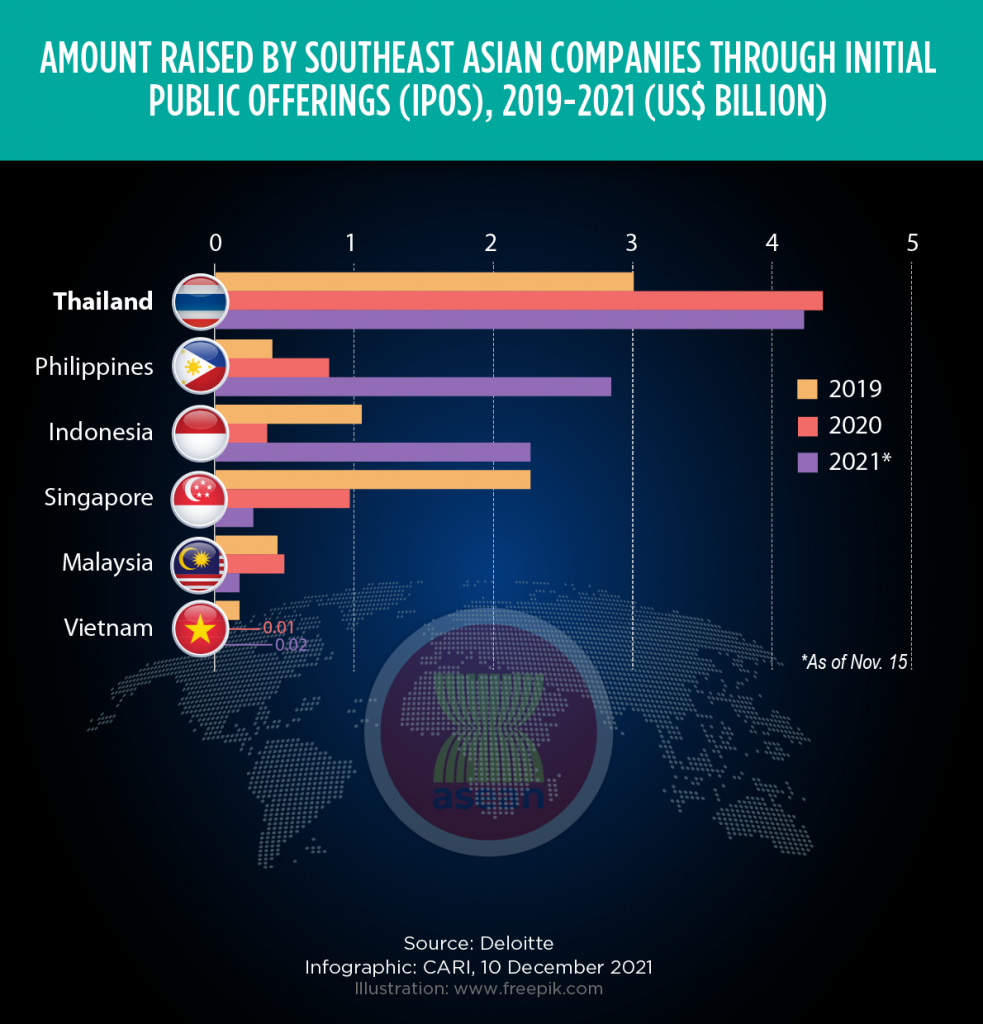
(06 December 2021) Southeast Asian companies have collectively raised more than US$10 billion through initial public offerings (IPOs) in 2021, the first time since 2017. According to data collected by Deloitte up to 15 November 2021, 121 Southeast Asian companies raised a total of US$9.77 billion on local bourses, with more companies issuing IPOs during the remainder of the year. The COVID-19 pandemic prompted companies to raise funding to invest into diversifying revenue sources and adjusting to the digitalization of the economy. Thailand led the region in terms of total funds raised in 2021, with 35 companies and real estate investment trusts raising $4.2 billion as of 15 November 2021. Thailand represented 43% of total funds raised in the region as of mid-November. Southeast Asian companies have found receptive investors, in part due to low interest rates ensuring low returns for alternative investment options such as bonds and deposits.

INDONESIA, MALAYSIA, SINGAPORE
Indonesia seeks to challenge Singapore’s Changi Airport and Kuala Lumpur International Airport as regional hubs

(04 December 2021) Indonesia seeks to challenge Singapore’s Changi Airport and Kuala Lumpur International Airport as regional hubs through Kualanamu International Airport in North Sumatra Province. GMR Airports Consortium – jointly owned by India’s GMR Group and France’s Aeroports de Paris Group – will form a joint venture with Indonesian state-owned Angkasa Pura II to operate Kualanamu International Airport. The joint venture will operate Kualanamu airport under a 25-year “strategic partnership” worth US$6 billion, with plans to expand Kualanamu airport and boost annual passenger traffic from 10 million visitors pre-pandemic to 54 million. Indonesia hopes the GMR-tie up will eventually draw a significant number of passengers away from Malaysia and Singapore who are travelling between South Asia, North Asia and Australia.

MALAYSIA
Malaysia’s unemployment rate stood at 4.3% in October 2021, at lowest rate since April 2020.

(08 December 2021) According to data collected by the Department of Statistics Malaysia, Malaysia’s unemployment rate stood at 4.3% in October 2021; its lowest rate since April 2020. Malaysia’s unemployment rate eased by 3.4% in October compared to the 729,600 unemployed people recorded in September 2021. Out of the total unemployed people in October, 83.6% were the ‘actively unemployed’, or those actively looking for work. As well, 55.5% had been unemployed for less than three months, while 7.8% had been unemployed for more than a year. The share of those aged between 15 to 24 stood at 13.9% for the third month, whereas the unemployment rate for those aged between 15 to 30 recorded a fall of 0.4% points month-to-month to 8.1% in October. The continuous resumption of more economic and social activities has ensured that the labour market has remained stable in October.

THE PHILIPPINES  
The Philippines government seeks nearly US$6 billion loan from central bank in 2022

(08 December 2021) The Philippines bank is seeking a nearly US$6 billion loan from its central bank in 2022. This will be lower than the government’s borrowing in 2021, as officials anticipate the economy to recover next year. The government has informed the Bangko Sentral ng Pilipinas that it will fully repay its outstanding US$10.7 billion provisional advances on 10 December 2021, ahead of the 12 January 2022 maturity. The new loan will carry no interest, and will be due in three months, and can be extended by another three months. The Philippines’ finance chief had stated during a forum on 08 December that government borrowings will start to decline in 2022 as revenue is expected to return to 2019 levels.

THAILAND, MALAYSIA  
Thailand to consider reopening borders with Malaysia to revive local tourism and boost economic growth

(06 December 2021) Thai authorities are considering reopening the border with Malaysia in order to revive local tourism and boost economic growth in Thailand’s southern provinces. Thailand’s Centre for Covid-19 Situation Administration (CCSA)’s forward command dealing with COVID-19 in the southern region is expected to make a decision this week, after which they will present the matter to the CCSA for consideration on 13 December. The CCSA had reportedly initially planned to reopen the Thai-Malaysia border on 16 December, but the recent emergence of the Omicron COVID-19 variant in Malaysia has forced Thai authorities to reassess the situation. Border checkpoints that were initially planned for reopening include Sa Dao border checkpoint in Songkhla province, Sungai Kolok checkpoint in Narathiwat province, Betong checkpoint in Yala province, and Wang Prachan checkpoint in Satun province.

SINGAPORE, UNITED KINGDOM
Singapore and UK agree to Digital Economy Agreement, to allow UK businesses to target Singapore market
(09 December 2021) The UK and Singapore agreed in principle to a Digital Economy Agreement (DEA) that will cut costs, slash red tape and pave the way for a new era of trade. An agreement was reached between the UK’s International Trade Secretary Anne-Marie Trevelyan and Singapore Minister-in-charge of Trade Relations S. Iswaran after just six months of negotiations. Referred to as the ‘first digitally-focused trade agreement ever signed by a European nation’, it is expected to further facilitate the UK-Singapore trading relationship – worth £16 billion in 2020 – by overhauling outdated trade rules that affect both goods and services exporters, making it easier for UK business to target new opportunities in both the Singapore and wider Asian markets. The UK government also announced that the DEA will help support the UK’s bid to join the Comprehensive Progressive Trans-Pacific Partnership (CPTPP) free trade agreement, of which Singapore is a signatory.

VIET NAM
Ministry of Transport submits proposal for resumption of international flights to Asia and the US

(08 December 2021) Viet Nam’s Ministry of Transport has submitted a proposal for a two-phased resumption of international flights across Asia and the United States from 15 December onwards. It is proposed that the first phase would include four flights weekly to and from either Los Angeles or San Francisco in the US, plus Singapore, Bangkok, Phnom Penh, Laos, Beijing, Tokyo, Seoul and Taipei. Under phase two, from 1 January 2022 onwards additional routes to Kuala Lumpur, Hong Kong, Paris, Frankfurt, Moscow and Sydney would be added. The first phase would see flights running to and from just two of Viet Nam’s airports in Ho Chi Minh City and Hanoi, to be expanded to include Da Nang City, Cam Ranh, Phu Quoc and Van Don under phase two.


RCEP Monitor


JAPAN  
Wholesale inflation in Japan hits record 9.0% in November 2021, pushing gains for ninth straight month

(10 December 2021) Japan’s wholesale inflation hit a record 9.0% in November 2021, pushing gains for a ninth straight month, suggesting upward pressure on prices from supply chain bottlenecks and rising raw material costs were broadening. Rising cost pressures coupled with a weak yen that inflates the price of imported goods is currently complicating Japan’s recovery from the COVID-19 pandemic. An index measuring yen-based import prices rose a record 44.3% year-on-year in November, in a sign a weak yen was inflating input costs for Japan. Oil and coal prices spiked 49.3% year-on-year in November, accelerating from a 44.4% gain in October. Other key drivers were steel goods, which rose 23.9%, and chemical goods, which rose by 14.1%. However, final goods prices rose by only 4.6%, with many companies cautious about passing on their rising input costs to consumers.

SOUTH KOREA  
South Korea’s population forecast to fall by 14 million people over the next five decades

(09 December 2021) South Korea’s population is forecast to fall by 14 million people over the next five decades due to the country’s low birth rate and shortage of foreign workers. According to data collected by Statistics Korea, the population is estimated to drop by 50.2 million in 2040 and 37.7 million in 2070 from the 2020 peak of 51.8 million. The working-age population (15 to 64) will also drop to 28.5 million in 2040 and 17.4 million in 2070 from 37.4 million in 2020. South Korea’s fertility rate reached 0.84 in 2020, down from 0.92 a year earlier, giving the country the lowest fertility rate among OECD member nations. The number of new-born babies also dropped to 270,000 in 2020, down from 300,000 the previous year. It is suggested that the country’s population could possibly increase if net international inflows grow or marriages and births rebound.

AUSTRALIA
Australia risks facing much steeper borrowing costs in future if country too slow to cut carbon emissions

(10 December 2021) Australia runs the risk of much steeper borrowing costs in the future should financial markets view the country as too slow in cutting carbon emissions. It is believed that large funds could disinvest from Australia in order to satisfy their stakeholders, a risk for a traditionally capital-importing nation like Australia. The Swedish central bank recently dumped the bonds of two Australian states, as global investors begin to pressure coal-reliant nations to take action. Government planners have forecasted that the country’s cost of raising capital will increase by 100 basis points in an adverse climate-change scenario without a strategy to reach a net-zero emissions target. Australia’s three largest exports include iron ore, liquefied petroleum gas and coal.

CARI Captures Issue 531: Grab lists on Nasdaq after SPAC merger at a US$40 billion valuation


ASEAN
Grab lists on Nasdaq after SPAC merger at a US$40 billion valuation

(2 December 2021) Southeast Asia’s largest ride-hailing and delivery “super app” began trading on Nasdaq on 2 December 2021 under the ticker symbol “GRAB” after completing a US$40 billion merger with a special purpose acquisition company (SPAC). The merger with Altimeter Growth Corp, said to be one of the biggest SPAC transactions to date, was first announced in April 2021 and approved by Altimeter’s investors on 30 November 2021. The company will receive a cash injection of US$4.5 billion as part of the deal. Grab debuted with an opening price of US$13.06 and rose as much as 21% in opening trades before retreating to close at US$8.51 on its first day of trading.

ASEAN
Governments respond to new COVID-19 variant

(1 December 2021) ASEAN governments have heightened precautions in response to the new Omicron variant which is said to potentially be more transmissible. Singapore is pausing vaccinated travel lane launches and will now require travellers arriving at or leaving from Changi Airport to undergo a PCR test. Indonesia has increased its quarantine period to 10 days and placed temporary bans on foreign nationals who visited high-risk countries in the past two weeks. Malaysia will temporarily ban the entry of travellers from countries who have reported Omicron cases or are considered high risk. The Philippines has banned travellers from 14 countries in Africa and Europe, while Vietnam has halted flights to and from seven African countries.

SINGAPORE, MALAYSIA
Singapore, Malaysia launch land vaccinated travel lane

(29 November 2021) Malaysia and Singapore launched their land and air vaccinated travel lanes (VTLs) on 29 November 2021 for citizens, permanent residents, and long-term pass holders of either country. The land VTL could also open to general travellers in mid-December as both sides plan to gradually expand access. In light of the Omicron variant, Malaysia now requires travellers from Singapore to self-test on the third and seventh day after entering the country and report their results via the government’s COVID-19 tracing app. This comes in addition to the VTL’s standard pre-departure and arrival tests, though travellers need not undergo quarantine.

CAMBODIA, THAILAND  
Bangkok Airways resumes flights to Phnom Penh

(2 December 2021) Cambodia welcomed its first flight from Thailand this week as both countries look to ease border controls, resume air travel and revive tourism. Thailand opened its borders to fully vaccinated Cambodians on 31 October 2021. Cambodia also hopes to resume flights between Siem Reap and Bangkok in the near future as it pushes ahead with plans to reopen its borders to fully-vaccinated foreign visitors despite concerns over the Omicron variant, safe for temporary bans on a few African countries. Bangkok Airways has also suspended food and beverage services on its flights and made mask-wearing mandatory.

MALAYSIA, SINGAPORE  
Malaysia, Singapore sign RTS Link Grantor Agreement

(29 November 2021) The Johor Bahru-Singapore Rapid Transit System (RTS) is now one step closer to reality following the signing of the Link Grantor Agreement by the countries’ respective transport ministries. The RTS is a cross-border rail link that will travel between a station at Woodlands North in Singapore and a station at Bukit Chagar in Johor Bahru. Each one-way journey is expected to take approximately five minutes, with passenger service starting by the end of 2026. The RTS link will have a capacity of up to 10,000 passengers per hour per direction.

INDONESIA
Constitutional Court orders amendments to omnibus job creation law
(29 November 2021) Indonesia’s apex court last week ruled the government’s 2020 Job Creation Law “conditionally unconstitutional” due to procedural flaws—particularly relating to public participation—and ordered the legislature to “redo the legislative process” following prevailing laws and regulation within two years. This means that the law will remain in force and will only be deemed unconstitutional if legislators fail to make amendments by 25 November 2023. President Joko Widodo responded to the ruling by reassuring investors that their investments remain secure, that business will go on as usual, and that the revision of the law will be a priority.

VIETNAM, RUSSIA
Vietnam to expand local production of Sputnik V vaccine

(1 December 2021) Vietnam’s state-owned pharmaceutical company VABIOTECH and investment company Sovico Group signed an agreement with Russia’s sovereign wealth fund, the Russian Direct Investment Fund (RDIF), to increase local production of the Sputnik V vaccine and start manufacturing the one-shot Sputnik Light vaccine in Vietnam. The RDIF also facilitated an agreement between Vietnam’s largest industrial company T&T Group and Russia’s Binnopharm Group for a US$60-70 million Sputnik V production facility in the first Vietnamese-Russian industrial park located in Quang Ninh province. The facility is expected to be fully operational in early 2023 after which it will produce 40 million doses of the vaccine per year.


RCEP Monitor


SOUTH KOREA  
South Korea ratifies the RCEP

(2 December 2021) South Korea’s National Assembly ratified the Regional Comprehensive Economic Partnership (RCEP) on 2 December 2021 following the Assembly foreign affairs committee’s approval of the ratification bill the previous day. The RCEP will go into effect on 1 January 2022 for member states who had ratified the agreement earlier and will go into effect for South Korea in early February 2022. This will also be the first trade agreement between South Korea and Japan, which do not have a bilateral trade agreement. South Korea’s exports to RCEP member states accounted for around half of the country’s exports in 2020, totalling US$254.3 billion.

JAPAN  
Japan puts border reopening plans on pause

(2 December 2021) The Japanese government briefly banned all inbound flight bookings for December in response to concerns around the Omicron variant before reversing their blanket ban as they took into account the need for flights for returning Japanese nationals. The latest transport ministry directive allows airlines to take new flight bookings with a daily arrival cap of 3,500, down from November’s 5,000 per day limit. Foreign nationals and non-resident foreigners are also temporarily barred from entry, and the government has halted the issuance of visas for special purposes, such as visas for musicians and athletes.

CHINA
China releases five-year green development plan for industrial sectors

(3 December 2021) The Chinese government published a five-year green development plan for its industrial sectors as part of its plans to meet its carbon peak commitment by 2030 and become carbon neutral by 2060. Shorter-term goals include reducing carbon dioxide emissions by 18% and energy intensity by 13.5% by 2025. The plan involves initiatives to encourage the use of clean energy sources such as hydrogen energy and biofuels in its industrial sector, promote the “rational” use of mineral resources, encourage the use of recycled sources, and impose strict carbon controls in its steel, cement, aluminium, and other industrial sectors.

CARI Captures Issue 530: China pledges to upgrade relations with ASEAN from strategic partnership to comprehensive strategic partnership


ASEAN, CHINA
China pledges to upgrade relations with ASEAN from strategic partnership to comprehensive strategic partnership

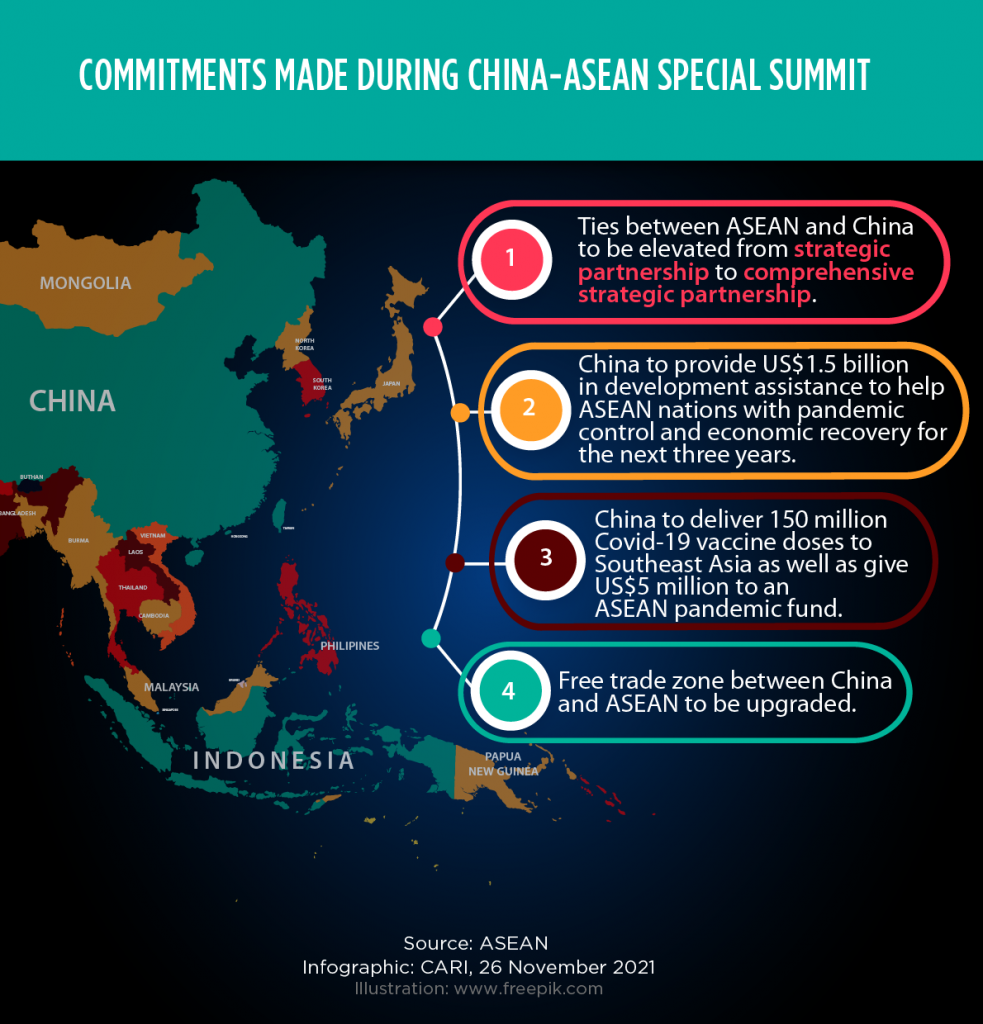
(22 November 2021) During the recent China-ASEAN Special Summit to Commemorate the 30th Anniversary of ASEAN-China Dialogue Relations held on 22 November 2021, Chinese President Xi Jinping announced that ties between China and ASEAN would be raised from strategic partnership to comprehensive strategic partnership, with more focus to be made on security cooperation and development funding. Among the commitments made during the summit included a pledge by China to provide US$1.5 billion in development assistance to help ASEAN nations with pandemic control and economic recovery for the next three years, as well as a pledge to deliver 150 million COVID-19 vaccine doses to the region as well as give US$5 million to an ASEAN pandemic fund. The free trade zone between China and ASEAN would also be upgraded, and more advanced technologies transferred to ASEAN from China.

SINGAPORE
Singaporean government projects growth of 3% to 5% for 2022 as borders reopen and restrictions are loosened

(24 November 2021) On 24 November 2021, Singapore’s Ministry of Trade and Industry projected in its quarterly economic update that the Singaporean economy would grow by 3% to 5% in 2022, as borders reopen and domestic restrictions are loosened. It also predicts that the economy will expand by around 7% in 2021. The ministry stated that the recovery of the various sectors in 2022 is expected to be uneven, with the aviation and tourism sectors expected to recover gradually. The economy also expanded by 7.1% year-on-year in the three months to September 2021, supported by manufacturing and a rebound in the services sector. Authorities warned however of downside risks, such as the uncertain COVID-19 situation, China’s economic slowdown and protracted global supply chain disruptions.

INDONESIA
Indonesia to consider banning tin exports in 2024 to attract investments into domestic resource processing industries

(24 November 2021) The Indonesian government is considering banning tin exports in 2024 in order to attract investments into the domestic resource processing industry, and to improve the country’s external balance. The government is also considering banning the export of bauxite in 2022 and copper ore in 2023. The Indonesian President, Joko Widodo, had made previous public remarks stating that the country is too dependent on the export of raw commodities, depriving it of revenue and jobs in the manufacturing industry. He stated that stopping the export of raw commodities and attracting investment in downstream industries will improve Indonesia’s trade and current account balances. Indonesia has already banned the export of nickel in order to attract investments in the manufacture of electric car batteries.

MALAYSIA  
Malaysian state of Sarawak to hold state election on 18 December 2021

(24 November 2021) Malaysia’s largest state of Sarawak will hold state elections on 18 December 2021, with votes to be cast for 82 state assembly seats. Nomination day will be held on 6 December, while early voting will start on 14 December. The Sarawak poll result could influence the timing and outcome of Malaysia’s next general election that’s due before July 2023. This comes as the ruling coalition won 21 out of 28 seats in the recent state elections in Malacca. While there are concerns that the local elections may put Malaysia at risk of a renewed surge in COVID-19, Malaysia’s rapid vaccination progress may prevent a repeat of a nationwide lockdown. As of 24 November 2021, some 77% of the population have been fully vaccinated.

MALAYSIA, SINGAPORE  
Malaysia and Singapore to reopen causeway linking both countries starting on 29 November 2021

(24 November 2021) Malaysia and Singapore have agreed to reopen the causeway linking both countries starting on 29 November 2021, allowing cross-border land travel for the first time since March 2020. Vaccinated passengers will be allowed on designated buses between Singapore and Malaysia’s southernmost city of Johor Bahru. As many as 2,880 people a day will be allowed to travel between the countries in the initial phase of the causeway reopening, with the quota to be reviewed weekly. Initial priority will go to people who have been working in either country to visit their families, while eligibility to be expanded over time to general travellers. Singapore was Malaysia’s largest source of tourists in 2019 at 10 million arrivals, while some 1.2 million Malaysian tourists visited Singapore in the same year.

THE PHILIPPINES
IKEA opens largest branch in the world in Manila, hopes to pull in 7 million shoppers in first year of operation
(25 November 2021) Swedish home furnishings multinational IKEA opened its first outlet in the Philippines, and its largest branch in the world, in Manila on 25 December 2021. IKEA plans to pull in 7 million shoppers in its first full year of operation, and plans to open other branches in the country. The new outlet can accommodate up to 8,000 people, but for now capacity will be held to half that to maintain physical distancing. Sales of home furnishings in the Philippines are expected to reach US$4.6 billion by 2023, up from US$3.5 billion in 2020, a year that saw sales decline by 16.4% due to COVID-19-related restrictions. IKEA stated they intend to keep prices low despite ongoing global supply chain challenges and high electricity costs in the Philippines.

THAILAND
Government to hand out US$4.7 billion in handouts to Thai farmers impacted by COVID-19 and floods

(24 November 2021) Thailand’s government plans to hand out US$4.7 billion in cash handouts to Thai farmers impacted by COVID-19, floods, droughts, and poor crop prices. The Thai Cabinet will consider a program to allocate US$4.7 billion to growers of rice, rubber, palm oil and other crops at a meeting on 30 November 2021. The money will be transferred to the accounts of eligible farmers through the Bank for Agriculture and Agricultural Cooperatives. The payments will be used as price-support measures for rice, rubber and palm oil as well as to prevent distress sales of agricultural produce. Flooding in October and November 2021 caused extensive damage to the Thai rice industry, and it is believed the money for farmers will help Thailand’s nascent economic recovery.


RCEP Monitor


NEW ZEALAND  
New Zealand’s central bank raises interest rates for second straight month due to rising inflation

(24 November 2021) The Reserve Bank of New Zealand (RBNZ) lifted interest rates for the second straight month since October 2021 due to inflationary pressures and a resumption of economic activity due to a loosening of COVID-19-related restrictions. The central bank raised the official cash rate (OCR) by 25 basis points to 0.75% in the final policy meeting of 2021, pointing to a need to maintain price stability and support maximum sustainable employment. The central bank also stated that further stimulus measures in the future may force the interest rate to be raised above its neutral rate. Large amounts of fiscal and monetary stimulus injected in response to the COVID-19 pandemic have helped New Zealand’s economy recover strongly and pushed inflation to its highest and the jobless rate to its lowest in over a decade. Annual inflation hit 4.9% in the third quarter, the fastest pace in more than a decade while the jobless rate fell to 3.4%, matching its lowest on record from December 2007.

AUSTRALIA  
Retail sales surge by 4.9% month-on-month in October 2021, representing largest rise since November 2020

(26 November 2021) Retail sales in Australia surged by 4.9% month-on-month in October 2021, being the largest rise since November 2020. Retail sales rose by 1.3% month-on-month in September 2021. This comes as protracted lockdowns have started to be eased, helping build momentum for the economy for the final quarter of 2021. The Australian central bank is expected to hike interest rates sooner than later, on the wave of strong consumer spending, high job vacancies, and firms boosting investment intentions. The central bank predicts a 5.5% expansion in 2022, but expects core inflation to reach the 2.5% midpoint of the central bank’s target in late-2023. Retail sales in New South Wales surged by 13.3% in October 2021, while in Victoria it rose by 3%.

JAPAN
Wages hikes occur across industries in Japan as economy recovers from COVID-19 pandemic

(26 November 2021) Wage hikes are occurring across different industries in Japan after the country lifted its monthslong COVID-19 state of emergency at the beginning of October 2021. This comes as Japanese Prime Minister Fumio Kishida touts higher subsidies for companies that pay workers more, part of his declared goal of balancing economic growth and wealth distribution. About 20 million people across Japan work temporary or in part-time jobs, and are now increasingly in demand as companies in the auto and food service industry struggle to find workers as they resume operations. Japan is also reportedly to allow foreign nationals working in farming, food service and other sectors to remain in the country indefinitely as soon as next fiscal year.

CARI Captures Issue 529: ASEAN launches free trade negotiations with Canada

ASEAN, CANADA

ASEAN launches free trade negotiations with Canada

(16 November 2021) ASEAN and Canada issued a joint statement at the conclusion of the 10th ASEAN Economic Ministers (AEM) – Canada Consultations announcing the commencement of talks for a free trade agreement (FTA), a deal that could result in a US$7.8 billion increase in bilateral trade according to the FTA’s joint feasibility study. ASEAN is currently Canada’s sixth-largest trading partner, and public consultations held in 2018 found Canadians to be highly favourable to an FTA. Trade in goods between Canada and ASEAN reached US$21.2 billion (CA$26.7 billion) in 2020, while trade in services reached US$4.6 billion (CA$5.8 billion) during the same.
 

ASEAN, EU
ASEAN and the EU launch sustainable development initiative

(18 November 2021) The 3rd ASEAN-EU Dialogue on Sustainable Development concluded with the announcement of a “Green Team Europe” initiative to seek synergies between the European Green Deal and the ASEAN Community Vision 2025. The European Union (EU) — represented by Austria, Denmark, France, Germany, Romania, and the European Investment Bank — will allocate an initial US$34 million grant for the initiative which will be implemented both at national and regional levels in ASEAN. Focus areas include climate action, environmental and biodiversity protection, clean energy transition, disaster resilience, prevention of illegal logging, wildlife trafficking, and air pollution.
 

ASEAN
FinTech funding in ASEAN tripled between 2020 and 2021

(17 November 2021) A report by UOB, PwC Singapore and the Singapore FinTech Association found that financial technology (FinTech) companies in ASEAN received three times more funding in the first nine months of 2021 alone compared to all of 2020. FinTech firms in the region inked 167 deals worth US$3.5 billion in the first three quarters of the year, primarily driven by 13 mega-rounds which accounted for US$2 billion of the sum. 49% of the 167 deals or US$1.6 billion in funding went to Singapore-based FinTech firms, while Indonesia came in second with US$904 million, followed by Vietnam’s US$375 million.
 

ASEAN  
Southeast Asia begins reopening phase after months of lockdowns

(17 November 2021) More ASEAN countries have announced plans to reopen their borders and roll back pandemic restrictions. Malaysia plans to fully reopen its borders to visitors at the start of 2022, while fully vaccinated travellers can now visit Langkawi island without undergoing quarantine. Indonesia’s Bali and Riau islands opened their doors to visitors from 19 countries in mid-October, while travellers from Indonesia can travel to and from India, Qatar, Saudi Arabia and the UAE without quarantine. Vietnam’s Phu Quoc island will resume flights in January 2022 to fully vaccinated international visitors with no quarantine required.
 

SINGAPORE, MALAYSIA  
Six airlines to provide VTL flights between Singapore and Malaysia

(18 November 2021) The Civil Aviation Authority of Singapore has designated six airlines to operate flights between the two countries under Singapore’s Vaccinated Travel Lane (VTL) scheme starting 29 November 2021. They are AirAsia, Jetstar Asia, Malaysia Airlines, Malindo Air, Scoot, and Singapore Airlines. Travellers from Malaysia can apply for the Vaccinated Travel Pass beginning 22 November 2021. Singapore says that “good progress” has been made on the reopening of the land link between the countries, while Malaysia’s Johor state government told local media that the land and air VTLs will open on the same day.
 

VIETNAM, US
Vietnam cuts tariffs on US corn, wheat, and pork
(16 November 2021) Vietnam announced that it will lower tariffs on corn, wheat and pork exports from the United States following discussions held during Vice President Kamala Harris’ visit to Hanoi in August. Tariffs on all classes of wheat exports have been removed, tariffs on corn reduced from 5% to 2%, and tariffs on frozen pork reduced from 15% to 10%. The changes to wheat and corn tariffs will go into effect on 30 December 2021, while changes to pork tariffs will go into effect on 1 July 2022. US exports of corn, wheat, and pork to Vietnam were valued at US$228 million in 2020 according to the US Department of Agriculture.
 

ASEAN, CHINA
ASEAN states object as China lobbies for Myanmar junta to join summit

(18 November 2021) Reuters sources say that four ASEAN countries — Malaysia, Indonesia, Singapore and Brunei — have reiterated their position on the barring of Myanmar’s military leader from the upcoming China-ASEAN Summit on 22 November 2021 hosted by the Chinese premier. Indonesia’s foreign ministry confirmed the country’s stance. China’s special envoy is said to have informed Myanmar’s military leader that China will accept ASEAN’s stand on the matter. Nevertheless, the military leader could still make an appearance at the summit since Myanmar is China’s coordinating country for ASEAN this year, a role that facilitates its interactions with the bloc.


RCEP Monitor


THE PHILIPPINES  
Agriculture interest groups oppose ratification of RCEP

(15 November 2021) 45 farmer groups led by the Federation of Free Farmers (FFF) published a position paper calling on the Philippines’ Senate to reject the Regional Comprehensive Economic Partnership (RCEP), citing a lack of consultation with agri-fisheries stakeholders. According to them, joining the RCEP would mean the removal of 75% of the country’s 1,718 agricultural tariff lines and a reduction of 15% of these tariff lines. The group believes that the RCEP will also hamper the effectiveness of existing trade remedies which could lead to import surges and other problems engendered by a lack of safeguards.
 

JAPAN, US  
Japan, US announce new trade partnership
 
(18 November 2021) The United States and Japan announced a new trade partnership to elevate cooperation on labour, environment, digital trade, cooperation in regional and multilateral trade forums, as well as concerns about China. Meetings for the US-Japan Partnership on Trade will commence in 2022 with periodic meetings held regularly. Both sides are expected to discuss bilateral trade issues such as the 25% steel tariff and 10% aluminium tariffs that were imposed by the previous US administration under the US’ Section 232 national security tariffs to curb global excess capacity for these metals.
 

SOUTH KOREA, SINGAPORE
South Korea opens its borders to vaccinated travellers from Singapore
 
(14 November 2021) The VTL between Singapore and South Korea came into effect this week, allowing fully vaccinated travellers to travel to and from both countries without quarantine. Under bilateral VTL procedures, travellers will undergo at least four COVID-19 polymerase chain reaction (PCR) tests before flying and upon arrival, with costs borne by the traveller. Travellers must possess a vaccination certificate issued by either Singapore or South Korea and they must prepare both electronic and printed copies of said certificate. Mask wearing is mandatory everywhere in South Korea.
 

CARI Captures Issue 528: Investments into Southeast Asia’s Digital Economy reaches US$11.5 billion in first half of 2021

ASEAN
Investments into Southeast Asia’s Digital Economy reaches US$11.5 billion in first half of 2021

(10 November 2021) According to a recently released report by Google, Temasek and Bain & Company, total investments into Southeast Asia’s tech companies reached US$11.5 billion in the first half of 2021, in comparison to the US$11.6 billion invested for the full year of 2020. The total number of deals made in the first six months of 2021 rose by 65% compared to the same period in 2020. The report covers the six digital economies of Vietnam, Thailand, the Philippines, Malaysia, Singapore and Indonesia. The report also found that in 2021 there were 11 freshly-minted consumer tech unicorns in the region, bringing the total number to 23. Southeast Asia’s internet economy is also expected to hit US$360 billion in gross merchandise value by 2025, as well as surpass US$1 trillion in 2030. While all nations covered in the report saw double-digit growth in their digital economies year-on-year in H1 2021, the Philippines saw the largest, at 93% growth.

THE PHILIPPINES
Philippines’ GDP expansion slows down to 7.1% on annual basis in third quarter of 2021

(09 November 2021) The Philippines’ GDP growth slowed down to 7.1% on an annual basis in the third quarter of 2021, compared to a 11.6% contraction in the same period of 2020 and 12.0% growth in the quarter ending in June. Growth in the third quarter was driven by an expansion in major services and industry sectors. Household consumption also grew by 7.1% during the same period, contributing 5.2% to the overall GDP increase. Year-to-date growth now stands at 4.9%. In the first nine months of 2021, the Philippines’ GDP in real terms was still down by 5.7% compared to pre-pandemic levels in 2019. The slowdown in growth in the third quarter was attributed to lockdown measures such as the stay-at-home order for minors and seniors reimposed in the third quarter.

SINGAPORE, MALAYSIA
Malaysia and Singapore to resume quarantine-free air travel starting on 29 November 2021

(08 November 2021) Malaysia and Singapore have agreed to resume quarantine-free air travel between them starting on 29 November. The arrangement at this point only covers air travel between Singapore’s Changi Airport and Malaysia’s Kuala Lumpur International Airport. The one-hour link was one of the world’s busiest international air routes before the pandemic struck in 2020. According to Singapore’s Transport Minister, under the new scheme only six flights a day would be allowed to enter Changi Airport, and that applications for a vaccinated travel pass to enter Singapore (required only for foreign nationals) would begin on 22 November 2021. Both parties also stated that they were discussing a similar setup for travel between the southern Malaysian state of Johor and Singapore. Prior to COVID-19, around 300,000 residents of southern Malaysia commuted to work in Singapore each day.

INDONESIA, MALAYSIA  
Indonesia and Malaysia agree to launch vaccinated travel lane between both countries

(10 November 2021) On 10 November 2021, it was announced that Indonesia and Malaysia had agreed to launch a vaccinated travel lane between both countries in stages. This had been announced following a meeting between Indonesian President Joko Widodo and Malaysian Prime Minister Ismail Sabri Yaakob in Indonesia. The scheme may first start with travel lanes between Jakarta and Kuala Lumpur, as well as Bali and Kuala Lumpur. Ismail Sabri stated that the relevant ministries would study the proposed travel lane in detail, and would eventually make a joint statement to announce the reopening of the borders. Both leaders also witnessed the signing of two memoranda of understanding (MOU) on education and Customs by their relevant ministers.

THAILAND  
US$34 million hydro-floating solar hybrid system begins operations in Thailand

(12 November 2021) The world’s largest hydro-floating solar hybrid system began operations in Thailand on 31 October 2021. The solar farm costs US$34 million in total, and is located in Sirindhorn reservoir, about 660 kilometers east of Bangkok. The solar farm is the first of 16 projects planned in key Thai reservoirs, which will have a combined capacity of 2.7 gigawatts. The facility is part of a push by the Thai government to achieve carbon-neutral status by 2050. Currently, natural gas accounts for two thirds of Thailand’s power generation in 2020, while wind, solar and hydropower combined for less than 10%.

INDONESIA
Indonesian tech giant GoTo Group raises US$1.3 billion from investors in first close of ongoing funding round
(11 November 2021) Indonesian tech giant GoTo Group raised US$1.3 billion from investors in the first close of ongoing funding rounds, ahead of a planned initial public offering (IPO). Backers in the pre-IPO funding round included tech giants such Google and Tencent, Singapore state investor Temasek, Malaysian sovereign wealth fund Permodalan Nasional Berhad, and a subsidiary of the Abu Dhabi Investment Authority. The company was formed in May 2021 from the merger of Indonesian tech companies Gojek and Tokopedia, and its businesses span from ride-hailing, financial services and e-commerce. The final close in its ongoing funding rounds is expected in the coming weeks, and the newly injected funds will be invested into growing the customer base and extending payments and financial services. The company is expected to list in early 2022.

VIET NAM
Viet Nam considering raising debt ceiling above 60% of GDP to spur growth

(12 November 2021) The Vietnamese government is considering raising its public debt ceiling above its current level of 60% of GDP to help spur growth following the COVID-19 pandemic. Viet Nam’s GDP contracted by 6.17% year-on-year in the third quarter of 2021, the sharpest contraction on record. As the Vietnamese economy is expected to see upward pressure on inflation in 2022, the country’s central bank may not rely on further easing of monetary policy to help spur more growth. Inflation in 2021 was below the targeted 4%. The Vietnamese government has set a growth target of 6.5% for 2021.


RCEP Monitor


SOUTH KOREA  
South Korea’s unemployment rate climbs to 3.2% in October 2021 as job seekers resume job hunting

(10 November 2021) South Korea’s unemployment rate increased to 3.2% in October 2021 from 3% in September, as the planned easing of virus-related restrictions allowed job seekers to resume hunting for work. The South Korean economy also added 652,000 jobs in October from a year earlier, marking the eight straight month of gains. On a month-on-month basis, 18,000 jobs were added. The participation rate in October increased by 0.1% from September to 62.8%. In October, the health and social service sectors added 300,000 positions year-on-year, while 163,000 jobs were added in the transportation and warehouse industry and 108,000 were added in education services.

AUSTRALIA  
Australia’s unemployment rate jumps to 5.2% from 4.6% in September 2021

(11 November 2021) Australia’s unemployment rate jumped to 5.2% in October 2021 from 4.6% in September, above economists’ forecast of 4.8%. This signalled a delay in the labor market’s bounce-back from lockdown measures implemented in major cities in 2021. The rise in the unemployment rate was attributed to workers who were initially unable to work during the lockdowns re-entering the labor force in early October to job hunt. The employment rate dropped by 46,300 roles in October, its third monthly decline, compared with economists’ estimate for a 50,000 increase. Employment in Victoria fell by 49,600 people, while New South Wales posted an increase of 21,700.

JAPAN
Corporate profits affected as wholesale inflation hits four-decades high in October 2021

(11 November 2021) Wholesale inflation in Japan hit a four-decade high in October 2021, affecting corporate profits. This comes as supply bottlenecks and rising commodity prices are affecting corporate profits across Asia. The corporate goods price index (CGPI), which measures the prices companies charge each other for their goods and services, surged 8.0% year-on-year in October, exceeding market expectations of a 7.0% gain. This is the fastest increase recorded since January 1981. It is believed that Japanese companies may eventually pass on the higher costs to consumers, which could deal a heavy blow to the latter given weak wage growth in the country. Core consumer prices rose by only 0.1% in September 2021 from a year earlier.

CARI Captures Issue 527: Indonesia and Vietnam pledge to halt deforestation at COP26

ASEAN
Indonesia and Vietnam pledge to halt deforestation at COP26

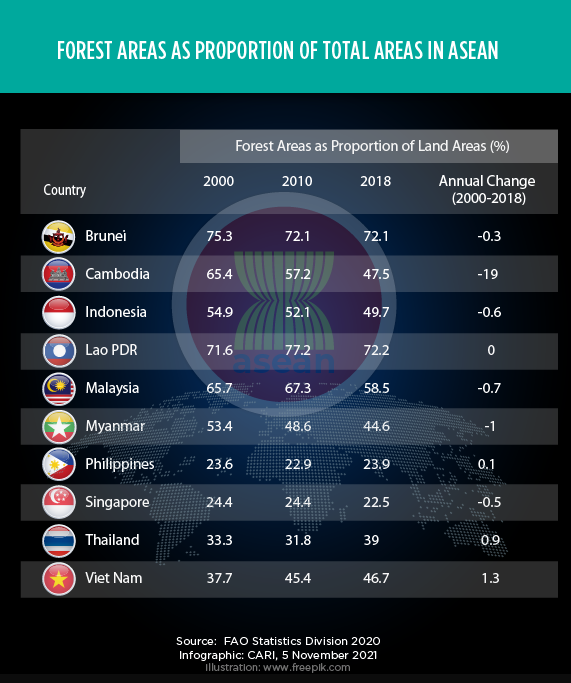
(3 November 2021) Over 100 countries representing 85% of the world’s forests signed the Glasgow Leaders’ Declaration on Forest and Land Use at the United Nations Climate Change Conference or COP26 pledging to “halt and reverse forest loss and land degradation by 2030”. Indonesia and Vietnam were the only Southeast Asian countries to sign the pledge. However, Indonesia’s environment minister said shortly after the announcement that it was “inappropriate and unfair” to describe the pledge as an agreement to reach zero deforestation by 2030 since the country’s development “must not stop in the name of carbon emissions or deforestation.” The country’s vice foreign minister echoed this view, stating that Indonesia interpreted the pledge to mean “sustainable forest management” and not an end to deforestation.
 

INDONESIA, THE PHILIPPINES
Indonesia and the Philippines commit to phasing out coal at COP26

(4 November 2021) Indonesia and the Philippines will receive support to accelerate their transition from coal energy to clean energy under two new initiatives announced at COP26: the Climate Investment Funds’ low-cost financing Accelerating Coal Transition programme and a new US$25 million Japan-backed Energy Transition Mechanism partnership with ADB. Indonesia, who previously said that it planned to phase out coal by 2056 by investing up to US$200 billion per year over the next nine years, now says that it could do so by 2040 if it receives more funding from the international community to replace its coal power plants with renewable energy sources.
 

ASEAN
ADB announces US$665 million programme for ASEAN’s green recovery

(2 November 2021) Four institutions pledged a combined US$665 million toward a platform managed by the Asian Development Bank (ADB) that aims to mobilize an additional US$7 billion for green infrastructure projects in Southeast Asia to help accelerate the region’s pandemic recovery. US$151 million came from the United Kingdom, US$166 from Italian investment bank Cassa Depositi e Prestiti, US$59 million from the European Union, and US$300 million from the Green Climate Fund. The programme will be part of the new ASEAN Green Recovery Platform under the ASEAN Catalytic Green Finance Facility, an entity created by the ASEAN Infrastructure Fund in 2019 and managed by the ADB.
 

ASEAN, AUSTRALIA  
Australia announces US$114 million for ASEAN, seeks an upgrade in ties

(27 October 2021) Australia announced a new US$114 million package for the region at the inaugural ASEAN-Australia Leaders’ Summit on 27 October 2021. The bulk of the investment will go to the new Australia for ASEAN Futures Initiative which focuses on developing and implementing projects in areas such as health security, terrorism and transnational crime, energy security, and the ASEAN Outlook on the Indo-Pacific. Both sides agreed to elevate ASEAN-Australia ties to a Comprehensive Strategic Partnership. Australia also pledged to provide ASEAN countries with around four million doses of COVID-19 vaccines from late 2021 to mid-2022.
 

ASEAN, CHINA  
China seeks to elevate ASEAN ties, calls for RCEP’s early entry into force
 
(2 November 2021) ASEAN and China agreed to elevate ties to a Comprehensive Strategic Partnership at the recent ASEAN Summit, during which the Chinese also proposed six areas for greater cooperation: (i) supplies to combat COVID-19 and the establishment of a China-ASEAN Public Health R&D Collaborating Centre, (ii) ratifying the Regional Comprehensive Economic Partnership (RCEP) and upgrading the China-ASEAN free trade agreement, (iii) partnerships in the blue economy, (iv) implementing the China-ASEAN Digital Economy Partnership, (v) implementing the China-ASEAN Environmental Cooperation Strategy and Action Plan, and (vi) facilitating the safe return of ASEAN students to China.
 

ASEAN
BIMP-EAGA GDP contracted by 3.5% in 2020, totalling US$322.8 billion
(28 October 2021) The Brunei Darussalam—Indonesia—Malaysia—Philippines East ASEAN Growth Area (BIMP-EAGA) subregion recorded a 3.5% contraction in 2020, down from the 6.9% growth recorded in 2019 before the pandemic. Total trade in goods also fell by 11.4% from US$107.6 billion in 2019 to US$95.3 billion in 2020. Nevertheless, foreign direct investments rose by 32.0% from US$9.7 billion in 2019 to US$12.8 billion in 2020, while domestic investments also rose by 33.3% from US$6.9 billion in 2019 to US$9.2 billion in 2020. The growth area has also completed 27 of its 88 priority infrastructure projects as of October 2021.
 

ASEAN
Cambodia takes over ASEAN chairmanship from Brunei

(29 October 2021) Brunei handed over the bloc’s chairmanship to Cambodia at the closing ceremony of the 38th and 39th ASEAN Summits and announced the theme ‘ASEAN A.C.T.: Addressing Challenges Together’ for ASEAN in 2022. Aside from advancing the bloc’s core interests, Cambodia will also appoint a new special envoy to Myanmar for its term as chair and push Myanmar’s military rulers to start a dialogue with its political opponents. The COVID-19 recovery, South China Sea, US-China trade war, and climate change are also expected to be high on Cambodia’s 2022 agenda.


RCEP Monitor


AUSTRALIA, NEW ZEALAND, THAILAND 
World’s largest trade deal to take effect at the start of 2022

(3 November 2021) The Regional Comprehensive Economic Partnership or RCEP will come into force on 1 January 2022 following Australia and New Zealand’s ratification of the same on 2 November 2021. Thailand ratified the deal a few days before on 28 October 2021. According to the RCEP’s text, the agreement will enter into force 60 days after ratification by at least six ASEAN countries and at least three non-ASEAN countries. Brunei, Cambodia, Laos, Singapore, Vietnam, China, and Japan have also ratified the pact thus far.
 

AUSTRALIA, SINGAPORE  
Singaporeans can visit parts of Australia starting in November
 
(1 November 2021) Vaccinated Singaporeans will be able to visit New South Wales and Victoria without having to spend 14 days in hotel quarantine in either country starting 21 November 2021. Similarly, vaccinated Australians will also be allowed to visit Singapore without serving quarantine from 8 November 2021 onwards under the country’s new Vaccinated Travel Lane program. The announcement was made following a meeting between the countries’ leaders at the Group of 20 (G20) summit in Rome.
 

THE PHILIPPINES
The Philippines looks to the RCEP to spur its post-pandemic recovery
 
(28 October 2021) The Philippines hopes to be among the first set of countries to benefit from the RCEP when it comes into force in 2022 as it sees it as a vehicle to accelerate the country’s post-pandemic recovery. The government considers the pact a way to gain access to RCEP markets and a platform to attract more foreign investors. The ratification instrument passed President Duterte’s desk on 2 September 2021 and is now with the Senate for concurrence.
 

CARI Captures Issue 526: Singapore currently occupies lowest spot ever in Bloomberg Covid Resilience Ranking for a former No. 1 occupant

SINGAPORE
Singapore currently occupies lowest spot ever in Bloomberg Covid Resilience Ranking for a former No. 1 occupant

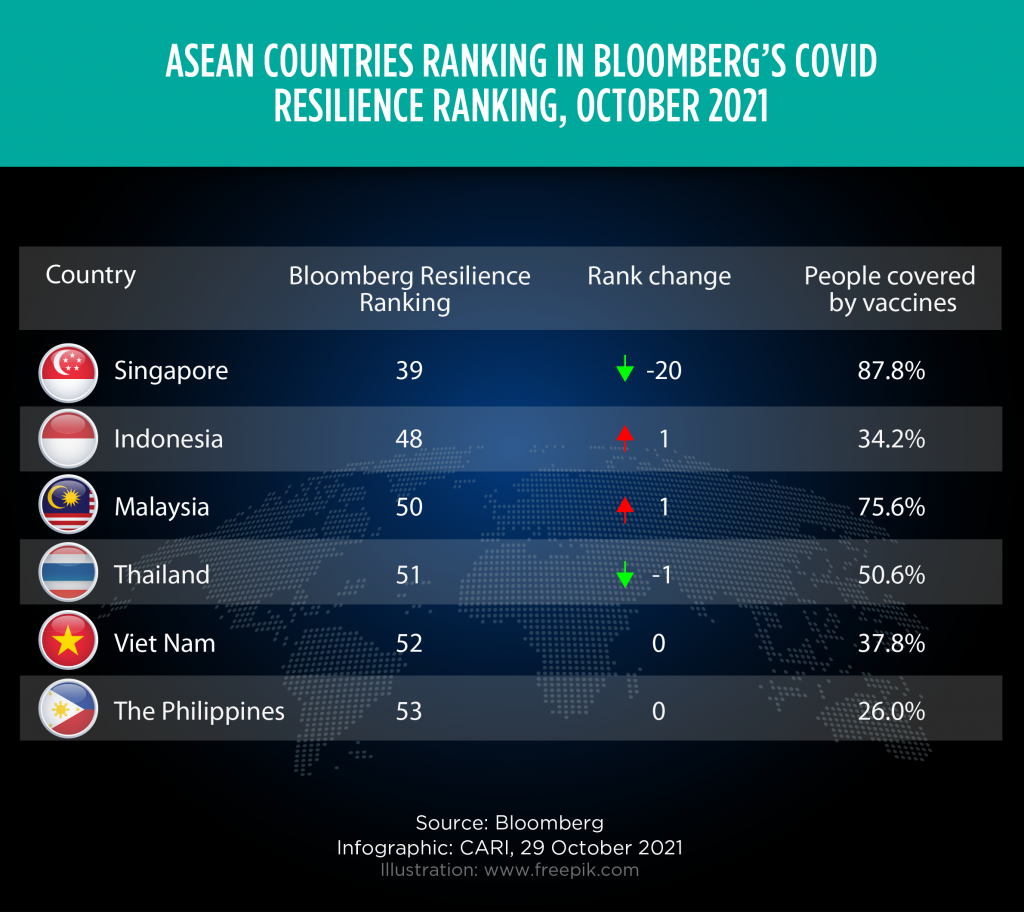
(27 October 2021) Singapore now occupies the lowest spot ever in Bloomberg’s Covid Resilience Ranking for a former No.1 occupant. The city-state had occupied the number one spot in April 2021, and had never dropped below the 19th spot since then, but in the latest iteration of the index released on 27 October, Singapore had dropped 20 spots to the 39th position. Despite 87.8% of its population being vaccinated (one of the highest rates in the world), the city-state still maintains strict COVID-19-related restrictions that have curbed mobility, and has been slow in reopening its borders (scoring low in terms of travel routes and flight capacity recovery). Singapore’s status as an international travel and business hub has made its government committed to reopening its borders soon, having recently announced vaccinated travel lanes to parts of Europe, Australia and the U.S., as well as allowing international conferences to take place with social distancing rules in place.

ASEAN-UNITED STATES
President Biden becomes first US President to attend ASEAN Summit in four years

(26 October 2021) President Biden became the first US President to attend the ASEAN Summit in four years. Biden informed the other ASEAN leaders that they should expect the United States to be more present in Southeast Asia going forward, and that the United States would provide US$100 million to strengthen ties with ASEAN and bolster the United States’ Strategic Partnership with ASEAN. Among the areas where the United States have committed to helping ASEAN include in handling the ongoing COVID-19 pandemic, and at least US$40 million of the new spending is reportedly to help address the pandemic. Biden also emphasized that the United States would focus on climate change in the region, with Southeast Asia being one of the regions most affected by global warming. The junta leaders of Myanmar were excluded from the summit due to the ongoing crisis in the country.

INDONESIA
Indonesia and Taiwanese company Foxconn held talks over electric vehicle investments in Indonesia

(25 October 2021) The Indonesian government and Taiwanese iPhone assembler Foxconn held talks over electric vehicle investments in Indonesia. The talks were held late last week, and the Indonesian government stated that Foxconn plans to build electric vehicles and electric batteries for two-wheel and four-wheel vehicles in Indonesia, although the company for their part said only talks had been held. The Taiwanese company joins a long list of companies that have shown interest in investing in Indonesia’s nascent electric vehicle industry, including the likes of Germany-based BASF, Tesla of the U.S. and China’s CATL. South Korea’s Hyundai Motor Group is already constructing an electric vehicle battery and automobile factory in the country. Indonesia plans to become a key cog in the global electric vehicle supply chain owing to its large nickel deposits, a key component of electric vehicle batteries.

THE PHILIPPINES, SOUTH KOREA  
The Philippines and South Korea conclude talks for free trade agreement, to be signed in early 2022

(27 October 2021) The Philippines and South Korea have concluded talks for a free trade agreement, with the pact expected to be signed in early 2022. Top trade officials from the two parties issued a joint statement on 26 October highlighting that the agreement would help the Philippines and South Korea recover from the economic impact of the COVID-19 pandemic. Among the issues which were resolved during the negotiations include trade in goods, trade remedies, rules of origin, competition, and legal and institutional issues. Negotiations for the free trade agreement had started in June 2019. The Philippines’ Department of Trade and Industry (DTI) said the final talks focused on market access for Filipino banana exports and for Korean automotive units and parts. The Philippines’ top exports to South Korea include bananas, pineapple, and copper, while it mostly imports industrial products in return.

THAILAND  
Finance Ministry lowers growth forecast for 2021 to 1% from 1.3% predicted in July 2021

(28 October 2021) Thailand’s Finance Ministry lowered its growth projection for 2021 to 1%, from 1.3% in July 2021. This is the Finance Ministry’s fourth revision this year after its deadliest COVID-19 wave which started in April and which caused restrictions on businesses and travel. It expects the economy to grow 4% in 2022, supported by exports and tourism. The ministry earlier had forecast growth as fast as 5% for 2022. Growth is seen rebounding to 3% in the final quarter of 2021, from a 3.5% contraction in the previous quarter. In September the Bank of Thailand cut its GDP forecast to 0.7%, while the National Economic & Social Development Council followed with a downward revision to 0.7% – 1.2%. The Finance Ministry forecast that the average baht will weaken to 31.93 to the US Dollar in 2021, compared to 31.30 in 2020.

SINGAPORE, MALAYSIA
Malaysia and Singapore to discuss reopening of borders through a dedicated air travel lane
(28 October 2021) On 29 October 2021, Malaysia’s Tourism, Arts and Culture Minister will meet Singapore’s Tourism, Arts and Culture Minister to discuss the reopening of borders through a dedicated air travel lane for vaccinated people. Malaysia is seeking to reopen its borders to foreign travellers as soon as December 2021, with all the standard operating procedures currently being prepared. As of now, international tourists are only allowed to visit Langkawi in Malaysia under a pilot travel bubble programme which is slated to begin on 15 November. An official announcement on an air travel bubble between Singapore and Malaysia will only be made after the matter is approved by the National Security Council.

CAMBODIA
Cambodia to partially reopen to international tourists starting on 30 November

(27 October 2021) Cambodia will partially reopen to international tourists starting on 30 November. The Cambodian Tourism Ministry on Tuesday announced a reopening for popular beach spots Sihanoukville and the island of Koh Rong, as well as the Dara Sakor resort zone. The northern city of Siem Reap will be added to the quarantine free list starting in January 2022. Revenue from Cambodia’s tourism industry plummeted from US$5 billion in 2019 to US$1 billion in 2020, due to the travel restrictions put in place due to the COVID-19 pandemic. Under Cambodia’s planned reopening, tourists must remain for a minimum of five days at the pilot locations and undergo a further swab test before being allowed to explore other parts of Cambodia.


RCEP Monitor


CHINA 
China doubling down on Zero COVID strategy with less than 100 days until Beijing Winter Olympics

(28 October 2021) China intends to eliminate its COVID-19 outbreak through a ‘zero-COVID’ strategy, with less than 100 days until the Beijing Winter Olympics. This is in contrast to other countries which have pivoted away from a zero-COVID strategy to learning to live with COVID-19 and focusing on vaccine rollouts. China currently requires international arrivals to completely isolate themselves for two to four weeks. Though travellers can spend this time in hotels, there are plans by authorities to monitor them closely in dedicated quarantine facilities such as the Guangzhou International Health Station, located on the outskirts of Guangzhou. Similar facilities are planned for Dongguan and Shenzhen. New locally transmitted cases have increased to between 10 and 60 a day since 19 October, up from the single digits through mid-October. In response, authorities have continued with their strategy of locking down entire cities and launching large-scale PCR testing drives.

AUSTRALIA  
Australian government plans to reach net zero greenhouse gas emissions by 2050

(26 October 2021) The Australian federal government has launched a plan to reach net zero greenhouse gas emissions by 2050. The plan includes US$19 billion to be invested in low emissions technologies including solar and clean hydrogen by 2030. The plan will also include carbon offsetting and reducing the costs of low emissions technologies. Prime Minister Scott Morrison, in launching the plan, stated that the target of net zero carbon emissions by 2050 would not see the end of coal or gas production or exports, and would not increase energy bills. He also stated that it would also not be a “set and forget” program, with five-yearly reviews from the Productivity Commission. The first review is set for 2023 and will look at the socio-economic impact of the plan.

NEW ZEALAND
New Zealand unveils plans to reopen borders to foreign travellers

(28 October 2021) The New Zealand government plans to partially reopen its borders to foreign travellers amid growing pressure from New Zealanders stranded overseas by strict travel restrictions. Starting on 8 November 2021, arrivals from the Pacific island nations of Samoa, Tonga, Vanuatu and Tokelau will be granted quarantine-free travel, while other low-risk countries would be considered in early 2022. It was also announced that the 14-day hotel quarantine period currently imposed on all overseas arrivals would be slashed to seven days in November and eventually replaced with home isolation. The goal was to move towards home isolation in the first three months of 2022, once 90% of New Zealand’s population is fully vaccinated.

CARI Captures Issue 525: ASEAN excludes Myanmar junta leader from summit in rare move


ASEAN
ASEAN excludes Myanmar junta leader from summit in rare move

(17 October 2021) The Association of Southeast Asian Nations (ASEAN) announced this week that it will exclude Myanmar’s military leader Min Aung Hlaing from its upcoming regional summit, citing the lack of progress made by the military to restore peace in the country following its February coup. The announcement was made following an Emergency Foreign Ministers’ Meeting on 16 October 2021. Brunei, the bloc’s current chair, says that a non-political figure from Myanmar will be invited instead. The 38th and 39th ASEAN Summits and Related Summits will be held from 26 to 28 October 2021.

ASEAN
ASEAN ministers endorse regional Fourth Industrial Revolution strategy

(19 October 2021) The ASEAN Economic Community (AEC) Council Ministers have endorsed the Consolidated Strategy on the Fourth Industrial Revolution (4IR) for ASEAN at the 20th AEC Council Meeting held on 18 October 2021. The strategy provides the bloc with a “whole-of-ASEAN” approach in taking advantage of the 4IR through three areas: technological governance and cybersecurity, digital economy, and digital transformation for society. The initiative also aligns with the region’s COVID-19 recovery strategy, the ASEAN Comprehensive Recovery Framework (ACRF), which was adopted in 2020. The strategy is expected to be adopted at the upcoming ASEAN Summit.

INDONESIA
Indonesian minister shares plan to accelerate digital transformation

(20 October 2021) Indonesian communications and informatics minister Johnny Gerard Plate shared the country’s four-pronged digital transformation strategy to contribute to the establishment of an ASEAN digital community during a meeting between the AEC Council and ASEAN Digital Ministers on 18 October 2021. The four approaches involve (i) implementing the 2021-2024 Indonesia Digital Roadmap, (ii) ensuring equal access to quality telecommunications services to reduce the digital divide, (iii) encouraging the establishment of cross-border data regulation, and (iv) promoting the use of digital technology in the COVID-19 pandemic recovery process through Indonesia’s 2022 G20 Summit presidency.

VIETNAM  
Vietnam ratifies the ASEAN Trade in Services Agreement (ATISA)

(18 October 2021) Vietnam ratified the ASEAN Trade in Services Agreement (ATISA) on 18 October 2021, making it the second ASEAN Member State to do so following Singapore’s ratification of the same on 5 April 2021. The agreement, which was first signed by ASEAN Economic Ministers on 7 October 2020, will replace the existing ASEAN Framework Agreement on Services (AFAS) when it comes into force. ATISA is expected to provide a more stable and predictable environment for service suppliers in the region as it uses a negative listing approach which would, by default, apply the same set of rules to all service suppliers unless otherwise specified.

CAMBODIA  
Cambodia reopens e-visa applications for international visitors

(20 October 2021) Cambodia’s e-Visa scheme “Visa T” reopened applications on 19 October 2021. Once approved, these single-entry visas will be valid for a period of three months, during which visitors can stay for up to 30 days upon arrival. Visitors will need to make a US$1,000 deposit to cover their stay in one of four designated quarantine hotels before arrival. Fully vaccinated visitors will be quarantined for seven days, while those not fully vaccinated or unvaccinated will be quarantined for 14 days. Visitors will also need to produce a negative PCR test result and vaccination certificate upon arrival.

SINGAPORE
Singapore’s Vaccinated Travel Lane scheme takes flight this week
(18 October 2021) The first flights under Singapore’s Vaccinated Travel Lane (VTL) scheme arrived from Amsterdam and New York on Wednesday and Thursday respectively following the VTL’s coming into force on Tuesday, 19 October 2021. Visitors under the VTL will only need two COVID-19 swab tests to enter Singapore, down from the current four, and they need not be quarantined upon entering. The first swab test will be done 48 hours pre-departure and the second on arrival. Eight countries have been authorized under the VTL: Canada, Denmark, France, Italy, the Netherlands, Spain, Britain and the United States.

ASEAN
Three ASEAN markets rise in EY’s global renewable energy index

(19 October 2021) The Philippines, Vietnam, and Indonesia have moved up EY’s latest bi-annual index which ranks the top 40 most attractive markets for renewable energy investment and deployment opportunities. The Philippines came in 27th place thanks to the government’s target to reach 35% in renewable energy by 2040 and its National Renewable Energy Board’s new offshore wind plan. Vietnam rose to 29th place backed by its rising use of hydro, wind, and solar power. While Indonesia rose to 39th place due to its “more ambitious renewables targets and positive policy developments to retire diesel and coal power plants”.


RCEP Monitor


SOUTH KOREA 
South Korea and Cambodia to sign bilateral free trade agreement

(20 October 2021) The Cambodia-South Korea Free Trade Agreement (CKFTA) will be signed and virtually endorsed by the countries’ respective trade ministers on 26 October 2021. Both countries are also members of the Regional Comprehensive Economic Partnership (RCEP). Cambodia will lift tariffs on 93.8% of its goods traded while South Korea will lift tariffs on 95.6% of the same once both the CKFTA and RCEP come into effect. Over 10,000 Cambodian goods enjoy tariff-free access when exporting to South Korea, while Cambodia will also increase its imports of electronics, pharmaceuticals, and automotive parts from South Korea.

NEW ZEALAND  
New Zealand and the United Kingdom reach agreement on trade deal

(21 October 2021) The United Kingdom (UK) and New Zealand have agreed in principle to terms for a bilateral free trade agreement following 16 months of negotiations. The UK believes that the bilateral deal would “pave the way” for them to join the Comprehensive and Progressive Agreement for Trans-Pacific Partnership (CPTPP), of which New Zealand is a member and of which the UK hopes to join by the end of 2022. The deal is expected to expand New Zealand’s access to the UK’s agriculture sector, and lower or remove taxes on cars, buses, textiles, and metals.

AUSTRALIA
Australia-UK free trade agreement could see more British labour imports

(18 October 2021) Australian trade minister Dan Tehan, who is in London finalizing the details of the Australia-UK free trade agreement, has indicated that the country could see an influx of British workers to fill labour shortages caused by Australia’s closed borders during the pandemic. The deal, which is expected to come into force on 1 July 2022, will also make it easier for people to live and work in both countries. According to Australian labour statistics, private sector vacancies were 49% higher than at the start of the pandemic, while public sector vacancies were 27% higher.