CARI Captures Issue 501: Myanmar junta states immediate priority is law and order after ASEAN calls for end of violence

ASEAN
Myanmar junta states immediate priority is law and order after ASEAN calls for end of violence

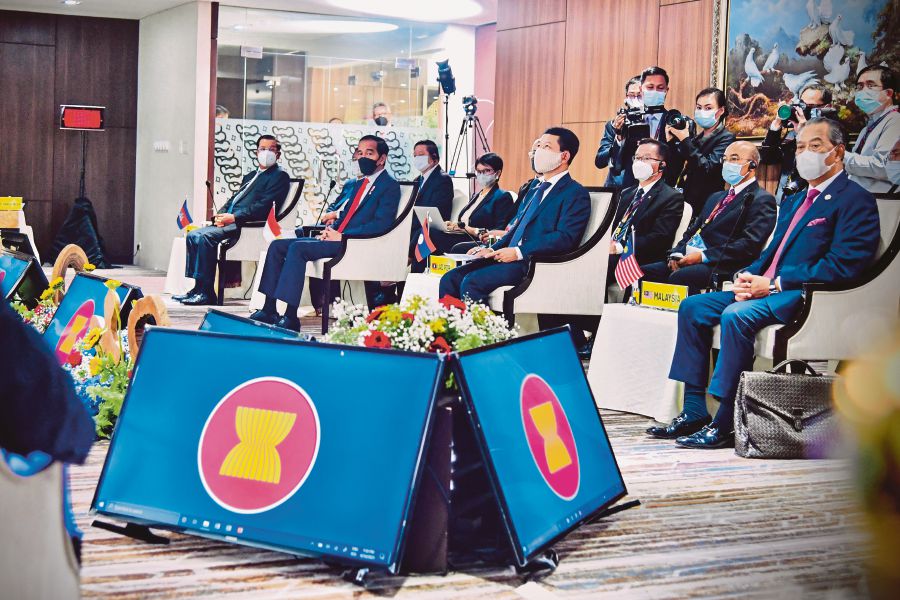
(24 April 2021) A summit held by ASEAN in Jakarta on 24 April 2021 regarding the ongoing crisis in Myanmar released a statement with five points: an immediate cessation of violence and restraint by all parties, the commencement of constructive dialogue towards a peaceful solution, for a special envoy of the ASEAN chair to mediate the dialogue, for ASEAN to provide humanitarian assistance, and for the special envoy and delegation to visit Myanmar to meet with all parties. The summit was attended by the head of Myanmar’s junta, Senior General Min Aung Hlaing, as well as the leaders and foreign ministers of the other ASEAN Member States. After the ASEAN meeting, a statement was posted on a Vietnamese government portal which stated that the Vietnamese prime minister had asked ASEAN countries to work closely with Vietnam at United Nations forums towards “finding suitable solutions for Myanmar.” Viet Nam is currently serving as a non-permanent member of the United Nations Security Council. However, the violence in Myanmar remains ongoing, with the military junta subsequently stating after the summit that their immediate priority would be on maintaining ‘law and order’.

INDONESIA 
Indonesian government looks to cut its budget deficit for 2022 state budget

(29 April 2021) Indonesia’s 2022 state budget could be smaller than its 2021 budget as the government looks to cut its budget deficit and reduce pandemic-era fiscal support. Indonesia had relaxed its fiscal rules for three years from 2020 to allow for more government spending amid the COVID-19 pandemic, but vowed to bring its fiscal deficits back to under the legal limit of 3% of GDP starting in 2023. Indonesia’s Finance Minister stated that the government would be preparing its 2022 budget within a range of US$182 billion to US$192 billion, with a deficit outlook of 4.51% to 4.85%. The 2021 budget has an estimated shortfall of 5.7%, while 2020’s budget had a fiscal gap of 6.1%, the country’s biggest in decades. Indonesia’s economy contracted by 2.07% in 2020, and the government expects a rebound of 4.5% to 5.3% growth in 2021.

MALAYSIA 
Malaysian exports grew by 31% in March 2021 from year earlier

(28 April 2021) Malaysia’s exports grew by 31% in March 2021 from a year earlier, the country’s largest year-on-year expansion in nearly four years. This boost in exports was fueled by higher global demand for electrical and electronic (E&E) products, mainly semiconductors used in 5G technology and high-performance computing, as well as rubber products. Imports also saw its highest growth since October 2017, rising 19.2%. Total trade expanded by 25.6%, while the country’s trade surplus grew by 96.1%. According to Malaysia’s International Trade and Industry Minister, the country’s trade, exports, imports and trade surplus recorded double-digit growth for two consecutive months in March 2021. For the first quarter of 2021 as a whole, total trade grew 14.8% year-on-year to MYR 505.65 billion. MIDF Research subsequently revised upwards its 2021 exports and imports forecast to 13.5% and 12.7% year-on-year respectively, from the earlier estimation of 8.1% and 8.7%.

SINGAPORE, THAILAND 
Thailand and Singapore link up real-time payment systems in world’s first of its kind

(29 April 2021) Singapore’s PayNow and Thailand’s Promptpay have become linked, allowing the users of both real time payment systems to transfer money across both countries using just a mobile phone number. This was revealed in a joint statement by the Monetary Authority of Singapore (MAS) and the Bank of Thailand (BOT), which stated that the link is the first of its kind in the world, and came about after several years of extensive collaboration between the two sides. Users will be able to transfer up to $1,000 Singapore dollars (US$750) or 25,000 Thai baht (US$800) daily between the countries. The managing director of MAS stated that their overall objective was to work with their counterparts in other ASEAN Member States to form a network of linked retail-time payment systems across the region.

THAILAND
Thailand to increase mandatory quarantine period for all travellers to two weeks due to rising cases

(29 April 2021) The Thai government has increased its mandatory quarantine period for all travellers to two weeks, as the country grapples with its latest COVID-19 wave. These new restrictions were announced on 29 April 2021, and are expected to be a setback to the country’s previous plans to reopen its borders to foreign tourists. Thailand had earlier in April 2021 reduced the timeframe to seven days for vaccinated tourists and ten days for most others in a bid to boost its tourism sector. All visitors to the country starting on 1 May 2021 will be required to undergo the longer isolation. The new restrictions also include a mask mandate, a ban on large gatherings, and a shutdown on bars. On the same day as the announcement, the Finance Ministry cut its economic growth forecast for Thailand to 2.3% for 2021, citing the current outbreak and the latest downward revision of international visitors to just 2 million in 2021, down from an earlier estimate of 5 million.

THE PHILIPPINES 
Philippines targeting foreign investments with Singapore-style tax laws 

(27 April 2021) The Philippines introduced a Singapore-style tax law which reduces corporate income taxes in order to boost foreign investments into the country. The so-called corporate recovery and tax incentives for enterprises (CREATE) act, which was signed into law in February 2021, aims to provide financial relief to companies in need while increasing the country’s competitiveness within the region. The law reduces the corporate income tax to 25% for large companies and 20% for small businesses, unifies the government’s inbound investment program, and grants the president more power to give non-fiscal incentives to businesses. The government stated the plans will  return cash to distressed small- and medium-sized businesses, which they can then reinvest in jobs and economic growth.

THE PHILIPPINES
Nearly half of more than 60 online casinos in the Philippines have permanently shut down due to coronavirus restrictions

(28 April 2021) The Philippines’ gaming agency chief stated that about half of the country’s more than 60 online casinos have permanently shut down due to coronavirus restrictions, affecting as many as 30,000 foreign workers.  Revenue from online casinos, which cater mostly to Chinese clients, is expected to be less than half of the usual earnings of 8 billion to 9 billion pesos for 2021. Manpower has been identified as an issue, as Chinese nationals can’t go to the Philippines to place bets, and workers who had left the country for Chinese New Year in 2021 are not able to return because of the lockdown. It is believed that some operators will transfer their operations to Vietnam, Myanmar and Malaysia, while bigger online casinos may return to the Philippines once travel restrictions are eased and there’s clarity on proposals to tax the industry.     


RCEP Monitor


JAPAN
Japan’s parliament approves Regional Comprehensive Economic Partnership
(28 April 2021) On 28 April 2021, the Japanese parliament approved the Regional Comprehensive Economic Partnership (RCEP), raising the possibility for the pact to enter into force later in 2021. RCEP will be Japan’s first trade deal involving both China and South Korea, their largest and third biggest trade partners respectively. As of 28 April 2021, Singapore and China have completed procedures for ratification. The Japanese government expects the trade agreement to boost Japan’s GDP by 2.7% and create 570,000 jobs. The deal will eliminate tariffs on 91% of goods and introduce common rules on investment and intellectual property to promote free trade.

JAPAN
Japan targets Viet Nam as first Southeast Asian country for oil sharing deal
(27 April 2021) Japan aims to bring Viet Nam into what will be its first oil-sharing deal with a Southeast Asian country, as Japan seeks to ensure an uninterrupted supply of petroleum in the event of a disruption. Under one proposal, each participant in the agreement would build up individual reserves of crude oil, along with gasoline, diesel fuel and other petroleum products, to prepare for possible future disruptions in supplies. The Japanese government has so far approached Viet Nam with the oil-sharing proposal. Once the pandemic has eased, Japan aims to begin active discussions with Hanoi with the goal of reaching an agreement at an early date. Japan also plans to build oil-sharing arrangements with several other ASEAN Member States, including Indonesia, Thailand, and Malaysia.


SOUTH KOREA, UNITED STATES 
South Korean President Moon Jae-In will visit US President Joe Biden on 21 May 2021
(30 April 2021) South Korean President Moon Jae-In will visit US President Joe Biden in Washington on 21 May 2021, according to a White House statement released on 29 April. President Moon will be the second world leader to visit the White House since Biden took office in January 2021, after Japanese Prime Minister Yoshihide Suga met with the US leader earlier in April. The statement by the White House noted that Moon’s visit will highlight the ‘ironclad alliance’ between both countries, as well as economic ties. The meeting is believed to reflect the Biden administration’s priority on relationships with Asian allies as the United States focuses on its tensions with China. US Secretary of State Antony Blinken and Pentagon chief Lloyd Austin visited Seoul in March 2021.

ASEAN: Give Credit When It’s Due

ASEAN leaders are to be commended for finally being able to do something about the deteriorating situation in Myanmar, one of its member states.

Brunei, this year’s chair, Indonesia, Asean’s primus inter pares, ably supported by Malaysia and Singapore, got all member states to support the chairman’s statement that came out of the Jakarta leaders meeting last Saturday.

Image Source: New Straits Times


It goes to show there can be meaningful Asean action when there is political leadership.

The content of the nine-paragraph statement was laced with the usual Aseanesque of Asean summits, with only the 8th referring directly to the situation in Myanmar, including the five action points of consensus as an attachment to the statement, and the 9th to the need to facilitate the repatriation of displaced persons in Rakhine state as well as the need to address the root causes of the situation there.

It was a good harvest to record also the Rakhine state situation, although the immediate concern of the leaders meeting was the violence and fatalities following the military coup in Myanmar on February 1st and civil action against it.

The “sweetener” of a more general overlay in the statement was proposed by the Brunei chair to get the de facto Myanmar leader to attend. There has been criticism of having General Min Aung Hlaing attend the meeting, but there was really no alternative if the object of the summit is to bring an end to violence in that country. The elephant had to be in the room.

Most of the discussion at the meeting was on the situation in Myanmar, whatever generalities there were in the chairman’s statement. The five-point consensus was clear, specific and succint: immediate cessation of violence; dialogue for peaceful solution; special envoy of the Asean chair to facilitate the dialogue process; humanitarian assistance; and the special envoy with his delegation are to visit Myanmar to meet all parties concerned.

All are desirable objectives and means to ultimate resolution and immediate end to violence. Of course there is many a slip between cup and lip, and there could be glitches and flare-ups, but the sense coming out of the meeting is that the General is looking for a way out of the hole his military has been digging for him.

Perhaps there should have been something on what would follow non-compliance. However in the exercise of the possible, given that Asean is now actually seized of the matter, it was left implicit.

Nevertheless it is incumbent that the special envoy, assisted by the Asean Secretary General, must not only get moving fast but should also report back to the chair of difficulties and recalcitrance. Asean must do more than just hold a watching brief.

It took some time for Asean to reach this point. Asean could only come out with a chairman’s statement following consultations that took place in early March. While Indonesia, Malaysia and Singapore have come out with their individual, robust statements, others, like the Thais, had come out to say what was happening in Myanmar were its internal affairs.

Image Source: South China Morning Post

Still others were silent. An Asean consensus itself, excluding Myanmar, was hard to form – as if some of the states “suspicious” of intervention were harboring dark acts against their people some time in the future, for which they did not fancy an Asean interest. So it was good to see all agreeing to last Saturday’s Jakarta statement.

Broad as the paragraphs were before the two on Myanmar, apart from two paragraphs on the theme and deliverables of Brunei year as chairman, there were important restatements – reminders not just to Myanmar – of commitments in the Asean Charter to the rule of law, good governance, the principles of democracy and constitutional government, respect for fundamental freedoms, and the promotion and protection of human rights.

There was a reminder too of the need to advance Asean community building, recovery from Covid-19 and to address “pressing issues of common interest to all Asean member states.” The last no doubt referring to the situation in Myanmar but also an opening to involvement in future crises affecting the region.

Passages in the broad paragraphs, further, underlined that Asean centrality depended on unity in engagement with external partners, with China and the U.S. mentioned by name.

The cynic might say there is so much wrong in too many member countries which already are at variance with those commitments under the Asean Charter. While, yes, it is the case, it is not peculiar to Asean and, more importantly, the lead up to involvement in Myanmar means there could be similar “intervention” in other countries when there is violence against and fatalities of their people. There is a limit even as many Asean countries fall short of its own standards.

Now that Asean has done something, it has escaped ignominy. However only a first, albeit all-important, step has been taken. The violence in Myanmar has to stop. Reconciliation has to take place. While stopping the violence is an immediate objective, reconciliation is a medium to long-term process.

What will Asean do if rogue elements of the Tatmadaw (the Myanmar armed forces) went on a rampage? Obviously it cannot do much without any peacekeeping forces on the ground. It is relying on the power, control and honesty of General Min Aung Hlaing. He has to be held accountable.

How deep should the Asean involvement be? It has to rely on good faith which is in short supply in Myanmar.

Reconciliation will take some time. And not just because of what has happened in the recent past since the coup. Can there be a return to the status quo ante? Have fresh elections got to be held? Must the present constitution which gives a special position to the military in the governance of the country be retained?

These issues no doubt are beyond Asean. They are for the people of Myanmar to sort out. Can, and should, Asean facilitation of dialogue between “warring” parties include help in resolving deep and outstanding issues? The word used in the Jakarta chairman’s statement is facilitating “mediation” of dialogue. How deep and how long and how involved are matters not quite clear.

So after a good day’s work, not to mention weeks of preparation, Asean is in a good place, but there is a lot more that lies ahead that needs to be thought through. After this particular statement, and its proposals, Asean leaders cannot all just go home and forget about it – as they have tended to do with many matters in chairman’s statements of the past.

The Myanmar situation requires constant attention and greater involvement if the country is not to fall apart – and Asean severely challenged again.

CARI Captures Issue 500: 56% of executives in Southeast Asia looking to pursue M&A over coming year

ASEAN
56% of executives in Southeast Asia looking to pursue M&A over coming year
(20 April 2021) According to consultancy firm EY’s latest Global Capital Confidence Barometer survey, some 56% of executives in Southeast Asia surveyed are looking to actively pursue mergers and acquisitions (M&A) over the next 12 months, the highest proportion since 2012, and also higher than the the 11-year average of 44% in past surveys. When looking at the responses of Asia Pacific C-suite executives in general, some 33% anticipate Southeast Asia would generate the most growth and opportunities for their companies in the next three years, followed by India (15%) and Oceania (15%). From an M&A standpoint, the sectors identified as significant in terms of value included real estate, energy and infrastructure, consumer — including core consumer, education, healthcare and consumer finance — and technology. In 2020, the region saw 329 M&A deals valued at US$51.45 billion, a decline of 24.4% year on year in terms of value, as well as 19.2% year-on-year in volume.

MALAYSIA
Malaysia first country to sell dollar denominated sukuk linked to sustainability activities
(21 April 2021) Malaysia became the first country to sell US dollar denominated sukuk linked to sustainability activities, adding to a growing number of issuers which have turned to debt financing for environmental and social projects. Malaysia issued 10-year sustainability sukuk notes priced at US$800 million, as well as 30-year notes priced at US$500 million. The offerings were oversubscribed by 6.4 times. Overall sustainable debt issuance rose by 29% in 2020 to a record US$732 billion, according to figures compiled by Bloomberg. The last time Malaysia issued dollar-denominated debt was in 2016, with its existing U.S. currency notes having a longer duration than Asian credit more broadly, making them vulnerable to a selloff last quarter as yields spiked.

MALAYSIA
Malaysia’s labour market expected to grow marginally in 2021 due to vaccination rollout and fiscal measures
(22 April 2021) According to Malaysia’s Department of Statistics Malaysia (DOSM), the country’s labour market is expected to grow marginally in 2021 due in part to the vaccination rollout and government support for businesses. Malaysia’s unemployment rate rose to 4.5% in 2020, up from 3.3% in 2019.This is the first time Malaysia’s unemployment rate reached above 4% in almost three decades. Although the labour market is expected to grow marginally in 2021, it will occur in a challenging environment due to the uncertainty of Malaysia’s current health situation. While COVID-19 cases in Malaysia continue to record high numbers in 2021, certain relaxations for economic activities to operate were permitted, allowing businesses to maintain their momentum.

INDONESIA
International companies planning on setting up nickel processing facilities in nickel-rich Indonesia
(23 April 2021) International companies are hoping to set up nickel processing facilities in Indonesia in order to tap into the country’s rich nickel reserves. Nickel is a critical part of electric-vehicle batteries, and Indonesia plans to leverage upon its rich reserves to establish a domestic battery supply chain. Germany-based BASF and French nickel processor Eramet are considering building a nickel- and cobalt-refining complex in Indonesia to begin operations in the mid-2020s, while Japanese Sumitomo Metal Mining has also expressed strong interest in bringing a multi-billion dollar Indonesian refinery online in mid-decade. Currently, there are three nickel-refining plants under construction in Indonesia expected to begin operations by 2023, according to the Ministry of Energy and Mineral Resources. Indonesia is believed to hold some 21 million tons of nickel in reserves, according to the U.S. Geological Survey (the largest reserves in the world).

THE PHILIPPINES
The Philippines issued US$2.5 billion in Eurobonds in three part bond sale
(22 April 2021) On 21 April 2021, the Philippines issued US$2.5 billion in Eurobonds, making it the first time the country returned to the Euro bond market in more than a year. The country tapped into the low interest rates of the Euro bond market with a three part bond sale. Proceeds from the bond issuance will be used in part to finance the country’s budget, as it grapples with the highest number of active COVID-19 cases in Southeast Asia. The issuance of the Eurobonds came less than a month before the country raised US$509 million worth of Samurai bonds. The Philippines sold EUR 650 million of four-year notes at 75 basis points over mid swaps.

SINGAPORE, HONG KONG
Hong Kong and Singapore again delay announcement of air-travel bubble between both territories
(22 April 2021) Singapore and Hong Kong have called off the announcement of an air-travel bubble which had been planned for 22 April 2021, as announced by Bloomberg. This is the second time in five months the announcement of quarantine-free travel between both territories had been delayed, with the first time scheduled to have happened in November 2020. No reason was provided for the new postponement of the announcement, although it comes as Singapore faces new COVID19 cases among its migrant labor population. Singapore’s Transport Minister stated earlier in April 2021 that he hoped an agreement on the air-travel bubble would be announced “soon,” echoing earlier comments by Hong Kong’s Chief Executive. On 21 April, Singapore announced that quarantine rules would be eased for those travelling to Hong Kong.

VIET NAM
Vietnamese real estate giant VinGroup officially launches US$2.8 billion resort in Phu Quoc
(23 April 2021) Viet Nam’s real estate development giant VinGroup officially launched a US$2.8 billion resort in the north of Phu Quoc. Phu Quoc United Center is described as a ‘super tourism resort entertainment complex’, and covers more than 1,000 hectares and provides around 12,000 hotel rooms across a number of 5-star hotel brands. The resort includes Viet Nam’s largest theme park, VinWonders Phu Quoc, plus an animal conservation park, an 18-hole golf course, a shopping and entertainment precinct, MICE facilities, multimedia shows, 24-hour street markets and a hospital. The development will also comprise Corona Resort & Casino, which was opened in January 2019 by Phú Quốc Tourism Development and Investment Company and which is still the only casino in Vietnam at which locals are allowed to gamble.


RCEP Monitor


SOUTH KOREA
South Korea to halt state-backed financing of overseas coal-fired power plants
(22 April 2021) South Korea is to halt state-backed financing of overseas coal-fired power plants, and also plans to strengthen its emissions reduction commitment under the Paris agreement. South Korea’s president Moon Jae-In made the announcement during a virtual climate summit hosted by US President Joe Biden. Although the American government had requested South Korea to withdraw from recent coal projects, the country will only halt funding for future plants abroad. South Korea plans to increase its current emissions reduction target under the Paris agreement by 24.4% by 2030 from its 2017 levels, by the second half of 2021. International investors have focused on South Korea’s financing of overseas coal development projects, particularly after the country pledged to become carbon-neutral by 2050.

SOUTH KOREA
South Korea grants conditional approval to allow public to use two COVID-19 self-test kits
(22 April 2021) South Korea’s government granted conditional approval to allow the public to use two COVID-19 self-test kits for the first time, as the country grapples with a resurgence of cases and a possible fourth wave. The manufacturers of the test kits, SD Biosensor Inc and Humasis Co Ltd, were given three months to provide further clinical trial data on self-testing as a condition of the approval. As of now, the self-test kits have been limited to medical specialists in South Korea. The kits can yield results within 15 minutes, and with an accuracy of 90%. This is compared to the 98% accuracy proven for industry-standard PCR tests and specialist-administered rapid tests. Local government chiefs have encouraged their use in homes, restaurants, shops and places of worship as a quick way to detect possible infections.

JAPAN
Japanese government seeks ‘short and powerful’ state of emergency for Tokyo, Osaka, and two other prefectures
(23 April 2021) The Japanese government is seeking a ‘short and powerful’ state of emergency for Tokyo, Osaka, and the prefectures of Kyoto and Hyogo, as Japan struggles to contain a resurgent COVID-19 pandemic. The new state of emergency is expected to be formally approved later on 23 April 2021, and will last between 25 April to 11 May. Under the new state of emergency, the government would request restaurants, bars, and karaoke parlours serving alcohol to close, and big sporting events to be held without spectators. Department stores and other retailers larger than 1,000 sqm would also be asked to close, while companies would be requested to make greater allowances for people to work from home. Several other prefectures in Japan remain in a ‘quasi-emergency’ state of targeted infection controls.

CARI Captures Issue 499: Grab’s plan to become US-listed public company to value company at almost US$40 billion

SINGAPORE
Grab’s plan to become US-listed public company to value company at almost US$40 billion
(15 April 2021) Singapore-based tech company Grab plans to become a US-listed public company via a merger with a special purpose acquisition company, or SPAC. Grab’s plan for a listing would value the company at almost US$40 billion, making it the largest such deal to use a SPAC. Grab expects to raise more than $4 billion through the SPAC deal and be traded on the Nasdaq in the ‘coming months’. Grab’s public listing is expected to open the door for investors to further tap into Southeast Asia’s booming startup ecosystem. A 2020 report by Google and Temasek projected Southeast Asia’s Internet economy to triple between 2020 and 2025, from US$ 105 billion to US$ 309 billion respectively. As of now, the only publicly listed internet company from the region is Singapore-based online gaming and e-commerce company Sea.

VIET NAM, INDONESIA
Viet Nam and Indonesia expected to be biggest beneficiaries of US economic boom
(13 April 2021) An expected boom in the US economy in 2021, fueled by massive stimulus measures, US$1.7 trillion of extra savings by American consumers, and wealth effects from higher asset prices, is expected to benefit Asian exporters. Viet Nam and Indonesia in particular are expected to be the biggest beneficiaries, with Bloomberg Economics projecting that if the US’ growth rate accelerates to 7.7% in 2021, it would add 1.09% and 1.06% to Viet Nam and Indonesia’s year-on-year growth respectively. Bloomberg Economics noted that the US buys more than 10% of Asia’s exports on average. In addition to a projected increase in direct demand from the US, there is also expected to be significant indirect spillovers for Asian firms linked to US supply chains. Bloomberg Economics noted that the key factor determining the extent of US spillovers on Asian economies will be the composition of US spending, with more spending on services expected to have less impact on Asian exporters.

VIET NAM
Record number of new retail investors in Viet Nam’s stock market in 2020
(12 April 2021) An estimated 400,000 new stock investors reportedly joined Viet Nam’s stock market in 2020, a record increase. It is believed the influx of new investors is due to three main reasons: low interest rates, social distancing measures keeping Vietnamese at home, and the rise of a generation with significant inherited wealth. In 2020, the Vietnam Securities Depository counted 2.7 million domestic individual accounts, a record jump of 16.8% versus 2019. Likewise, in January 2021 86,000 new trading accounts opened, higher than any month in 2020. The surge to equities also signals a change in mindset in the Vietnamese public, who traditionally invested their money in real estate or savings accounts. Vietnam has two bourses, the Ho Chi Minh City Stock Exchange and the Hanoi Stock Exchange, with a combined market capitalization of US$ 211 billion.

MALAYSIA
Prime Minister claims Malaysia open to all free trade agreements as long as they are fair 
(15 April 2021) Malaysian Prime Minister Tan Sri Muhyiddin Yassin informed industry players during a closed door meeting at the International Trade and Industry Ministry (MITI) on 15 April 2021 that Malaysia would be open to all free trade agreements so long as they were fair and beneficial to the country. In particular with regards to the Comprehensive and Progressive Agreement for Trans-Pacific Partnership (CPTPP), he stated that the Malaysian government would determine a ‘pragmatic way forward’ for the agreement. He noted that MITI is already exploring options in this area, including possible ideas to facilitate Malaysia’s ratification of the CPTPP. He also stated that it was important for Malaysia to pursue robust trade and investment policies to attract investors.

SINGAPORE
Home sales in Singapore doubled in March 2021, fueling fears of cooling measures being implemented 
(15 April 2021) Data from Singapore’s Urban Redevelopment Authority showed that purchases of new private apartments doubled to 1,296 in March 2021 from 645 units in February 2021. Singapore’s residential market is believed to be heating up as the economy begins to recover from the COVID-19-induced recession. Demand is rising due to buyers anticipating prices to climb further in tandem with Singapore’s economic recovery, as well as many taking advantage of low interest rates to upgrade their housing. Analysts have warned of authorities implementing possible measures to cool the market. It has been noted that Singapore home prices grew 2.9% in the last quarter of 2020, the most since the second quarter of 2018, right before authorities last imposed cooling measures. Prices of public housing flats and luxury homes have also risen, with some breaking records.


INDONESIA, GERMANY
Indonesia offers to open exclusive German industrial area within Central Java
(15 April 2021) Indonesian President Joko “Jokowi” Widodo offered to open an exclusive German industrial quarter in the Batang Integrated Industrial Park in Central Java. He also urged Germany to increase industrial investments in Indonesia by building factories, as well as by integrating Indonesia into its global supply chains. He also suggested that Germany and Indonesia form a partnership to develop vocational schools in Indonesia to improve the latter’s human resources. The Batang Integrated Industrial Park sits on 4,368 hectares of land owned by state-owned plantation holding company PT Perkebunan Nusantara (PTPN) IX in Gringsing district, Batang regency. Germany was Indonesia’s fourth largest investor in 2020, having invested some US$1.4 billion. As well, trade between both countries in 2020 reached US$5.48 billion.

THE PHILIPPINES
New two week lockdown in Manila may cause Philippines to miss its growth targets for 2021
(14 April 2021) The Philippines’ Economic Planning Secretary stated that the country may miss its economic growth target of at least 6.5% in 2021 after a resurgence of COVID-19 cases forced Metro Manila and the adjacent provinces of Bulacan, Cavite, Laguna and Rizal into a new two week lockdown in late March 2021. He stated that first-quarter gross domestic product performance may be close to zero compared to the same period in 2020, but will be a lot better than the final three months of 2020, when the economy contracted 8.3%. It is believed the economy can still recover in the coming months by opening certain areas, accelerating government spending, and speeding up the vaccination rollout for frontline workers.


RCEP Monitor


AUSTRALIA
Australia one of first nations to regain all jobs lost throughout COVID-19 pandemic
(15 April 2021) Australia is one of the first countries to regain all jobs lost during the COVID-19 pandemic in 2020, reflecting a successful early suppression of the pandemic as well as massive fiscal measures to support the economy. According to government data, employment and hours worked in March 2021 were higher than in the same month of 2020. Unemployment fell to 5.6% in March 2021, exceeding estimates by economists. Consumer sentiment in Australia is reportedly surging, as households with large savings are encouraged to spend and firms consider investing. This in turn has prompted increased hiring. The Reserve Bank of Australia in February 2021 doubled its quantitative easing program to US$155 billion.&nbsp

JAPAN
Slow rollout of vaccines to cause Japan’s annual output to only regain pre-pandemic levels in 2023
(12 April 2021) Japan’s vaccination rollout was expanded to people 65 and over in age on 12 April 2021, making them the first members of the public to be given the vaccine after priority was given to inoculating frontline medical staff first. Japan’s vaccination rollout has been noticeably slower than other countries including the US and UK, in part due to Japan’s dependence on imported vaccines as well as a strict approval process in Japan for foreign vaccines (given public skepticism over the effectiveness of vaccines). According to Bloomberg Economics, Japan’s slow rollout of vaccines means its annual output is not expected to regain its 2019 pre-pandemic level until 2023, compared with 2021 for the U.S. and 2022 for the Euro-zone.

CHINA
China’s GDP grows record 18.3% in first quarter of 2021 due to surging exports
(16 April 2021) Data released by the National Bureau of Statistics saw China’s GDP grow by a record 18.3% in the first quarter of 2021, rebounding from the 6.8% contraction in the same period in 2020 at the start of the COVID-19 pandemic. China's GDP growth for the January-March period of 2021 followed a 6.5% gain in the final quarter of 2020. This was fueled by greater demand from China’s trading partners, with exports jumping 49% during the quarter to US$710 billion, while imports rose 28% to US$593.6 billion. China projects 6% GDP growth overall for 2021, with some economists projecting growth to slow down in the coming quarters due to economic conditions in other countries.

ASEAN: Last In, Last Out

ASEAN: Last In, Last Out
Originally published in TheEdge Malaysia, 12 April 2021.

Once again, during a healthcare webinar organized last Wednesday by CARI Asean Research and Advocacy on “Covid-19 Vaccine Rollout and the Recovery of the Asean Economy”, it was so clear that the regional organization has been ineffective in getting member states to work together in facing down the epidemic.

Malaysia’s Minister of Science, Technology and Innovation, Khairy Jamaluddin, who is in charge of the country’s vaccine roll-out, pulled no punches in his keynote presentation when he stated there is a lack of solidarity and coordination in Asean.

He made this point when referring to difficulties faced by less developed countries in accessing vaccines. Actually, rich countries constituting 14% of the world’s population have bought up 53% of supply, leaving the rest scampering to lay their hands on available vaccines.

Even the WHO’s COVAX arrangement to which 192 countries have subscribed, including Asean member states, is struggling to achieve its promise of supplying 20% of the population of its members. Shortage of funds is one obvious problem, but availability of supplies has become chronic as Indian exports of the Astra Zeneca vaccine fell off because of domestic needs as well as the blood clot issues surrounding that vaccine.

Vaccine nationalism has become endemic, just like the virus. This matter of access to supplies was well anticipated by the private sector when in June last year in a report where CARI was the knowledge partner, it had urged Asean to organize pooled purchases of vaccines to give its members greater bargaining strength and buying power. This was contained in its report “A Pathway Towards Recovery and Hope for Asean” (Pathway 225) presented to Asean ministers and leaders in the middle of 2020.

There were a lot of nods in agreement among the officials, ministers and leaders but afterwards, in typical Asean way, they nodded off.

Instead of enhancing Asean decision-making at a time of crisis, even if on an ad hoc basis, as suggested in Pathway 225, a new body had been created, the ACCWGPHE (Asean Coordinating Council Working Group on Public Health Emergency) in substitute of real action. This was a working group however much it was a being of the Asean Coordinating Council (ACC), the body comprising foreign ministers which makes decisions to recommend steps or stands to be taken by the leaders at their twice a year summits which this year is to take place only once.

That it has not worked is evidenced by the 28-page statement at the end of the Asean Foreign Ministers’ Meeting last September (see my article in Forum, The Edge Malaysia Weekly, September 14-20 2020), which made no mention of Pathway 225, let alone pooled purchase of vaccines by Asean. Thus the leaders summit in November did not touch on a joint effort to get vaccines for member states.

Just last month, at another of those convivial meetings with Asean Economic Ministers, one minister mumbled something about a pooled purchase of vaccines being discussed by the ACCWGPHE. Yet, Malaysia’s supremo on its vaccine roll-out, Khairy Jamaluddin, knows nothing of this.

He said that in the past year that he had been working on Malaysia’s roll-out plan, there had been no Asean communication whatsoever of that supposed discussion on pooled purchase. He was quite clear that he would not wait upon Asean which, as we have noted again and again, just talks and talks, gets behind the clock, and talks some more.

In his own words, with which I entirely agree, Asean does not have the institutional mechanism to make decisions. That is why I had specifically put in Pathway 225 for there to be established that decision-making body – at least at a time of crisis.

Khairy had suggested that the private sector took over in making things happen. However, we can but only as allowed by Asean bureaucracy – and up to the border.

Thus it is that Asean is behind the curve in acquiring the Covid-19 vaccines, and in terms of percentage of population who have received at least one dose as of 5th April 2021, with Singapore (17.95%) far in the lead, followed distantly by Indonesia (3.16%), Malaysia (1.57%) and Cambodia (1.37%), with the others trailing some distance back.

The above figures were provided by Dr. Khor Swee Kheng, a leading independent health policies specialist, who was a discussant at the webinar.

Minister Khairy, on the other hand, highlighted the Israeli success story in vaccine roll-out and recovery of the economy, the best record in the world. With nearly 90% of those over 50 vaccinated or recovered from Covid-19, it was decided on 7th March, less than 2 months after the vaccination programme kickstarted, it was safe to re-open the economy. The Israeli central bank forecasts economic growth in 2021 of 6.3% and in 2022 of 5.8%.

Of course this is a great story and nice numbers to look at. However I would caution there is also another vaccination rate success story, Chile, which is in lockdown again, after opening and freeing up too prematurely. There is continued need for discipline, in the new normal often referred to but in reality most people wish to disregard.

Indeed, Dr. Khor Swee Kheng put across a number of cogent points, which should set Asean thinking, planning – and acting. He still emphasized vaccine supply which should cause Asean to want to be better late than never with pooled procurement, but added regional manufacturing. It is to be hoped if the latter takes off, there will not suddenly be non-tariff measures suddenly surfacing, unimaginable, but never impossible with Asean.

Even with vaccines, Dr. Khor advised, there should be a variant strategy – maximum suppression and genomic surveillance. Again, this is something the ACCWGPHE should already be thinking about and fashioning cooperation for.

Finally, on restarting the Asean economy, Dr. Khor took the view “vaccines are not a magic strategy”. He believes antibody passport are better than vaccine passport, although most people would say both would be best.

So, having missed the pooled purchase bus in the first round, there is still plenty for the ACCWGPHE, now under Brunei’s chairmanship, to do to justify its existence.

First, it has to activate Asean pooled purchase of vaccines. Of course it will not displace national efforts, but it would certainly augment them, especially for member states way behind in the queue.

Second, it should formulate the acceptable standards of disclosures for a vaccine passport. If based on blockchain technology the required data – to be determined – can be readily available.

Third, the required and accepted standards of antibody tests have to be agreed upon. The US FDA, for instance, have just recently authorized a Covid-19 self-collected anti-body test system based on a fingerstick dried blood sample that is self-collected. The experts will know better but they do not need to spend hours and hours reinventing the wheel, or to not want to move because of national pride, or some private consideration.

Medical equipment, the ACCWGPHE chair should remind all member states, are to be available with no tariffs across borders, as provided by the Asean Medical Devices Directive 2015 signed by all – but only adhered to by Indonesia, Malaysia and Singapore. This has to change.

Finally, dare I say, might it be possible to work on an Asean-wide contact tracing app? There are so many issues involved, apart from the technology, which relate to access to data and invasion of privacy. As I have said before, it could be every would-be dictator’s wet dream. Maybe this is something that could be attractive in Asean. I pray it would be for the purpose of reducing transmission of disease alone as a measure of sustained epidemic suppression.

In sum, there is still plenty to do although not much was achieved last year. I just hope I will not be writing this again next year. At the least Asean should strive for a harmonized approach to testing standards and vaccines passports, which is key to swift Asean economic recovery.

Even if the harmonized approach cannot be reached from a centralized Asean position on ALL of the above four matters, the many bilateral bubbles that are being worked on, such as Malaysia-Singapore or Malaysia-China, for particular bilateral considerations, should be replicated as far as possible across Asean. Without a multilateral framework, a series of bilateral arrangements would show Asean means something.

CARI Captures Issue 498: Facebook, Google to build undersea cables linking Southeast Asia to the US to advance connectivity between the Asia-Pacific region and North America


ASEAN 

(2 April 2021) Facebook and Google are building two new undersea data cables linking Southeast Asia to the US, marking the latest attempt to improve access and infrastructure in major markets like Indonesia and Singapore. Facebook has announced plans to lay two underwater cables connecting the US to Indonesia and Singapore, the first set of cables directly linking Southeast Asia to North America. Facebook says that the Echo and Bifrost trans-Pacific cables, as the company is calling them, will increase the capacity for data transfer between the Americas and Southeast Asia by 70%. The Echo cable is also backed by investment from Google, which says that the cable will run from “Eureka, California to Singapore, with a stop-over in Guam, with plans to also land in Indonesia. Additional landings are possible in the future.” The move is the latest in a growing trend of tech companies like Microsoft and Facebook investing in connectivity infrastructure around the world. Google is an investor in six undersea cables that have already been completed. Until recently, projects like fibre optic cables were primarily undertaken by telecom firms. Around 98% of the world’s internet and telephone communications are now carried by undersea cables, with about 400 in existence as of March 2021, according to Bloomberg. For the firms building the new cables, the projects are about expanding their networks by supporting growth within Southeast Asia.

ASEAN 

(5 April 2021) The ASEAN manufacturing sector returned to growth in March, following declines in February, as output and orders increased during March. According to the latest data on the IHS Markit Purchasing Managers’ Index (PMI), the headline PMI increased to 50.8 in March, from 49.7 in February, signalling a slight improvement in the health of the manufacturing sector. IHS Markit reported that four of the seven ASEAN constituent nations witnessed expansions during March, with Vietnam (53.6) leading the fourth consecutive month of improvement. Indonesia and the Philippines also saw sustained growth during March. Singapore also registered an improvement in manufacturing conditions during March (with the PMI at 50.7), indicative of a slower growth rate than in the past three months. At the national level, Myanmar registered a record-low headline figure of 27.5 as factories remained closed amid political turmoil. In Malaysia, the headline index was registered at just below the 50.0 mark, indicating stable health of the Malaysian goods-producing sector. Meanwhile, in Thailand, the downturn had eased since February, but the PMI at 48.8 signalled a modest rate of contraction overall.


MALAYSIA 

(7 April 2021) Nestlé (Malaysia) Bhd has 7 April launched its pioneering plant-based meal solutions manufacturing facility, the first in ASEAN and one of only two in Asia. The new facility in Shah Alam will cater to the rising demand for plant-based foods and will supply local demand as well as exports. Nestlé Malaysia said it had invested a total of RM150 million in the facility, which has been the main contributor to the RM280 million capital expenditure in 2020, the company’s highest in the last six years. Nestle S.A vice president and chief executive officer for Asia, Oceania and sub-Saharan Africa Chris Johnson said it had chosen Malaysia, and Selangor particularly, as the location of the new manufacturing hub as it had found here the right infrastructure, trade links and access to talent and capabilities. Nestle Malaysia CEO Juan Aranols said the production site would allow it to supply locally produced, high-quality, great-tasting and Halal certified plant-based meals. Nestlé’s new plant has already commenced production of its new Harvest Gourmet plant-based products for the out-of-home market and is soon to launch its consumer range, to be available in retailers nationwide and via eCommerce.


THE PHILIPPINES, ASEAN 

(8 April 2021) The Film Development Council of the Philippines (FDCP) launched an incentive fund for Association of Southeast Asian Nations (ASEAN) member states collaborating with the Philippines on March 15 during the “The Philippines: Let’s Create Together Country Session”. The ASEAN Co-production Fund (ACOF) is for feature films with a director of ASEAN nationality minority or majority co-producing with the Philippines. It is the latest Film Philippines Incentives Program of the FDCP following the Film Location Incentive Program (FLIP), International Co-production Fund (ICOF), and Film Location Engagement Index (FLEX). Department of Tourism (DOT) Secretary Bernadette Romulo-Puyat opened the Country Session with a statement on how a film is crucial in promoting tourism and culture to local and international audiences. “A memorable, well-made film has a greater capacity to promote tourism and foster cultural understanding than any other medium,” stated Romulo-Puyat. “Even though the pandemic kept people apart, the movies bring us closer together.” Department of Trade and Industry (DTI) Undersecretary Rafaelita M. Aldaba noted that there is an increasing demand for new, entertaining, and engaging content across the world. “The generation and production of content are not just limited to a particular market but are undertaken with the potential of being appreciated globally anytime, anywhere,” said Aldaba.


SINGAPORE 

(8 April 2021) Singapore will revise its port dues rates to fund the increased costs of operating and maintaining the Port of Singapore, according to the Maritime and Port Authority of Singapore (MPA). MPA said the revision is also to encourage vessels to make faster turnarounds in the port to allow more ships to be served within the limited anchorage space in the port. MPA noted that these costs have increased since port dues rates were last revised in 2014. Following consultations with industry partners including the Singapore Shipping Association and the Association of Singapore Marine Industries, MPA said the port dues rates will be adjusted over two phases to give companies time to adjust to the new rates. Under Phase 1 which will take effect from Jan 1, 2022, vessels calling at the Port of Singapore to load/unload cargo or to embark/disembark passengers with port stays between two and four days will experience an increase in port dues of up to around 6.0%. Meanwhile, under Phase 2 which will take effect from Jan 1, 2023, the port dues rates for vessels that stay in port for one day or less for purposes including loading/unloading of cargoes, embarking/disembarking passengers, taking bunker or supplies and changing of the crew will also increase.


THAILAND 

(7 April 2021) Sony Pictures Entertainment has teamed up with Thailand’s Amazon Falls to set up an amusement park based on productions from its Columbia Pictures studio, in the Southeast Asian country, the companies said on 6 April. The 14-acre Columbia Pictures’ theme and water park, Aquaverse, will be open for the public from October 2021 and feature rides and attractions based on the studio’s popular movies including “Ghostbusters”, “Jumanji”, “Bad Boys”, “Men in Black” and “Hotel Transylvania”.


VIETNAM 

(5 April 2021) Vietnam’s National Assembly on 5 April elected Pham Minh Chinh, 63, to be the country’s next prime minister, tasked with reviving the economy in the wake of the pandemic while navigating growing U.S.-China tensions. Chinh rose through the ranks of Vietnam’s national security apparatus and has a PhD in Law, was the only candidate for prime minister put forward by the Politburo. He also served on a powerful anti-corruption steering committee. General Secretary Nguyen Phu Trong, 76, was re-elected to a rare third term on January 31 by the National Party Congress during the once-in-five-year leadership transition wrapping up this week. Former Prime Minister Nguyen Xuan Phuc, 66, was elected president, allowing him to stay among the country’s top leaders. Vuong Dinh Hue, 64, a former minister of finance and ex-deputy prime minister, was approved as chairman of the National Assembly. In a speech before parliament, Chinh said his administration will “drastically and persistently push for anti-corruption” measures while “continuing with economic reforms, developing the digital economy and focusing on solving difficulties for industries and businesses.”

RCEP Monitor


CHINA 

(8 April 2021) Seven Chinese businesses were added to the so-called Entity List on 8 April to restrict US firms from dealing with the companies. The newly blacklisted companies include Tianjin Phytium Information Technology, Shanghai High-Performance Integrated Circuit Design Center and Sunway Microelectronics, as well as four National Supercomputing Centers in Jinan, Shenzhen, Wuxi and Zhengzhou. The department’s Entity List has existed for years. But during the Trump administration, the US government began adding Chinese businesses to the list at a faster pace, beginning with companies such as Huawei, the global telecommunications giant. The Biden administration is reviewing many of the Commerce Department’s Trump-era policies. So far, officials appear poised to maintain the US government’s confrontational posture toward China. President Biden’s infrastructure plan, for example, highlights the strategic threat posed by China, describing it as a competitor in technology and R&D.


AUSTRALIA 

(9 April 2021) Australia has doubled its order of the Pfizer Inc COVID-19 vaccine, Prime Minister Scott Morrison said on 9 April, as the country raced to overhaul its inoculation plan over concerns about blood clots’ risks with the AstraZeneca Plc vaccine. Until 8 April, Australia based its vaccination programme largely on an AstraZeneca shot, with an order for 50 million doses, enough for the required two shots for its entire 25 million population, to be made domestically by biopharma CSL Ltd. But Australia has now joined a host of countries in restricting the use of the vaccine due to clotting concerns. Local health authorities have changed their recommendation to say the country’s nearly 12 million people aged under 50 should take the Pfizer product instead. The policy change to Pfizer effectively ends plans to have the entire population vaccinated by the end of October.


SOUTH KOREA  

(9 April 2021) South Korea unveiled its homegrown supersonic jet fighter on 9 April, joining an exclusive club of military aviation giants and setting the stage for a US$5.2 billion program it hopes will be a top export driver and jobs creator. President Moon Jae-in said after ground and flight tests are completed, mass production of the KF-21 will begin with a goal of 40 jets deployed by 2028 and 120 by 2032. “When full-scale mass production begins, 100,000 additional jobs will be created and we’ll have an added value of 5.9 trillion Korean won (US$5.2 billion). The effect will be much greater if they’re exported,” Moon said. The KF-21 is a joint project between South Korea and Indonesia in which Seoul holds 80% of shares while Jakarta seeks 20%. South Korea says Indonesia is behind in payments to the project, but negotiations will continue. “When the final tests are completed in the future, South Korea will become the eighth country in the world that has developed an advanced supersonic fighter,” a government statement said. Those countries are the United States, Russia, China, Japan, France, Sweden and a European consortium of the United Kingdom, Germany, Italy and Spain.

CARI Captures Issue 498: Facebook, Google to build undersea cables linking Southeast Asia to the US to advance connectivity between the Asia-Pacific region and North America


ASEAN 

(2 April 2021) Facebook and Google are building two new undersea data cables linking Southeast Asia to the US, marking the latest attempt to improve access and infrastructure in major markets like Indonesia and Singapore. Facebook has announced plans to lay two underwater cables connecting the US to Indonesia and Singapore, the first set of cables directly linking Southeast Asia to North America. Facebook says that the Echo and Bifrost trans-Pacific cables, as the company is calling them, will increase the capacity for data transfer between the Americas and Southeast Asia by 70%. The Echo cable is also backed by investment from Google, which says that the cable will run from “Eureka, California to Singapore, with a stop-over in Guam, with plans to also land in Indonesia. Additional landings are possible in the future.” The move is the latest in a growing trend of tech companies like Microsoft and Facebook investing in connectivity infrastructure around the world. Google is an investor in six undersea cables that have already been completed. Until recently, projects like fibre optic cables were primarily undertaken by telecom firms. Around 98% of the world’s internet and telephone communications are now carried by undersea cables, with about 400 in existence as of March 2021, according to Bloomberg. For the firms building the new cables, the projects are about expanding their networks by supporting growth within Southeast Asia.

ASEAN 

(5 April 2021) The ASEAN manufacturing sector returned to growth in March, following declines in February, as output and orders increased during March. According to the latest data on the IHS Markit Purchasing Managers’ Index (PMI), the headline PMI increased to 50.8 in March, from 49.7 in February, signalling a slight improvement in the health of the manufacturing sector. IHS Markit reported that four of the seven ASEAN constituent nations witnessed expansions during March, with Vietnam (53.6) leading the fourth consecutive month of improvement. Indonesia and the Philippines also saw sustained growth during March. Singapore also registered an improvement in manufacturing conditions during March (with the PMI at 50.7), indicative of a slower growth rate than in the past three months. At the national level, Myanmar registered a record-low headline figure of 27.5 as factories remained closed amid political turmoil. In Malaysia, the headline index was registered at just below the 50.0 mark, indicating stable health of the Malaysian goods-producing sector. Meanwhile, in Thailand, the downturn had eased since February, but the PMI at 48.8 signalled a modest rate of contraction overall.


MALAYSIA 

(7 April 2021) Nestlé (Malaysia) Bhd has 7 April launched its pioneering plant-based meal solutions manufacturing facility, the first in ASEAN and one of only two in Asia. The new facility in Shah Alam will cater to the rising demand for plant-based foods and will supply local demand as well as exports. Nestlé Malaysia said it had invested a total of RM150 million in the facility, which has been the main contributor to the RM280 million capital expenditure in 2020, the company’s highest in the last six years. Nestle S.A vice president and chief executive officer for Asia, Oceania and sub-Saharan Africa Chris Johnson said it had chosen Malaysia, and Selangor particularly, as the location of the new manufacturing hub as it had found here the right infrastructure, trade links and access to talent and capabilities. Nestle Malaysia CEO Juan Aranols said the production site would allow it to supply locally produced, high-quality, great-tasting and Halal certified plant-based meals. Nestlé’s new plant has already commenced production of its new Harvest Gourmet plant-based products for the out-of-home market and is soon to launch its consumer range, to be available in retailers nationwide and via eCommerce.


THE PHILIPPINES, ASEAN 

(8 April 2021) The Film Development Council of the Philippines (FDCP) launched an incentive fund for Association of Southeast Asian Nations (ASEAN) member states collaborating with the Philippines on March 15 during the “The Philippines: Let’s Create Together Country Session”. The ASEAN Co-production Fund (ACOF) is for feature films with a director of ASEAN nationality minority or majority co-producing with the Philippines. It is the latest Film Philippines Incentives Program of the FDCP following the Film Location Incentive Program (FLIP), International Co-production Fund (ICOF), and Film Location Engagement Index (FLEX). Department of Tourism (DOT) Secretary Bernadette Romulo-Puyat opened the Country Session with a statement on how a film is crucial in promoting tourism and culture to local and international audiences. “A memorable, well-made film has a greater capacity to promote tourism and foster cultural understanding than any other medium,” stated Romulo-Puyat. “Even though the pandemic kept people apart, the movies bring us closer together.” Department of Trade and Industry (DTI) Undersecretary Rafaelita M. Aldaba noted that there is an increasing demand for new, entertaining, and engaging content across the world. “The generation and production of content are not just limited to a particular market but are undertaken with the potential of being appreciated globally anytime, anywhere,” said Aldaba.


SINGAPORE 

(8 April 2021) Singapore will revise its port dues rates to fund the increased costs of operating and maintaining the Port of Singapore, according to the Maritime and Port Authority of Singapore (MPA). MPA said the revision is also to encourage vessels to make faster turnarounds in the port to allow more ships to be served within the limited anchorage space in the port. MPA noted that these costs have increased since port dues rates were last revised in 2014. Following consultations with industry partners including the Singapore Shipping Association and the Association of Singapore Marine Industries, MPA said the port dues rates will be adjusted over two phases to give companies time to adjust to the new rates. Under Phase 1 which will take effect from Jan 1, 2022, vessels calling at the Port of Singapore to load/unload cargo or to embark/disembark passengers with port stays between two and four days will experience an increase in port dues of up to around 6.0%. Meanwhile, under Phase 2 which will take effect from Jan 1, 2023, the port dues rates for vessels that stay in port for one day or less for purposes including loading/unloading of cargoes, embarking/disembarking passengers, taking bunker or supplies and changing of the crew will also increase.


THAILAND 

(7 April 2021) Sony Pictures Entertainment has teamed up with Thailand’s Amazon Falls to set up an amusement park based on productions from its Columbia Pictures studio, in the Southeast Asian country, the companies said on 6 April. The 14-acre Columbia Pictures’ theme and water park, Aquaverse, will be open for the public from October 2021 and feature rides and attractions based on the studio’s popular movies including “Ghostbusters”, “Jumanji”, “Bad Boys”, “Men in Black” and “Hotel Transylvania”.


VIETNAM 

(5 April 2021) Vietnam’s National Assembly on 5 April elected Pham Minh Chinh, 63, to be the country’s next prime minister, tasked with reviving the economy in the wake of the pandemic while navigating growing U.S.-China tensions. Chinh rose through the ranks of Vietnam’s national security apparatus and has a PhD in Law, was the only candidate for prime minister put forward by the Politburo. He also served on a powerful anti-corruption steering committee. General Secretary Nguyen Phu Trong, 76, was re-elected to a rare third term on January 31 by the National Party Congress during the once-in-five-year leadership transition wrapping up this week. Former Prime Minister Nguyen Xuan Phuc, 66, was elected president, allowing him to stay among the country’s top leaders. Vuong Dinh Hue, 64, a former minister of finance and ex-deputy prime minister, was approved as chairman of the National Assembly. In a speech before parliament, Chinh said his administration will “drastically and persistently push for anti-corruption” measures while “continuing with economic reforms, developing the digital economy and focusing on solving difficulties for industries and businesses.”

RCEP Monitor


CHINA 

(8 April 2021) Seven Chinese businesses were added to the so-called Entity List on 8 April to restrict US firms from dealing with the companies. The newly blacklisted companies include Tianjin Phytium Information Technology, Shanghai High-Performance Integrated Circuit Design Center and Sunway Microelectronics, as well as four National Supercomputing Centers in Jinan, Shenzhen, Wuxi and Zhengzhou. The department’s Entity List has existed for years. But during the Trump administration, the US government began adding Chinese businesses to the list at a faster pace, beginning with companies such as Huawei, the global telecommunications giant. The Biden administration is reviewing many of the Commerce Department’s Trump-era policies. So far, officials appear poised to maintain the US government’s confrontational posture toward China. President Biden’s infrastructure plan, for example, highlights the strategic threat posed by China, describing it as a competitor in technology and R&D.

AUSTRALIA 

(9 April 2021) Australia has doubled its order of the Pfizer Inc COVID-19 vaccine, Prime Minister Scott Morrison said on 9 April, as the country raced to overhaul its inoculation plan over concerns about blood clots’ risks with the AstraZeneca Plc vaccine. Until 8 April, Australia based its vaccination programme largely on an AstraZeneca shot, with an order for 50 million doses, enough for the required two shots for its entire 25 million population, to be made domestically by biopharma CSL Ltd. But Australia has now joined a host of countries in restricting the use of the vaccine due to clotting concerns. Local health authorities have changed their recommendation to say the country’s nearly 12 million people aged under 50 should take the Pfizer product instead. The policy change to Pfizer effectively ends plans to have the entire population vaccinated by the end of October.

SOUTH KOREA  

(9 April 2021) South Korea unveiled its homegrown supersonic jet fighter on 9 April, joining an exclusive club of military aviation giants and setting the stage for a US$5.2 billion program it hopes will be a top export driver and jobs creator. President Moon Jae-in said after ground and flight tests are completed, mass production of the KF-21 will begin with a goal of 40 jets deployed by 2028 and 120 by 2032. “When full-scale mass production begins, 100,000 additional jobs will be created and we’ll have an added value of 5.9 trillion Korean won (US$5.2 billion). The effect will be much greater if they’re exported,” Moon said. The KF-21 is a joint project between South Korea and Indonesia in which Seoul holds 80% of shares while Jakarta seeks 20%. South Korea says Indonesia is behind in payments to the project, but negotiations will continue. “When the final tests are completed in the future, South Korea will become the eighth country in the world that has developed an advanced supersonic fighter,” a government statement said. Those countries are the United States, Russia, China, Japan, France, Sweden and a European consortium of the United Kingdom, Germany, Italy and Spain.

Media Release: ASEAN HEALTHCARE WEBINAR 2021: COVID-19 VACCINE ROLLOUT AND THE RECOVERY OF THE ASEAN ECONOMY


ASEAN must act together: A harmonised approach to testing standards and vaccines passport is key to ASEAN’s swift recovery

(In picture, clockwise from top left) Hon. Khairy Jamaluddin, Tan Sri Dr. Munir Majid,
Dr. Khor Swee Kheng, Hong Jukhee

Kuala Lumpur, 7 April 2021– CARI ASEAN Research and Advocacy (CARI), in partnership with ASEAN BAC Malaysia, hosted the “ASEAN Healthcare Webinar: COVID-19 Vaccine rollout and the recovery of the ASEAN economy” to discuss the issues faced by ASEAN and particularly ASEAN and Malaysia’s effort in inoculating its peoples and navigating policy challenges before, during and after the COVID-19 pandemic. 

The session featured the Hon. Khairy Jamaluddin, Minister of Science, Technology and Innovation of Malaysia who is also the coordinating minister for Malaysia’s national COVID-19 immunisation program, as well as independent health policies specialist Dr. Khor Swee Kheng. 

Moderated by Tan Sri Dr. Munir Majid, Chairman of CARI, the webinar has been organised as a follow-up of healthcare sector related recommendations captured in a policy document named “A Pathway Towards Recovery And Hope For ASEAN” Or “Pathway 225” produced in 2020 by CARI as the knowledge partner for the ASEAN Business Advisory Council and Joint Business Councils. The report contained 225 recommendations aimed to coordinate efforts to help ASEAN business recover and was recognised by the ASEAN Leaders.

(In picture) Hon. Khairy Jamaluddin, Minister of Science, Technology and Innovation, Malaysia

1. Economic recovery is dependent on a successful vaccination programme


In his keynote presentation, Minister Hon. Khairy Jamaluddin shared that we have seen evidence of successful results from the immunisation programme in several countries. This shows that a successful immunisation programme leads to the opening and speedy recovery of the economy. 

The World Bank forecasts Malaysia’s economy to grow by 6% in 2021 after contracting by 5.8% in 2020, premised on the effective roll-out of a vaccination programme, continued improvements in exports and a build-up in momentum, particularly in consumption and investment. Globally, the World Bank projected the global economy to expand by 4% in 2021 where vaccine deployment and Investment are key to sustaining the recovery.

At the ASEAN level, the ongoing rollout of vaccinations among ASEAN countries is showing a positive sign. The Philippines projects a growth range of 6.5% to 7.5% in 2021, as the economy reopens further and vaccinations begin. In Indonesia, sectors with high overseas demand have partially recovered due to a rebound in commodity prices and expect GDP to grow between 4.5% and 5.5%. Singapore expects its forecast of GDP growth of 4% to 6% for 2021 and has urged businesses to have meetings in the country’s COVID-19-free bubbles as part of its effort in re-opening travel into the country.

“In Malaysia, after successful completion phase one and two, priority will then be given to targeted economic sectors. These economic frontliners by definition are those that are involved in essential industries and are front-facing other individuals through the course of their daily tasks This would include the manufacturing, aviation, logistic, oil and gas, transportation, maritime, tourism and service sectors,” the minister explained.

With regards to the digital health certificate or passport, he said that the World Health Organisation (WHO) had on 19 March 2021 issued an early guideline to suggest the principles, technology enhancement as well as the role of respective agencies that is required to create a vaccination certificate.  Malaysia, through Malaysia Airlines, has begun discussing with the International Air Transport Association (IATA) to allow our vaccination certificate that is currently pushed through the MySejahtera app to be accepted internationally.

“Malaysia has also begun discussions with Singapore and China with regards to travel bubbles as there are more than 450,000 people that frequent the Selat Johor border and the second link bridge daily to and from Singapore and given that China is our biggest trade partner the past 12 years with a total trade amount of RM316 billion in 2019,” said the Hon. Khairy Jamaluddin.

(In picture) Dr. Khor Swee Kheng, Independent Health Policies Specialist

2. Three challenges faced by ASEAN: Vaccine supply, confidence and variant strategy


According to Dr. Khor, as of the 5th of April 2021, Malaysia’s vaccination rate is the third highest in ASEAN with 1.57% of the total population receiving at least one dose of the COVID-19 vaccine. This is behind Singapore at 17.95% and Indonesia at 3.16%. Cambodia is just behind Malaysia at 1.37%, whereas the rest of the Philippines, Lao PDR, Thailand, Brunei and Vietnam have vaccinated less than 1% of their populations.

Dr. Khor believes that vaccine supplies, vaccine confidence and a “virus variant strategy” are three challenges ASEAN has to manage in the short and medium term. To manage vaccine supplies, continuous procurement is crucial, with ÅSEAN pooled procurement and regional manufacturing being beneficial to keeping the cost low and the supply constant. 

Second, in terms of building public confidence in vaccination programmes, the public needs to be educated with reliable information and to stem out fake news. The management of adverse event reporting is also critical, and the media must report accurately and responsibly. From a public health perspective, it is crucial to raise appropriate attention and alarm, but without causing panic.

Thirdly, the recovery from the COVID-19 pandemic relies on effective vaccination strategies to manage the inevitable virus variants. Effort should be focused on ensuring maximum suppression of the spread of the virus, building adequate genomic surveillance capabilities and vaccinating as quickly as possible to reduce the risk of the virus evolving.

However, Dr. Khor cautioned that vaccines are not a magic exit strategy. “Public health measures are crucial for a phased restart, and governments cannot rely solely on vaccines to get out of the pandemic. Indeed, antibody passports are potentially better than vaccine passports, because vaccine passports just prove that you’ve been vaccinated but antibody passports prove that you have adequate antibodies to fight COVID-19. To restart the economy, there are some low-hanging fruits that can be prioritized, such as digitizing the economy, building the private provision of public health goods (like testing, tracing and isolating) and focusing on supporting SMEs, which are the bulk of employers in ASEAN. Doing all that will help strengthen the resilience of a society, an economy and a health system.,’ he said.

(In picture) Tan Sri Dr. Munir Majid, Chairman of CARI and ASEAN BAC Malaysia

3. ASEAN cooperation in vaccine rollout: more needs to be done


Tan Sri Dr. Munir concurred with the viewpoint but opined that the vaccines offer more than just a chink of light as evidence of immunity however hotly debated. Nevertheless, the government must also, concurrently make self-testing equipment available to individual citizens to give the confidence and trust that will allow the further opening up of economies and the movement of people.

“We have been talking about regulatory harmonization in ASEAN for the longest time. Now, in response to the COVID-19 pandemic, harmonization in respect of accepted vaccine passports and virus test results is critical for the opening up of economies and movement of people. As never before, ASEAN must act together,” urged Tan Sri Dr. Munir Majid 

Tan Sri Dr. Munir thanked Hon. Khairy Jamaluddin for participating in the webinar saying that the minister has a thankless task as the supremo in the sourcing, distribution and administering of the COVID-19 vaccines.

“If the roll-out goes smoothly it will be regarded as something to be expected. If it goes wrong, from unfulfilled supplies, globally uneven distribution and unfair administering of the jabs, all hell will break loose. He is being severely tested. For reasons over and above public health and economic recovery, for the sake of Malaysia, I hope he succeeds.”


About CARI
CARI ASEAN Research and Advocacy (CARI) is an independent, transnational research institute dedicated solely to the advancement and acceleration of ASEAN integration. 

For more information, kindly contact:
Jukhee Hong, Executive Director
jukhee@cariasean.org

CARI Captures Issue 497: Thai Baht worse performing major currency in Southeast Asia in Q1 2021, depreciating 4% against US Dollar


Announcement: CARI Chairman calls for green recovery for ASEAN at the 7th ASEAN Finance Ministers and Central Bank Governors Meeting (AFMGM)’s interface session with ASEAN-, EU-, US-Business Councils.

In his capacity as ASEAN BAC Malaysia Chair, CARI Chairman Tan Sri Dr. Munir Majid proposed climate change initiatives in national budgets for 2021, and for beyond that, tax relief that promotes transitions to low carbon economies, environmental taxes, the adoption of carbon tax system by ASEAN Member States, development of an ASEAN Regional Carbon Market, and movement towards a common minimum in tax standards, particularly for corporate income taxes (CIT). These recommendations were in line with the ASEAN Comprehensive Recovery Framework (ACRF), and was highlighted in CARI’s Policy Brief: Greening ASEAN. Access to all four (4) Greening ASEAN papers can be found here.


THAILAND
Thai Baht worse performing major currency in Southeast Asia in Q1 2021, depreciating 4% against US Dollar
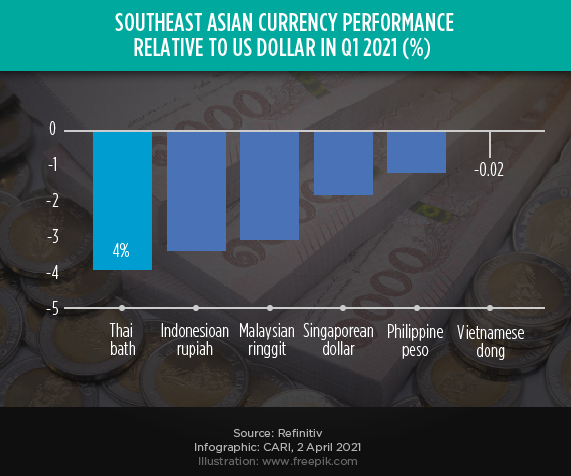
(01 April 2021) The Thai Baht was the worse performing major currency in Southeast during Q1 2021, having depreciated 4% against the US Dollar to 31.24. This was largely attributed to a drop in tourist receipts, which plunged to US$742 million due to border closures (only 5% of the same period in 2020). Thailand’s current account turned to a deficit of US$1.4 billion in Q1 2020 from a surplus of US$6.6 billion in the Q3 2020 and $11.5 billion in the same period in 2019. It was the first time Thailand has recorded a deficit since the third quarter of 2014. Starting in April 2021, Thailand intends to shorten its mandatory quarantine to 10 days to revive tourist inflow and spending. Among other regional currencies, the Indonesian rupiah and Malaysian ringgit fell 3.4% and 3.1% respectively in the first quarter of 2021. The Singaporean dollar and Philippine peso for their part fell over 1%, while the Vietnamese dong remained virtually flat.

ASEAN
Southeast Asia seeking to establish framework for green investments in the region
(30 March 2021) ASEAN is seeking to establish a framework for green investments in the region. The bloc set up the Asean Taxonomy board this week, which is tasked with developing and maintaining a set of categories and definitions to guide its Member States on establishing clarity and common definitions on what constitutes ‘green’ investing. It is believed that green financing opportunities in the region could be worth US$3 trillion between 2016 and 2030, according to a report by Asean Working Committee on Capital Markets Development. The board comprises eight members including representatives from Monetary Authority of Singapore, Bank Negara Malaysia and Bank of Thailand.

MALAYSIA
Malaysia’s central bank projects economy to grow by between 6% and 7.5% in 2021
(31 March 2021) Bank Negara Malaysia stated in their Economic and Monetary Review 2020 released on 31 March 2021 that Malaysia’s economy is projected to grow by between 6% and 7.5% in 2021. The factors supporting Malaysia’s recovery in 2021 included improving external demand, less stringent containment measures and the vaccine roll out, a gradual improvement in labor market conditions, and a pickup in manufacturing facilities. The central bank also pointed to policy measures which aided Malaysia’s recovery, including fiscal injections to ease cash constraints, support labor market conditions, and reinvigorate spending and economic activities. In terms of monetary stimulus, measures which were put into place in 2020 included a 125-basis point (bps) reduction in the overnight policy rate (OPR) to 1.75% and a reduction in the statutory reserve requirement (SRR) ratio of 100bps to 2%.

INDONESIA
Indonesia expands tax breaks on car sales to include larger cars in bid to accelerate economic recovery
(02 April 2021) The Indonesian government has expanded its tax breaks on car sales to include larger vehicles, in a bid to accelerate economic recovery and to aid its manufacturing industry. The government noted that Indonesia’s upper-middle class had so far held back from big purchases during the COVID pandemic, and preferred to focus on their savings. Indonesia had already introduced a tax incentive scheme for sedans and two-wheel drive cars with engine power below 1,500 cc in February 2021, and this has been expanded to include the sales of four-wheel drives and cars with up to 2,500 cc that are manufactured with at least 60% domestically-sourced components. The tax incentive for the new range of vehicles will be between 12.5% to 50% discounts for luxury tax payments, taking effect from April until end-2021. Car sales in Indonesia are yet to return to pre-pandemic levels.

THE PHILIPPINES
Philippines expresses interest to joining Comprehensive and Progressive Agreement for Trans-Pacific Partnership (CPTPP)
(02 April 2021) (02 April 2021) The Philippines’ has formally expressed interest in joining the Comprehensive and Progressive Agreement for Trans-Pacific Partnership (CPTPP) in order to expand its trading relations with countries outside of its existing bilateral free trade agreements. The Philippines’ secretary of trade and industry sent a signed letter of intent to New Zealand, the depositary nation of the CPTPP trade bloc. The Philippines government stated it is crucial for the country to engage the CPTPP members that are currently not part or not a partner of the Philippines in free trade agreements, including new markets such as Canada, Mexico, Peru and Chile. As well, other countries are expected to join, including the UK, US, and China. As well, the Philippines is also interested in cultivating its domestic manufacturing capacities. By joining the CPTPP, the cost of procuring components would decrease, allowing Philippine manufacturers to gain easier market access.

MALAYSIA, SINGAPORE
Sabah’s government is working on a travel bubble plan to allow Singaporean tourists into the state
(01 April 2021) The government of Malaysia’s state of Sabah is working on an exclusive travel bubble plan to allow Singaporean tourists into the state after the Eid holidays. The State Tourism, Culture and Environment Ministry stated they were awaiting the state Cabinet’s green light for the plan while discussions were ongoing with various stakeholders. The latter included Malaysia Airports Holdings, in which discussions are currently being held with about tightening SOPs. In regards to calls for Sabah to prepare a road map and timeline on the reopening of borders for international travel, the ministry stated that safety must be prioritized at the moment, and that the travel bubble approach has been recommended for now.

VIET NAM, UNITED STATES
United States Trade Representative raises concerns over Viet Nam’s currency practises
(02 April 2021) The United States’ Trade Representative raised concerns about Viet Nam’s currency practises during a virtual meeting with the latter’s trade minister. The US also raised concerns on illegal timber practices, digital trade and agriculture. The US trade ministry stated in a statement released after the meeting that both countries would continue to actively cooperate to comprehensively address the concerns raised in order to maintain trade relations. Both officials plan to hold a meeting later in 2021 under the Trade and Investment Framework Agreement to work on ‘resolving bilateral issues’. Under the previous Trump administration, the US Treasury designated the Hanoi government as a currency manipulator and the U.S. Trade Representative in January 2021 labeled Vietnam’s currency actions ‘unreasonable and restrictive to American businesses’.


RCEP Monitor


AUSTRALIA
Australia’s resources and energy exports earnings expected to reach record high in fiscal 2021
Australia’s resources and energy export earnings are expected to reach a record high in fiscal 2021, driven by the export of iron ores. Australia’s resources and energy exports are expected to reach US$255 billion in the year ending June 30 2021. Iron ore giants such as BHP Group, Rio Tinto Group and Fortescue Metals Group Ltd. have recorded strong profits as prices surged on the back of strong demand from Chinese steelmakers and supply disruptions in number two iron ore producer Brazil. Although commodity prices are expected to moderate in fiscal 2022, this is expected to be balanced by the growth up to 2026 in demand for the materials vital to the clean energy transition, such as lithium, copper, and nickel.

SOUTH KOREA
South Korean exports rise the most in two years amid continued global economic recovery
(01 April 2021) South Korean exports rose by 16.6% year-on-year in March 2021, its highest rise in more than two years. These gains came amidst continued robust gains in manufacturing activity, increasing strength in global demand, and improved confidence in the global outlook as more countries start their vaccination programs. Korean exports to the United States and Europe saw significant gains, with values reaching some of the highest levels on record. A separate report by IHS Markit showed purchasing managers’ index for Korean manufacturing in March 2021 holding at 55.3, unchanged from February 2021, which was its strongest reading since 2010. Chips and automobiles have been leading the export rally as overseas consumer demand returns and investment improves.

NEW ZEALAND
New Zealand to use its chairmanship of the APEC Forum in 2021 to promote joint agreement on medical supply chains
(31 March 2021) New Zealand will use its chairmanship of the APEC Forum in 2021 to press the 21 leaders of APEC to agree to the free movement of essential medical supplies in order to combat rising vaccine nationalism. The country would use its APEC chairmanship to promote a joint agreement covering the movement of goods, including personal protective equipment, across borders. The joint agreement would focus on the elimination of tariffs, non-tariff barriers, and any import restrictions, as well as to improve trade facilitation. New Zealand’s foreign minister stated that the COVID-19 pandemic highlighted the importance of international collaboration.

Chairman of CARI Tan Sri Dr Munir urged the private sector between the ASEAN and EU region to deepen engagement and cooperation, in the absence of robust policy reform of ASEAN at the EU-ABC Webinar: Europe’s New Trade Policy

Chairman of CARI Tan Sri Dr Munir urged the private sector between the ASEAN and EU region to deepen engagement and cooperation, in the absence of robust policy reform of ASEAN at the EU-ABC Webinar: Europe’s New Trade Policy

He cited the policy document Pathway 225 that was produced by CARI in 2020 as a response to the COVID-19 for the ASEAN Business Advisory Council (ASEAN-BAC) and the Joint Business Council’s call to set up the ASEAN High-Level Special Commission has failed to progress further despite initial support from the economic ministers and leaders.

He also suggests that ASEAN private sector could look to the EU for leadership in sustainable technologies.

The webinar was moderated by Noel Clehane, Global Head of Regulatory & Public Policy, BDO, featuring H.E. Eduardo de Vega, Philippine Ambassador to Belgium, Luxembourg and the European Union,  Helena König, Deputy Director-General, European Commission’s directorate-general for Trade and Alessia Mosca, Secretary-general of Italia-ASEAN Association as panellists.