Malaysia: April 2018 trade


HIGHLIGHTS

April 2018 trade

  • Malaysia’s trade surplus remained strong at RM13.1bn in April, aided by pronounced gains in petroleum and manufacturing exports.
  • Key risks to the trade outlook are slowing tailwinds in the global capex cycle and spillovers from US-China trade tensions, in our view.
  • We lower annual export growth forecast to 7.7% (from 9.8%) and import growth by a larger margin to 5.5% (from 11%), resulting in larger trade surplus forecast for 2018F.
  • The revisions boost our 2018F current account surplus estimate to 3.4% of GDP.
img-my11-1

April’s trade growth surprised on upside…
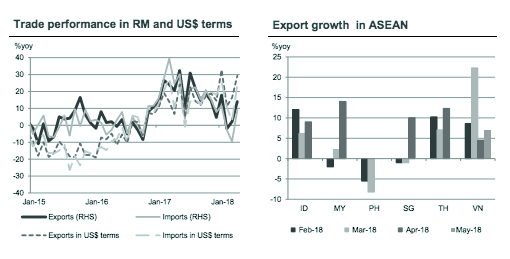
Trade activity was resurgent in April (+11.7% yoy vs. -3.5% yoy in March) with gross exports delivering a stellar gain of 14.0% yoy (CIMB: +7.5% yoy, Bloomberg consensus: +6.3% yoy; March: +2.2% yoy). The rebound in import growth was equally sharp at +9.1% yoy (CIMB: +4.3% yoy, Bloomberg consensus: +3.8% yoy, March: -9.6% yoy), resulting in a healthy trade surplus of RM13.1bn (CIMB: RM11.4bn, Bloomberg consensus: RM12.8bn, RM14.7bn in March).

…with gains in downstream petroleum pad O&G exports…
A lumpy gain in refined petroleum products (+38.9% yoy vs. -8.6% yoy in March) due to a low base and stronger shipments of crude petroleum (+22.7% yoy vs. +18.4% yoy in March) from an increase in external demand and higher oil prices drove the improvement in oil and gas (O&G) exports (+17.0% yoy in April vs. +0.4% yoy in March). We expect the annual gain in refined petroleum products to moderate sharply in May. Meanwhile, the contraction of LNG exports deepened (-12.5% yoy in April vs. -3.3% yoy in March), reflecting: 1) lower volumes due to the ramp-up of output at several fields in 1H17 and production declines this year, and 2) falling unit prices.

… and recovery in manufacturing exports exceeding expectations
Key sectors, which have driven manufacturing exports (+16.8% yoy in April vs. +3.7% yoy in March) since 1Q17, rebounded convincingly after a lacklustre post-CNY recovery in March: E&E (+21.2% yoy in April vs. +8.8% yoy in March), chemicals (+17.8% yoy vs. -21.0% yoy in March), machinery (+6.2% yoy vs. +3.6% yoy in March), optical and scientific equipment exports (+7.7% yoy vs. -0.2% yoy in March). Apart from the usual suspects, exports for metal products, road vehicles and other transport equipment surprised on the upside.

Import performance lifted by capital goods
The imports of capital goods recorded a 4.8% yoy gain in April after a steep decline in March that was exacerbated by a high base effect. On the other hand, the pace of contraction eased for intermediate goods (-11.9% yoy in April vs. -14.5% yoy in March) and consumer goods (-1.8% yoy vs. -12.5% yoy in March). We think domestic demand for imports of consumer goods is likely to increase in the next few months due to seasonally higher demand during the Ramadan month and Hari Raya celebrations, as well as the spurt in consumer spending in the period between the reduction of the Goods and Services Tax (GST) to 0% on 1 Jun and the reintroduction of Sales and Services Tax (SST) on 1 September.

Revision to trade outlook boosts net export contribution in 2018F
Malaysia’s stronger export growth in April echoed similar trends in ASEAN (Indonesia, Singapore and Thailand) but was at odds with the weaker manufacturing PMI (47.6 pts in May vs. 48.6 pts in April) that pointed to drag from lower output and new export orders. We have pared our gross export estimate for 2018F to 7.7% (from +9.8% initially) to reflect a weaker prognosis for manufactured exports and spillover from global trade tensions in 2H18. However, even more aggressive downward adjustment to our gross import forecast to 5.5% (from +11.0%) implies higher net trade contribution in 2018F, underpinning a higher current account surplus forecast of +3.4% of GDP this year (from +2.8% of GDP).

img-my11-2

img-my11-3

img-my11-4

img-my11-5

img-my11-6

img-my11-7

img-my11-8


Originally published by CIMB Research and Economics on 17 May 2018.

CARI Captures 358

Infographic


MALAYSIA

Malaysia announced measures to boost consumption and expand government fund
(1 June 2018) The Malaysian government has announced three measures to give US$5.2 billion (RM20.7 billion) into the hands of Malaysians in order to boost the country’s consumption. The measures are the zero rating of good and services tax (GST), replacing GST with Sales and Services Tax (SST) from 1 September 2018 and retaining the price of RON95 at RM2.20 and diesel at RM2.18 per litre. Malaysia’s Finance Minister Lim Guan Eng said lifting the GST will contribute US$4.27 billion (RM17 billion) and maintaining fuel prices would further release US$754 million (RM3 billion) to the people. Lim said the new administration has taken steps to ensure the budget deficit stays at 2.8 percent. Among the steps taken to expand government fund is the US$2.5 billion (RM10 billion) reduction in expenses through the delaying, review and renegotiations of certain projects such as the rehabilitation of Sultan Abdul Samad building, consulting services, promotional ventures and technology infrastructure changes. Besides the reduction, the government also expects to collect US$1.36 billion (RM5.4 billion) from petroleum taxes, US$1.26 billion (RM5 billion) dividends from government-linked companies (GLCs) and US$1 billion (RM4 billion) from SST.

MALAYSIA

Malaysia sets up fund for donation and cancelled MRT3 to reduce national debt
(30 May 2018) After the cabinet meeting on 30 May 2018, Malaysia’s Prime Minister Tun Dr Mahathir Mohamad announced that the government has set up a fund called “Tabung Harapan Malaysia” (THM) to help reduce the country’s US$251 billion (RM1 trillion) debt. Since Finance Minister Lim Guan Eng announced the country’s debt figure, many citizens have expressed their wish to contribute towards reducing the country’s debt. He said the fund will be managed systematically and transparently by the Finance Ministry. Twenty-four hours since its launch, Malaysians have so far contributed US$1.76 million (RM7 million) to the fund. Dr. Mahathir also announced that the government will cancel the MRT Line 3 project as it has high financial implications similar to the Singapore-Malaysia High Speed Rail (HSR) project. He said the cancellation of the HSR project is subject to discussions with the Singaporean government and added that the East Coast Rail Line (ECRL) is still being reviewed.

INDONESIA

India and Indonesia to raise bilateral trade to US$50 billion by 2025
(30 May 2018) India and Indonesia are working to boost bilateral trade between both nations to US$50 billion by the year 2025. India’s Prime Minister Narendra Modi, who met Indonesia president Joko Widodo in Jakarta, said both nations have agreed to elevate their relationship to a Comprehensive Strategic Partnership and discuss ways to improve cooperation in sectors like defence, maritime security, trade and economy. According to Indonesia’s Central Statistics Agency (BPS), trade between both nations in 2016 was US$ 12.9 billion. It increased 28.7 percent to US$18.13 billion in 2017 with Indonesia’s exports to India reaching US$14.08 billion and its imports from India at US$ 4.05 billion. During the talks also, India and Indonesia agreed to work intensely to conclude the Regional Comprehensive Economic Partnership early and stressed that the partnership needs to be inclusive, just and objective to all ASEAN member states (AMS).

SINGAPORE

Singapore’s commodity trading reaches a new high in 2017
(17 May 2018) Government agency Enterprise Singapore reported that Singapore’s commodity trading reached US$20.9 billion in 2017, which is a new high for the country. Businesses there also have appointed more than 15,000 people. These developments represent a 2.7 percent compounded annual growth rate over the last five years thanks to strong demand growth from vital markets like natural gas, nickel and copper, which is pushing improved investments in commodity. The turnover for the sector last was almost US$1.2 trillion. Enterprise Singapore said the significant growth in commodity trading is due to sustainable global economy and demand from Asia. Singapore at the moment has more than 400 global, regional and local commodities firms and Singapore’s marketplace comprise 80 percent of the world’s top oil and gas, metals and mining and agricultural enterprises.

INDONESIA

Indonesia’s central bank raised interest rate for the second time in two weeks
(30 May 2018) Indonesia has increased its interest rate by another 25 basis points to 4.75 percent and the central bank has indicated further hike in interest rate in order to improve the Rupiah value and capital outflows. New governor of Bank Indonesia Perry Warjiyo promised to develop a stable financial and economic environment in order to strengthen the country’s assets. Bank Indonesia had lowered its interest rate by a total of 200 basis points in 2016 and 2017 to encourage the country’s lending and economic growth, which remains stagnant at around 5 percent annually. However, rise in U.S Treasury yields and the strengthening of the US Dollar caused a huge drop in investors’ demand for Rupiah. The central bank raised its interest rates by 25 basis points in the middle of May, first raise since November 2014 before the second raise that happened within two weeks to strengthen Rupiah. Indonesia’s Finance Minister Sri Mulyani Indrawati said the country is ready to resort to any kind policy to support Indonesia’s economy, even if the short-term measures lead to lower growth. The Indonesian government has targeted a growth of 5.4 percent in 2018, while Bank Indonesia still expects expansion of 5.2 percent this year.

VIETNAM

Japanese investors continue to pour in billion dollar investments in Vietnam
(31 May 2018) Being the second biggest investor in Vietnam after China, Japan is continuing to invest billions of dollars into new projects in the country. Recently, Japanese integrated trading company Sumitomo Corporation Asia agreed to collaborate with local company BRG Group to invest in the Nhat Tan-Noi Bai smart city project. It is billed as the biggest Japanese project in the country with US$4.2 billion being invested into the project. Influx of major projects has placed Japan as one of the leading investors among 116 countries investing in Vietnam. According to the Vietnamese Ministry of Foreign Affairs, as of March 2018, Japan had 3,693 projects with a total capital of US$49.84 billion. Vietnam president Tran Dai Quang’s visit to Japan from May 29 until June 2 is also expected to improve relations between both countries. According to Vietnam’s Ministry of Industry and Trade (MoIT), the country’s exports to Japan reached up to US$2.7 billion as of early March. During the same period also, the country spent US$2.705 billion on imports from Japan.

THE PHILIPPINES

The Philippines’ poor economic competitive ranking is a wake-up call but a false alarm too, says DOF
(29 May 2018) According to the Philippines’ Department of Finance (DOF), the drop in rankings for the country’s economy global competitiveness was a cautionary call for policymakers but the department also believes that the assessment was not backed by actual data. In the World Competitiveness Ranking 2018 released by the Institute of Management Development (IMD), the Philippines was ranked 50th out of 63 economies, falling nine places compared to last year’s ranking. Based on IMD’s assessment, the country experienced the worst decline in Asia due to poor tourism, employment, education system and public finances. However, the department said the ranking assessment did not look at the dynamics of the country’s economy. Referring to government data, DOF said the unemployment rate dropped to 5.3 percent in January 2018 while international tourist arrivals to the Philippines increased by 16.1 percent to 1.4 million visitors during the first two months of 2018. However, the department said the ranking was still a wake-up call for the country’s policymakers.

THAILAND

China and Japan to test economic platform in Thailand
(1 June 2018) Thailand will become a testing ground to for the new Japan-China economic platform as both the economic superpowers are looking into efficient investment in ASEAN. On May 9, Japan and China inked an agreement to form an economic platform to partner in ASEAN as both nations aim to develop regional economy. According to Thailand’s Industry Minister Uttama Savanayana both nations are interested to invest in the Eastern Economic Corridor (EEC). He added that investors from both countries want to share expertise in Research and Development, Thailand’s ten targeted industries namely Automotive, Petrochemicals, Medical, Digital, Electrics and Electronics, Automation, Agro Processing, Aerospace, Tourism and Textile and EEC infrastructure. The Thai administration projects the EEC to create and generate US$43 billion (1.38 trillion baht) in economic activity from 2018 to 2023.

MYANMAR

Investment from Japan increases since civilian rule
(29 May 2018) Japanese investors pumped in a record high of investment amounting to US$1.48 billion in Myanmar for the financial year 2017 and this increase is attributed to the country’s change from military to civilian rule in 2011. The investment amount was at an all-time high due to a large-scale commercial complex and steel producing projects. According to Myanmar’s Ministry of Planning and Finance, Japanese investment from financial year 2017 until March this year increased five-fold from a year earlier, beating the previous record of US$1.02 billion in financial year 2014. The increase can be linked to the US$333 million real estate project in Yangon by construction firm Fujita Corp with its Japanese and Myanmar partners, as well as a $400 million public-private partnership project led by contractor Kajima Corp. Japanese investment in Myanmar amounted to US$252 million in 2012, US$55 million in 2013, US$590 million in 2015 and US$280 million in fiscal 2016.

CAMBODIA

Cambodia moving towards sustainability in agricultural sector
(25 May 2018) International Financial Corporation (IFC) together with London based food company Mars Food and Cambodian rice producer Battambang Rice Investment Co. Ltd have formed a new collaboration to improve sustainable farming practices and post-harvest methods in Cambodia. The three entities will collaborate to help farmers in Cambodia to use sustainable agricultural standards and actions, and tap into advanced agricultural technology. This project is targeted to reach a higher yield and income by 20 percent and 25 percent respectively by 2025. The partnership will help around 9,000 smallholder farmers expose to climate smart agriculture technologies and financial literacy training within the next three years.

Myanmar Monitor


Photo

Photo credit: Economy Watch

Economy, Investment and Trade

Myanmar, Yunnan to sign bilateral agreement on border trade
(31 May 2018) Myanmar and the regional government of Yunnan, China will seal a bilateral trade agreement when Myanmar’s Minister of Commerce U Than Myint attends the Kunming trade fair, which will be held from 14 to 20 June 2018. The deal will see assistance of legal export of Myanmar’s agriculture commodity like rice and sugar across the border of both nations. Once the deal is inked, China will purchase one million tonnes of Myanmar rice and 300,000 tonnes of sugar. Besides sugar and rice, Myanmar is expected to export maize, pulses, beans and other agricultural products to China. From the deal also, Myanmar will be importing electrical equipments, steel and iron ore from China. For many years, China imposed trade regulations to curb illegal border trade between Myanmar and China. The move did not benefit Myanmar merchants, who urged both governments to negotiate on ways to promote legal trade of goods.
Read More >

Plans to connect East and West Yangon through a bridge
(25 May 2018) Myanmar’s Ministry of Construction has announced plans to build a suspension bridge linking Kyauktan and Dala by going through the Thilawa Special Economic Zone. The decision to build a suspension bridge was taken after plans to build a tunnel to connect Kyauktan and Dala was deemed not practical. The planned construction will see the bridge constructed across the Yangon River and it will connect five eastern municipalities with five western municipalities. Myanmar’s Deputy Minister of Ministry of Construction U Kyaw Lin said the construction will lead to development, better job opportunities, ease traffic congestion and also address disparities in the living standards of East and West Yangon.
Read More >

Myanmar to appoint new finance minister
(29 May 2018) Myanmar president Win Myint has proposed Managing Partner of Deloitte and Touche in Myanmar Soe Win to be the country’s next finance minister after Kyaw Win resigned from his post last week. Soe Win’s appointment will be confirmed by the parliament and according to analysts; the move is expected to encourage investors, who are concerned about Myanmar’s slow financial reform pace and lack of economic focus. The government did not explain why Kyaw Win left the position but according to media reports from Myanmar, he was being investigated by the country’s Anti-Corruption Commission.
Read More >

Better jobs lead to better future
(29 May 2018) According to a report by Myanmar’s Young Entrepreneurs Association and the World Bank, comprehensive and quality jobs are needed to drive Myanmar’s future development. The report states that the country should enhance its job quality in order to improve the livelihood of its employees and also competitiveness in the job market. To do so, the government should provide strategic assistance for private sectors as it would assist in creating quality jobs. Also, the country’s human capital plan needs to be altered to the labour market demand and mobility of its workforce can be enhanced through clear migration paths. According to the report, 90 percent of Myanmar’s jobs are low-scaled when it comes to productivity and pay and people are mostly involved in the agriculture, households and small firms sector.
Read More >

Myanmar, South Korea ink anti-corruption agreement
(31 May 2018) Anti-corruption agencies from Myanmar and South Korea signed an agreement to improve collaboration, share knowledge and help halt, if not stop corruption in Myanmar. The agreement was signed in South Korea by Myanmar Anti-Corruption Commission (MACC) chief U Aung Kyi and chairperson of the South Korea’s Anti-Corruption and Civil Rights Commission (ACRC) Un Jong Pak. Aung Kyi stated that his government wants to look at structural corruption matters, as it is preventing Myanmar from reaching its full potential. He said the cooperation is the first step to improve prevention capacity, in which MACC will learn from ACRC.
Read More >

Press Release: ASEAN economic integration making progress but ASEAN must pursue a regional policy approach and concerted cross-sectoral efforts to fast-track integration


ASEAN economic integration making progress but ASEAN must pursue a regional policy approach and concerted cross-sectoral efforts to fast-track integration

(Kuala Lumpur, 6 June 2018): Progress towards realising the goals of the ASEAN Economic Community (AEC) 2025 remains steady and ASEAN will continue to work closely to implement the deliverables under the AEC 2025 agenda. Singapore as the Chair of ASEAN in 2018 had identified 12 economic priority deliverables focusing on innovation and digital economy. ASEAN will continue the work on improving trade facilitation, deepening services and investment integration, cultivating a conducive regulatory environment and progressing ASEAN’s external relations.
conomy.


AAM_4469

(From left) Hong Jukhee, Director of Operations, CIMB ASEAN Research Institute; Datuk Isham Ishak, Deputy Secretary General (Trade), Ministry of International Trade and Industry (MITI); Tan Sri Dr. Munir Majid, Chairman of CIMB ASEAN Research Institute (CARI) and President of the ASEAN Business Club  during the CARI Briefing session on “ASEAN Economic Community 2018 priorities and progress”. The briefing was organised by CARI on 31 May 2018, in collaboration with the ASEAN Business Club. 


These were highlighted by Datuk Isham Ishak, Deputy Secretary General (Trade) Ministry of International Trade and Industry (MITI) Malaysia at the Inaugural CARI Briefings titled, “ASEAN Economic Community 2018 Priorities and Progress” which was organised by the CIMB ASEAN Research Institute (CARI) on 31 May, in collaboration with the ASEAN Business Club.

According to Datuk Isham, the key thrusts and economic priority deliverables for Singapore’s ASEAN Chairmanship in 2018 are driven by the overall thematic priority of “Resilience and Innovation” with the key economic objective of deepening regional connectivity to position ASEAN as a region for seamless economic activity and growth opportunities, especially in e-Commerce and the digital economy. ASEAN is currently undertaking a study to assess the readiness of ASEAN and individual ASEAN Member States in addressing the challenges while seizing opportunities brought about by the Fourth Industrial Revolution (4IR).

He further added that ASEAN Good Regulatory Practice (GRP) is one of the new elements introduced in AEC 2025 and ASEAN Work Plan on Good Regulatory Practice (GRP) 2016-2025 was endorsed in April 2017. ASEAN is currently drafting the GRP Core Principles to further implement GRP in ASEAN with the aim to reduce the regulatory burden and improve the overall regulatory coherence and cooperation in the region.

According to Datuk Isham, ASEAN has implemented an enhanced monitoring framework which includes outcomes monitoring and impact assessment, annual prioritisation and country visits. The annual prioritisation of AEC Blueprint 2025 measures will provide opportunities for regular reviews to ensure proper implementation and continued relevance. Country visits were conducted in Lao PDR as a pilot project in 2016, whereas two comprehensive country visits were carried out in Indonesia and the Philippines in 2017. For 2018, country visits will be carried out in Brunei and Malaysia.

One of ASEAN’s immediate priorities is to complete negotiations on the Regional Comprehensive Economic Partnership (RCEP), a free trade agreement that is built upon the existing FTAs of ASEAN with its six dialogue partners – Australia, China, India, Japan, New Zealand, and South Korea. The negotiations have been ongoing for over five years with 22 rounds of negotiation.

“Early implementation of the RCEP will enable the business sector to tap into the huge potential that the 16 countries can offer collectively, while also contributing to global economic growth. ASEAN will continue to demonstrate centrality and leadership to advance the negotiations and conclusion of the RCEP,” said Datuk Isham.

Tan Sri Munir Majid, Chairman of CARI and President of the ASEAN Business Club, who chaired the briefing, said, “ASEAN is making progress towards achieving some of the strategic measures under the AEC Blueprint 2025. The enhanced monitoring and evaluation framework that takes into account impact assessment, annual prioritisation and country visits is a much-needed improvement. However, the advent of the 4IR has presented new realities that ASEAN must respond to speedily. ASEAN economic integration is on the right track to prioritise innovation and the studying of ASEAN’s readiness for the 4IR. However, speed matters, and what ASEAN must pursue as a community, is a regional policy approach and concerted cross-sectoral efforts to unleash the potential of ASEAN’s digital economy.”


Download PDF Document Download presentation here

China-ASEAN Monitor


Screen Shot 2018-05-30 at 3.23.57 PM

Photo Credit: Reuters


Economy, Investment and Trade

Malaysia is trying to rearrange East Coast Rail Link (ECRL) terms
(27 May 2018) According to Malaysian Prime Minister Tun Dr Mahathir Mohamad, the Malaysian government will renegotiate the terms of the ECRL agreement, which is worth US$14 billion (RM55.8 billion) with China as Malaysia’s debts might possibly lower by US$50 billion (RM199 billion) through the abolishment of mega project. ECRL is one of the largest construction projects in Malaysia and is a crucial part of Beijing’s Belt and Road infrastructure push. The project is being constructed by China Communications Construction Co Ltd and financed by a loan from China Exim Bank. However, it is now being reevaluated as the current priority of the Malaysian government is to reduce its national debt of US$251.32 billion (RM1 trillion), at 80% of the country’s GDP. The government has announced its intention to drop the high-speed rail (HSR) project with Singapore, which is worth US$17 billion (RM67.8 billion).
Read more>>

Chinese deputation seeks investment opportunities in Philippines
(28 May 2018) A delegation from the All-China Federation of Commerce and Industry (ACFCI) has met Finance Secretary of the Philippines recently in seeking cooperation and investment opportunities in Philippines. ACFCI is a civil organization comprising of 44,000 local-level business chambers or organizations with 47 million of members, engaging with Chinese private entrepreneurs. The organisation accounts for 60% of GDP and 50% of tax revenues in China as well as 70% and 80% towards technological and product innovation and job opportunities in China respectively. ACFCI was impressed by Philippines’ economic development and believed that Chinese investment would further boost the country’s economic development by providing more job opportunities and incomes for Filipinos. Philippines’s DOF gave positive responses and are willing to connect ACFCI with Philippines Chamber of Commerce and Industry (PCCI) for further discussion regarding business collaboration and the opportunities in the country.
Read more>>

Cavite earns China’s support to build a US$10 billion airport in Sangley Point
(28 May 2018) The province of Cavite in the Philippines has gained full support from China under the One Belt, One Road initiative for the proposal to build a US$10 billion airport in Sangley Point. The Sangley International Airport project aims to expand the former United States naval station into a modern gateway that can be an alternative to the Ninoy Aquino International Airport (NAIA). The project is crucial in reducing traffic and lowering the burden of NAIA, which has a maximum design capacity of 35 million passengers. The project will also reduce traffic in Metro Manila as the new road projects are connected to Sangley. Development of first runway in Sangley Airport will be able to accommodate 25 million passengers yearly with a capex of US$3.8 billion (199 billion pesos), and expected to operate the earliest in 2022 whereas the second runway with a capex of US$5.5 billion (289 billion pesos) is expected to accommodate 75 million passengers annually. This government-to-government proposal has been handed to the Department of Transportation.
Read more>>

Rising tra fish exports from Vietnam to China in the first four months of 2018
(25 May 2018) Vietnam Association of Seafood Exporters and Producers (VASEP) stated that China has became Vietnam’s largest tra fish or also known as Pangasius, importer in the first four months of 2018, with a rise of 34% on-year, which is worth US$145 million (3.3 trillion dong). Vietnam is currently occupied 21% of the fishery industry’s total export value and the third largest white fish provider for China. Vietnam’s tra fish output reached 1.2 million tons, which is an increase of 5.1% in 2017 whereas its export turnovers almost reached US$1.8 billion (41 trillion) with a rise of 4.3% in 2017, expecting to perform better in second quarter of 2018. However, the market deteriorated since the implementation of high anti-dumping and technical barriers by United States and the European Union recently. Vietnam aims to occupy 31.5% of the total export value in the fishery industry by achieving a turnover of US$ 2.2 billion (50 trillion) in 2018.
Read more>>

Foreign Affairs

Medical team from China helps rural communities in Cambodia
(23 May 2018) A total of thirteen doctors, nurses and health specialists who are specialised in cardiology, ophthalmology and infectious diseases from seven hospitals in southwest Yunnan Province of China are sent to Cambodia to assist the rural communities in the country. Ma Linkun, the deputy dean of the Yunnan Fuwai Cardiovascular Diseases Hospital and head of the medical team stated that they will visit three states in Cambodia for almost 20 days. He also said the team is formed from the collaboration between Cambodia’s Ministry of Commerce and the Yunnan Fuwai Cardiovascular Diseases Hospital. Prior to this, China also supplied 20 mobile clinics to Cambodia to give on-the-spot primary care for patients who live in rural communities.
Read more>>


Press Release: ASEAN policymakers urged to intensify facilitation of skilled labour mobility and education reforms to address extreme skills deficit


ASEAN policymakers urged to intensify facilitation of skilled labour mobility and education reforms to address extreme skills deficit

Kuala Lumpur, 15 May 2018 – ASEAN need to intensify the intra-ASEAN skilled labour mobility in the near term, as well as implement urgent education reforms and workforce reskilling agenda in the long-term to remedy the extreme skills deficit, accentuated by the skills demand brought upon by the rapid digital revolution.


img-rt10-1

(From left) Dato’ CM Vignaesvaran Jeyandran, Chief Executive of Human Resources Development Fund (HRDF) of Malaysia; Chua Soon Ghee, Partner and Head of Southeast Asia of A.T. Kearney; Tan Sri Dr. Munir Majid, Chairman of CIMB ASEAN Research Institute (CARI) and President of the ASEAN Business Club; Dato’ Hamidah Naziadin, Group Chief People Officer of CIMB Group and Shareen Shariza Dato’ Abdul Ghani, CEO of TalentCorp Malaysia pose for the cameras after the roundtable session on “Closing the Talent and Skills Gap in ASEAN”. The roundtable was organised by CARI on 15 May, in collaboration with the ASEAN Business Club.


Although the ASEAN Economic Community (AEC) has envisioned for the free movement of skilled labour and business visitors within the bloc, current arrangements are considered to be narrow in scope. The lack of true intra-ASEAN skill labour mobility within ASEAN would mean that skill gaps in ASEAN cannot be filled by talents from within the economic community.

These are among the issues discussed during a roundtable titled, “Closing the Talent and Skills Gap in ASEAN” which was organised by CIMB ASEAN Research Institute (CARI) on 15 May, in collaboration with the ASEAN Business Club.

The roundtable was chaired by Tan Sri Dr. Munir Majid, Chairman of CARI and President of the ASEAN Business Club. The panel of speakers comprised of Dato’ Hamidah Naziadin, Group Chief People Officer of CIMB Group; Shareen Shariza Dato’ Abdul Ghani, CEO of TalentCorp Malaysia; Chua Soon Ghee, Partner, Head of Southeast Asia of A.T. Kearney, Singapore; and Dato’ CM Vignaesvaran Jeyandran, Chief Executive of Human Resources Development Fund (HRDF) of Malaysia.

Six mutual-recognition agreements (MRAs) were concluded by 2012 for engineering services, nursing, architectural services, tourism professionals, medical practitioners, and dental practitioners; while framework agreements for surveying and accountancy services have been signed. ASEAN also adopted and signed the ninth MRA for Flight Crew licensing in late 2017. Except for engineering and architectural services, progress for the rest has been slow.

Shareen Shaniza believes that brain circulation or talent mobility can only be promoted by important developments such as the awareness that foreign professionals play an important role in regional economic growth; the expansion of the ASEAN educational infrastructure which supports the growth of student mobility in the region; and the efforts to mutually recognise professional qualifications.

“MRAs for a number of professions have been signed and while the intention is noble, there has been no clarity or speed in implementation. Without the ability and real prospects to move intra-regionally, ASEAN professionals who are not able to move within ASEAN may move elsewhere. Current data suggests almost two million professionals from ASEAN member states live and work out of the ASEAN region. Therefore, ASEAN leaders, policymakers and industries need to work together collectively and collaboratively to close the gap between technologies, market demands and policy, to strongly commit to implementing the MRAs and to keep the pace and accelerating transformation. We also need to understand and harness our talent landscape, in order to meet current market gaps and predict future demand,” she said.

The financial industry is also facing the realities of skills shortages, especially with the emergence of Fintech disruptors. According to a report by Asian Institute of Finance (AIF), 76% of employers in the domestic financial services industry faced talent shortages across all sectors.

“CIMB has a workforce of about 37,000 strong in major ASEAN markets that we are present. The shortage of competent and skilled workers is of concern to our industry as financial services are one of the key contributors to ASEAN GDP growth. Intra-ASEAN mobility should be more efficient, and we need regulatory support for us to harness the best of ASEAN’s diverse talents. ASEAN should also establish an MRA for the financial experts to allow intra-ASEAN transfers of skills and knowledge. With new entrants coming into the financial industry through fintechs and other non-traditional competitors who are yet to be fully regulated, intra-ASEAN talent acquisition must speed up to meet the need of markets or we risk being irrelevant given the speed of disruption,” said Dato’ Hamidah Naziadin.

A.T. Kearney’s study with the World Economic Forum on the Future of Production shows that ASEAN can benefit from Industry 4.0 and its impact on changing geographies and nature of production, but it will need to transform itself. While ASEAN has a strong legacy manufacturing base to leverage on, there is a growing human capital mismatch as quality of labour, rather than cost of labour, will be the new source of competitive advantage.

“There is not just a shortage of skilled labour in ASEAN in the near-term to implement or integrate Industry 4.0 technologies, but the educational system and adult retraining programs will need an overhaul in many ASEAN countries to emphasise technology, digital and higher-order cognitive skills. In addition, ASEAN will also need to improve labour mobility, specifically around attracting skilled migrants that can help to increase and level up the Industry 4.0 labour base,” said Chua Soon Ghee.

Malaysia has embarked on the reskilling and upskilling of the workforce for the Fourth Industrial Revolution through the Human Resources Development Fund (HRDF) established by the Human Resources Ministry of Malaysia.

“Industry 4.0 is transforming entire industries and economies. HRDF has launched the National Workforce Human Capital Development Blueprint 2018-2025 early this year that outlines strategic initiatives to address workforce challenges associated with Industry 4.0, digitisation and automation. HRDF aims to support the national agenda of producing a 35% skilled local workforce by year 2020,” said its CEO, Dato’ CM Vignaesvaran Jeyandran.

According to World Economic Forum, ASEAN is facing serious skills divide. 55% of Singapore workers are highly skilled, followed by Malaysia at 25%, Philippines at 24% and Thailand at 14%. Whereas highly skilled workers in Vietnam, Indonesia, Myanmar, Laos and Cambodia range between 4% to 10% only.

“Skills deficit for present and future industry needs in ASEAN cannot be overstated. It has been estimated that there will be 68 million new entrants to ASEAN’s labour force by 2025 and ASEAN is at a crucial juncture to introduce education reforms at the national level to produce the workforce fit for industry 4.0 that has rapid and profound impact on all member states. More crucially, only with true intra-ASEAN talent mobility, especially for skilled professionals, will ASEAN be able to fully optimise its human capital potential,” said Tan Sri Dr. Munir Majid who chaired the discussion.

CARI Captures 357

c357-b_graphic


MALAYSIA

New government announced new measures to reduce government expenditure
(23 May 2018) According to Finance Minister Lim Guan Eng, the official federal government debt is at US$172.4 billion (RM686.8 billion), while the government guarantees for various agencies amount to US$49.5 billion (RM199.1 billion). The Malaysian government also makes lease payments for “Public-Private Partnership” projects such as building of roads, schools and hospitals, which is about US$50.55 billion (RM201.4 billion). He said all these debts are 80.3 percent of the country’s GDP as of 31 December 2017. To reduce the debt, the new government has terminated 17,000 contractual employees, announced 10 percent pay-cuts for ministers and shutting down government agencies such as National Professors Council (MPN), the Land Public Transport Commission (SPAD), the Residents’ Representatives Committee (JPP) and Special Affairs Department (JASA). The new government will also review projects including the Singapore-Kuala Lumpur Rail.

INDONESIA

Rupiah rate has declined but remains attractive
(19 May 2018) Rupiah has dropped as much as 0.8 percent to 14,158 against the US Dollar, its weakest since October 2015. This drop led to the Indonesian central bank to spend at least US$7 billion of reserves since February to stop the downturn. Jakarta Composite Index (JCI) has declined by 9% whereas the benchmark bond yield has raised 68 basis points in 1Q18 to 7.358%, in what constitutes as the biggest quarterly growth since December 2016, reaching 7.39% on 9 May 2018 causing a net US$2.3 billion of Indonesian sovereign bonds being sold, the biggest quarterly withdrawal since 2009. However, Indonesia’s high yield and reformist moves remain attractive for foreign investors.

LAOS

Inflation due to higher fuel prices
(18 May 2018) Inflation in Laos has increased by 1.88% mainly due to rising fuel prices, according to Lao National Statistics Bureau’s latest report. The data also shows that the value of Lao Kip dropped by 11% in 2018 as compared to 2017. The depreciation in Lao Kip especially against Thai Baht and US Dollar also contributed to the inflation in Laos as most of the consumer goods are imported from Thailand. Lower Lao Kip value against Thai Baht caused the higher price of imported goods and rising cost of living in Laos. The government cabinet has directed the Ministry of Industry and Commerce and the Ministry of Agriculture and Forestry to control the price of listed food items as well as for steel, cement and petrol.

PHILIPPINES

Rising budget deficit in 1Q18
(24 May 2018) Phillippines’ Department of Finance (DOF) reported that the country’s fiscal deficit swelled by about 400% to US$2.2 billion (P115.9 billion) in 1Q18 from US$574 million (P30.2 billion) in 1Q17 mainly due to the unfavourable effects from developments in the oil and capital markets abroad. Although the government gained a lower fiscal surplus by 12% from US$1 billion (P52.8 billion) in 2017 to US$ 880 million (P46.3 billion) in 2018 for the month of April 2018, the computations from the data given by the finance department show that the government revenue actually improved by 21% from US$14.6 billion (P768.3 billion) in 1Q17 to US$17.6 billion (P927.1 billion) in 1Q18. However, the budget deficit is rising as the expenditure in 1Q18 rose even higher to US$19.8 billion (P1.043 trillion), which is 31% higher compared to 1Q17. The revenue given through the implementation of the Tax Reform for Acceleration and Inclusion (TRAIN) Law is also part of the reason for the country’s high disbursement.

ASEAN

ASEAN should not take positive outlook for granted
(21 May 2018) Singapore’s Trade and Industry Minister Chan Chun Sing stated that ASEAN is at a turning point as the bloc’s open and rules-based multilateral trading system, regional cooperation and economic integration is under heavy pressure. This is due to the unbalanced gains from globalization are being abused, causing inward sentiments that challenge the importance of blocs like ASEAN. However, Chan said that trade frictions between major economic players will lead to spillover effects in the region. He further added that ASEAN must reiterate their steadfastness to follow open regionalism, push for further deepening integration, and come together to make a strong statement for a free, open, rules-based and interdependent system.

CAMBODIA, LAOS, VIETNAM, MYANMAR

India’s trade relationship with CLMV nations grows stronger
(22 May 2018) Cambodia, Laos, Vietnam and Myanmar (CLMV) trade with India has seen immense growth over the years, from US$460 million in 2000 to US$14.5 billion in 2017. India is the largest trading partner of CLMV nations in South Asia and according to Vietnam’s Deputy Minister of Industry and Trade Cao Quoc Hung, CLMV’s trade relations with India will only get better. Fast-improving economies, young population and strategic geographic location have helped trade ties between India and CLMV over the years. India is known for its developments in capital, technology, new energy, education, renewable energy while CLMV countries provide textile and garments, farm products, mineral, vegetables and even machinery parts.

SINGAPORE

Singapore’s commodity trading reaches a new high in 2017
(17 May 2018) Government agency Enterprise Singapore reported that Singapore’s commodity trading reached US$20.9 billion in 2017, which is a new high for the country. Businesses there also have appointed more than 15,000 people. These developments represent a 2.7 percent compounded annual growth rate over the last five years thanks to strong demand growth from vital markets like natural gas, nickel and copper, which is pushing improved investments in commodity. The turnover for the sector last was almost US$1.2 trillion. Enterprise Singapore said the significant growth in commodity trading is due to sustainable global economy and demand from Asia. Singapore at the moment has more than 400 global, regional and local commodities firms and Singapore’s marketplace comprise 80 percent of the world’s top oil and gas, metals and mining and agricultural enterprises.

THAILAND

Joint Foreign Chambers of Commerce urges Thai government to permit foreign ownership of local companies to exceed 49 percent
(21 May 2018) Foreign businesses have urged the Thai government to permit foreign ownership of Thai companies to exceed 49%. Due to this cap on foreign equity, foreign businesses will have to look for a competent Thai partner, otherwise foreign companies will have to rely on a local nominee to run the business. Joint Foreign Chambers of Commerce of Thailand has urged the government to amend Thailand’s Foreign Business Act (FBA) to attract foreign investment. Thailand’s Business Development Department, a body under the country’s Ministry of Commerce, said it is deliberating whether to allow some service businesses, especially those linked to government targeted industries, to increase foreign investment.

CAMBODIA

Cambodian agriculture sector show a sign the sector is on the right track
(2 May 2018) Cambodia’s Ministry of Agriculture said the country’s agriculture sector was on the right track as the total export of agriculture products were 5.13 million tonnes in 2017, a hike from 4.7 million tonnes in 2016. According to the 2017 annual report released by the ministry, rice exports grew by 17.3 percent to reach 635,679 tonnes in 2017, while rubber expanded by 30.14 percent to reach 188,832 tonnes during the year. While, the export of cashew nuts grew up to 20 percent in 2017 to 87,853 tonnes. However, rampant smuggling continues to plague the country’s agricultural trade as more than 40 percent of Cambodia’s rice exports go through informal channels while rubber plantations and processing companies have lamented that small-scale farmers get higher prices for their crops by selling to Vietnamese brokers instead of following Cambodia’s tax laws.

THAILAND

Growth in exports and tourism sector improve Thailand’s economic recovery
(30 April 2018) Thailand’s economy has bounced back in the first quarter of 2018 thanks to healthy growths in the export and tourism sectors. Bank of Thailand stated that exports in the first three months jumped 11.4 year-on-year, representing a seven-year high and a driving force in the country’s economy in 2018. Tourist arrivals hitting 10 million is one of the aspects helping Thailand’s economy in the latter half of 2018. For March 2018, the merchandise exports reached US$22.363 billion thanks to steady economic growth seen in Thailand’s trade partners. Thailand’s think tank Kasikorn research centre stated that the country’s favorable performance in oil-related shipment is due to rising global crude oil prices and accelerated electronics imports by China and the U.S. before the U.S. enforces import tariffs on Chinese-made products.

Indonesia: May 2018 Bank Indonesia meeting


HIGHLIGHTS

May 2018 Bank Indonesia meeting

  • Bank Indonesia (BI) raised its 7-day Reverse Repo Rate by 25bp to 4.50% and left the door open for further policy rate adjustments.
  • The rate hike cycles in 2008 and 2013 suggest an average policy rate increase of 25bp for every 3-4% depreciation in the currency.
  • We do not rule out the possibility of more increases should currency volatility heighten, but we maintain our year-end policy rate forecast of 4.50% for now.

First rate hike since Nov 2014
Bank Indonesia (BI) decided to raise its 7-day Reverse Repo Rate (7DRRR) by 25bp to 4.50%, in line with our and market expectations. Correspondingly, the Deposit Facility Rate and Lending Facility Rate were lifted by the same magnitude to 3.75% and 5.25%, respectively. This was the first rate hike since Nov 2014 and after the policy rate was reduced by 200bp between 2015 and 2017 to boost economic growth. The decision came as several external risks triggered capital outflows, which negatively impacted the rupiah movement. The rupiah has depreciated 3.4% YTD.

A slightly hawkish statement
By indicating it is “ready to implement stronger measures to maintain macroeconomic stability”, BI left open the possibility of further policy rate adjustments. We take note of the sensitivity of monetary policy responses to depreciating rupiah trends in the past. Back in 2008 and 2013, the policy rate was raised by 150bp and 175bp in the respective years amid sharp currency depreciation (by ~20%), translating into an average 25bp increase in the policy rate for every 3-4% depreciation in the currency.

International reserves remain ample despite recent contraction
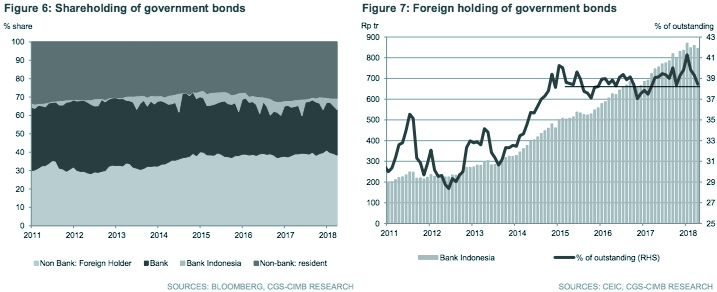
BI’s intervention in foreign exchange and bond markets has led to a US$7bn decline in the country’s international reserves in the past three months. At US$124.9bn, the reserves level remains comfortable as it is sufficient to cover 7.7 months of imports. Following the foreign portfolio outflows, the foreign shareholding of government bonds of 38.4% in Apr was in line with the average of ~38.7% in the past three years.

Macroeconomic conditions remain stable
The assessments of the domestic macroeconomic conditions were little changed. The central bank is willing to tolerate a wider current account deficit (BI projection: 2.0-2.5% of GDP; CIMB forecast: 2.0% of GDP; 2017: 1.7% of GDP) as long as the deficit stays within the 3% of GDP threshold, as stronger imports are a reflection of the recovery in economic growth (BI projection: 5.1-5.5%; CIMB forecast: 5.3%; 2017: 5.1%). The inflation rate remained in check despite the weaker currency in recent months. The volatile food pressure eased, although the seasonally higher demand could lead to higher inflationary pressure again. Based on BI’s consumer confidence survey, the short-term price expectation index rose in anticipation of the festive season while the long-term price expectation index remained steady.

We expect the policy rate to stay for now
Although we do not rule out the possibility of further rate adjustments if rupiah volatility heightens, for now we expect the current policy rate level to stay to allow the growth recovery to gain further momentum. We reiterate that a drastic cycle of rate increases and a sharp currency depreciation are not our base-case scenarios.


img-ind16-2

img-ind16-3

img-ind16-4

img-ind16-5


Originally published by CIMB Research and Economics on 18 May 2018.

Myanmar Monitor


img

Photo credit: Economy Watch

Economy, Investment and Trade

Myanmar’s economy to improve in 2018
(19 May 2018) The World Bank has projected Myanmar’s economy to increase to 6.7 percent in 2018 reflecting the administration’s efforts to hasten reforms and improve the financial sector. The organization said the medium-term prospects for the nation looks promising despite some risks. Increase in foreign investment will further boost growth in the country. However, for the growth to happen, the government needs to ensure that it is feasible and inclusive. Although there is growing global and domestic uncertainty especially the Rakhine state issue, the growth is expected to increase to 6.4 percent in 2017 from 5.9 percent in the 2016-17 financial year. This increase was motivated by improvements in the agricultural sector especially in crop production, stronger manufacturing performance, and improving services sector although there was a period in which the tourism and banking sector went through a slowdown due to the Rakhine issue. Inflation, which abated to 5.5 percent in 2017 from 7 percent in the financial year 2016-2017, is anticipated to decrease further to 4.9 percent in 2019.
Read More >

First credit bureau to be introduced in Myanmar
(22 May 2018) Myanmar Credit Bureau, a joint venture between the Myanmar Bank Association and Singapore’s Asian Credit Bureau Holdings has obtained a license from the Central Bank to establish the first credit bureau in Myanmar. The bureau is expected to start operations next year with a starting capital of US$2.2 million. The role of the bureau is to gather information on loan repayment histories of borrowers and distribute the profiles to lenders including non-bank financial institutions. This initiative aims to help entrepreneurs in the country to be qualified for loans by refining the risk assessment method and allow lenders to analyse the creditworthiness of borrowers by providing more credit profiles and borrower information. The country believes that this will be the leading step towards interest rate alleviation and eventually endorsement of risk-based pricing for loans.
Read More >

Myanmar government takes a loan from Central Bank to finance the country’s deficit
(24 May 2018) Myanmar administration will take a US$476 million loan from the Central Bank of Myanmar (CBM) to aid the fiscal deficit for the six-month interim period, which started on 1 April 2018 and ends on 30 September 2018. Myanmar’s Ministry of Planning and Finance deputy minister U Maung Maung Win said the loan amounts to around 20 percent of the administration’s allowed local borrowings from the central bank, which also follows the Union Budget Law. The country’s focus is to cover 80 percents the administration’s debt requirements through treasury bonds, while the remainder from CBM. The government has pledged to stop its dependence on CBM to address the country’s fiscal deficit in two years.
Read More >

Myanmar allows more opportunities for Foreign Direct Investment (FDI) in different sectors
(17 May 2018) Myanmar’s Investment Commission (MIC) has been monitoring the latest developments in the country’s infrastructure framework and the body is looking to open up other sectors for foreign investment. Many foreign investors have shown interest in Myanmar’s education sector when the administration permitted foreigners to make full capital investments on 20 April 2018 and that development spurred MIC to consider opening up other sectors in the country. According to Myanmar’s Directorate of Investment and Company Administration (DICA), MIC is looking at liberalising the insurance sector first as many insurance companies have visited the country to discuss on expanding their services in Myanmar.
Read More >

Foreign Affairs

Tightening of security measures for Myanmar Embassy in Pakistan
(31 May 2018) Anti-corruption agencies from Myanmar and South Korea signed an agreement to (21 May 2018) Myanmar presidential emergency funds worth US$237,842 was used to upgrade security features in the Myanmar Embassy in Pakistan as it anticipates possible terror attacks due to the Rakhine issue. There have been a number of rallies held in Pakistan to protest Myanmar government’s treatment towards Rohingya Muslims after the Pakistani Foreign Ministry invited Myanmar’s ambassador to talk about the alleged human rights abuses against Rohingya Muslims. According to the Vienna Convention on Diplomatic Relations, a host country is in charge of providing security for foreign embassies and Pakistan’s diplomatic police force has provided security measures for the embassy staff. However, the police force also recommended the embassy to reinforce the security of the embassy building. The embassy then submitted a list of necessary security measures, namely to build tall walls and high-security gate, to the Union Ministry.
Read More >

Malaysia: First election promise delivered as GST struck down


HIGHLIGHTS

First election promise delivered as GST struck down

  • The government will reduce the GST from 6% to 0% effective 1 Jun 2018.
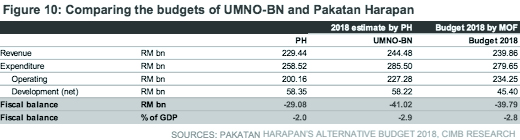
  • Sparse details on budget-balancing measures may spook markets as we estimate the shortfall could widen the fiscal deficit by 0.4% to1.0% of GDP in 2018.
  • Oil revenue and trimming fat in opex of selected ministries are the low-hanging fruits.
  • An expanded budget deficit could be mildly stimulative for the economy, particularly for households, perhaps at the expense of investment, and dampen inflation in 2018.

img-my10-1

GST drops to 0% effective 1 Jun 2018
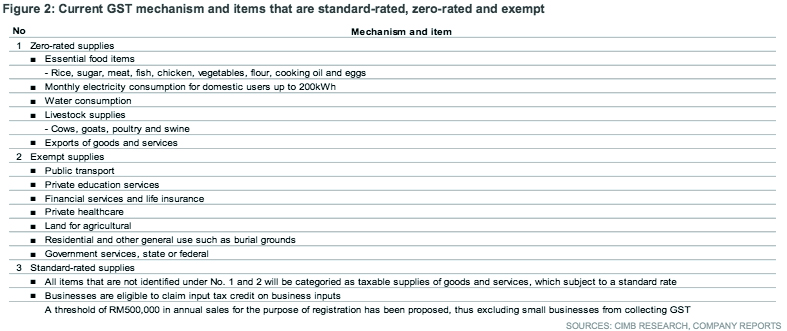
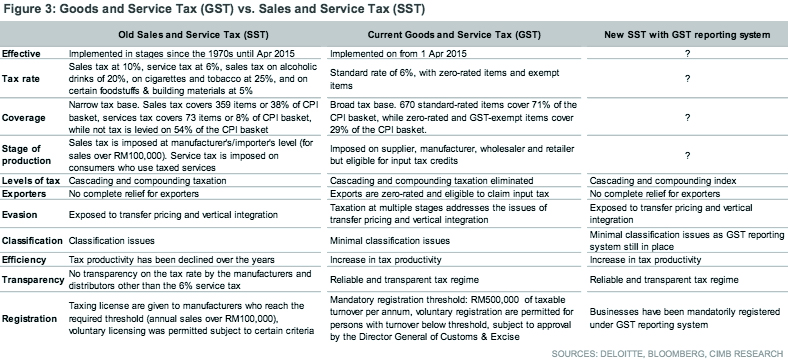
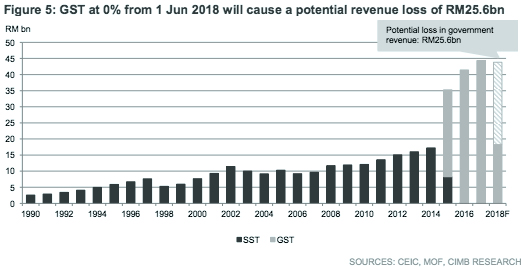
The Ministry of Finance announced that the Goods and Services Tax (GST) will be cut from the current rate of 6% to 0% with effect from 1 Jun 2018. We understand that ‘zerorating’ the GST will not require Parliamentary approval as the GST Act 2014 will be retained, together with the reporting system to improve income tax collection and reduce tax evasion. We estimate the revenue shortfall from GST removal at RM25.6bn.

What about the Sales and Services Tax?
We were surprised by the early implementation of GST abolishment and the lack of details on budget-balancing measures. Mention of a return of a Sales and Services Tax (SST) as outlined in the Pakatan Harapan (PH) Manifesto was conspicuously absent. We believe the SST is likely to follow, though implementation and Parliamentary approval may take up to Sep, limiting revenue contribution to an estimated RM7.6bn.

Windfall from higher oil prices partly funds fixed petrol prices
Fortuitously, oil prices have rallied strongly this year, with YTD Brent at US$70/bbl, yielding an additional RM5.4bn in oil revenues for the government. Data from OPEC shows that the global oil glut has been largely eliminated and producers are exceeding output reduction targets, putting a floor on global prices. We estimate the directive to freeze retail fuel prices indefinitely will cost the government about RM2bn-3bn in 2018.

Parsing clues from PH Alternative Budget for next course of action
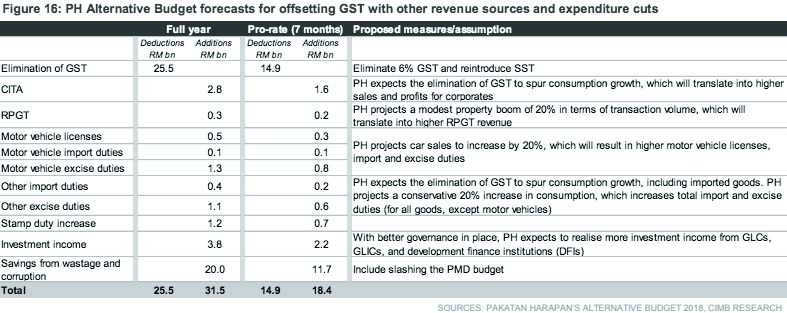
The government exceeded actual non-oil revenue collection targets in 1Q18 on sustained economic growth and aggressive tax collection tactics. While the PH Alternative Budget 2018 [PDF] has promised to ease up on raids targeting the rakyat, non-oil revenue could still exceed the target by RM4bn-5bn through higher interest and investment income, particularly from Khazanah (+RM1.5bn) and other investments (+RM2.3bn). That said, some revenue targets look too ambitious, particularly those linked to substantial hikes in property and car purchases (‘Others’ in Fig 1).

Trimming the fat may yield some near-term savings
Similarly, projections to eliminate operating expenditure (opex) of up to RM15.8bn appear stretched to us. Aiming for low-hanging fruits like trimming the fat from bloated ministries and agencies, such as the Prime Minister’s Department (see Fig 20-22), and eliminating duplication of functions among ministries and agencies could reasonably slash RM5bn6bn in opex. If PH struggles to prevent the current balance (revenues less opex) from widening, the blade may fall on the RM46bn allocation for development expenditure.

Prospects for fiscal savings are more promising in the medium term
Supplies and services, totalling RM33.6bn in 2018B, have ample scope for re-negotiation of concessions and contracts but are unlikely to be expedient enough to take effect this year. Likewise, recoveries from governance lapses and corruption could yield significant returns to the government but after potentially lengthy legal processes, if forced to ‘go by the book’. However they provide a high base from which to cut opex for Budget 2019.

Neutralising GST impact is possible but hard to achieve
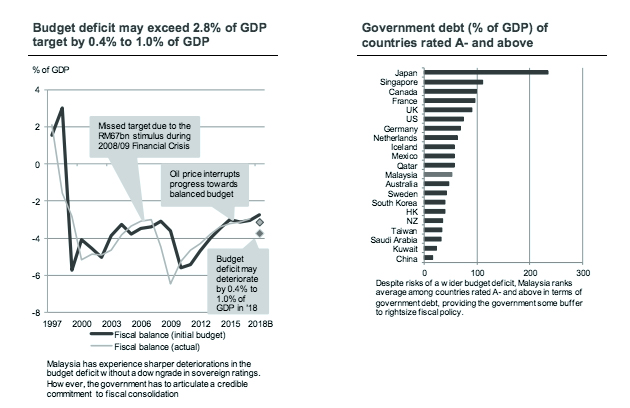
The policy change was announced via a one-page press release and the lack of details is likely to concern markets. The government has several avenues to balance the fiscal impact of GST and fuel subsidies but we think ultimately it will exceed the targeted 2.8% of GDP budget deficit by 0.4% to 1.0% of GDP (see Figs 1 and 17). The impact to our macro forecasts are subject to considerable policy uncertainty, but we generally expect an expanded budget deficit could be stimulative for GDP growth, particularly for households but perhaps at the expense of investment, and exert a one-off dampening effect on inflation, which could be enhanced by price-monitoring efforts.

img-my10-2

APPENDIX 1: REVENUE AND EXPENDITURE ESTIMATES

Oil-related revenue:
The sensitivity of fiscal revenue to each US$1/bbl in excess of the Budget 2018 average oil price assumption of US$52/bbl is +RM300m, as provided by Ministry of Finance officials from the previous Barisan Nasional government. At the YTD average oil price of US$70/bbl, the government expects to collect additional O&G revenue of RM5.4bn.

Sales and services tax (SST):
In the Pakatan Harapan (PH) Alternative Budget 2018, replacing the GST with an SST produces a shortfall of RM16.5bn (see Fig 12). Based on the Budget 2018 target GST collection of RM43.8bn, we estimate that the pro-rated GST collection in 5M18 is RM18.3bn. We think the government is likely to follow through with the introduction of an SST, though implementation and Parliamentary approval may take up to Sep, limiting revenue contribution to RM7.6bn. The sum was derived from the last available full-year collection of the SST in 2014, which totalled RM17.2bn. We then adjusted for the nominal GDP growth rate of 7.2% p.a. to obtain a full-year SST estimate in present value of RM22.8bn, or RM7.6bn when pro-rated to Sep-Dec 2018.

We expect the implementation to be much faster than the GST, which required a lead time of 1.5 years due to 1) preparations by the Royal Malaysia Customs Department and re-classification of tax codes for goods and services, and 2) substantial overhauls to financial bookkeeping processes by businesses.

Prime Minister’s Department:
The PH Alternative Budget 2018 identified potential savings of RM20bn from wastage and corruption, which includes slashing the Prime Minister’s Department (PMD) budget. While we think projections to eliminate operating expenditure (opex) of up to RM15.8bn annually appear stretched to us, we think substantial fat can be trimmed from the PMD, which has been allocated RM17.4bn in Budget 2018, comprising of RM5.2bn in operating expenditure and RM12.2bn in development expenditure. PH points to Tun Dr Mahathir’s last PMD budget as sitting prime minister of RM5bn in 2003, which adjusted for average CPI inflation of 3.5% p.a. adds up to RM8.4bn in today’s terms. Assuming the PMD has spent the proportional equivalent of the total in 5M18, it has an estimated RM10bn left to be rationalised. We estimate that the government can reasonably trim about half the amount, yielding savings of RM5bn-6bn in 2018.

Investment income:
Apart from additional dividends from Petronas due to higher oil prices, which we have factored in above together with oil-related revenue, PH believes it can increase contributions from 1) Khazanah dividends from RM1bn to RM2.5bn, and 2) other interest and investment income from RM1.7bn to RM4.0bn from returns on investments and deposits as well as asset sales (see Fig 14).

Corporate income tax and other taxes:
PH expects corporate and other tax collections to increase on the back of a virtuous cycle due to the stimulative effect that GST cuts will have on consumption and the broader economy. We are more conservative on factoring in an increase in corporate and personal income tax collection, as Prime Minister Tun Dr Mahathir has pledged to return taxes and penalties paid by businessmen and individuals as a result of “aggressive tax collection” methods under the previous government. Moreover, we believe the assumptions for significant recoveries from property transactions and car sales of 20%, underpinning an estimated revenue increase of RM4.9bn, may be too optimistic. These include the Real Property Gains Tax, stamp duties and duties on motor vehicles. Therefore, we have attached a lower probability to these sources of potential revenue increases.

img-my10-3

img-my10-4

img-my10-5

img-my10-6

img-my10-7

img-my10-8

img-my10-9

img-my10-10

img-my10-11

img-my10-12

img-my10-13

img-my10-14

img-my10-15

img-my10-16

img-my10-17

img-my10-18

img-my10-19

img-my10-20


Originally published by CIMB Research and Economics on 17 May 2018.