CARI Captures 370

c370c_graphic


ASEAN

ASEAN economic ministers signed two agreements to reduce trade barriers
(27 August 2018) ASEAN Economic ministers signed two agreements to enhance the integration of the services sector and trade facilitation within the region. The agreements included the 10th package of commitments under the ASEAN Framework Agreement on Services (AFAS) which would allow for the deepening of commitments and the widening of market access for the services sector. This conclusion of the final package would facilitate regional service providers’ participation in sectors that were previously closed including logistics, air and maritime transportation. In addition, a protocol was signed to amend the ASEAN Trade in Goods Agreement (ATIGA) to enable the implementation of the ASEAN-wide self-certification (AWSC) regime. This measure would allow certified exporters to self-certify the origin of their goods and to enjoy preferential treatment under the ATIGA.

ASEAN

SMEs’ entry into the ASEAN digital economy could increase GDP by US$1 trillion
(3 September 2018) An industry report by a research team that included Bain & Co indicated that ASEAN SMEs’ participation in the digital economy could potentially raise the region’s GDP by an additional US$780 billion to US$1.13 trillion. At the time of release, the study said that the digital economy for ASEAN was US$200 billion or 7 percent of GDP, lagging behind China (16 percent) and the US (35 percent). The survey which polled 2,300 small businesses cited factors such as logistics, cross-border digital regulations and skills gap as barriers to their participation in the digital economy.

INDONESIA

Violators of foreign banknotes regulation would be fined in Indonesia
(3 September 2018) With the enforcement of Bank Indonesia Regulation (PBI) No.20/2018 on the revision of PBI No.19/7 2017 effective 4th September, only licensed entities such as banks and money changing institutions would be allowed to carry foreign banknotes of more than US$1 million. Violators would be required to pay a penalty of up to 10 percent of the total amount of foreign banknotes held, up to a maximum fine of US$20,299. The BI has an information technology infrastructure to process the licensing of the import and export of foreign currencies, as part of the Indonesia National Single Window (INSW) which would monitor the import and export of limited goods.

LAOS

Lao’s Central Bank issued warning against the use of cryptocurrencies
(3 September 2018) The Bank of Laos (BOL) issued a public warning about the risks of using cryptocurrencies as instruments for payment, trading and investment. Specifically, Lao regulation would not provide for the recognition and regulation of cryptocurrencies. As such, according to a senior central bank official, these currencies would not be considered as valid instruments to service debt. Despite the official notice, there has not been as yet an official ban on cryptocurrency trading domestically while its use as payment instruments have been accepted by some companies for trading in goods and services.

MALAYSIA

Malaysia and Singapore agreed to defer the High-Speed Rail project until 2020
(3 September 2018) Singapore and Malaysia agreed to postpone the construction of the Kuala Lumpur-Singapore High-Speed Rail (HSR) project until 31 May 2020. Malaysia would pay Singapore S$15 million by January 2019 for the deferment and be deemed liable for additional sums should the project not resume in two years. If construction were to start by May 2020, the rail link service could commence by January 2031.

MYANMAR

Myanmar to open bid for oil and gas fields in 2019
(31 August 2018) The tender for Myanmar’s offshore and onshore oil and gas blocks would be opened in the first half of 2019, the first time to be held under the current government. State-owned Myanmar Oil and Gas Enterprise (MOGE) would invite international tenders for oil and gas exploration as well as drilling and production activities in unoccupied onshore and offshore blocks in partnership with foreign oil companies. Projects would be awarded under the Production Sharing Contract (PSC) and Improved Petroleum Recovery Contract arrangements.

SINGAPORE

Facebook to invest more than US$1 billion in Asia’s first data centre in Singapore
(6 September 2018) Facebook announced it would invest more than US$1.4 billion to build its first Asian data centre in Singapore. Located at Tanjong Kling (formerly known as Data Centre Park) in the western part of the island, the 170,000 square metre facility would be expected to generate employment opportunities and other positive spillover effects. According to Singapore’s Minister of Trade and Industry, the establishment of the centre would facilitate the inflow of talents and creativity and in strengthening its data storage capacity and would augment its strengths in data protection, intellectual property, data security and data analytics. The data centre is scheduled to start operations in 2022.

THAILAND

Pressure on the Bank of Thailand to increase interest rate amid rising inflation
(3 September 2018) In August 2018, inflation increased to a four-year high of 1.6 percent in Thailand amid rising food and energy costs. At 1.5 percent, the policy rate would be below inflation, fuelling expectations of the first interest rate hike by the Bank of Thailand (BoT) since 2011. Despite this development, the BoT Governor, Veerathai Santiprabhob said that Thailand did not face immediate pressure to tighten monetary policy. Similarly, the Bank Indonesia would face pressure to increase interest rate given the rupiah’s weakening by about 8 percent against the U.S. dollar this year.

VIETNAM

Vietnam to lift barriers on rice exports
(1 September 2018) Following a new Decree 107/2018/ND-CP which will take effect Oct 1st, Vietnam government would no longer require rice exporters to own rice storage, paddy milling and grinding facilities with processing capacities of 5,000 tonnes of rice and 10 tonnes of paddy per hour. Instead, rice traders could now rent the facilities and not be limited by the need to meet volume requirements. In addition, organic rice, parboiling rice and multi-micronutrient fortified rice traders could now be exported to foreign markets without the need to produce a certificate of eligibility for rice export business.

VIETNAM

Vietnam has the highest growth of international visitors in Southeast Asia in 2017
(3 September 2018) According to the World Tourism Organization, Vietnam saw the highest growth in international arrivals in Southeast Asia in 2017. In 2017, the number of foreign visitors to Vietnam was 12.9 million, a 29.1 percent increase from 2017. Myanmar (18.4 percent) and Brunei (18.3 percent) also recorded a significant increase in tourist arrivals last year. However, Vietnam’s revenue from tourist arrivals was at US$8.86 billion, a mere 7.4 percent increase from the previous year. In contrast, at 35.4 million, Thailand has the highest international tourist arrivals in ASEAN in 2017, which generated US$57.5 billion. Southeast Asia received a total of 120.4 million visitors last year.

Mekong Monitor


IMG-MM-160818

Photo Credit: Bangkok Post


TRADE, ECONOMY, AND INVESTMENT


THAILAND

Thailand is the most digitally disrupted market in Asia Pacific
(29 August 2018) Thailand has been listed as the most digitally disrupted market in the Asia-Pacific, according to a study commissioned by US multinational IT firm, CA Technologies. The Asia-Pacific & Japan (APJ) Digital Transformation Impact and Readiness Study, found 95 per cent of businesses and IT leaders had felt the impact in the country, compared to 80 per cent average across the region. The study, conducted in late 2017, looked at 900 business and IT pioneers across nine Asia-Pacific markets. Out of the 900, 100 respondents were from Thailand. Some of the significant challenges for digital transformation in the region listed by the study are satisfying customer expectations, which may vary from time to time; fast-paced economic conditions and using digital transformation to beat traditional competitors.
Read more>>

MYANMAR

Foreign insurance firms will be able to penetrate Myanmar market in 2018-2019
(29 August 2018) Myanmar’s Insurance Business Regulatory Board (IBRB) will permit international insurance companies to set its bases in the country in the new 2018-2019 financial year, which will start 1 October 2018. Foreign insurers will be able to provide life and general insurance policies in financial year 2018-19. IBRB, which is under the purview of the Ministry of Planning and Finance, has already called for proposals from international consultants to screen and review foreign insurance providers prior to granting these companies market access. According to Oxford Economics Group, Myanmar’s insurance is just 0.07 per cent of its GDP with Myanma Insurance having the dominant market share. The country’s central bank reported that the total gross written premiums (GWP) are approximately at US$22.23 million (K33.9 billion) in the first quarter of 2017.
Read more>>

LAOS

Laos government partners with China Tower and a local firm to form Southeast Asia Tower company
(29 August 2018) Chinese state-owned China Tower signed an agreement with Laos government and local firm Click Lao Marketing and Consultancy to jointly set up Southeast Asia Tower company. The company will take part in the construction, maintenance and operation of communication towers, base stations, power supplies and other supporting facilities in Laos. Based on the agreement, China Tower will be the principal shareholder with a 70 per cent stake while the government and the consultancy firm will hold a 15 per cent stake each. It is China Tower’s first investment outside of China, and it will impart its capabilities in technology, operation management, and industrial chain integration. According to Xinhua, the four-year-old firm manages about 1.9 million base stations in China and it is regarded as the world’s largest provider of communications tower and infrastructure services.
Read more>>

VIETNAM

Ho Chi Minh lays out plans to bolster its Provincial Competitiveness Index (PCI)
(29 August 2018) The Ho Chi Minh City People’s committee has announced plans to enhance its Provincial Competitiveness Index (PCI) and improve its business environment. PCI was developed in 2005 to measure Vietnam’s economic governance and promotes local socio-economic development in each of the country’s 63 provinces. The plans will include abolishing and simplifying 50 per cent of its business and investment conditions and apart from removing a number of conditional business lines, the city will scrap at least 50 per cent of goods subject to specialised inspection. Also, the city will reduce the proportion of imported goods subject to stringent checks at the customs from 25 to 27 per cent to less than 10 per cent.
Read more>>

CAMBODIA, THAILAND

Cambodia, Thailand set to reach an agreement on cross-border rail transportation
(30 August 2018) Cambodia and Thailand are close to striking an agreement on cross-border rail transportation that is expected to play a crucial role in facilitating trade and movement of people between the two countries. The western rail line, stretching 386 kilometres from Phnom Penh to Poipet city in the border of Thailand is also part of an extensive railway project connecting Singapore with Kunming in Southern China. The two governments are currently reviewing the draft of the agreement before the document is finalised, which is due to be signed before the end of 2018. Trade between Thailand and Cambodia was recorded at US$6 billion in 2017.
Read more>>


mekong-monitor-map

About Greater Mekong Subregion (GMS)

The Greater Mekong Subregion (GMS) Economic Programme was launched by the Asian Development Bank in 1992 connecting five developing ASEAN countries, namely Cambodia, Laos, Myanmar, Vietnam and Thailand, and Chinese provinces of Yunnan and Guangxi Zhuang Autonomous region. The region has some of the most robust economies sharing the Mekong River Basin thanks to its reform and liberalisation. The subregion is growing at a faster pace than the whole of East Asia and the Asia Pacific as the GDP growth rate for 2017 was at 6.4 percent, according to the World Bank. The population at the subregion as of 2016 is at 340 million while the GDP at PPP is at US$3.1 trillion in 2016. In 2015, trading within the region was at US$444 billion.

China-ASEAN Monitor


img-ca-290818.jpg

File photo


Economy, Investment and Trade

The Philippines to ink ten infrastructure loan agreements with China
(28 August 2018) The Department of Budget and Management has confirmed that at least ten infrastructure loan agreements are expected to be signed between the Philippines and China during President Xi Jinping’s visit to the country in November. Although both countries are accelerating the financing for the infrastructure projects, the Philippines emphasised that the project will only be selected if the rate of return is more than 10 per cent. The Philippines President Rodrigo Duterte has signed a few loan agreements with China to build the Chico River Pump Irrigation Project, New Centennial Water Source-Kaliwa Dam, as well as the planned industrial park at the upcoming New Clark City. Philippines is tapping partners to roll out the massive “Build, Build, Build” program, which is an ambitious US$180 billion infrastructure scheme.
Read more>>

Chinese nationals can purchase units in Forest City but Malaysia will give no residential visas
(4 September 2018) Malaysia will allow people from China to buy properties at Forest City in Johor, but they would not be given residential visas to stay there. Malaysian Prime Minister Tun Dr Mahathir Mohamad earlier mentioned that Malaysia would ban foreigners from buying residential units in Forest City project, but on 4 September 2018 confirmed that Chinese nationals could purchase units there. The Prime Minister’s Office clarified that the country imposes certain “conditions and information” for foreign nationals buying properties, irrespective of their nationality. Forest City is a China-backed project developed by Guangdong-based Country Garden Holdings Co to create a new city that was envisaged to be home to 700,000 people in the southern state of Johor.
Read more>>

Indonesia to work with Alibaba to establish Jack Ma Institute
(2 September 2018) Indonesia will partner with Alibaba’s CEO Jack Ma to create Jack Ma Institute in Indonesia to develop the capacity of human resources in the country. Indonesia is finding ways to expand its human resources in the e-commerce sector. According to Indonesian Communication and Information Minister, besides securing supply of talents in the country through the establishment of Jack Ma Institute, Indonesia is aspiring to be the supplier of talent to other nations as well. Indonesia has sent delegates to the Alibaba Group to discuss on an educational system, which includes regulations and start-ups. On top of that, Indonesian President Joko Widodo will work together with Alibaba to find ways to increase its exports to China by leveraging Alibaba’s vast networking and resources.
Read more>>

China offered US$13.2 billion worth of projects in Indonesia
(28 August 2018) Chinese companies and firms have been called to invest in Indonesia after the Indonesian government offered infrastructure projects worth US$13.2 billion recently in Guangzhou. Some of the projects include electric power plants under the Independent Power Producer (IPP) scheme and toll roads in some regions in Indonesia. Indonesia’s Investment Coordination Agency (BKPM) stated that the government through infrastructure financing guarantee agency, PT Penjaminan Infrastruktur Indonesia (PII) would provide guarantees for any firms that intend to be part of the government-to-business (KPBU) scheme. Companies such as CCCC Industrial Investment Holding Co., Ltd., China Energy Engineering Group Guangdong Electric Power Design Institute Co., Ltd., Guangdong Zhiyuan New Material Co. Ltd., GD Shengda Investment Group and China Southern Power Grid Co., Ltd. were part of the market sounding event.
Read more>>

Myanmar to proceed with border economic zone projects with China
(28 August 2018) Myanmar and China have extended their economic co-operation by agreeing to develop border economic cooperation zones that would span the border trade areas between the two countries. The economic corridor would enhance investment and trade under the Myanmar-China Economic Corridor as part of the One Belt One Road Initiative (OBOR). Myanmar’s Union Minister for Commerce stated that apart from spurring local and foreign investments, the border economic zone would create business opportunities and employment opportunities in the region. Muse Trade Zone, situated at the northern Shan state linking to China’s Ruili of Yunnan province, is the biggest border trade zone in Myanmar and it also a key zone for Myanmar and China’s trade cooperation. According to the Union Minister for Commerce, regions such as Kampaikti in the Kachin State, as well as Muse and Chinshwehaw in the Shan state would be designated as the China-Myanmar border economic cooperation zones.
Read more>>


50th ASEAN Economic Ministers’ (AEM) Meeting


50th ASEAN Economic Ministers’ (AEM) Meeting
 
The 50th ASEAN Economic Ministers’ (AEM) meeting concluded in Singapore on 1 September 2018. The meeting was chaired by Singapore’s Minister for Trade and Industry, Chan Chun Sing. Prior to the 50th AEM meeting, a preparatory meeting of the ASEAN Senior Economic Officials (SEOM) was held. The economic ministers also convened joint meetings with the 32nd ASEAN Free Trade Area (AFTA) Council and the 21st ASEAN Investment Area (AIA) Council.


KEY OUTCOMES OF THE MEETING


Regional and Global Development

  1. ASEAN’s combined GDP reached US$2.8 trillion in 2017, a 5.3 per cent growth year-on-year, up from 4.8 per cent in 2016. Growth is expected to remain stable at 5.2 per cent in 2018 and 2019.
  2. ASEAN’s total merchandise trade reached US$2.55 trillion in 2017, an increase of 14.1 per cent year-on-year, of which 22.9 per cent was intra-ASEAN. Among the bloc’s dialogue partners, China, the European Union (EU) and the United States (US) ranked as the region’s top three trade partners in 2017.
  3. ASEAN’s total services trade stood at US$695.2 billion in the same year, of which 16.7 per cent was intra-ASEAN.
  4. Inflows of foreign direct investment (FDI) to ASEAN reached US$137 billion in 2017. At 19.4 per cent, intra-ASEAN contributed the highest share. The top three sources of external FDI inflow to the region are the EU, Japan and China. The services sector remained the largest recipient of FDI inflows to ASEAN, amounting to US$90.12 billion or 65.8 per cent total inflows in 2017.

ASEAN Economic Community (AEC) 2025

  1. Operationalisation of the AEC 2025 Monitoring and Evaluation (M&E) Framework is in progress.
  2. Country visits to the Philippines and Indonesia were completed in 2017, and terms of reference (TOR) for the AEC 2025 M&E country visit was adopted as a technical verification tool for compliance monitoring.
  3. Development of the compliance monitoring and integration monitoring databases in the ASEAN Secretariat was completed to support compliance and outcomes monitoring, respectively, as well as the publication of the updated AEC 2025 Consolidated Strategic Action Plan and the third issue of the ASEAN Economic Integration Brief.

Priority Deliverables under Singapore’s Chairmanship of ASEAN

  1. The ASEAN Agreement on Electronic Commerce (E-Commerce) was endorsed by ASEAN Economic Ministers, and it will be signed at the sidelines of the 33rd ASEAN Summit at the end of 2018.
  2. ASEAN Economic Ministers adopted the ASEAN Digital Integration Framework and was submitted to the AEC Council. It will be endorsed at the end of 2018.
  3. First Protocol to Amend the ASEAN Trade in Goods Agreement (ATIGA) was signed to allow for the operationalisation of the ASEAN-wide Self-Certification (AWSC), and the Protocol to implement the 10th ASEAN Framework Agreement on Services (AFAS).
  4. ASEAN Trade in Services Agreement (ATISA) negotiations is in progress and it will be signed at the 17th AEC Council in November 2018.
  5. ASEAN Single Window (ASW) is being implemented among five ASEAN Nations – Indonesia, Malaysia, Singapore, Thailand and Vietnam.
  6. Progress is made by Brunei Darussalam, Cambodia and the Philippines, who are in the final stages of testing the exchange of the e-ATIGA Form D in joining the ASW.
  7. Memorandum of Understanding (MoU) with the International Renewable Energy Agency will be signed at the 36th ASEAN Ministers on Energy Meeting (AMEM) in October 2018.

Trade in Goods

  1. Under the ATIGA, 99.3 per cent of import duties have been eliminated for the ASEAN-6 while the corresponding figure for Cambodia, Laos, Myanmar and Vietnam is pegged at 97.7 per cent. ASEAN, on the whole, has eliminated 98.6 per cent of import duties.
  2. ATIGA Tariff Reduction Schedules (TRSs) in ASEAN Harmonised Tariff Nomenclature (ATHN) 2017 of Brunei Darussalam, Indonesia, Laos, Malaysia, Myanmar, the Philippines, Singapore and Thailand were endorsed by the AFTA Council.
  3. Transposed ATIGA Product Specific Rules (PSRs) (Annex 3) in Harmonised System (HS) 2017 is completed with the target implementation on 1 December 2018.

Trade Facilitation

  1. The ASEAN Seamless Trade Facilitation Indicators (ASTFI) Baseline Study, which will enhance the monitoring of the implementation of trade facilitation measures in the region was completed.
  2. ASTFI and Time Release Studies, which will be completed by the end of 2018, will enable ASEAN to determine the potential contribution of ASEAN trade facilitation initiatives in achieving the target of 10 per cent reduction in trade transactions cost by 2020 and striving to double intra-ASEAN trade by 2025.

ASEAN Customs Integration

  1. The ad-referendum of the ASEAN Framework Agreement on the Facilitation of Goods in Transit (AFAFGIT)’s Protocol 2 (Designation of Frontier Posts) including the endorsement of the List of Designated Frontier Posts was signed by all ten ASEAN Director-General of Customs in May 2018.
  2. AHTN 2017 by all ASEAN Member States was implemented on 1 July 2018 and endorsed TOR of the Technical Sub-Working Group on Classification (TSWGC) to assume the role of the existing AHTN Task Force.

Standards and Conformance

  1. The MRA on Inspection and Certification System on Food Hygiene for Prepared Foodstuff Products was completed and signed.
  2. ASEAN Guidelines on Type Approval Control on Weighing and Measuring Equipment was finalised.

Trade in Services

  1. Protocol to Implement the Tenth Package of Commitments of the AFAS was signed by the ASEAN Economic Ministers. It is the final AFAS package as ASEAN transitions into the next phase of integration under the ATISA.
  2. Implementation of the ASEAN Qualifications Reference Framework (AQRF) is in progress.

Investment

  1. Agreement was reached to enhance the ASEAN Comprehensive Investment Agreement (ACIA), as the investment related deliverable of Singapore’s ASEAN chairmanship for 2018.

Competition Policy

  1. Handbook for Competition Policy and Law for Business 2017 and the Competition Compliance Toolkit for Businesses in ASEAN was published.
  2. The ASEAN Regional Cooperation Framework on Competition (ARCFC) was endorsed by the ministers, which encouraged sharing of agency and case-related information as well as merger and enforcement cooperation in ASEAN.

Consumer Protection

  1. The work on consumer protection policy and law was reviewed by the ASEAN Economic Ministers, noting that efforts continue to put in place a common protection framework in ASEAN through the upgrading of rules and regulations in the ASEAN Member States.

Intellectual Property

  1. On-going work on compiling baseline data for tracking the outcomes of the IP delivery systems.
  2. Development of common examination manuals to further enhance service delivery and endorsed the ASEAN Common Guidelines on Industrial Designs, which will be published in September 2018.
  3. ASEAN IP Training Platform will be operationalised to help micro, small and medium enterprises (MSMEs) learn about IP asset protection and commercialisation.
  4. To date, 126 innovation technology support offices/ technology transfer offices established.

Electronic Commerce

  1. Working Group on Digital Data Governance, under the purview of the ASEAN Telecommunications and Information Technology Senior Officials Meeting (TELSOM), has been established to develop an ASEAN Framework on Digital Data Governance.

Micro, Small and Medium Enterprises

  1. ASEAN SME Policy Index (ASPI) 2018 was endorsed as a reference tool to help monitor and evaluate ASEAN’s efforts in advancing MSME development policies in the region.
  2. Publication of the 2018 edition of the Future of ASEAN: 50 Success Stories of Digitalisation of ASEAN MSMEs, which is targeted for release in November 2018.
  3. Activities to the ASEAN Business Inclusive Framework endorsed in 2017 will be followed up, namely two capacity building initiatives to equip policymakers on Inclusive Business Policy and Inclusive Business Eco-System Development.

Good Regulatory Practice

  1. ASEAN Good Regulatory Practice (GRP) Core Principles, which is a practical, non-binding set of principles to serve as a guide to mainstream GRP into ASEAN work, was adopted.

Fourth Industrial Revolution

  1. Assessment of ASEAN Readiness for the Fourth Industrial Revolution (Industry 4.0) was completed by the ASEAN Secretariat.

ASEAN Community Statistical System

  1. Adoption of the M&E System of the ASEAN Community Statistical System (ACSS) Strategic Plan 2016-2025 by the ACSS Committee, in line with the AEC 2025 M&E Framework, as well as the approval of the key performance indicators (KPIs) for measuring the outcomes of four strategic components of the ACSS Strategic Plan 2016-2025.

Narrowing the development gap

  1. Capacity building activities and technical assistance extended to CLMV nations through the initiative for ASEAN Integration (IAI) Work Plan III and CLMV Action Plan 2017-2018 that are aimed at enhancing the capacity of these member states to meet regional commitments and promote inclusive development.

External Economic Relations

  1. Implementation of ASEAN’s FTAs with China, Japan, Korea, India, Australia and New Zealand was reviewed.
  2. Negotiations to enhance the Product Specific Rules under the ASEAN-China Free Trade Area (ACFTA) Upgrading Protocol’s future work programme was concluded.
  3. Recommendations of Stage Two of the General Review of the ASEAN-Australia-New Zealand Free Trade Area (AANZFTA) Agreement was endorsed.
  4. First Protocol to Amend the ASEAN-Japan Comprehensive Economic Partnership Agreement, which incorporates the Chapters on Trade in Services, Movement of Natural Persons and Investment was finalised.
  5. The signing of the ASEAN-Hong Kong, China Agreement and the ASEAN-Hong Kong, China Investment Agreement was completed.


Indonesia: August 2018 CPI inflation


HIGHLIGHTS

August 2018 CPI inflation

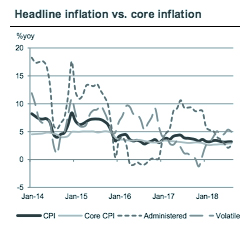
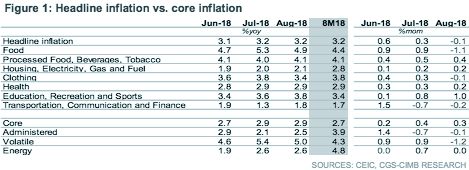
  • Both headline and core inflation were unchanged in August, at 3.2% yoy and 2.9% yoy, respectively, as easing food prices offset higher education costs.
  • Non-O&G wholesale price inflation eased slightly to 4.2% yoy in August on milder agriculture and manufacturing wholesale inflation.
  • We see some downside risks to our inflation forecast of 3.4%, given that the monthly headline inflation reading has undershot our expectations for four months now.
  • We nonetheless leave our forecast unchanged, taking into consideration the potential cost pass-through from a weaker rupiah.

img-ind26-1

Stable headline and core inflation in August
Headline inflation was unchanged at 3.2% yoy in August (CIMB forecast: +3.4% yoy; Bloomberg consensus: +3.3% yoy; July: +3.2% yoy). So was core inflation, which stood stable at 2.9% yoy. For 8M18, headline inflation remained steady at 3.2% yoy, comfortably within Bank Indonesia’s target range of 2.5%-4.5%.

Easing food prices…
On a month-on-month basis, the consumer price index (CPI) contracted 0.1% mom (+0.3% mom in July). Volatile food price pressure eased (-1.2% mom in August vs. +0.9% mom in July) after the Lebaran celebration and FIFA World Cup, whereas administered inflation declined for second consecutive month (-0.1% mom in August vs. -0.7% mom in July) due to falling airfares.

…offset higher education inflation
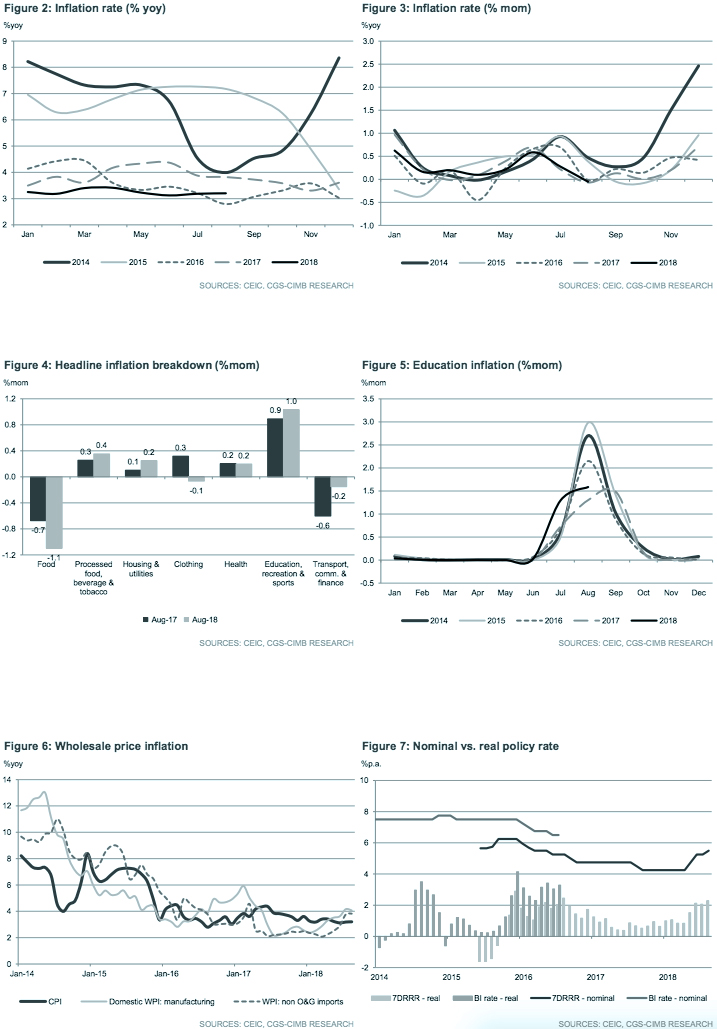
Excluding volatile and administered price items, core CPI rose 0.3% mom (+0.4% mom in July), led mainly by higher costs of education (+1.6% mom in August vs. +1.3% mom in July) as well as courses & training (+0.8% mom vs. +0.7% mom in July). Historically, education costs tend to increase in July-September, with the pace of increase peaking in August, in conjunction with the start of a new school year (see Fig 5).

Slight moderation in wholesale inflation
Rupiah has depreciated by 8% YTD against the US$. Nevertheless, it has yet to significantly affect consumer prices so far, partly driven by the government’s commitment to keep fuel prices unchanged despite rising oil prices and weakening currency. NonO&G wholesale inflation eased slightly to +4.2% yoy in August after an acceleration in July (+4.3% yoy in July vs. +3.5% yoy in Jun) amid a slower increase in agriculture WPI (+1.8% yoy vs. +2.1% yoy in July) and manufacturing WPI (+4.1% yoy vs. +4.2% yoy in July).

No change to our 2018 inflation forecast of 3.4%
Given that the monthly headline inflation reading has undershot our expectations for four months now, we see some downside risks to our inflation forecast of 3.4%. Nonetheless, we retain our forecast, taking into consideration of a potential cost pass-through from a weaker rupiah. According to the purchasing managers’ survey by Markit, input cost pressure intensified as a result of the weaker currency, which led to firms raising output charges to pass on their higher cost burden. Indonesia’s manufacturing PMI rose to 51.9 in August from 50.5 in July, as purchasing activity and output increased on the back of rising new orders led by domestic demand. Higher manufacturing activity, if accompanied by higher imports, could exert pressure on current account deficit. As downside pressure on rupiah lingers, monetary policy remains tilted towards tightening bias. However, rather than relying solely on the blunt interest rate tool, which has shown limited success in propping up the rupiah amid rising external and contagion risks, policymakers have recently considered several administrative measures such as 1) B20 biodiesel initiative to reduce O&G trade deficit, 2) plans to restrict certain imports, and 3) sequencing of imports by asking importers to provide details of shipping plans for certain goods, to curb balance of payment risks. As more measures are forthcoming, we expect Bank Indonesia to keep policy rate unchanged at 5.50% at the next meeting on 26-27 September.


img-ibd26-2

img-ind26-3


Originally published by CIMB Research and Economics on 3 September 2018.

Thailand: Macro snapshot


HIGHLIGHTS

Macro snapshot

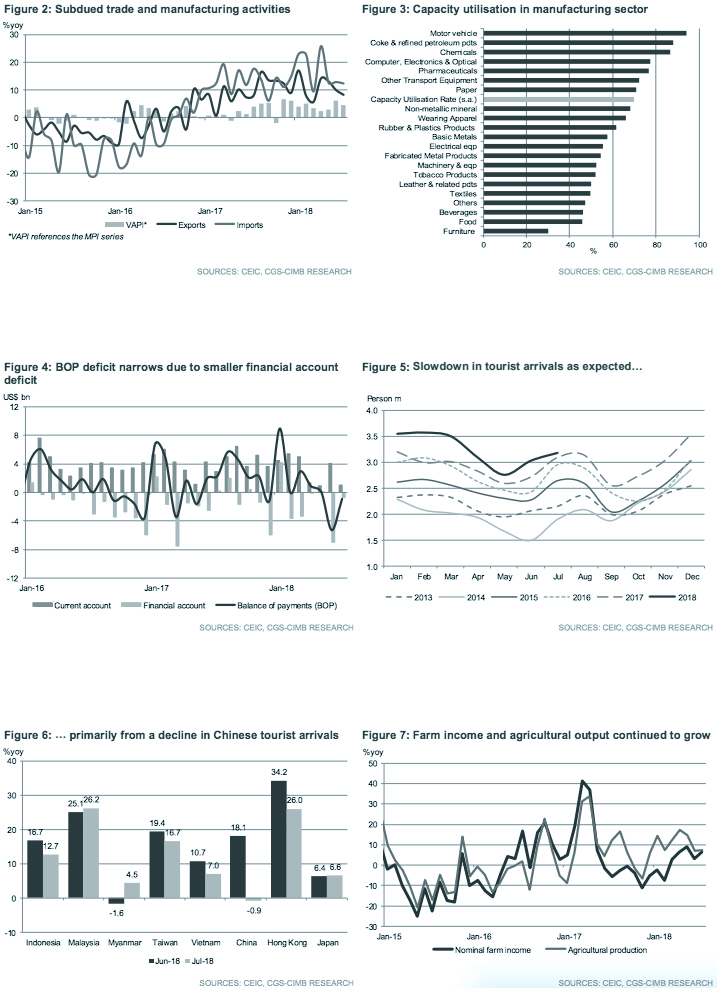
  • A dip in agriculture exports and slower tourist arrivals weighed on the current account, but net financial outflows abated, relieving pressure on the balance of payments.
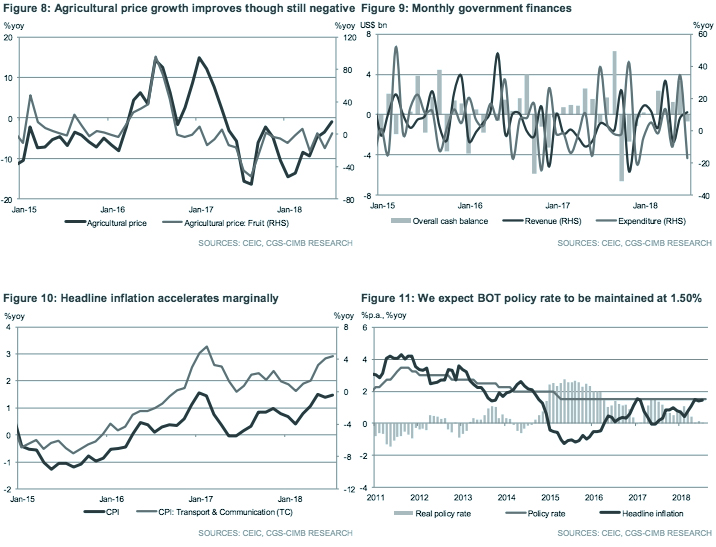
  • Gains in consumer confidence and household spending were supported by wage growth as well as the recent recovery in farm incomes and agriculture prices.
  • The NLA approved a narrower budget deficit of 2.6% of GDP in FY19 following the fiscal stimulus extended earlier this year and gradual economic recovery.
  • As the output gap narrows and inflation picks up, we reiterate our end-2018 policy rate forecast of 1.5%. We project the next rate hike to take place only in early-2019.

img-th5-1

Trade and manufacturing expansion eases in July
Export growth eased to 8.3% yoy in July (+10.0% yoy in June), mainly due to a reversal in agricultural export growth (-4.3% yoy vs. +6.7% yoy in June). Import growth was also more modest in July (+12.4% yoy vs. +12.9% yoy in June) due to moderation in in-bound shipments of capital goods, particularly machinery & equipment (+3.4% yoy in July vs. +13.7% yoy in June). Manufacturing activity, measured by the Value Production Index (VAPI), toned down in July (+4.6% yoy vs. +5.0% yoy in June), dragged by lower production in food & beverages, cement & construction, electrical appliances and hard disk drives (HDD). Seasonally-adjusted capacity utilisation in the manufacturing sector decreased to 69.6% in July (70.1% in June).

Weaker current account offset by subsiding financial outflows
A narrower trade balance of US$0.9bn in July (vs. +US$2.9bn in June), alongside lower net inflows from services and income accounts (+US$0.2bn vs. +US$1.2bn in June) depressed the current account surplus (+US$1.1bn vs. +US$4.1bn in June). The financial account registered a smaller deficit (-US$0.7bn in July vs. -US$7.0bn in June) as net outflows in portfolio and other investments abated, resulting in a slimmer overall balance of payments (BOP) deficit in July (-US$0.9bn vs. -US$5.3bn in June).

Tourist arrivals show a slowdown
The number of international arrivals moderated sharply as expected in July (+2.8% yoy vs. +11.6% yoy in June), primarily affected by the decline in tourists from China (-0.9% yoy in July vs. +18.1% yoy in June) following the recent boat accident in Phuket. Arrivals from neighbouring countries, such as Malaysia (+26.2% yoy), Myanmar (+4.5% yoy) and Japan (+6.6% yoy), while encouraging, were unable to offset the drag on tourist spending.

Farmers’ incomes rise for fifth straight month
Nominal farm incomes continued to grow at a more steady pace in July (+6.5% yoy vs. +3.3% yoy in June), aided by diminished declines in agricultural prices (-0.9% yoy vs. – 3.5% yoy in June), spurred by higher fruit prices. While regional agricultural prices have risen due to adverse weather, we are monitoring the effects of recent floods on Thailand’s farm production, which continued to grow in July (+7.4% yoy vs. +7.1% yoy in June).

Less fiscal support in FY2019
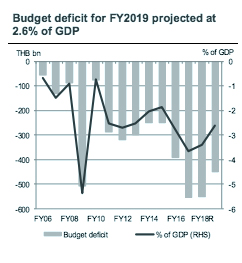
On 30 August, the National Legislative Assembly (NLA) after the second and third readings approved the budget that will finance FY2019 beginning 1 October. Under the budget, revenue was estimated at THB2.55tr or 2% above FY2018R while current expenditures were projected at THB2.26tr (+1.1%) and capital expenditures at THB660bn (-2.4%). Following the stimulus package enacted earlier this year, the government intends to pull back on fiscal support, targeting a narrower budget deficit of THB450bn (-2.6% of GDP) in FY2019 (vs. THB550bn or -3.4% of GDP in FY2018). As the output gap wanes and inflation accelerates next year, we expect the Bank of Thailand (BOT) to begin tightening monetary policy in early-2019 and reiterate our end-2018 policy rate forecast at 1.50%.

img-th5-2

img-th5-3

img-th5-4

img-th5-5


Originally published by CIMB Research and Economics on 3 September 2018.

Mekong Monitor


IMG-MM-160818

Photo Credit: AP


TRADE, ECONOMY, AND INVESTMENT


MYANMAR

Myanmar’s Financial Inclusion Roadmap focuses on fintech
(24 August 2018) The latest inclusion of forming a digital services working group that will be supervised by the Myanmar’s Central Bank and Financial Regulatory Department (FRD) will be embedded in the new Financial Inclusion Roadmap (2018-2022). The digital services working group will include personnel from the private sectors, such as insurance companies, private banks and micro-finance institutions. Only 8 per cent of Myanmar’s population use digital financial services, a minuscule percentage compared to the 74 per cent of the populace who use mobile phones. However, Myanmar’s financial inclusivity is improving as the growth of a formal financial system is on the rise due to the strong growth in microfinance and cooperative sectors coupled with an increase in the private bank sectors. Apart from that, the new roadmap will include pressing forward with financial literacy and protecting customers. According to a research conducted by Myanmar’s Financial Regulatory Department on 12,000 pensioners, only 5 per cent were able to use digital financial services.
Read more>>

VIETNAM

Vietnam to accelerate cashless economy
(25 August 2018) Vietnam aims to move from being a cash-based society by encouraging public services payments such as taxes, electricity, water, hospital fees, social and public welfare programmes to be transacted via banks, according to the State Bank of Vietnam’s (SBV) Deputy Governor, Nguyen Kim Anh. The government envisions collecting 80 per cent of tax payments through banks and allowing treasuries in all provinces to have cashless options by 2020. Non-cash electronic payments will be accepted by 70 per cent of electricity and water suppliers, including all universities and colleges and 50 per cent of all hospitals in the major cities. In addition, 20 per cent of social welfare transactions will be made through banks. Vietnam is progressively transforming the landscape of payments in order to develop a cashless society so it can reduce the cash in circulation, reducing the costs of printing, tallying, transporting and destroying old money.
Read more>>

CAMBODIA

Cambodia’s bilateral trade with the UK surpasses US$1 billion
(23 August 2018) Bilateral trade between Cambodia and the UK in 2017 exceeded US$1.2 billion in 2017, thanks to a 7 per cent increase in bilateral trade Y-o-Y between both countries. Currently, the UK is Cambodia’s fourth biggest export market, behind the EU, US and ASEAN. However, it ranks second in terms of bilateral trade. Cambodia’s exports to the UK grew by five per cent in 2017, peaking at US$1.16 billion. Apart from that, US$48 million of goods were imported from the UK into the Kingdom this year, a significant increase of 112 per cent, underscoring the close economic relations between the two countries. The UK is one of the biggest buyers of Cambodia’s garments, importing 24.3 per cent of total Cambodia garment exports to the world.
Read more>>

THAILAND

Property developers tap Thailand’s Eastern Economic Corridor (EEC)
(27 August 2018) Property developers and hospitality companies will invest more than US$3.38 billion in the Eastern Economic Corridor (EEC), one of the mega projects initiated by the Thai government to transform a large part of Thailand to create an industrial hub which stretches across the provinces of Chachoengsao, Chonburi, and Rayong. The EEC development plan, designed to accommodate Thailand 4.0 initiative, has already attracted infrastructure investments to develop a high-speed train project to link three main airports, which is projected to generate an economic return of US$22.3 billion. Details include the development of U-Tapao airport, the expansion of the Laem Chabang and Map Thaput deep-sea port, as well as a joint venture between Airbus and Thai Airways to build maintenance facilities in the region. Apart from local investors, foreign investors from China and Japan are eyeing to invest in developing residential projects in the region such as Chinese conglomerate, HNA Group and CT Bright. According to a survey by the Government Housing Bank Real Estate Information Centre, Chonburi remains an attractive centre for property development, with the largest number of new projects launched, comprise 53,000 units worth US$4.8 billion, followed by Sri Racha with 18,300 units worth US$1.53 billion.
Read more>>

LAO PDR

Laos to offer electronic payments of land taxes
(29 August 2018) Lao’s Ministry of Finance is set to launch an electronic payment system next year, through which Lao citizens could pay their land taxes through internet banking, mobile applications, Automatic Teller Machine (ATMs) or counter services. The new land tax system will be leveraging the existing road tax payment system via Banque pour le Commerce Extérieur Lao Public (BCEL). Lao’s Ministry of Natural Resources and Environment is working together with other agencies to ensure successful implementation of this new system and to calculate the number of land ownership in Vientiane, which will be supplied to the Taxation Department. Currently, almost all landowners in the targeted villages are now registered in a software programme, where the launch of the new system will be the next step.
Read more>>


mekong-monitor-map

About Greater Mekong Subregion (GMS)

The Greater Mekong Subregion (GMS) Economic Programme was launched by the Asian Development Bank in 1992 connecting five developing ASEAN countries, namely Cambodia, Laos, Myanmar, Vietnam and Thailand, and Chinese provinces of Yunnan and Guangxi Zhuang Autonomous region. The region has some of the most robust economies sharing the Mekong River Basin thanks to its reform and liberalisation. The subregion is growing at a faster pace than the whole of East Asia and the Asia Pacific as the GDP growth rate for 2017 was at 6.4 percent, according to the World Bank. The population at the subregion as of 2016 is at 340 million while the GDP at PPP is at US$3.1 trillion in 2016. In 2015, trading within the region was at US$444 billion.

China-ASEAN Monitor


img-ca-290818.jpg

Photo credit: AP


Economy, Investment and Trade

Singapore, Guangdong to tie up on high tech, smart cities
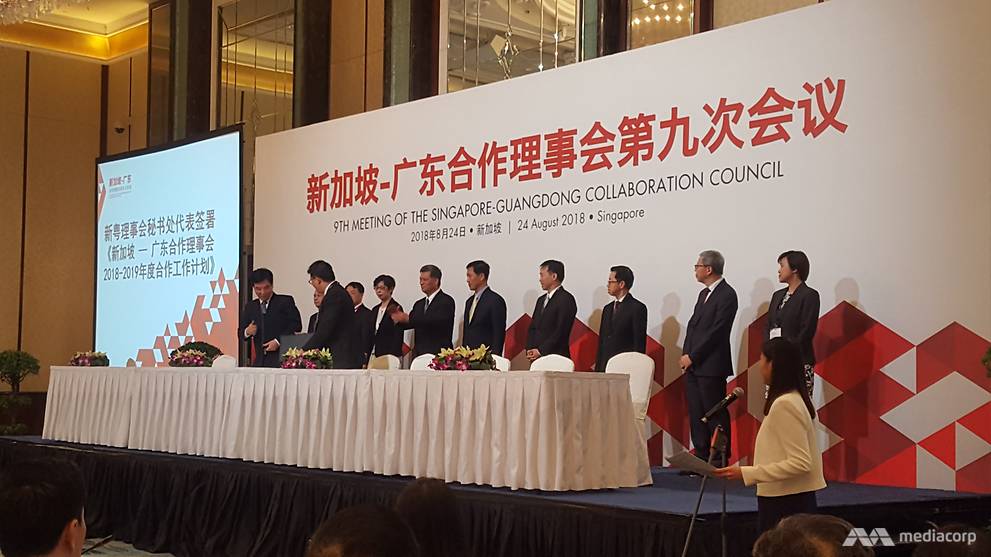
(24 August 2018) Fourteen Singapore companies signed agreements to partner with Chinese companies from the South China province of Guangdong to further cooperate in areas such as transport, education, training and professional services. The deals were signed during the Singapore-Guangdong Collaboration Councils (SGCC) ninth meeting on 24 August 2018 in Singapore. The agreement introduces new opportunities for Singaporean firms to develop its research and development sector, technology, smart cities development, transport and logistic, education and biomedical sciences in Guangdong. The Greater Bay Area project, which is a Chinese government’s scheme to link nine cities in the Guangdong Pearl River Delta Economic Zone with Hong Kong and Macau, is expected to lure in more investments opportunities and partnerships. Singapore-Guangdong bilateral trade saw an increase of 10.3 per cent year-on-year, peaking at US$29.7 billion in 2017. In terms of trade with Chinese provinces, Guangdong ranks as Singapore’s top trade partner.
Read more>>

China-Myanmar Economic Corridor sets to export agricultural products once completed
(25 August 2018) According to Myanmar‘s Minister for Commerce, agricultural goods produced locally would be exported to the lucrative Chinese market via the proposed economic zones along the Myanmar-China border. At the moment, the Myitkyina economic development zone and Kan Paik Tee development zone are the two areas confirmed for the initiative. The Myitkyina development zone will serve as a livestock breeding sector, as well as an area for processing finished goods from the industrial sector, agricultural production, producing advanced construction materials and small-scale industrial materials. The Myitkyina economic zone will be developed with Chinese investments, spanning a land area of 4,000 acres and over a period of 15 years. It will be developed over a period of 15 years with its share ratio of 80 per cent for China and another 20 per cent for Myanmar.
Read more>>

Thailand and China pledge to double bilateral trade by 2021
(25 August 2018) Thailand and China seek to boost bilateral trade and investment partnership from US$73 billion to US$140 billion by 2021 through Thailand’s flagship Eastern Economic Corridor (EEC) scheme and China’s Belt and Road Initiative. The US$45 billion EEC project under the Thailand 4.0 initiative aiming to develop its eastern provinces into a leading ASEAN economic zone. The new law providing tax breaks for investors in the EEC project is a centrepiece of Thailand’s policy to boost growth and target investments into hi-tech industries. It also enables investors to rent land for up to 99 years. Five Memorandums of Understanding (MOU) relating to the EEC were inked between both nations to foster significant strategic cooperation in Southeast Asia. Thailand’s Prime Minister’s Office minister also stated that a board would be formed to promote and facilitate the development of investments and all kinds of business activities. Currently, China is the fifth biggest investor in Thailand. In 2017, the bilateral trade volume between the two nations exceeded US$80 billion.
Read more>>

The Philippines to accelerate Chinese-funded infrastructure projects
(25 August 2018) The Philippines and China have pledged to fast-track the implementation of Duterte administration’s infrastructure projects, which will be financed by the Chinese Official Development Assistance (ODA). Based on a remark by China’s Foreign Minister, the Manila-Bicol Railway and the Subic-Clark Railway projects have been moving rapidly, in line with the Philippine government’s objective to accelerate infrastructure spending. The construction of the north to south railways connecting Manila to Legaspi City will start once both nations agree on the terms of the US$2.83 billion loan, which is due to be signed by the end of 2018. In addition to that, the US$1.07 billion Subic-Clark Railway Project has moved closer to being rolled out after gaining approval by the National Economic and Development Authority-Investment Coordination Committee (NEDA-ICC) last year. Relations between China and the Philippines have warmed in recent times. Net foreign direct investments from China have soared by 534 per cent from January to May 2018 compared to the whole of 2017.
Read more>>

Fashion retailers shift production to Cambodia and Vietnam as trade war escalates
(20 August 2018) Increased tariffs on Chinese products have given Cambodia and Vietnam the competitive edge for consumer-goods makers to shift their supply chains to these countries. Based on a research by the U.S. Fashion Industry Association on companies sourcing goods from China, 67 per cent are eyeing to decrease the value or volume of production in China over the next two years due to the U.S. trade protectionism. Vietnam’s relatively low inflation, the stability of the Dong and politics are attractive factors to foreign investment while Cambodia’s low-cost labour has garnered interests from investors to invest production capacity in Cambodia. However, labour productivity in Cambodia is lower than China’s, posing a challenge to the manufacturers to produce more elaborate products.
Read more>>


Singapore: July 2018 industrial production


HIGHLIGHTS

July 2018 industrial production

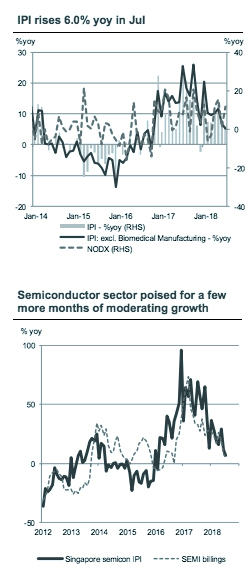
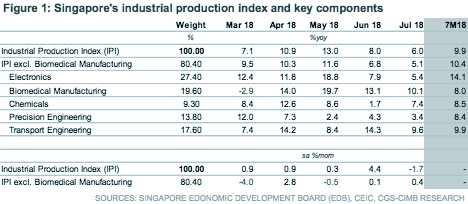
  • The industrial production index (IPI) came in ahead of our forecast at 6.0% yoy in July due to resilient pharmaceutical and chemicals output growth.
  • However the prognosis for the electronics cluster, which accounts for 27% of the manufacturing sector, remains weak in 2H18.
  • We cut our Singapore GDP growth forecast for 2019 from 2.8% to 2.6% (2018 forecast intact at 3.2%) owing to slowing cyclical drivers and negative trade spillover.

img-sg9-1

IPI growth slowed less than we expected…
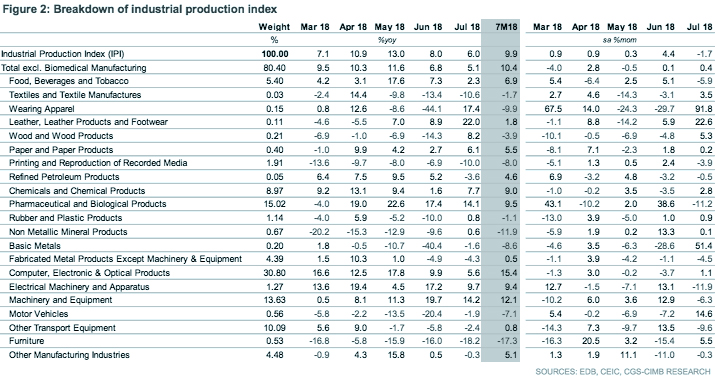
The IPI beat our forecast, rising 6.0% yoy in July (CIMB: +4.9% yoy, Bloomberg consensus: +6.0% yoy), and was accompanied by an upward revision in June’s pace to 8.0% yoy. Manufacturing activity, excluding the volatile biomedical sector, grew 5.1% yoy in July (+6.8% yoy in June), mirroring the headline trend. On a seasonally-adjusted basis, the IPI declined 1.7% mom, breaking a four-month streak of increases that ended with a 4.4% mom gain in June.

… due to resilient biomedical production …
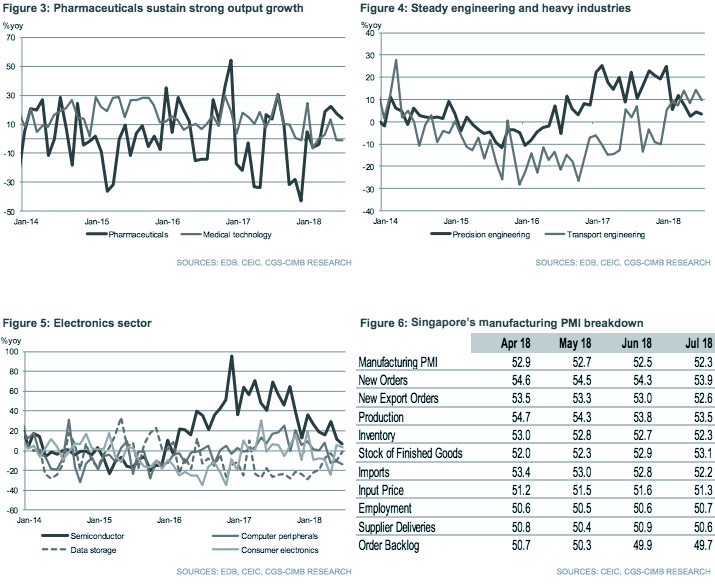
Biomedical manufacturing sustained double-digit growth for the fourth consecutive month (+10.1% yoy in July vs. +13.1% yoy in June). Despite traditionally being volatile, pharmaceuticals – which stand out as the second largest sub-cluster in the manufacturing sector – has sustained strong output growth at 14.1% yoy in July (+17.4% yoy in June) and 9.5% yoy in 7M18.

… and a stronger showing in the chemicals cluster
The chemical sector’s activity improved in July (+7.4% yoy vs. +1.7% yoy in June) mainly boosted by robust demand for other chemicals (+15.8% yoy vs. -6.0% yoy in June) and specialty chemicals (+1.9% yoy vs. -2.6% yoy in June). Petrochemical output growth eased to 7.8% yoy in July (+14.4% yoy in June) while petroleum output contracted for the first time since a year ago (-3.6% yoy vs. +5.2% yoy in June) due to the closure of a plant for maintenance.

Steady engineering and heavy industries
The precision engineering segment registered growth of 3.4% yoy (+4.3% yoy in June) despite a more challenging base. Transport engineering growth moderated to a stillrobust 9.6% yoy (+14.3% yoy in June) as a pickup in aerospace (+23.5% yoy vs. +4.9% yoy in June) cushioned cooling marine & offshore activity (+1.4% yoy vs. +32.1% yoy in June).

Electronics IPI growth to remain weak until late 2018
Expansion in the electronics sector (+5.4% yoy in July vs. +7.9% yoy in June) was weighed down by a challenging base arising from last year’s demand surge. We expect the yoy trend in the electronics sector to only bottom in late 2018, as global demand for semiconductors (+7.0% yoy vs. +11.3% yoy in June), which make up 62% of the sector’s production, stagnates.

Manufacturing sector bracing for more headwinds
We expect Singapore’s GDP growth to moderate to 2.3% yoy in 2H18 (+4.2% yoy in 1H18) as cyclical drivers that spurred demand last year have waned. Negative spillover from the US-China trade spat on demand for Singapore’s exports is emerging as a significant risk to the economic outlook for 2019, following the impasse in trade negotiations between the two countries this week. We have moderated our GDP growth estimate for 2019 accordingly from 2.8% to 2.6%. Our 2018 GDP forecast is intact at 3.2%.

img-sg9-2

img-sg9-3

img-sg9-4


Originally published by CIMB Research and Economics on 24 August 2018.

CARI Captures 369

c368_graphic


ASEAN

Growing interest in Impact Investing in Southeast Asia
(23 August 2018) Global Impact Investing are investments made into companies, organizations and funds with the intention to generate social and environmental positive externalities in addition to financial gain. Impact investments are primarily brokered by Private Impact Investors (PII) and Development Finance Institutions (DFI). The former consists of a myriad of investors, such as fund managers, family offices and foundations. According to the Landscape for Impact Investing in Southeast Asia report, since 2007 until 2017, PIIs have deployed around US$904 million through 225 direct deals and Developmental Finance Institutions (DFI) have transacted US$11.3 billion through 289 direct deals. Cambodia is the leading country of the PII activity in ASEAN, which absorbed 45 per cent of all PII capital between 2007 and 2017. This was followed by Indonesia, Philippines and Thailand. Due mainly to Cambodia’s use of the U.S. Dollar and its open economy, it has garnered nearly as much PII capital as in Indonesia, the Philippines and Vietnam combined. High income countries like Singapore garnered comparatively less PII activity to date, however, many regional enterprises that have received impact investments are still headquartered in Singapore. Meanwhile, Indonesia has the highest DFI worth US$3.595 billion, followed by Philippines (US$2.310 billion) and Thailand (US$1.589 billion). The financial services sector has received the most impact of PII capital to date, accounting for roughly 60 per cent of all PII capital deployed, with 18 per cent of capital going into clean energy, followed by ICT and agriculture.

INDONESIA

Indonesia aims for less foreign ownership of bonds
(23 August 2018) Following a massive withdrawal of foreign bonds from the bonds market, totalling up to US$759 million within the past two weeks, Indonesia aims to slash the amount of government bonds owned by offshore funds to 20 per cent from the current 38 per cent in order to protect its assets from external shocks. Foreign ownership of bonds was at a peak of 42 per cent in January this year. Thus, a drop in the level of confidence among the foreign investors to invest in the emerging markets is being seen as a great opportunity to expand domestic ownership. Indonesia has been highly reliant on Foreign Direct Investment (FDI) as a source of funding to finance its current account and budget deficits. According to the data from the Indonesia’s Ministry of Finance, foreign investors held US$58 billion of Indonesian bonds as of August 2018.

THAILAND

Bank of Thailand to launch digital currency in 2019
(22 August 2018) The Central Bank of Thailand (BoT) is planning to introduce a state-issued cryptocurrency based on R3’s Corda blockchain through the Central Bank Digital Currency (CBDC) project called Inthanon. Eight of the country’s largest commercial banks are participating in the projects such as Bangkok Bank, Standard Chartered Bank Thai and HSBC. The first phase which is intended to be used for interbank fund transfers and is expected to be completed within the first quarter of 2019. In the second phase, the participating commercial banks and R3 plan will expand the usage of the digital currency to include third-party fund transfers and cross-border payments. BoT noted that the project is similar to those in development by other central banks such as the Bank of Canada, the Hong Kong Monetary Authority and the Monetary Authority in Singapore. Bank of Thailand’s governor envisioned the project would increase efficiency in the Thai financial market infrastructure and reduce interbank settlement costs.

MALAYSIA

Malaysian government cancelled ECRL and gas pipeline projects
(21 August 2018) Malaysia has decided to cancel the East Coast Rail Link (ECRL) and other multibillion-dollar Chinese infrastructure projects which were previously endorsed by former premier Datuk Seri Najib Abdul Razak as the new government aims to cut down on the country’s ballooning debt. The Chinese government has agreed with Tun Mahathir’s stand to scrap the US$20 billion East Coast Rail Link Project and the energy pipeline projects which has been suspended over issues relating to escalating costs as well as their effect on the country’s debt burden. Malaysian government officials will negotiate for the compensation and other issues with the Chinese companies involved. This latest pronouncement from Tun Mahathir ended speculation that his five-day official visit to China would revive the projects which are currently under a stop-work order.

SINGAPORE

Singapore lays out costly plans for affordable healthcare and housing to curb rising living costs
(19 August 2018) The Singaporean Prime Minister said in his National Day Rally, outlined plans to ensure the affordability of healthcare and public housing to alleviate worries of rising cost of living although Singapore’s economy is showing strong growth with a low rate of unemployment and high wages.Therefore, the government has introduced schemes such as the Community Health Assist Scheme (CHAS) which applies to all Singaporean with chronic health conditions regardless of income. The government plans to implement, among other things, 99-year leases on public housing and is concentrating on plans to build more desalination plants to produce clean water in Singapore. These measures will require the government to find new revenue streams for its growing government expenditure. According to experts, higher taxes or a broader tax base may be anticipated in order to protect the government’s fiscal prudence.

PHILIPPINES

Philippines’ tax reform to generate US$5.01 billion annually
(23 August 2018) The Duterte administration’s proposed tax reform program, Tax Reform for Acceleration and Inclusion or (TRAIN) seeks to improve the tax system and generate steady revenue streams, raising an estimated US$5.01 billion yearly to fund the massive infrastructure projects that are in the pipeline. The revenue from the tax as the percentage of its GDP was 15.7 per cent last year. According to the Fiscal Year 2017 Annual Fiscal Report, the tax reform would generate an additional income equal to about 1.2 per cent of Philippine’s GDP. Apart from that, the new proposed tax system would propel the growth of disbursements from 17.9 percent of the GDP in 2017 to 20.6 per cent in 2022. TRAIN, which took effect in January 2018 has been imposed on oil products, raised levies on sugary drinks and automobiles.

INDONESIA

Indonesia launches its first blockchain hub
(23 August 2018) Indonesia has launched its first blockchain hub through the joint efforts of prominent players from Indonesia’s financial system, including the Creative Economy Agency (BEKRAF), Indonesian Chamber of Commerce (KADIN), Indonesian Blockchain Association (ABI) and HARA (a blockchain for social impact). The hub acts as a gateway to the growing blockchain ecosystem in Indonesia for all global and local projects, it also aims to drive the innovation among the blockchain communities and to offer education about the blockchain technology. According to the former Indonesia Minister of Finance, Chatib Basri, the blockchain would allow the access to granular, connected and open data which could improve business efficiency and policy-making process for the government. However, HARA acknowledged the information asymmetry in the blockchain ecosystem and the difficulties in explaining the social and economic impact of blockchain technology to the businesses, regulators and to the society which altogether hinder the expansion of blockchain technology across the world.

LAOS

Laos embraces ASEAN tariff code
(23 August 2018) Laos has adopted a new ASEAN tariff code, signifying the country’s commitment to ASEAN’s economic integration and community building process, according to a statement by Lao’s Ministry of Finance. Vietnam started to implement the ASEAN Harmonized Tariff Nomenclature 2017 in May 2018. The updated version of the tariff code provides a much clearer definition for goods traded among the ASEAN countries. By adopting the new tariff code, Vietnam was able to overcome the difficulties in levying tariffs on goods from ASEAN countries since there was no commodity description and tariff code for international use in the past. Currently, the country has liberalised tariffs on selected goods. As Laos is the last country to join the trade bloc, the country is permitted to withhold its tariffs on strategic goods at the moment.

MYANMAR

Myanmar’s Construction Industry Board will be formed under the new law
(22 August 2018) According to Myanmar’s Ministry of Construction, a new law is being drafted to form a Construction Industry Development Board (CIDB) to enforce a set of standards for the construction industry. Vietnam is working together with Building and Construction Authority of Singapore and the Malaysian CIDB in drafting the new law. The new law will force all construction businesses across the region to comply with the international standards of safety, health and environment. The CIDB intends to foster further transparency in procurement and tendering for both public and private projects as well as creating transparency in public spending. Apart from that, the government will set a minimum quality standard for the materials used in the construction to prevent contractors cutting corners to reduce costs.

VIETNAM

Implementation of Vietnam’s National Single Window (NSW) and ASEAN Single Window (ASW) falls below expectations
(20 August 2018) Vietnam’s National Single Window (NSW) is a prerequisite of the ASEAN Single Window (ASW), both play a vital role in meeting the trade facilitation and economic integration between the ASEAN nations. According to the General Department of Vietnam Customs, only 11 ministries and sectors were connecting administrative procedures to NSW. Vietnam has targeted to connect an additional 143 procedures to NSW in 2018, however, ministries and sectors linked just 53 formalities to the system, only 37 per cent of the total as of June. Most of the ministries are evaluating, putting forward solutions, and drafting legal documents to implement administrative reform measures. Since there is no decree on mutual recognition of electronic documentation and licenses between Vietnam and its trading partner, Vietnam aims to improve the Information Technology (IT) to enhance connectivity between the ministries and between Vietnam and Malaysia, Thailand, Singapore and Indonesia.