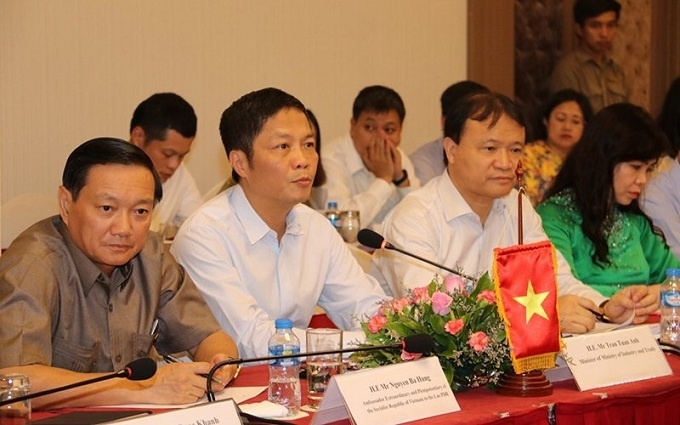
China-ASEAN Monitor: Chinese investment pledges into Vietnam increases 134% y-o-y in first seven months of 2019


Photo Credit: VCG


Economy, Investment and Trade


Chinese investment pledges into Vietnam increases 134% y-o-y in first seven months of 2019
(22 August 2019) Chinese investment pledges increased 134% on the year during the first seven months of 2019 totalling US$2.48 billion, despite a 11.9% decline in Vietnam’s total investment pledges received during the period, according to Vietnamese Foreign Investment Agency data. However, the agency noted that the figures represent only investment pledges and not actual disbursements. According to data from the Chinese side, China’s investment in Vietnam previously reached a high of US$1.28 billion in 2016 from under US$200 million in 2011, before declining to US$760 million in 2017 due to tightening Chinese investment regulations. This was followed by an over 60% jump in Chinese non-financial new direct investment in Vietnam totalling US$1.23 billion in 2018.
Read more>>

Chinese smartphone brands gain market share in Southeast Asia
(21 August 2019) Chinese smartphone brands led by Oppo, Xiaomi and Vivo accounted for 62% of total smartphone shipments to Southeast Asia in the second quarter of 2019 — a 12% year-on-year increase, according to an industry research report. However, South Korean heavyweight Samsung remains the market leader in the region with a 5% growth during the period. Having said that, Vietnam’s state-owned mobile carrier Viettel Group told a media outlet on August 26 that it aims to be the first Southeast Asian country with a 5G network that does not ride on technology from China’s Huawei, as “it is a bit sensitive with Huawei now.” Instead, Viettel will work with “safer” options from the west: Ericsson AB’s technology in Hanoi, Nokia Oyj’s technology in Ho Chi Minh City, as well as 5G chipsets from Qualcomm Inc and another US supplier.
(Photo credit: Phone World)
Read more>>

China’s streaming firm iQIYI in talks for Indonesian expansion
(22 August 2019) Chinese video-on-demand company iQIYI is currently in talks with Indonesia’s Media Nusantara Citra (MNC) to expand its reach in Southeast Asia, according to a media report. The announcement follows a similar announcement in June when iQIYI announced a tie-up with Malaysia’s pay-TV leader Astro, as well as an announcement in April when the company said that it will start by making its application available throughout Southeast Asia as a first step in building up its presence in the region. iQIYI has since confirmed in a statement that they were indeed in preliminary discussions with MNC but a final agreement had yet to be reached. However, according to a statement by MNC chairman Hary Tanoesoedibjo, the companies have agreed to form a joint venture — in which MNC holds the controlling stake — that will begin operations in the fourth quarter of 2019.
Read more>>

Indonesia eyes palm oil export boost to China amidst trade war
(23 August 2019) Indonesia looks forward to expanding its reach in China for crude palm oil (CPO) exports following the Chinese commerce ministry’s announcement in early August that it plans to remove palm oil, soybean oil and rapeseed oil from its import tariff quota management. However, a senior Indonesian economic official stressed that the government does not intend to clear more forests in preparation for the anticipated increase in palm oil exports, but that they will instead focus on producing higher yields from better palm oil seeds and technology. China’s announcement was also well received by the Indonesian Palm Oil Association (GAPKI), whose spokesman said that the “potential is huge” since China presently consumes more soybean oil than palm oil.
Read more>>

Chinese bank first to get digital bank approval in Labuan SEZ
(26 August 2019) The China Construction Bank Corp. Labuan Branch (CCBL) became the first company to receive regulatory approval from the Labuan Financial Services Authority to operate a digital bank in the Labuan International Business and Financial Centre (Labuan IBFC) in East Malaysia. With this, CCBL is slated to become the first bank to provide digital banking services in the Labuan special economic zone (SEZ) — a move that is also expected to boost Labuan’s position as a financial hub for Belt and Road Initiative (BRI) companies.
Read more>>

Japan to the rescue?


It’s fair to say that ASEAN is finding itself in between a rock and a hard place. With the trade war between the US and China seeing no sign of concluding, the region’s export-oriented economies are already suffering. The Trump administration’s hostility towards free trade and China’s own inward pull has many ASEAN leaders worried about who is left to credibly stand up for globalisation and a rules-based order, both of which are vital for the bloc’s survival. Could Japan prove to be ASEAN’s salvation?


Commitment towards a liberal world order

Japan has increasingly been referred to as an example of a developed country which has so far avoided the spread of populism afflicting other much older and venerable democracies. Reasons put forth have included historically low levels of immigration, a tamed mainstream media, the high quality of its social services, including education and healthcare, and its relatively egalitarian economy. In an era where ethnic and class tensions are testing Western democracies and fracturing the liberal world, Japan seems committed to becoming more liberal, not less.

Japan and ASEAN share a common belief in upholding the postwar multilateral system upon which Asian prosperity has been built. After the withdrawal of the US from the Trans-Pacific Partnership (TPP) agreement, Japan proved indispensable in resuscitating the agreement and rebalancing certain concessions to address the demands of certain members. Japan proactively contributes money and personnel to global institutions such as the United Nations, the International Monetary Fund, and the Asian Development Bank. According to the Japan International Cooperation Agency, total contributions and subscriptions to international organisations in 2017 amounted to US$3.4 billion. Its close collaboration with international organisations such as the International Court of Justice (ICJ) and the International Criminal Court attests to Japan’s belief in the international rule of law.

Of smart cities and Samurai bonds

At a time when ASEAN must navigate the ongoing US-Sino rivalry and resist pressures to pick sides, Japan may provide a welcome partner as a fellow middle power. Japan accounted for 8% of ASEAN’s total merchandise export value in 2017. It also accounted for 9.9% of total FDI inflows in the same year, making Japan the second largest external source of FDI into ASEAN behind the European Union.

While there has been much media attention focused on China’s Belt and Road Initiative, the latest data from Fitch Solutions as of June 2019 argued that in terms of the total value of pending projects, Japanese-backed infrastructure projects in ASEAN’s six largest economies of Indonesia, Malaysia, the Philippines, Singapore, Thailand, and Vietnam outpaced that of China’s by US$367 billion to US$255 billion respectively. Across ASEAN as a whole and by number of projects, Japan still narrowly beat China by 240 to 210.

Japan’s infrastructure drive into Southeast Asia is distinguished from China’s by its focus on providing quality and sustainability in place of deep pockets. Japanese Prime Minister Shinzo Abe has promised support for the ASEAN Smart Cities Network (ASCN) programme, for example, which seeks to create environmentally friendly cities using artificial intelligence and networked devices in 26 pilot cities across ASEAN. Japan, already knowledgeable in smart city innovation, is well placed to provide the technological know-how and funding required.

For ASEAN governments worried about Beijing’s so-called ‘debt diplomacy’, the Japanese bond market provides an alternative source of external financing. While Japan’s highly indebted government can never challenge Beijing’s state-backed chequebook diplomacy head on, it has managed to shift the liability of providing foreign aid onto its huge capital market instead. This is done by allowing ASEAN governments to issue yen-denominated bonds guaranteed by the Japanese government, allowing the former to take advantage of Japan’s low interest rates environment.

ASEAN governments have certainly proven receptive, with Malaysia having issued 200 billion yen (US$1.9 billion) worth of ‘Samurai’ bonds in March 2019 to fund infrastructure developments. As of August 26, Malaysian Prime Minister Tun Mahathir Mohamad announced a second round of Samurai bonds was in the works. The Indonesians for their part issued 177 billion yen (US$1.7 billion) worth of bonds in May of this year, while the Philippines issued 92 billion yen (US$870 million) worth of their own bonds in early August.

A trusted partner

Beyond building infrastructure and providing ready cash, Japan also trumps over China in the ASEAN market of public approval. In a January 2019 region-wide survey conducted by the ISEAS-Yusof Ishak Institute, Japan was ranked the most trusted major power in Southeast Asia with 65.9% of respondents expressing confidence in Japan ‘doing the right thing’ in global affairs (China concurrently was ranked the least trustworthy).


Trade spat with Korea dampens Japan’s pro-globalisation shine

However, Abe’s pretensions of being a champion of free trade may be severely tested by the recent trade spat taking place between Japan and South Korea. On July 4, the Abe administration has decided to tighten controls on the exports of three chemicals used for making semiconductors and flat panel screens used in smartphones and TVs, thereby constricting South Korea’s high tech economy.

Abe followed this on August 2 by formally stripping Seoul of its white list status, further restricting the export of certain materials to South Korea. Under the latter measure, the export of around 1,120 dual-use items to South Korea will now require individual authorisation instead of fast track approval. South Korea, for their part, intends to remove Japan from its own white list by September.

While Japan justified their actions on the grounds of national security, many aren’t buying it. Tokyo’s move is widely seen as a response to a South Korean court ruling on October 30 ordering Japanese firms to pay reparations to former wartime labourers from the colonial period. This was followed by a court decision in January to freeze the Korean assets of Japanese firm Mitsubishi Heavy Industries (one of the firms ruled against) in order to sell them off.

Japan objected to the rulings, stating that all issues related to reparations from the colonial period were settled under a 1965 treaty which normalised bilateral ties. While the Japanese are frustrated by what they perceive to be a constant demand for apologies and reparations from South Korea, there is also a very real economic incentive for refusing to abide by the rulings. Accepting the verdict could see other former victims file their own lawsuits against some 300 Japanese companies accused of using slave labour during Japanese rule. Potential reparations could balloon to US$20 billion or more.

Experts meanwhile warn the spat could challenge the existing US-led security architecture in East Asia, with Seoul having decided on August 22 to scrap an intelligence-sharing agreement with Tokyo. Meanwhile, Japan’s espousals for international liberalism may prove hollow if Abe continues to insist on intermeshing politics and trade, as well as attempting to interfere in the judicial system of another country.


Another headache for ASEAN?

The Japan-Korea spat will no doubt be another headache for ASEAN, already reeling from the Sino-US trade war. Having three of the largest economies in the world plus Korea choosing to weaponise trade will further disrupt regional supply chains and hurt ASEAN growth. Whether Japan will be the new saviour of globalisation is dependent on whether Abe is ultimately willing to choose realism over nationalistic impulse.


Pace of contraction for Singapore’s IPI slows down in July


HIGHLIGHTS

July 2019 industrial production

  • Manufacturing weakness abates amid regional semiconductor rebound, and incremental gains in chemicals and transport engineering.
  • Tech output surge to be short-lived as higher US-China tariffs loom from September.

The decline in industrial production narrowed to 0.4% yoy in July
The decline in Singapore’s industrial production index (IPI) extended into the third month in July, but the pace of contraction whittled to 0.4% yoy (-8.1% yoy in June), an improvement on our expectations. Likewise, IPI excluding biomed fell at a milder pace of 0.7% yoy (-11.5% yoy in June). On a seasonally-adjusted basis, IPI expanded 3.6% mom in July (-0.3% mom in June).

Temporary tariff de-escalation in late-Jun triggers tech rebound
Electronics manufacturers, buoyed by a US-China tariff de-escalation at the G20 meeting and China’s surge in integrate circuits output, staged a strong rebound in July (+28.9% mom vs. -8.9% mom in June and +0.9% yoy vs. -18.2% yoy in June), lifted single-handedly by semiconductors (+46.7% mom vs. -17.0% mom in June). On the other hand, production of other components retreated, some after strong increases the prior month: computer peripherals (-13.1% mom vs. -2.4% mom in June), data storage (-26.0% mom vs. +58.1% mom in June), infocomms & consumer electronics (-26.7% mom vs. +44.1% mom in June) and other electronic modules segments (-29.7% mom vs. +23.2% mom in June).

Incremental gains in chemicals and transport engineering segments
Biomedical output growth slowed to 0.8% yoy (+5.4% yoy in June) as pharmaceutical production contracted 4.8% yoy (+5.7% yoy in June), superseding a 17.7% surge in medical tech (+4.2% yoy in June). An uptick in the chemicals segment (+2.2% yoy vs. – 3.3% yoy in June) was supported by stronger output in specialty chemicals and other chemicals, offsetting steep declines in petroleum and petrochemicals, which saw weaker production due to plant shutdowns in Singapore as well as lower demand from the trade war and competition from increased regional supply. Weak capex appetite continued to weigh on the precision engineering segment (-7.5% yoy vs. -2.3% yoy in June) while transport engineering (-0.2% yoy vs. -15.0% yoy in Jun) stabilised due to improved activity in the aerospace cluster, in addition to narrower losses in marine & offshore.

Trade outlook waxes and wanes as tit-for-tat resumes
We expect recent gains in Singapore’s semiconductor output to be short-lived, following the ratcheting up of trade tensions. In early-Aug, the US announced a 10% tariff on US$300bn of goods from China effective in two tranches on 1 Sep and 15 Dec. China retaliated with new 5-10% tariffs on US$75bn of US imports and a 25% tariff on US autos and auto parts effective on the same dates. Matters took a turn for the worse last week, as President Trump raised existing duties on US$250bn of Chinese goods from 25% to 30% (w.e.f. 1 Oct), and upped the ante on aforementioned tariffs from 10% to 15%. After a brief period of inventory restocking, we expect higher incoming tariffs to depress export demand and regional manufacturing activity again.

Originally published by CIMB Research and Economics on 26 August 2019.

This article has been edited to reflect its time-sensitivity.

CARI Captures 418


INDONESIA

Government aim for moderate rise in revenue, expenditure in 2020 state budget
(17 August 2019) Indonesian President Joko Widodo revealed details in the government’s proposed 2020 state budget on August 17, which aims for a 2.6% increase in state revenue to US$156 billion and a 1.5% increase in state expenditure to US$178 billion. For comparison, Indonesia’s 2019 state budget saw a 13% increase in state revenue and 10% increase in state expenditure from the previous year. According to Joko, who will be sworn in for his second term in October, the 2020 budget focuses on five pillars: human capital development, infrastructure improvement, social protection, regional autonomy and anticipation of global uncertainty. Nevertheless, in a post-budget briefing, finance minister Sri Mulyani Indrawati noted that the numbers proposed were not “fixed,” and that it “might be difficult to accelerate” growth in 2020 due to weakening global economic growth. The question, she said, is whether domestic demand will be able to offset such risks.

THAILAND

Government unveils US$10.27 billion economic stimulus package
(21 August 2019) The Thai government announced on August 20 a US$10.27 billion package to stimulate the country’s economy. These incentives include (i) a US$32.50 handout via registered e-wallets and further rebates for citizens travelling domestically outside their home provinces, (ii) visa fee waivers for tourists from 18 countries until April 2020, (iii) US$16.25 in monthly handouts for low-income earners, (iv) US$16.25 in handouts per 1,600 square metre of farmland for four million rice-farming households, and (v) a 0.1% interest rate cut for one-year loans of up to US$9,749. The move comes as Thailand recorded its slowest growth in almost five years in the second quarter of 2019 as the country’s exports — which account for 68% of GDP — continue to be impacted by the US-China trade war. Furthermore, Thailand’s exports to China — its top trade partner — plunged 14.9% on the year in June, not least because of the strength of the Thai baht and the weakening yuan, which is at an 11-year low.

MALAYSIA

Malaysia’s GDP grows 4.9% in 2Q, exceeding analysts’ forecast
(19 August 2019) The Malaysian economy grew 4.9% in the second quarter of 2019, exceeding its 4.5% expansion in the first quarter of the year and the second quarter of 2018. According to central bank governor Nor Shamsiah Mohd Yunus, the country’s mining sector grew 2.9%, aided by recovery in natural gas output following pipeline disruptions in 2018. Furthermore, the manufacturing sector grew 4.3% due to growing domestic demand, the construction sector grew 0.5% due to improved activity in the high-end residential market, and the services sector grew 6.1% fuelled by continued growth in wholesale and retail trade. However, growth in the agricultural sector slowed from 5.6% in the first quarter to 4.2% in the second quarter, due to weaker natural rubber output and a decline in fishing and forestry. On the whole, the Malaysian economy grew 1% on a quarter-on-quarter basis, with growth in the first half of the year coming in at 4.7%.

MALAYSIA-UK

Malaysian PM urges Britain to “break with Europe” on palm oil
(19 August 2019) Malaysian Prime Minister Mahathir Mohamad called on Britain to take a “fresh attitude” towards palm oil after it leaves the European Union (EU) on October 31, saying that doing so could mean even better trade relations between the UK and ASEAN. The premier added that engaging palm oil producers and incentivising sustainable production were a better way to promote environmental sustainability, as opposed to singling out a commodity and boycotting it. Mahathir’s comments, which were published in an opinion column on Bloomberg, comes as Malaysia and Indonesia prepare to retaliate against the EU’s directive curbing the use of palm oil in European biodiesel.

INDONESIA

Indonesian PM encourages production of palm oil-based aviation fuel
(16 August 2019) Indonesian President Joko Widodo called on local enterprises to produce palm oil-based aviation fuel in order to boost the use of local palm oil and decrease the country’s dependence on aviation fuel imports. The premier’s calls come after his recent announcement that he had instructed stakeholders to expedite the mandatory proportion of diesel blended with crude palm oil from 20% to 30% by January 2020, and 50% by the end of 2020. Separately, trade minister Enggartiasto Lukita confirmed on August 16 that the Indonesian government has submitted a letter to the World Trade Organization challenging the EU’s imposition of 8%-18% in anti-subsidy import duties on Indonesian biodiesel which went into effect on August 14. The duties will be enforced for a four-month period, extendable to five years.

THAILAND, INDONESIA, MALAYSIA

Tripartite rubber council ending rubber export curbs
(19 August 2019) Thailand, Indonesia and Malaysia — which make up the International Tripartite Rubber Council (ITRC) and account for 70% of global natural rubber production — will not be extending their rubber export curbs after the agreed upon term. In March, the ITRC agreed to implement curbs on around 240,000 tonnes of rubber exports over four months to prop up prices for the commodity. According to unnamed Reuters sources, Indonesia and Malaysia have already completed their part in the Agreed Export Tonnage Scheme (AETS) export curbs, while Thailand will likely complete its end of the deal in September. According to Indonesian rubber association chairman Moenarji Soedargo, extensions were not necessary since “supply will be lower by itself” due to a disease afflicting rubber plantations in parts of Indonesia which will lead to an estimated 15% drop in the country’s rubber output this year.

MALAYSIA, SINGAPORE

Singapore, Sarawak ink eight deals at inaugural trade forum
(17 August 2019) The inaugural Sarawak-Singapore Business Forum and Expo held in Singapore on August 16 saw the signing of eight memoranda of understanding (MoU), witnessed by Sarawak chief minister Abang Johari Tun Openg and Singapore trade minister Chan Chun Sing. These included MoUs for R&D collaboration to advance the Sarawak Digital Economy Strategy; greater cooperation between chambers of commerce; collaboration to develop a supply chain of raw or processed plant material from Sarawak for healthcare and wellness products; the promotion of an advanced smart metering system in Sarawak; and collaboration in the areas of the new interconnected self-service Augmented Virtual Reality (AVR) Platform.

MALAYSIA, THAILAND

Thailand hopes to collaborate with the state of Sabah in medical tourism, agriculture
(21 August 2019) Thailand is seeking investment opportunities in Malaysia’s Sabah state, especially in the areas of medical tourism and niche tourism, Thai ambassador to Malaysia Narong Sasitorn said during a Thailand-Sabah trade and investment forum held on August 21. According to Narong, Thailand also hopes to participate in the BIMP-EAGA (Brunei, Indonesia, Malaysia and Philippines-East Asia Growth Area), and hopes to do so by using Kota Kinabalu’s land and maritime facilities as a gateway to the growth area. Similarly, he said, Sabah can also leverage on Thailand’s agricultural expertise to meet the state’s goal of increasing its reach in the sector. Sabah chief minister Mohd Shafie Apdal, for his part, said that the state is also looking to expand its automotive, wood processing and manufacturing industries to create new employment opportunities for locals — and that these too are areas for potential collaboration between both countries. Thailand is Sabah’s third largest trading partner in ASEAN while Malaysia is Thailand’s main trading partner in ASEAN with trade valued at US$25 billion in 2018.

INDONESIA

President Joko seeks approval from parliament to move capital to Kalimantan
(16 August 2019) Indonesian President Joko Widodo requested on August 16 parliamentary approval to relocate the country’s capital from Jakarta to a city on Kalimantan island. Doing so, he said, would help ensure “Indonesia-centric” development that does not only focus on Jakarta or Java. According to local media, Joko is weighing three cities in the eastern, central and southern parts of Kalimantan, and will make his final selection later this month. Subsequently, he hopes to obtain parliamentary approval by 2020, begin construction in 2021 and start the relocation process in 2024. The Indonesian premier’s announcement to move the capital city to Kalimantan, which is also located on Borneo island, was well received by neighbouring countries. Neighbouring Malaysian Sabah state’s deputy chief minister Wilfred Madius Tangau said that Sabah could be like what Johor is to Singapore, while Malaysia-Singapore Business Council co-chair Nik Norzrul Thani said that the move will likely have multiplier effects for Sabah and that they will seize the opportunity to position the state as a springboard to enter Indonesia and Borneo.

ASEAN

Southeast Asia tech deals total US$6 billion in 1H 2019
(16 August 2019) Southeast Asia recorded US$5.99 billion in capital inflows to the region’s technology companies in the first six months of 2019 — a nearly two-thirds increase from the US$3.6 billion recorded in 2H 2018, according to a report by a Singapore-based venture capital firm. However, when compared on a year-on-year basis, 1H 2019’s inflows came in around 28% lower than the US$8.31 billion recorded during the same period last year. Nevertheless, the report expects 2019’s full-year investment to match 2018’s, what with firms such as Grab, Gojek, Traveloka and Tokopedia continuing to attract sizeable funding rounds, and up-and-comers such as Ninja Van, Taiger, Carousell, Pomelo and Rupiahplus also raising larger funding rounds.

Mekong Monitor: Vietnam, Laos to step up cooperation in trade and energy


TRADE, ECONOMY, AND INVESTMENT


VIETNAM, LAOS

Vietnam, Laos to step up cooperation in trade and energy
(18 August 2019) Vietnam and Laos’ ministries of trade and energy held their annual cooperation meetings in Vientiane on August 16-18 to discuss bilateral development cooperation in the areas of industry, trade, energy and mining. According to local media, both sides lauded the 10% growth in bilateral trade between the countries — fulfilling a target set by the countries’ leaders during a prior inter-governmental meeting. Furthermore, Vietnamese trade minister Tran Tuan Anh raised several issues faced by Vietnamese companies when doing business in Laos, such as delays in goods clearance and origin inspection. Lao energy and mines minister Khammani Inthilath, for his part, raised the possibility of Vietnam purchasing thermal and wind power from energy projects in Laos in the near future. Both sides agreed that their immediate steps post-meeting would include designing a plan to implement energy and mining cooperation agreements, and negotiating a memorandum of understanding to develop border trade and infrastructure along their shared border. Revenues from trade between both countries reached US$663.8 million in the first seven months of 2019, a 13.1% year-on-year increase.
Read more>>

VIETNAM, LAOS

Vietnamese, Lao provinces to sign 2020-2022 cooperation agreement
(16 August 2019) Vietnam’s Quang Tri province and Laos’ Savannakhet and Salavan provinces agreed to ink a cooperation period for the 2020-2022 period following talks in Quang Tri on August 16. According to Vietnamese media, the agreement will include clauses to boost trade at the Lao Dao and La Lay border gates and auxiliary border gates, as well as other support and tax incentives for businesses and investors. The three provinces also pledged to boost cooperation in the area of agricultural and rural development, such as through technology transfers to boost agriculture capabilities.
Read more>>

VIETNAM, LAOS, CAMBODIA

Vietnam, Laos, and Cambodia commemorate 20th anniversary of Development Triangle
(17 August 2019) A two-day forum was held to commemorate the 20th anniversary of the Cambodia-Laos-Vietnam (CLV) Development Triangle in northern Vietnam’s Quang Ninh province on August 17. During the event, representatives from each country lauded the positive results from their partnership, such as investment from the Vietnamese side of up to US$3.6 billion in 116 projects in Lao and Cambodian localities. They also pointed to ongoing issues including poor infrastructure, human resource quality, and smuggling and trade frauds. The CLV Development Triangle zone comprises 13 localities from the three countries covering 144,300 square kilometres and a combined population of over seven million.
Read more>>

VIETNAM

Vietnam aims to sell stakes in nearly 100 state firms by end-2020
(15 August 2019) The Vietnamese government will accelerate its privatisation plans by aiming to sell its stake in 93 state-owned firms by the end of 2020. These include the sale of a 35% stake in the country’s largest bank by assets Agribank, the country’s biggest coal miner Vietnam National Coal Mineral Industries Holding Corp, and the Vietnam Northern Food Corp. Furthermore, the government will also sell up to 50% of its stakes in mobile telecommunications company MobiFone, and in the Vietnam Posts and Telecommunications Group and the Vietnam National Chemical Group. Additionally, the government aims to sell 100% of Vietnam Paper Corp. and two power-generating units under the Vietnam Electricity Group.
Read more>>

THAILAND

Foreign investment more than doubles in 1H 2019
(20 August 2019) Thailand’s Board of Investment (BoI) received 758 new investment project applications in the first half of 2019, said the board’s secretary-general Duangjai Asawachintachit. This was a 7% increase from the same period last year. Of the sum, 57% of applicants came from industrial companies in the electrical appliance, automotive, agricultural and food processing sectors. Furthermore, foreign investors invested US$4.77 billion in 468 projects in Thailand, representing a 109% increase from the US$2.27 billion invested during the same period last year. Most of these investments came from Japan (US$1.36 billion), China (US$779 million), Switzerland (US$357 million), Singapore (US$247 million), and Hong Kong (US$237 million).
Read more>>


mekong-monitor-map

About Greater Mekong Subregion (GMS)

The Greater Mekong Subregion (GMS) Economic Programme was launched by the Asian Development Bank in 1992 connecting five developing ASEAN countries, namely Cambodia, Laos, Myanmar, Vietnam and Thailand, and Chinese provinces of Yunnan and Guangxi Zhuang Autonomous region. The region has some of the most robust economies sharing the Mekong River Basin thanks to its reform and liberalisation. The subregion is growing at a faster pace than the whole of East Asia and the Asia Pacific as the GDP growth rate for 2017 was at 6.4 percent, according to the World Bank. The population at the subregion as of 2016 is at 340 million while the GDP at PPP is at US$3.1 trillion in 2016. In 2015, trading within the region was at US$444 billion.

CARI Captures 417


SINGAPORE

Singapore slashes 2019 growth forecast as it records its slowest growth rate in years in 2Q19
(13 August 2019) Singapore’s Ministry of Trade and Industry announced on August 13 that it has lowered the country’s 2019 growth forecast from 1.5%-2.5% to 0.0%-1.0%, primarily due to the escalating US-China trade war and a “steeper-than-expected” slowdown of the Chinese economy. The new forecast comes after Singapore announced its worst quarterly growth rate in seven years at -3.3% — down from 3.8% in the first quarter of 2019. This also translated to year-on-year growth of only 0.1% — the slowest growth rate the country has seen since the global financial crisis in 2008. Unsurprisingly, Singapore’s wholesale and retail trade sector saw its biggest dip at 3.2%, followed by its manufacturing sector at 3.1%.

THE PHILIPPINES

Growth forecast cut despite 4.4% manufacturing sector growth in H1
(13 August 2019) The Philippines’ manufacturing sector recorded a 4.4% growth rate in the first half of 2019, fuelled by continued growth in several export markets and stronger domestic demand, said trade secretary Ramon Lopez. Lopez also touted the fact that not only were they were able to achieve such numbers despite the global manufacturing slowdown, but that the Philippines was also the second-fastest growing economy in ASEAN in the second quarter of 2019 with growth coming in at 5.5%. Having said that, Lopez’s ministry has also lowered its growth forecast for exports from 4%-5% to 2% due to weakening external demand caused by the ongoing trade war. Nevertheless, Lopez says that the strategy is to continue growing their reach in new markets such as Russia, India and the Middle East to offset slowing growth in traditional markets.

VIETNAM

Vietnam maintains goal of export value growth at 7.5% for 2019
(10 August 2019) Vietnam will keep its export growth target of 7%-7.5% or around US$262 billion while working to find ways to ensure that this target is met despite external challenges, said industry and trade minister Tran Tuan Anh. According to the minister, he has directed the Department of Import and Export to identify new export markets and industries, and work with the Trade Protection Department to review export goods and find ways to remove trade barriers. According to the Import and Export Department head, Vietnam recorded US$145.1 billion in exports in the first seven-month of the year, but they were still US$1 billion short of their seven-month target. As such, the country will need to achieve a monthly average of US$23.2-23.4 billion in export value in the remaining months in order to reach their goal.

MALAYSIA

Services sector revenue grew 6.5% y-o-y in 2Q19
(13 August 2019) Malaysia’s services sector grew 6.5% from US$98.85 billion to US$105.32 billion on a year-on-year basis and 2.3% on a quarterly basis in the second quarter of 2019, according to data from the Department of Statistics Malaysia (DoSM). Furthermore, the country’s information, communication, transportation and storage sector grew by 6.9% to US$15.73 billion when compared to the first quarter of 2019. However, on a year-on-year basis, the sector’s revenue growth fell 0.5 percentage points to 6.5% during the quarter. Salaries and wages paid also registered a growth of 4.4% year-on-year.

THAILAND

Ministers say new “economic cabinet” won’t interfere with central bank
(9 August 2019) Thai Deputy Prime Minister Somkid Jatusripitak’s recent proposal to form a joint economic committee with representatives from the Finance Ministry, Bank of Thailand, and Securities and Exchange Commission drew much public debate over whether such a committee would mean interference in the central bank’s independent workings. Finance minister Uttama Savanayana responded to the concerns by providing reassurance that there will not be any interference, and that the committee will mainly share information and cooperate to address issues resulting from intensifying global challenges. Meanwhile, four major Thai banks announced that they will lower their Minimum Retail Rate (MRR) by up to 0.25 percentage points starting August 15 to support the local economy. The four banks are Kasikornbank, Krungthai Bank, Bangkok Bank and Siam Commercial Bank.

THAILAND

Commerce Ministry identifies five high potential markets to boost exports
(14 August 2019) The Thai Commerce Ministry has identified five “high-potential” markets to boost its chances of reaching its 3% year-on-year growth target for Thailand’s exports, commerce minister Jurin Laksanawisit said during a press conference after a meeting with private sector representatives on August 14. According to Jurin, a public-private working group will be formed to determine ways to penetrate these key markets in order to “yield tangible results in three to six months.” While he declined to elaborate on what “tangible results” would mean, Jurin said that the target markets were markets around the world which have shown great demand for Thai goods. The five targeted markets include the CLMV countries, the rest of ASEAN, China, the Middle East, and South Asia. Separately, the minister also held meetings with palm oil producers which resulted in an agreement to a proposed price guarantee for palm oil with 18% of oil content at four baht per kilogramme, pending cabinet approval. The proposed guarantee is part of the ministry’s measures to tackle low palm oil prices.

INDONESIA-EU

EU imposes duties on Indonesian biodiesel, Indonesia retaliates with tariffs on EU dairy
(14 August 2019) The European Commission announced on August 13 that it has imposed tariffs of 8%-18% in subsidised biodiesel imports from Indonesia in order to level the playing field for producers from the European Union (EU). According to the EU’s statement, the new tariffs are being imposed on a provisional basis and definitive measures may be imposed by mid-December this year once an investigation concludes. In response, Indonesian trade minister Enggartiasto Lukita said that they will retaliate by imposing a 20%-25% tariff on EU dairy products, and that he has asked dairy importers to seek alternative supply sources outside the EU. Separately, Indonesian President Joko Widodo and Malaysian Prime Minister Mahathir Mohamad reiterated their commitment to working together to tackle what they call the EU’s continued discrimination against palm oil.

INDONESIA

Indonesia aims for 30% biodiesel in cars by January 2020
(12 August 2019) President Joko Widodo said during a cabinet meeting on August 12 that he is looking to drive domestic demand for crude palm oil (CPO) by increasing its blend ratio in diesel from 20% to 30% by January next year, and then to 50% by the end of 2020. This increase, he added, would help them prepare for any possible pressures on the commodity, while also lowering Indonesia’s imports of oil. Furthermore, a reduced dependence on oil imports would also help alleviate Indonesia’s trade deficit, and by extension, its current account position. According to coordinating economic minister Darmin Nasution, the Energy and Mineral Resources Ministry will complete the necessary B30 tests by mid-September.

MALAYSIA

US$477 million oil terminal project to be built in Johor state
(14 August 2019) The Malaysian government announced this week that it has approved the development of a US$477 million integrated oil terminal facility in the country’s Iskandar Malaysia development. According to transport minister Anthony Loke, the facility will be built on the man-made Bunker Island, which will be located within southern Johor state’s port limits. Loke added that the location was selected to position the facility as a hub for oil break bulking, make-bulking, blending and redistribution for both domestic and regional markets. Furthermore, the terminal will have a storage capacity of around 1.2 million cubic metres through 61 tanks in five tank pits, and have two jetties with seven berths. Additionally, services such as ship chandelling, stevedoring and logistics support will also be available.

MYANMAR-ROK

Myanmar, Korea sign joint venture agreement to build industrial facility north of Yangon
(9 August 2019) Myanmar’s Urban and Housing Development Department (UHDD) inked a joint venture agreement with the Korea Land and Housing Cooperation on August 8 to develop a joint industrial complex in northern Yangon. The nearly 558-acre facility in Hlegu, which will be known as the Korea-Myanmar Industrial Complex (KMIC), will house industrial and commercial developments, as well as a vocational school. Speaking at the signing ceremony, construction minister U Han Zaw said that the KMIC is expected to create 50,000 to 100,000 jobs. According to the Yangon Project Bank, the KMIC will cost around US$110 million and be completed by 2023.

CARI Captures 414


THAILAND

New DPM to form economic cabinet, public-private sector committee
(20 July 2019) Thailand’s newly-minted Deputy Prime Minister Somkid Jatusripitak announced his plans to establish two mechanisms to boost the country’s economic management: firstly, an “economic cabinet” whose membership will comprise ministers holding key economic portfolios such as finance, industry, transport, energy and commerce. This economic cabinet, which aims to drive policy management and increase efficiency, will only meet when there is a special agenda. Secondly, Somkid plans to revive the joint public-private consultative committee (JPPCC) to bolster cooperation between the public and private sectors. This committee will meet two to three times a year.

THAILAND

New commerce minister outlines top policy priorities
(18 July 2019) Thailand’s newly-minted commerce minister Jurin Laksanawisit outlined his four key policy priorities during his first day in office. Firstly, Jurin vowed to resume the revenue guarantee scheme for key economic crops including rice, rubber, oil palm, tapioca and corn for animal feed. Secondly, the minister vouched to push for more exports in the second half of the year to achieve the country’s 3% growth target. Thirdly, Jurin pledged to help rein in product prices through intervention policies to temper the cost of living. Fourthly, the minister will also focus on completing trade negotiations which were put on hold due to the elections, especially negotiations for the Regional Comprehensive Economic Partnership (RCEP) and Thailand-EU free trade agreement.

THAILAND

Government agencies to lure SMEs to invest into border special economic zones
(22 July 2019) Thai Deputy Prime Minister Somkid Jatusripitak has tasked the Industry Ministry, Board of Investment (BoI), and National Economic and Social Development Council (NESDC) to draw up plans to attract small and medium-sized enterprises (SMEs) to invest and set up shop in special economic zones (SEZs) near the border. According to Somkid, large-scale industries have been reluctant to invest in border SEZs despite the government’s many efforts to draw them there in the past three years. According to the NESDC, the 10 border SEZs have 66 investment applications worth US$349.54 million as of July 12.

INDONESIA

Indonesia to tax all activities within the digital economy
(24 July 2019) Indonesia’s Taxation Directorate General announced recently that two new taxation directorates have been formed to map out the tax potential of digital economy activities. According to the directorate-general, the goal is to collect taxes from “all activities” in the digital economy, whether through marketplaces, social media or financial technology platforms. Authorities are now working on data analysis of the digital economy to map out areas of tax potential. However, he stressed that while the government seeks to “discipline” taxpayers, they hope to do so without the need to introduce a new tax regulation. In commenting on the matter, the Indonesian E-commerce Association said that it will be a challenge to tax sales made through social media as these transactions are not executed through social media platforms.

MYANMAR

Government to greenlight local and foreign insurance joint ventures in August
(23 July 2019) Myanmar’s insurance business regulatory board under its Ministry of Planning and Finance is currently reviewing requests for proposals (RFP) from six foreign insurance companies who have applied to form joint ventures with local insurance companies, said the regulatory board’s secretary U Zaw Naing. According to the secretary, the board will likely give the approved companies the green light next month. These approvals come after the government’s announcement in April that it would allow foreign insurance providers to offer general insurance services and life insurance services through 35:65 joint ventures with local insurers.

CAMBODIA

Exports up by 15% in the first five months of 2019, in part due to US demand
(23 July 2019) Cambodia’s exports in the first five months of 2019 rose by over 15% on the year totalling US$5.3 billion, according to a report published by the Ministry of Economy and Finance. Furthermore, the country’s imports grew 21.5% on the year reaching US$8.2 billion. According to the report, the rise in exports was largely fuelled by stronger demand from the US for shipments of travel goods, with US imports of Cambodian goods having totalled US$3.8 billion in 2018, an increase of 24.8% year-on-year. In addition, the rise in exports has also been attributed to “accelerating business models, economic diversification, and the expansion of target markets” that have enabled the country to grow and reduce pressure from external risks.

SINGAPORE

Inflation down to 1.2% in June partially due to steep decline in electricity and gas prices
Singapore’s core inflation dipped 1.2% in June from 1.3% in May, according to the latest data from the Monetary Authority of Singapore (MAS) and Ministry of Trade and Industry (MTI). According to the authorities, the decline can be attributed to a steeper decline in electricity and gas prices, as well as lower inflation in services and retail. Furthermore, Singapore’s consumer price index inflation eased to 0.6% on the year in June from May’s 0.9%, mainly due to lower inflation in private road transport, services and retail, as well as the larger decline in electricity, gas and accommodation inflation.

BRUNEI

Government aims to double rice production this year
(20 July 2019) Brunei’s Ministry of Primary Resources and Tourism (MPRT) hopes to double rice production and ensure that the country is at least 10% self-sufficient. To this end, the ministry has put in place “better irrigation, agrotechnology and high-yield rice strains” at what will be the country’s largest rice cultivation site in Kandol, Belait. It is hoped that the new facility, which begins operations in October, will boost the current output of 1,500 tonnes, which provides only 5% of national rice self-sufficiency. Brunei’s rice was mostly imported from Thailand, Vietnam and Cambodia in 2018. In 2018, the government budgeted US$45 million to invest in new technologies, irrigation systems, and farming programmes, with total rice production that year reaching 1,569 metric tonnes (24% short of the 1,950 tonne target).

THE PHILIPPINES

Jollibee buys loss-making Coffee Bean for US$350 million
(24 July 2019) The Philippines’ homegrown restaurant chain Jollibee Food Corp. announced on July 24 that it will acquire US-based Coffee Bean & Tea Leaf for US$350 million. According to Jollibee chair Tony Tan Caktiong, the acquisition is expected to increase the company’s global sales by 14% and expand its current network of stores by over 25%. However, analysts have expressed their scepticism over the acquisition since Coffee Bean’s 2018 losses equated to around 12% of Jollibee’s profit in 2018.

VIETNAM-ROK

South Korean bank acquires stake in Vietnam’s largest bank BIDV
(23 July 2019) South Korea’s KEB Hana Bank announced this week that it has acquired 15% of Vietnam’s largest bank by assets, the Bank for Investment and Development of Vietnam (BIDV). KEB Hana’s move comes as South Korean banks race to tap into Vietnam’s fast-growing market, which led four of South Korea’s major banks — Shinhan, KB Kookmin, KEB Hana and Woori — to record a 120% year-on-year profit growth last year totalling US$132 million. According to KEB Hana, they will seek to expand BIDV’s cooperation with other Hana Financial Group affiliates within Vietnam, and help BIDV expand its retail finance, digital banking and risk management capabilities.

China-ASEAN Monitor


Photo Credit: Straits Times


Economy, Investment and Trade


Chinese investment in Southeast Asia nearly doubles in 1H 2019
(14 August 2019) Chinese investment in Belt and Road Initiative (BRI) projects in Southeast Asia almost doubled to US$11 billion in the first half of 2019, up from US$5.6 billion in the second half of 2018. Most of the inflows in the first half of the year went to Indonesia (US$3.08 billion), Cambodia (US$2.53 billion), Singapore (US$1.91 billion), Vietnam (US$1.58 billion) and the Philippines (US$1.16 billion). Nevertheless, Malaysia, which saw US$440 million in Chinese investment during the same period, remains the largest beneficiary of cumulative BRI contracts since 2013, followed by Indonesia and Singapore. Vietnam remains a bright spot in Southeast Asia this year, as it saw a 200% increase in registered foreign direct investment from mainland China and Hong Kong in the first seven months of 2019.
Read more>>

Myanmar and China to ink framework agreement on cross-border economic cooperation zone
(15 August 2019) The Myanmar and Chinese governments have reviewed a framework agreement on the establishment of cross-border economic cooperation zones and are getting ready to sign said agreement soon, Myanmar’s commerce minister spokesperson U Khin Maung Lwin told a local news outlet. According to the spokesperson, the framework will include guidelines for the establishment of a bilateral joint committee to implement and manage the proposed cooperation zones, as well as guidelines for investor incentives. The three zones expected to benefit from the agreement are Kachin State’s Kanpiketi township, as well as Shan State’s Laukkai township and Muse township.
Read more>>

Myanmar’s cross-border trade with China halted by clashes with rebels
(19 August 2019) Myanmar’s border trade with China through the Muse border trade zone has halted due to ongoing clashes in the area and the destruction of bridges on the Mandalay-Muse road. According to a Muse-based trader, the halt in trade has not only impacted exporters, but also other associated businesses such as logistics firms and restaurants. Producers of fishery products, in particular, have suffered heavy losses as they have no choice but to dispose of their goods. Myanmar primarily exports rice, corn, sugar, and the agricultural and marine products to China through the Muse gateway. It imports building materials, machinery, electronics and other raw materials from China. The daily total value of bilateral trade through the Muse gateway is around US$3 million.
Read more>>

Enterprise Singapore to work with Shanghai accelerator to bring Singaporean tech startups to China
(14 August 2019) Enterprise Singapore and Shanghai-based accelerator XNode launched the first official China-Singapore innovation launchpad on August 14. According to XNode, the zero-equity programme will allow Singapore technology startups to be based in Shanghai for two months where they will receive assistance to help grow and commercialise their solutions. Furthermore, participating companies will gain access to the Chinese market, and have a chance to seek funding at the end of the programme. Likewise, XNode and Enterprise Singapore will then cooperate to help Chinese companies enter the Singapore market starting in November.
Read more>>

Chinese tech giant Baidu to provide cloud computing services in Singapore
(19 August 2019) Chinese technology giant Baidu announced on August 19 that it has begun to offer cloud computing services in Singapore, with its first few clients being Baidu’s video streaming subsidiaries iQiyi and Do Global. Baidu’s move follows a similar announcement by Huawei in April touting the same. According to Baidu, the company will provide computing, storage, networking, security, database and system management services to both Chinese firms based in Singapore and local enterprises. Baidu was the fourth largest cloud infrastructure earner in China behind Alibaba, Tencent and Amazon in the first quarter of 2019.
Read more>>

ASEAN should emulate China’s GBA eco-civilisation concept

Originally published in TheEdge Malaysia, 19th – 25th August 2019 edition.

I have recently been working in the Greater Bay Area (GBA), evaluating how the concept of the “eco-civilisation” – an objective of the Chinese central government – can be applied to the region, given the bold plans to leverage the strong blend of features the various cities in it possess.

It is a necessary step – the GBA is predicted to become the largest conurbation economy in the world, thus it is imperative that environmental sustainability and quality of life directives become integrated into all aspects of economic planning across the region, from policymaking to the nature of investments. These approaches and lessons learnt are not solely for the GBA but for all of China as it enters its next phase of development.

Beyond China, this is an approach that is timely for the ASEAN Economic Community (AEC) to take on board if it is to realistically meet the needs of its people in the long-term. It is time that ASEAN reframes its 2025 vision and centres it around the concept of initiating an eco-civilisation as its overarching philosophy for regional integration and development

The GBA’s businesses and services are fast, flexible, and efficient – unsurprising given its former identity as the “factory of the world”. But its sheer capacity for production has been criticised in the past for being environmentally degrading, and so, the need for reining in the damage to the GBA’s land, air, water and ecology is evident.

There is a need for a new vision and model of growth; fortunately, there are real signs of progress. Take Shenzhen – it is operating eight years ahead of Greater China’s goal to reach peak carbon by 2030 and possesses a fleet of over 16,000 electric buses (the largest in the world) that saves up to 8,000 barrels of oil per day compared with diesel models.

This shift in mindset and operational values is powerful, given the GBA’s development repertoire – it has a population 10 times smaller than ASEAN’s at 69 million, but possess a GDP of over half the size, at US$ 1.8 trillion. Importantly, its growth is facilitated by incredible links between Chinese municipalities and Hong Kong and Macau in terms of physical and digital infrastructure, trade and cultural exchanges. Over 640,000 passenger trips between Hong Kong and China occur each day, including travel across the world’s longest sea bridge.

This degree of connectivity is aspired to by the AEC, which is mandated to integrate the member states of ASEAN through intra-regional trade as far as possible. But just as the GBA must recast its identity to follow China’s eco-civilisation drive, it is time for the AEC to adjust the direction of its mandate too. Where the AEC has wanted to move towards the degree of physical, digital and cultural connectivity present in the GBA, it now must adopt a unified yet wholly different approach if it is to navigate a climate-altered future and combat the existential environmental and resource challenges facing the region and continue its trajectory of development.

These challenges are the big hitters of our time: deforestation, biodiversity loss, pollution (air, water and soil), energy overuse and climate change. Take the 2015 Indonesian haze crisis – cyanide, ammonia and formaldehyde released by burning peat land blanketed Indonesia, Singapore and Malaysia, affecting 40 million in Indonesia alone and causing over half a million people to fall sick.

This is one of the more visible ecological disasters among many occurring across Southeast Asia that urgently needs a coordinated approach to find solutions, and nothing short of a regional effort will achieve that. It is an irony that a regional-scale catastrophe like the haze has been the event to truly connect ASEAN over the last 20 years, not the rise of budget airlines, the expansion of the internet or easier visa travel.

At the same time, the AEC has been slow to adapt to these new realisations for cooperation. ASEAN is a sovereignty-retaining and border-respecting entity, meaning it has not benefitted from the supranational decision-making that has accelerated regional regulatory approaches in the EU, but nor does it experience the political divisions rife in such a system (for example, Brexit). Nonetheless, the existential challenges facing Southeast Asia now require a degree of unification that goes beyond the traditional consensus-based, non-interference model of the “ASEAN Way”.

It is here that the AEC has a vital role to play. ASEAN is positioned strategically in the global economy given the US-China trade war, with Vietnam having benefitted the most, securing as much as 7.9% of its GDP in additional exports to China and the US. Meanwhile, Cambodia is one of the countries identified by Apple as a potential market for relocating 15% to 30% of its operations from China. Similarly, Thailand saw a jump of nearly 32% in Chinese FDI in its industrial property spaces in 2018 as major Chinese manufacturers look to relocate. Given ASEAN’s positioning, the question is, can the AEC continue to catalyse intra-regional flows while adapting to a new era that demands resilience, and at the same time also prevent environmentally and socially exploitative practices?

It can, but it needs an overhaul. It needs to develop a framework that guides ASEAN’s free market rather than simply abolishing tariffs to ape outdated, liberal Western economic models. This goes beyond the lip service paid to sustainability in the AEC Blueprint 2025, in which the term is frequently misapplied. For example, in section C.5.57 on Food, Agriculture, and Forestry, there is just one throwaway clause with no qualification: “Enable sustainable production and equitable distribution”. To render it even more defunct, there is another clause stating the intention to “increase crop, livestock, and fishery/aquaculture production”. These clauses are in direct conflict with one another – over 65% of Southeast Asia’s fisheries are overfished to the point of collapse, so there is simply no ‘win-win’ in which fishing can intensify in a sustainable manner.

As such, a vision for 2050 urgently needs guiding principles, focus areas and achievable targets, for an integrated approach towards an eco-civilisation is required for the AEC to hold its member states accountable in the absence of supranational mandates. These must cover key challenges such as air quality, carbon emission limits, water systems management, forest cover, agriculture and food supply systems, energy use, marine resources conservation, and waste management.

Taking air pollution as an example, long-term targets have to be set, such as the goal that ambient air quality in ASEAN’s major cities must meet World Health Organization standards, with fine suspended particulates not exceeding a concentration of 30 nanograms per cubic metre. Once determined, the AEC then wields its financial and economic tools to meet the target, by cutting tariffs on goods and services that do not produce air pollution, while applying tariffs on those that do.

Yes, this is a departure from the AEC’s existing focus, but it needs this new vision with necessary commitment to create its own unique approach to sustainability and quality of life for its population of one billion population by 2050. If it does this, it may actually be able to meet its mandate of promoting the long-term success of the region; of its people and resources.


Malaysia’s GDP growth accelerated to 4.9% yoy in 2Q19 bucking regional slowdowns


HIGHLIGHTS

2Q19 GDP and current account

  • Malaysia’s GDP growth accelerated to 4.9% yoy in 2Q19, a standout among Asean peers where growth momentum broadly weakened.
  • Private consumption remained the cornerstone of the economy, while abating supply disruptions further boosted headline growth.
  • Resilient consumer spending and further recovery from supply disruptions to underpin growth trajectory this year. Maintain GDP forecast at 4.7% in 2019F.

Stronger-than-expected growth at 4.9% yoy
Malaysia’s GDP growth quickened to 4.9% yoy in 2Q19 (+4.5% yoy in 1Q19), and bettered our expectation of 4.7% yoy. The acceleration, which bucked the trend of slower expansions across the Asean region, was underpinned by improved contributions from net exports (+1.4% pt vs. +0.9% pt in 1Q19) and domestic demand (+4.6% yoy in 2Q19 vs. +4.4% yoy in 1Q19). Inventory drawdowns extended into the sixth quarter, taking 0.7% pt off the headline reading in 2Q19 (-0.5% pt in 1Q19).

Household spending sustained by purchasing power improvements
Income growth, muted inflation and cash handouts ahead of the festive season supported household purchasing power, which drove private consumption (+7.8% yoy in 2Q19 vs. +7.6% yoy in 1Q19). In contrast, public consumption (+0.3% yoy vs. +6.3% yoy in 1Q19) turned more subdued amid front-loaded spending in 1Q19 and a higher base last year ahead of the elections. Meanwhile, the contraction in investments narrowed to 0.6% yoy in 2Q19 (-3.5% yoy in 1Q19), amid improvements in the residential property segment with the launch of the Home Ownership Campaign (HOC) and ICT-related capex on machinery and equipment.

Supply disruptions abate in primary industries
Within the primary sector, mining activity posted first positive growth since 3Q17 (+2.9% yoy vs. -2.1% yoy in 1Q19) following the dissipation of natural gas supply disruptions. In agriculture (+4.2% yoy vs. +5.6% yoy in 1Q19), higher CPO yields were offset by weaker rubber production growth amid subdued rubber prices and joint efforts by key producers to curb exports. Other segments broadly held onto form: services (+6.1% yoy vs. +6.4% yoy in 1Q19), manufacturing (+4.3% yoy vs. +4.2% yoy in 1Q19), and construction (+0.5% yoy vs. +0.3% yoy in 1Q19).

Despite CA surplus, financial outflows weighed on BOP
The current account (CA) surplus remained sizeable at RM14.3bn or 3.8% of GDP in 2Q19 (RM16.4bn or 4.5% of GDP in 1Q19), as a narrower surplus on goods and services was partly compensated by a smaller primary income deficit amid higher income receipts from investments abroad. The CA surplus was insufficient to offset higher net outflows in the financial account (-RM18.6bn in 2Q19 vs. -RM13.8bn in 1Q19), due to higher direct investments abroad by Malaysian companies as well as non-resident portfolio outflows. As a result, the balance of payments dipped into the red (-RM1.4bn in 2Q19 vs. +RM5.5bn in 1Q19).

Growth outlook for 2019 remains intact at 4.7%
Malaysia’s growth trajectory has shown relatively more resilience than regional peers despite exposure to volatile external conditions, partly due to the strength of household incomes and consumption, materialisation of foreign direct investments as well as a recovery in agriculture and mining output. We believe these drivers will continue to hold the fort for the rest of the year, and maintain our 2019F GDP growth forecast at 4.7%. However, as the one-off commodity supply revival fades into next year and trade headwinds intensify, we project Malaysia’s economic growth to moderate to 4.4% in 2020F. To stave off downside risks to the economy, we expect the government to enact a mildly expansionary Budget 2020 as well as monetary support from BNM in the form of a further OPR cut by end 2019.

Originally published by CIMB Research and Economics on 16 August 2019.

This article has been edited to reflect its time-sensitivity.