CARI Captures 421: ASEAN, India agree to review free trade agreement


Source: ASEAN Secretariat | Infographic: CIMB ASEAN Research Institute


ASEAN-INDIA

ASEAN, India agree to review free trade agreement
(10 September 2019) ASEAN and India agreed during the recent 16th ASEAN Economic Ministers-India consultations held in Bangkok to review the existing ASEAN-India trade in goods agreement which first came into force in January 2010 to boost trade and investment between them. A joint committee will be formed to undertake the review and submit an update at the next ministerial meeting. Trade between the parties totalled US$80.8 billion in 2018 and US$73.6 billion in 2017.

ASEAN

Higher trade and foreign investments for ASEAN in 2018
(8 September 2019) ASEAN recorded year-on-year growth of 8.7% for trade in goods and 10.6% for trade in services in 2018, according to the 51st ASEAN Economic Ministers’ (AEM) Meeting joint statement. Furthermore, the bloc received 5.3% more FDI last year than the year before, reaching US$154.7 billion. The economic ministers also noted that the region was able to sustain aggregate growth at 5.2% in 2018, similar to the aggregate growth in 2017. However, they expect growth to moderate to 4.8% in 2019 and 4.9% in 2020.

ASEAN

ASEAN economic ministers approve four bills on Industry 4.0
(7 September 2019) The AEM Meeting held in Bangkok last week also saw the passing of four bills that aims to prepare ASEAN for the Fourth Industrial Revolution (4IR) or Industry 4.0, according to Thai commerce minister Jurin Laksanawisit. The first bill was related to an ASEAN digital framework for the 2019-2025 period, the second bill covered the 4IR, the third bill focused on human capital development for the 4IR, and the fourth bill detailed the need to promote digitalisation among micro, small and medium enterprises.

ASEAN

Laos, Thailand, Malaysia kick off ASEAN Power Grid project
(7 September 2019) Laos, Thailand and Malaysia (LTM) became pioneers in advancing the ASEAN Power Grid (APG) with the establishment of the LTM Power Integration Project (PIP) and a commitment to increase the maximum committed energy capacity under the project to 300 MW during the recent 37th ASEAN Ministers on Energy Meeting (AMEM) held in Bangkok. According to Malaysian energy minister Yeo Bee Yin, Malaysia is also in talks with Singapore to join the PIP and the countries could start trading electricity as early as next year or in 2021.

INDONESIA-INDIA

India agrees to reduce export tariff on Indonesian palm oil
(11 September 2019) India has agreed to lower tariffs on Indonesian refined, bleached and deodorised palm oil by five percentage points to 45% to allow it to compete on a level playing field with Malaysian palm oil, Indonesian trade minister Enggartiasto Lukita announced on September 10 after his meeting with Indian trade minister Piyush Goyal on the sidelines of the AEM Meeting in Bangkok. In exchange, Indonesia will provide India greater market access for its raw sugar exports by lowering the standard for imported refined crystal sugar from 1,200 to 200.

INDONESIA-ROK

Indonesia aims to conclude CEPA negotiations with South Korea in October
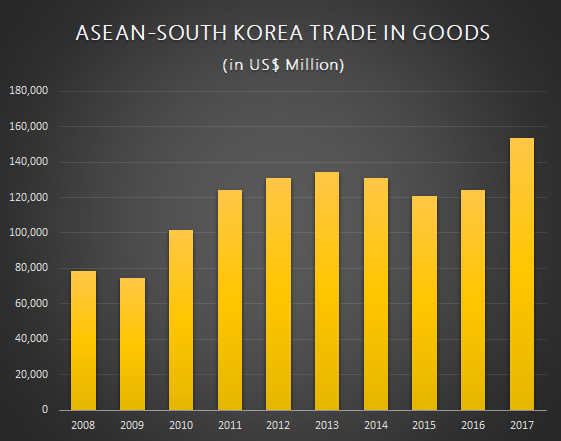
(9 September 2019) Indonesia and South Korea aim to “substantially conclude” negotiations of their bilateral Comprehensive Economic Partnership Agreement (CEPA) in October 2019, said Indonesian trade minister Enggartiasto Lukita after a meeting with his South Korean counterpart Yoo Myung-Hee on the sidelines of the AEM Meeting in Bangkok. Enggartiasto added that the CEPA will also serve as the umbrella under which investment agreements with South Korea’s Lotte Group and Hyundai will fall under, in order to facilitate their expansion in Indonesia. It is believed that the CEPA will boost trade between both nations to nearly US$30 billion in 2022.

SINGAPORE-EAEU

Singapore to ink free trade agreement with Eurasia in October
(9 September 2019) Singapore is slated to sign a free trade agreement with the Eurasian Economic Union (EAEU) during the bloc’s Supreme Eurasian Economic Council meeting on October 1, said Russian deputy economic development minister Timur Maksimov. According to him, both sides are also working on a comprehensive package to allow free movement of goods, services and capital that will likely be inked next year. Singapore will be the second ASEAN country to enjoy free trade with the EAEU behind Vietnam.

THE PHILIPPINES, SINGAPORE

PH, Singapore sign eight bilateral agreements in infrastructure development and education
(10 September 2019) Singaporean President Halimah Yacob’s five-day state visit to the Philippines concluded with her and President Rodrigo Duterte witnessing the signing of eight agreements covering matters such as infrastructure development, water resource management and microgrid technology for cost-efficient supply of electricity to rural areas, and education in preparation for the 4IR. Both sides also plan to update their bilateral double taxation avoidance agreement and expand the existing bilateral air transport agreement to boost connectivity and collaboration.

MYANMAR

Myanmar to create secondary board to enable the trading of non-listed companies
(10 September 2019) The Securities and Exchange Commission of Myanmar (SECM) plans to establish a second board to allow the public to trade shares of companies that are not listed on the main board of the Yangon Stock Exchange (YSX). According to a SECM representative, the move comes as they look to enable the trading of shares of public companies that do not meet the stringent requirements for listing on the YSX. Nevertheless, these companies will also need to meet certain criteria, which are still being determined.

THAILAND

New perks for firms relocating amid trade war
(6 September 2019) Thailand’s economic cabinet approved on September 6 a new investment incentive package that aims to lure foreign firms — especially those in the high technology sector — looking to relocate production outside of China due to the ongoing trade war. The package covers tax incentives, special investment zones for individual countries and plans to change the foreign business law to facilitate foreign investment. According to a senior government official, the new package will allow investment applications submitted to the Board of Investment by 2020 to enjoy additional privileges such as a 50% reduction in corporate income tax for five years.

ASEAN Roundtable Series on ASEAN Vision 2040: The imperative of collective leadership, ASEAN integration and centrality in uncertain times

Published on 17 September 2019


SPEAKERS

Prof Mari ELka Pangestu

Prof. Mari Elka Pangestu

Professor of International Economics at the University of Indonesia

Read more

Mari Pangestu is Professor of International Economics at the University of Indonesia, Senior Fellow at Columbia School of International and Public Affairs, Board Member of Indonesia Bureau of Economic Research (IBER) and on the Board of Trustees, Centre for Strategic and International Studies Foundation, Jakarta. She currently serves on a number of boards such as the Leadership Council of the UN Sustainable Development Solutions Network (SDSN); Member of the High Level Commission on Carbon Prices; Distinguished Fellow Asia Global Institute, University of Hong Kong; Board Member to Australia Indonesia Council; Member of Editorial Board of Bulletin of Indonesian Economic Studies, ANU; Member of the Global Future Council on Trade and Investment, World Economic Forum; and President of the United in Diversity (UID) Foundation, Jakarta. She served as Indonesia’s Minister of Trade from 2004 to 2011, and as Minister of Tourism and Creative Economy from 2011 until October 2014. During her time as Minister of Trade, she led international trade negotiations and cooperation for Indonesia.

Dr. Donald Hanna

Dr. Donald Hanna

Chief Economist, CIMB Group

Read more

Dr. Donald Hanna has an insightful blend of both global perspective and local ASEAN experience in analyzing global macroeconomic and policy developments, having done his first work on ASEAN while still in graduate school. He began his professional career with the World Bank working in Washington DC and Jakarta, Indonesia. He has managed macroeconomic teams for Goldman Sachs and Citigroup, ending his stint with Citi as their Deputy Chief Economist. In addition to sell-side experience, Dr. Hanna has worked on the buy-side providing macro and market views to risk takers at two hedge funds. He has also set up and managed an independent, Asian-focused macro research office.

Dr. Hanna is a Fulbright Scholar, and has a PhD in Economics from Harvard University and a BA, summa cum laude, in Economics and Spanish from the University of California at Berkeley. He is also a member of the Advisory Board of the Centre for Applied Macroeconomic Analysis at Australia National University and the Asian Development Bank’s International Advisory Group. He is fluent in both Spanish and Bahasa Indonesia.


Prof. Fukunari Kimura

Prof. Fukunari Kimura

Chief Economist, Economic Research Institute for ASEAN and East Asia

Read more

Fukunari Kimura is the Chief Economist for Economic Research Institute for ASEAN and East Asia (ERIA) and Professor, Faculty of Economics, Keio University. He was born in Tokyo in 1958. He received his Bachelor of Laws from the Faculty of Law, University of Tokyo in 1982. He then received Master of Science and PhD titles from the Department of Economics, University of Wisconsin-Madison in 1990 and 1991, respectively. He worked for the Department of Economics, State University of New York at Albany as Assistant Professor in 1991-1994, and in the Faculty of Economics of Keio University as Associate Professor in 1994-2000. In particular, he has recently been active in writing academic/semi-academic books and articles on international production networks and economic integration in East Asia.

Dr. Kaewkamol Pitakdumrongkit

Lydia K. Ruddy

Director of Communications, Economic Research Institute for ASEAN and East Asia

Read more

Lydia Ruddy is the Director of Communications for the Economic Research Institute for ASEAN and East Asia (ERIA), an international organization based in Jakarta. With over 20 years of experience, she has worked at the nexus of the public and private sectors focused on development from the local to the international level. Fluent in Indonesian, she has spent over 10 years advising Indonesian and International businesses and organizations on strategic planning, communications, sustainability and policy issues. Prior to ERIA, she served as Advisor to the Chairman of the Indonesian Chamber of Commerce and Industry where she managed public relations, hosted foreign delegations, researched special topics, and wrote the Chairman’s speeches. Trained in Law (J.D.) at Georgetown University and Urban Planning and Geography (M.U.P, A.B.D.) at the University of Washington, Ms. Ruddy has lived and worked in Indonesia since 2006 when she came as a Fulbright scholar to research private investment during Aceh tsunami reconstruction. Clients and employers have included USAID, ADB, Save the Children, private equity firms, forest products (paper and timber) companies, and business advisory consultants. Before coming to Indonesia, Ms. Ruddy’s career focused on legal practice, real-estate development and land conservation on the West Coast of the United States.


Chair

Tan Sri Dr. Munir Majid

Tan Sri Dr. Munir Majid

Chairman, CIMB ASEAN Research Institute President, ASEAN Business Club

Read more

Tan Sri Dr. Munir is currently Chairman of CIMB ASEAN Research Institute, of Bank Muamalat Malaysia Berhad, of the Financial Services Professional Board, of ASEAN Business Advisory Council, Malaysia, as well as President of the ASEAN Business Club. He is a member of the Economic Action Council chaired by the Prime Minister of Malaysia. He also sits on the board of the Institute of Strategic and International Studies (ISIS) Malaysia. He is an active advocate of deeper ASEAN economic integration.

He has an extensive experience and is well known in the Malaysian corporate world. He had been the Group Editor of the New Straits Times, first executive chairman of CIMB and founding chairman of the Malaysian Securities Commission. After stepping down from the Securities Commission, he became Independent Non-Executive Director of Telekom Malaysia Berhad, Chairman of Celcom (Malaysia) Berhad and Non-Executive Chairman of Malaysian Airline System Berhad. He was Founder President of the Kuala Lumpur Business Club, established in 2003 and is a member of the Court of Fellows of the Malaysian Institute of Management.

Tan Sri Dr. Munir obtained a B.Sc (Econ) and Ph.D in International Relations from the London School of Economic and Political Science (LSE) in 1971 and 1978. He is an Honorary Fellow of LSE and continues the long association with his alma mater as Visiting Senior Fellow at the Centre of International Affairs, Diplomacy and Strategy. Tan Sri Dr. Munir is an associate of Southeast Asia Centre (SEAC) at LSE.


CARI Viewpoints: Changing externalities including great power rivalries, regional competition, and technological developments means ASEAN must chart a new vision to guide the bloc towards 2040

The CIMB ASEAN Research Institute (CARI) in collaboration with the Economic Research Institute for ASEAN and East Asia (ERIA) organised an ASEAN Roundtable Series (ARS) on 26th July 2019 in Kuala Lumpur. The ARS was held in conjunction with the launch of the ASEAN Vision 2040 report by ERIA, which looks at strategies to guide ASEAN for the coming decade in light of major external issues including the US-Sino tensions, rising competition from economies such as China and India, and rapid technological development.

Titled ‘ASEAN 2040: The imperative of collective leadership, integration and centrality in uncertain times’, the roundtable looked into how ASEAN can enhance policy capacity and coordination, implement internal institutional changes, and engage with outside partners to ensure ASEAN’s growth and regional centrality. To bring clarity to such complex issues, the roundtable featured eminent speakers such as Professor Mari Elka Pangestu, former Minister of Trade for Indonesia and currently Professor of International Economics at the University of Indonesia; Dr. Donald Hanna, Chief Economist of CIMB; and Professor Fukunari Kimura, Chief Economist for ERIA.

Moderating the roundtable was Tan Sri Dr. Munir Majid, Chairman of CIMB ASEAN Research Institute (CARI), President of the ASEAN Business Club, and member of Malaysia’s Economic Action Council chaired by the Prime Minister.


Presentation of ASEAN Vision 2040

Lydia Ruddy, Director of Communications at ERIA first presented the key messages put forth in the ASEAN Vision 2040 report. Lydia referenced guiding themes of the research namely: 1) striving for an inclusive ASEAN, 2) making ASEAN vital to the lives and livelihoods of its peoples, and 3) ASEAN’s future may be diminished if the bloc fails to deliver.

Lydia noted that ASEAN is facing numerous challenges including a realignment of geopolitics, the Fourth Industrial Revolution, and rapid digital transformation. More than ever, ASEAN should strive towards a plural global order characterised by free trade. With this in mind, the ASEAN Vision 2040 is built upon seven foundations:

With these in mind, Lydia laid out the three areas which ASEAN should prioritise for the coming decade:

  1. Collective Leadership: since no single Asian country can lead due to diverging interests, stability in Asia must come through multilateralism and collective leadership. This could be achieved through:
    • Shared commitment to multilateral principles.
    • Consensus-based decision-making.
    • International norms and rules.
  2. ASEAN Integration and RCEP: integration will strengthen ASEAN’s regional influence and global voice. The Regional Comprehensive Economic Partnership (RCEP) is key to deepening the integration process, and remains the only multilateral pushback against the present rise of protectionism. RCEP has significant political-security payoff and provides a mechanism through which ASEAN can manage relations with larger powers.
  3. ASEAN Centrality: ASEAN serves as a platform for regional cooperation and the buffer to managing great power relations. In order to achieve regional centrality, ASEAN must work towards a single market and production base, implement the Code of Conduct on the South China Sea, and partner with middle powers like Australia and the Republic of Korea.

In conclusion, enhancing policy capacity and cooperation on these three strategic priorities can help ASEAN manage the rapid changes underway. There is now a need for greater creativity, complementarity and connectivity on the part of the bloc.


Taking advantage of new technologies for economic development in ASEAN

Professor Fukunari Kimura, Chief Economist of ERIA presented on the impact of new technological developments on ASEAN’s future economic growth.

  • He believes that technological development will allow ASEAN countries to capture more value add within global value chains and expedite their involvement in the international division of labour. New technologies will allow ASEAN countries to deepen their involvement in regional production networks, while also involving themselves in the development of cross-border outsourcing of the services industry.
  • According to Professor Kimura, new technologies should be embraced for economic development without fear of backlash. ASEAN Member States (AMS) should seek a good combination of information technology (IT) and communications technology (CT) to promote sustainable and inclusive growth. He points out that perceptions of new technologies differ between developed and developing economies.

  • He states that the digital revolution can be broken down into Information Technology (IT) and Communications Technology (CT):


  • As Professor Kimura notes, the free flow of data should be utilised as a benchmark with supporting policies implemented, while also addressing issues around personal privacy.


  • Discussing the implications of new technologies for developing inclusive growth, Professor Kimura notes that IT affect middle-range human capital firstly over low and high human capital. With regards to CT, he argues that CT platforms can be utilised by almost everyone, including MSMEs.


Trade and development amidst disruptions: implications for ASEAN

Professor Mari Pengestu, former Minister of Trade for Indonesia and currently Professor of International Economics at the University of Indonesia, presented on trade and economic development for ASEAN amidst an external environment characterised by rising protectionism and a drawback from globalisation.

  • She started by contextualising ASEAN’s present economic situation, noting that ASEAN countries are at different levels of economic development and demographic composition. For instance, while Singapore is an ageing nation, Indonesia is still a very young nation which can still tap into its demographic bonus. Nonetheless, all ASEAN countries must address these challenges for the next stage of development:
    1. Least developed economies: is an export-oriented industrialisation strategy still an option at this point? Or is there a possibility of leapfrogging to the digital economy?
    2. Countries at the middle level of development: have they hit the limits with regards to export-oriented industrialisation? They will have to deal with the maturation of the global value chains (GVCs), disruptions caused by the trade war, and the rapid development of the digital economy.
    3. More developed countries: how to get out of the middle-income trap, as well as find new sources of growth (looking beyond GVCs and into the services sector, new technology etc).
       

  • ASEAN countries will be encountering these challenges at a time of great disruption and uncertainty, namely with present issues including trade and geopolitical tensions, technological disruptions and development, and climate change.
     
  • In what Professor Mari describes as ‘The New Normal’, she discusses how 2016 was a watershed year with the Brexit vote in June and the election of Donald Trump later in November. We have observed increased protectionism and nationalistic policies being implemented in many major economies due to concerns over inequality and its supposed ties to globalisation, as well as notions of ‘unfair’ trade vis-a-vis China.
     
  • Washington’s current disinterest in defending the public good of the present global economic order has been a major disruptor. This was seen in Washington’s decision to exit the TPP and the ongoing US-China trade war. Professor Mari pointed to Japan as a possible alternative in championing the public good in the stead of the US.
     
  • Professor Mari believes the ongoing trade war will not be resolved anytime soon, due to both bipartisan support for Trump’s current policies toward China and the emergence of nationalists and reformers factions within China itself. The causes of the current trade tensions can be summarised as such:


  • Professor Mari notes that for many Pacific economies, protectionism and trade tensions were ranked the highest risks for their economies over the next two to three years:


  • A Mckinsey survey from September 2018 also found that uncertainty in trade policy is the largest concern facing business executives over the next twelve years:


  • Although Professor Mari acknowledges that certain ASEAN countries such as Thailand, Malaysia, and Vietnam may benefit from the trade war in terms of providing substitute exports to the US in lieu of China, she believes these gains will be short term. GVC linkages to China will put downward risks to ASEAN countries due to slower Chinese exports.
  • Professor Mari believes that ASEAN must respond by seizing the opportunities. ASEAN countries should seek to exploit the immediate opportunities for export diversification and investment relocation, and pro-actively invite investments into their countries. They should also seek to implement domestic reforms, including labour policies, trade facilitation, and investment policies. ASEAN will also need to find a way to balance China and the United States without having to ally with either. Mari warns of the ‘double-edged sword’ of increasing exports to the US; using examples of Vietnam and Indonesia of how the US views the concept of trade deficits and ‘unfair’ trade.
  • Professor Mari ultimately advocates a ‘three-pronged approach’ for ASEAN to navigate the current external environment.


  • Professor Mari also pointed out that regional agreements are still important in ensuring stability and predictability of trade policies in countries involved, continued market expansion, and openness. She notes that past experiences in unilateral reforms have been done in the framework of regional and unilateral commitments. Regional agreements can also provide a forum to discuss issues not yet mentioned in the WTO.
  • Professor Mari notes there are presently different pathways for broadening and deepening regional integration and with major trading partners outside ASEAN, including the RCEP, the Comprehensive and Progressive Agreement for Trans-Pacific Partnership (CPTPP), and the Belt and Road Initiative.


Cybersecurity and China’s slowdown

Dr. Hanna opened his speech by admitting that the rise of protectionism around the world was in part because economists were for too long focused on the power of the market to the detriment of the responsibility of the state to address inequality.

  • Discussing the current trade war, he believes the current course being pursued by the Trump administration makes little sense as they are focusing on bilateral indicators like the imbalance in the current account deficit without accounting for the fact that the US is not saving enough. As such, he doesn’t think that current contractionary policies being pursued by the Federal Reserve will be effective.
  •  

  • Touching on Professor Mari’s previous points about the US-Sino rivalry over technology, Dr. Hanna believes that there are real national security concerns associated with the Chinese telecom company Huawei from Washington’s perspective. He points to China’s 2017 cybersecurity law, which requires Chinese companies to submit data to state authorities on demand. In the US, in contrast, access to data requires approval from a court.
  •  

  • He challenges Professor Mari’s argument that the biggest risk to the growth of Pacific economies will be increased protectionism. Instead, he posits the inevitable slowdown in China’s economy will present a larger challenge to the region’s growth. While a slowdown will have political implications for China owing to the country’s unique social contract, he also believes it might push Beijing to be more cooperative with the US.


CONCLUSION

In conclusion, ASEAN is entering an era where global norms are being disrupted due to the rise of populism, shifts in the global economy, and rapid technological development. As such, it is incumbent on ASEAN to reconceptualise its vision to guide the bloc over the next two decades. This will include adopting new technologies without fear to further deepen the bloc’s involvement in regional supply chains, as well as promote inclusive and sustainable growth. ASEAN will need to reemphasise its centrality in regional architectures in light of the ongoing US-Sino tensions to maintain the bloc’s integrity and maintain regional stability.

ASEAN Roundtable Series

ASEAN Roundtable Series

Mekong Monitor: Thailand, Cambodia hope to renew talks on developing disputed gas field


Photo credit: Bangkok Post


TRADE, ECONOMY, AND INVESTMENT


THAILAND, CAMBODIA

Thailand, Cambodia hope to renew talks on developing disputed gas field
(6 September 2019) Thailand and Cambodia are considering reviving talks on the development of a gas field which both countries lay claim to in the Gulf of Thailand, said Thai energy minister Sontirat Sontijirawong following a meeting with his Cambodian counterpart on the sidelines of the 37th ASEAN Ministers on Energy Meeting (AMEM) in Bangkok. According to Sontirat, both sides agreed that talks should resume “as quickly as possible” to ensure that the area can be “developed for mutual interests” since both countries are in need of more power sources as domestic demand increases.
Read more>>

THAILAND, MYANMAR

Thailand’s FPT mulls extending oil pipeline into Myanmar
(9 September 2019) Thailand’s Fuel Pipeline Transportation (FPT), a subsidiary of SET-listed Bangkok Aviation Fuel Services, announced this week that it is studying the feasibility of extending an existing pipeline from Thailand’s Tak province to Myanmar’s Mawlamyine district as it sees great potential in Myanmar’s burgeoning automobile market. According to the company, such an extension is crucial in ensuring that they remain competitive as demand for oil in neighbouring countries rise. Furthermore, FPT hopes to expand its oil pipelines to China through Laos as soon as regulations permit.
Read more>>

MYANMAR, THAILAND

Traders call for more trade in maize with Thailand as previous deal expires
(9 September 2019) Myanmar’s agreement with Thailand for maize exports — which was signed in 2018 after China started imposing greater import restrictions on Myanmar — came to an end in August, said a senior Myanmar commerce official. According to him, Myanmar was only able to export “several truckloads” of maize to Thailand in early September. As such, the country’s border trade associations have been calling for more exports in general agricultural products to Thailand. At the Myawaddy border, Thai exports to Myanmar reached US$648 million, while Myanmar’s exports to Thailand totalled only US$181 million during the previous fiscal year.
Read more>>

CLMV

CLMV economic ministers vow to carry out action plans
(6 September 2019) Vietnam, Myanmar and Laos’ economic ministers as well as Cambodia’s commerce secretary reaffirmed their countries’ commitment to the implementation of the CLMV Action Plan 2019-2020 during the recent 11th Cambodia-Laos-Myanmar-Vietnam (CLMV) Economic Ministers’ meeting held in Bangkok on September 5, especially via greater connectivity through transport infrastructure, trade, and logistics, as well as investment and tourism promotion. The group also agreed to carry out the additional regional commitments stipulated in the action plan regarding the support of micro, small and medium enterprises, and the updating of the framework for CLMV development.
Read more>>

LAOS-ROK

South Korea vows to support Laos’ economic growth and encourage investments
(5 September 2019) South Korean President Moon Jae-in concluded his six-day tour to three Mekong countries with a visit to Laos, following earlier visits to Thailand and Myanmar. During his visit, Moon noted Laos’ “solid infrastructure” and pledged to support the development of Laos’ road, railway and port systems. Additionally, South Korea will also provide incentives to encourage companies to invest in Laos, particularly in the areas of hydropower, renewable energy, smart cities, digital infrastructure and water resource development. Laos-South Korea trade reached US$114 million in 2018.
Read more>>


mekong-monitor-map

About Greater Mekong Subregion (GMS)

The Greater Mekong Subregion (GMS) Economic Programme was launched by the Asian Development Bank in 1992 connecting five developing ASEAN countries, namely Cambodia, Laos, Myanmar, Vietnam and Thailand, and Chinese provinces of Yunnan and Guangxi Zhuang Autonomous region. The region has some of the most robust economies sharing the Mekong River Basin thanks to its reform and liberalisation. The subregion is growing at a faster pace than the whole of East Asia and the Asia Pacific as the GDP growth rate for 2017 was at 6.4 percent, according to the World Bank. The population at the subregion as of 2016 is at 340 million while the GDP at PPP is at US$3.1 trillion in 2016. In 2015, trading within the region was at US$444 billion.

China-ASEAN Monitor: Singapore-Sichuan trade grew 42.8% in 2018 despite global uncertainties


Photo Credit: Straits Times


Economy, Investment and Trade


Singapore-Sichuan trade grew 42.8% in 2018 despite global uncertainties
(4 September 2019) Trade between China’s Sichuan province and Singapore saw year-on-year growth of 50.3% in the first half of 2019 and 42.8% in 2018 (with trade in 2018 amounting to US$1.44 billion), according to the 20th Singapore-Sichuan Trade and Investment Committee. Furthermore, Singapore remains the province’s top foreign investor with cumulative investments in over 600 projects totalling US$6.93 billion in 2018. The figure was further boosted with the signing of 17 agreements in areas such as medical technology, transport and logistics during the committee’s recent meeting on September 4.
Read more>>

Manila banks on Chinese capital to expand domestic manufacturing base
(4 September 2019) Filipino trade secretary Ramon M. Lopez reaffirmed his department’s commitment to “aggressively promote” greater trade with China in line with the Philippines’ Inclusive Innovation Industrial Strategy. The Philippines hopes to utilize Chinese capital to propel its domestic manufacturing. Lopez’s comments were made in response to recently-published government data which showed that while the country’s investment inflows from China grew 69.2% on the year in the first quarter of 2019, Chinese investment accounted for only 1.6% of the country’s foreign inflows during the quarter — trailing behind the Netherlands, Japan, Thailand, Singapore, Taiwan and the US.
(Photo credit: Phone World)
Read more>>

Brunei, China joint venture produces qualified petrochemical product
(11 September 2019) China-Brunei joint petrochemical venture Hengyi Industries Sdn Bhd announced on September 7 that its new Pulau Muara Besar (PMB) facility’s atmospheric and vacuum distillation unit has successfully produced qualified petrochemical products, thus bringing the new industrial park a step closer to being fully operational. The PMB facility will be developed in two phases costing US$3.45 billion and US$12 billion respectively. The project is expected to raise Brunei’s GDP by US$1.33 billion in its first year and create over 1,600 jobs.
Read more>>

Thailand government warns local durian producers of future competition from China
(7 September 2019) Thailand’s durian farmers should work to raise the quality of their produce and brace themselves for future competition from Chinese durian producers, said Thailand’s Nanning-based trade promotion head Wandala Rattanapanich. Wandala’s remarks were made after a private company in southern Hainan revealed that it has successfully produced durians from 20 Sanno durian seedlings imported from Malaysia. Nevertheless, Hainanese fruit experts believe that it will be awhile before they will be able to produce enough for domestic consumption or export. Currently, 80% of fresh durians in the Chinese market are imported from Thailand.
Read more>>

Savills lists large factories moving from China to Vietnam
(7 September 2019) Savills Vietnam published this week a list of manufacturers that is says have either shifted from China to Vietnam or are considering doing so to avoid tariffs resulting from the US-China trade war. According to the list, those who have completed their relocation include South Korean aerospace manufacturer Hanwha Aero Engines, Japanese automotive parts manufacturer Yokowo, and Hong Kong garment and textile producer Huafu Industrial. Meanwhile, companies who are still considering a move include Foxconn, Lenovo, Nintendo, Sharp, Kyocera and Oasis. Besides the trade war, free trade agreements including the CPTPP and the EVFTA have attracted investments into Vietnam.
Read more>>

CARI Captures 420: South Korea, Thailand sign six agreements to intensify cooperation


Source: ASEAN Secretariat | Infographic: CIMB ASEAN Research Institute


THAILAND-ROK

South Korea, Thailand sign six agreements to intensify cooperation
(2 September 2019) South Korean President Moon Jae-in’s visit to Thailand resulted in the signing of six memoranda of understanding (MoU) between the countries, according to the Thai government. This includes MoUs for cooperation between their respective ministries and agencies for the development of smart cities, smart automobiles, smart devices, robotics, automation, bioeconomy, smart technology for water management, transport and infrastructure, as well as military cooperation. Both sides are also expected to form a Korea-Thailand Committee on Economic Cooperation by the end of 2019.

MYANMAR-ROK

Myanmar, South Korea sign agreements to boost cooperation
(4 September 2019) South Korean President Moon Jae-in’s visit to Myanmar concluded with the signing of five agreements in Nay Pyi Taw. According to local media, this includes a framework agreement for economic development for the 2018-2022 period, an MoU to establish an information hub to facilitate South Korean investment in Myanmar, an MoU on the development of shipping infrastructure, an MoU on cooperation in science and technology, as well as an MoU on cooperation in innovation and new businesses.

CAMBODIA, MALAYSIA

Malaysia, Cambodia sign deals on double-taxation avoidance and tourism promotion
(2 September 2019) Malaysian Prime Minister Mahathir Mohamad’s three-day visit to Cambodia this week concluded with the signing of a bilateral double-taxation avoidance agreement to promote greater Malaysian investment in Cambodia, as well as a tourism cooperation agreement to boost tourist arrivals to both countries. According to the Malaysian ambassador to Cambodia, Cambodia received 20 investment pledges from Malaysian businesses in the first quarter of 2019 alone, including a US$4 billion, 2000-room hotel development project. In 2018, Malaysia-Cambodia trade value totalled US$558 million, while during the first six months of 2019 alone, the value had reached US$422.6 million, marking a 39.2% increase as compared with the same period last year.

THAILAND, MALAYSIA

Thailand, Malaysia look to boost bilateral trade at border
(2 September 2019) The Thai government is considering doubling the number of immigration staff and widening the road at the Sadao-Bukit Kayu Hitam checkpoint from four to six lanes in order to boost the flow of goods and tourists at the Thai-Malaysian border. The proposals were made during Thai commerce minister Jurin Laksanawisit’s visit to the area, during which he also noted that while the checkpoint is now open 24 hours, Thai food exports to Malaysia remains slow because Thailand’s public health officials only worked during office hours. Border trade accounts for 70% of the total trade between both countries.

MALAYSIA, INDONESIA

Sabah and Indonesia to facilitate trade along the Lombok-Makassar Straits
(30 August 2019) Malaysia’s Sabah state port authority POIC Sabah and Indonesia’s largest port operator PELINDO II inked a Port Collaboration Agreement recently to establish POIC Lahad Datu — a port to develop the shipping industry along the Lombok-Makassar Straits with a focus on promoting export-oriented manufacturing, the palm oil industry, investments in petrochemical and logistics, as well as the transshipment of raw materials. The new port received its first ship on September 4. As part of developing shipping in the Lombok-Makassar Straits, Sabah intends to promote closer cooperation with Indonesia’s Kalimantan provinces.

MYANMAR, MALAYSIA

Malaysian developer to build US$624 million housing and commercial project in Yangon
(1 September 2019) Malaysian real estate developer Berjaya Land will begin constructing smart, affordable homes in Myanmar’s capital city in January 2020, said the company’s chief executive, Pee Kang Seng. The US$624 million project will comprise 10,000 residential units plus a 1.2 million square feet commercial segment covering 74 hectares of land in Yangon. The project is developed as a joint venture between Berjaya Land and the Myanmar government, and is expected to last over six years.

INDONESIA

Indonesia to ban nickel exports from January 2020
(2 September 2019) Indonesia’s Energy and Mineral Resources Ministry announced this week that the country will halt nickel exports starting January 1 next year as part of its plans to boost the country’s capacity to produce and sell value-added nickel products such as stainless steel slabs while its nickel reserves are limited. To this end, the government aims to establish 25 new nickel smelters on top of its current 11 smelters. Indonesia was the world’s top nickel producer last year with 560,000 tonnes produced and average production is expected to rise by 8.1% in a decade.

BRUNEI

New government entity UNN takes over all telco infrastructure in Brunei
(3 September 2019) The Bruneian government’s plan to consolidate the country’s telecommunications network infrastructure came into force on September 1 as all assets from its three telcos — TelBru, DST and Progresif — were officially transferred to a new entity known as Unified National Networks (UNN). According to UNN chief executive Steffen Oehler, the new entity will focus on investing heavily in new, 5G-capable network infrastructure, thus freeing the three telcos to focus on their retail operations.

SINGAPORE

RCEP negotiations in final stages says Singapore trade minister
(2 September 2019) Negotiations for the Regional Comprehensive Economic Partnership (RCEP) will likely be completed by 2019 or early 2020 “with a bit of political commitment from all sides” and some “tough trade-offs”, Singapore trade minister Chan Chun Sing said during an interview. He added that the RCEP has gone beyond being simply an economic agreement, but that it is also “a strategic signal to the world’s economy on what countries in this part of the world believe in.” Taken together, the countries involved in the RCEP represent a third of the global economy.

ASEAN-EU

Europe’s business confidence in ASEAN still high, but concerns over lack of integration remains
(2 September 2019) The EU-ASEAN Business Council’s latest EU-ASEAN Business Sentiment Survey found that while more European companies are keen to increase their engagement in ASEAN in the coming five years, many remain concerned over the lack of integration within the ASEAN Economic Community. Indeed, only 3% of survey respondents feel that the region’s economic integration is going well, while 58% feel that the state non-tariff barriers within the bloc remains largely the same, and a quarter of those polled feel that the number of non-tariff barriers have actually increased.

Mekong Monitor: Thailand’s PTT Group to develop electricity system for New Yangon City


Photo credit: AFP


TRADE, ECONOMY, AND INVESTMENT


MYANMAR, THAILAND

Thailand’s PTT Group to develop electricity system for New Yangon City
(1 September 2019) Thailand’s PTT Group announced on August 30 that it has clinched a deal to develop the electricity production system for Myanmar’s New Yangon City bordering Yangon. The new project area will be built on around 8,000ha of agricultural land on the opposite bank of the river from Yangon and is expected to create two million new jobs. The project is currently waiting for approval from the central government. According to PTT subsidiary Global Power Synergy Co Ltd (GPSC), the company is also eyeing two other projects: a gas to power project to generate electricity in Myanmar using natural gas and a second project that is still under wraps. Ultimately, GPSC aims to build a 5,500 MW power production capacity in the next five years.
Read more>>

THAILAND, MYANMAR

Siam GS Battery begins operation of US$10 million Myanmar plant
(2 September 2019) Thailand’s Siam GS Battery announced this week that operations has begun at its US$10 million battery charging plant in Myanmar’s Thilawa Special Economic Zone (SEZ). According to the company, which is part of the larger Siam Motors Group, Myanmar’s automobile market shows great potential, evidenced by the rise in the number of car registrations from 280,000 in 2011 to 630,000 in 2018. Furthermore, only 20% of the Myanmar market utilises maintenance-free batteries — which the company manufactures — thus presenting much opportunity.
Read more>>

THAILAND, VIETNAM, LAOS

Gulf Energy to expand its presence in Indochina with new power plants
(3 September 2019) Thailand’s Gulf Energy Development Plc announced plans to develop new power plants in Vietnam and Laos to expand its reach in the Indochina region and increase the company’s revenue from infrastructure projects to 20% of total revenue in the next five to seven years. To this end, it has submitted a proposal to the Vietnamese government to develop a gas-fired power plant and is in talks with a Chinese firm to build a hydroelectric power plant in Laos. Both proposals are expected to be finalised in 2020.
Read more>>

MYANMAR, THAILAND

Myanmar woos Thai investors in Bangkok
(28 August 2019) Myanmar seeks to promote “responsible, quality investment” as the country transitions to a market-based economy, said state counsellor Daw Aung San Suu Kyi in a video address delivered at a forum in Bangkok in late August. Among the new opportunities in Myanmar that were highlighted at the event were the new overland goods transportation route through Yangon (Thilawa) – Myawaddy – Mae Sot – Bangkok (Laem Chabang), a new railway linking China’s Yunnan and Myanmar’s Muse, as well as ample opportunities available in Myanmar’s many special economic zones. Thailand’s investments into Myanmar reached US$6.6 billion in the fiscal year 2018-19, with half being in the oil and gas industry.
Read more>>

CAMBODIA, LAOS, VIETNAM

CLV countries formulate tourism development plan
(28 August 2019) Tourism officials from Cambodia, Laos and Vietnam are in talks over the development of a joint tourism plan for the CLV Development Triangle Area, according to a local news outlet. The aim, according to the report, is to turn the area into a sustainable tourism destination while improving the living conditions of citizens in the area. More specifically, the plan will link landmark sites in these areas and promote them as a single tourist package and destination. The triangle area comprises 13 provinces in all three countries combined.
Read more>>


mekong-monitor-map

About Greater Mekong Subregion (GMS)

The Greater Mekong Subregion (GMS) Economic Programme was launched by the Asian Development Bank in 1992 connecting five developing ASEAN countries, namely Cambodia, Laos, Myanmar, Vietnam and Thailand, and Chinese provinces of Yunnan and Guangxi Zhuang Autonomous region. The region has some of the most robust economies sharing the Mekong River Basin thanks to its reform and liberalisation. The subregion is growing at a faster pace than the whole of East Asia and the Asia Pacific as the GDP growth rate for 2017 was at 6.4 percent, according to the World Bank. The population at the subregion as of 2016 is at 340 million while the GDP at PPP is at US$3.1 trillion in 2016. In 2015, trading within the region was at US$444 billion.

ASEAN Collective Leadership Running on Empty

ASEAN Collective Leadership Running on Empty
Originally published in TheEdge Malaysia

At the Bangkok ASEAN summit in June, the ASEAN Business Advisory Council (ASEAN-BAC) asked the region’s leaders to show greater collective political leadership in the deteriorating international economic environment.

We alerted them to the need to be more active and effective at the G20 summit in Osaka then coming up at the end of June.

We said ASEAN had a crucial stake in defending world economic peace. We understand ASEAN may be powerless to intervene in the big issues of international security between the US and China, including in the South China Sea, where the regional grouping is hopelessly divided. But on the matter of an open, rules-based global trade and investment system, which ASEAN has greatly benefited from and depends so much on, it must get its combined voice heard and offer encouraging signs of economic sense.

ASEAN is well represented at the G20. Indonesia is a full member and, since 2009, the chair of ASEAN has been invited as an observer. Singapore is also there, representing the Global Governance Group of medium and small countries. However, has there ever been a joint ASEAN stand and position taken at the conclave on rice bowl issues that matter?

Does ASEAN prepare a detailed strategy on how to be effective and how to engage partners in world economic peace at these meetings? Does the grouping have a strategy it has worked out in these uncertain times of outright trade war and impending world economic recession beyond general asinine leaders’ statements at the end of every summit?

ASEAN is long on vision statements and blueprints usually going out into the next 20, 30 years. A couple of months ago, another one, the ASEAN Vision 2040 report, was released in Bangkok musing about, among the so many things it lays out in four volumes, the collapsing world trading system – as if it is not happening already all around us and eating us up.

ASEAN can more effectively move issues for an open, rules-based global free trade system and its centrality is not realised by commissioning academic reports. Neither is it just about hosting meetings and regional forums. ASEAN’s claim to centrality can only be sustainable to the extent that it is able to remain relevant and be a part of the solution to the myriad of challenges to the global commons. Where is the collective leadership to drive its centrality?

Of course, individual countries will address current economic and trade challenges to suit their interests. Vietnam seems to have benefited the most from investment relocation as a result of the US-China trade war. However, its trade surplus with the US last year was already US$40 billion, with every sign of a sharp increase this year. US President Donald Trump has already deemed the ASEAN member state a cheat. There will be action taken against the country unless it believes Trump protectionism is an aberration.

Malaysia too has gained some relocation benefits, but these too are short-term. Apart from potential countervailing American action – the country is among the ASEAN member states the US has identified as currency manipulators – Malaysia must be aware that the investments it is attracting are not the kind that moves it up the value chain.

Thailand, with its economy slowing as a result of the trade war squeezing export markets, has come out with a domestic stimulus package to sustain growth, but business and consumer confidence are not likely to rise if the external environment continues to be fraught with economic fear and uncertainty.

The point is, while individual member states have to take their separate actions and enjoy their short-term benefits, they must also think about the medium and long-term and the kind of economic world that allows them to best prosper. They must think of the common interest. This is the rules-based order that has propelled many of their economies forward and, indeed, which is what their own integration initiatives are founded on. Should they not show this desire and commitment by word and deed?

In early August, Indonesia’s President Jokowi stated ASEAN must be united against the economic circumstances caused by the trade war. Although a welcome statement from the Indonesian leader, who in his first term was ASEAN neutral, there should be content in this statement if it is not going to be just empty rhetoric.

With Indonesia at the front, Thailand, Malaysia, Singapore and the Philippines, as the founders of ASEAN, could seize this moment of high economic risk to give the regional grouping the collective political leadership which it is severely lacking. The other members will come along. If on nothing else, at least with respect to world economic conduct.

There has to be careful strategic planning from now into the November summits when ASEAN could show it has a strong and united stand on the global economic order, not just in the leaders’ statement but, more importantly, in the discussions and meetings with summit partners, particularly the US and China. The messaging, who says what, when and to whom, should be rehearsed. Afterwards, there should be a review and an assessment of what has happened, and constant communication among the leaders, even as they will no doubt return home to domestic preoccupations.

Is this too much to expect of ASEAN in a situation in its own common interest?

In terms of its own actions to speak louder than words, ASEAN leaders should push for the conclusion of the RCEP (Regional Comprehensive Economic Partnership) by the end of this year. This is actually an ASEAN initiative from 2012, often wrongly attributed to the Chinese by Westerners, which must come to fruition in this year of trade war mayhem, to show in this fastest economically growing part of the world, there is life yet in a rules-based economic order.

If India continues to be the laggard, it should be left behind to join later. The fightback to protect world economic peace and order is time-critical. Trump must not be allowed to destroy it.

The ASEAN collective political leadership can then be taken one stage further, without risk of over-reach, by forming an effective Southeast Asian Caucus at APEC 2020, which can link up with so many like-minded economies in a world threatened by US bullying. Given Tun Dr. Mahathir Mohamad’s prestige and seniority as the APEC chair, it would be a propitious moment to take ASEAN – with full collective political leadership – to a level meaningful for an open rules-based international trade and investment. There are also so many issues that cut across national borders, like the environment, sustainability and shared prosperity, that need transnational solutions.

To show that ASEAN walks the talk, the regional grouping should also look unto itself and be honest about adherence to its integration based on open trade and investment. It should not just trumpet stellar future one-ASEAN economy numbers without attending to the conditions that would get it there.

ASEAN’s extrapolated combined GDP numbers for 2025, which could make it the fourth largest in the world, for instance, depend on the fulfilment of three main conditions. Zero tariffs, which ASEAN about satisfies; reduction in cost of intra-ASEAN trade by 20% which is still to be fully satisfied; and non-tariff barriers (NTBs) coming down by half – which is a huge battle as the numbers have ballooned.

NTBs now come in the guise of NTMs (non-tariff measures) justified as protective and not protectionist in nature. But they are proliferating and many are NTBs in disguise. Certainly, they are not transparent and announced beforehand.

ASEAN-BAC, together with its Joint Business Council members, works very hard to get at these NTBs and NTMs, now totalling over 9,000. It works with the officials in working groups at sectoral levels. It relates to ASEAN economic ministers, who it is meeting again in September, and just this year has been given access to the finance ministers and central bank governors. There is much goodwill but little movement.

As noted, ASEAN-BAC also meets the leaders. Again, all so convivial and warm. But no follow-through. No collective political leadership to make important things happen.

In the past two years, ASEAN has been concentrating, at least in words, on Industry 4.0, which will bring immense benefits to the region. Frequently now, the extra US$1 trillion it will bring to ASEAN GDP by 2025 (based on a 2015 study) is being cited. Again, however, the conditions for success both at the cross-ASEAN and individual member state levels must not be neglected.

There has to be greater liberalisation and harmonisation. Take e-commerce, which will be one of the drivers of growth. The efficiency of sales will not be fully realised if there are border roadblocks and latent demand will not be able to fulfil the increased spending that will propel greater growth.

Another assumption; higher worker productivity. But will the ASEAN workers be “Tech Ready” and “E-Fit”? What is being done, individually and collectively, to address the skills gap? There’s not even enough data on the skills supply pipeline into different economic sectors.

The issues for the good of ASEAN, whether to repel the bad, as in Trump’s trade war, or to fulfil the good such as growth from greater integration and digitisation, desperately need collective political leadership. ASEAN leaders must not continue to behave as if the world moves at the pace the grouping has been operating.

ASEAN must begin to get real and not have too many apologists who contribute to keeping it in its comfort zone.

Don’t get me wrong. I am very pro-ASEAN. That is why I am so frustrated. We must strive for ASEAN optimality, not mediocrity because that is all it can take. In the context, not of 2040 or of so many years cast so far ahead, but in the very next few years, this is not good enough.

Indonesia’s headline inflation rises to 20-month high of 3.5% y-o-y in August


HIGHLIGHTS

August 2019 CPI inflation

  • Headline inflation quickened to a 20-month high of 3.5% yoy in August, while core inflation increased to 3.3% yoy, the highest since February 2017.
  • Drought, rising gold prices and school fees were key contributors of the stronger price growth last month.
  • Bank Indonesia has cut the 7DRRR rate by 50bp in July – August; we expect another 25bp reduction in the policy rate this year.

Headline inflation rose to 3.5% yoy in August, highest since December 2017
Indonesia’s headline inflation accelerated to a 20-month high of 3.5% yoy in August (+3.3% yoy in July), in line with our and market expectation. On a month-on-month basis, the consumer price index (CPI) rose 0.1% mom in August, in contrast to marginal declines registered for the corresponding months in the past three years. Core inflation, which excludes volatile food and administered price inflation, rose to 3.3% yoy (+3.2% yoy in July), the highest since February 2017.

Drought raised food inflation
Drought, rising gold prices and school fees were the key drivers of the higher inflation in August. The sequential decline in food prices was milder at 0.2% mom last month, compared to an average decline of 0.8% mom in August 2016-2018. As a result, annual food inflation rose to 5.8% yoy (+4.8% yoy in July), the highest since November 2016, as supply disruption due to drought lifted prices of chillies and peppers. Prepared food inflation was steady at 3.5% yoy (+3.6% yoy in July).

Core inflation lifted by gold jewelries and education costs
Meanwhile, lower airfares brought down transport inflation to 2.1% yoy in August (+2.8% yoy in July). Among the core components, surging gold prices amid external uncertainties resulted in higher clothing inflation (+5.2% yoy vs. +4.2% yoy in July), whereas rising education inflation (+4.2% yoy vs. +3.7% yoy in Jul) coincided with the start of a new school year.

Inflation forecast raised to 3.1% for 2019F
Taking into account the headline inflation performance YTD, we raise our 2019F average inflation forecast to 3.1%, from 3.0% previously. In its draft state budget 2020 (RAPBN 2020), the government projects energy subsidies to decline a meagre 3.6% to Rp138tr in 2020, or 0.8% of GDP (vs. Rp143tr, or 0.9% of GDP in the outlook for 2019), indicating that the government is likely to leave fuel and electricity prices unchanged to maintain household purchasing power and support consumption growth in the country. As such, we expect headline inflation to remain steady at 3.1% yoy in 2020F. As price pressure remains well within Bank Indonesia’s (BI) target range of 2.5-4.5%, we expect the central bank to lower the 7-Day Reverse Repo Rate (7DRRR) by another 25bp this year, after having delivered 50bp cuts in July – August.


Originally published by CIMB Research and Economics on 2 September 2019.

CARI Captures 419: Vietnam, Malaysia agree to deepen strategic partnership


MALAYSIA, VIETNAM

Vietnam, Malaysia agree to deepen strategic partnership
(28 August 2019) Malaysian Prime Minister Mahathir Mohamad’s official visit to Vietnam on August 27 concluded with the leaders of both countries agreeing to ink an action plan to advance Vietnam and Malaysia’s bilateral strategic partnership for the 2020-2025 period. Both Mahathir and his Vietnamese counterpart Nguyen Xuan Phuc lauded the countries’ 13% growth in bilateral trade in 2018 totalling US$11.5 billion as they agreed to aim to raise this figure to US$15 billion. According to local media, Mahathir pledged to increase Malaysian investment in Vietnam and import more Vietnamese products in order to reduce the bilateral trade imbalance. Malaysia is also presently Vietnam’s eighth largest investor with around 600 investments worth over US$12 billion. Furthermore, Mahathir reaffirmed his support for Vietnam’s 2020 ASEAN Chairmanship, while both sides pledged to better leverage the strength of the ASEAN bloc to grow their economies and promote the building of an ASEAN Community.

MALAYSIA

Government approves US$5.13 billion national connectivity plan
(28 August 2019) The Malaysian government approved the implementation of a five-year, US$5.13 billion National Fiberisation and Connectivity Plan (NFCP) to provide nationwide digital connectivity, said communications and multimedia minister Gobind Singh Deo. According to the minister, the NFCP aims to provide high-speed broadband connectivity with “an average speed of 30 Mbps in 98% of populated areas and gigabit availability in selected industrial areas by 2020 and all state capitals by 2023.” Implementation will begin this year as part of the government’s push to put in place the necessary infrastructure in preparation of the Fourth Industrial Revolution. Separately, Malaysian premier Mahathir Mohamad announced on August 27 that the government will create designated Special Tourism Investment Zones nationwide to attract more technology-based investments to transform the country’s tourism industry. These zones, he said, would help Malaysia move beyond conventional tourism and venture into areas such as medical services, film, adventure sports, content development, religious activities, gaming and green technology.

MALAYSIA, INDONESIA, THE PHILIPPINES

Malaysia’s Sabah revives barter trading with Indonesia and the Philippines
(25 August 2019) East Malaysia’s Sabah state held an event this week to conduct barter trading of non-subsidised cooking oil with the Philippines and Indonesia, said Sabah chief minister Mohd Shafie Apdal. According to the chief minister, the event aims to revive barter trading between the countries following a two-year ban due to concerns over cross-border smuggling of goods, especially subsidised ones. The event, he said, was also a good way for Sabah to prepare for the possible shift of Indonesia’s capital to Kalimantan, which will likely spur a surge in economic activity in all surrounding areas. Separately, neighbouring Sarawak state’s chief minister Abang Johari Tun Openg shared recently that the state government is mulling the establishment of a trade office in Bangkok (Thailand), Pontianak (Indonesia) and Brunei following its recent establishment of the same in Singapore.

MALAYSIA-INDIA

India mulls import tax hike on Malaysian refined palm oil
(26 August 2019) The Indian trade ministry recommends raising tariffs on imports of Malaysian refined palm oil from 45% to 50% for six months, according to a government document seen by a media outlet. The recommendation comes as India’s Directorate General of Trade Remedies (DGTR) found that the current 45% rate has made Malaysian refined palm oil more lucrative than Indian palm oil, thus leading to a 727% year-on-year increase of such imports from Malaysia in the first half of 2019. As such, the recommended hike would not only give Indian producers a much-needed respite, but also help rectify the countries’ bilateral trade balance. In responding to the report, Malaysian primary industries minister Teresa Kok said that they will consider India’s request to allow more Indian goods to be exported to Malaysia to ensure a better trade balance. Meanwhile, Malaysian defence minister Mohamad Sabu revealed that they were in talks with several countries including China, Russia, India, Pakistan, Turkey and Iran on the possibility of using palm oil to pay for defence equipment.

THAILAND

Thailand to create “relocation package” to lure foreign investment
(23 August 2019) Thailand’s Board of Investment (BoI) has been tasked with designing a “relocation package” to attract foreign investors looking for greener pastures outside of China, a senior government official said. According to the official, the necessary approvals for the creation of a special team to coordinate such special investor incentives will be reviewed for approval during the economic cabinet meeting chaired by Prime Minister Prayut Chan-o-cha on August 30. Furthermore, the special scheme will also seek to lure investors from Japan, South Korea, Taiwan, the US and the EU — with the Eastern Economic Corridor (EEC) as the country’s flagship scheme. Meanwhile, Deputy Prime Minister Somkid Jatusripitak expressed his confidence that Thailand’s GDP will pick up in the fourth quarter with the economic stimulus packages and rice price guarantee scheme in place. Thailand’s GDP grew 2.3% in the second quarter of the year and 2.8% in the first.

THAILAND

Thailand wants to be Southeast Asia’s power-trading middleman
(26 August 2019) Thailand is reviving a decades-old plan to position itself as Southeast Asia’s electricity super grid as it steps up its ambition to be the region’s power trading hub. According to Thai energy policy and planning head Wattanapong Kurovat, the plan is to make use of the country’s strategic position in the centre of Southeast Asia by buying more electricity from Laos and then reselling it to Malaysia, Cambodia and Myanmar. Thailand already has the necessary infrastructure for power trading with Laos and Malaysia — it served as the middleman when Malaysia bought 100 MW of electricity from Laos last year. The same, Wattanapong said, will therefore be done with Cambodia and Myanmar, though they will first have to put in place the necessary infrastructure.

CAMBODIA-EU

Cambodian rice association to meet with EU to discuss safeguard tariffs
(26 August 2019) The Cambodia Rice Federation (CRF) is planning to meet European Union representatives to discuss the bloc’s decision to impose three-year safeguard tariffs on Cambodian rice to protect European producers. According to CRF head Lun Yeng, the association intends to meet the EU as they believe that the EU “is missing vital information” that led to the “misunderstanding” which subsequently led them to “take the wrong course of action.” The CRF’s key argument is that Cambodian rice is simply different from rice produced by farmers in Italy and Spain, and is therefore not a threat to the livelihoods of European farmers. The CRF’s new approach comes after its earlier approach of filing a complaint to the EU over the tariffs yielded no response. Cambodia’s rice exports to the EU in the first half of 2019 fell by almost 50% year-on-year, but the country’s total rice exports grew 3.7% in the first seven of the year nonetheless.

VIETNAM-AUSTRALIA

Vietnam, Australia aim to be each other’s top ten trading partners
(23 August 2019) Australian Prime Minister Scott Morrison’s official visit to Vietnam from August 22-24 concluded with the leaders of both countries agreeing to raise their bilateral trade goal from the almost US$7.8 billion achieved last year to US$10 billion in 2020. Both leaders also agreed to push for even more investment from Australia, which presently has investments in almost 500 Vietnamese projects worth over US$2 billion. According to the leaders, the ultimate goal will be to double the amount of investments and be among each other’s top ten trade partners. To this end, the countries will soon host their first ministerial-level Vietnam-Australia economic partnership meeting to boost economic cooperation, in addition to stepping up cooperation in areas such as energy security, digital economy and e-government.

VIETNAM

Grab to invest US$500 million in Vietnam over five years
(28 August 2019) Southeast Asian ride-hailing unicorn Grab announced this week that it plans to invest US$500 million in Vietnam over the next five years. More specifically, the company will focus on expanding its transport, food and payment services in the country. According to Grab President Ming Maa, the company sees very similar characteristics between Vietnam and Indonesia. Grab’s Vietnam announcement follows a similar announcement last month that it plans to invest US$2 billion in Indonesia in the coming few years. According to local analysts, Grab’s entry into Vietnam will surely mean fiercer competition in the ride-hailing space, as the company competes for market share with Indonesia’s Go-Jek and Vietnam’s Be.

ASEAN

Shopee extends lead over Lazada in the second quarter of 2019
(26 August 2019) Internet shopping platform Shopee exceeded Lazada in terms of the volume of monthly average visits and monthly active users in the second quarter of the year in six ASEAN markets (Indonesia, Thailand, Vietnam, the Philippines, Malaysia and Singapore), according to an iPrice report. According to the report, Sea-owned Shopee received a monthly average of 200.2 million visits via its desktop and mobile application during the quarter, while Alibaba-owned Lazada received 174.4 million visits. Shopee’s growth was attributed to its celebrity campaigns which attracted users to remain engaged with its application, while Lazada was particularly active during the Ramadan and Raya period in Indonesia and Malaysia. The next three most visited sites after Shopee and Lazada were Indonesia’s Tokopedia, Bukalapak and Blibli.

Mekong Monitor: Thailand’s Amata Corporation to develop a smart city in Yangon, first in Myanmar


Photo credit: Myanmar Eleven

TRADE, ECONOMY, AND INVESTMENT


MYANMAR, THAILAND

Thailand’s Amata Corporation to develop a smart city in Yangon, first in Myanmar
(24 August 2019) Thailand’s largest industrial estate developer Amata Corporation will develop a smart city in Myanmar’s capital city Yangon soon, said Amata chairman Vikrom Kromadit. The chairman’s remarks were made during a signing ceremony on August 22, during which he and Yangon chief minister Phyo Min Thein inked a framework agreement to turn Yangon into the country’s first smart eco city. Vikrom also urged the Myanmar government to create a one-stop investment service centre to expedite the development of the 2,000-acre industrial estate, saying that the company hopes to begin construction immediately after the rainy season and all that they needed were the necessary government permits. The project will be a cooperation between Amata’s local subsidiary Yangon Amata Smart and Eco City (YASEC) and Myanmar’s Department of Urban and Housing Development (DUHD) who holds a 20% stake in the project.
Read more>>

VIETNAM, LAOS

Cambodia, Vietnam aim to surpass US$5 billion trade target by 2020
(23 August 2019) The 17th meeting of the Cambodia-Vietnam Joint Commission on economic, cultural and technological cooperation held in Phnom Penh on August 21-22 concluded with both sides agreeing to not only reach but surpass their target of US$5 billion in bilateral trade by 2020. According to a post-meeting statement, the parties also agreed to bolster cooperation in high-value industries such as those involving medicine, electric and electronic products, and automobiles. Furthermore, both sides agreed to continue bolstering investment and cooperation in the aviation industry, border agro-industry, as well as the tourism industry. The meeting was chaired by the Cambodian and Vietnamese foreign affairs ministers Prak Sokkhonn and Pham Binh Minh.
Read more>>

LAOS, VIETNAM

Laos to increase energy trade with Vietnam
(22 August 2019) Lao energy minister Khammany Inthirath asked Vietnamese trade minister Tran Tuan Anh to consider the possibility of procuring power from its thermal power projects in Khammuan province and wind power projects in Sekong province during bilateral meetings held in Vientiane recently. The Vietnamese minister responded by saying that Vietnam was indeed willing to consider increasing their electricity trade with Laos. Presently, Laos exports 320 MW of electricity to Vietnam, but expects exports to exceed 5,000 MW by 2030. The countries also signed major cooperation agreements to advance energy and mining projects, as well as electricity trading earlier this year.
Read more>>

LAOS

Laos hopes to begin use of electric cars next year
(22 August 2019) Electricité du Laos (EDL) and the EV Lao Company will begin installing electric vehicle charging stations in Vientiane this year with plans to begin importing electric vehicles next year, according to local media. According to the EV Lao Company, the pilot project will be implemented with full government support as it is in line with the administration’s efforts to lower the use of fossil fuels. The two companies and the Lao Ministry of Energy and Mines are currently testing the installation of charging stations as they hope to install 20 such stations in the capital city this year. Laos remains heavily dependent on imported fuel — the country imported almost US$2 billion worth of fuel in 2018, up from over US$1 billion worth of the same volume in 2016.
Read more>>

LAOS

Laos’ current account deficit to widen to 12% in 2019: World Bank
(25 August 2019) Laos’ current account deficit is projected to expand to 12% in 2019 as imports continue to outpace exports, according to the World Bank’s latest Lao Economic Monitor. According to the report, the surge in imports was largely due to the imports of construction equipment, vehicles and machinery from China to support mega infrastructure projects such as the Laos-China railway. The Lao government expects imports to total US$5.77 billion and exports to total US$5.51 billion this year, leaving it with a trade deficit of US$259 million.
Read more>>


mekong-monitor-map

About Greater Mekong Subregion (GMS)

The Greater Mekong Subregion (GMS) Economic Programme was launched by the Asian Development Bank in 1992 connecting five developing ASEAN countries, namely Cambodia, Laos, Myanmar, Vietnam and Thailand, and Chinese provinces of Yunnan and Guangxi Zhuang Autonomous region. The region has some of the most robust economies sharing the Mekong River Basin thanks to its reform and liberalisation. The subregion is growing at a faster pace than the whole of East Asia and the Asia Pacific as the GDP growth rate for 2017 was at 6.4 percent, according to the World Bank. The population at the subregion as of 2016 is at 340 million while the GDP at PPP is at US$3.1 trillion in 2016. In 2015, trading within the region was at US$444 billion.