Thailand: Macro snapshot


HIGHLIGHTS

Macro snapshot

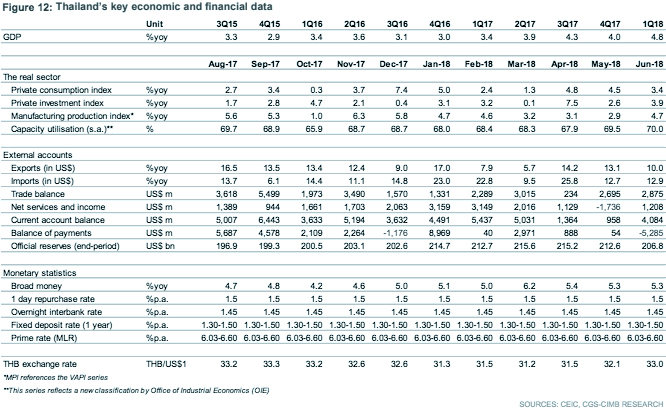
  • Despite strong current account gains due to healthier net inflows in the services and income accounts in June, overall BOP weakened due to greater financial outflows.
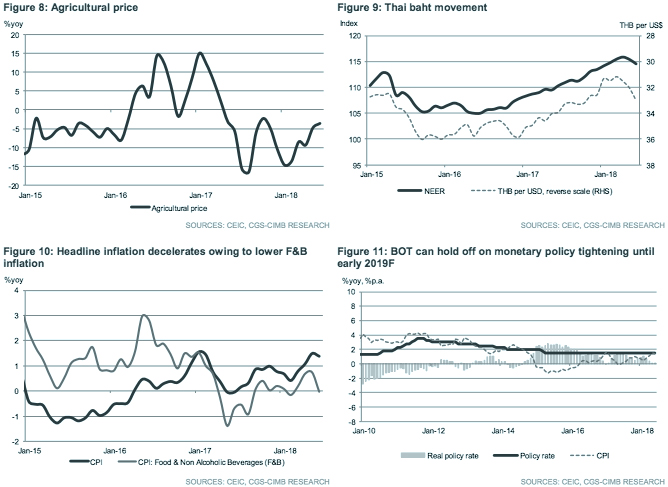
  • Farm incomes grew at a slower pace in June due to contraction in agricultural prices and lower agricultural production.
  • With June’s inflation at the low end of BOT’s target range, it can afford to hold off monetary policy tightening until early 2019F, in our view.
  • We expect the policy rate to remain at 1.50% through end-2018F.

img-th2-1

Exports moderating but manufacturing sector is improving
Export growth softened in June (+10.0% yoy vs. +13.1% yoy in May), mainly due to moderation in automotive shipments from an elevated level (+7.0% yoy vs. +19.6% yoy in May). Conversely, import growth strengthened slightly to 12.9% yoy in June (+12.7% yoy in May), primarily supported by fuel imports (+62.5% yoy vs. +26.2% yoy in May). Manufacturing activity picked up, with the Value Production Index (VAPI) rising 4.7% yoy (+2.9% yoy in May), buoyed by food & beverages, rubbers & plastics as well as cement & construction. Seasonally-adjusted capacity utilisation in the manufacturing sector also improved to 70.0% in June from 69.5% in May.

Current account thrives but financial outflows weaken BOP
Thailand’s current account improved significantly in June, registering a surplus of US$4.1bn (+US$1.0bn in May) on the back of higher net inflows from services and income accounts (+US$1.2bn vs. -US$1.7bn in May). Tourist arrivals rose 11.6% yoy in June to 3.0m. However, the nation’s financial account worsened to a deficit of US$7.0bn (+US$0.1bn in May) due to net outflows by Thai equity portfolio investors and ‘other investments’, resulting in a deterioration of the overall balance of payment (BOP) position (-US$5.3bn vs. +US$0.1bn in May).

Farm incomes to watch out for given the heavy downpours
Nominal farm incomes rose at a slower pace in June (+4.3% yoy vs. +8.0% yoy in May), dragged down by the persistent weakness in agricultural prices (-3.6% yoy vs. -4.8% yoy in May) and the slowdown in agricultural production growth (+8.2% yoy vs. +13.5% yoy in May). While the peak harvest season remains a few months away, the country’s provinces have been warned to brace for heavy downpours and flood risks.

Courting investments in the EEC
Thailand recently sought Chinese investment via the Belt and Road Initiative to help fund a five-year development plan worth THB1.7tr in the Eastern Economic Corridor (EEC). In 1Q18, the value of foreign direct investment applications from China approved by the country soared 1,482.2% yoy to THB14.3bn. Another initiative was signed by Thailand and the Japanese prefecture of Mie to establish the Mie-Thai agro-industrial cooperation centre at the EEC of Innovation (EECi) in Rayong, focusing on advanced food and food processing.

Policy rate to hold as inflation remains at low-end of target range
The Bank of Thailand’s (BOT) Monetary Policy Committee (MPC) voted 5-1 to leave the policy rate unchanged at its MPC meeting on 20 June, when the committee had its first extensive discussion on the conditions and timing for monetary policy normalisation. Inflation decelerated slightly in June (+1.4% yoy vs. +1.5% yoy in May), primarily owing to lower food inflation. Yet, it remains at the low end of BOT’s target range of 1-4%, suggesting that the central bank can hold off on monetary policy tightening until early 2019F. We reiterate our forecast that the policy rate will remain at 1.50% through to the end of 2018F.

img-th2-2

img-th2-3

img-th2-4

img-th2-5


Originally published by CIMB Research and Economics on 31 July 2018.

China-ASEAN Monitor


img-ca-200718

File Photo


Economy, Investment and Trade

Thailand to protect local industries by curbing bypass practices from foreign firms
(30 July 18) Thai trade officials will meet the United States customs to discuss ways to thwart bypass methods used by Chinese exporters who direct goods to Thailand in order to avoid higher US tariffs. Both parties will work together to outline Thai goods that will soon face levies from US tariffs imports and the quantities of the products exported every year. Recently, the Foreign Trade Department cooperated with the Customs Department to implement stricter imports and export controls especially on goods which are subject to high US tariffs. The move is to prevent Thailand from becoming a dumping ground for Chinese goods subjected to US tariffs hikes and anti-dumping measures which could harm local industries. An official from the Thailand’s Foreign Trade Department claimed that the US is concerned that certain foreign enterprises may shift its production bases to Thailand and re-export to the US due to President Trump’s’ decision to impose a 25 percent tariff on steel and 10 percent tariff on aluminium imports into the US on 8 March 2018.
Read more>>

Myanmar hopes for progress as China-backed Kyaukphyu megaproject negotiations resume
(30 July 2018) According to Myanmar’s deputy finance minister, an agreement has been made to scale down the China-backed Kyaukphyu megaproject from over US$7 billion to a projection of under US$1 billion. The implementation of the project will be supervised by Chinese consortium company, CITIC Group in the Rakhine State. The deep-sea port project which has been put on hold for more than three years has been heavily criticised because of its potential to put Myanmar heavily indebted to China with the unfair contractual agreement, that is 15 percent share for Myanmar and 85 percent on the CITIC-led group. The current government of Myanmar insisted on a 30 percent share which was then agreed by the Chinese consortium. The agreements are expected to be signed soon.
Read more>>

Vietnam surpasses Malaysia, becomes China’s biggest trade partner in ASEAN bloc
(29 July 2018) Among the ASEAN member states, Vietnam has taken the top spot as China’s largest trading partner for the first time from Malaysia. China-Vietnam revenue in June is US$11.2 billion, surpassing China-Malaysia revenue of US$9.3 billion. Malaysia was China’s largest trading partner from 2008 till 2015 and 2017. In the first half of the year, trade between China and Vietnam increased by 28.8 percent compared with the same period last year, 13.3 percent higher than the trade between Malaysia and China. Chinese Embassy in Vietnam said it is working together with the border provinces’ authorities to enhance the process of import of Vietnamese agricultural produce into China due to overwhelming growth of commodity exchange between the two countries.
Read more>>

Alibaba launches second availability zone to meet increasing demand in Malaysia
(30 July 2018) Alibaba Cloud, a subsidiary of Alibaba Group Holding Limited, has set up a second availability zone in Malaysia (Availability zone B) to expand its cloud data centre footprints as the regional demand for the digital services boom. Alibaba Cloud would further invest in Malaysia to set up the first cloud-based Anti-DDoS Scrubbing Centre in August. The new centre will offer new services to protect businesses from cyber threats and safeguard its customers’ information. Availability Zone B also will provide payment hardware security modules (HSM), elastic computing, database, networking and monitoring services which are certified for SAP hosting.
Read more>>

Philippines banks work with Bank of China to launch peso-renminbi spot market
(24 July 2018) Bank of China will ink a memorandum of understanding (MOU) with 15 local banks to ease the exchange and transactions of RMB into pesos vice versa without pegging to the US Dollar. Peso-renminbi spot market called the Philippine-RMB Community will be set up in the third quarter of the year. The Head of Bank of China, Deng Jun, said the RMB Community would open doors to trade and investment opportunities between China and Philippine. Currently, financial transactions between Filipino and Chinese businesses need to convert to US dollar rate which increases the marginal cost by one to two percent.
Read more>>


Singapore: June industrial production


HIGHLIGHTS

June industrial production

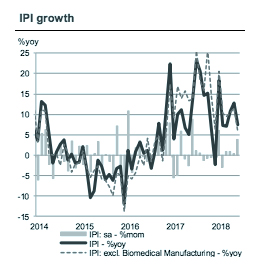
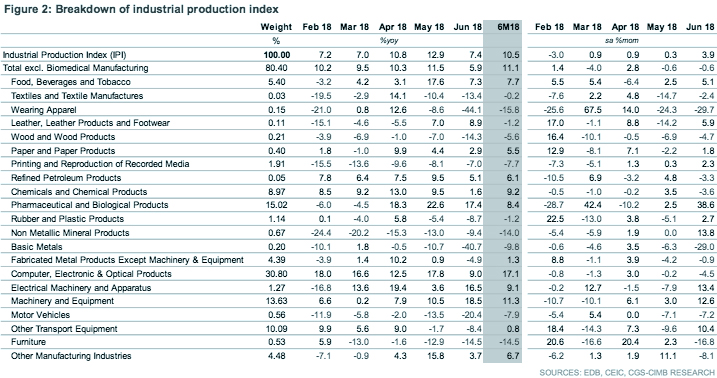
  • IPI expanded at a slower pace of 7.4% yoy in June, due to subdued growth in the electronics, chemicals and biomedical clusters.
  • Cumulative manufacturing growth (+10.2% yoy in April-June vs. +11.8% yoy in April May), suggests minor tweaks to the advanced GDP growth of 3.8% yoy in 2Q18.
  • While external developments have not significantly dented the manufacturing sector, global trade tensions remain a risk to the medium-term outlook.

img-sg7-1

Slower IPI expansion, but ahead of forecasts
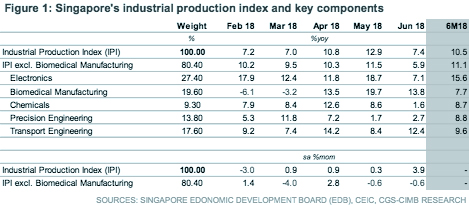
The industrial production index (IPI) expanded by a slower pace of 7.4% yoy in June, ahead of expectations (CIMB: +5.4% yoy, Bloomberg consensus: +3.3% yoy), and following an upward revision to growth in May of 12.9% yoy. Manufacturing activity excluding the volatile biomedical sector mirrored the headline trend, growing at a slower pace of 5.9% yoy in Jun (+11.5% yoy in May). On a seasonally-adjusted basis, the IPI expanded 3.9% mom (+0.3% mom in May).

Electronics output growth weakens on softer export shipments
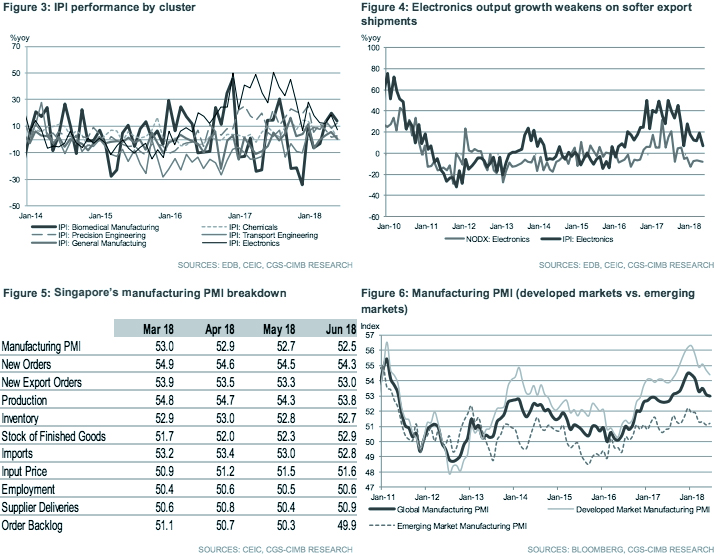
Electronics output growth moderated significantly to 7.1% yoy in June (+18.7% yoy in May), amid broader demand weakness for Singapore’s electronics exports (-7.9% yoy in June). Weighing on the sector were subdued semiconductor output growth (+10.2% yoy vs. +29.0% yoy in May), declines in the computer peripherals (-10.1% yoy vs. -12.0% yoy in May) and data storage segments (-9.9% yoy vs. -2.4% yoy in May). A pick-up in consumer electronics (+5.4% yoy vs. -24.6% yoy in May) and electronic modules output (+9.2% yoy vs. -10.9% yoy in May) were insufficient to counter wavering demand elsewhere.

Chemicals sector expansion more muted in June
Expansion in the chemicals sector lost pace in Jun (+1.6% yoy vs. +8.6% yoy in May) due to slower demand growth for petrochemicals and petroleum. The specialty chemicals segment continued to contract by 2.6% yoy in Jun (-1.2% yoy in May) and production of ‘other chemicals’ plummeted by 6.2% yoy (+11.9% yoy in May). However, transport engineering recorded robust growth (+12.4% yoy vs. +8.4% yoy in May), primarily led by the marine & offshore engineering segment. Furthermore, precision engineering also grew by 2.7% yoy in June (+1.7% yoy in May), helped by the precision modules & components segment.

Biomedical sector contribution moderates
The prognosis for the biomedical manufacturing cluster was less rosy in June (+13.8% yoy vs. +19.7% yoy in May) due to more subdued increases of pharmaceutical drugs production (+17.4% yoy vs. +22.6% yoy in May). The medical technology segment also experienced toned down gains of 1.9% yoy (+13.1% yoy in May).

Manufacturing outlook still clouded by global trade developments
Growth in the manufacturing sector broadly held up last quarter (+10.2% yoy in April – June vs. +11.8% yoy in April – May), suggesting only minor tweaks to the advanced GDP growth reading of 3.8% yoy in 2Q18, when the revised reading is released in Aug. While external risks have yet to significantly dent Singapore’s near-term manufacturing outlook beyond the anticipated cyclical slowdown in demand, trade relations between the US and China remain uncomfortably tense, particularly as the US prepares to raise the ante with at least US$400bn of additional tariffs on Chinese exports to the US.

img-sg7-2

img-sg7-3

img-sg7-4


Originally published by CIMB Research and Economics on 26 July 2018.

Malaysia: Dusting off the old playbook for SST 2.0


HIGHLIGHTS

Dusting off the old playbook for SST 2.0

  • Sales Tax rates of 5% and 10%, and Service Tax of 6% proposed under SST 2.0.
  • Taxable goods and services shrink from 60% of CPI basket under GST to 38%.
  • Households are clear winners in the GST-SST trade-off while businesses selectively benefit from lower compliance costs and boost to consumer demand.
  • On the other hand, government finances remain a concern as the replacement of GST with SST 2.0 entails a revenue shortfall of RM23bn (~1.6% of GDP).
  • We reiterate our GDP growth (+5.2% in 2018) and inflation forecasts (+1.3% in 2018), which had already been adjusted to reflect the reinstatement of SST 2.0.

img-my17-1

SST 2.0 borrows heavily from previous SST regime
The Sales and Services Tax (SST) will make a comeback on 1 September 2018 in a familiar fashion, with proposed rates of 5% and 10% for the Sales Tax, and 6% for the Service Tax – similar to the previous SST regime that was retired after 2015. While a separate tax schedule will be released later for petroleum and petroleum products, specific provisions were not made for tobacco and liquor, which incurred sales tax rates of 25% and 20% respectively under the SST 1.0, implying either the tax rate has not been finalised or a standard-rated sales tax of 10% applies. The new SST bill will be tabled soon and is expected to be passed before the end of the current parliamentary session in mid August. SST 2.0, alongside the GST zerorisation on 1 June, brings one of the new government’s core election promises closer to realisation.

Tweaks to improve efficiency of SST and minimise profiteering
We understand that improvements are being considered to the new SST Bill to address criticisms of the old SST like double taxation, incomplete tax relief for exports outside designated/special areas, and efficiency of collection. The Royal Malaysia Customs Department (RMCD) is also in consultation with the Finance Ministry and the Domestic Trade and Consumer Affairs Ministry to monitor and prevent unjustified profiteering during the SST 2.0 implementation.

Fulfilling pro-consumer election promise
Households are the clear winners in this trade-off, receiving additional disposable income through reduced tax collection. While goods without exemptions such as passenger vehicles, selected building materials, processed F&B and services (Fig 4) are poised for price increases after the GST tax holiday, SST 2.0 covers a narrower basket of goods and services (38% of CPI basket vs. 60% under the GST as cited by Finance Minister Lim Guan Eng), curtailing the inflationary impact to consumers. We retain our inflation forecast of 1.3% in 2018, which already assumes the reintroduction of the SST.

Lower administrative and compliance burden on businesses
SST 2.0 and the proposed abolishment of the GST Act relieves many businesses from the onerous reporting requirements, with the RMCD estimating that less than 100,000 businesses will be affected by SST 2.0 vs. 472,000 under GST. FM Lim contends that delayed GST refunds had tied up operating cash flows and raised costs for businesses. RMCD plans to help reduce administrative burden via automatic registration of eligible businesses (annual turnover >RM500,000) and digitising submissions of SST returns. RMCD will begin nationwide engagement with stakeholders on SST 2.0 from 23 July.

Government to tighten belt after picking up the tab
The government expects to collect RM21bn p.a. from the SST, vs. RM44bn p.a. under the GST regime estimated in Budget 2018 before it was abolished on 1 June, leaving a shortfall of RM23bn p.a. (~1.6% of GDP). While higher oil-related revenues provide a fortuitous temporary buffer, maintaining fiscal discipline hinges on the new government’s ability to rapidly rationalise unproductive expenditures and reduce revenue leakages. Alongside these fiscal reforms, we believe a comprehensive tax reform over the medium term, which helps simplify tax structures and broaden the tax base, is equally critical to ensuring fiscal and debt sustainability.

img-my17-2

img-my17-3

img-my17-4


Originally published by CIMB Research and Economics on 20 July 2018.

Indonesia: No revision to State Budget 2018 (APBN 2018)


HIGHLIGHTS

No revision to State Budget 2018 (APBN 2018)

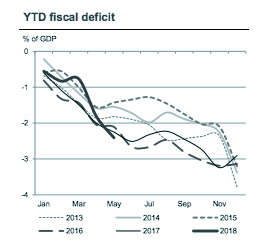
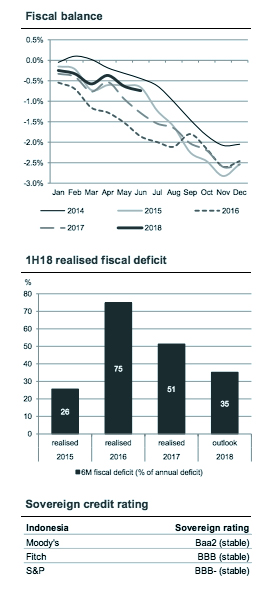
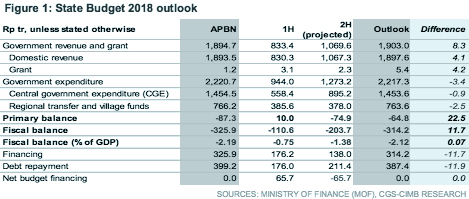
  • With 1H18 fiscal deficit remaining healthy at -0.75% of GDP (vs. full-year target of 2.19% of GDP), the government has decided not to revise its State Budget 2018.
  • Redirecting additional revenue to fund higher energy subsidy and social assistance implies current account deficit (CAD) remains a risk to rupiah and monetary policy.
  • No change to our 2018 forecasts for inflation (+3.4%) and GDP growth (+5.3%).

img-ind19-1

Fiscal deficit at -0.75% of GDP in 1H18
1H18 fiscal deficit came in at Rp111tr, or -0.75% of GDP, the smallest level in three years, as a result of stronger growth in government revenue and grant (Rp833tr, 44% of APBN, +16% yoy) relative to government expenditure (Rp944tr, 43% of APBN, +6% yoy). Given the healthy deficit position, government decided not to revise the State Budget 2018, although its estimates on macroeconomic assumptions have changed.

Outlook on macroeconomic assumptions
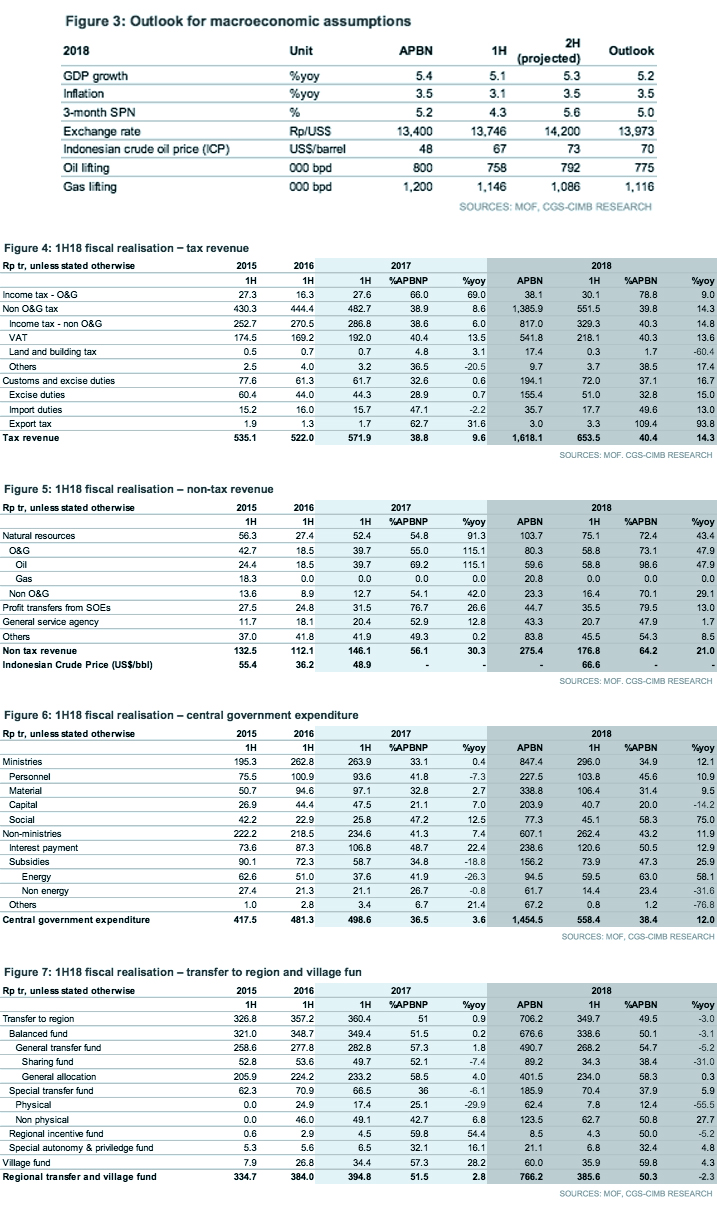
The government now expects GDP growth to come in at 5.2% in 2018 (vs. 5.4% in APBN), based on an oil price assumption of US$70 per barrel (vs. US$48 per barrel in APBN) and an exchange rate close to Rp14,000 per US$ (vs. Rp13,400 per US$ in APBN). The inflation outlook remains at 3.5% as prices remained under control in 1H18.

Revenue boosted by rising commodity prices and trade activity
Higher-than-expected commodity prices, in particular oil and coal, raised resource-related revenue collection in 1H18, such as O&G income tax (Rp30tr, 79% of APBN, +9%) and natural resources receipts (Rp75tr, 72% of APBN, +43%). Stronger trade activity, especially import growth, lifted import duties (Rp18tr, 50% of APBN, +13% yoy) and, partly, VAT (Rp218tr, 40% of APBN, +14% yoy).

Higher energy subsidy and social assistance…
The revenue windfall was redirected to fund higher energy subsidy (Rp60tr, 63% of APBN, +58% yoy) and social assistance (Rp45tr, 58% of APBN, +75% yoy), which collectively accounted for ~19% of central government expenditure. Capital spending took a backseat (Rp41tr, 20% of APBN, -14% yoy). To maintain subsidised fuel prices at current levels until 2019 and alleviate subsidy burden on Pertamina, the government announced in June that diesel subsidy would be raised from Rp500 per litre to Rp2,000 per litre. Taking into account the impact of higher oil prices on LPG subsidy, as well as higher allocation for electricity subsidy, the Ministry of Finance (MOF) projects energy subsidies to go up to Rp164tr in 2018, Rp69tr higher than APBN 2018.

…to support household purchasing power
The subsidy allocation is likely to remain elevated, as there are plans to raise diesel subsidy further to Rp2,500 per litre in 2019. We are not overly concerned about the government’s ability to absorb the additional energy subsidy, given that it could partly be compensated by higher O&G revenue, as we have highlighted in our previous report. The cumulative O&G fiscal balance (O&G revenue less energy subsidy) increased to Rp29tr in 1H18 compared to Rp14tr in 3M18.

No change to our inflation and GDP growth forecast
Channeling extra revenue to finance government spending, rather than lowering fiscal deficit, may keep pressure on the current account deficit (CAD) position; hence, we expect currency or monetary policy tightening risks to persist until 2019. As fiscal focus is diverted towards supporting household purchasing power from infrastructure development previously, we expect consumption growth to improve in 2H18, but investment growth could still be backed by ongoing infrastructure projects. We reiterate our inflation forecast of +3.4% and GDP growth projection of +5.3% for 2018.


img-ind19-2

img-ind19-4

img-ind19-3


Originally published by CIMB Research and Economics on 23 July 2018.

CARI Captures 365

c363_graphic


SINGAPORE

Singapore becomes the third nation to ratify CPTPP
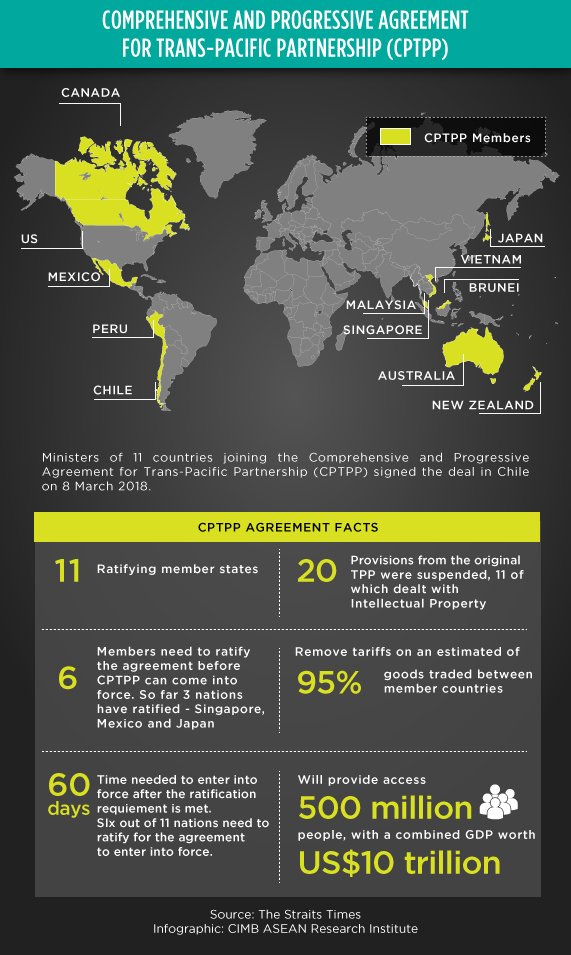
(20 July 2018) Singapore is the third country after Japan and Mexico to ratify the Comprehensive and Progressive Agreement for Trans-Pacific Partnership (CPTPP). Singapore’s Prime Minister Lee Hsien Loong said the trade pact signifies the country’s commitment to upholding free trade and a rules-based trading system. The CPTPP, which is the revised trade agreement of the original Trans-Pacific Partnership (TPP) after the United States pulled out from the original agreement in January 2017, will promote trade in a combined market of 500 million people with a gross domestic product of US$10 trillion. Mexico was the first nation to ratify the agreement in April 2018 followed by Japan on July 6, 2018. The other countries part of the agreement are Australia, Brunei, Canada, Chile, Malaysia, New Zealand, Peru and Vietnam.

INDIA-ASEAN

Singapore prompts India to finalise RCEP with ASEAN
(19 July 2018) India has been prompted to conclude the Regional Comprehensive Economic Partnership (RCEP) agreement to counter the escalating global trade war. Singapore’s Foreign minister Vivian Balakrishnan acknowledged that India and ASEAN would gain from the agreement as the combined gross domestic product (GDP) of India and the bloc is at US$3.8 trillion-US$4.5 trillion. ASEAN, India, South Korea, China, Australia, New Zealand and Japan started discussions in 2013 on the RCEP, which encompasses trade in goods, trade in services, investment, economic and technical cooperation, intellectual property, competition, dispute settlement and e-commerce. However, the pact has been delayed due to India’s hesitance to open its market to China. India has a high trade deficit of US$63 billion in 2017-2018 with China. Many nations want market access to India of up to 92 percent of its traded goods, but India is only prepared to open market access up to 85 percent of goods with different terms for China, New Zealand and Australia with whom the country does not have trade deals with.

MALAYSIA

Malaysia to increase oil royalties for producing states

(19 July 2018) The Malaysian government will increase oil royalties for oil-producing states from five percent to 20 percent. The country’s Prime Minister Tun Dr Mahathir Mohamad assured the parliament that the federal government would pay 20 percent royalties to all states including Sabah and Sarawak. The East Malaysia states had previously received 5 percent oil royalties while Terengganu and East Coast states Terengganu and Kelantan were given “compassionate funds”. In Dr Mahathir’s coalition manifesto, it said that royalty payments to oil-producing states would be increased so that the states can take over and channel funds on the states’ development plans.

LAOS

VLaos dam collapse uncovers frailties of dam projects
(25 July 2018) The dam collapse in Southern Laos, which has affected thousands of Laotians, has revealed weaknesses of the sudden surge of dam constructions in the country. The communist state is constructing dozens of dams to sell energy to its neighbours namely Vietnam, Cambodia, China and Thailand to ensure that the nation comes out of poverty. According to Laos News Agency, the country now has 46 operating hydropower plants generating 6,400 MW of energy and another 54 is being built and will go online in 2020. The International Energy Agency reported that about 85 percent of the electricity produced in Laos is mostly exported, primarily to Thailand where two-thirds of the resource is used up by Thailand’s capital Bangkok. However, these projects impact local communities as people will have to move out of their villages and landscapes, and river systems in the country would be affected. A report from the Mekong River Commission estimated that the projects could damage up to 40 percent of fish species in the Mekong River basin.

ASEAN

Southeast Asian nations see increased adoption of Artificial Intelligence (AI) in 2018
(26 July 2018) A survey conducted by international IT market research firm IDC reports an increase in the adoption of artificial intelligence in Southeast Asia. The study titled, The IDC Asia/Pacific Enterprise Cognitive/AI survey, is a biyearly study that aims to learn about adoption trends, barriers and business preferences. A total of 502 executives and IT line-of-business including 146 respondents from Southeast Asia nations namely Singapore, Malaysia, Indonesia, Thailand were interviewed for the survey. Based on the firm’s survey, AI adoption rates are at 14 percent over the region in 2018, compared to eight percent in 2017. The percentage increases show that firms in the region are beginning to include some form of AI into operations. Other growth enhancers in 2018 are improved process automation at 51 percent and enhanced productivity at 42 percent. Among the ASEAN nations, Indonesia is at the top when it comes to adoption with 24.6 percent of its organisations embracing AI.

VIETNAM

Bac Lieu LNG fueled power plant project to address Vietnam’s power shortage
(26 July 2018) Vietnam’s Prime Minister Nguyen Xuan Phuc mentioned that the Mekong Delta Region is suitable for liquefied natural gas (LNG) projects and a new project in the region will address the country’s future power supply shortage. In a meeting held on 25 July 2018, he welcomed investors of the country’s US$4 billion LNG powered project in the Mekong Delta province of Bac Lieu. The project is scheduled to start running in late 2021 and expected to generate 3,200 MW of energy. In May 2017, the U.S. based Energy Capital Vietnam inked a Memorandum of Understanding (MoU) with Bac Lieu authorities for the building of the LNG-powered project. According to Fitch Ratings, electricity usage in Vietnam will increase at an average rate of nine percent every year.

THAILAND

Thailand’s E-Commerce market to see 8.5 percent growth in 2018
(25 July 2018) The continuous growth of social commerce would increase the value of Thailand’s E-Commerce to US$91.6 billion in 2018, an increase of 8.5 percent since last year. According to the Thailand Electronic Transactions Development Agency (ETDA), the country’s e-commerce market value in 2017 was US$84 billion. ETDA recorded that the market value of business-to-consumer (B2C) e-commerce in the country is ranked the highest in Southeast Asia at US$23.33 billion in 2017. The top three areas that recorded the most significant value in 2017 were wholesale, accommodation and manufacturing.

ASEAN

Singapore is the top ASEAN nation in World Bank’s trade logistics rankings
(25 July 2018) Singapore was the top Southeast Asian in World Bank’s trade logistics ranking at the seventh spot. In the biyearly World Bank report titled “Connecting to Compete 2018: Trade Logistics in the Global Economy”, Singapore’s Logistics Performance Index (LPI) score was 4.00. Even though Singapore did better than most of its ASEAN counterparts, in 2016, the nation fared better as it was ranked fifth and had better LPI score of 4.14. The World Bank noted that the index reviews six aspects namely customs, infrastructure, international shipments, logistics quality and competence, tracking and timeliness. Thailand was ranked 32nd with an LPI score of 3.41 while Malaysia was placed at 41st with a score of 3.22. Vietnam also showed vast improvement as they jumped from 64th to 39th with an LPI score of 3.27. Indonesia was ranked 46th with a score of 3.15, an increase from 2016 where the country was ranked 63rd with a score of 2.98. The Philippines and Laos were ranked 60th and 82nd respectively, with LPI scores of 2.90 and 2.70 respectively.

MYANMAR

Regions in Kachin and Shan State provisionally selected as China-Myanmar border economic zones
(26 July 2018) Myanmar’s Union Minister for Commerce Dr Than Myint announced that Kampaikti region in Kachin State and Muse and Chinshwehaw regions in Shan State would be the provisional regions selected for the China-Myanmar border economic cooperation zones. The zones are part of the Belt and Road Initiative (BRI) and also the Myanmar-China Economic Corridor. The creation of the economic zones would help stimulate local and foreign investments, generate business and job opportunities for locals, help expand the SMEs in the country and enhance production capacity. An agreement to build the border economic cooperation zones was agreed in August 2016 during State Counsellor Aung San Suu Kyi’s visit to China.

CAMBODIA

Cambodia’s construction sector sees investments worth US$2.15 billion from January to June 2018
(26 July 2018) Cambodia’s construction sector managed to rake in investments worth US$2.15 billion in the first half of 2018. According to a report issued by Cambodia’s Ministry of Land Management, Urban Planning and Construction, the country issued licenses to 1,643 projects for 5.35 million square metres of area from January to June 2018. China, South Korea and Japan are the top investors in Cambodia’s construction and real estate sector. According to statistics provided by the Cambodian government, the construction sector contributed 29 percent of the country’s US$22 billion GDP in 2017. Garment sector was the highest contributor with 30 percent while agriculture and tourism accounted for about 25 and 13 percent respectively.

Mekong Monitor


img-ca-200718

Photo Credit: GIZ


TRADE, ECONOMY, AND INVESTMENT


GREATER MEKONG SUBREGION

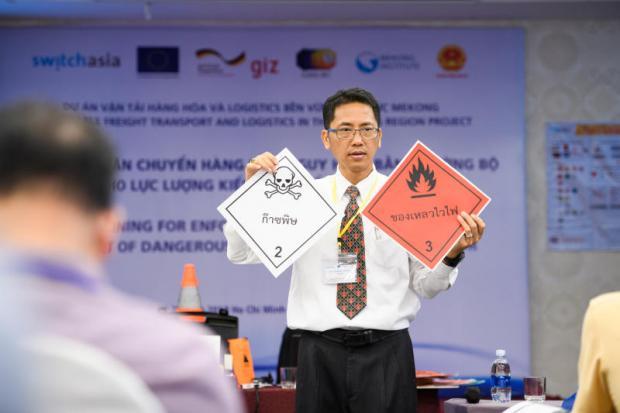
European Union (EU) trains officials on the safety of transporting dangerous goods in the Greater Mekong Subregion (GMS)
(22 July 2018) Thailand has been commissioned by the European Union to conduct training workshops for road-based logistic operations in the Greater Mekong Subregion (GMS). The EU funded workshops are based on the ASEAN Framework Agreement on the Facilitation of Goods in Transit signed in 1998 as part of the move to prepare GMS countries to embrace the UN-based safety regulations. However, most of the members have yet to utilise the programmes fully. In 1990, a major disaster related to the transportation of dangerous goods when a liquid petroleum gas tanker truck crashed on an expressway exit in Bangkok, leading to 90 deaths.
Read more>>

CAMBODIA

Cambodia’s internet users increases as network coverage expand
(24 July 2018) There has been a 10 percent increase in the number of internet users to a total of 12 million users for the first half of the year in Cambodia, said an official from the Telecommunication Regulator Cambodia. Social media users continue to multiply too, especially Facebook which represents 69 percent of social media accounts registered in the country. Much of the growth in the number of internet users has come from higher internet penetration to rural areas. In 2015, Cambodia had 20 million mobile phone connections, but it dropped in 2016 and 2017 as they were only 19.9 million and 18.57 million phone connections respectively. Up to June 2018, the number is at 18.9 million phone connections.
Read more>>

VIETNAM

Vietnam looks to insulate itself from the global trade war
(19 July 2018) Vietnam is seeking to protect itself from the growing trade conflict between two of the country’s largest export destinations China and the United States. The National Centre for Socio-Economic Information and Forecast, which is under Vietnam’s Ministry of Planning and Investment has submitted a report to the ministry on the potential impact of the trade war and how the country’s authorities should prepare to defend the economy. The Deputy Director-General of the centre Luong Van Khoi said the trade tension could reduce the country’s exports, hamper domestic production and foreign investment inflow. Vietnam’s dependence on exports and foreign direct investment to power growth makes it susceptible to the escalating global trade conflict. According to Vietnam’s Trade Ministry, the country imported US$57 billion of goods from China in 2017. Some experts call for the devaluation of the dong against the US dollar of about 2% for the entire 2018 to boost exports.
Read more>>

THAILAND

Thailand to step up investment on digital projects
(24 July 2018) Thailand’s Ministry of Digital Economy and Society will set up a 5G mobile application testbed lab at the Digital Park in Si Racha to help the country’s transition from the current 4G telecommunication spectrum to the incoming 5G era. The country’s National Broadcasting and Telecommunications Commission (NBTC) is also looking to allocate some spectrum bands for the 5G testing at the programmed test bed. The cyberport would be the centre for start-ups to get extensive support on a one-stop basis, from funding until their participation in a connected ecosystem. Thailand targets the digital economy to account for 25 percent of its GDP in 2018.
Read more>>

MYANMAR

Myanmar plans to establish agricultural zones in Mandalay and Nay Pyi Taw
(20 July 2018) Myanmar’s Ministry of Agriculture, Livestock and Irrigation has pledged to construct agrarian zones to produce agriculture-based products. Through the country’s agricultural development strategy and investment programme, the ministry will initiate such zones in the agricultural assistance plan stage (2) of Greater Mekong Subregion (GMS). The zones will allow growers to pioneer innovations and use modern appliances. The areas will be provided with equipment that generates electricity from biogas and water treatment plants.
Read more>>


mekong-monitor-map

About Greater Mekong Subregion (GMS)

The Greater Mekong Subregion (GMS) Economic Programme was launched by the Asian Development Bank in 1992 connecting five developing ASEAN countries, namely Cambodia, Laos, Myanmar, Vietnam and Thailand, and Chinese provinces of Yunnan and Guangxi Zhuang Autonomous region. The region has some of the most robust economies sharing the Mekong River Basin thanks to its reform and liberalisation. The subregion is growing at a faster pace than the whole of East Asia and the Asia Pacific as the GDP growth rate for 2017 was at 6.4 percent, according to the World Bank. The population at the subregion as of 2016 is at 340 million while the GDP at PPP is at US$3.1 trillion in 2016. In 2015, trading within the region was at US$444 billion.

Indonesia: July 2018 BI meeting


HIGHLIGHTS

July 2018 BI meeting

  • Bank Indonesia kept its 7-day Reverse Repo Rate (7DRRR) at 5.25% after the 100bp increase in May-June.
  • BI sees the weaker net export position as a drag on overall economic growth outlook.
  • Monetary policy remains biased towards tightening stance amid global uncertainties from US Fed monetary policy normalisation and trade wars.
  • The policy focus on rupiah stability implies economic growth would be less likely to get support from monetary policy, at least through 2019F.

img-ind18-1

Hitting the pause button after 100bp hike…
Bank Indonesia (BI) decided to leave its 7-day Reverse Repo Rate (7DRRR) unchanged at 5.25% after having raised the policy rate by 100bp in May-June. The decision was in line with our and Bloomberg consensus expectation. The Deposit Facility Rate and Lending Facility Rate were maintained at 4.50% and 6.00%, respectively.

… as downside pressure on rupiah subsides
The move came amid some softening of the downside pressure on rupiah. Since the last BI Board of Governors’ meeting, which saw a larger-than-expected increase of 50bp on the policy rate, more attractive yield spreads have reduced the pace of foreign portfolio outflows in the bond market. The weakening of the rupiah was relatively in line with the depreciating trend seen among regional currencies on the back of broad US$ appreciation. The large trade surplus in June also came to its rescue, alleviating pressures on the current account deficit (CAD). We expect higher tourist receipts from the Asian Games as well as the authorities’ plans on import reduction to prevent further deterioration in Indonesia’s CAD position (CIMB forecast: 2.5% of GDP in 2018).

GDP growth restrained by weaker net export position
Given Indonesia’s weaker net export position, the central bank now envisages that the outlook for 2018 economic growth is settling at the lower end of its forecast of 5.1-5.5% (CIMB forecast: +5.3% yoy). BI nonetheless noted a build-up in growth momentum in 2Q18, backed by household consumption and solid investment. Policy coordination between BI and the government has kept inflation rate within the 2.5-4.5% target range, with headline inflation under control during the Lebaran festive month (+3.1% yoy in June).

Monetary policy direction remains biased towards tightening stance
We expect the monetary policy to be guided by external risks, given the US Federal Reserve’s monetary policy tightening cycle and escalating global trade tensions. Indonesia’s trade-to-GDP ratio is low relative to its peers i.e. Malaysia, Singapore and Thailand, insulating the economy from the direct economic impact of US-China trade tensions. Nonetheless, given Indonesia’s higher foreign holding of government bonds and CAD position, rupiah will bear the burden when escalating trade wars trigger flight to safety. Hence, we see Indonesia’s monetary policy direction remaining biased towards tightening stance. The policy focus on rupiah stability implies that economic growth would be less likely to get support from monetary policy, at least through 2019F. We maintain our policy rate forecasts of 5.25% for 2018F and 5.75% for 2019F.


img-ind18-2

img-ind18-3


Originally published by CIMB Research and Economics on 20 July 2018.

China-ASEAN Monitor


img-ca-200718

Photo Credit: Reuters


Economy, Investment and Trade

China initiated anti-dumping investigation on stainless steel imports from Indonesia, EU, Japan and South Korea
(23 July 2018) China launched an anti-dumping investigation on stainless steel imports worth US$1.3 billion after complaints of substantial damage to domestic industries because of improperly low prices of steel imports. China’s probe focuses on stainless steel billet and hot-rolled stainless steel plate from EU, Japan, South Korea and Indonesia which nearly tripled last year. Almost two-thirds of China’s stainless steel imports came from Indonesia last year. The imported prices of stainless steel products fell 23 percent to US$1,867 a tonne in 2017.
Read more>>

Blockchain platform for cross-border trade between ASEAN and China’s digital Silk Road launched in Singapore
(19 July 2018) An e-government service provider owned by a Singapore government body and port operator PSA Singapore has launched a blockchain platform called Open Trade Blockchain (OTB). The primary focus of OTB is to facilitate cross-border trade between ASEAN nations and China. This blockchain service is the region’s first cross-border blockchain platform that aligns with China’s Belt and Road Initiative (BRI) and Southern Transport Corridor. The blockchain platform enhances transparency and efficiency in trade and supply chain by way of user-friendly interface with ‘drag-and-drop simplicity’ to share trade documents between port operators, shippers and buyers/sellers.
Read more>>

China and Myanmar economic border zone reaches the final stage
(17 July 2018) China and Myanmar are inching closer to sign a deal to construct a China-Myanmar Economic Corridor. Assistant secretary of Myanmar’s Ministry of Commerce, U Khin Maung Lwin said location of the proposed economic zone bordering China and Myanmar will be finalised in the near future. The implementation body will determine which locations between Kachin and Shan states to be prioritised. The planned economic zone would allow free trade and increase Myanmar’s exports to the Chinese market.
Read more>>

Double Taxation Agreement (DTA) will boost Chinese investment in Cambodia- expert
(19 July 2018) Industry experts believed that the implementation of a Double Taxation Agreement (DTA) due to come into force in January would increase Chinese investments in Cambodia. Previously, Cambodia levied a 14 percent withholding tax on payments of dividends, interests and royalties paid to non-residents. Under the signed DTA, these rates would be slashed to 10 percent and address concerns of double taxations. Cambodia has signed DTAs with five nations, namely, China, Brunei, Thailand, Singapore and Vietnam.
Read more>>

More Mandarin-speaking guides needed to capture growing Chinese market
(19 July 2018) Brunei tour guides are taking steps to learn and sharpen their Chinese language skills as China is now the biggest market for tourist arrivals into the sultanate. About 40 participants from Brunei are taking a three-day training course organised by the ASEAN-China Centre (ACC) in collaboration with China’s top ranking tourism universities to learn the language. Brunei is the first ASEAN nation to start the project, which looks to cater the growing Chinese market travelling to Southeast Asia. With more than 52,000 Chinese visitors to the sultanate in 2017, a jump of 26 percent from 2016 figure, the market looks set for an increased presence with Royal Brunei Airlines announcing the addition of several new direct routes to major cities in China. In 2017, approximately 28 million Chinese nationals visited ASEAN countries.
Read more>>


Malaysia: June 2018 consumer price inflation


HIGHLIGHTS

June 2018 consumer price inflation

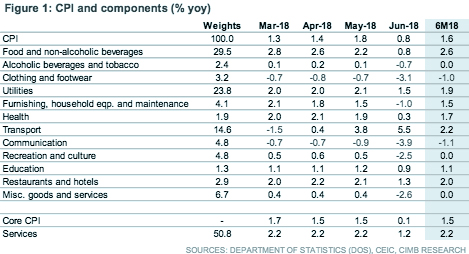
  • Both headline and core inflation decelerated sharply in June (+0.8% yoy and +0.1% yoy, respectively) following the zero-rating of GST on 1 June.
  • All but transport components saw falling price gains. Transport inflation accelerated despite unchanged RON95 and diesel prices, due to lower base effect a year ago.
  • Benign food inflation can also be attributed to the Price Control Scheme for Aidilfitri 2018, which took effect on 8-22 June.
  • We maintain our 2018F inflation forecast of 1.3%, and Overnight Policy Rate (OPR) at 3.25%.

img-my16-1

Inflation eases in all key components, but…
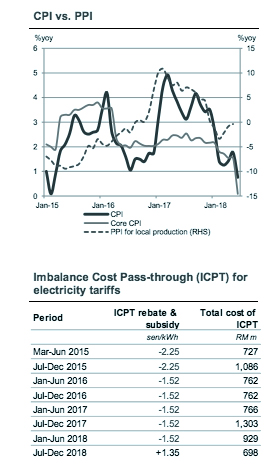
The reduction of Goods and Services Tax (GST) from 6% to 0%, effective 1 June, has resulted in a drastic deceleration in both headline and core inflation. The headline inflation eased more than expected to 0.8% yoy in June (CIMB: +1.1% yoy, Bloomberg consensus: +1.3% yoy, May: +1.8% yoy), the smallest increase since Feb 2015, whereas core inflation moderated to 0.1% yoy (+1.5% yoy in May). On a seasonally-adjusted basis, headline CPI fell 1.2% mom in June (+0.2% mom in May).

… lower base effect lifts transport inflation
All key components saw falling price gains, except for the transport component. Transport inflation quickened to 5.5% in June (+3.8% yoy in May) due to rising fuels and lubricants inflation (+10.2% yoy vs. +5.3% yoy in May) and passenger airfares (+3.7% yoy vs. +2.4% yoy in May) as a result of lower oil prices last year. Meanwhile, Price Control Scheme for Aidilfitri 2018, which took effect on 8-22 June, also contributed to benign food inflation (+0.8% yoy in June vs. +2.2% yoy in May) alongside the GST effect.

10% sales tax and 6% services tax to be reintroduced on 1 September
A survey by National Price Council under the Ministry of Domestic Trade and Consumer Affairs revealed that the prices of 72% of consumer goods declined by up to 13% since the GST was lowered to 0%. The zero-rated GST will last until end-August, after which the government will implement a 10% sales tax and a 6% services tax effective 1 September 2018.

Monetary policy to stay accommodative amid benign inflation outlook
In our view, the inflation outlook is likely to remain subdued in 2H18 (+1.6% yoy in 1H18) even after taking into account the reintroduction of SST on 1 Sep 2018. Effective 1 July to 31 December 2018, TNB will implement a 1.35 sen per kWh surcharge on electricity tariffs, to account for higher fuel and generation costs under the Imbalance Cost Pass-Through (ICPT) mechanism. Nonetheless, households with monthly consumption above 300kWh will be spared from the ICPT surcharge as it will be funded by Kumpulan Wang Industri Elektrik. In the meantime, Telekom Malaysia has recently offered an entry plan for the B40 group (with monthly household income not exceeding RM4,500), as well as speed upgrades for existing broadband subscribers, which effectively translate to lower broadband prices per Mbps, pointing to the absence of inflation risk in the near-term. Hence, we maintain our 2018F headline inflation forecast at 1.3% yoy (+3.7% yoy in 2017). With inflation rate remaining below Bank Negara Malaysia (BNM)’s forecast of 2- 3%, we expect the central bank to leave Overnight Policy Rate (OPR) unchanged at 3.25% for the rest of 2018.

img-my16-2

img-my16-3


Originally published by CIMB Research and Economics on 18 July 2018.