China-ASEAN Monitor: Myanmar rice traders expect losses despite higher imports allowed from China


Photo Credit: The Myanmar Times


Economy, Investment and Trade


Myanmar rice traders expect losses despite higher imports allowed from China
(3 May 2020) More than 5,000 tonnes of rice, equivalent to around 100,000 sacks, have piled up at the Myanmar-China border over the past month. According to U Min Thein, vice-chair of Muse 105-mile Rice Wholesale Center, the accumulation occurred when Chinese authorities temporarily suspended imports without certificates from the General Administration of Quality Supervision, Inspection and Quarantine of the People’s Republic of China (AQSIQ). This has resulted in some 150 trucks unable to go beyond the Kyal Gaung area since 3 April and drivers have had to hire warehouses to store the rice. Min Thein said that the agriculture ministry had not been issuing AQSIQ certificates for the first few weeks of April but have started doing so after inspecting the rice stocks since 20 April. Trade at the border resumed in May and China has issued letters to Chinese companies permitting them to import up to five times more rice than the amount purchased in 2019. However, traders are still anticipating further losses due to the earlier stockpiles.
Read more>>

China’s demand for Thai durians still strong despite pandemic
(4 May 2020) Chinese demand for durian remains strong as some of Thailand’s production regions continue their harvest in May. According to a regional news outlet, Thailand’s durian sector has been able to sidestep some of the effects of the COVID-19 pandemic by dealing directly with Chinese buyers. According to Vipavadee Teplasamee, a durian grower from the Chanthaburi provinces, Chinese buyers had already visited the country’s production regions in March to secure the fruit before Thailand entered lockdown. The demand in China that resulted in these buyers’ visits has led to an increase in durian cultivation in Thailand. As a result, there has been a shift from rubber production to durian production in regions such as Chanthaburi. According to Silapakorn University research, rubber cultivation in Chanthaburi has shrunk to 89,782ha from 177,736ha in 2012, while durian orchards in the province now cover 30,400ha. Much of this growth is expected to supply China’s demand which accounted for 70% of Thai durian exports in 2018.
Read more>>

Work completed on third-longest Lao tunnel for railway link with China
(1 May 2020) Work on Laos’ third longest-tunnel at Namor district in Oudomxay province has been completed. The tunnel is part of the Laos-China Railway Project and has a length of 9,020 metres. The work was completed 43 days ahead of schedule on 29 April despite several challenges in the construction area, which was filled by groundwater. Despite the COVID-19 outbreak, officials from the Laos-China Railway Company said the firm expanded the team in charge of construction and implemented preventive measures to curb infections. The rail network at the tunnel in Oudomxay will provide the foundation for the Laos-China railway service which is expected to be operational by 2021. Built under the Belt and Road Initiative, the Laos-China Railway Project will link Vientiane in Laos with Kunming city of China’s Yunnan province.
Read more>>

Malaysian subsidiary bags US$6.4 billion sand order from Guangzhou Kaishengda
(4 May 2020) Malaysia’s Esa Pile Sdn Bhd, a subsidiary of Ageson Bhd, has accepted a purchase order from Guangzhou Kaishengda Industrial Co Ltd (GKI) for river sand and sea sand for a period of 15 years. The contract is estimated to be worth around US$6.4 billion. According to a filing made to Bursa Malaysia on 4 May, the company is expected to supply 50 million cubic metres of river sand annually and 100 million cubic metre of sea sand annually to GKI beginning from the third quarter of 2020. The company expects the contract to further strengthen its international export market and its trading business for sustainable earnings for the long term while creating business opportunities with GKI.
Read more>>

China’s NGO sends volunteers and donates medical supplies to Cambodia
(4 May 2020) Chinese non-governmental organisation, Blue Sky Rescue Team, sent a team of 10 volunteers and donated medical supplies to Cambodia to help fight the COVID-19 pandemic. The team handed over the items, including 280,000 masks, 200 disinfection machines, and 900 protective suits, to Cambodia’s Council of Ministers’ secretary of state Kemreat Viseth, chairman of Civil Society Alliance Forum (CSAF), at a ceremony held in Phnom Penh on 4 May. The team of volunteers will participate in a Joint Action for Defeating the COVID-19 under the Blue Sky Rescue Team’s Silk Road Community Building Initiative. The volunteers have been disinfecting public spaces, schools, quarantine centres, hospitals, markets, forts, and state premises in Phnom Penh and provinces, while also sharing their experiences in curbing COVID-19 with Cambodian staff.
Read more>>

CARI Captures 452: Model predicts COVID-19 in ASEAN will end by September 2020


ASEAN

Model predicts COVID-19 in ASEAN will end by September 2020
(26 April 2020) A study conducted by Singapore University of Technology and Design (SUTD) projects that the COVID-19 pandemic will gradually end beginning in June 2020. The results released by SUTD’s Data-Driven Innovation Lab on 24 April were obtained by using the susceptible-infected-recovered (SIR) on 28 countries including Malaysia. The SIR model has previously been used to predict other diseases such as SARS and AIDS. Based on the model, the world will achieve 100% recovery from COVID-19 on 2 December 2020. For ASEAN countries included in the study, the pandemic is predicted to end 100% as follows: Vietnam (14 May 2020), Thailand (11 June 2020), Singapore (19 June 2020), the Philippines (8 July 2020), Malaysia (9 July 2020) and Indonesia (1 September 2020).

ASEAN

More than 20 million workers in ASEAN-6 could lose jobs due to pandemic
(27 April 2020) Analysts from BofA Global Research estimated that about 7% of total employees, or 20.7 million, in ASEAN-6 economies could be laid off due to the COVID-19 pandemic. The ASEAN-6 region comprises Indonesia, Vietnam, the Philippines, Thailand, Malaysia and Singapore, with the highest number of workers expected to be laid off led by Indonesia at 9.4 million. The research firm warned that a crash in the labour market would threaten the expected economic recovery in the region once the pandemic subsides. Workers in services activities such as accommodation and food, wholesale and retail trade, and real estate and business services are likely to be hit hard. While some countries have allowed manufacturing activities to continue, the sector will feel the brunt of the drop in global demand. According to the research firm, given that risks are still skewed to the downside, more and better-targeted, help is needed.

ASEAN, US

US commits to aiding ASEAN’s COVID-19 response
(24 April 2020) The US has committed to continue providing generous support to the Association of Southeast Asian Nations (ASEAN) in order to assist them in their response to the COVID-19 outbreak. According to a statement issued by the US Department of State’s office, the commitment was made by US Secretary of State Mike Pompeo during the launch of the US-ASEAN Health Futures initiative during a US-ASEAN Special Ministers’ Meeting held on 23 April 2020 via video conference. The special meeting was co-chaired by Laos, as country Coordinator for ASEAN-US Dialogue Relations. Pompeo said to date, the US has released more than US$35.3 million in emergency health funding to help ASEAN countries fight the virus, building on the US$3.5 billion in public health assistance provided across ASEAN over the last 20 years.

ASEAN

Ramadan bazaars go digital in Southeast Asia
(28 April 2020) With the COVID-19 pandemic having led to the cancellation of Ramadan bazaars in many Muslim-majority countries in the region, thousands of street hawkers and vendors in Malaysia have had to make the switch to digital platforms, mirroring a shift seen in neighbouring Indonesia, where roadside businesses enjoy a sizeable online presence. Due to the partial lockdown, some 100,000 Malaysian hawkers are estimated to have suffered a loss of US$11.5 million (RM50 million). Several companies have developed e-bazaar platforms to help Ramadan traders partner with delivery companies and reach more customers online. Many small food businesses, however, prefer marketing directly to customers via social media as they do not earn enough profit to share with delivery firms. Dozens of Ramadan bazaar groups have popped up on Facebook, where sellers can offer cash-on-delivery services to customers closest to them. Virtual bazaars have also been set up in Singapore, which cancelled Ramadan markets in March.

MALAYSIA

Cryptocurrency trading operators record upsurge in trading during lockdown
(30 April 2020) Two government-approved cryptocurrency trading operators in Malaysia have reported an upsurge in trading volumes and new users. Malaysia’s first fully approved digital asset exchange, Luno, stated that local trading volumes on its platform grew by 33% over the last four weeks and that the number of active users on the platform also reached a record high. The other cryptocurrency exchange operator, Tokenize Technology, also stated that they saw the average daily trading volume increase by 30% to 40%. It is believed that users are using cryptocurrency as a store of value during economically difficult times.

MALAYSIA

Vehicle sales plunge 58.96% year-on-year in first quarter of 2020
(29 April 2020) Vehicle sales in Malaysia plunged by 58.96% year-on-year in the first quarter of 2020, to 22,478 units from 54,776 in the first quarter of 2019. According to the Malaysian Automotive Association (MAA), this is largely due to the Movement Control Order implemented by the Malaysian government, which has seen car showrooms closed. Passenger vehicle sales fell by 60% year-on-year while commercial vehicle sales dropped by 52%. Year to date, cumulative sales were down 25.59% to 106,428 units from 143,036 units in 2019. Sales volume in March 2020 was 44% lower than in February 2020.

THE PHILIPPINES

The Philippines may relax restrictions in Luzon after 15 May
(28 April 2020) Philippine President Rodrigo Duterte said he may soon ease restrictions to contain the COVID-19 outbreak, a move that his spokesperson said will be considered after the lockdown ends in mid-May. The Philippine leader said the lockdown will only be gradually eased as completely lifting it raises the risks of more infections. The government plans to allow construction and other sectors to slowly restart, making sure that social distancing remains in effect including in the capital’s congested railways. The Philippine economy may shrink 0.2% in 2020 before bouncing back to a 7.7% growth in 2021 as support measures “gain traction,” central bank Governor Benjamin Diokno said over the weekend.

THE PHILIPPINES

Philippine government raises US$2.35 billion in bond sale as it fights COVID-19
(28 April 2020) The Philippines government has raised US$2.35 billion from a bond sale as it seeks to shore up its economy from the COVID-19 pandemic. The bonds were issued in two parts, with the 10-year notes priced to yield above 180 basis points over Treasuries, up 110 basis points when it issued a similar note in January 2019. The Philippines government expects its budget deficit for 2020 to widen to 5.3% of GDP from 3.6% in 2019. This would be the highest budget deficit since at least the year 2000.

SINGAPORE

More than 130 garment, footwear and travel goods factories suspend operations
(28 April 2020) As of 27 April 2020, more than 130 garment, footwear and travel goods factories in Cambodia have suspended operations due to a sharp decline in purchase orders. Most of these products are exported to Europe and the US, both of which have been impacted by the COVID-19 pandemic, leading to a sharp decline in demand. Nearly 100,000 workers have been affected, with the garment, footwear and travel goods industry being Cambodia’s largest export sector employing approximately 750,000 people. Labour Ministry secretary of state and spokesman Heng Sour said although factories in the kingdom have not received purchase orders from potential buyers for April, May and June, there are some factories that are still in operation and keeping their final products in warehouses in the hopes that demand will bounce back. He expects the country’s exports in the second quarter of 2020 to drop by 50% to 60% over the same period in 2019.

CAMBODIA

New factories opened in the first quarter of 2020 despite COVID-19 pandemic
(23 April 2020) A total of 77 new factories, including 34 garment, footwear, and travel goods factories, opened in Cambodia in the first quarter of 2020 despite the COVID-19 pandemic. According to the Ministry of Industry, Science, Technology, and Innovation, the new factories created jobs for 27,909 people. Although many factories have seen a drop in purchasing orders, it is believed demand will resume once the pandemic passes. Most of the garment, footwear and travel goods factories continued to operate due to constant supply of raw materials from China, with only six factories having permanently shut down during the quarter affecting some 6,052 workers. Cambodia’s exports of garment, footwear, and travel goods in 2019 was valued at US$9.32 billion, accounting for over 83% of the country’s total industrial product exports.

ASEAN Roundtable Series on ASEAN’s Response to COVID-19: Medium-term Outlook and Urgent Stimulus Measures for the Business Sector

Published on 30 April 2020

CARI Viewpoint: ASEAN responded to the COVID-19 pandemic with varying degrees of fiscal and non fiscal measures, but it must move beyond rhetorics and remap its supply chains network as the world embraces regionalisation post pandemic

The CIMB ASEAN Research Institute (CARI) organised its first online ASEAN Roundtable Series (ARS) on 21 April 2020, which brought together business leaders from Malaysia, the Philippines, Singapore, Thailand, and Indonesia. Titled “ASEAN’s Response to COVID-19: Medium-term Outlook and Urgent Stimulus Measures for the Business Sector”, the roundtable discussed the series of stimulus measures announced by their respective countries in response to the COVID-19 pandemic.

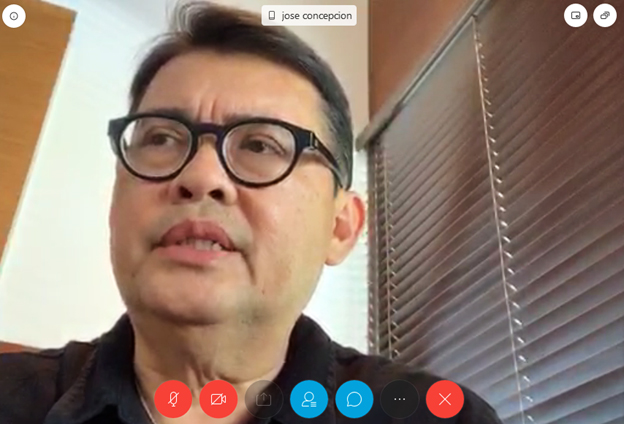
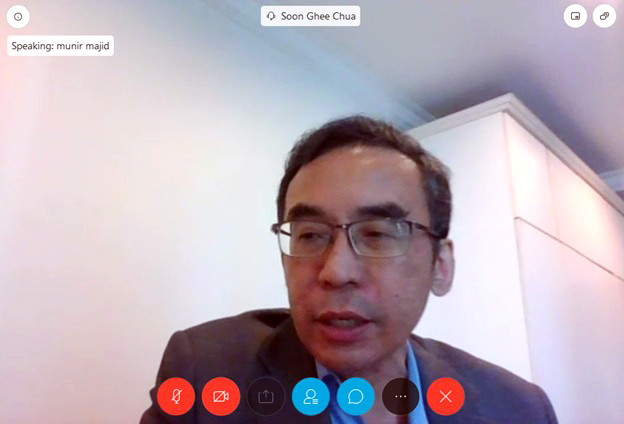
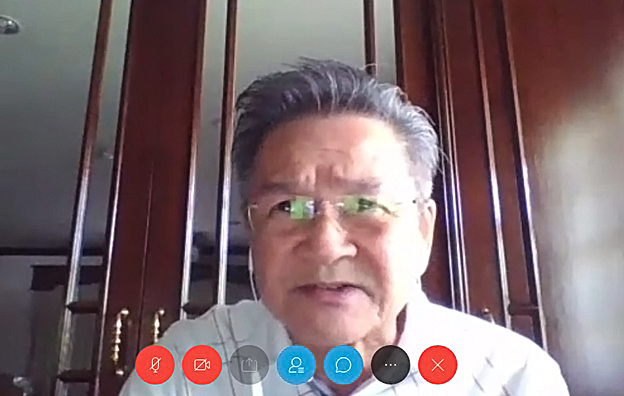
To bring clarity to such issues, the online roundtable gathered eminent speakers such as Chua Soon Ghee, Partner of Kearney Singapore; Shinta Widjaja Kamdani, CEO of Sintesa Group Indonesia; Arin Jira, Chairman of the Map Ta Phut Industrial Gasses Co Ltd Thailand and Jose Ma Concepcion III, President and CEO of RFM Corporation Philippines.

A few key themes have emerged from the discussion.


1. Varying degrees of government relief have been provided for business sector in Malaysia, Indonesia, Thailand, and Philippines


Tan Sri Munir described MSME’s as the ‘backbone’ of ASEAN; pointing out how if they break, then ASEAN breaks. He noted that the liquidity crisis is being disproportionately felt by MSMEs, and that most government fiscal measures announced are specifically designed to keep demand and employment up.

Tan Sri Munir also called for a master list of grants and assistance schemes for MSMEs both on a country-by-country basis, and regionally. This would provide a ‘user guide’ to help MSME’s navigate country-specific paperwork, and enable the sharing of best practises.

Tan Sri Munir described MSME’s as the ‘backbone’ of ASEAN; pointing out how if they break, then ASEAN breaks. He noted that the liquidity crisis is being disproportionately felt by MSMEs, and that most government fiscal measures announced are specifically designed to keep demand and employment up.

Tan Sri Munir also called for a masterlist of grants and assistance schemes for MSMEs both on a country-by-country basis, and regionally. This would provide a ‘user guide’ to help MSME’s navigate country-specific paperwork, and enable the sharing of best practises.

  • a) Malaysia managed to keep fiscal deficit low despite the fiscal measures

    While discussing Malaysia’s fiscal relief measures, Tan Sri Dr. Munir noted that Malaysia has managed to keep its fiscal deficit as a percentage of its budget at a relatively low of 4%. He attributed this to strategies including the reallocation of funds from other departments and programs. He also pointed to the proactive role played by Malaysia’s central bank in ensuring that there is enough liquidity in the banking system.

     
  • b) Indonesia’s COVID-19 fiscal measures focus on healthcare, social services, and industrial support

    Indonesia unemployment rate doubled: Shinta Kamdani, discussing the economic impact of the pandemic in Indonesia, noted that of particular concern for Indonesia was the closures of businesses and its implications on the job market. She noted that unemployment on a weekly basis has doubled, with some three million Indonesian unemployed or furloughed as of April 21, 2020.

    Indonesia’s COVID-19 fiscal stimulus package at 2.5% of GDP: She noted that Indonesia’s series of stimulus packages are broken down into three main categories; healthcare, the social safety net, and industrial support. She noted that the total fiscal measures are still relatively low with spending at 2.5% of the Indonesian GDP, as compared to other countries' stimulus packages which stand at a minimum of around 10%. As a result, she stated that the Indonesian private sector is requesting that the government increase its emergency expenditures.

    Indonesian social safety nets in informal sectors: She noted that Indonesia’s social safety measures, in particular, are focused on the informal sector, wherein 55% of Indonesia’s workforce is currently employed in. These measures include subsidies on basic necessities, housing incentives for low-income people, and pre-employment training provided to informal sector workers.


    Industrial support included tax and import duty waivers for certain industries, as well as financing for national economic recovery.


  • c) Thailand: 10 million people may risk losing jobs

    Arin Jira stated that Thailand will see about 7-10 million people (about a quarter of the workforce) out of work due to the pandemic. He believed that governments right now are focused on bigger companies when MSMEs form the majority of businesses in ASEAN.

    He believed that Malaysia’s stimulus measures are more generous than Thailand’s, pointing to Malaysia's discounts on electricity bills and free e-discount and internet broadband. Included amongst the proposals he made for the Thai government are wages subsidies for employees (at about 50% of the total wage), relief from corporate taxes for MSMEs for the full year, and help for domestic producers (such as the agriculture sector) by trying to sell their goods to the domestic market to meet regional shortages.

  • d) The Philippines: Structured lockdown of infected communities may save the economy

    Jose Conception III likewise revealed that some 99.6% of MSMEs in the Philippines have been impacted by the pandemic. Jose proposed non-financial measures to help the economy, such as ‘structured lockdowns’ which would shift away from locking down entire urban areas to specific infected communities, in tandem with mass testing. More and more of the economy would be gradually opened depending on the importance of the industry, which he stated will be crucial as thousands of Filipino overseas workers return home.


2. COVID-19 aid channels must be de-bottlenecked and reliable data is crucial to the successful delivery of relief


Besides discussing the emergency measures in the macro-context, the panellists also discussed the inherent issues within the measures which hindered distribution. Chua noted that one issue has been the bottlenecks in the flow of support to smaller businesses and employees. In one example, he observes that wage assistance to companies has not been coming as smoothly as expected. In terms of cash handout policies, SMEs still complain of cash flow problems due to banks still requiring cumbersome background checks (even with government assistance).


Shinta Kamdani identified several issues with Indonesia’s economic stimulus measures, including limited funds to help the private sector, problems with verifiable data needed to deliver social safety benefits (especially with regards to the informal sector), delays in stimulus distribution due to bureaucratic inefficiency, and the bottleneck of credit stimulus delivery (e.g. many banks being wary of undergoing debt restructuring due to their own liquidity problems).


3. Digital Adoption Hampered by Digital Illiteracy


  • a) Digital solutions allow business continuity in the new business environment

    Tan Sri Dr. Munir reiterated that the MSME’s in ASEAN have been hit by a demand shock caused by the pandemic, which prevents many from accessing their markets. Digital solutions such as e-commerce and online marketplaces may allow many MSMEs to survive in this new business environment, although he warned that many businesses may not necessarily be digitally literate and that adopting e-commerce would be a learning experience.

    While Tan Sri Munir also acknowledged the importance of app-based contact tracing in helping contain the spread of the virus in certain Asian countries, he warned that our adoption of data-driven solutions must not come at the expense of personal freedoms and its exploitation by authoritarian governments.

  • b) Digital literacy Inequality in Thailand

    Thailand’s distribution is also facing issues as a result of pandemic emergency measures. Arin Jira observed that there have been issues about determining the eligibility of recipients, even with an AI system being adopted to measure cash handout qualifications. Likewise, Jira shares Tan Sri Munir’s concerns and warned that our enthusiasm for digital solutions to the crisis must be tampered by issues of digital illiteracy among a large part of ASEAN’s populace. For instance, although registration for Thailand’s stimulus measures can be conducted online, Arin Jira warned that a large part of the populace may be shut out of much-needed financial support due to digital illiteracy.

    In his observations on which industries could benefit from long-term demand shifts, Chua identified digital industries as a potential new winner. He noted that e-commerce has now become a necessity instead of a luxury, while other online businesses such as e-learning may also benefit.


4. Regionalisation of trade as supply chains are remoulded


  • a) ASEAN suffers from supply chain disruptions with China

    Tan Sri Dr. Munir observed that global manufacturing and supply chains had been severely impacted by the pandemic, with ASEAN in particular having suffered due to its heavy interlinkages with China. He stated that there have been concerns over the disruptions of supply chains due to the pandemic, pointing to the example of Singaporean concerns over the flow of food and cargo from Malaysia during the latter’s announcement of its Movement Control Order (MCO).

    Shinta Kamdani, for her part, argued that projections on the potential winners and losers from the pandemic ignore that supply chain issues may cancel out any benefits accrued. These include the increase in the price of input production caused by supply chain shortages, limitations in transferring increased production costs to end users during an economic crisis, and supply chain disruptions.

    Tan Sri Dr. Munir suggested that one solution would be for businesses to push for supply chain mapping on a single platform, which would allow manufacturers to identify alternative suppliers in the event of future disruptions.

  • b) From global trade to regional trade

    Tan Sri Dr. Munir argued that the pandemic overall will lead to greater regionalization of world trade, which had already started due to the US-China trade war. He observed that for the majority of The Regional Comprehensive Economic Partnership (RCEP) members, the majority of trade is conducted with fellow RCEP partners, creating a structure similar to internal trade within the European Union and North America. However, he warned that the regionalization of world trade cannot take place when one economy dominates (i.e. China).

    Chua Soon Ghee stated that the relocation of manufacturing from China to ASEAN had already been taking place prior to the pandemic, and will now be accelerated. However, he warned that supply chains in China are very tightly integrated, which will make the transference of manufacturing plants very difficult. Chua believes that while technology companies may prefer to continue operating in China, lower-value industries such as mobile phones and textiles will relocate to other countries. Given the size of China’s manufacturing heft, even the relocation of a small portion of it to ASEAN will be a huge bonus.


5. Intra-ASEAN Cooperation: Too Much Rhetoric


  • a) ASEAN cooperation on MSMEs must go beyond scripted statements

    Shinta Kamdani discussed how ASEAN could cooperate to help MSMEs. Among her proposals are initiatives to push for an ASEAN marketplace, as well as allowing the sharing of best practises with other ASEAN MSMEs. She also stated that business matching initiatives should be pushed for smaller businesses and not just big corporations. She laments that ASEAN governments are too focused on helping themselves instead of intensifying regional cooperation.

    Tan Sri Dr. Munir added that the lines of communication between the private sector and ASEAN governments through the ASEAN business advisory councils are limited by stilted and scripted discussions. Tan Sri Dr. Munir believed that the private sector should use this crisis to aggressively insist for joint private-government approaches to the problems. For instance, he believes that government stimulus measures could be partly funded through greater intra-regional trade to promote greater regional prosperity (such as by focusing on non-tariff measures).

  • b) Don’t bet on ASEAN financial cooperation


    When the panel was asked if they had any confidence in ASEAN’s ability to collaborate together, Arin Jira gave a firm negative response’. He said that notions of ASEAN collaboration have been floated for years with no significant progress seen. He sees the ASEAN Response Fund proposed during the ASEAN Summit in April 2020 as just ‘rhetoric’, as he does not think any ASEAN country would be willing to actually put money into it.

    Shinta concurred, stating that financially no ASEAN country will be in a position to provide money to a regional fund. Shinta believes that we should focus instead on non-financial measures as a ‘low-hanging fruit’. One example she used was an ongoing private sector-driven initiative to help ASEAN startups receive investment from other ASEAN partners.

  • c) Lessons from the Asian Financial Crisis

    Using a historical example of a successful ASEAN-led initiative, Tan Sri Dr. Munir referred to the 1998 Asian Financial Crisis when ASEAN+3 was able to hammer out the US$240 billion Chiang Mai Multilateral Initiative to resolve short term currency problems. Arin Jira however warned that comparisons with the Asian Financial Crisis are problematic due to the differing circumstances now. While cash flow problems only affected the upper layer of businesses and financial leaders during the Financial Crisis, COVID19 has caused wider cash flow problems for the world at large.


6. Time to reboot ASEAN


Lastly, Shinta Kamdani observes that the crisis presents an opportunity for ASEAN to ‘reboot’ by creating new norms, and that ultimately any crisis can be a cause for optimism through the new opportunities they present. Tan Sri Dr. Munir underlined that current realities are often tougher than what ASEAN has envisioned, and followed by concurring with Shinta’s statement that ‘future prospects are not current realities,’.

China-ASEAN Monitor: Construction of Laos-China railway resumes


Photo Credit: The Laotian Times


Economy, Investment and Trade


Construction of Laos-China railway resumes
(27 April 2020) The construction of the Laos-China Railway has resumed in full capacity following the return of foreign workers from China. According to a media report, Laos-China Railway Co., Ltd said on 25 April that construction works have resumed at all its work sites along the Laos-China Railway. Due to the COVID-19 pandemic, the company has put in place specific measures to reduce the risk of infection among its employees and ensure construction continues. The project has already completed installing the beams of the Luang Prabang cross-Mekong River super major bridge, putting the completion of the structure at more than 80%. The bridge has a total length of 1,458.9 meters and is composed of 28 span T-beams and six spans continuous beams. The Laos-China Railway will run some 414 kilometres, including 198km of tunnels, and will traverse 62km of bridges. It will move from the Boten border gate, connecting Northern Laos to China, down to Vientiane Capital, with an operating speed of 160km per hour.
Read more>>

New fruit shipping route links China’s Dalian port with Vietnam
(28 April 2020) A new fruit shipping route connecting the Dalian Port in Northeast China’s Liaoning Province with Vietnam opened on 27 April. Launched by Liaoning Port Group, the shipping route will be used mainly for the shipment of refrigerated fruit. On 27 April, a ship loaded with 565 tonnes of pitaya from Vietnam arrived at the Dalian Port. After the shipment was unloaded, it was sent to supermarkets and shops in Dalian within 24 hours. The transportation time from Ho Chi Minh City to Dalian Port via this new shipping route takes only seven days, saving three to five days when compared with other shipping routes linking the port with Southeast Asia.
Read more>>

Cambodian minister urges China telecoms to build digital infrastructure
(27 April 2020) Cambodia’s Minister of Posts and Telecommunications Chea Vandeth has urged two Chinese telecom giants, China Communication Construction Co Ltd (CCCC) and Huawei Technologies Co Ltd, to further invest in the kingdom’s telecommunications infrastructure. The appeal was made during a meeting between Vandeth, Huawei Technologies (Cambodia) Co Ltd CEO Yao Yuya and CCCC subsidiary China Road and Bridge Corporation (CRBC) Cambodia Office general manager Zhan Jinsheng at the ministry on 24 April. Vandeth said the ministry’s priority in the development of telecommunications infrastructure is to ensure better quality, scope and cost-effectiveness of underwater cables, backbone networks, access networks, international internet gateways and other groundwork. Cambodia’s Ministry of Information is set to release the 700MHz frequency band to the telecommunications ministry in the next few years to help it develop a 5G network.
Read more>>

Malaysia allows resumption of construction work on East Coast Rail Link
(28 April 2020) Construction work on Malaysia’s biggest mega project, the East Coast Rail Link (ECRL), has resumed, after the government gave its approval, the project’s main contractor said on 28 April. The RM44 billion project was suspended earlier when movement restrictions were put in place on 18 March to curb the spread of COVID-19. The movement control order (MCO) shut the country’s borders as well as non-essential businesses and work. According to a spokesman for China Communications Construction ECRL, the project has received approval from the Malaysian government for the resumption of work on some of the sites involving tunnels and viaducts. He added that it has put in place the necessary health and safety measures to ensure the safety of its staff and sub-contractors and that an intensified work schedule has been drawn up to catch up with the time lost due to the MCO.
Read more>>

Cambodia, China to continue to work together to fight COVID-19
(28 April 2020) Cambodia and China will continue to work together in the fight against the COVID-19 pandemic. The commitments were expressed by Cambodian Deputy Prime Minister Prak Sokhonn, Minister of Foreign Affairs and International Cooperation and Chinese State Councilor and Minister of Foreign Affairs Wang Yi. The commitment was made during a telephone conversation between them on 27 April. Prak Sokhonn spoke highly of China’s success in the containment of COVID-19 and its assistance to many countries around the world including Cambodia. He also thanked China for sending raw materials that allowed for the continued operation of factories in Cambodia. Wang Yi expressed thanks to Cambodia for opposing the politicisation and the blame game at a time when everyone should collaborate to face the joint threat to humanity.
Read more>>

CARI Captures 451: Vietnam and Laos lead region in COVID-19 response stringency index


ASEAN

ASEAN-5 countries projected to grow in 2021
(20 April 2020) Vietnam and Laos lead ASEAN countries with a score of 100 as of 18 April, in the COVID-19 Government Response Stringency Index published by the University of Oxford’s Blavatnik School of Government. The two countries are followed by the Philippines, Malaysia and Thailand which share the same score of 85.71. Brunei, which has among the lowest cases of COVID-19 in the region comes in the last spot with a score of 57.14. The scores are based on measurements of seven response indicators, which include school and workplace closures, travel bans, public event cancellations, public transport closures, public information campaigns and movement restrictions. The Blavatnik School of Government notes that a higher position in the index does not necessarily mean that a country’s response is “better” than others lower on the index and that the index was released to help decision makers and public health professionals examine the robustness of government responses

ASEAN

Dialogue partners working towards signing of RCEP in Vietnam in late 2020
(18 April 2020) Dialogue partners of the Regional Comprehensive Economic Partnership (RCEP) are advancing the review of legal texts, with an expectation of the process to finish in July 2020 so that the pact can be signed at the ASEAN Summit in Vietnam in late 2020 as scheduled, according to Auramon Supthaweethum, director-general of the Trade Negotiations Department under Thailand’s Ministry of Commerce. The working panel handling the legal text-scrubbing for the pact has already finished six chapters and is working on the remaining 14 chapters. The next video conference of the RCEP Trade Negotiation Committee is scheduled for 20-24 April. The agreement has been scheduled for official signing in 2020, and is expected to come into force either in 2021 or January 2022. Auramon said signing the RCEP is crucial to the region, especially with the pandemic delivering a heavy blow to the world’s economy.

BRUNEI

Brunei considers cutting oil output in line with OPEC+ pact
(22 April 2020) Brunei will review cutting its oil output in view of its cooperation with OPEC, second minister of finance Mohd Amin Liew Abdullah said on 21 April. This comes after OPEC and allies led by Russia, a group known as OPEC+, agreed on 12 April on historic production cuts that could curb global supply by up to 20% and prop up oil prices. According to Amin, the government is in discussions with Brunei Shell Petroleum and OPEC to see how it can help stabilise the global oil market. Since the COVID-19 outbreak began, global fuel demand has fallen by 30%, as steps to fight the pandemic have grounded planes, cut vehicle usage and curbed economic activity. However, the second finance minister was optimistic Brunei could still offload its oil shipments.

MALAYSIA

Malaysian bonds one of Asia’s top performers, but oil prices may weigh on them
(24 April 2020) Malaysia’s bonds have been one of Asia’s top performers behind the Philippines in April 2020, with the yield on the benchmark 10-year security dropping by 40 basis points. Demand for Malaysian government debt has been boosted by expectations that the central bank will lower its overnight policy rate by at least another 25 basis points in the coming months to help cushion the impact of COVID-19. However, the slump in oil prices may weigh on bond prices, with Malaysia deriving some 20% of its revenue from the energy market. The government is forecasting a deficit of about 4% of GDP in 2020.

INDONESIA

Indonesia to restrict all passenger travel starting 24 April to prevent Idul Fitri exodus
(24 April 2020) The Indonesian government will restrict all passenger travel starting on 24 April as the government attempts to prevent the Idul Fitri tradition of mudik (exodus) to contain the spread of COVID-19. The ban will not apply to the transportation of cargo nor vehicles serving special purposes such as ambulances and fire trucks. The ban will apply to vehicles entering and leaving regions that had imposed large-scale social restrictions and those that had been declared COVID-19 red zones. Air transportation to domestic and international destinations will be stopped until 1 June, while restrictions on land transport will last until 31 May. All train services until 15 June will be cancelled, while passenger transportation by sea will be suspended until 8 June.

INDONESIA

Government to provide interest subsidy for small business borrowers
(22 April 2020) The Indonesian government announced that it will provide interest subsidies for small business borrowers in banks and finance companies to help them cope with the effects of the COVID-19 pandemic. According to finance minister Sri Mulyani Indrawati, the government, the Financial Services Authority (OJK) and Bank Indonesia (BI) were currently finalising the regulations in response to President Joko Widodo’s call for financial assistance for small businesses. The subsidy will be designed for individuals as well as micro, small and medium enterprises (MSMEs) with the financing capped at US$32,269 (Rp 500 million), which is the credit limit in the government’s microcredit programme (KUR). Cooperatives and Small and Medium Enterprises Ministry acting finance deputy Hanung Harimba Rachman estimated that 70% of the total existing KUR entities will be able to join a business restructuring programme with the government’s interest subsidy.

THAILAND

Finance Ministry to issue promissory notes worth US$2.2 billion
(23 April 2020) Thailand’s Finance Ministry will issue promissory notes (PN) worth US$2.2 billion (70 billion baht) as the first batch of borrowing under the US$30.8 billion (1 trillion baht) royal decree to mitigate the impact from the COVID-19 outbreak and the government’s containment measures. The Public Debt Management Office (PDMO) initially planned to offer 70 billion baht worth of PNs with maturity of four years based on the Bangkok Interbank Offered Rate (Bibor), which stood at 0.97%. The PDMO will allow commercial banks to make the bidding on 28 April, according to PDMO director-general Patricia Mongkhonvanit. The proceeds obtained from the PNs will be used to fund the US$154 (5,000 baht) cash handout in its second month and the ministry must receive the raised funds before 5 May to add to treasury reserves

THE PHILIPPINES

Remittance flows to the Philippines may decline by more than a fifth in 2020
(23 April 2020) Remittance flows to the Philippines may decline by more 20% in 2020 as Filipinos working abroad lose employment while the world economy faces the COVID-19 pandemic. In 2019, remittances from overseas Filipino workers rose by 4.0% to US$35.2 billion. The World Bank noted year-on-year growth in remittances to the Philippines for January and February 2020 was 4.8% and 4.4%, respectively and that remittances may decline by 20% to 30% in 2020. This would see a corresponding growth rate of 2.0% for the year 2020. The World Bank noted that during economic crises in host countries, remittance flows can decrease, as was the case during the 2008 Financial Crisis, which saw remittance flows to low- and middle-income countries decline by 5.0%.

THE PHILIPPINES

World Bank approves US$100 million loan to the Philippines
(23 April 2020) The World Bank has approved a US$100 million loan to the Philippines for its COVID-19 emergency response project to help meet urgent healthcare needs. The project will help strengthen the country’s healthcare delivery system for critical medical services in the face of increased demand in the coming months. According to the World Bank, the project will focus on providing personal protective equipment (PPE), drugs, medical supplies, medical devices, laboratory equipment, and test kits. Apart from that, the response project will also support the Department of Health in preparing guidance on standard design for hospital isolation and treatment centres to manage COVID-19. The expansion of the Philippines’ laboratory capacity will also be funded by the project.

CAMBODIA

New factories opened in the first quarter of 2020 despite COVID-19 pandemic
(23 April 2020) A total of 77 new factories, including 34 garment, footwear, and travel goods factories, opened in Cambodia in the first quarter of 2020 despite the COVID-19 pandemic. According to the Ministry of Industry, Science, Technology, and Innovation, the new factories created jobs for 27,909 people. Although many factories have seen a drop in purchasing orders, it is believed demand will resume once the pandemic passes. Most of the garment, footwear and travel goods factories continued to operate due to constant supply of raw materials from China, with only six factories having permanently shut down during the quarter affecting some 6,052 workers. Cambodia’s exports of garment, footwear, and travel goods in 2019 was valued at US$9.32 billion, accounting for over 83% of the country’s total industrial product exports.

Mekong Monitor: Vietnam establishes anti-panic commodities trading floor amid pandemic


Photo credit: vnshop.vn


TRADE, ECONOMY, AND INVESTMENT


VIETNAM

Vietnam establishes anti-panic commodities trading floor amid pandemic
(19 April 2020) Vietnam has established an anti-panic commodities trading floor to boost e-commerce and help the public purchase necessities at a stable price. The trading floor vnshop.vn was launched by CIB Corporation on 18 April and will be managed by Vietnam’s Ministry of Industry and Trade. It will assist local authorities, manufacturing companies, logistic companies and consumers by mitigating false demand and supply fluctuations. According to CIB Corporation CEO Albert Ma, if there is any demand for necessities, consumers can pre-order online in a limited quantity and the orders are guaranteed to be supplied by manufacturing enterprises in a timely manner. He added that keeping the demands transparent can avoid psychological panic during the COVID-19 pandemic and regulate real supply-demand to avoid social waste.
Read more>>

THAILAND, VIETNAM

Thai energy firm invests US$456.7 million in solar power plants in Vietnam
(21 April 2020) Thailand-listed Super Energy Corporation Public Company Limited will invest US$456.7 million in four solar power plants in Vietnam’s southeastern province of Binh Phuoc, the company said in a regulatory filing to the Stock Exchange of Thailand. The four solar power plants are expected to have a total installed capacity of 750 megawatts and estimated to produce returns on investment of around 17% for each plant. The Vietnamese government currently gives priority to solar and wind energy to reduce environmental impacts and to build energy security for the country. Binh Phuoc province is expected to become one of the country’s largest solar energy producers as it has high potential for solar electricity, particularly in Loc Ninh district where the intensity of solar radiation, at 5.14 KWh per square metre per day, is higher than other places in the region.
Read more>>

LAOS

Lao government to consider compensation for unemployed workers
(22 April 2020) Employees who are members of their companies’ social insurance scheme may be eligible to receive about US$56 (500,000 kip) from the National Social Security Fund (NSSF) as part of measures to help people affected by the COVID-19 pandemic, according to Lao deputy minister of Labour and Social Welfare, Padeumphone Sonthany. If implemented, the NSSF will pay compensation to unemployed workers for a two-month period in May and June. The businesses heavily affected by the closure under the current lockdown are processing and garment factories, construction material manufacturers, restaurants and shops, as well as businesses related to the special and specific economic zones. The proposal is one among several that was put forward by businesses and will be tabled at the cabinet’s monthly meeting scheduled for 23 April.
Read more>>

CAMBODIA

Tax exemption for hotels, guesthouses extended to more provinces
(21 April 2020) The Cambodian government has given a three-month tax exemption to hotels, guesthouses, restaurants and travel agencies in Phnom Penh and several provinces as the tourism industry feels the pinch from the COVID-19 pandemic. According to Tith Chantha, a secretary of state at the Ministry of Tourism, the tax exemption was made in line with the government’s measures aimed at assisting the private sector and workers affected by the pandemic. The tax exemption for March until May 2020 are for hotels, guesthouses, restaurants and travel agencies located in Phnom Penh, Siem Reap, Preah Sihanouk, Kep, Kampot, Bavet city and Poipet city, which are registered with the General Department of Taxation. Earlier in February, the government announced a monthly tax exemption from February to May for hotels and guesthouses in Siem Reap province only.
Read more>>

VIETNAM

Rice export continues despite pandemic
(21 April 2020) Vietnam’s deputy prime minister Trinh Dinh Dung on 20 April ordered the advancing of the export quota of 100,000 tonnes of rice, which was set for May 2020, in order to ease difficulties for firms that have rice stuck at ports but are unable to submit customs declarations. After chairing a meeting on rice export during the COVID-19 outbreak, Dung said glutinous rice can be exported as normal. He added that the Ministry of Industry and Trade has been assigned to coordinate with the Ministry of Agriculture and Rural Development to review and assess the domestic supply and demand of rice to manage the export. In the current situation, rice export must be carefully considered against national food security and the protection of the legal rights of farmers and relevant organisations.
Read more>>


mekong-monitor-map

About Greater Mekong Subregion (GMS)

The Greater Mekong Subregion (GMS) Economic Programme was launched by the Asian Development Bank in 1992 connecting five developing ASEAN countries, namely Cambodia, Laos, Myanmar, Vietnam and Thailand, and Chinese provinces of Yunnan and Guangxi Zhuang Autonomous region. The region has some of the most robust economies sharing the Mekong River Basin thanks to its reform and liberalisation. The subregion is growing at a faster pace than the whole of East Asia and the Asia Pacific as the GDP growth rate for 2017 was at 6.4 percent, according to the World Bank. The population at the subregion as of 2016 is at 340 million while the GDP at PPP is at US$3.1 trillion in 2016. In 2015, trading within the region was at US$444 billion.

China-ASEAN Monitor: Online trade fair between Vietnam and Guangxi province opens


Photo Credit: China Daily


Economy, Investment and Trade


Online trade fair between Vietnam and Guangxi province opens
(21 April 2020) An online trade fair between Vietnam and China’s Guangxi Zhuang Autonomous Region opened on 21 April, according to Guangxi’s commerce department. The three-day event will feature more than 70 kinds of commodities such as nuts, fruits, and seafood. Enterprises from both countries intend to purchase US$86.1 million worth of commodities. Guangxi’s import and export trade volume with Vietnam reached US$24.7 billion in 2019, with Vietnam having been Guangxi’s largest trading partner for 21 consecutive years. Another trade fair with Vietnam is expected to be held in May.
Read more>>

Vietnam’s total exports to China in first quarter of 2020 increases by 24%
(20 April 2020) Vietnam’s total exports to China by value in the first quarter of 2020 reached US$9.3 billion, a 24% increase year-on-year. The export value in March alone reached US$3.9 billion, a 22.3% increase year-on-year. Two groups of export goods, phones and components; and computers, electronic products and components, each achieved export values above US$1 billion. Agricultural products, however, saw a sharp decline within the same quarter. The import of goods from China reached US$16.2 billion, a decrease of US$50 million compared to the same period last year. China was Vietnam’s largest trading partner within the quarter, accounting for 20.8% of Vietnams’ total trade.
Read more>>

Guangdong trade with ASEAN grows by 7.7% in first quarter of 2020
(21 April 2020) Guangdong province saw its trade with ASEAN countries grow by 7.7% year-on-year in the first quarter of 2020. The province’s total trade volume in the first quarter dropped by 11.8% year-on-year to US$193 billion, with exports down 14.4% and imports down 7.8% year-on-year. ASEAN was Guangdong’s largest trading partner in the first quarter, with the trade volume accounting for 16% of the province’s total trade. According to the province’s customs official, Guangdong’s foreign trade gradually improved in March as the COVID-19 pandemic subsided within China.
Read more>>

Chinese tourists indicate they would like to travel to Thailand sometime in 2020
(21 April 2020) The China Thailand Travel Sentiment Survey 2020 conducted in mid-April found that 53% of Chinese tourists would like to travel sometime this year, with August, October, and December in particular seen as preferred dates to travel. More than two thirds (71%) of these respondents prefer to travel to Thailand, with Bangkok, Phuket, and Chiang Mai ranked as the top three destinations. Chinese tourists totalled almost 11 million in 2019, more than one-fourth of Thailand’s overall 39.8 million international arrivals. A weakening baht vis-a-vis the yuan as well as a resumption of aviation activities in China may encourage a return of Chinese tourists to Thailand.
Read more>>

Thai-listed manufacturing companies may benefit from resumption of economic activities in China
(11 April 2020) At least 45 Thai listed companies in the manufacturing sector will benefit from the resumption of economic activities in China. At the end of 2019, 45 companies in the production sector listed on the Stock Exchange of Thailand were doing business with China, and are to benefit from a resumption of bilateral trade and supply chain activity. Thai exports to China were worth US$29 billion (12% of Thai exports worldwide), while Thai imports from China were worth US$50 billion (worth 21% of total imports). As of 26 March, these listed companies had a total market capitalisation worth US$74 billion (20% of the Stock Exchange of Thailand).
Read more>>

ASEAN in crisis and its preparedness against COVID-19

Originally published in TheEdge Malaysia, 20 April – 26 April 2020 edition.

The Association of Southeast Asian Nations or ASEAN, established through the ASEAN Declaration of 8 August 1967 identifies its roots based on accelerating economic growth through the promotion of coordinated regional actions and initiatives – most importantly for regional peace, as the region faced a common fear of communism at the time of ASEAN’s interception. Fast-forward 53 years, and ASEAN member states today face the COVID-19 pandemic as their common enemy; and at the time of writing, the number of cases in the region had exceeded 18,994.1

This article attempts to examine how effective the regional bloc has been in collaborating pandemic preparedness and protocols, and the need for the region to refocus its 2020 lens at decentralised and autonomous production this year to lessen the impact of over-reliance on the global supply chains.

ASEAN’s coordinated initiatives

Several initiatives and actions have been set up by the ASEAN health sector to share technical expertise, risk reports, data analyses, and to ensure the maintenance of international health regulations and standards. (see table)

Regional mechanisms in the ASEAN health sector2

Mechanism ASEAN Member State
ASEAN Plus Three Senior Officials Meeting for Health Development (APT SOMHD) Cambodia
ASEAN Public Health Emergency Operations Centre (PHEOC) Network Malaysia
ASEAN Plus Three Field Epidemiology Training Network (ASEAN+3 FETN) Chaired: Malaysia
Coordinated by Thailand
ASEAN BioDiaspora Virtual Centre for big data analytics and visualisation (ABVC) The Philippines
ASEAN Risk Assessment and Risk Communication Centre (ARARC) Malaysia
Public health laboratories network under the purview of ASEAN Health Cluster 2 on Responding to All Hazards and Emerging Threats All Member States
Regional Public Health Laboratories Network (RPHL) Thailand


Be that as it may, it can be said that from the outbreak of the pandemic, each member state has had to generate their own protocols in terms of social distancing measures, border controls, and suitable economic stimulus to be put in place.

We recognise that ASEAN is made up of diverse economies at various market maturities. However, as ZICOlaw being present in all ten ASEAN countries, we have Regional mechanisms in the ASEAN health sector contract interpretations, force majeure and employer obligations. We have seen that regardless of common, civil or hybrid legal systems of the ten ASEAN jurisdictions, shared opinion and response can be found which allowed us to adopt a common protocol for our clients. Invariably this also applies to how our ASEAN leaders could have better resolved common difficulties and challenges across the region.

The pandemic’s economic impact is heightened given ASEAN’s reliance on China as its second-largest trading partner. While ASEAN states have each issued a variety of fiscal and non-fiscal measures to soften the short-term impact of the pandemic, there appears to be a vacuum in terms of strong leadership for coordinated efforts in the region. It could be said that a region-wide streamlined response framework, or agreed protocols could be better coordinated and put in place instead of the current ad-hoc approach which gave rise to issues like stranded employees and supply chain disruptions.

Social distancing, movement control orders and border controls

As early as 30 January 2020,3 the World Health Organization had identified social distancing as a necessary action to flatten the curve and combat further transmission of the virus. Among the ASEAN countries, the quick and bold actions by the Philippines and Malaysia governments instituting movement and mobility control orders within its shores were arguably, hard decisions made. Further control orders were then instituted requiring borders to close, first partially, thereafter fully, where all overseas travel and arrivals were curbed. While this is commended, it is important to recognise the mobility of ASEAN citizens working within the region. A good example is the reliance on Malaysia’s workforce in Singapore – and the ad-hoc announcement between the two countries on 18 March 20204 and 23 March 20205 respectively, that resulted in confusion and chaos at border control checkpoints. In this regard, closer coordination by Malaysia and Singapore leaders would have been more ideal and effective.

China-reliance and supply chain disruptions

As ASEAN’s second-largest trading partner, with China being closed for most of Q1 2020, it is vital for ASEAN leaders to come together earlier to address supply chain disruptions and the need to self-supply. While globalisation and the co-dependency of an efficient global supply chain has fuelled the growth of ASEAN in recent decades, the lesson learned from these border controls is surely the fragility of the system itself.

We agree that implementing border controls and travel bans are essential. However, overly stringent measures can cause disruptions in supply chains which rely heavily on the movement of goods. In this regard, a delicate balance has to be kept between implementing overarching protectionist measures and preserving national health and safety.

In the ASEAN region, many strong ASEAN brands and businesses could pull together to fill the gap left by China. For example, the world’s biggest medical gloves manufacturer by volume, Top Glove Corp in Malaysia could have, without interruption, continued manufacturing 200 million gloves a day, but had to halt until its packaging suppliers obtained the requisite approval to operate following the shutdown under Malaysia’s movement control order6. A deeper study on the supply and demand capabilities that can be resourced within ASEAN may prove useful to ensure a more self-reliant region, both in times of prosperity and crisis.

Conclusion

Fifty-three years is a considerable amount of time, as an economic block, to have reached some maturity at coming together in a crisis. Past crises would be useful parameters for some measure of preparedness and protocols that can be commonly adopted. Close communication at times of isolation is key, and future focus on self-producing for ASEAN-made and ASEAN-reliant goods, would help further propel the region’s growth in terms of sustainability and creativity.


1 Outbreak.my
2 ASEAN Health Sector Efforts in the Prevention, Detection and Response to Coronavirus Disease 2019 (COVID-19)
3 Statement on the second meeting of the International Health Regulations (2005) Emergency Committee regarding the outbreak of novel coronavirus (2019-nCoV), WHO
4 PM Muhyiddin calls on people to remain resilient, continue obeying MCO, Prime Minister's Office of Malaysia Official Website
5 Coronavirus: An unprecedented Singapore border closure, in unprecedented times, The Straits Times
6 COVID-19 fight at risk as Malaysia’s medical glove makers struggle with lockdown, CNA


Hanim Hamzah is Regional Managing Partner of ZICOlaw Network, the only premier law firm network with offices in all 10 ASEAN countries. The network comprises independent leading law firms with a full presence in 18 cities across Southeast Asia, a region of over 650 million people and 10 countries. This article represents the author’s opinion and does not necessarily reflect that of the ZICOlaw Network. It also does not serve as substitute for specialist legal advice.

Press Release: COVID-19 Pandemic: ASEAN must address short-term relief and long-term survival for businesses while well placed to thrive on post-pandemic regionalism


ASEAN’s economic policy responses to COVID-19 must address short-term relief and long-term survival for businesses while ASEAN is well placed to thrive on post-pandemic trade regionalisation with true economic integration


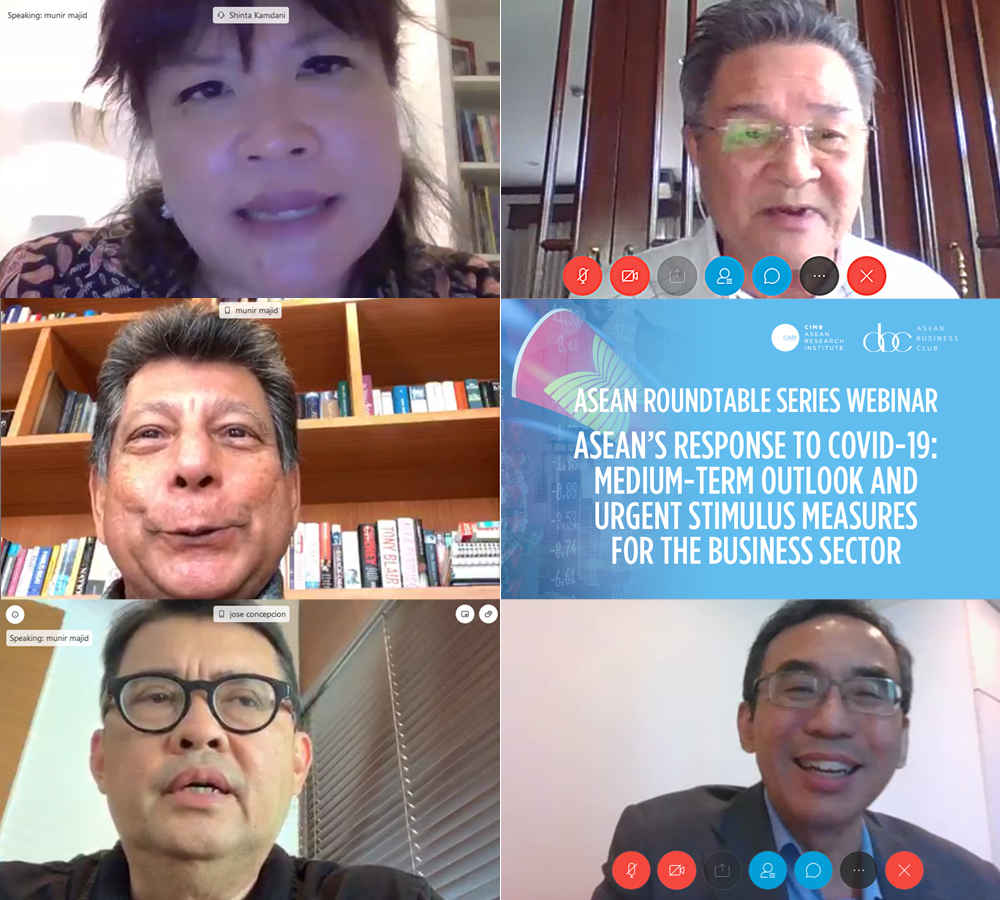
Clockwise starting from top left: Shinta Widjaja Kamdani, CEO of Sintesa Group Indonesia; Arin Jira, Chairman of the Map Ta Phut Industrial Gasses Co Ltd Thailand; Chua Soon Ghee, Partner of Kearney Singapore; Jose Ma Concepcion III, President and CEO of RFM Corporation Philippines; and Tan Sri Dr. Munir Majid, Chairman of CIMB ASEAN Research Institute and President of ASEAN Business Club.


21 April 2020 – The first online ASEAN Roundtable Series organised by the CIMB ASEAN Research Institute (CARI) brought together business leaders from Malaysia, the Philippines, Singapore, Thailand, and Indonesia to discuss the series of stimulus measures announced by several ASEAN governments in response to the COVID-19 pandemic.

The panellists consist of four of ASEAN’s leading business leaders and expert, Chua Soon Ghee, Partner of Kearney Singapore; Shinta Widjaja Kamdani, CEO of Sintesa Group Indonesia; Mr Arin Jira, Chairman of the Map Ta Phut Industrial Gasses Co Ltd Thailand and Jose Ma Concepcion III, President and CEO of RFM Corporation Philippines. The panel discussion was chaired by Tan Sri Dr Munir Majid, Chairman of CARI.

“We should not be in a state of COVID-19 paralysis. Yes, we must first confront the attack on health and lives. We must also, however, open up corridors to livelihoods and economic activity which have been decimated. We must find the median that makes them not mutually exclusive. This calls for imaginative policy implementation and enforcement, as well as for personal and corporate discipline,” noted Tan Sri Munir in his opening remarks.


1) Policy responses today determines long-term survival of businesses

Shinta Widjaja Kamdani said that even though there are limits to the extent of what ASEAN countries can do to save themselves from the economic damages and crisis projection caused by the pandemic, all policy responses and government spending that are aimed at alleviating financial burdens on businesses, such as reducing tax and credit burdens as well as compliance cost, will translate into survivability for business in the longer term.

“This pandemic has raised the alarm – that regulatory efficiency; the accuracy of the overall economic activities data (particularly the informal ones); interconnectivity and diversification of supply chain, both domestic and cross-border supply chains included – are capital that saves our economy in a crisis. Although the importance of these aspects may vary in each ASEAN country, some will be more pronounced than others in the long run when the industries consider their future business plans,” says Shinta, who is also the Deputy Chairman of International Relations of the Indonesian Chamber of Commerce and Industry, KADIN.


2) Supply chains diversification and opportunities for ASEAN

The panellists agree that diversification of supply chains also involves reducing the region’s overdependence on Chinese manufacturers and raw materials. Disruptions in the supply of raw materials, labour, and sub-assembly components to ASEAN (particularly from China) had a significant impact on ASEAN industries.

Data shows that ASEAN manufacturers saw their worst month on record in March 2020, with the headline Purchasing Managers’ Index (PMI) falling from 50.2 in February to a record low of 43.4 in March. This was attributed in part to disruptions in supply chains impacting production and causing delays in deliveries.1

“The sudden China shutdown triggered a global supply chain shock and will accelerate the movement of some manufacturing from China to ASEAN and elsewhere. China has a 28% share of global manufacturing, while ASEAN is only at 4-5%. For those countries who are prepared with policy tools such as incentives and schemes, this will be a golden opportunity,” observed Chua Soon Ghee.


3) Stimulus package for MSMEs – go beyond short-term and debottlenecking the help

The panellists agreed that the stimulus measures announced by several ASEAN governments were timely. However, the assistance provided to SMEs is limited and targeted at providing support and relief in the short term.

“Most of the stimulus packages have been focused on ameliorating the pain of a sudden sharp drop in demand, through some combinations of wage assistance, fees rebates or deferrals as well as loan support. New rounds of support should go beyond the short term. With continued social distancing until a vaccine is widely available, there will be reduced demand for industries such as travel, hospitality, F&B, retail, energy, and therefore longer-term support for a year would be required,” said Chua.

He noted that critically, governments need to help SME address cash flow problems directly by providing loan support to keep SMEs afloat until demand goes back to normal. Equally important is the need to debottleneck the assistance to the SMEs due to slow flow through within the channels which are expected to distribute the benefits to downstream companies. The flow-through has been slow in many circumstances and will need to be accelerated through either moral exhortation, legislation, or direct cash to affected individuals and companies.


4) Acceleration of digitalisation but capacity building needed

The panel observed that the impact of the COVID-19 pandemic has accelerated the speed of digital transformation. E-commerce and online businesses were already growing quickly in ASEAN prior to the outbreak, but most businesses will now consider e-commerce as a necessity rather than a luxury. The acceleration of digitalisation, however, has brought to fore the digital literacy gap in the market, while some businesses are still playing catch up to digitalisation. The panel suggested that policymakers focus on providing capacity building to MSMEs on how to navigate and adjust to the new business environment, in particular on how to leverage digital technologies.

“The lack of digital literacy has to be addressed. Many of the relief funds in Thailand require registration online or on mobile devices but the truth is, the majority of Thai citizens and businesses are not digital literate. Likewise, entrepreneurs must adapt to the new-normal of meeting the surge in fulfilling grocery and food demand as well as delivery through online platforms. Businesses must act on digital preparedness now in anticipation of the market’s returning to normal,” said Arin Jira.


5) The recovery ahead for ASEAN

In closing, Tan Sri Munir urged ASEAN leaders to deepen ASEAN integration in response to the post-pandemic trade order.

“In the aftermath of COVID-19, globalisation will be diminished. There will be greater regionalisation of the world in which ASEAN is well-placed if it took its chances, and truly established the AEC, that single production base and market long-promised but still fragmented by barriers and nationalist sentiment. The post-COVID-19 economic recovery is entirely in Asean’s hands and in those of its partners in the wider RCEP.”


1 IHS Markit, ‘IHS Markit ASEAN Manufacturing PMI: PMI tumbles to record low in March amid global COVID-19 pandemic’, April 2020.

CARI Captures 450: ASEAN-5 countries projected to grow in 2021


ASEAN

ASEAN-5 countries projected to grow in 2021
(15 April 2020) The International Monetary Fund (IMF) has projected strong growth for the ASEAN-5 countries, which are expected to achieve a combined GDP growth of 7.8% in 2021. Malaysia is expected to be the fastest-growing among the ASEAN-5 countries, with a projected growth rate of 9.0% for 2021. The other ASEAN-5 countries are projected to capture robust growth rates as well: Indonesia (8.2%), the Philippines (7.6%), Vietnam (7.0%) and Thailand (6.1%). The latest 2021 IMF projection for Malaysia is higher than Fitch Ratings’ projection of 5.8%. The IMF’s latest forecast expects global growth to contract by -3.0% before rebounding to 5.8% in 2021. However, the international financial institution noted that the rebound in 2021 depends critically on the pandemic fading in the second half of 2020, allowing containment efforts to be gradually scaled back and restoring consumer and investor confidence.

ASEAN

ASEAN rallies against COVID-19
(14 April 2020) The leaders of ASEAN met at the Special ASEAN Summit on COVID-19 via a videoconference chaired by Vietnamese Prime Minister Nguyen Xuan Phuc on 14 April 2020. They resolved to further strengthen health cooperation measures to contain the COVID-19 pandemic and protect the people and to intensify cooperation for adequate provision of medicines, essential medical supplies, and equipment, including diagnostic tools, and personal protective equipment. At the meeting, Thai Prime Minister Prayut Chan-o-cha proposed repurposing funds to support efforts to deal with the pandemic. According to a local Indonesian news outlet, part of the existing ASEAN Development Fund will be allocated to set up the new fund. Malaysia also proposed that ASEAN formulate an economic recovery plan post-COVID-19 that focuses not only on the financial aspects but also on social safety net, food security and education.

ASEAN

ASEAN now China’s largest trading partner
(15 April 2020) The ASEAN bloc has replaced the European Union to become China’s largest trading partner in the first quarter of 2020, according to data from the Chinese General Administration of Customs cited by a Chinese online news portal. In the first three months of 2020, total bilateral trade between ASEAN and China rose 6.1% year-on-year to US$140.62 billion despite the COVID-19 outbreak. However, the online news portal pointed out that manufacturing activities in some ASEAN countries were hit hard by the pandemic in March. ASEAN’s purchasing managers’ index (PMI) fell from 50.2 in February to 43.3 in March. The news outlet further stated that China can help the ASEAN supply chain recover.

MALAYSIA

Malaysia agrees to cut crude oil production by 136,000 bpd for May and June in line with OPEC+ pact
(15 April 2020) The Malaysian government agreed to cut its crude oil production by 136,000 bpd for May and June 2020 in line with an OPEC+ record deal which could see 20% of global oil supply being curbed. The Malaysian government welcomed the global supply reduction agreement despite being a small producer and net importer of oil, as it could help stabilise the global oil market and prop up oil prices amidst the COVID-19 pandemic. Despite the cuts, it was critical for the Malaysian government to preserve a favourable investment climate since its upstream market is a liberalised market.

THE PHILIPPINES

Philippine central bank cuts interest rate by 50 basis points in off cycle move
(16 April 2020) The Philippines’ central bank, Bangko Sentral ng Pilipinas, has cut its key interest rate by 50 basis points in an off-cycle monetary easing move amidst fears of a possible recession in 2020. This will bring the benchmark interest rate to 2.75%, with the country having made 125 basis points worth of cuts this year. The move comes ahead of a scheduled monetary policy announcement on 21 May, and follows a 50 basis point reduction on 19 March. The central bank stated the cut was to encourage lending to various sectors amidst the COVID-19 pandemic. Finance Secretary Carlos Dominguez has said that the Philippine economy could contract by 0.8% or post zero growth in 2020.

THAILAND

Thai central bank to temper borrowing costs amidst massive borrowing by government
(17 April 2020) The Bank of Thailand could adopt unconventional methods to temper bond yields amidst a US$30.6 billion borrowing programme by the government. It is believed that the central bank had studied options such as large scale asset purchase programmes and some forms of yield-curve control. The additional borrowing by the government is more than double the average annual budget deficit of recent years, with concerns over how this will affect liquidity. Thailand has Southeast Asia’s largest local-currency bond market worth US$446 billion at the end of 2019. Its economy is expected to contract by 6.7% in 2020, according to IMF estimates.

INDONESIA

Indonesia records US$743.4 million trade balance surplus in March 2020
(15 April 2020) Indonesia’s trade balance in March 2020 recorded a surplus of US$743.4 million, with exports valued at US$14.09 billion and imports at US$13.35 billion, according to the Central Statistics Agency (BPS). In March, the non-oil and gas trade surplus stood at US$1.7 billion, while the oil and gas sector posted a deficit of US$932 million. Therefore, the trade balance during the January-March 2020 period registered a surplus of US$2.62 billion, with an export value of US$41.79 billion and imports, US$39.17 billion. According to BPS Chief Suhariyanto, the trade surplus from January to March 2020 was a big improvement as compared to the same period in 2019 when a deficit of $62.8 million was recorded.

SINGAPORE

Singapore’s non-oil domestic exports grow by 17.6% year-on-year in March 2020
(17 April 2020) Singapore’s non-oil domestic exports grew by 17.6% year-on-year in March 2020, a substantial jump from the 3.1% year-on-year growth seen in February 2020. On a seasonally adjusted month-on-month basis, Singapore’s non-oil domestic exports rose by 12.8% in March, up from February’s 4.7% decline. Total trade in March grew by 0.7% month-on-month after a 8.6% decline in February. The growth in non-oil domestic exports was attributed to non-electronics such as non-monetary gold, specialised machinery and pharmaceuticals. Exports to the majority of markets increased with the exception of Malaysia, Indonesia, and China.

SINGAPORE, NEW ZEALAND

Singapore, NZ to keep trade lines in essential goods open
(15 April 2020) The trade ministers of Singapore and New Zealand have concluded negotiations to keep trade lines in essential goods open during the COVID-19 outbreak. A declaration on trade in essential goods for the fight against the COVID-19 pandemic was made in a joint statement announced on 15 April. This follows a joint ministerial statement on supply chain connectivity issued by the two countries in March 2020. Under the joint declaration, there will be no tariffs and other trade barriers, including export restrictions. Singapore is expected to receive its first shipment of essential supplies from New Zealand next week. The two countries will also work closely to expedite and facilitate the flow and transit of essential supplies through their respective sea and air ports.

CAMBODIA

Cambodia drops by eight spots in latest Index of Economic Freedom
(17 April 2020) Cambodia’s ranking in the latest Index of Economic Freedom dropped by eight places from 2019. The drop is largely due to lesser investment freedoms, with the country dropping by 10 points in that category from a year earlier. In 2020, Cambodia scored 57.3 points, putting it at the 113th position among 180 countries while the country held the 105th spot in 2019 after posting a score of 56.8 points. The study noted that while economic freedom in Cambodia has been in decline since 2017, its economic growth has been strong with an average of 7.1% over the past five years. The study opined that Cambodia will need to implement deep, broad, and well-institutionalised reforms. The Index of Economic Freedom is co-produced by the Heritage Foundation and the Wall Street Journal.