Mekong Monitor: Thailand’s outlook revised from positive to stable amidst COVID-19 uncertainty


Photo credit: Bangkok Post


TRADE, ECONOMY, AND INVESTMENT


THAILAND

Thailand’s outlook revised from positive to stable amidst COVID-19 uncertainty
(15 April 2020) S&P Global Ratings has revised its outlook for Thailand from positive to stable amidst the COVID-19 outbreak, pointing to projected “slower political adjustments.” The ratings agency expects Thailand’s political transition under the elected government to be delayed due to coronavirus-induced economic uncertainty. Two political developments that should be observed are the banning of the Future Forward Party and the potential departure of the Democrat Party from the ruling coalition. If there is more certainty about the direction of Thailand’s politics, the ratings agency stated it may decide to raise the ratings while a slower economic recovery and disruptions in Thailand’s political transition would see a downgrade. Thailand’s economy is projected to see a 2.5% contraction and a 5% decline in exports. Measures to alleviate the economic fallout are expected to widen Thailand’s fiscal deficit to 5.5% of GDP, raising net government debt to 31% of GDP in 2020.
Read more>>

THAILAND

Thai Prime Minister calls for gold sellers to practice moderation to avoid cash crunch at gold shops
(15 April 2020) Thai Prime Minister Prayuth Chan-Ocha urged Thais to sell their gold “gradually” to ensure that gold shops do not suffer a cash crunch. This comes amidst a surge in people trying to sell their gold belongings as gold prices hit a seven-year high. On 14 April, the purchase price of gold bars was US$797 (26,050 baht) per baht weight while the selling price was US$802 (26,250 baht). Many sellers cited getting laid off or having their wages cut during the COVID-19 lockdown. The Prime Minister stated that officials are working with gold shops to ensure they have enough money to deal with a surge in sellers. Thailand’s Gold Traders Association chairman Jitti Tangsitpakdee urged people to avoid selling in large quantities due to worries of possible liquidity problems, concerned that some shops may have to shut down temporarily.
Read more>>

THAILAND, MYANMAR

Thailand’s Kasikornbank to expand digital banking services in Myanmar
(16 April 2020) Kasikornbank’s acquisition of a 35% stake in Ayeyarwaddy Farmers Development Bank was approved by Myanmar’s central bank, making it the first foreign commercial bank to acquire a stake in a local lender. The stake is reportedly worth US$40 million. Kasikornbank stated they would leverage upon Ayeyarwaddy Farmers Development Bank’s network of branches in the country to expand digital banking services to both existing customers and unbanked people. The acquisition would help expand its digital banking services and electronic payment systems. Myanmar’s digital banking market has garnered foreign interest in recent years, due to the surge in smartphone penetration among its people. The COVID-19 outbreak has further expanded prospects for both e-commerce and digital banking in the country.
Read more>>

VIETNAM

Exports expected to drop by 21% in first quarter of 2020
(14 April 2020) Vietnam’s total exports are projected to fall by 21% in the first quarter of 2020 as the country’s exporters see declining orders from Europe and the US, according to a Ho Chi Minh City-based supply chain consultancy. Freight forwarders in Vietnam have seen cargo volumes drop by 70% in comparison with pre-coronavirus levels, as many key markets remain under lockdown. Demand is now the biggest challenge for exports, when initially it was supply side issues that affected businesses when the virus broke out. When supply chains were initially affected, it prompted a frantic search for alternative production and transport capacity in Vietnam. However, Vietnams’ own reliance on raw materials and components from China led to delays and production challenges.
Read more>>

VIETNAM, CAMBODIA

Vietnam Airlines to sell its 49% stake in Cambodia Angkor Air
(14 April 2020) Vietnam Airlines is set to sell its 49% stake in Cambodia Angkor Air after the former has been left cash-strapped amidst the COVID-19 outbreak. Vietnam Air is reportedly in advanced talks with potential buyers, including the Cambodian government, which owns the remaining 51% stake. Vietnam Airlines informed investors it has received permission from the Vietnamese government (its majority shareholder) to sell its stake. Established in 2009 as the new flag carrier, Cambodia Angkor Air has reportedly not been profitable. It operates about 10 domestic and foreign routes and has a code-share arrangement with Vietnam Airlines. The Vietnamese carrier halted all international service in late March 2020, and furloughed roughly 10,000 employees (about half its workforce).
Read more>>


mekong-monitor-map

About Greater Mekong Subregion (GMS)

The Greater Mekong Subregion (GMS) Economic Programme was launched by the Asian Development Bank in 1992 connecting five developing ASEAN countries, namely Cambodia, Laos, Myanmar, Vietnam and Thailand, and Chinese provinces of Yunnan and Guangxi Zhuang Autonomous region. The region has some of the most robust economies sharing the Mekong River Basin thanks to its reform and liberalisation. The subregion is growing at a faster pace than the whole of East Asia and the Asia Pacific as the GDP growth rate for 2017 was at 6.4 percent, according to the World Bank. The population at the subregion as of 2016 is at 340 million while the GDP at PPP is at US$3.1 trillion in 2016. In 2015, trading within the region was at US$444 billion.

China-ASEAN Monitor: ASEAN+3 leaders meet online to discuss COVID-19

Photo Credit: VNA/VNS Photo


Economy, Investment and Trade


ASEAN+3 leaders meet online to discuss COVID-19
(14 April 2020) ASEAN leaders and their three ASEAN partners, namely China, South Korea and Japan, discussed initiatives to strengthen cooperation in the fight against the COVID-19 pandemic. The online ASEAN Special Summit and ASEAN+3 Special Summit on COVID-19 response took place on 14 April and was chaired in Hanoi by Vietnamese Prime Minister Nguyen Xuan Phuc. The leaders discussed measures to protect people’s interests and ease socio-economic impacts caused by pandemic, and put forward a post-pandemic recovery plan. ASEAN leaders noted the lessons that could be learned from the way China, South Korea and Japan managed the pandemic. In terms of the economy, the leaders pledged to maintain open markets, expedite the signing of the Regional Comprehensive Economic Partnership (RCEP), diversify the connectivity of supply sources in and outside the region, and ensure the flow of goods and services, particularly essential medical materials and products.
Read more>>

Cambodia, China conclude second round of FTA negotiations
(11 April 2020) Cambodia and China have wrapped up the second round of negotiations of a free trade agreement (FTA). Held on 10 April, the negotiation meeting was co-chaired by Sok Sopheak, Secretary of State at the Cambodian Ministry of Commerce and Yang Zhengwei, Deputy Director-General of China’s Ministry of Commerce, and held via video conference. Both countries agreed to conclude the remaining issues by May 2020, before the third round of negotiations, scheduled for June 2020. The FTA between Cambodia and China is expected to contribute to the recovery of the two countries which have been impacted by the COVID-19 pandemic. The first round of negotiations was previously held in Beijing in January 2020.
Read more>>

Myanmar trucks stopped at China border crossing due to COVID-19 restrictions
(13 April 2020) Around 300 trucks that transport bananas and watermelons to China daily via a border crossing in the Myanmar town of Lweje near Longchuan County in southwest China’s Yunnan province were not permitted to enter China on 13 April. A media report on 10 April revealed that Chinese authorities have restricted their drivers from entering Myanmar and since 1 April have required Myanmar traders in northern Shan state to pay Chinese drivers 10 yuan each (US$1.40) to transport truckloads of rice and fruit from border crossings to local cargo facilities. Truck drivers say China’s policy of handing over their vehicle keys to Chinese drivers is being enforced at border crossings in Kachin state and they are concerned about their vehicles if this rule is enforced. Myanmar government officials have met with Chinese authorities to try to resolve the issue and come up with alternatives.
Read more>>

Chinese medical team conclude anti-epidemic training in Laos
(11 April 2020) China’s anti-epidemic medical expert team has completed its experience sharing and training programme for central Laos’ backbone staff in hospital, prevention and control departments. According to He Wei, the liaison official of the Chinese expert team, the team has conducted the COVID-19 diagnosis and treatment programme, hospital infection prevention and protection, and epidemiological survey of COVID-19, guidelines for personal protection, among others, for central Laos’ four provincial regions, including three provinces and the capital Vientiane. The team concluded the anti-epidemic training in all the 18 provincial regions in Laos on 11 April. The Lao side expressed gratitude to the Chinese team for dispatching the expert team to assist Laos immediately.
Read more>>

Vietnam restricts exports to China over stringent border controls
(10 April 2020) Due to stringent import measures imposed by China in the wake of the COVID-19 pandemic, Vietnam will only allow exports through official channels. On 9 April, Its Ministry of Industry and Trade said that the recently imposed more stringent measures were to limit the immigration of people and transport from Vietnam as China seeks to prevent the entry of COVID-19 from outside the country. Border gates between Vietnam and China have not resumed full operations due to protective measures imposed by both countries. As of 8 April, there were nearly 1,700 containers stuck at the Vietnamese side of the border, mostly carrying fruits. The trade ministry will work with Chinese officials to ensure commerce continues under safe conditions. According to ministry estimates, fruit exports from Vietnam to China in the first quarter of 2020 fell 29.4% year-on-year to US$300 million as the pandemic halted normal trade.
Read more>>

How COVID-19 will transform global supply chains and how ASEAN must respond


KEY HIGHLIGHTS


    1. The rapid spread of COVID-19 has impacted manufacturing the world over. ASEAN industries in particular are in for a painful 2020 due to supply chain disruptions centering on China.


    1. The modern nature of supply chains, with their focus on lean manufacturing and supplier consolidation, has put them at greater risk of disruptions.


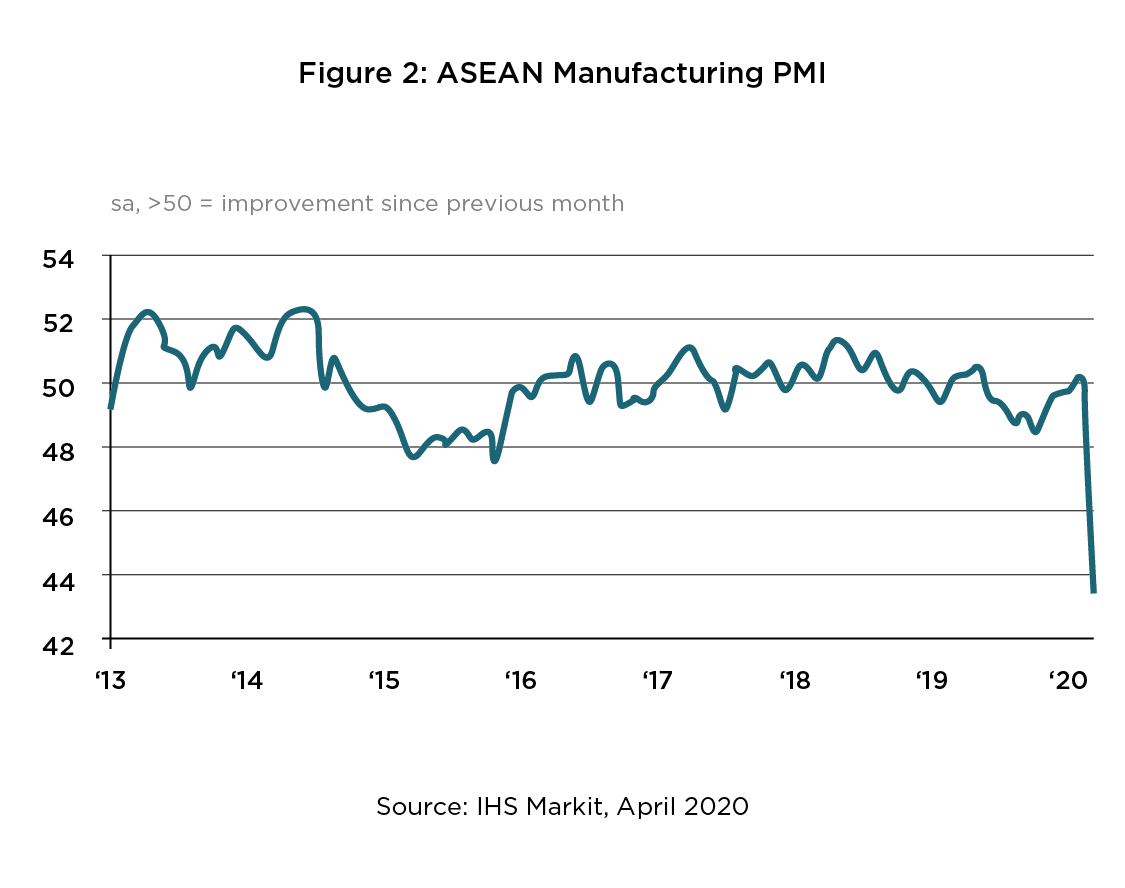
    1. According to IHS Markit PMI data, ASEAN manufacturers saw their worst month on record in March 2020, due in part to supply chain disruptions impacting factory production and delivery times.


    1. There are several scenarios for how the COVID-19 pandemic could play out and its economic ramifications, including a seasonal disruption, prolonged disruption, an uneven rebound, and a global rebound.


    1. Multinationals looking to hedge against future supply chain disruptions may look towards diversifying their production bases away from China, or reshoring production back home.


  1. ASEAN should respond to these expected shifts in global trade by advocating for greater intra-ASEAN trade and investment, pushing ASEAN towards becoming a single market to increase its competitiveness, recognising public health as a new dimension of global trade, and guarding against any rise in global protectionism by defending the rules-based international order.


A disruption in supply and demand


As of April 10, 2020, there have been over 1.6 million confirmed cases of the respiratory virus COVID-19 worldwide, along with over 95,000 deaths. The virus has had an unprecedented impact on world economic activity, with many major global economic and financial centres, including New York City, London, Tokyo, Hong Kong and Singapore, under some form of a lockdown or undergoing significant restrictions in mass gatherings and business operations. Travel restrictions have been imposed by over 150 countries, accounting for the vast majority of travel demand.1

After a shutdown and now gradual recovery of Factory Asia, we are now seeing a shutdown of Factory Europe and America, with the impact of the coronavirus outbreak having shifted from the services sector to manufacturing. This has caused shutdowns in heavy industry in the West not seen since the Second World War.2


ASEAN manufacturing: the China Factor


2020 promises to be a painful year for ASEAN’s export-orientated economies – many of whom serve as key supply nodes within the intricate regional production networks centring on China. ASEAN serves as a major supplier of intermediate goods and commodities to China, who process them into finished goods for export to the West.

Likewise, much of ASEAN’s own domestic manufacture, from electronics to textiles, depend on Chinese-made components and raw materials. The rapid spread of the coronavirus, and the subsequent lockdowns governments imposed to contain it, thus saw disruptions in global value chains through both demand and supply.


The vulnerabilities of modern supply chains


Beyond an over-dependence on China, pundits have pointed to the unique vulnerabilities of modern global supply chains which have been laid bare by the COVID-19 pandemic. Recent attempts by global businesses to reduce supply chain costs through a focus on lean manufacturing, offshoring, and supplier consolidation by concentrating manufacturing while also reducing inventory levels that limit businesses’ reactive capacity in case of disruptions has paradoxically increased overall global supply chain risk. . Supply chains have ultimately become more integrated, but at the same time less flexible.

This was evidently seen in how many businesses were seemingly caught off guard by the pandemic. 71% of businesses surveyed by The Economist in February would state they had no business operations contingency plan in case the outbreak lasted longer than a few weeks.3


Freefall of China’s manufacturing sector


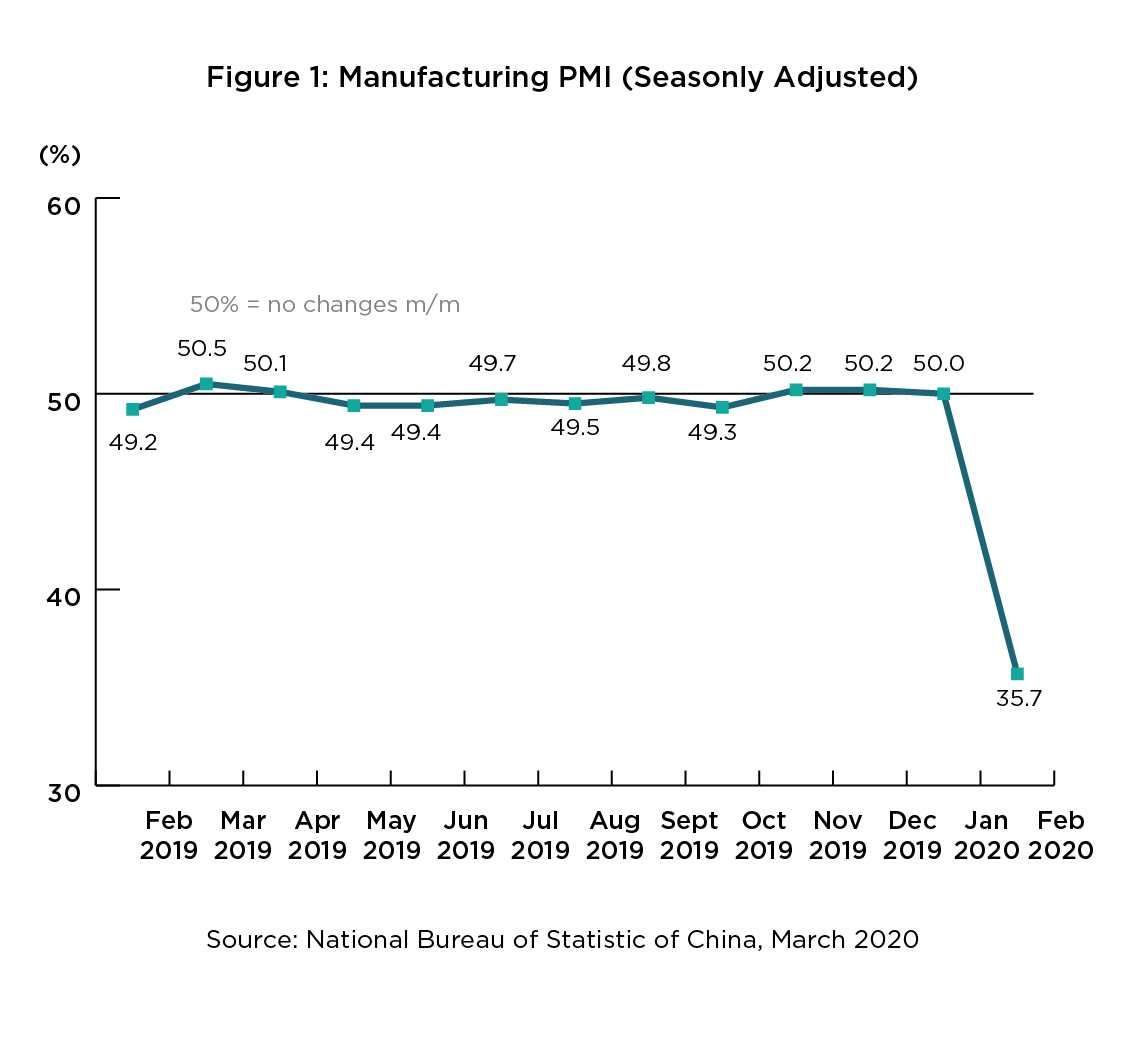
The initial outbreak of the coronavirus in Wuhan would have a severe impact on Chinese manufacturing. According to numbers by China’s own National Bureau of Statistics:

  • The Manufacturing Purchasing Managers Index (PMI), a measure of factory activity across the country, plummeted to a record low of 35.7 in February 2020, down from 50.0 the month before (see Figure 1).4
  • The production index in February 2020 was 27.8%, dropping by 23.5% from the month prior, indicating a slowdown in manufacturing production activity.5


Supply chains in ASEAN severely disrupted


Like the virus itself, the economic impact has spread quickly to Southeast Asia through the disruption of the supply of raw materials, labor, and sub-assembly components. According to IHS Markit’s PMI data, ASEAN manufacturers saw their worst month on record in March 2020, with the headline PMI falling from 50.2 in February to a record low of 43.4 in March (see Figure 2). 6

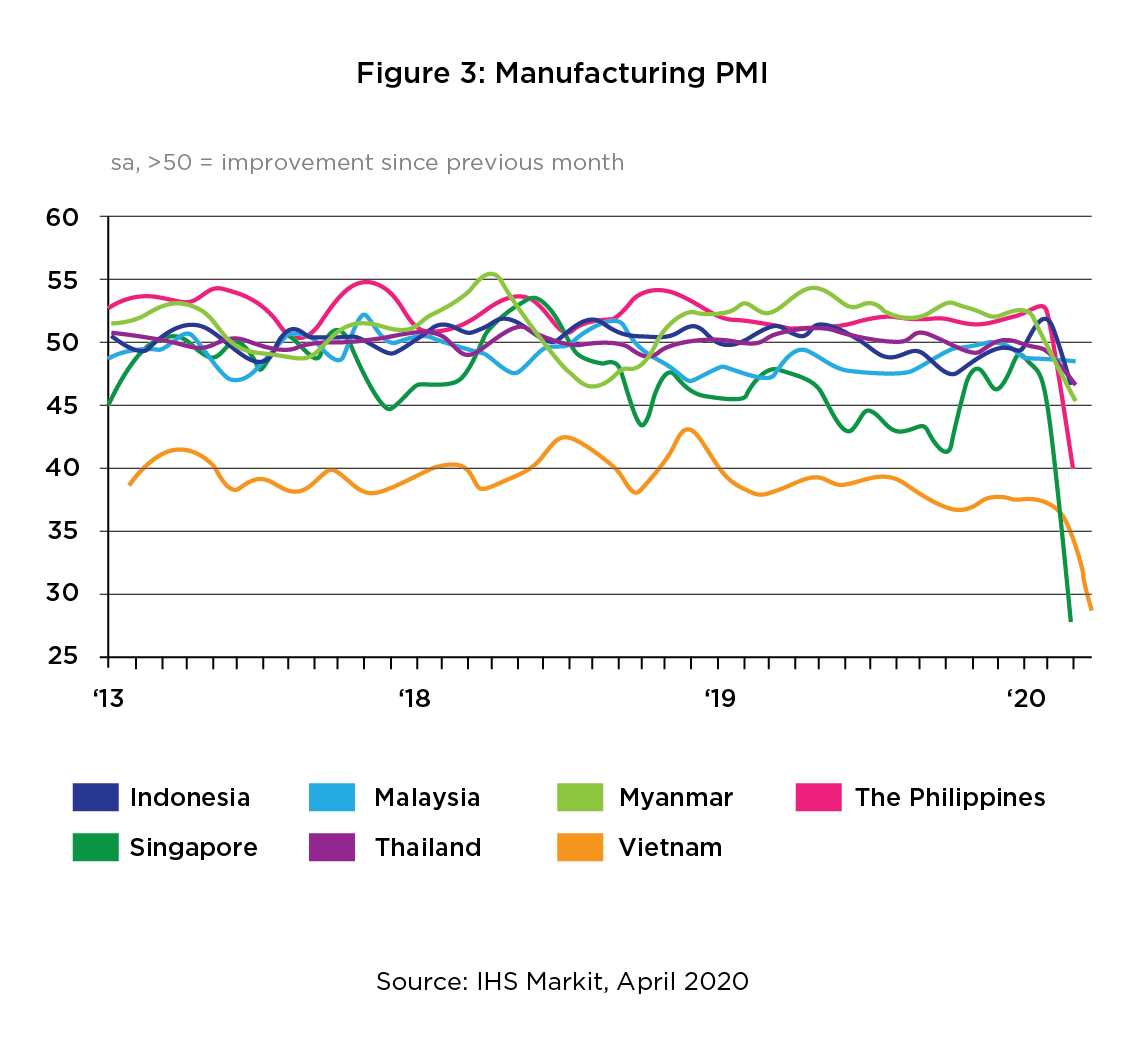
Deteriorations were reported in each of the seven constituent economies that IHS Markit covered. The downturn was most marked in Singapore, with the headline figure in March slipping a record 18.1 points month-on-month to 27.7, its lowest score in the eight-year history of the survey (see Figure 3).7

The drop was attributed to deteriorating operating conditions for manufacturing firms, with record declines in production output and new orders in particular driving the downturn. Disruptions in supply chains impacted factory production and caused delays in delivery times.8


ASEAN industries in trouble


Numerous industries across ASEAN, several of whom are major domestic employers within their respective economies, would report being impacted by supply chains disruptions linked to China. These included:

    • Tech firms in Malaysia’s state of Penang, one of the world’s largest electronics and electrical hubs, warning of disruptions in supplies from China and therefore to their revenue growth outlook. Many of these firms supply major tech multinationals such as Intel, Apple, and Broadcom, and rely on China for as much as 60% of components and materials.9


    • Textile firms in Cambodia and Vietnam faced disruptions in the supply of raw materials from China. Cambodia’s garment industry employs some one million full-time workers, and procures some 60% of its textiles from China.10


  • Factories in Indonesia have complained of supply disruptions of raw materials, with an estimated 20% to 50% of the raw materials for the country’s factories being sourced from China alone. The government was forced to step in to provide relief measures such as six-month relief from income tax for workers in the manufacturing sector and delays in import and corporate taxes for businesses.11

According to a February 2020 survey by the American Chamber of Commerce in Singapore, a majority of firms in the logistics, manufacturing, and technology sectors stated that the pandemic had impacted their business operations (see Figure 4).

Given Singapore’s position as a regional hub for the larger Asia-Pacific region for many multinationals, the impact on firms in the country is possibly indicative of larger disruptions to regional supply chains.

Supply chain disruptions have not only impacted manufacturers but also those in the services sector. A survey of 150 finance executives from around the world by PricewaterHouse Cooper (PwC) during the week of March 23 concerning the pandemic saw 36% responding that they were considering making adjustments to their supply chains (see Figure 5).


How bad can it get?


Global risk intelligence consultancy Control Risks lays out four scenarios for the COVID-19 global pandemic, with focus on the implications for global supply chains (Table 1).12


Future implications for global supply chains


In the long term, global businesses hoping to hedge themselves from future supply chain disruptions can respond through two main strategies:

    1. Supply chain diversification: the global pandemic has revealed the inherent risk of firms directing all of their demand for intermediate goods and raw materials to a single source. Companies in the future may decide to diversify their production bases to hedge against future supply shocks, regardless of the immediate cost benefits.

      We may see a greater relocation of production from China to Southeast Asia in light of the pandemic, but as Thai Ambassador to Malaysia H.E. Narong Sasitorn noted in a recent CARI ASEAN Roundtable Series, ASEAN would first have to demonstrate they collectively understand the opportunities being provided to them in order to attract investors.13

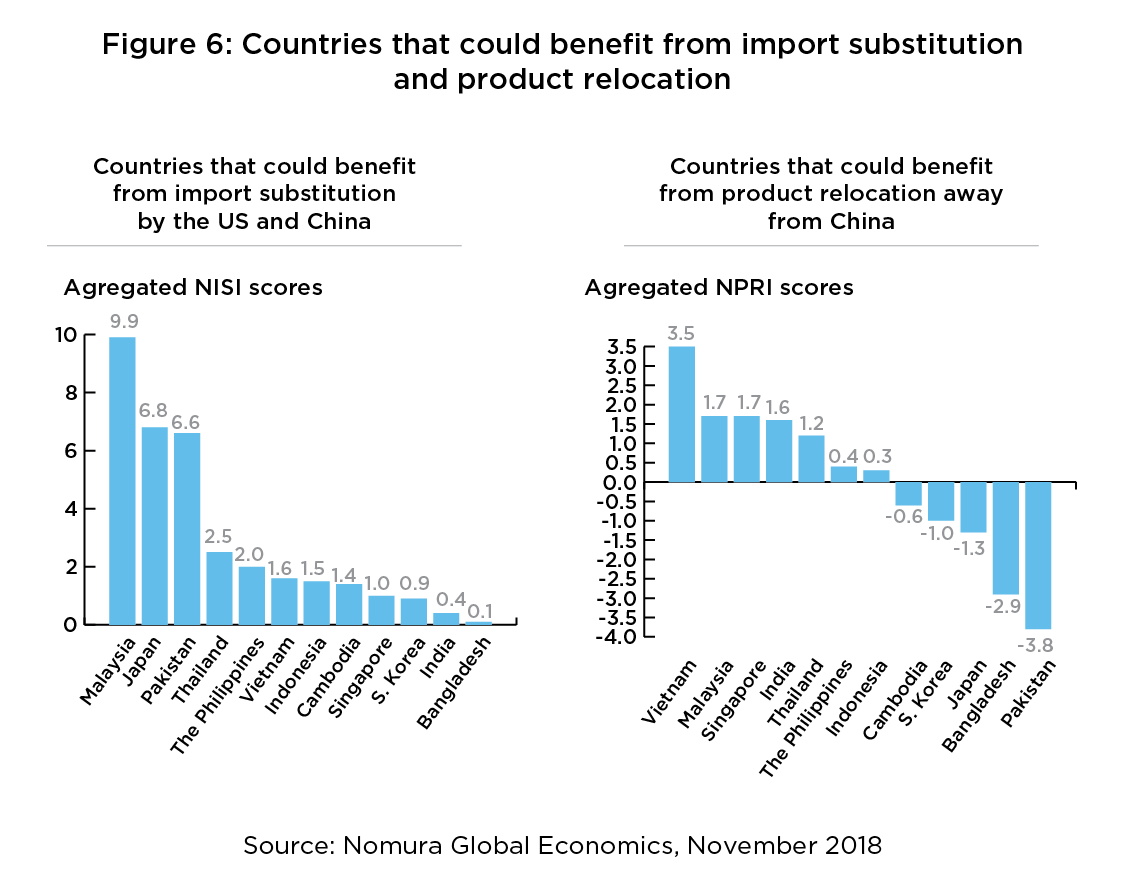
      A 2018 study by Nomura identified Malaysia, followed by Thailand and the Philippines, as the biggest potential beneficiaries among select Asian countries of import substitution by US and Chinese firms during the US-China Trade War (see Figure 6).14

      The study similarly identified Vietnam, followed by Malaysia and Singapore, as the most likely Asian countries in diverting production and FDI away from China during the same period (see Figure 6).15

      Both of these findings may be replicated by companies seeking to diversify their sources of production in the wake of the COVID-19 pandemic, assuming ASEAN leaders can correctly identify the opportunities and take advantage of them. 


      *Nomura utilized the Nomura Import Substitution Index (NISI) to identify which Asian countries would benefit the most from Chinese and US import substitutions (e.g. importing from other countries due to tariffs imposed).
      **They also used the Nomura Production Relocation Index (NPRI) to identify which countries would be most successful in diverting production and FDI from China.


    2. Onshoring of production: the exposure of the inherent fragility of modern supply chains may persuade some companies to produce more of their goods locally. The advent of the Fourth Industrial Revolution (4IR) and the increasing automation of manufacturing has made it more economical to shift production back to developed economies where the costs of labor is less material. This has been referred to as onshoring or near-shoring.

      SHEA Global, an automation technologies consultant, noted that such as artificial intelligence (AI) and augmented reality (AR) will allow future workers in the manufacturing sector to work remotely and thus to continue operations during disruptions, mitigating future workplace health risks in the process.16

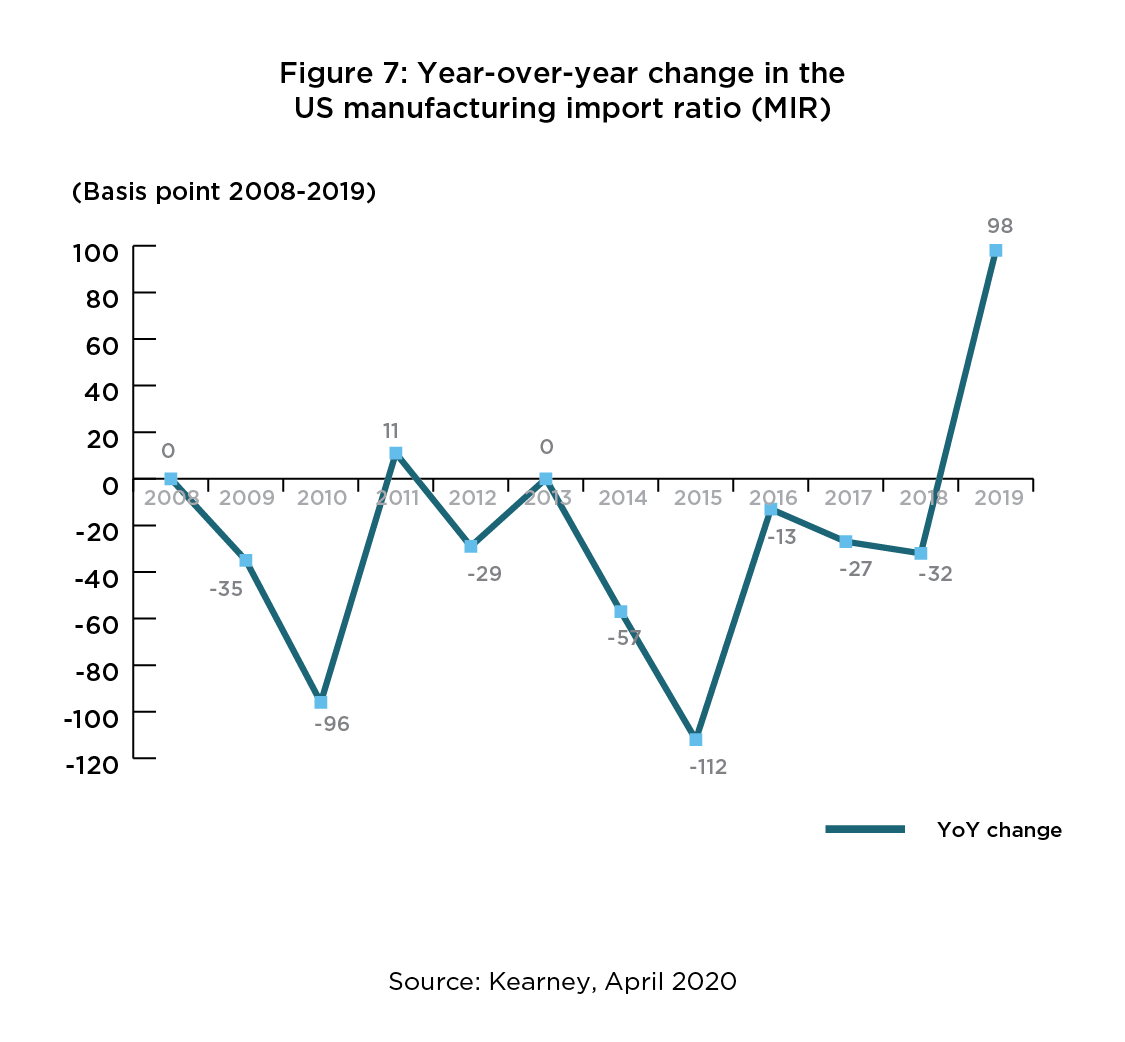
      The seventh annual Kearney US Reshoring Index, which compares US manufacturing gross output to the import of manufactured goods from 14 Asian low-cost countries* (LCCs) proves illuminating. The US Reshoring Index is expressed in basis points (1 percent change = 100 basis points). A positive index number indicates net reshoring – the degree by which gross domestic output exceeded imports from the 14 LCCs as compared to the previous year. 17

      The resulting 98-basis point jump in the Kearney Reshoring Index in 2019 is by far the highest yet registered by the index (see figure 7). Kearney attributed this almost exclusively to a collapse in imports from China, which declined by 17% in value terms due to US tariffs. By a substantially increased margin, US companies chose to source more goods domestically rather than import them from the Asian LCC countries. 18

      Kearney argued that COVID-19 will further force companies to rethink their sourcing strategies by factoring in resilience (the ability to foresee and adapt to unforeseen systemic shocks) as a new dimension of global supply chains.19 


The path forward for ASEAN


Given the disruptions and projected long-term changes to global supply chains, there are different ways ASEAN can respond:

      • Push for greater intra-ASEAN trade and investments: in light of ongoing fracturings of global supply chains and shifts towards onshoring of manufacturing, ASEAN should seek to hedge themselves in the long term by pushing for greater intra-regional trade and investment. Greater regional connectivity can help strengthen the bloc in an increasingly uncertain trading environment and make the region less dependent on external markets such as China.


      • Building a competitive ASEAN single market: for multinationals who seek to diversify their future production bases (instead of producing their goods locally) , many will no doubt turn to Southeast Asia for alternative manufacturing sites. ASEAN must be cognizant of these trends and expedite liberalisation reforms and push ASEAN towards a single market in order to better compete with larger markets such as China and India.

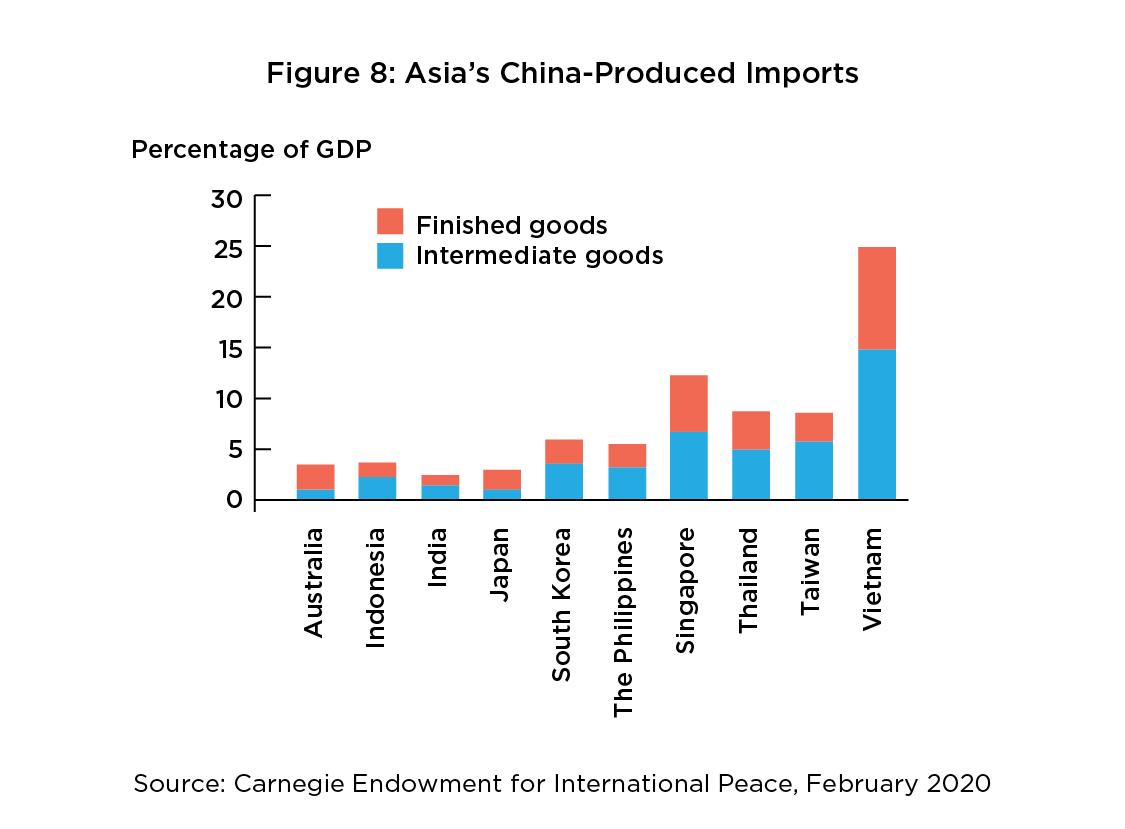
        However, caution must be practised. Even if ASEAN firms were to benefit from import-substitution and production relocation vis-a-vis China, the complexity of modern supply chains means these firms may themselves may be dependent on Chinese supplies of raw materials and sub-assembly components. To put this into better perspective, data from the Carnegie Institute revealed that countries like Vietnam, Philippines, and Indonesia imported a larger proportion of Chinese-made intermediate goods than finished goods (see Figure 8). Most multinational corporations (MNCs) today are often unaware of the full extent of their supply chains below their top tier (direct) suppliers. 20

        There are often no direct contractual relationships between MNCs and their lower tier suppliers. This leads to increased risk and challenges in managing the lower tier suppliers as they are further removed from the MNC’s direct supervision. It will be prudent for firms moving forward to exhaustively map out their supply chains to help determine the full extent of their vulnerabilities to future disruptions. 21 

      • Public health as a new dimension of global trade: in relation to the previous point, the COVID-19 pandemic has added a biological dimension to the political and institutional challenges of contemporary global trade. Future investors may be wary of investing in or trading with countries with inadequate public health infrastructure that would struggle to handle pandemics such as the coronavirus.

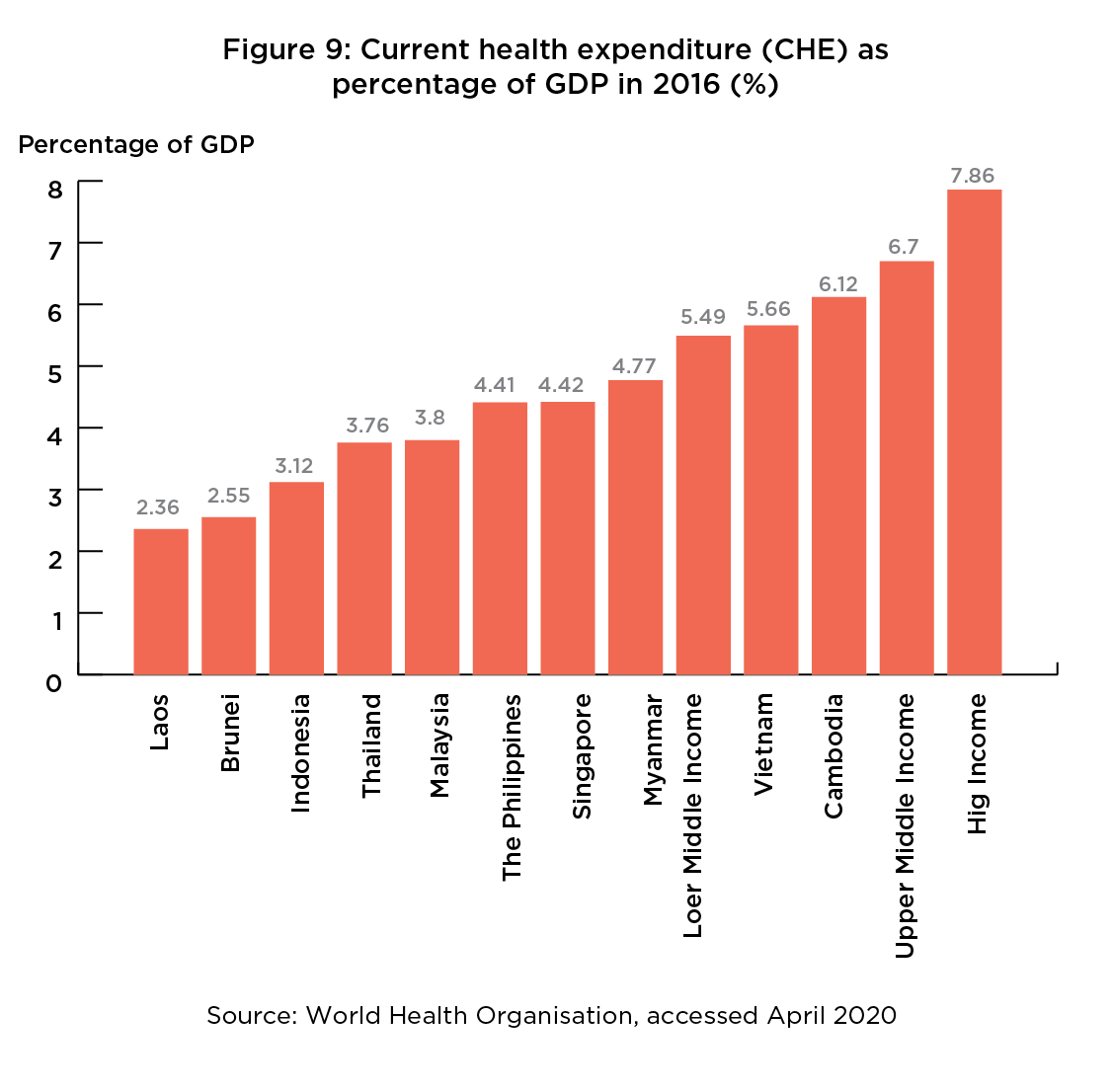
        Figures from the World Health Organisation are revealing: the majority of ASEAN Member States with the exception of Vietnam and Cambodia allocated a smaller proportion of their resources towards healthcare compared to the average for lower middle income countries (as defined by the World Bank), and ASEAN collectively allocated lower amounts than upper middle income countries (see Figure 9). This would indicate a lack of focus on public health for many ASEAN countries, which may change post-pandemic.22 


*Current health expenditure as a share of GDP provides an indication on the level of resources channelled to health relative to other uses. It shows the importance of the health sector in the whole economy and indicates the societal priority which health is given measured in monetary terms.
**It should be noted that higher health expenditure does not always produce better health outcomes and values. While Cambodia spends a higher proportion of resources towards healthcare than Singapore, the latter scores higher in terms of life expectancy.


      • Guarding against protectionism: the COVID-19 pandemic arrives on the back of ongoing disruptions to global trade caused by the US-China trade war, China’s economic slowdown and internal shift towards domestic consumption, and the UK’s ongoing and uncertain disengagement from the European Union. Depending on the future course of this pandemic (particularly the economic impact), present public skepticism towards globalization may heighten.

        As middle-power open economies, ASEAN will have to strive harder to defend the global rules-based trading order from which it benefits from. Regional trade agreements such as the Regional Comprehensive Economic Partnership (RCEP) can serve as multilateral mechanisms to push back against protectionist sentiments, while also bolstering ASEAN centrality and give the region a louder voice in managing great power relations in the region.


Conclusion


The rapid spread of COVID-19 has led to significant disruptions in global supply chains, with implications for the economic wellbeing of ASEAN. This is due to both the over-dependence of many global supply chains on China (the first epicentre of the outbreak), as well as the inflexible nature of modern supply chains. There are already indications of the economic fallout of the outbreak in China reaching Southeast Asia, with locally-based manufacturers reporting their worse PMI data on record in March 2020, due in part to supply chain disruptions.

There are ultimately several scenarios of how this pandemic and the economic fallout it will bring will play out, from a swift containment of the virus and supply chains eventually recovering within 2020, to uneven recoveries and an onshoring of production amidst rising protectionist sentiments. Multinational manufacturing firms hoping to hedge against future disruption risks can either choose to diversify their manufacturing bases to other countries or produce more goods locally by taking advantage of automation and fourth-industrial revolution technologies. Recent studies suggest the latter process is already underway.

Expected dramatic changes in global trade and supply chains will demand a response from ASEAN in order to maintain international relevancy. The bloc should respond by advocating for greater intra-ASEAN trade and investment to reduce dependency on external markets, as well as pushing towards a single market in order to attract future investors looking for alternative production bases away from China. ASEAN policymakers will also have to be cognizant of the importance of public health as a new dimension of global trade, and guard vigilantly against any rise in global protectionism through multilateral mechanisms such as RCEP.


1World Meters, ‘COVID-19 Coronavirus Pandemic’, accessed on April 3, 2020.
2Bloomberg, ‘Biggest Factory Closing Since World War II Hits U.S., Europe’, March 2020.
3(Webinar) The Economist: Coronavirus outbreak – economic and business implications, February 2020.
4National Bureau of Statistics of China, ‘Purchasing Managers Index for February 2020’, March 2020.
5Ibid.
6IHS Markit, ‘IHS Markit ASEAN Manufacturing PMI: PMI tumbles to record low in March amid global COVID-19 pandemic’, April 2020.
7Ibid.
8Ibid.
9Reuters, ‘In Malaysia’s Silicon Valley, fortunes flip as virus wrecks trade war gains’, March 2020.
10Nikkei Asian Review, ‘Cambodia’s garment industry hangs by a thread’, March 2020.
11 The Star, ‘Covid-19: Indonesia waives income tax for manufacturing workers for six months’, March 2020,
12Control Risks, ‘New global scenarios for COVID-19’, April 2020.
13CIMB ASEAN Research Institute: ‘CARI Viewpoint: ASEAN Roundtable Series on Malaysia-Thailand: Towards Connectivity Beyond Borders’, February 2020.
14Nomura, ‘US-Sino trade friction: not all a lose-lose outcome for Asia’, November 2018.
15Ibid.
16SHEA, ‘COVID-19 and the Workplace Part 1: Global Supply Chain Disruption’, March 2020.
17Kearney, ‘Trade war spurs sharp reversal in 2019 Reshoring Index, foreshadowing COVID-19 test of supply chain resilience’, April 2020.
18Ibid.
*China, Taiwan, Malaysia, India, Vietnam, Thailand, Indonesia, Singapore, Philippines, Bangladesh, Pakistan, Hong Kong, Sri Lanka, and Cambodia.
19Ibid.
20Harvard Business Review, ‘A More Sustainable Supply Chain’, March-April 2020.
21International Finance, ‘Epidemics in China: Reducing global supply chain risks’, March 2020, Harvard Business Review, ‘A More Sustainable Supply Chain’, March-April 2020 issue.


Research Director: Hong Jukhee
Editorial Team: Mohd Imran Said Mohd Shamsunahar, Eleen Ooi Yi Ling, Nor Amirah Mohd Aminuddin

CARI Captures 449: Report shows decline in ASEAN community mobility during COVID-19 pandemic


ASEAN

Report shows decline in mobility during COVID-19 pandemic
(29 March 2020) Movement trends of people around the world was recently revealed in Google’s COVID-19 Community Mobility Reports. The reports compare movement trends over time by geography, across six different categories of places. Among ASEAN countries, the trend in all the categories except residential showed a decline when compared to the baseline. Countries with partial lockdowns in place such as Malaysia and the Philippines showed significant drop in all categories except for residential. For instance, in the retail & recreation category, both saw a decline of 81% while visits to transit stations showed a sharp decline at 83% for Malaysia and 82% for the Philippines. The two countries also showed sharp reductions in movements to the workplaces, with both seeing a more than 50% decrease. The movement to residential places showed an upward trend for all ASEAN countries, with the highest increase of 31% evident in Malaysia, followed by 26% in the Philippines. The analysis of location data from billions of Google users’ phones were revealed to help health authorities assess if people are abiding with movement control orders and similar orders issued across the world to rein in the virus.

THE PHILIPPINES

Trade deficit narrows as virus fears keep factories shut
(8 April 2020) A sharp decline in imports narrowed the Philippines’ trade gap in February 2020, the government reported on 8 April, an indication that COVID-19 fears are already crippling the country’s growth engines amid falling demand and tepid economic activity. According to the Philippine Statistics Authority, the country posted a trade deficit of US$1.66 billion in February, which was 39.4% smaller than the US$2.73 billion trade deficit recorded a year ago. A closer look revealed that imports fell 11.6% year-on-year in February to US$7.06 billion due to lower purchases of capital goods (-16.18%), raw materials (-8.65%), consumer goods (-9.45%) and mineral fuels (-12.03%), including petroleum crude. Shipments from major trading partner China fell 43.83%. On the flip side, exports posted an annual growth rate of 2.8% to US$5.4 billion. A prominent economist said the country’s shrinking trade deficit will likely persist in the coming months as businesses and factories remain shut in the main island of Luzon.

MALAYSIA

COVID-19 cases cross the 4,000 mark, new sub-cluster detected in Negeri Sembilan
(8 April 2020) Malaysia reported another 156 COVID-19 cases on 8 April, pushing the total number of cases past 4,000 and the number of deaths to 65. The total number of cases had already gone past 3,000 on 2 April. With 4,119 infections as of 8 April, Malaysia remains the worst-hit country in Southeast Asia. According to Health Ministry director-general Noor Hisham Abdullah, 166 more patients have recovered, which brings the total number of patients discharged as of 8 April to 1,487. He also revealed a new COVID-19 sub-cluster was discovered in Rembau, in the state of Negeri Sembilan, and it was linked to the Sri Petaling event. One of the participants of the Sri Petaling event had later attended a school meeting in Rembau. Twenty-seven people have now tested positive for the novel coronavirus, with two undergoing intensive care. Malaysia is currently under the Movement Control Order until 14 April, whereby people are required to stay at home and only essential services are allowed to operate.

MALAYSIA

Economy projected to grow by 5.8% in 2021
(9 April 2020) Fitch Ratings has affirmed Malaysia’s long-term foreign-currency Issuer Default Rating (IDR) at “A-”, with a revised outlook from stable to negative. It also projected Malaysia’s economy to grow by 5.8% in 2021. Malaysia’s government had recently launched a US$60.4 billion economic stimulus package, which is expected to add 2.9% points to its 2021 GDP growth. Malaysia’s Finance Minister Tengku Datuk Seri Zafrul Aziz stated that Malaysia had entered the pandemic “from a position of strength,” which included a healthy financial system, strong domestic institutional investors, adequate buffers, and robust policy frameworks. The government’s medium-term fiscal strategy will be issued together with the 2021 Budget in October 2020. He also noted that 96% of the government’s debt is issued in ringgit, and therefore not subject to currency fluctuations.

MALAYSIA, UK

Malaysia and UK discuss COVID-19 and cooperation in trade and investment
(9 April 2020) Malaysia and the UK discussed matters concerning COVID-19 and the need for broader bilateral cooperation. The British High Commissioner to Malaysia, Charles Hay, stated that the High Commission had been helping British nationals return to the UK, and also raised the issue of British nationals with work permits or long-term visit passes who are stuck outside Malaysia during the latter’s Movement Control Order (MCO). There are approximately 8,000-10,000 British nationals residing in Malaysia, including work permit holders and those who live in the country under the Malaysia My Second Home programme. The High Commissioner also expressed concern over foreign companies and manufacturers operating under limited time or workforce caps, due to the impact it may have on their orders (especially for essential medical equipment). Britain is also setting up a Joint Committee on Trade and Investment Cooperation with Malaysia, and hopes to pursue a Dialogue Partner status with ASEAN.

INDONESIA

Thousands of workers across Indonesia laid-off due to COVID-19 outbreak
(8 April 2020) Tens of thousands of workers across Indonesia have lost their jobs due to the economic impact brought upon by the COVID-19 pandemic. In Central Java, 24,249 workers have been laid off with 191 companies employing 148,791 workers affected by the outbreak. In West Java, its Manpower and Transmigration Agency recorded that 34,365 workers have been put on leave, 14,053 have been furloughed, while 5,047 have been laid off. In North Sulawesi, the Transmigration and Manpower Agency recorded 1,275 workers in the province that have been laid off, while 2,576 have been furloughed. A total of 262 companies across the region report that they have closed down because of the outbreak. According to Central Java Governor Ganjar Pranowo, the government will seek solutions for workers who have been laid off, one of which is the pre-employment card. “We have been allocated 421,705 slots for the pre-employment cards. So far, only 19,000 people have registered, less than 5% of the allocated slots,” he said.

INDONESIA

COVID-19 adds new worry for Indonesia’s debt-saddled state-owned enterprises
(9 April 2020) The COVID-19 pandemic has added a new worry for Indonesia’s debt-saddled state-owned enterprises (SOEs), with a slump in revenue and credit crunches caused by the surge of the dollar pushing some closer to the risk of default. As of the third quarter of 2019, state-owned firms had amassed a combined debt of US$98 billion (a growth of 15% from the previous year). Many of Indonesia’s SOE’s have binged on debt for years, and many face debt-repayment issues amidst accusations of corruption and mismanagement. SOEs have also been racking up foreign debt as well, which has boosted their funding costs with the dollar surging now. Indonesia’s new SOE minister Erick Thohir has pledged to liquidate firms which fail to contribute to the country’s economic performance.

MYANMAR

Myanmar attracts over US$2 billion in foreign investment in first half of FY 2019/2020
(9 April 2020) Myanmar had attracted some US$2.73 billion from permitted foreign companies in the first half of the FY 2019/2020, which started from 1 October 2019 till 31 March 2020. Within this period, the Myanmar Investment Commission (MIC) gave the go-ahead to 147 foreign investment enterprises. The power sector attracted the most investment with over US$1 billion, followed by the real estate and manufacturing sectors. From FY 1988/1989 to FY 2019/2020, a total of 1,984 foreign enterprises invested capital worth over US$84.5 billion. Singapore, China, and Thailand are the top three investors into Myanmar. The Yangon region attracts some 60% of investments from both home and abroad, followed by the Mandalay region at 30%.

SINGAPORE

Singapore enters month-long lockdown
(7 April 2020) Singapore’s usually bustling business district was almost deserted on 7 April as most workplaces were closed to stem the spread of the COVID-19 coronavirus after a surge in cases. The city-state has won praise for using a tough regime of testing and tracing contacts of the sick to keep its outbreak largely in check, but has seen a jump in new infections in recent days. While authorities previously resisted the kind of drastic measures seen in worse-hit countries, Manpower Minister Josephine Teo announced on 3 April that all workplaces except for those providing essential services and those able to operate remotely were to be suspended from 7 April to 4 May during a month-long “circuit breaker” campaign. Prime Minister Lee Hsien Loong urged Singaporeans to do their part to support healthcare professionals by staying at home and complying with the enhanced measures put in place. The city-state reported 66 more COVID-19 cases on 6 April, bringing its total so far to 1,375, including six deaths.

CAMBODIA

Government issues order banning majority of travel within the country for a week
(9 April 2020) The Cambodian government issued an order banning most internal travel for a week in order to contain the spread of COVID-19. The ban came into effect on 10 April, and will last until 16 April. The order, signed by Prime Minister Hun Sen, comes ahead of Cambodia’s new year holiday, a time when many people visit their families in the countryside. While people will be allowed to travel within the capital of Phnom Penh, travel into and out of the city will be barred. Residents will also be prevented from travelling between districts and provincial borders. Those exempted from the order include those transporting food, government officials, military officials, emergency service workers, and those who work in waste disposal. The travel lockdown comes amidst an emergency law likely to be approved by parliament in the coming days.

Mekong Monitor: Cambodian government allocates additional US$475 million to fight COVID-19


Photo credit: Fresh News Asia


TRADE, ECONOMY, AND INVESTMENT


CAMBODIA

Cambodian government allocates additional US$475 million to fight COVID-19
(9 April 2020) Cambodia has allocated an additional US$475 million from the state budget to fight COVID-19. The announcement was made by Cambodian premier Hun Sen at a press conference held on 8 April. In February 2020, the premier had already allocated US$443 million from the state budget to curb the pandemic. Together with the recently additional allocation, the country has set aside approximately US$918 million to control the outbreak. According to its Ministry of Economy and Finance, Cambodia’s budget expenditure for 2020 amounted to US$8.2 billion, marking an increase of 22.7% compared to its budget in 2019. Cambodia is also set to receive US$20 million in funding from the World Bank to help it source much-needed medical supplies and facilities to diagnose and treat COVID-19, reduce the spread of infection, strengthen pandemic response capabilities, and shorten the recovery time for people and the economy. In the latest annual report by the ASEAN+3 Macroeconomic Research Office (AMRO), Cambodia’s economic growth in 2020 is projected to reach only 2.7%, but will rise to 6.8% in 2021.
Read more>>

LAOS

Lao government to provide tax breaks, reduced rates to combat pandemic
(3 April 2020) The Lao government will reduce and defer the payment of tax, customs, and other administrative fees during the COVID-19 outbreak, Deputy Prime Minister Sonexay Siphandone said on 2 April. One of the measures includes the vehicle road tax payment deadline, which will be extended from 31 March to 30 June. The payment of personal income tax will be exempted for low-income workers (those earning below US$569) until June 2020. For businesses, profit tax will be exempted for companies earning between US$5,600 and US$44,700 for the second quarter of 2020 while tourism-related businesses will also receive a tax deferral for three months beginning in April 2020. Tax exemptions will be applied to certain goods related to the prevention and control of the COVID-19 virus, while the price of fuel will be regulated. Commercial banks will be expected to reduce interest rates and fees and offer new loans to debtors and affected enterprises.
Read more>>

MYANMAR

Government calls off investment forums, approves US$550 million in FDI in March 2020
(7 April 2020) Four state and regional investment forums in Myanmar have been cancelled due to the COVID-19 pandemic. According to Permanent Secretary of the Ministry of Investment and Foreign Economic Relations, U Aung Naing Oo, as a result of the cancellations, investments could decline by as much as 40%. Forums that were to be held in Yangon, Bago, Monywa of Sagaing and Mandalay were postponed. Nevertheless, the Myanmar Investment Commission (MIC) approved more than US$550 million in foreign direct investment (FDI) on 3 April for 11 projects and another US$35 million in local investments, amid the COVID-19 outbreak. The approved amount in FDI is being directed to sectors including manufacturing, construction and services. The MIC further added that the investment projects are estimated to create a total of 3,234 jobs, once operational.
Read more>>

THAILAND

Cabinet approves US$58 billion (1.9 trillion baht) third economic stimulus package
(7 April 2020) The Thai cabinet approved on 7 April a US$58 billion spending to support individuals and businesses affected by the COVID-19 pandemic. The package is the third phase of the country’s stimulus programme to shore up the economy and includes the allocation of US$18.3 billion for six-month cash giveaways and the implementation of health-related plans, and US$15.3 billion worth in soft loans for small and medium-sized businesses. The financial aid includes US$150 monthly handouts to an estimated 9 million self-employed and laid-off people affected by the outbreak, which is now extended to six months from three previously. More than 140,000 employees have lost their jobs in March 2020 due to the fallout from the COVID-19 pandemic, according to Thailand’s Department of Employment.
Read more>>

VIETNAM

Online shopping surges as Vietnam embarks on social distancing campaign
(5 April 2020) During its 15-day nationwide social distancing campaign that began on 1 April, Vietnam has seen an uptick in online shopping, particularly online grocery shopping. A spokesperson for a supermarket chain said its stores in the south reported 3,000 orders in March, up from 1,000 in February. In the north, the average order value during the week of 5 April has increased 80%-120% compared to the past. Ride-hailing firms have also caught up with the trend by launching new services that enable people to buy food and groceries without leaving home. Ride-hailing service Be Group receives 15,000 orders every day for buying goods, an increase of 200% from late January. A recent survey by Nielsen Vietnam and Infocus Mekong Mobile Panel showed that consumers have reduced the frequency of their visits to supermarkets and grocery stores by 50% and to traditional and fresh food markets by more than 60%.
Read more>>


mekong-monitor-map

About Greater Mekong Subregion (GMS)

The Greater Mekong Subregion (GMS) Economic Programme was launched by the Asian Development Bank in 1992 connecting five developing ASEAN countries, namely Cambodia, Laos, Myanmar, Vietnam and Thailand, and Chinese provinces of Yunnan and Guangxi Zhuang Autonomous region. The region has some of the most robust economies sharing the Mekong River Basin thanks to its reform and liberalisation. The subregion is growing at a faster pace than the whole of East Asia and the Asia Pacific as the GDP growth rate for 2017 was at 6.4 percent, according to the World Bank. The population at the subregion as of 2016 is at 340 million while the GDP at PPP is at US$3.1 trillion in 2016. In 2015, trading within the region was at US$444 billion.
China-ASEAN Monitor: Thailand to re-open four ports on the Mekong River to allow essential goods from China

Photo Credit: Xinhua


Economy, Investment and Trade


Thailand to re-open four ports on the Mekong River to allow essential goods from China
(3 April 2020) The Thai government has reopened four ports along the Mekong River to allow the trade of essential goods between Thailand and China. The four ports, which include cargo terminals and border crossing, were closed since 21 March to curb the COVID-19 outbreak, leaving only two bridges over the river in the districts of Chiang Kong and Mae Sai open. The Governor of Chiang Rai, Prajon Pratyakul, stated that since the pandemic situation in China has improved, it was safe to resume trade. He also added that the temporary closure of the ports had resulted in cargo pile-up at port terminals and shortages of daily necessities in both Thailand and Myanmar border towns. The ports will be in operation for only three days a week, and travellers will not be allowed entry.
Read more>>

Vietnamese fruit exports to China in first quarter drop by 29.4% year-on-year
(7 April 2020) Vietnamese fruit exports to China in the first quarter of 2020 has dropped by 29.4% year-on-year. The value of exports in the first three months of 2020 dropped to US$300.4 million. This decline in exports was attributed to the backlog of fruits which had built up at the Chinese border due to a lack of processing capacity in China. The Department of Farm Produce Processing and Market Development said that while trade had partially resumed, exports were still suffering. Vietnamese imports have also suffered, experiencing a 30% drop to US$294 million. Chinese, Australian, and Thai exports to Vietnam all dropped by at least 10%.
Read more>>

Chinese officials and health professionals arrive in the Philippines to share technical advice
(5 April 2020) Twelve Chinese officials and health professionals arrived in the Philippines on 5 April to share technical advice on the prevention and control of the COVID-19 pandemic. The Philippines Health Undersecretary Maria Rosario Vergeire stated that the Chinese officials will coordinate with local medical experts in laboratories and hospitals in the Philippines on improving infection prevention protocols against COVID-19. The experts will be exchanging ideas and information with medical professionals from institutions including the Research Institute of Tropical Medicine in Muntinlupa City, Philippine Lung Center in Quezon City, and San Lazaro Hospital in Manila.
Read more>>

Malaysia purchases 94 ventilators from China
(5 April 2020) A total of 94 ventilators from China were purchased by the Malaysian Health Ministry and were expected to arrive on 5 April. The ventilators were produced and shipped from Shanghai. Malaysian Transport Minister Wee Ka Siong thanked MASkargo and the Chinese government for their invaluable efficiency, support and expertise that led to the expedited shipment. China has been providing support to Malaysia in its efforts to contain the COVID-19 pandemic. China’s Ambassador to Malaysia Bai Tian stated that China was working with Malaysian authorities to actively source and purchase medical supplies to provide to Malaysia, and called upon Chinese companies to provide support to the country as well.
Read more>>

Chinese and Singaporean officials reaffirm commitment to maintain bilateral connectivity
(2 April 2020) Singaporean Trade and Industry Minister Chan Chun Sing and Chinese Minister for Commerce Zhong Shan reaffirmed their commitment to maintain supply chain connectivity between both countries, ensuring the free flow of goods and personnel amidst the COVID-19 pandemic during a teleconference on 2 April. Both sides also discussed the impact of COVID-19 at the regional level, and agreed to explore ways of providing support to regional countries on epidemic prevention and control.
Read more>>

CARI Captures 448: Central banks in Southeast Asia discuss coordinating efforts to mitigate COVID-19 impact


ASEAN

Central banks in Southeast Asia discuss coordinating efforts to mitigate COVID-19 impact
(31 March 2020) Officials from leading central banks in Southeast Asia have reportedly agreed to coordinate efforts to boost their economies, which are currently affected by the COVID-19 pandemic. According to Bank Indonesia Governor Perry Warjiyo who had a meeting with officials from five central banks in the region, the measures they are planning were still in discussion, but shows a coordinated direction in the region. Policymakers in the region have been cutting interest rates, boosting market liquidity and injecting stimulus into their economies as the spread of COVID-19 halts most economic activities. In the past week officials in Singapore and Thailand have said they expect their economies to shrink in 2020, while the World Bank warned Malaysia could be next.

ASEAN

Malaysia least impacted as ASEAN manufacturers report their worst month on record
(1 April 2020) Malaysian manufacturers appeared to be the least impacted in March 2020, according to the latest IHS Markit Purchasing Managers’ Index (PMI) data. The headline PMI fell from 50.2 in February to 43.4 in March, signalling a renewed deterioration in the health of the ASEAN manufacturing sector. A reading above 50 indicates an overall increase compared to the previous month while a reading below 50 shows an overall decrease. Malaysia’s Manufacturing PMI fell to 48.4 in March, from 48.5 in February. Singapore’s headline figure slipped a record 18.1 points from February to 27.7 in March, its lowest in almost eight years. The Philippines’ headline index fell to 39.7 which was the first time it reached below 50 since January 2016. Vietnam recorded a back-to-back contraction, its headline index fell to its lowest on record, 41.9 in March. It was similar with Myanmar, which saw its deterioration for the second month running, at 45.3. Indonesia, which showed expansion in February, returned to contractionary territory to 45.3 while Thailand posted a record low to 46.7.

MALAYSIA

Moody’s downgrades Malaysia’s banking system outlook to negative
(2 April 2020) Moody’s Investor Service downgraded Malaysia’s banking system from stable to negative, reflecting growing risk from the COVID-19 outbreak. The rating agency noted that deteriorating economic conditions over the next 12-18 months will see asset risks for banks increase while their profitability will concurrently decrease. It stated however that “robust loan-loss reserves and capitalisation will provide a buffer against growing risks.” Although the banks’ internal capital generation would decrease due to weakening profitability, weaker loan growth will see an overall stable loan-to-deposits ratio. Moody’s further noted that Malaysia is facing slower regional growth, while its lockdown will affect the country’s electronics exports and tourism sector. In addition, political uncertainty is expected to affect investor sentiment. Apart from Malaysia, Moody’s outlooks for the Australian, Chinese, Indian, Indonesian, Korean, New Zealand, Philippines, Singapore, Taiwan, Thailand and Vietnam banking systems were changed to negative.

MYANMAR

World Bank cuts Myanmar’s GDP growth to 2%-3% for 2019/2020 fiscal year
(1 April 2020) The World Bank downgraded its projections for Myanmar’s GDP growth for the 2019/2020 fiscal year from 6.3% to between 2.0% and 3.0%, anticipating that the country will still have higher growth rates than other developing countries. The international financial institution attributed this to Myanmar’s strong performance in the first half of the fiscal year (1 October to 31 March). Myanmar’s economy is already suffering from the COVID-19 pandemic, with tourism, the garment sector, and agriculture all having been hit. The World Bank’s chief economist in Myanmar urged policymakers to invest more into the healthcare sector, provide income support for households, and defer tax payments and ease of credit for businesses. Myanmar’s economic growth is expected to return to between 4.0% and 6.0% during the period 2020-2021, but faces downside risks depending on how long the pandemic lasts.

MYANMAR

Japan’s largest retailer Aeon plans to open mall in Yangon as early as 2023
(24 March 2020) Myanmar has announced a stimulus package to mitigate the impact of the COVID-19 outbreak. The stimulus package includes US$70 million worth of loans and relaxation of tax payments and deadlines for affected businesses such as garment, manufacturing, hotel and tourism businesses, as well as SMEs. The interest rate for loans to be given to vulnerable businesses will be set at 1.0% for a year, with the rate to be reviewed later as the government assesses the economic impact of the pandemic. Eligible businesses have now until the end of September 2020 to make their quarterly income tax and monthly commercial tax payments. Businesses will also be exempted from paying 2.0% advance income tax on exports until the end of the current fiscal year on 30 September. The stimulus package is expected to draw US$35.8 million from the country’s revolving fund and another US$35.8 million from the social welfare fund.

INDONESIA

Government plans to cut corporate income tax and collect taxes from tech companies
(2 April 2020) The Indonesian government is planning a series of tax reforms, including cutting corporate income tax and taxing tech companies with an electronic transaction tax, in response to the COVID-19 pandemic. The decision to tax digital companies with the electronic transaction tax was made due to the companies’ increased sales during the COVID-19 outbreak, Finance Minister Sri Mulyani Indrawati said in a teleconference briefing on 1 April. Corporate income tax will be reduced from 25% to 22% for 2020 and 2021 and will be further reduced to 20% in 2022. The government also plans to spend a total of US$24.6 billion in health care, a social welfare safety net, and financial stimulus measures for small-and-medium enterprises. The government expects a 5.07% budget deficit in relation to its GDP. The government predicts economic growth to reach 2.3% in 2020, its lowest growth in 21 years, and is preparing for a worst-case scenario in which the economy contracts by 0.4% if the pandemic is prolonged.

THE PHILIPPINES

Manila Port faces shutdown in a week as containers pile up due to lockdown measures
(1 April 2020) The Manila International Container Port, the 28th busiest container port in the world, could face shutdown in less than a week if not enough shipping containers are moved to free up space for new cargo. Businesses are facing hindrances in retrieving their cargo due to the lockdown in effect, with shut banks preventing importers from paying shipping fees as well as keeping warehouses and trucking services staffed. According to the Philippine Ports Authority General Manager Jay Santiago, while businesses usually retrieve around 4,000 containers a day from Manila Port, that has now slowed down to 1,600. The port is now operating at 98% capacity. Under draft rules expected to be released this week, cargo discharged from vessels for more than a month will be declared abandoned if not retrieved in five days, while cargo discharged in less than a month will be given ten days. The government may also cut down free storage space from seven days to five days.

THAILAND

Thailand begins night curfew to curb spread of COVID-19
(3 April 2020) The Thai government has implemented a curfew, effective 3 April, that will ban the movement of all people nationwide from 10pm to 4am. In a televised segment on 2 April, Prime Minister Gen Prayut Chan-o-cha announced the curfew, which is effective until further notice. He asked for the public to stay calm and not to stock up on food as they will still be allowed to go out during the daytime, though they will be required to observe social distancing. Medical and banking personnel, as well as logistics workers handling consumer goods, agricultural produce, pharmaceutical products, medical supplies and equipment, newspapers, fuel, post, products bound for export and imported goods, are exempt from curfew restrictions. Curfew violations will result in a jail term of no more than two years and/or a fine of no more than US$1,200. The new ban, however, does not apply to people who already received permission to travel to Thailand. The government’s Centre for COVID-19 Situation Administration (CCSA) therefore, urge affected travellers to contact Thai embassies and follow their instructions.

VIETNAM

Vietnam records US$2.8 billion trade surplus in first quarter 2020
(28 March 2020) Vietnam recorded a trade surplus of US$2.8 billion in the first quarter of 2020, higher than the US$1.5 billion seen in the same period in 2019, even with the COVID-19 pandemic impacting its major export markets. The domestic sector posted a trade deficit of US$4.4 billion while the foreign-invested sector posted a trade surplus of US$7.2 billion, according to the General Statistics Office’s (GSO’s) monthly report. The country’s export turnover was estimated at US$59.08 billion during the period, up 1.0% year-on-year while the export value of the domestic sector saw a year-on-year increase of 8.7% to US$18.65 billion, accounting for 31.0% of the country’s exports. Meanwhile, the foreign-invested sector reaped US$40.43 billion from overseas shipments, down 3.0% year-on-year and making up 69.0% of the total.

SINGAPORE

Singapore Airlines secures US$13 billion to survive pandemic and grow after
(27 March 2020) Singapore Airlines Ltd said it had secured up to US$13 billion of funding to help see it through the COVID-19 crisis and expand afterwards, signalling confidence that travel demand will eventually return. Singapore Airlines’ majority shareholder, state-fund Temasek Holdings, said it would underwrite the sale of shares and convertible bonds for up to US$10.5 billion. Singapore’s biggest bank DBS Group Holdings Ltd has also provided a US$2.8 billion loan. For the time being, the airline has cut capacity by 96% and grounded almost its entire fleet after the Singapore government banned foreign transit passengers. Some financially strong carriers are also banking on a return to more normal times once the pandemic has passed, such as Australia’s Qantas Airways Ltd, which is continuing to refurbish the interiors of its fleet of 12 grounded A380 superjumbos while others including Air New Zealand Ltd and Virgin Australia Holdings Ltd, have warned that they expect to be smaller carriers in the future. According to data provider Cirium, nearly one-third of the world’s aircraft fleet is now in storage.

Mekong Monitor: International rice prices rise as droughts affect rice production in Thailand and Vietnam


Photo credit: Vietnam News Agency


TRADE, ECONOMY, AND INVESTMENT


THAILAND, VIETNAM

International rice prices rise as droughts affect rice production in Thailand and Vietnam
(31 March 2020) International rice prices have surged as droughts affect production in key exporters, Thailand and Vietnam. The benchmark export price of Thai-produced rice reached US$550 a tonne in March 2020, its highest since August 2013 while the price of Vietnamese rice topped US$400 a tonne, a level not seen since December 2018. A Thai trade group sees the country’s exports falling to 7.5 million tonnes in 2020 from 11.1 million tonnes in 2018. No significant increase in Vietnamese rice exports is expected from the 6.6 million tonnes exported in 2018. This fall in production has been attributed to water shortages, with the upstream areas of Thailand and Vietnam’s main growing areas (the Chao Phraya River and the Mekong River, respectively) experiencing 30% less rainfall from normal levels since August 2019. It has been predicted that if the drought continues until June, the February-July rice harvest in Thailand will be halved.
Read more>>

THAILAND

Thai economy expected to contract by -4.3% in 2020, worse since 1998 Asian Financial Crisis
(1 April 2020) ING has cut its forecast for Thailand’s GDP growth in 2020 from -0.8% to -4.3%, the country’s worst showing since the 1998 Asian Financial Crisis. In its article, the bank pointed to the recently released manufacturing Purchasing Manager Index (PMI) score of 46.7 in March; described as an “all time low”. The PMI score was also the third consecutive month it stayed below 50, implying contraction. Thailand’s Business Sentiment Index (BSI) score of 42.6 in March was also its lowest since November 2011. The low BSI score was attributed to Thailand’s greater reliance on trade and tourism, both of which have been negatively impacted by the COVID-19 pandemic. In addition, Thailand’s central bank is predicted to slash its current interest rate of 0.75% further by 50bp in the current quarter.
Read more>>

MYANMAR

Myanmar garment factories close due to cancelled orders from Europe
(1 April 2020) Garment factories in Myanmar have either stopped operations or reduced their workforce as customers in the European Union (EU) cancelled their orders amidst the COVID-19 pandemic. The EU market accounts for 70% of Myanmar’s garment exports. The cancellation of orders comes as supply disruptions of raw materials from China are being resolved, and the supply of raw materials starting to flow back. Even before the cancellation of orders, at least 20 of the 500 factories in Myanmar had shut down due to the pandemic, leaving some 10,000 workers unemployed. Since January 2020, 38 cut-make-pack factories had shut down, 22 of which had been garment factories. The US market has also started to cancel orders but there has been no cancellation of orders from Japanese or Korean companies yet.
Read more>>

VIETNAM

Vietnam’s economy expected to grow by 4.9% in 2020
(31 March 2020) The World Bank has projected Vietnam’s growth in 2020 to be around 4.9%, about 1.6% lower than previous projections. Despite favourable prospects for the Vietnamese economy in the medium term, the bank predicts that the COVID-19 pandemic will adversely impact the country’s tourism and manufacturing sectors; both of which are highly dependent on the global economy. For the first quarter of this year, the Vietnamese economy is estimated to gain a GDP growth of 3.8%, its lowest within the 2011-2020 period. Vietnam recorded a growth of 7.0% in 2019, and had set a target of 6.8% for 2020.
Read more>>

VIETNAM

Ba Ria-Vũng Tàu Province to speed up procedures to allow investment into province
(1 April 2020) Authorities in the province of Ba Ria-Vũng Tàu have been requested by the province’s People’s Committee to speed up procedures so that investors can be sought for important projects. Among the procedures asked to be expedited include land clearance compensation for important projects as well as creating the necessary documentation to guide the overall bidding process. The Department of Planning and Investment is also expected to report on how the investment for the Lâm Viên Núi Dinh Tourism Area will be carried out. The Department for Natural Resources and Environment has also been asked to submit the necessary documents to the People’s Committee so that it can start issuing land acquisition decisions. The province has 23 important projects that require investors.
Read more>>


mekong-monitor-map

About Greater Mekong Subregion (GMS)

The Greater Mekong Subregion (GMS) Economic Programme was launched by the Asian Development Bank in 1992 connecting five developing ASEAN countries, namely Cambodia, Laos, Myanmar, Vietnam and Thailand, and Chinese provinces of Yunnan and Guangxi Zhuang Autonomous region. The region has some of the most robust economies sharing the Mekong River Basin thanks to its reform and liberalisation. The subregion is growing at a faster pace than the whole of East Asia and the Asia Pacific as the GDP growth rate for 2017 was at 6.4 percent, according to the World Bank. The population at the subregion as of 2016 is at 340 million while the GDP at PPP is at US$3.1 trillion in 2016. In 2015, trading within the region was at US$444 billion.
China-ASEAN Monitor: Indonesian palm oil exports to China halved in January 2020


Photo Credit: Shutterstock


Economy, Investment and Trade


Indonesian palm oil exports to China halved in January 2020
(30 March 2020) Indonesia’s palm oil export volume to China fell by 381,000 tonnes, or 57.0% in January 2020 and this had contributed to the drastic fall in the country’s total palm oil exports, which declined by 35.6% to 2.39 million tonnes in January, from 3.72 million tonnes in December 2019. According to the Indonesian Palm Oil Producers Association (GAPKI), the sharp export decline in January could be due to importing countries still holding on to their stock while waiting for the Indonesian government to implement the 30% blended biodiesel (B30) programme. GAPKI data showed that China imported 6 million tonnes of palm oil from Indonesia in 2019, contributing 16.5% to the overall palm oil exports that year. The COVID-19 outbreak could further lower China’s crude palm oil (CPO) imports from Indonesia, as most of the country’s industries, including food and beverage producers, were closed for months. The palm oil industry is one of Indonesia’s major foreign exchange earners, contributing 13.5% to total non-oil and gas exports worth US$22.3 billion.
Read more>>

Cambodia’s Kampot attracts attention of Chinese investors
(27 March 2020) Chinese investors are seeking investment opportunities in Kampot, with plans to develop a deep-sea port with potential for the tourism, industrial and agricultural sectors. Kampot provincial governor Cheav Tay told local media on 23 March that he had met with about 20 potential Chinese investors. He revealed that Kampot province had previously received investments in heavy industries like cement-manufacturing and hydropower plants, and light industries such as investments in the first banana farm in Chhouk district and tourism. The Cambodia Association of Travel Agents (Cata) said it would be a good sign for the tourism sector as Chinese investment in Kampot could likely attract more foreign investors after the COVID-19 situation settles down. According to Tay, the Kampot province administration, including the town and district administrations issued 238 construction project permits with a total capital investment of more than US$3.13 million in 2019.
Read more>>

One million face masks donated by China’s HOdo Group to Cambodia
(29 March 2020) HOdo Group, a Wuxi-based textile and garment giant in China’s Jiangsu province, has donated one million face masks to the Cambodian Red Cross for use in the fight against the COVID-19 pandemic in Cambodia. The handover ceremony was held on 28 March in Wuxi City, Jiangsu province in China in the presence of Tean Samnang, Cambodian Consul General based in Shanghai city; Zhou Haijiang, chairman and CEO of HOdo Group; and Chen Jiangang, chairman of Sihanoukville Special Economic Zone. Around 200,000 face masks will be sent to Cambodia in the first shipment, with the rest to be shipped later. Zhou said that HOdo Group will continue paying attention to the COVID-19 situation in Cambodia which is a reflection of the close relationship between China and Cambodia.
Read more>>

China remains committed to investing in Myanmar despite COVID-19 pandemic
(30 March 2020) China will continue to support Myanmar economically and by seeing through infrastructure developments in the country despite the challenges caused by the COVID-19 outbreak, China’s ambassador to Myanmar Chen Hai told local media. According to him, two items remain on his agenda which are the response to the COVID-19 pandemic and cementing the collaboration between China and Myanmar, particularly the agreements signed during Chinese President Xi Jinping’s state visit in January 2020. China is Myanmar’s largest trading partner and source of accumulative FDI. Chen said customs clearances in Yunnan province and other border trading posts have been eased so that goods from Myanmar are able to pass into China more efficiently. According to the Ministry of Commerce, goods are once again flowing across the border at the Muse trade gate with trade volumes reaching US$8 million to US$10 million per day. Border trade disruptions earlier in the year had resulted in over US$50 million worth of losses in Myanmar watermelon exports alone.
Read more>>

China flies in medical experts to Laos
(1 April 2020) A team of Chinese medical experts, along with medical materials, arrived in Vientiane on 29 March to assist Laos in its fight against the COVID-19 pandemic. The medical team was received by Somdy Douangdy, Lao deputy prime minister and chair of the Task Force Committee for COVID-19 Prevention and Control, and Chinese Ambassador to Laos Jiang Zaidong at the Wattay International Airport. The team includes experts in various fields such as infection prevention and control, intensive care, epidemics, and laboratory testing, according to a Chinese news outlet. The medical team arrived in Laos after the Lao side announced its first two confirmed COVID-19 cases on 24 March and asked for assistance from China. As of 1 April 2020, Laos has nine confirmed COVID-19 cases. Somdy said the Lao side will make full use of the intellectual support and material assistance brought by the Chinese side, and will try its best to prevent the pandemic from spreading.
Read more>>

CARI Captures 447: Malaysia, Indonesia, the Philippines and Thailand to receive medical supplies from Alibaba


ASEAN

Malaysia, Indonesia, the Philippines and Thailand to receive medical supplies from Alibaba
(20 March 2020) The Jack Ma Foundation and Alibaba Foundation announced on 19 March a joint donation of 2 million masks, 150,000 test kits, 20,000 sets of protective gear and 20,000 face shields to Indonesia, Malaysia, the Philippines and Thailand. The donations come at a time when the Southeast Asian countries face a domestic surge in the number of COVID-19 infections. Other Chinese tech companies including smartphone maker Oppo and its competitor Xiaomi have also donated masks and other equipment to countries affected by the outbreak. Two cargo flights transporting medical supplies donated by the Jack Ma Foundation and Alibaba Foundation arrived at the Kuala Lumpur International Airport (KLIA) in Malaysia on 25 March. The medical supplies will be routed to the three other Southeast Asian countries. The Jack Ma Foundation and Alibaba Foundation also have plans to donate medical supplies to other countries in Asia, namely Afghanistan, Bangladesh, Cambodia, Laos, Maldives, Mongolia, Myanmar, Nepal, Pakistan and Sri Lanka.

VIETNAM

Vietnam gains higher exports to Canada and Mexico partly due to CPTPP
(26 March 2020) Vietnam has seen strong growth in exports to Canada and Mexico in part due to the CPTPP (Comprehensive and Progressive Agreement for Trans-Pacific Partnership), according to its Ministry of Industry and Trade (MoIT). During the period January-February 2020, Vietnam’s exports to Canada rose by 20.4% to US$578 million year-on-year. Textile and apparel export value was up 5.86% to reach more than US$100 million while the export value of mobile phones and accessories jumped 104.2% to US$122.09 million compared to the same period last year. During the same period, Vietnam’s export value to Mexico reached US$497.2 million. The products that gained high export value included computers, electronic products and components (US$133.6 million), telephones and components (US$122.6 million), shoes and sandals (US$47.5 million), and textiles and garments (US$16.3 million). Canada and Mexico are members of the CPTPP, which came into effect on 14 January, 2019, but have not yet signed any free trade agreement with Vietnam.

SINGAPORE

Singapore unveils US$33.6 billion supplementary budget to cope with economic and public health crisis
(26 March 2020) Singapore announced the Resilience Budget to help deal with the challenges brought upon by a public health crisis, an economic shock and a social test, said Deputy Prime Minister Heng Swee Keat on 26 March. Preliminary data showed that the Singaporean economy has shrunk by 2.2% year-on-year in the first quarter of 2020. The supplementary budget will draw up to US$11.89 billion from the country’s past reserves. Together with the US$4.48 billion announced in Budget 2020 in February, Singapore will be allocating close to US$38.47 billion, equivalent to 11% of its GDP, for the fight against the COVID-19 pandemic. With the supplementary budget, among the enhancements to the previous package include the tripling of the cash payouts to adult Singaporeans in 2020 to US$210, US$420 and US$630, depending on income, and an increase in the Workfare Special Payment for lower-income workers to US$2,100 in cash each. Heng said more than one-third of the Resilience Budget is dedicated to saving jobs and supporting workers.

THE PHILIPPINES

Filipino government to spend up to US$3.9 billion in stimulus to support economy
(26 March 2020) The Filipino government is expected to spend up to US$3.9 billion in stimulus to help support the economy amidst the COVID-19 pandemic and subsequent lockdown across the entire island of Luzon. The stimulus will draw from realigned budget items and unused allocations and funds from government corporations, according to Finance Assistant Secretary Tony Lambino. On 24 March, President Rodrigo Duterte signed a law granting him special powers, including reallocating billions of pesos in the current US$80.6 billion budget to equip the Department of Health and provide two months of cash subsidies to 18 million families. The US$532.7 million COVID-19 package announced before the Luzon lockdown will be included in the US$3.9 billion stimulus package, Lambino said. He added that the budget deficit could exceed 3.6% of GDP, and that the country is negotiating with the World Bank and the Asian Development Bank to make available up to US$2 billion in financing.

MYANMAR

Myanmar announces US$70 million stimulus package to tackle pandemic
(24 March 2020) Myanmar has announced a stimulus package to mitigate the impact of the COVID-19 outbreak. The stimulus package includes US$70 million worth of loans and relaxation of tax payments and deadlines for affected businesses such as garment, manufacturing, hotel and tourism businesses, as well as SMEs. The interest rate for loans to be given to vulnerable businesses will be set at 1.0% for a year, with the rate to be reviewed later as the government assesses the economic impact of the pandemic. Eligible businesses have now until the end of September 2020 to make their quarterly income tax and monthly commercial tax payments. Businesses will also be exempted from paying 2.0% advance income tax on exports until the end of the current fiscal year on 30 September. The stimulus package is expected to draw US$35.8 million from the country’s revolving fund and another US$35.8 million from the social welfare fund.

MALAYSIA

Local airlines facing plummeting demand request financial aid from government
(25 March 2020) Local airlines in Malaysia have requested financial aid from the government as the aviation industry grapples with the ongoing COVID-19 pandemic. This is to ensure that they would be able to continue operations despite capacity reductions in affected routes, aircraft grounding, and travel restrictions globally. The airlines have already implemented cost-cutting measures including voluntary unpaid leave, cuts in top management salaries, and the abolishment of allowances but there was no financial assistance announced for them in the 2020 Economic Stimulus Package. Assistance for the aviation industry announced in the stimulus package included a 15% discount on monthly electricity bills, rebates on rental for premises at airports and parking and landing charges. A market analyst suggested that instead of bailouts, the government could help airlines with their liquidity issues by providing financial guarantees so they can still obtain loans. Other suggestions by analysts included suspending slot requirements at airports, as well as renegotiating payment schedules for airlines with lease payments obligations such as AirAsia.

INDONESIA

Government considers issuing “recovery bonds” to rescue businesses affected by COVID-19 outbreak
(26 March 2020) The Indonesian government is planning to offer government debt papers to the market and use the proceeds to fund programmes that aid businesses affected by the COVID-19 outbreak and prevent staff layoffs. The so-called “recovery bonds” would be purchasable by Indonesia’s central bank, Bank Indonesia, as well as exporters and importers. Businesses that want to receive funds from the proceeds of the bond issuance will be required to keep 90% of their existing staff with the same salary amount prior to the crisis. The pandemic is likely to cut Indonesia’s projected growth for 2020 to just above 4.0%, its lowest in 15 years. The government also intends to reallocate US$3.9 billion of state spending from the 2020 budget to tackle the virus outbreak, on top of the US$7.4 billion allocated to stimulate the economy.

CAMBODIA, INDONESIA

Cambodia-Indonesia trade rise to record high in 2019
(26 March 2020) Trade between Cambodia and Indonesia rose 46% to a record high of more than US$792 million in 2019 from US$543 million recorded in 2018, according to Cambodia’s Ministry of Commerce. Data showed that Cambodia exports increased 4.0% in 2019 to US$22.3 million worth of goods while imports rose 47% to US$770 million. Trade activity between the two countries has been increasing since September 2017. Indonesian investors are excited about Cambodia’s fast-growing economy and potential, said Cambodian Ambassador to Indonesia Hor Nambora. According to him, Indonesian investments in Cambodia amounted to US$350 million. The recently launched direct flight between Jakarta and Phnom Penh by Indonesia’s low-cost carrier Citilink in 2019 provided air connectivity which is crucial to boost economic ties and people-to-people contacts, Nambora added.

LAOS

Import of consumer goods continues as normal despite border restrictions
(26 March 2020) The Laos Department of Import and Export confirmed that imports of consumer goods from Thailand have continued uninterrupted despite the restrictions placed on travellers on crossing the border to prevent the spread of the COVID-19. Vehicles transporting goods with customs permits are still permitted to cross at the international border checkpoints. The majority of consumer goods in Laos are imported, mainly from Thailand, as well as Vietnam and China. Concerns over an interruption in imports has reportedly caused households in Vientiane to begin stocking up on goods, causing wholesalers and retailers in the capital to report shortages. Nevertheless, certain imports from Thailand may be restricted due to factories in Thailand reducing or stopping production. According to Lao Ministry of Industry and Commerce, imports in February 2020 reached US$378 million, a drop from US$480 million in January.

VIETNAM

ASEAN Summit in Vietnam postponed to end-June
(19 March 2020) Vietnam has postponed the 36th ASEAN Summit, originally scheduled for 6-9 April to the end of June. This decision was made shortly after the ASEAN 2020 chair announced on 17 March the implementation of mandatory quarantine for all visitors from the US, Europe and ASEAN countries and the suspension of visa issuance for all foreign nationals due to the COVID-19 outbreak. Prime Minister Nguyen Xuan Phuc has informed leaders of other Southeast Asian countries about the postponement, according to the Ministry of Foreign Affairs. In February, a summit between ASEAN and the US that was scheduled to take place in Las Vegas on 14 March was postponed by the US. The president of the US Donald Trump had reportedly invited ASEAN leaders to the summit after he did not attend the 35th ASEAN Summit in Bangkok which took place in November last year.