China to purchase 1.7 million tonnes of Malaysian palm oil until 2023
(13 October 2020) China has expressed its commitment to purchase 1.7 million tonnes of palm oil from Malaysia, said Malaysian foreign minister Hishammuddin Tun Hussein at a joint news conference following bilateral meetings with his visiting Chinese counterpart Wang Yi in Kuala Lumpur on 13 October. Malaysian exports of palm oil and palm oil-based agriculture products to China rebounded by 17.8% in 2019 after declining for seven consecutive years. According to the Malaysian Palm Oil Council, Malaysia’s palm oil exports to China increased by 31.1% to 1,848,433 metric tonnes in the first eight months of 2020. Hishamuddin said both sides agreed to promote sustainability requirements for palm oil products that adhere to the Malaysian Sustainable Palm Oil (MSPO) and the Green Food label. Read more>>
Indonesia potential manufacturing hub for COVID-19 vaccine
(13 October 2020) Indonesia could be a vaccine production hub for Southeast Asia in the near future, China’s foreign minister Wang Yi said after a meeting held with visiting coordinating maritime affairs and investment minister Luhut Pandjaitan during his visit to Indonesia. He added that a joint vaccine programme could be the focus of new ties between the two countries. According to Wang Yi, China is willing to work with Indonesia on vaccine research, production and distribution and support the exchanges of relevant departments and medical institutes to facilitate access to affordable vaccines across the region and around the world. Beijing has promised that Southeast Asian countries would be among the first to receive the COVID-19 vaccines it develops once they become available. Read more>>
Cambodia and China sign free trade agreement
(12 October 2020) Cambodia has signed a free trade deal with China with the latter pledging US$140 million for the Southeast Asian country’s priority projects. Cambodian prime minister Hun Sen and Chinese foreign minister Wang Ti oversaw the signing of the agreements in Phnom Penh on 12 October, at the end of Wang Yi’s two-day trip to the kingdom. China has also agreed to offer loans and grants for eight infrastructure projects that Cambodia has identified as “top priority”. The two leaders did not disclose the terms of the trade deal but in July, the head of Cambodia’s negotiating team said that at least 340 Cambodian export commodities including pepper, garlic and seafood would be exempt from tariffs under the agreement. Read more>>
Thailand faces stiff competition from Malaysia for China’s US$1.6 billion durian market
(12 October 2020) Thailand’s position as the largest exporter of fresh durian to China is being challenged by Malaysia’s Musang King durian. In the past five years, the retail price of Musang King durian has risen 300% after China began importing whole frozen durian from Malaysia. The Royal Thai Consulate-General in Nanning, China, said Malaysia targeted the Guangxi region in October 2019 with over 1,000 tonnes of Musang King durian for the “Durian Malaysia 2020” event. Guangxi, along with Guangdong are the largest markets for durian in China. According to the operator of T-Mall, typically the online venue for traders to sell Thailand’s Monthong durian in China, Malaysian durian entered the fast-expanding online market by using nitrogen-freezing technology that extends the fruit’s expiry date from five days to 18 months and overcomes seasonal restrictions. Read more>>
Thailand looks to first batch of Chinese visitors to kickstart tourism sector
(13 October 2020) Thailand is looking to kickstart its tourism industry with a special charter flight that will take 150 Chinese tourists from Guangzhou, Guangdong province, to the Thai resort island of Phuket after 25 October 2020, instead of 8 October as originally scheduled. The Chinese tourists will be the first foreign tourists allowed into Thailand on special tourist visas under a conditional entry programme for selected groups of foreigners approved by the government. Thailand’s minister of tourism and sports Pipat Ratchakitprakarn said on 7 October that the tourists would fly directly to Phuket on a chartered AirAsia flight. Phuket Governor Narong Woonciew said on social media that he had decided to delay the arrival of tourists out of concern that local residents may fear going outdoors to celebrate the annual vegetarian festival from 17-25 October if foreign tourists are present. Read more>>
Published on 12 October 2020
Writer: Eleen Ooi Yi Ling, Research Manager, CARI
Editor: Jukhee Hong, Executive Director, CARI
CARI Viewpoint: ASEAN needs to adopt a holistic approach and reimagine a human-centric economic model to ensure sustainability in adopting fourth industrial revolution (4IR) technologies
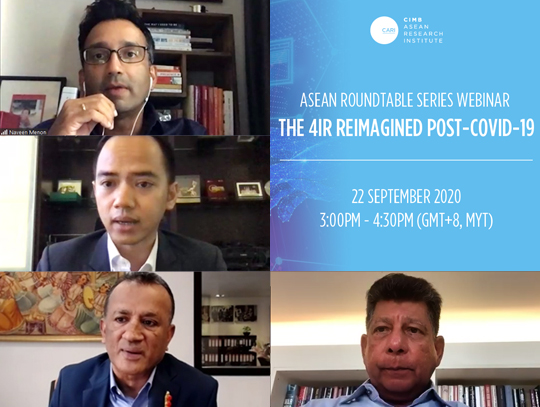
Kuala Lumpur, 22 September 2020 – CIMB ASEAN Research Institute (CARI) hosted the ASEAN Roundtable Series, titled “The 4th Industrial Revolution (4IR) Reimagined Post-COVID-19”. The session featured insights from industry veterans Naveen Menon, President (ASEAN) for Cisco; Dato’ Fadzli Shah, Chief Strategy Officer for MDEC; and Chandran Nair, Senior Fellow of CARI and founder and CEO of Global Institute for Tomorrow (GIFT). Moderated by Tan Sri Dr. Munir Majid, Chairman of CARI, the discussion centred around recent technological and adoption changes brought on by COVID-19 and how the future of 4IR will look like in ASEAN.
The discussion had two distinct lines of thoughts, one that is along the perceived unavoidable 4IR adaptation that ASEAN societies must embrace and how to achieve that ambition; whereas the other focuses on examining whether the 4IR idea or narrative is altogether cultural- and region- appropriate based on societal needs in ASEAN and Asia.
During the briefing, among the key insights shared were:
1. ASEAN is poised to benefit from 4IR but needs vary according to local requirements
ASEAN member states are at different stages of readiness when it comes to 4IR, with Singapore and Malaysia positioned well to benefit from 4IR in the future, and the remaining ASEAN members rapidly moving up in 4IR preparedness.
Reduction in manufacturing cost: Focusing on the manufacturing sector, Naveen highlighted the five key technologies projected to transform this sector are the internet-of-things (IoT), artificial intelligence (AI), 3D printing, advanced robotics and wearable technology, which can potentially reduce manufacturing costs by US$210-230 billion through increased yield and quality, labour machine arbitrage and decreased material cost by 2028.
Social innovation: Another benefit from the usage of 4IR technology lies in social innovation. The technologies have the potential to equalise society, increase economic development through sustainable technologies and enable financial service providers with the ability to address the “bottom-of-the-pyramid” or unbanked markets. The 4IR technologies are also potentially useful in efforts to ensure environmental sustainability, through the use of more effective technology in bio-conservation and disaster relief efforts. New digital delivery models in education also improve access to education by reducing costs and increasing the effectiveness of classroom delivery.
Low start-up cost: According to Dato’ Fadzli, the current internet economy is benefitting from the upfront cost for infrastructure that was footed by many large enterprises in the 1990s. In terms of business model, the permeation of 4IR could be seen from the transition of software and platforms as a product to it being sold as a service, thus enabling many new startups to grow due to the lower cost of business.
Fadzli further added that due to COVID-19, border policies will have a bigger impact in policy-making going forward. “COVID-19 could be the impetus to drive 4IR to replace migrant or foreign workers for lower-end jobs in countries like Malaysia when border control kicks in efforts to stem the pandemic,’ he said.
Prioritise basic needs instead: Chandran Nair, however, cautioned that not all countries and its people will be able to benefit from 4IR technologies, especially digital-related ones. In countries where accessible basic infrastructures are lacking and 4IR preparedness is low, many of its populations will not be able to afford access to technology. Chandran also stressed that some ASEAN member states still struggle with basic infrastructures like clean water and sanitation, and the adoption of 4IR technologies should be used to address these problems, rather than focusing on digital adoption.
4IR as a means to an end: Chandran suggests a people’s first approach, with technology as an enabler that will create a more sustainable future for the region, rather than a technology-centric approach without consideration of the long-term effects it has on nationhood and societies.
2. ASEAN needs to overcome some major barriers in infrastructure, human capital, regulations and economic policies in addressing 4IR adoption and to create an ASEAN-centric economic model for the future
The panel sharing highlighted many barriers to 4IR adoption in the ASEAN region.
Job displacement: Naveen highlighted that the technologies will fundamentally alter the nature of work and lead to potential job displacements. Research conducted by CISCO with Oxford Economics found that approximately 28 million jobs will be replaced by 4IR technology in the ASEAN region in 2028.
Reskilling required: The displaced workers will be required to enrol in reskilling programmes that will equip them with 4IR-ready skills to take on new work where they will interact more with machines. According to Naveen, “we need more foundational skills, cognitive skills, interactive skills, operational skills, information technology (IT) skills and management skills. In IT, there are about 800,000 workers in ASEAN will need programming, system analysis and systems evaluation skills.”
Not all jobs can be replaced by machines: Naveen further added that “In the teaching profession or retail, the interactive skills, negotiation, service orientation, persuasion, social perceptiveness are skills that cannot be replicated by machinery. Therefore, the skills that make us more human are important for us to develop so that workers can move from one function to another in a job”.
Current education system is unable to offer reskilling: Fadzli, however, opined that the education system is not ready to address the need for re-skilling in the near future. “Misleadingly, from a tech point of view, we can quickly get to an answer, but the more fundamental point to address is the structure of the education system itself. In the Malaysian education system, we train people through rote learning, you know to learn the steps and repeat them. It doesn’t give them (the workers) the right kind of foundational soft skills to be able to innovate and adjust. As a result of the latent workforce, traversing between careers or moving horizontally across industries for different roles is going to be a major challenge.”
SMEs are short term oriented due to lack in resources: According to Fadzli, the majority of Malaysian enterprises are also small and medium enterprises (SMEs) that do not have the short-term capacity to invest in and adopt new technology. “Due to COVID-19, a survey found that 78% of SMEs reported that they did not have enough money to survive the economic shock as a result of COVID-19, even for the next few months. As such, they are most likely to take a short-term lens to things, rather than thinking of investment items like 4IR technologies.”
Western economic models need to be localised to suit ASEAN’s 4IR needs: Chandran is also concerned that the norming of the western economic model of underpricing resources, externalises costs, encourages people to essentially consume will lead to an ASEAN economic model that works against its people and the biology of the region. Despite the potential of technology in resolving social and environmental issues, Chandran believes that the issues are currently not addressed as it is not in the interest of the western economic model, and thus the policymakers prioritise the use of 4IR in resolving issues in these areas. Naveen agreed that ASEAN needs to reframe how we look at the future and Fadzli supported the argument by adding that ASEAN needs to reimagine a future that is culturally unique to itself, that does not follow the standard western model of development.
3. Governmental policy intervention in capability building and facilitation of public-private collaboration is crucial in ensuring regional readiness and successful implementation of 4IR initiatives
Naveen recommended the following key areas that require policy makers attention in facilitating 4IR; adoption in relation to 5G, privacy and security (cybercrime vs cyber securities) and cross-border data flows, trust and ethics.
5G adoption is a key 4IR infrastructure: 5G rollout is a key area for government intervention with spectrum licensing at 60 gigahertz, harmonising spectrum across ASEAN and allocating spectrum for private networks as major areas needing address. Private and public partnerships and investments could be key to ensure access to infrastructure.
Build cyber security capacity: Developing critical information infrastructure, a national coherent strategy, enacting cybersecurity legislation and establishing information sharing, incident reporting capabilities, community awareness building on cyber security issues and finally capacity building to increase the number of cyber security experts in the region. Naveen noted that many countries have cyber crime laws in place, but there is a need to include cyber security regulation in the future legal framework.
Set up infrastructure for cross border data flows: There is a need to enable cross border data flows. Currently organisations and countries are required to set up their own infrastructure and this is very expensive, slows down progress, and doesn’t give us a head start as a regional ASEAN block in 4IR adoption. Naveen also highlighted the need to ensure that privacy is protected as a basic human right especially where child users are concerned.
Planning and policies need to be short term focused: Dato Fadzli re-emphasised the three areas related to Capitals that requires attention: financial, human and skills and the culture of capitalism, and the need to focus on the short term as he believes the middle and long term agenda is irrelevant if short-term solutions do not work out. There also exists a need to ensure that policies and technologies are localised for the ASEAN needs and conditions.
Governments need to incentivise people to adopt new skills: About reskilling, Dato Fadzli commented that, “This is not something we can address within the next 3,5 or 10 years without significant overhaul of the education system. Primarily in the Malaysian context, if you want to change something in the syllabus, the cycle to change or address something new in the system is a minimum 3-year cycle”.
Tan Sri Dr. Munir noted that technology disables by creating unemployment; where education foundation is weak, there will be instability in the society as a result of the disablement. The quicker way is to align economic benefits with skill adoption. “People will move heaven and earth to adopt new skills and effectively transform themselves, because of the promise of better livelihood after that,” according to Dato Fadzli.
ASEAN needs strong institutions to drive changes and adoption of 4IR: Chandran noted that we need strong institutions and states that put collective welfare ahead of norms in the ASEAN region to ensure that the 4IR adoption is sustainable in the long term. “Insured resilience is important. Policies in ASEAN that creates a safe and secure society built around economic policies, deployment of technology and basic rights to life, for example, water sanitation, food security, housing, education and public health. Technology can help with this, but it would call for a very different policy than the one we are currently looking at. Technology should be an enabler, but should not drive the notion of prosperity. In using technology, we need to understand the world that ASEAN lives in to ensure that technology is used to create prosperity rather than impoverishing the region.”
4. Conclusion
4IR provides a myriad of opportunities, but ASEAN needs to move beyond prioritising economic and technological concerns, to take into consideration the broader opportunity areas relating to social and environmental benefits in ensuring a sustainable future for the region.
In summing up, Tan Sri Dr. Munir stressed that “fundamentals of social organisation, society and nationhood should be defined before we embark on these kinds of challenges and opportunities offered by technology. Otherwise, we will be heading for another kind of crash of society.” Tan Sri Munir also noted that the accumulation of multiple micro benefits from 4IR technologies does not necessarily result in a macro benefit or social stability.
Singapore ready to begin first phase 3 antibody trial for COVID-19 patients
(8 October 2020) Singapore is ready to begin the first phase three monoclonal antibody trial for hospitalised COVID-19 patients. According to the National Centre for Infectious Diseases (NCID), it is ready to enrol its first patients as of 6 October and aims to enrol 100 patients. Singapore is only the third country to start recruiting patients as part of a global trial called Activ-3, which started in August 2020 and aims to recruit 1,000 patients globally. As of 8 October, the number of global patients recruited totalled 260, most of them from Denmark and the US. Activ-3 is estimated to be completed by the end of 2020 or in January 2021. The monoclonal antibody is a purified, highly active antibody that targets the spike protein of the coronavirus and the Activ-3 trial enrols COVID-19 patients who are sick enough to be hospitalised.
ASEAN
ASEAN region still attractive for European businesses but hurdles remain
(8 October 2020) More than half (53%) of European businesses in the region see ASEAN as the region with the best economic opportunity while almost three quarters (73%) of respondents say they plan to expand current levels of trade and investment in the region in the next five years. These were some of the key findings from the 2020 EU-ASEAN Business Sentiment Survey released on 8 October. Despite the positive findings, the optimism among European businesses declined from a year ago due to the COVID-19 pandemic and also the pace of ASEAN’s economic integration and customs procedure. Almost half of the respondents (49%) said they did not have the resources to deal with the pandemic while 92% reported a negative impact of their businesses in ASEAN due to the pandemic. On the matter of free trade agreement (FTA), 98% of the respondents would like the European Union to accelerate FTA negotiations with ASEAN and its members.
INDONESIA
Government passes omnibus bill on job creation despite opposition
(5 October 2020) The Indonesian government has passed the controversial omnibus bill on job creation into law on 5 October 2020, earlier than the initially planned date of 8 October, despite growing opposition due to the bill’s anticipated impact on labour rights and the environment. The law aims to improve bureaucratic efficiency, particularly with regards to business permits and investment. Coordinating economic minister Airlangga Hartarto said the law was necessary to increase employment and improve the business climate following the COVID-19 pandemic. While several house factions have approved the bill, two other factions, the Democratic Party and the Prosperous Justice Party have rejected the bill. Civil society organisations voiced their opposition and labour groups held protests on the same day in several locations in Jakarta. On 8 October, thousands of students and workers staged protests across Jakarta to voice their opposition towards the omnibus law on job creation.
INDONESIA
Government preparing US$5.1 billion in capital for sovereign wealth fund
(9 October 2020) The Indonesian government is preparing US$5.1 billion in capital for the country’s sovereign wealth fund called the Indonesia Investment Authority. The fund would raise its required funds from private investors instead of Indonesia’s reserve funds, and it is unclear where the funds would be invested (although the fund has been described as being earmarked for development and stabilisation). The fund will have a supervisory council led by finance minister Sri Mulyani Indrawati, with members including the state enterprise minister and three more professionals. The government would still be able to inject more money into the fund should its capital decline significantly. The establishment of the sovereign wealth fund is included in the job creation law passed recently.
THAILAND
Thailand to extend tax incentives to spur growth
(8 October 2020) Thailand will extend tax incentives to millions of its middle- and upper-income groups to drive consumption and mitigate the country’s worst economic slump caused by the COVID-19 pandemic. The concession will allow about 3.7 million taxpayers to deduct US$962 (30,000 baht) each from their total taxable income and will cost the government US$353 million (11 billion baht), deputy prime minister Supattanapong Punmeechaow told reporters on 7 October. The proposal will be submitted for cabinet approval on 12 October, he said. Supattanapong added that the latest tax breaks and co-payment programmes can together deliver a US$6.4 billion (200 billion baht) boost to the Thai economy in the fourth quarter of 2020. According to a government statement, the tax relief will exclude spending on alcohol, cigarettes, lottery, hotel and airlines costs and will be valid between 23 October and 31 December 2020.
THE PHILIPPINES
Businesses allowed to reopen further despite high number of COVID-19 cases
(5 October 2020) The Philippine government has allowed malls and businesses to reopen further despite 90,000 new COVID-19 cases being recorded in September 2020. Essential shops in malls, money exchanges, and miners will be allowed to operate at full capacity, while restaurants will be allowed to operate round-the-clock. Malls can stay open until 11:00 PM, while salons and barbershops are allowed to operate at 75% capacity. According to socioeconomic planning secretary Karl Chua, the Philippines is expected to contract by as much as 6.6% in 2020, with the poverty rate expected to temporarily rise to 17.5%.
SINGAPORE
August unemployment rate rises above peak seen during global financial crisis
(7 September 2020) Singapore’s unemployment rate in August 2020 rose to 3.4%, higher than the 3.3% peak unemployment recorded in September 2009 during the global financial crisis. The rate in August, however, is still lower than the highest overall unemployment rate of 4.8% recorded in September 2003 during the SARS epidemic. The overall unemployment rate in August 2020 rose by 0.4% from July. Manpower minister Josephine Teo said that it is unknown if the unemployment numbers will rise further in the coming months, or stay at the same level. Deputy prime minister Heng Swee Keat stated that there are still growth sectors in Singapore and that COVID-19 will reshape the labour market in the long-term.
VIETNAM
Government to reduce its civil service workforce and freeze new hirings
(8 September 2020) The Vietnamese government will reduce its civil workforce by 4,000 workers and has frozen all new hirings as the country struggles to recover from the COVID-19 pandemic. Prime minister Nguyen Xuan Phuc has approved the proposal to reduce the number of workers to 249,650 in 2021. This follows measures approved in 2017 for government offices to reduce their staff by 1.5% to 2.0% a year for the next five years. Central and local agencies were ordered to ensure only key employees were retained, while there would be no fresh hiring in the healthcare and education sectors. The civil service was cut from 265,100 in 2018 to 259,598 in 2019, and 253,000 in 2020.
MALAYSIA, SINGAPORE, VIETNAM, JAPAN
Japan to remove travel ban for 12 countries including three ASEAN countries
(8 October 2020) Japan is planning to remove a ban on overseas travel to 12 countries including Malaysia, Singapore and Vietnam in November 2020, according to a Japanese news outlet. The other countries include Taiwan, Australia, China, New Zealand and South Korea. The Japanese government, which currently bans travel to 159 countries and regions, will recommend that travellers refrain from unnecessary and non-urgent visits to the 12 countries. Meanwhile, Japan plans to permit Japanese and foreign national business travellers with residency status to re-enter the country without having to isolate for two weeks, according to a regional media company. The two-week self-quarantine measure will be waived for returning business travellers who submit an action plan. The travellers will also have to refrain from using public transit. The final decision on the easier re-entry procedure is expected to be made sometime this month.
BRUNEI, MALAYSIA
Service charge to be imposed on individuals crossing the Sarawak-Brunei border
(8 October 2020) Starting on 1 October 2020, the Bruneian government has imposed a US$2.2 service charge on each individual every time they cross the Sarawak-Brunei land border post. Bruneian and foreign nationals who travel frequently at least 15 times a month for work and/or schooling purposes will be eligible to apply for a Frequent Commuters Pass (FCP), which can be applied for online through the portal of the Prime Minister’s Department of Brunei Darussalam. The FCP rate for employees for one month is US$36.8 per individual, while for students it is US$22.1 per individual. Exemptions for the service charge will be provided to vehicles owned by the Malaysian government or the Sarawak state government for official use, as well as to fire engines, ambulances and police, hearse vehicles; and children aged two years and under.
Myanmar extends suspension period of jade mining operations due to COVID-19
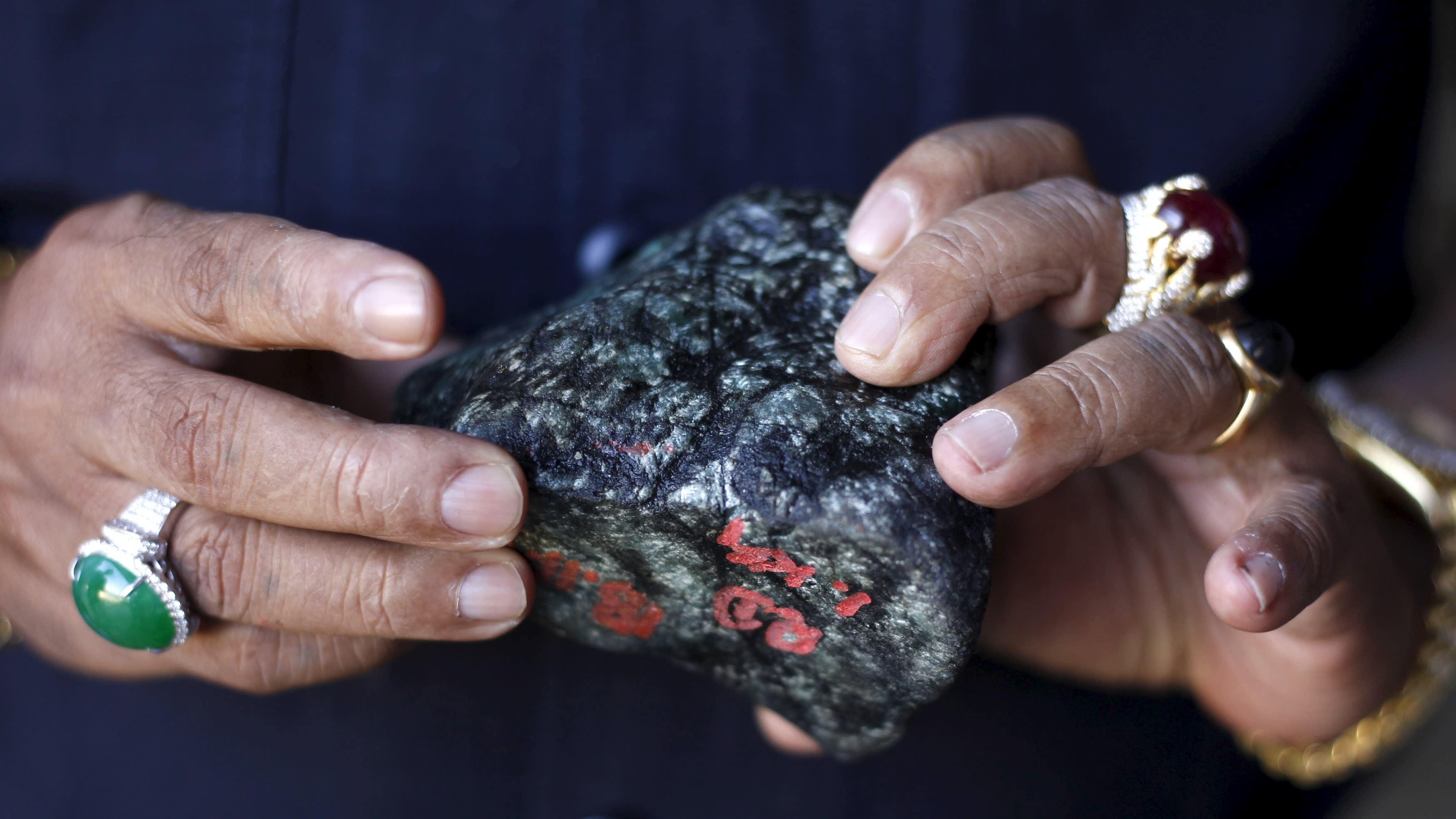
(6 October 2020) Myanmar has extended the suspension period of operations at jade mining sites until the end of November 2020 to contain the spread of the COVID-19 pandemic, according to an official from Myanmar Gems Enterprise quoted by Xinhua on 6 October. The Myanmar Gems Enterprises initially directed the suspension of operations at the mining sites for three months starting from July 2020. The suspension is currently enforced at the Lone Khin-Hpakant mining area in Kachin state, and Kanin mining area and Maw Luu-Maw Han mining area in Sagaing region. Jade mining operations are usually suspended during the monsoon season as heavy rainfalls frequently cause landslides that lead to casualties. Many locals make their living by jade scavenging in the region and most of the landslides are caused by the partial collapse of tailings heaps and dams. Read more>>
MYANMAR, INDIA
India proposes US$6 billion oil refinery project in Myanmar
(6 October 2020) India has proposed to build a US$6 billion petroleum refinery project near Yangon. This was one of the key takeaways from the two-day joint visit by Indian Army chief Manoj Mukund Naravane and foreign secretary Harsh Vardhan Shringla to Myanmar from 4 to 5 October 2020. A source close to the matter said the project would be a win-win arrangement for both countries and that Indian Oil Corp has shown interest in the project. Other highlights of the visit included the presentation of 3,000 vials of Remdesivir, considered as a viable option to treat COVID-19 patients, to state counsellor Aung San Suu Kyi. India has also promised to import 150,000 tonnes of urad, a type of lentil, from Myanmar till 31 March 2021 and the provision of a US$2 million grant for the construction of a border village bridge at Byanyu/Sarsichauk in Chin state to facilitate increased economic connectivity between Mizoram and Myanmar. Read more>>
THAILAND
Arkhom appointed as new finance minister
(5 October 2020) Arkhom Termpittayapaisith has been appointed as the new finance minister, ending the month-long vacancy left by the sudden resignation of his predecessor Predee Daochai. The Royal Gazette announced his appointment on 5 October 2020, with immediate effect. He was formerly the secretary-general of National and Economic and Social Development Council (NESDC) and also the former transport minister for the post-coup junta. As a deputy minister and minister of transport, Arkhom was part of the economic team led by former deputy prime minister Somkid Jatusripitak, although he had no links to Somkid and was known as a trusted man of Prime Minister Prayut Chan-o-cha. Read more>>
LAOS
Laos forestry investment offered US$5 million funding by Dutch bank FMO
(7 October 2020) One of Laos’ largest forestry plantation companies, Mekong Timber Plantations (MTP), has been offered US$5million in funding by Dutch development bank FMO, according to a disclosure by the bank dated 30 September 2020. The financing is expected to be used by MTP to expand its plantation and to establish an integrated saw log, veneer and chipping mill. The plantation company has a total of 24,099 hectares of land under a 50-year concession until 2049. MTP’s plantations are located across central Laos, in Khammoune, Bolikhamxai, Vientiane and Xengkuang provinces, and include eucalyptus and acacia. FMO said its funding of MTP is an additional investment, following its investment in the company in 2018, and fills a need for long-term capital, the lack of which it said is a barrier to finance for the forestry sector. Read more>>
VIETNAM
Number of new firms decline but total capital from new and existing firms increase in first nine months of 2020
(7 October 2020) Around 99,000 new enterprises were established in the first nine months of 2020, marking a 3.2% year-on-year decline, according to Vietnam’s General Statistics Office (GSO). The new firms registered to-invest total capital of more than US$60.6 billion (VND1.4 quadrillion), an increase of 10.7% compared to the same period in 2019. The average registered capital of each new business also increased to US$623,000 (VND14.4 billion), a year-on-year surge of 14.4%. On another note, around 29,500 operating enterprises registered to-increase capital by US$90.7 billion (VND2.1 quadrillion) in total for their business. As a result, Vietnam’s domestic economy received a total capital of more than US$155.4 billion (VND3.6 quadrillion) from newly established and existing businesses in 2020, equivalent to a 19.2% year-on-year increase. Read more>>
About Greater Mekong Subregion (GMS)
The Greater Mekong Subregion (GMS) Economic Programme was launched by the Asian Development Bank in 1992 connecting five developing ASEAN countries, namely Cambodia, Laos, Myanmar, Vietnam and Thailand, and Chinese provinces of Yunnan and Guangxi Zhuang Autonomous region. The region has some of the most robust economies sharing the Mekong River Basin thanks to its reform and liberalisation. The subregion is growing at a faster pace than the whole of East Asia and the Asia Pacific as the GDP growth rate for 2017 was at 6.4 percent, according to the World Bank. The population at the subregion as of 2016 is at 340 million while the GDP at PPP is at US$3.1 trillion in 2016. In 2015, trading within the region was at US$444 billion.
Indonesia, China to develop direct settlement between rupiah and yuan
(1 October 2020) China and Indonesia signed a memorandum of understanding on 1 October 2020 to develop and promote a framework of direct settlement between the rupiah and the yuan, to strengthen bilateral financial cooperation between both countries. Authorities believe this will strengthen the usage of both local currencies for the settlement of trade and investments. China is Indonesia’s largest trading partner, with more than US$73 billion worth of goods exchanged between the two countries annually. Chinese investors are also significantly involved in Indonesia, including in key infrastructure projects such as Jakarta-Bandung high-speed train project in West Java and the US$10 billion Weda Bay industrial complex in Sulawesi. Read more>>
Cambodian banana exports to China could exceed 300,000 tonnes in 2020
(5 October 2020) Cambodian banana exports to China could exceed 300,000 tonnes in 2020, a substantial increase from the 130,000 tonnes which were exported in 2019, according to industry insiders. Cambodian bananas were exported to China for the first time in May 2019 which not only diversified the fruit basket of Chinese consumers but also boosted Cambodia’s banana industry. As of 5 October 2020, the number of Cambodian banana plantations approved to export to China numbered 15 with a planting area of more than 24,000 hectares, and this is expected to expand. The autumn and winter are important consumption seasons for bananas within China, with the peak around the Spring Festival. Read more>>
Chinese tourists to arrive in Thailand under Special Tourist Visa (STV) scheme
(7 October 2020) The Tourism Authority of Thailand (TAT) stated that both Chinese and Scandanavian tourists will be arriving in Thailand in October 2020 under the Special Tourist Visa (STV) scheme. Tourists from both countries that have complied with regulations will be arriving after the Thai government started easing regulations on 1 October. The Thai government has set quotas for tourist numbers at approximately 300 persons a week or about 1,200 per month. The TAT, however, does not want to rush the opening up of the country for foreign tourists but will follow strict disease control measures to prevent putting the country at risk of COVID-19 spreading. The arrivals of the first group of 150 Chinese tourists scheduled for 8 October could be postponed to allow officials to work on proper preparation and settle entry processes. Read more>>
China to enhance cooperation with Malaysia in vaccine development and resumption of production
(1 October 2020) China will work together with Malaysia to enhance collaboration on COVID-19 vaccine development and resumption of production, said China’s outgoing ambassador to Malaysia Bai Tian. He said Beijing and Kuala Lumpur will also continue the fight against the pandemic and subsequent economic recovery. According to Bai Tian, Xi Jinping had announced at the 73rd session of the World Health Assembly in May 2020 that China will make its COVID-19 vaccine a global public good, once available. The ambassador was speaking at an online reception on the occasion of the 71st Anniversary of the founding of the People’s Republic of China. Read more>>
Digital Silk Road initiative to integrate technology into culture, tourism, and industrial cooperation
(2 October 2020) The 2020 Malaysia-China Year of Culture and Tourism – Digital Silk Road campaign was launched via cloud by the China Culture & Entertainment Industry Association (CCEA). The initiative will integrate digital technology into culture, tourism and industrial cooperation to shape a “digital culture industry” that can further facilitate exchange of culture, technology and business opportunities between China and Malaysia. CCEA president Liu Jinhua said the integration between culture and tourism, together with traditional industries, through digitalisation, is creating new business opportunities to take the economy to the next level. According to the National Bureau of Statistics of China, 16 typical business entities belonging to the digital culture industry recorded US$76.8 billion in annual revenues with a growth rate of 15.5%. Read more>>
ASEAN manufacturing’s operating conditions deteriorate again in September
(1 October 2020) ASEAN’s headline manufacturing Purchasing Managers’ Index (PMI) posted a modest deterioration to 48.3 in September 2020 after having stabilised at 49.0 in August. Firms continued cutting their staffing levels for the sixteenth month running, after seeing a slight easing of job shedding in August. The 12-month sentiment outlook, however, reached an eight-month high as companies had a more confident outlook of economic recovery. Among the seven ASEAN countries covered, Myanmar recorded the largest deterioration; its headline figure fell to a near-record low of 35.9 in September, marking a weakened performance of the sector amid stricter lockdown measures. Indonesia also saw a renewed contraction, following slightly improved conditions in August. Further contractions were recorded in Singapore (48.0) and Malaysia (49.0). Vietnam’s manufacturing sector saw the first improvement in operating conditions for three months during September. Its headline index (52.2) was the highest since July 2019 and signalled a modest improvement in conditions.
ASEAN
New ASEAN regional centre to address the future of work
(29 September 2020) Singapore launched the Regional Centre for the Future of Work on 29 September 2020. The new regional centre will help ASEAN member states prepare for the future of work and will be advised by ASEAN Secretary-General Dato Lim Jock Hoi and relevant international experts. Speaking after launching the centre, Minister for Manpower Josephine Teo said the initiative is especially timely during the COVID-19 pandemic. The idea for the new centre was first presented as a regional initiative to ASEAN leaders and International Labour Organization (ILO) representatives last year at the 2019 Singapore Conference on the Future of Work. The centre will advocate the adoption of technology for inclusive growth, workplace safety and health, and tripartite relations. The centre will also be organising more conferences over the next few years, in collaboration with the National Trades Union Congress and the Singapore National Employers Federation.
SINGAPORE
Singapore ranked second most digitally competitive economy in the world
(1 October 2020) Singapore was ranked second in the world in digital competitiveness in the latest edition of the IMD World Digital Competitiveness Ranking. The ranking measures the capacity of 63 nations to use digital technologies to drive economic transformation in business, government and wider society, and is currently in its fourth year. Singapore excelled in areas including knowledge, technology, and employee training, but continued to trail in future e-readiness due to a lower adaptability to technological change and a drop in business agility. Other ASEAN countries covered in the ranking included Malaysia (26th), Thailand (39th), Indonesia (56th) and the Philippines (57th). The US took the top spot, with Singapore, Denmark, Sweden and Hong Kong rounding up the top five spots.
MALAYSIA
World Bank revises Malaysia’s GDP contraction for 2020 to 4.9%
(29 September 2020) The World Bank has recently revised its 2020 economic growth forecast for Malaysia to 4.9%, from the previously estimated 3.1% decline. This was after the larger than expected contraction of 17.1% in the second quarter of 2020 due to the imposition of the movement control order (MCO), as well as weak external conditions. The revised projection reflected the heightened uncertainty over the speed of the global recovery from COVID-19, as well as the elevated unemployment rate and labour market weaknesses. Malaysia’s central bank projects that the country will experience a contraction of between 3.5% and 5.5% in 2020.
BRUNEI
Central bank to cease issuance of 10,000-Brunei-dollar currency notes
(1 October 2020) Brunei’s central bank, Autoriti Monetari Brunei Darussalam stated on 1 October 2020, that its issuance and circulation of the 10,000-Brunei-dollar currency notes will cease effective 2 November 2020. The 10,000 Brunei-dollar notes is the country’s biggest denomination currency. However, the bank stated that the notes will remain legal tender and retain full face value. The decision to stop the circulation of the notes was to reduce the risks of financial crimes such as money laundering and counterfeiting. The public was also encouraged to use alternative payment methods such as debit or credit cards for high-value transactions.
CAMBODIA
Cambodia wins rice battle in EU court
(29 September 2020) The European General Court has rejected the European Commission’s (EC) request to reject a complaint submitted by Cambodia and the Cambodian Rice Federation (CRF) regarding the EU’s reintroduction of tariffs on Indica rice exports from Cambodia. In April 2019, Cambodia and the CRF took the EC to court for the commission’s decision to reintroduce import duties for Indica rice from Cambodia for three years. The court said that temporarily reintroducing the Common Customs Tariff duties on imports of the product is tantamount to limiting the access of certain entities to the EU market, including that of Cambodia. It said the contested regulation caused significant economic damage for Cambodia. “It follows from all the foregoing that the plea of inadmissibility must be rejected,” the court said.
THAILAND
Household debt in Q2 2020 jumps to 83.8% of GDP as economy shrinks
(30 September 2020) Thailand’s household debt level to GDP jumped to 83.8% in the second quarter of 2020, the highest since 2003, data from the Bank of Thailand showed on 30 September, as the COVID-19 pandemic hammered the economy. The kingdom suffered its largest contraction in 22 years in the second quarter and may shrink to a record 7.8% in 2020, according to the central bank’s projections. As of June 2020, household debt increased to US$429.11 billion (13.59 trillion baht), from US$427.75 billion (13.50 trillion baht) at end-March, equal to a revised 80.2% of GDP, already among the highest in Asia. Bank of Thailand director Don Nakornthab said in a statement that the debt ratio was driven by an economic contraction, while the amount rose at a slower pace. Kasikornbank’s research centre projects that the debt to GDP ratio may surge to 88%-90% at the end of 2020.
THE PHILIPPINES
Philippines Airlines to cut more than a third of its workforce
(1 October 2020) Philippines Airlines started a major job-cutting programme on 1 October 2020 that could cut its workforce by more than a third, reflecting the deepening impact of the COVID-19 pandemic and the resultant travel restrictions across Asia. The first phase of the programme will see the airline seeking voluntary resignations, after which compulsory resignations will be made. The move is expected to run through early December 2020, and staff were informed in early September 2020 that the airline was considering a 21% to 38% reduction of its workforce. Philippines Airlines is considering cutting around 35% of jobs across all departments. The airline and its budget affiliate employ around 7,800 workers. The airline’s listed parent, PAL Holdings, which is partly owned by Japan’s ANA Holdings, saw its revenue plunge 88.8% to US$97 million during the April-June quarter, which covered the most intense period of lockdown in the Philippines.
INDONESIA
Founders of PT Lion Mentari Airlines planning on starting new airline
(1 October 2020) The founders of Indonesia’s PT Lion Mentari Airlines are planning on starting a new airline in the country, as the airline seeks to move beyond a 2018 crash. The transport ministry has confirmed it is processing one application for an air operator certificate but did not confirm for which airline. Air travel in Indonesia in July 2020 measured at 1.46 million people, a significant decline from 7.14 million in the same month in 2019. If the new airline goes ahead, an independent aviation analyst argued it may allow Lion’s founders to grab a bigger share of Indonesia’s aviation market once air travel rebounds.
VIETNAM
Vietnam sets out to achieve 17 sustainable development goals by 2030
(29 September 2020) The Vietnamese government has set 17 sustainable development goals (SDGs) to achieve by 2030 in a recently-issued decree, Decree No 136/NQ-CP. The goals aim to reduce poverty and inclusivity and develop the country in a sustainable and responsible manner. The country will strive for a peaceful, democratic, just, equal, civilised society; build effective institutions with good accountability and promote global partnership towards sustainable development. The decree outlines tasks and solutions to realise the goals, with focus on completing institutions and policies, enhancing communications, promoting the role of and participation by relevant parties, mobilising and arranging financial resources, and intensifying international co-operation. Specific measures have also been assigned to ministries and sectors.
Thailand and Myanmar resume cross-border goods transportation
(30 September 2020) Myanmar has accepted a proposal from Thailand to resume cross-border goods transportation with the condition that the drivers would have to change at the border due to the risks of COVID-19. Transportation across the Second Thai-Myanmar Friendship Bridge resumed at 6:00am on 30 September 2020. On 28 September, Thailand had requested Myanmar to allow the resumption of cross-border trade due to trucks being stranded on the Thai side of the border, which were at risk of losing between US$2.5 million to US$3.2 million a day. The two countries also agreed to collaborate further in solving problems at the border. Read more>>
VIETNAM, UK
Vietnam backs the UK joining the CPTPP
(30 September 2020) UK Foreign Secretary Dominic Raab stated that Vietnam will support the UK’s accession to the Comprehensive and Progressive Trans-Pacific Partnership (CPTPP) regional trade deal. Both Vietnam and the UK are also seeking their own bilateral trade deal as early as 2021, as the UK’s exit from the European Union after December 2020 will leave it out of the bilateral trade deal signed between the EU and Vietnam. In the meantime, Vietnam will apply the EU deal to the UK until a bilateral deal between both parties is ready. Vietnam’s main exports to the UK include mobile phones, seafood, garments and textiles, while the UK hopes to tap into Vietnam’s markets for education, renewable energy, technology, infrastructure, and health care. Read more>>
MYANMAR
Myanmar extends ban on foreign and domestic travel by another month to curb rising COVID-19 cases
(25 September 2020) Myanmar extended its ban on foreign visitors and domestic travel by another month in order to curb rising cases of COVID-19. The suspension, which was supposed to expire on 30 September 2020, will be extended until 31 October 2020. As of now, Myanmar has recorded up to 8,515 cases and 155 fatalities, and the Central Bank of Myanmar has responded by extending its minimum reserve requirement relaxations for banks to March 2021 to lessen the impact of COVID-19 on lenders. The country has set aside US$2.3 billion (3 trillion kyat) for efforts to contain the outbreak and minimise its impacts. Read more>>
CAMBODIA
Around 10 casinos reopen after lifting of closure order
(29 September 2020) Cambodia’s Ministry of Economy and Finance stated that at least 10 casinos in Cambodia have reopened since a closure order was lifted in early July 2020. The casinos are currently operating in a limited capacity and must ensure social distancing and cleanliness. Cambodia’s casinos were closed on 1 April 2020, following an order from Prime Minister Hun Sen, after which the order was lifted on 3 July pending official approvals from the Ministry of Health, which require operators to include a detailed list of COVID-19 prevention measures. Read more>>
THAILAND
Thailand plans to reopen country to tourists and investors in early 2021
(29 September 2020) Thai deputy prime minister Supattanapong Punmeechaow stated that Thailand is planning on reopening its economy to foreign tourists and investors in early 2021. The Thai government is looking at how to resume international flights and relax other quarantine rules, and said that it would be done on a bilateral basis with countries which are seen as having effectively handled the COVID-19 pandemic well, including Japan, Singapore, and Vietnam. Thailand plans to cut its quarantine period from 14 days to seven days to allow foreigners to go out and stimulate the economy sooner. The country is also planning on realigning its investment incentives to promote targeted industries more in line with a post-COVID-19 economy, including medical, biochemical, and wellness tourism. Read more>>
About Greater Mekong Subregion (GMS)
The Greater Mekong Subregion (GMS) Economic Programme was launched by the Asian Development Bank in 1992 connecting five developing ASEAN countries, namely Cambodia, Laos, Myanmar, Vietnam and Thailand, and Chinese provinces of Yunnan and Guangxi Zhuang Autonomous region. The region has some of the most robust economies sharing the Mekong River Basin thanks to its reform and liberalisation. The subregion is growing at a faster pace than the whole of East Asia and the Asia Pacific as the GDP growth rate for 2017 was at 6.4 percent, according to the World Bank. The population at the subregion as of 2016 is at 340 million while the GDP at PPP is at US$3.1 trillion in 2016. In 2015, trading within the region was at US$444 billion.
Thailand to restart tourism with China
(29 September 2020) Thailand is expected to welcome its first foreign tourists when a flight from China arrives next week, marking the gradual restart of a vital tourism sector battered by COVID-19 travel restrictions, said a senior official on 29 September. Tourism Authority of Thailand governor Yuthasak Supasorn said the first flight will have about 120 tourists from Guangzhou, flying directly to the resort island of Phuket. Government spokeswoman Traisulee Traisoranakul expects 1,200 tourists in the first month, generating about US$31.6 million (1 billion baht) in revenue and US$1.6 billion over one year, drawing in 14,400 tourists. Nationalities permitted to enter will be from countries deemed low risk by the Thai government, which will keep tabs on them using wrist bands and apps. Visitors will need health insurance and a negative COVID-19 test result 72 hours before travelling and will be tested twice in quarantine. Read more>>
Indonesia among countries to first receive Chinese-made COVID-19 vaccine
(25 September 2020) Indonesia, along with Brazil and Turkey, where third-phase human trials of the Chinese-developed COVID-19 candidate are ongoing, will have access to the vaccine at the same time as China, according to a Russian news agency. Vaccine developer Sinovac began the third phase of clinical trials in Brazil on 21 July, Indonesia on 1 August and Turkey on 16 September, chief executive officer Yin Weidong told reporters in Beijing. He also said that the first lots of the vaccine will be distributed on a priority basis in China and in parallel to the countries with clinical trials. Sinovac expects the vaccine to hit markets by the end of 2020. Read more>>
Brunei-China joint petrochemical venture to expand into second phase
(25 September 2020) Brunei-China petrochemical joint venture Hengyi Industries Sdn Bhd has begun the expansion into the second phase construction of its oil refinery and petrochemical project at Pulau Muara Besar (PMB), an industrial park on an island at the Brunei Bay. Hengyi invested about US$3.5 billion in the first phase of its PMB oil refinery and petrochemical project, which went into full operation in November 2019 and equipped the company with 8 million tonnes of crude oil processing capacity annually. The company said on 16 September that it plans to invest about US$13.7 billion in the second phase expansion. The proposed second phase expansion is expected to last three years and add 14 million tonnes of crude oil processing capacity per year upon completion. Read more>>
Stricter quality requirements hit Vietnam fruit exports to China
(25 September 2020) Vietnam’s fruit exports to China are decreasing after China made quality and origin standards more stringent, insiders from both countries said at an online conference on 24 September. According to Vietnam Customs, the higher standards and the impact of the COVID-19 pandemic on border trade resulted in Vietnam’s fruits and vegetables exports to China falling by over 25% year-on-year in the first eight months of 2020 to US$1.3 billion. Vietnam Fruit and Vegetables Association said exporters need to have at least 10 hectares of orchards meeting VietGAP (Vietnamese good agricultural practices) standards to be able to export to China but many businesses operate on a small scale and have poor packaging practices. Read more>>
Trade at Chinese border city near Myanmar resumes
(22 September 2020) Border trade at Muse in Myanmar’s Shan state has resumed following the reopening of the customs office in Ruili, China, after the border town resumed business on 22 September. Border trade between Myanmar and China had been placed on hold after Ruili was placed under lockdown on 15 September after positive COVID-19 cases were detected in the city. Muse Rice Wholesale Center vice chair U Min Thein said since the reopening of the customs office, Myanmar has resumed exporting products such as rice, sugar, onions and other goods across the border. While travel outside Ruili is still restricted, goods for trade are permitted to pass through the border from both sides. Myanmar truck drivers, however, are still required to swap vehicles with Chinese drivers before the goods are allowed to pass into China Read more>>
Indonesia and the Philippines among ASEAN countries facing significant ecological threats
(22 September 2020) The Asia Pacific region, which includes Southeast Asian countries, fall among the medium risk group on the Ecological Threat Register 2020 (ETR). The study categorises countries into low exposure (0 -1 threat), medium exposure (2-3 threats) and high exposure (4 or more threats). Indonesia and the Philippines face 3 ecological threats each, followed by Myanmar, Thailand and Vietnam which face 2 ecological threats each. Cambodia, Laos, Malaysia and Singapore each face 1 ecological threat, putting them in the low exposure grouping. The Asia-Pacific region was exposed to the highest number of natural disasters with 2,845 events recorded since 1990. Two-thirds of natural disasters in the region were either floods or storms, with the Philippines, Indonesia and Vietnam being among the most affected countries. Ecological threats and climate change pose serious challenges to global development and peacefulness and building resilience to ecological threats will increasingly become more important and will require substantial investment today.
ASEAN
Finance leaders approve increase of “condition free” access to cash swap fund
(21 September 2020) ASEAN+3 finance leaders at the 23rd ASEAN+3 Finance Ministers and Central Bank Governors’ Meeting have approved to increase the “delinked portion” of the US$240 billion Chiang Mai Initiative Multilateralisation (CMIM) cash swap fund from 30% to 40% of borrowing capacity. The meeting was held virtually on 18 September and was co-chaired by Vietnam and Japan. The increase means all 10 ASEAN countries, as well as, Japan, South Korea and China can now access up to 40% of their maximum borrowing amount from the facility without the need for any conditions on the funds provided. Implemented in 2010, the CMIM is a means of addressing balance of payments and short-term liquidity difficulties in the region during times of financial crises; it allows members to access a pool of US dollars in exchange for their own currencies.
MALAYSIA
Government announces US$2.4 billion additional stimulus
(23 September 2020) The Malaysian government announced that it would implement several initiatives and additional assistance under the US$2.4 billion (RM10 billion) Prihatin Supplementary Initiative Package (Kita Prihatin) in line with its efforts to boost economic recovery. Prime Minister Muhyiddin Yassin said the Kita Prihatin package targets four main groups, namely the bottom 40% income group (B40) who are married and single; M40 group with family and who are single; local workers in various fields and micro-traders in various fields. The package is an extension of previous economic stimulus packages, worth a total of US$70.8 billion (RM295 billion), or about 20% of the nation’s GDP, with an additional fiscal injection by the government totalling US$10.8 billion (RM45 billion). According to Muhyiddin, the latest figures from the Department of Statistics Malaysia revealed encouraging developments in economic indicators, such as the unemployment rate, manufacturing index and consumption index.
MALAYSIA
Malaysia records US$15.6 billion worth of investments in the first half of 2020
(24 September 2020) Malaysia recorded US$15.6 billion (RM64.8 billion) worth of investments in the first half of 2020 in the manufacturing, services, and primary sectors. The investments totalled 1,725 projects and would create 37,110 employment opportunities in Malaysia. Domestic direct investment accounted for 69.8% of total investments approved, while foreign direct investments made up the remaining number. The top five sources of foreign investments were Singapore, Switzerland, China, the US, and Thailand. The manufacturing sector accounted for the largest share of approved investments in the first half of 2020 at 55.1% of total investments, followed by the services sector at 44.2% and the primary sector at 0.7%. In the first half of 2020, the manufacturing sector’s approved investments totalled US$8.6 billion (RM35.7 billion), which was only a 3% decrease from the corresponding period in 2019.
CAMBODIA, INDONESIA
Cambodia and Indonesia agree on tax deal
(23 September 2020) Cambodia and Indonesia have reached an agreement on double tax avoidance (DTA), Cambodia’s General Department of Taxation (GDT) said on 22 September 2020. The DTA could take effect as early as 1 January 2020 if the remaining approval procedures are completed in 2020, said the GDT. The agreement is expected to protect nationals from both countries from double taxation. The Indonesian government recently notified the Cambodian government, as obliged by Article 29 of the DTA, that it had completed the internal procedures that are required for the entry into force. An official from the GDT told a local news outlet that the DTA will further shore up bilateral trade and investment between the two countries. Cambodia Chamber of Commerce said that apart from preventing double taxation, the DTA would also allow income tax to be paid wherever individuals or companies make a profit.
THE PHILIPPINES
Shell to sell its 45% stake in gas-to-power plant in Malampaya
(24 September 2020) Royal Dutch Shell is looking to sell its 45% stake in a gas-to-power plant in Malampaya, a key source of power for the Philippine’s main island of Luzon. Shell’s move is part of its larger portfolio rationalisation initiative to simplify and increase the resilience of its business. Malampaya’s natural gas was discovered by Shell in 1991 and fuels four power plants that deliver about a fifth of the Philippines’ electricity requirements. Shell’s divestment plan comes about a year after Chevron agreed to sell its 45% interest in the project to Philippine oil and shipping group Udenna Corp. State-owned Philippine National Oil Company holds the remaining 10% stake in the Malampaya project.
THE PHILIPPINES
Trade department confident of retaining GSP+ privileges
(23 September 2020) The Philippines is confident that it can retain tariff perks with the European Union (EU) after the European parliament voted in support of their removal. Trade Secretary Ramon M. Lopez said in an interview on 23 September that the Philippines is currently working on addressing the EU’s concerns by providing them with the right information. Last week, the European parliament asked the European Commission to begin the process of temporarily withdrawing the Generalized Scheme of Preferences Plus (GSP+) privileges enjoyed by the Philippines after the country failed to improve its human rights situation. The Management Association of the Philippines has asked the government to take the matter seriously, noting that the removal of tariff perks would hurt various industries and worsen unemployment.
INDONESIA
Reimposed restrictions expected to further hinder revival of domestic consumption
(23 September 2020) Jakarta’s recently reimposed restrictions is expected to further hinder the revival of domestic consumption in Indonesia. The hit to domestic consumption, which contributes about 60% of GDP, is expected to worsen an economy already projected to contract by between 0.6% to 1.7% in 2020. Consumer confidence among Indonesians who spend more than US$339 a month declined, according to a central bank survey carried out in August 2020. As of 11 September 2020, visits to retail and recreational spaces were still 10% lower than before the pandemic started, according to a mobility report by Google. According to Indonesian Retailers Association chairman Roy Mandey, retailers are already dipping into capital reserves to stay afloat. If the pressure on retailers continues, he believes it would just be a matter of time that modern retailers would stop operations, particularly those with smaller business scale.
SINGAPORE
Singapore implements measures as it moves to reopen the economy
(24 September 2020) Singapore will allow more people to return to office and will be trialling a new business travel pass for senior executives as the city-state moves to re-open its economy. The updated requirements will allow staff to return to the office for up to half their working time, with no more than half of the workplace’s employees at any point in time. The updated measures will take effect on 28 September 2020. The international business travel pass will be for executives with international responsibilities who need to travel regularly. Among the other aspects of the updated measures include allowing the resumption of work-related events within the workplace, allowing cinemas to expand their capacities from 1 October, and an adjustment of the legal cut-off age for children to wear masks.
THAILAND
China’s Great Wall Motors to start automobile production in Thailand in 2020
(24 September 2020) China’s leading automobile manufacturer Great Wall Motors (GWM) will start production in Thailand in 2021, with a capacity for 80,000 units a year. The company will start with the production of sports utility vehicles and pickup trucks. GWM Thailand has a registered capital of US$715.88 million and will employ 3,435 people. The company will also manufacture key parts including batteries and transmissions for its electric vehicles. Locally produced parts will form 45% of parts for its first model to be produced in Thailand, with the proportion to increase to 90% by 2025. The GWM Thailand operation will also establish a research and development hub for Southeast Asia.
Thai central bank to keep benchmark interest rate unchanged at 0.5%
(23 September 2020) Thailand’s central bank is expected to keep its benchmark interest rate unchanged at 0.5%, as the Thai economy grapples with the COVID-19 pandemic. The governor of the Bank of Thailand Veerathai Santiprabhob recently played down further rate cuts, and argued that fiscal policy can play a greater role in reviving the economy. He recently told a business news outlet that the bank has looked at unconventional policy moves like controlling yield curves but doesn’t think the measures are needed at the moment. While all options, including rate cuts, are available, targeted measures that provide funding to the sectors that need it the most can be more effective, he said. However, a senior economist at Krung Thai Bank in Bangkok stated that she believes Thailand will announce further “unconventional tools” such as quantitative easing, supply-side measures or debt restructuring. The Bank of Thailand projected in June that the Thai economy would contract by 8.1% in 2020. Read more>>
VIETNAM
Vietnam aviation authority submits detailed plans for flight schedules
(23 September 2020) The Civil Aviation Authority of Vietnam has submitted detailed plans for flight schedules and requirements for airlines to bring international passengers into the country. These requirements are currently awaiting approval from the Ministry of Transport and other relevant authorities. The country has decided to reopen bilateral travel between six Asian nations, including Cambodia, Japan, South Korea, China and Laos. Both national carriers Vietnam Airlines and budget airline Vietjet Air will conduct a total of nine flights a week landing in Hanoi and Ho Chi Minh City. Read more>>
VIETNAM
Government targets growth of 6.5% for 2021
(22 September 2020) Vietnam’s cabinet has targeted economic growth of 6.5% for 2021, which is similar to its growth level prior to COVID-19. The government expects the economy to rebound in 2021 from the economic slowdown it is currently experiencing due to the pandemic. In 2020, Vietnam’s economy is expected to grow at between 2.0% to 2.5%. The government has also asked the central bank to sustain a monetary policy that controls inflation and promotes economic stability while other ministries were directed to bring in more foreign capital, increase exports and stimulate domestic consumption. Read more>>
MYANMAR
Myanmar locks down most of Yangon province for two weeks to contain surge in COVID-19 infections
(21 September 2020) Myanmar locked down most of Yangon province for two weeks to contain a recent surge in COVID-19 infections. Under the new stay-at-home orders starting on 21 September, only one family member is allowed to go out for shopping while travel from Yangon to other cities is not allowed save for essential work. Essential services such as banking, healthcare, fuel stations and food outlets will still be allowed to operate as usual. While private sector employees were ordered to work from home, government employees will follow a rotational system. New daily cases jumped to 671 on 20 September 2020, a single day record. Read more>>
LAOS
Laos rating downgraded from B- to CCC, attributed to real default risk
(24 September 2020) Fitch Ratings has downgraded Laos’ rating from B- to CCC, citing “substantial credit risk” on the part of the country. The main reason for the downgrade was attributed to deepening external liquidity pressure as a result of COVID-19, alongside with Laos’ large volume of approaching debt maturities. Around US$500 million of the country’s external debts will mature by the end of 2020, with a further US$1.1 billion over the next four years. The country faces an imminent repayment of about US$200 million to commercial banks in September 2020, and then the equivalent of US$100 million in Thai baht-denominated bonds in October 2020. The ratings agency anticipates that “additional bilateral financing and debt relief could be forthcoming, including from China,” as other options may not be readily available for the landlocked country. Read more>>
About Greater Mekong Subregion (GMS)
The Greater Mekong Subregion (GMS) Economic Programme was launched by the Asian Development Bank in 1992 connecting five developing ASEAN countries, namely Cambodia, Laos, Myanmar, Vietnam and Thailand, and Chinese provinces of Yunnan and Guangxi Zhuang Autonomous region. The region has some of the most robust economies sharing the Mekong River Basin thanks to its reform and liberalisation. The subregion is growing at a faster pace than the whole of East Asia and the Asia Pacific as the GDP growth rate for 2017 was at 6.4 percent, according to the World Bank. The population at the subregion as of 2016 is at 340 million while the GDP at PPP is at US$3.1 trillion in 2016. In 2015, trading within the region was at US$444 billion.