China-ASEAN Monitor: China agrees to share year-round water data with Mekong River Commission


Photo Credit: Reuters


TRADE, ECONOMY, AND INVESTMENT


China agrees to share year-round water data with Mekong River Commission
(22 October 2020) China signed an agreement with the Mekong River Commission (MRC) on 22 October to share year-round data on the flow of its portion of the vital waterway amid concern that Chinese dams may be causing drought downstream in Southeast Asia. MRC said that data-sharing is critical to the management of the Mekong, upon which 60 million people depend for fishing and farming in downstream countries Thailand, Cambodia, Laos and Vietnam. Two years of record drought on the 4,350-km (2,700-mile) waterway have severely harmed livelihoods and raised questions over how mainstream Mekong dams in China and downstream in Laos were affecting the flow of water. China has for 18 years shared water during the June to October monsoon season with the MRC to provide early flood warnings. However, with drought an increasing concern, the MRC has been seeking year-round data to help analyse what may be causing the river’s low flow.
Read more>>

Malaysian firm partners with Huawei in manufacturing venture
(26 October 2020) JF Technology Bhd, via its wholly-owned unit JF International Sdn Bhd, is partnering with Huawei Investment & Holding Co Ltd’s unit Hubble Technology Investment Co Ltd (HTI) to set up a plant for the manufacture and supply of high-performance test contactors in China. With the opportunity for JFH Technology to work closely with HTI to develop new test contacting technology for 5G and 6G networks in the future, this will enable JFH Technology to move up the value chain of the semiconductor industry while developing local talents amongst Malaysians, the company said in the filing.
Read more>>

Thai-Chinese firms want the government to expedite links with China
(24 October 2020) The Thai-Chinese Chamber of Commerce has urged the government to speed up its economic partnership with China. According to Thai-Chinese Chamber of Commerce president Narongsak Puttapornmongkol, China’s economy is on a path to a strong recovery and this could benefit Thai exports and overall economy. Narongsak urged the government to boost the promotion of connectivity between China’s Belt and Road Initiative and Thailand’s flagship Eastern Economic Corridor (EEC) project and elevate the relationship between the two countries in terms of trade and investment. He added that Thailand is still a target destination for Chinese investors, as indicated by investment applications approved by the Board of Investment in the first half of 2020 that saw China rank number one in terms of investment applications approved.
Read more>>

Laos receives law enforcement vehicles from China
(26 October 2020) The Lao Ministry of Public Security has received law enforcement vehicles provided by its Chinese counterpart. Chinese Ambassador to Laos Jiang Zaidong said during a handover ceremony on 23 October that China-Laos law enforcement and security cooperation is an important part of bilateral relations, expressing hope that the law enforcement vehicles will help improve the capacity building of the Lao ministry. Member of the Secretariat of the Lao People’s Revolutionary Party Central Committee and Minister of Public Security Vilay Lakhamfong said that the two ministries have always supported and helped each other in various forms. According to him, the Lao Ministry of Public Security is willing to deepen cooperation with the Chinese side, including jointly cracking down on crime such as cross-border gambling.
Read more>>

First group of Chinese visitors arrive in Bangkok
(21 October 2020) The first group of Chinese visitors since Thailand’s border closure in March due to COVID-19 arrived at Suvarnabhumi airport from Shanghai on 20 October, according to the Tourism Authority of Thailand (TAT). A total of 41 Chinese visitors on a Special Tourist Visa (STV) arrived on a special Spring Airlines flight at 5.10pm, TAT governor Yuthasak Supasorn said. Yuthasak said the tourists have entered the 14-day mandatory quarantine in Bangkok. Upon arriving, the tourists were required to download a tracking app on their smartphones. Chinese tourists accounted for most of 2019’s tourist arrivals, with 10.99 million visitors arriving last year. The TAT governor said the return of foreign visitors signalled a recovery, which has been made possible by a raft of tourism-related incentives.
Read more>>

Jukhee Hong, CARI’s Executive Director, leads the panel discussion on “Leveraging on the Digital Wave: The Roadmap to ASEAN Digital Transformation” at the ASEAN STARTUP FORUM 2020


Jukhee Hong, CARI’s Executive Director, leads the panel discussion on “Leveraging on the Digital Wave: The Roadmap to ASEAN Digital Transformation” at the ASEAN STARTUP FORUM 2020

The ASEAN STARTUP FORUM 2020 was organised by the ASEAN Business Advisory Council Vietnam as the Chair of ASEAN BAC 2020 together with the Vietnam Chamber of Commerce and Industry in Hanoi on 16 October 2020.

The panel discussion on “Leveraging on the Digital Wave: The Roadmap to ASEAN Digital Transformation”, was led by Jukhee Hong, Executive Director of CIMB ASEAN Research Institute (CARI) and consisted of the following distinguished panellists:

  1. Bountheung Douangsavanh, Chair of the ASEAN Coordinating Committee on Micro, Small and Medium Enterprises (ACCMSME)
  2. Fadzli Shah Anuar, Head of Strategy, The Malaysia Digital Economy Corporation (MDEC)
  3. Adrian Gunadi, Co-Founder & CEO Investree, ASEAN BAC Indonesia
  4. Yoav Elgrichi, Founder & CEO, Impactech
  5. Pham Kim Hung, Founder & CEO, Base.vn
  6. Vivek Lath, Partner at McKinsey & Company
  7. Ngo Dien Hy, Director General of Vietnam Post and Telecommunication Corporation Information Technology Company (VNPT-IT)

The session generated insightful discussion around how COVID-19 serves as a trigger to the digital transformation of the regional businesses and highlighted the importance of collaboration and cooperation between ASEAN member states in ensuring the success of digitalisation in the region. Key facts and messages derived from the session are as follows:

  • MSME is an important part of the ASEAN economy. Almost a third (30%) of the world’s top startup ecosystems are now in Southeast Asia (compared to 20% in 2012). MSMEs contribute almost 60% of the gross domestic product (GDP) in many ASEAN countries and employ over 90% of the region’s workforce.
  • Most SMEs still use manual means in running their business, where managing their data and miscalculation are their main pain points. SMEs reluctantance to fully digitise their processes, either due to lack of knowledge or due to perceived investment cost. The solutions market for this problem is fragmented, but with collaborative efforts, an integrated solution can be achieved with cooperation from various stakeholders.
  • The diverse maturity and readiness across MSMEs in their digitalisation journey demand an agile organisation to cater to their needs. The support required by MSMEs to digitally transform their organisation requires a departure from the traditional or legacy operating models and favours startups which are generally more agile and flexible compared to large enterprises.

For more information on the ASEAN Startup Forum 2020 and to view the recording on the Panel discussion, please visit here.

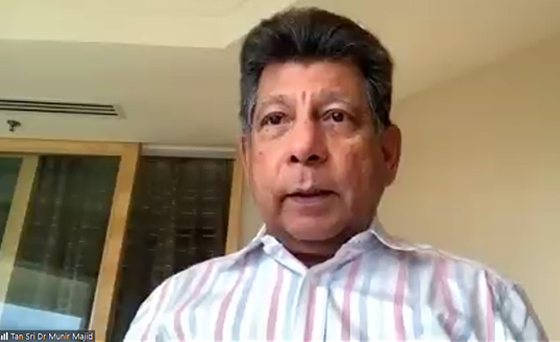
CARI Chairman Tan Sri Dr. Munir Majid spoke at the 35th ASEAN Roundtable, Yusuf Ishak Institute (ISEAS)


CARI Chairman Tan Sri Dr. Munir Majid spoke at the 35th ASEAN Roundtable, Yusuf Ishak Institute (ISEAS)

Tan Sri Dr. Munir Majid participated in the 35th ASEAN Roundtable on “The COVID-19 Crisis: Impact on ASEAN and the Way Forward” on 22 October 2020. This year’s Roundtable aims to take a deeper, analytical look at the impact and implications of the current COVID-19 pandemic outbreak on ASEAN as a region.

The panel discussions centred on the “Economic Impact of COVID-19 on ASEAN”, was moderated by Prof Tham Siew Yean, Visiting Senior Fellow of ISEAS and comprises the following distinguished panellists:

  1. Selena Ling, Chief Economist of OCBC Bank
  2. Dr. Jayant Menon, Visiting Senior Fellow, Regional Economic Studies Programme of ISEAS
  3. Tan Sri Dr. Munir Majid, Chairman of CIMB ASEAN Research Institute (CARI)

The annual ASEAN Roundtable provides a forum for leading scholars and commentators to examine key issues and challenges affecting ASEAN as a region and as a regional organisation. The event was organised by the Yusuf Ishak Institute (ISEAS) and supported by the Konrad Adenauer Stiftung.

CARI Captures 476: Malaysia’s COVID-19 fatality rate among the lowest in the region despite rise in number of cases


MALAYSIA

Malaysia’s COVID-19 fatality rate among lowest in the region despite rise in cases
(19 October 2020) Malaysia’s COVID-19 fatality rates are much lower compared to other countries globally despite recording higher number of deaths recently, according to health experts. Universiti Malaya (UM) department of social and preventive medicine Dr Moy Foong Ming said Malaysia’s statistics are on the low side compared to total COVID-19 deaths and case fatality rate (CFR) in other countries and the global trend. As of 21 October 2020, Malaysia’s CFR was 0.9%. According to the Our World in Data COVID-19 dataset, in the ASEAN region as of 21 October, Singapore recorded the lowest CFR with less than 0.1% while Indonesia recorded the highest CFR at 3.5%. The global CFR rate stood at 2.8%. UM epidemiologist Dr Awang Bulgiba said that Malaysia’s CFR in June was around 1.4% and has now fallen to 0.9% due to the much larger increase in the number of cases.

ASEAN

Demand for green bonds expected to remain strong despite COVID-19 setback
(20 October 2020) The strong growth of the green bond market is expected to continue, especially in the ASEAN region, said Climate Bonds Initiative’s ASEAN programme manager Cedric Rimaud. He expressed confidence in the green debt issuance market even though the number of issuances declined by 26% in the first half of 2020 to US$91.6 billion. According to him, ASEAN markets are strong in terms of accessing capital to finance and with regulators fully supporting and governments making progress in sovereign securities. In 2019, global green bond and loan issuance rose by more than 50% to US$258 billion from 2018. In ASEAN, the total issuance size almost doubled to US$8.1 billion in the same period. Singapore accounted for 55% of ASEAN’s green debt issuance in 2019, posting a 29% increase from 2018. While investing in green bonds may not pose high risk, analysts say caution should be exercised and warned against the risk of green washing.

VIETNAM, JAPAN

Japanese corporate investment falls to fourth place for the first nine months of 2020
(22 October 2020) Japanese corporate investment into Vietnam in the first nine months of 2020 dropped 43% year-on-year. While Japan ranks second in cumulative investment, and topped the annual list in 2017 and 2018, it sank to fourth place for 2019. The COVID-19 pandemic has hit larger corporate investment flows into Vietnam, with total investment by foreign companies for the nine months through September 2020 dropping 19% on the year to US$21.2 billion. New Japanese investments into Vietnam dropped by 70%, putting the country in sixth place behind Taiwan and Hong Kong. Meanwhile, investment by Chinese companies has been picking up since around 2015. The country jumped into the lead both in new spending and in expanded investment in the first half of 2019, and sits in third place overall in 2020. South Korea remains the largest source of corporate investment in Vietnam to date.

SINGAPORE

Singapore Airlines to restart flights to New York in November 2020
(20 October 2020) Amid “early signs of optimism” of a recovery in air travel, Singapore Airlines (SIA) said on 20 October that it will resume its flights to New York. The nonstop thrice-weekly flights between Changi Airport and New York’s John F Kennedy airport will start on 9 November. SIA anticipates significant cargo demand from a range of industries based in the New York metro area, including pharmaceuticals, e-commerce and technology firms. The airline said it will continue to review its operations to the US, and “assess the growing demand for air travel amid the ongoing recovery from the COVID-19 pandemic”, before deciding to reinstate services to other points in the US. The airline currently operates nonstop services to Los Angeles. For SIA, the resumption of international traffic is much more crucial as they have no domestic networks to fall back on.

VIETNAM

Vietnam Airlines to increase number of domestic flights
(20 October 2020) Vietnam is set to raise the number of domestic flights to meet increasing demand, said a representative of the national flag carrier. Vietnam Airlines will increase the number of flights between Hanoi and province of Dien Bien to 14 per week starting from 26 October while routes linking Ho Chi Minh City with the Kien Giang and Ca Mau provinces will see seven flights per week served by the airline’s affiliate Vietnam Air Services (VASCO). In the first nine months of 2020, Vietnam Airlines reported a 12% increase in domestic passengers compared to the same period in 2019. Meanwhile, Vietnam Travel Aviation Company Limited is set to become Vietnam’s sixth airline once the Ministry of Transport issues an air transport business licence for it. It is expected to make its first flight on 18 December 2020 and in the short term, will fly domestically.

SINGAPORE, MALAYSIA

Stakeholders push for wider travel bubble between Singapore and Johor state
(22 October 2020) Stakeholders in the Malaysian state of Johor are pushing for the government to free up border travel with Singapore to allow the state’s economy to pick up again. As of now, both Malaysia and Singapore have established the Reciprocal Green Lane (RGL) and Periodic Commuting Arrangements (PCA), which critics have claimed is limited in scope and has stifled cross-border movement. The Federation of Malaysian Manufacturers (FMM) stated that both countries needed to find a way to facilitate the 250,000 travellers who used to commute daily from Johor to Singapore before COVID-19 struck. It was suggested that a “targeted travel bubble” with strict SOPs for Johoreans who want to commute to Singapore daily for work be implemented.

THE PHILIPPINES

The Philippines lifts ban on foreign travel
(21 October 2020) The Philippines lifted a ban on non-essential foreign trips by Filipinos on 21 October, but the immigration bureau said the move did not immediately spark large numbers of departures. The government has gradually eased travel restrictions to support the economy, which slipped into recession in the second quarter of 2020 following months of lockdown and quarantine to fight the COVID-19 pandemic. Those who travel to other countries are required to show confirmed two-way tickets, travel and health insurance, a declaration acknowledging the risks of travel and trip delays, and a negative COVID-19 test within 24 hours of departure. Nevertheless, aside from the pre-departure requirements, many countries still restrict the entry of travellers from nations with a high number of COVID-19 infections, including the Philippines.

THE PHILIPPINES

The Philippines to resume oil and gas exploration in the South China Sea
(18 October 2020) The Philippines government has ended a six-year moratorium on resource exploration in the South China Sea. In 2018, the Philippines had signed a memorandum on joint exploration with China, but this has not materialised as of yet. Among the companies which have contracts to explore in the South China Sea include the British company Forum, Hong Kong-listed PXP, and the state-owned Philippine National Oil Company. A big impetus for the Philippines to restart exploration in the South China Sea has been the declining gas supplies from the Malampaya gas reservoir. The Malampaya gas field supplies fuel to four power plants that deliver about a fifth of the country’s electricity requirements and is projected to dry up by 2027, based on the latest energy department projection.

MYANMAR, MALAYSIA

Petronas to cut jobs at Yetagun offshore gas field in Myanmar
(21 October 2020) Malaysian state-owned oil and gas company Petronas acknowledged that there have been job cuts at its Yetagun offshore gas field in Myanmar as part of its review of its business portfolio. The job cuts started in the first week of September 2020, with further reductions expected in December 2020 and March 2021. Petronas has been engaging with the relevant authorities in Myanmar, including the host authority, Myanmar Oil and Gas Enterprise (MOGE) in order to share its plans. Compensation has been arranged for the retrenched workers in accordance with Myanmar’s labour laws. According to a local daily, the Yetagun field produced nearly 300 million standard cubic feet (mmscf) per day at its peak, but has now curtailed production to only 60 mmscf per day. Petronas holds a 40.9% stake in the gas field, and currently operates it.

SINGAPORE

House prices rose 0.8% quarter-on-quarter in Q32020
(23 October 2020) Singapore house prices rose 0.8% quarter-by-quarter in the third quarter of 2020, which ended 30 September. With a second consecutive quarter of growth, analysts have revised their forecasts and now believe house prices are expected to rise by as much as 1.5% in 2020 (the prices were previously expected to decline by as much as 6.0%). The rise in home prices comes on the back of home sales rising to its highest in more than two years. This rise in home prices is reportedly due to low-interest rates available and the more than US$74 billion of stimulus provided by the government.

Mekong Monitor: New Bank of Thailand governor raises concern on local unrest


Photo Credit: Bangkok Post


TRADE, ECONOMY, AND INVESTMENT


THAILAND

New Bank of Thailand governor raises concern on local unrest
(21 October 2020) The ongoing anti-government rallies could further weaken domestic consumption and tourism, said newly appointed Bank of Thailand (BoT) governor Setthaput Suthiwart-Narueput, who succeeded Veerathai Santiprabhob on 1 October. The central bank noted that it needs to monitor the situation closely. Setthaput said that given the existing fundamentals of financial stability, sufficient foreign reserves, low public debt and labour market flexibility, Thailand remains resistant to shocks. The country has also succeeded in containing the spread of COVID-19, lending support to the economic recovery. Nevertheless, the new governor said Thailand faces an uneven road to recovery from the pandemic. On 22 October 2020, Prime Minister Prayut Chan-o-cha suggested everyone take a step back in the conflict and offered to lift the state of emergency. A special parliamentary session to discuss ways to defuse the ongoing political conflict is expected to be held on 26 October.
Read more>>

THAILAND

Thailand’s Siam Bioscience to produce Oxford COVID-19 vaccine for ASEAN
(14 October 2020) Thai biopharmaceutical company Siam Bioscience has signed an agreement to partner with UK-based firm AstraZeneca to produce and supply potential COVID-19 vaccine AZD1222, developed by the University of Oxford, for Thailand and Southeast Asian countries. Thai deputy prime minister and public health minister Anutin Charnvirakul said on 12 October that all parties have agreed to prepare large-scale manufacturing capacity at Siam Bioscience. AstraZeneca will be providing the potential vaccine at no profit during the COVID-19 pandemic, while Siam Bioscience will set up the manufacturing facilities through technology transfer from the European company.
Read more>>

LAOS

Special economic zone project in Vientiane completes feasibility study
(19 October 2020) A new Special Economic Zone (SEZ) project in Laos’ Vang Vieng district has completed its feasibility study, environmental and social impact assessment, and concession survey, according to Lao-Vang Vieng New Area Development Company director Thang Zinxuan. A report by a local news site said that Chinese investor Lao-Vang Vieng New Area Development Company has spent two years undertaking a feasibility study for the development of its new SEZ in Vang Vieng district in Vientiane. The project, located to the west of the Xong River, will cover around 7,000 hectares. Thang said the project is being divided into five construction phases spanning 29 years, with a total value of US$5.3 billion. The project will include new roads, four bridges across the Xong River, a shopping centre, a school, a hospital, unique temple grounds, a convention centre and natural tourism sites.
Read more>>

VIETNAM

Corrosion-resistant steel exported to Canada will not be imposed anti-subsidy tax
(21 October 2020) Canada has concluded that Vietnam does not subsidise enterprises producing and exporting steel following an anti-dumping and anti-subsidy investigation that began in November 2019, according to the Trade Remedies Authority of Vietnam under its Ministry of Industry and Trade. Canada, will therefore, not impose an anti-subsidy tax on the steel products imported from Vietnam. In addition, Canada also reduced the anti-dumping tax significantly compared to the preliminary decision. Anti-dumping tax rates will be cut from 36.3%-91.8% in the preliminary period to 2.3%-16.2% in the final conclusion for exporters offering full cooperation in the case. The Trade Remedies Authority of Vietnam said Canada was currently assessing the damage to its domestic manufacturing industry and is expected to reach a final conclusion on 13 November. If there is no damage in the conclusion, Canada will not impose anti-dumping duties on Vietnam’s corrosion-resistant steel sheets.
Read more>>

VIETNAM

Vietnam’s Phu Yen signs first green loan for 257MW solar farm
(13 October 2020) Vietnam’s Phu Yen TTP Joint Stock Company (Phu Yen JSC) signed a US$186 million loan with the Asian Development Bank (ADB) on 9 October 2020 to develop and operate a 257MW solar power plant in the southern province of Phu Yen’s Hoa Hoi commune, through the country’s first certified green loan. Phu Yen JSC is owned by B Grimm Power Public Company Limited and Truong Thanh Vietnam Group Joint Stock Company (TTVN). The project is the largest single operating solar power plant in Vietnam and one of the largest in Southeast Asia. It will help to reduce 123,000 tonnes of carbon dioxide annually. The power plant will deliver electricity to Quang Ngai and Nha Trang cities, as well as surrounding areas in a region that is emerging as one of Vietnam’s key tourist centres.
Read more>>


mekong-monitor-map

About Greater Mekong Subregion (GMS)

The Greater Mekong Subregion (GMS) Economic Programme was launched by the Asian Development Bank in 1992 connecting five developing ASEAN countries, namely Cambodia, Laos, Myanmar, Vietnam and Thailand, and Chinese provinces of Yunnan and Guangxi Zhuang Autonomous region. The region has some of the most robust economies sharing the Mekong River Basin thanks to its reform and liberalisation. The subregion is growing at a faster pace than the whole of East Asia and the Asia Pacific as the GDP growth rate for 2017 was at 6.4 percent, according to the World Bank. The population at the subregion as of 2016 is at 340 million while the GDP at PPP is at US$3.1 trillion in 2016. In 2015, trading within the region was at US$444 billion.

China-ASEAN Monitor: Chinese investors expected to lead doubling of investments into Indonesia’s nickel processing sector by 2033


Photo Credit: The Jakarta Post


TRADE, ECONOMY, AND INVESTMENT


Chinese investors expected to lead doubling of investments into Indonesia’s nickel processing sector by 2033
(16 October 2020) Indonesia expects to see investments into its nickel processing sector to double to US$35 billion by 2033, led by Chinese firms. Representatives from Chinese steel and battery companies operating in Indonesia met with the Indonesian Coordinating Minister for Maritime and Investment Affairs Luhut Pandjaitan during his recent visit to Yunnan province. Among the projects discussed was a plan by China’s Contemporary Amperex Technology Co Ltd and Ningbo Lygend Mining Co to create the world’s largest integrated lithium battery production facility. According to the minister’s spokesman Jodi Mahardi, the Chinese companies, along with others including Tsingshan Holding Group and Delong Holdings, reportedly have some US$16 billion invested in Indonesia’s nickel processing sector, and plan to increase their collective investment to around US$35 billion by 2033. Indonesia is a major nickel ore producer and is keen to expand as a nickel processing hub.
Read more>>

The Philippines stands to benefit from China’s early economic recovery due to resumption of trade
(21 October 2020) The Philippines stands to gain from China’s early economic recovery from the COVID-19 pandemic, due to China’s status as the country’s largest trading partner. Annual bilateral trade between the Philippines and China before the pandemic stood at US$50 billion, said finance secretary Carlos Dominguez III during an online forum. China posted a growth of 4.9% in the third quarter of 2020, which is expected to increase the demand for Filipino goods. Filipino exports to China recovered after China posted a growth of 3.2% year-on-year in the second quarter of 2020, said acting socioeconomic planning secretary Karl Kendrick Chua in a quote to a local news outlet. Based on the latest data from the Philippine Statistics Authority, China and Hong Kong were the Philippines largest export destinations as of end-August 2020, with combined shipments of US$11.37 billion while imports amounted to US$13.58 billion.
Read more>>

Ministry of Tourism report reveals an 83% fall in mainland Chinese visitors to Cambodia in 2020
(16 October 2020) A report by Cambodia’s Ministry of Tourism revealed an 83% fall in the number of tourists from mainland China for the first eight months of 2020. The number of tourists from China fell from 1.7 million in the first eight months of 2019 to 292,303 for the same period in 2020. Cambodia is expected to lose around US$3 billion in tourism revenue in 2020, having recorded between US$4.9 billion from 6.6 million foreign visitors in 2019. The decline in visitors has had a major impact on Cambodia’s casino sector, with 30 casinos in Sihanoukville alone having either closed their doors completely or suspended all staff in 2020.
Read more>>

China remains Malaysia’s largest foreign investor in the manufacturing sector for four consecutive years
(20 October 2020) China has remained as Malaysia’s top foreign investor in the manufacturing sector for four consecutive years since 2016, said Malaysia’s deputy international trade and industry minister Lim Ban Hong at the 10th Malaysia-China Entrepreneurs Conference (MCEC) 2020 held virtually on 20 October. A total of 32 FDIs amounting to US$452.43 million were approved in the first six months of 2020 while 79 FDIs from China worth US$3.74 billion were approved in 2019. Bilateral trade between Malaysia and China stood at US$80.06 billion from January to August 2020, while it had previously reached US$123.96 billion in 2019. The deputy minister stated that he hoped the corporate elites from both countries would collaborate in sectors including digital economy, big data, innovative economy, as well as industrial innovation and modern agriculture.
Read more>>

China accounts for Brunei’s fourth largest trade partner in 2019 at 8.9% of total trade
(16 October 2020) China was Brunei’s fourth-largest trading partner in 2019, accounting for 8.9% of Brunei’s total trade. Total trade in 2019 was valued at approximately US$1.1 billion. China was Brunei’s largest source of imports, accounting for 13.1% of total imports, and was Brunei’s seventh-largest export market accounting for 5.9% of total exports. Discussing opportunities for both countries to capitalise on the relationship, Brunei’s Minister in the Prime Minister’s Office and Minister of Finance and Economy Dr Awang Haji Mohd Amin Liew noted that Brunei is strategically located in the centre of the Brunei Darussalam-Indonesia-Malaysia-Philippines East ASEAN Growth Area (BIMP-EAGA). He noted that Brunei-China cooperation not only strengthens the connection between China and BIMP-EAGA countries, but also benefits China-ASEAN cooperation as well as the Belt and Road Initiative.
Read more>>

ASEAN needs to do more than just bounce along


ASEAN needs to do more than just bounce along
Originally published in TheEdge Malaysia, 19 October – 25 October 2020.

ASEAN was in a sweet spot – the foreign investment destination of choice. It still is. But investment relocation to ASEAN means investment is mobile, let it not be forgotten.

The COVID-19 crisis, plus global geopolitical tensions, can result in investments making a pit-stop in ASEAN, but they may continue in a near-shoring direction towards, ultimately, strategic protectionism.

Then, a United Nations Conference on Trade and Development (UNCTAD) report recently forecast a slowdown in FDI of 5% to 15% because of the pandemic. The crisis has brought an end to good times. There is no room for complacency.

So, there are many things ASEAN has to show, first in recovery from the crisis, and then in an economic integration which makes real the 650 million people market, young, upwardly mobile, middle-class consumers.

And then there is the third component: an ASEAN not wedded to any particular power, China or the US. This would make it truly open for business.

With the unprecedented health crisis, the key is how to bounce back, faster and stronger, than others. It cannot be business as usual. Quick decision-making is needed and not more paper pushing, or economic blueprints.

The whole of the private sector represented by ASEAN Business Councils from all corners of the world have proposed that a high-level special commission be established for a quick decision-making. They have also offered to set up a special business advisory board to assists the commission and all other ASEAN bodies that feed into it.

The special commission will be to the ASEAN Leaders Meeting what an executive committee is to a board of directors. It will have delegated authority – very important to making timely decisions – as the leaders typically meet only twice a year, and all too often to give instruction on what needs to be done.

At that rate, ASEAN is not going to bounce back quickly and stronger to continue to be the investment destination of choice. Fast decisions will also save lives, apart from rescuing the economy.

In its submission, called “A Pathway Towards Recovery and Hope for ASEAN”, to ASEAN leaders on 23 July, the private sector made 225 proposals (Pathway225) to protect lives, to risk-manage economies out of lockdown, and to be on the road to recovery.

The 225 proposals are not a wish list. They are inter-related and cover immediate to the medium term. Yes, ASEAN would need to prioritise them, give them further substance – but most of all, get them implemented.

Hence, the first need: Make decisions fast.

Pathway225 next proposed an exponential increase in mass-testing capacity. Companies in the membership of the ASEAN Business Councils stand ready to work with the public sector in ASEAN to scale up affordable, reliable and accessible mass-testing capacity to restore business and general public confidence across the region.

There are also proposals on contract tracing, definition of essential goods and services for their uninterrupted supply and, crucial at this time, keeping at least one port per ASEAN member state open 24/7.

Pathway225 is not about business gone mad, wanting to get economies going again. It addresses first how to do so in a safe manner with strict risk management protocols. Only then can business get going if it is not to fall back flat on its face, costing lives and damaging confidence for the next time.

But is also talks about the thereafter. All the things ASEAN has not done to be the single production base and market that was promised when the ASEAN Economic Community (AEC) was proclaimed in 2015.

Dismantlement of non-tariff barriers, reducing the cost of trade, connectivity and so much more that can be found in the document.

Most of all, however, Pathway225 seizes the COVID-19 crisis as the opportunity, not only to do the things that have not been done, but to do them better with greater and faster digitalisation, including the benefit of less human contact, with more sustainable development that recognises the human condition.

At a recent CIMB ASEAN Research Institute dialogue, Michael Michalak for the US-ASEAN Business Council (USABC) stated that American companies are emphasising public health, digital innovation and the green economy. Kawal Preet, who runs FEDEX from Africa across to Asia-Pacific, emphasised connectivity, but a connectivity that avoids waste, employs recyclable materials and uses clean energy. A connectivity that promotes intra-Asia trade and a connectivity that does not lend itself to disruption of supply chain.

They both underlined a recovery that takes care of SMEs who are the backbone of the ASEAN economy by making them more competitive through greater digitalisation. There are specific programmes, which member companies of the USABC run to help the SMEs.

The point is the proposals in Pathway225 are capable of being implemented by the companies behind them. That is why the private sector wants so much for decisions to be made on them – fast.

Which brings me to the third point. There are so many private sector companies across the world available to play a role in fighting the pandemic and in driving economic recovery. These include American companies.

The USABC alone comprises 169 American companies. Cumulative US investment in ASEAN is four times that of China. ASEAN should not favour or be fixated on any one country. ASEAN should not be distracted by the geopolitics. It should welcome all and become an oasis for economic activity not held to ransom by any one party in whatever great power struggle.

At the same time, of course, American companies should not allow themselves to be bullied into an idiotic “America First” thinking, which will only limit their opportunities for expansion.

The COVID-19 crisis is unprecedented. Operating or thinking in old and unproductive ways will fall short of what is needed to rebuild confidence and chart economic recovery.

CARI Captures 475: Funding in Southeast Asian startups continues to decline in Q3 2020


ASEAN

Funding in Southeast Asian startups continues to decline in Q3 20200
(9 October 2020) Investments in Southeast Asian startups declined for the third consecutive quarter in 2020 due to the impact of COVID-19 pandemic on dealmaking and investor sentiment. Startups in the region raised US$1.8 billion in the third quarter of 2020, marking a 40% year-on-year decline and 34% quarter-on-quarter decline, according to the Southeast Asia Deal Review Q3 2020 report. Singapore was the only market in the region to witness a growth in both deal value and deal count, replacing Indonesia, the region’s top investment destination, which saw an almost 50% decline for year-on-year, as well as quarter-on-quarter. Early stage startups in the region, particularly those focused on fintech and healthtech continue to draw interest from investors. Overall startup fundraising in Southeast Asia is expected to remain muted in the near term due to the pandemic.

ASEAN

Southeast Asia to produce half of the world’s notebook personal computers by 2030
(7 October 2020) Southeast Asia is projected to produce half of the world’s notebook personal computers by 2030 as more and more manufacturers shift away from China due to rising labour costs as well as supply chain diversification, according to a Taiwanese government think tank. China is responsible for 90% of the current global output of notebook PCs (which stood at 160 million units in 2019) but the portion is expected to be reduced to 40% by 2030. Many of the major manufacturers, which are often Taiwanese contract manufacturers, will be shifting production to certain ASEAN countries such as Vietnam and Thailand. Notebook PC deliveries are expected to climb 6% this year to 170 million units.

THAILAND

State of emergency declared in Bangkok amid protests
(15 October 2020) Thailand has declared a state of emergency in Bangkok after tens of thousands of anti-government protesters surrounded the prime minister’s office demanding greater democracy and less power for the monarchy. According to a notification in the Royal Gazette, the emergency declaration, which goes into immediate effect, bans gatherings of five or more people and allows for the arrest of anyone violating the rules. The latest protest is a series of anti-government demonstrations which began in early July 2020. Protesters are calling for the resignation of Prime Minister Prayuth Chan-Ocha and curbs on the monarchy, such as prohibiting the king from endorsing any coups and revoking laws that criminalise insults against the king and top members of the royal family. Anger in Thailand has also been exacerbated by the economic impact of COVID-19 which is even greater than in other parts of Southeast Asia because of the importance of tourism to its economy.

SINGAPORE

Singapore expected to add about US$73.5 billion of fiscal stimulus
(15 October 2020) Singapore is seeking to add US$73.5 billion worth of fiscal stimulus to help strengthen an economy expected to contract by 5.0% to 7.0% in 2020. The Singaporean government will use its budget in early 2021 to deliver more support to the battered economy. Government measures so far this year have focused on helping cushion businesses and consumers from the impact of the global COVID-19 pandemic. The Monetary Authority of Singapore has warned that fiscal measures will be crucial in supporting the economy as central banks have little room left to navigate with regards to cutting interest rates or buy back bonds.

INDONESIA

BI keeps rates steady as it focuses on alternative measures to shore up economy
(13 October 2020) Indonesia’s central bank, Bank Indonesia, kept its policy rates steady at 4% on 13 October, as expected by 23 out of 25 economists surveyed by a news agency. The Indonesian government plans to use alternative measures such as government bond purchases to help finance stimulus measures, as well as easing banks’ reserve ratio requirements and liquidity rules. Direct bond purchases will remain a one-off policy in 2020, according to the central bank’s governor Perry Warjiyo. Bank Indonesia has directly purchased some US$15.6 billion in government securities this year. There may be room for further rate cuts amidst subdued inflation and growth, with inflation expected to ease below the lower end of the central bank’s target range of 2.0% to 4.0%.

INDONESIA

Merger of Islamic units of state-owned banks to form entity worth US$15 billion
(13 October 2020) Indonesia’s planned merger of the Islamic units of state-owned lenders such as PT Bank Mandiri, PT Bank Negara Indonesia and PT Bank Rakyat Indonesia is expected to create an entity with US$15 billion worth of assets. By 2025, the merged entity’s assets could reach US$26 billion. The vice president director of Bank Mandiri, Hery Gunardi, stated that the merged bank would help raise Indonesia’s profile in the global Islamic banking industry, and the merged entity will look at global sukuk (Islamic bonds) that can be sold in the Middle East. Indonesia has been planning on creating a mega-Islamic bank since 2015. PT Bank BRISyariah will be the surviving entity of the current deal, which is expected to be completed by February 2021.

MALAYSIA

Jobless rate remains at 4.7% in August 2020
(13 October 2020) Malaysia’s unemployment rate remained at 4.7% in August 2020, according to the Department of Statistics Malaysia. The latest labour force statistics showed that the number of those unemployed decreased marginally by 3,500 persons to 741,600 in August compared to July 2020. The resumption of more economic activities from July 2020 was reflected in the continued rise in employment, particularly in the tourism, education, arts, entertainment and recreational sectors, said chief statistician Mohd Uzir Mahidin. The employment-to-population ratio, which indicates the ability of an economy to create employment, was 65.2% in August compared to 64.9% in July. The labour force in August numbered 15.90 million compared to 15.82 million in July. Although Malaysia’s labour force situation showed improvement in August, the continuous improvement will depend on the COVID-19 situation in the country, said the chief statistician.

THE PHILIPPINES

FDI net inflows grow for third consecutive month in July 2020
(13 October 2020) FDI net inflows into the Philippines sustained its growth momentum in July 2020 registering an increase of 35.2% year-on-year to US$797 million from US$590 million in the same period in 2019, Bangko Sentral ng Pilipinas (BSP) said on 12 October. BSP attributed the rise in FDI net inflows to improving investor sentiment due to easing of COVID-19 containment measures and some signs of gradual improvements in economic activities. The central bank said the growth in FDI net inflows in July was mainly on account of net investments in debt instruments, which rose by 60.1% to US$643 million from US$402 million in July 2019. Meanwhile, the BSP said net equity capital investments declined by 19.6% to US$81 million in July from US$101 million in 2019. The BSP also said reinvestment of earnings decreased by 16.1% to US$73 million in July 2020 from US$87 million a year ago.

THE PHILIPPINES

Government begins national ID system registration
(13 October 2020) The Filipino government began the process of registering millions of citizens for its national identification system on 12 October 2020, to promote electronic payments and make it easier for low-income earners to access financial services. Officials from the Philippines statistics agency will visit homes to collect personal information, hoping to complete the process before President Duterte’s term ends in June 2022. The system is expected to begin operations in the second half of 2021. All Filipino citizens and foreign residents will be required to register such information as name, sex, date of birth, place of birth, blood type, address and nationality. The country’s current system, in which different agencies issue their own numbers, has been criticised as inconvenient. The new system will grant each person a unique number that can be used across agencies.

LAOS

Lao tourism operators slash prices to attract local travellers
(15 October 2020) Tour and hospitality business operators in Laos have massively cut the cost of their services and package tours and are offering special promotions targeted at local visitors in a bid to make up for the absence of foreign tourists during the COVID-19 pandemic. According to Luang Prabang province’s president of the Chamber of Commerce and Industry, Bounthieng Soulivan, some businesses have reduced the cost of their services threefold or more. “Some hotels that previously charged US$200-500 for a room have reduced the rate to just US$70-80,” he said, adding that such a huge drop in price was unprecedented. There have also been additional attractive offers such as free pick-up services to and from airports. The changes are being made to enable businesses to survive at a time when tourism has been virtually wiped out by the pandemic, resulting in millions of dollars in lost revenue.

Mekong Monitor: Thailand’s economic recovery expected to take at least two years to return to pre-pandemic levels


Photo Credit: Bangkok Post


TRADE, ECONOMY, AND INVESTMENT


THAILAND

Economic recovery expected to take at least two years to return to pre-pandemic levels
(14 October 2020) The Bank of Thailand (BOT) stated that it expects Thailand’s economic recovery to take at least two years to return to pre-pandemic levels, specifically, in the second half of 2022. The central bank expects the economy to contract by a record 7.8% in 2020 before posting a 3.6% growth in 2021. The central bank also reiterated a need to preserve limited policy room for an appropriate time, and stressed that more fiscal measures will be required to support recovery. The BOT’s policy rate is currently at a record low of 0.5% after three cuts in 2020. Measures to be implemented by the central bank in the near team include measures related to soft loans and expiring debt, as well as easing rules on foreign currency deposits in early 2021.
Read more>>

THAILAND

Logistical startup Flash Express raises US$200 million in new financing round
(12 October 2020) Thai logistics startup Flash Express has succeeded in raising US$200 million in a new financing round, the company said on 12 October 2020. Flash Express works with e-commerce companies in Thailand, and operates door-to-door pickup and delivery services. It is the second-largest private player in the sector, and has expanded aggressively over the past year from 1,100 delivery points in October 2019 to more than 5,000 in October 2020. Flash Express currently delivers more than 1 million parcels a day, up from 50,000 during the same period in 2019. The startup plans to deploy the new funds to introduce new services and expand to other Southeast Asian markets.
Read more>>

VIETNAM

Vietnam to increase imports of coal, gas and primitive energies between 2020 and 2030
(14 October 2020) Vietnam is projected to transition from an energy exporter to an energy importer, and it would have to sharply increase its import of coal and gas to meet its development needs from now until 2030, according to data from the Ministry of Industry and Trade. It was reported that domestic coal production was not enough to fuel thermal power plants, in part due to rising mining costs. In addition, a projected decline in gas fields in the southeast since 2022 will see the gas output of the region decline from 11 billion cubic metre in 2022 to nearly 3 billion cubic metre in 2030. As such, Vietnam is projected to import more than 10 million tonnes of liquefied natural gas (LNG) annually by 2030.
Read more>>

MYANMAR

COVID-19 pandemic and lockdown measures forces delays in establishment of corporate bonds market
(9 October 2020) The COVID-19 pandemic and the subsequent lockdown measures in Yangon province has forced delays in plans to establish a corporate bonds market in Myanmar. The planned trial of corporate bond trading set for December has now been delayed to the first half of 2021, as uncertainty has caused only two to three companies out of 210 registered public companies to enter talks to join the Pre-Listing Board. Furthermore, while regulators have allowed foreign investors to trade on the Yangon Stock Exchange in March 2020, only 41 foreigners have put money into four stocks. Trading on the Yangon Stock Exchange, which has a total of six listed companies, has fallen during the second wave of COVID-19 which started near the end of August 2020.
Read more>>

CAMBODIA

EU contributes US$42.35 million to Cambodia for the safe reopening of schools
(14 October 2020) The European Union has contributed US$42.35 million to Cambodia for the safe reopening of schools as part of a nationwide back-to-school campaign launched by the Ministry of Education, Youth and Sports and the United Nations Children’s Fund (Unicef). The campaign will involve providing guidance to children, parents, teachers and school personnel on making schools as safe as possible and reducing the risk of COVID-19 transmission, as well as the provisioning of critical hygiene supplies to all 11,500 of the country’s pre-schools and primary schools. Other Unicef-related partners will be contributing to the provision of hygiene supplies to all 1,771 secondary schools in Cambodia. According to Cambodia’s Ministry of Health, the country has so far recorded a total of 283 confirmed COVID-19 cases, adding that none have died while 278 have recovered.
Read more>>


mekong-monitor-map

About Greater Mekong Subregion (GMS)

The Greater Mekong Subregion (GMS) Economic Programme was launched by the Asian Development Bank in 1992 connecting five developing ASEAN countries, namely Cambodia, Laos, Myanmar, Vietnam and Thailand, and Chinese provinces of Yunnan and Guangxi Zhuang Autonomous region. The region has some of the most robust economies sharing the Mekong River Basin thanks to its reform and liberalisation. The subregion is growing at a faster pace than the whole of East Asia and the Asia Pacific as the GDP growth rate for 2017 was at 6.4 percent, according to the World Bank. The population at the subregion as of 2016 is at 340 million while the GDP at PPP is at US$3.1 trillion in 2016. In 2015, trading within the region was at US$444 billion.

Media Release: US private sector is committed to supporting ASEAN’s economic recovery: strengthening public health infrastructure, restoring consumer confidence, and promoting sustainable development are critical recovery areas


US private sector is committed to supporting ASEAN’s economic recovery: strengthening public health infrastructure, restoring consumer confidence, and promoting sustainable development are critical recovery areas


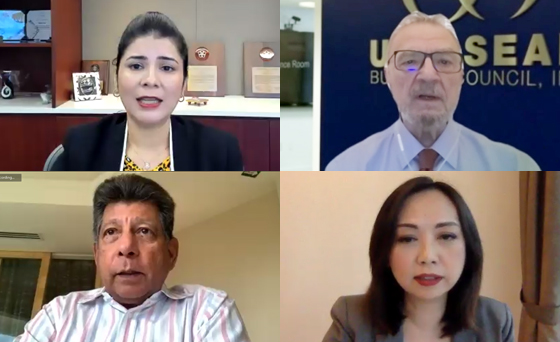
Counterclockwise starting from top left: Amb. Michael W. Michalak, Senior Vice President and Regional Managing Director, US-ASEAN Business Council; Kawal Preet, President, Asia Pacific, Middle East and Africa, FedEx Express; and Tan Sri Dr. Munir Majid, Chairman of CIMB ASEAN Research Institute


Kuala Lumpur, 14 October 2020 – CIMB ASEAN Research Institute (CARI) hosted a CARI Briefings webinar under its COVID-19 Economic Recovery Plan Series, titled ‘How Can ASEAN Bounce Back: A US Perspective’. The session featured Ambassador Michael W. Michalak, Senior Vice President and Regional Managing Director of the US-ASEAN Business Council, and Kawal Preet, President of the Asia Pacific, Middle East, and Africa (AMEA) region at FedEx Express.

Moderated by Tan Sri Dr. Munir Majid, Chairman of CARI, the discussion was centred on ASEAN’s post-COVID economic recovery through building upon the present bilateral trade ties between ASEAN and the United States, how American global supply chains are expected to shift post-COVID-19 and how ASEAN can leverage upon this for its own 4IR transformation, and ultimately how US interests coincide with ASEAN integration efforts and how both partners can collaborate in this regard.

During the discussion Tan Sri Dr. Munir emphasized that ASEAN must expedite its institutional decision-making process if it is to save lives and to come out of the COVID-19 pandemic faster and stronger. The speakers commended Pathway 225 proposals (A Pathway Towards Recovery and Hope for Asean) particularly on setting up the High-Level Special Commission, precisely to improve decision-making at this most challenging of times.

The discussion also centred around supporting MSME recovery to increase their competitiveness. MSMEs have been hardest hit and need all the help available to them. Financial assistance from governments gave MSMEs a lifeline, but those who embraced digital tools thrived. The panelists also discussed how the pandemic is an opportunity for ASEAN governments to encourage and facilitate e-commerce to support the MSMEs.


ASEAN and the US should strengthen bilateral trade ties as part of post-COVID-19 recovery


Tan Sri Dr. Munir opened the session by observing that the ASEAN region enters a new decade defined primarily by uncertainty, as the world continues to grapple with the global pandemic which has exacerbated global trade frictions.

According to the World Bank’s projection in April 2020, Vietnam, Laos, the Philippines, Indonesia, and Myanmar are expected to register economic growth of between 2.1%-4.9%, while Malaysia and Thailand would experience contractions of between 4.6% and 5.0% respectively. Separately, the UNCTAD projected that foreign direct investments (FDI) into developing Asia would decline by up to 45% in 2020.12

“The power of American businesses should not be neglected even if the general feel about the US is of a country in decline. Those businesses – their financial, technological and entrepreneurial strength – are not. They have to be engaged. They have to demonstrate they are not damaged goods and continue to have a global outlook,” said Tan Sri Dr. Munir.


US private sector is committed to supporting ASEAN’s recovery in short-term health outcomes; restoring consumer confidence and recovering sustainably


Ambassador Michalak concurred with Tan Sri Dr. Munir that greater collaboration with the United States will be crucial for ASEAN to ‘bounce forward’ from the pandemic-induced slump.

“American firms can be strong partners in ASEAN’s Recovery and as ASEAN develops its post-pandemic recovery plan, the U.S. private sector is committed to ensuring the success of these comprehensive recovery efforts. We believe in the region’s future as a preferred trade and investment destination. Furthermore, by approaching recovery strategically, ASEAN can position itself to not only bounce back from its current economic slump, but bounce ‘forward’ from the COVID-19 pandemic,” Ambassador Michalak pointed out.

Improving short-term health outcomes
In terms of the sort of strategic recovery ASEAN should undertake, Ambassador Michalak suggests that one focus area would be strengthening the region’s public health infrastructure. For instance, Ambassador Michalak suggests that in the short-term ASEAN should set up the necessary full-service delivery system to ensure its efficient distribution. In the longer term, ASEAN should consider setting up a sort of stockpiling system to create more regional resilience to future outbreaks. Investment in logistics capabilities is also critical in ensuring uninterrupted access to essential medical supplies and much needed food supplies during times of need.

Restoring confidence in the consumer economy and support for the MSMEs
Panelists further stressed the importance of restoring consumer confidence so that the markets can rebound in the near term. This can be achieved by accelerating digital transformation by supporting SMEs transition onto e-commerce platforms. COVID-19 has exposed the need for business digitalisation to ensure economic sustainability in times of pandemic. With many ASEAN states still struggling to get back on their feet and governments enforcing social distancing in their efforts to control the spread of COVID-19, e-commerce is the perfect platform for trade facilitation as it enables economic activities to continue amid social control.

In order to capture the accelerating e-commerce growth, modern infrastructure and regulatory support from ASEAN member states is vital to ensure the SME sector not only survives the pandemic but also thrives beyond these challenging times.

Recovering sustainably
Panellists also agree that any sort of ASEAN recovery should be done sustainably, and that one avenue would be through accelerating green and sustainability-related financing within regional markets. The combination of a lasting infrastructure and the use of a circular economy will ensure sustainable management of resources and the ability for ASEAN economies to recover sustainably.


Conclusion


Tan Sri Dr. Munir, in his closing remarks, makes a forceful argument about the continued relevance of openness and free trade. Despite political tensions which have affected the region over the last few years, he says the severe economic ramifications brought about by COVID-19 and the subsequent need to protect livelihoods and tackling poverty should take precedence over political disagreements. For this to happen, he posits, ASEAN and the US should uphold the global rules-based order which would facilitate bilateral and multilateral negotiations.


1 World Bank, ‘East Asia and Pacific Economic Update’, April 2020, UNCTAD, ‘World Investment Report 2020’, 2020.
2 ASEAN Secretariat.