China-ASEAN Monitor


China-ASEAN Monitor

Photo Credit: Xinhua


Economy, Investment and Trade

China, Laos to cooperate for more achievements in Lancang-Mekong Cooperation
(1 April 2018) During a meeting that was held on 31 March between Chinese State Councilor and Foreign Minister Wang Yi, as well as Lao Prime Minister Thongloun Sisoulith, China and Laos pledged to strive for bigger achievements in the Lancang-Mekong Cooperation (LMC). China-Laos railway is a flagship project of the bilateral cooperation between both countries and also a concrete outcome of the development strategies between China and its neighboring countries under the framework of China’s Belt and Road Initiative. China, as a member of the Greater Mekong Subregion (GMS) Economic Cooperation, has participated not only in the GMS economic cooperation program over the past 25 years, but also in sustainable management and development of the Mekong River. In 2017, China’s total investment in Cambodia, Laos, Myanmar, Thailand, and Vietnam has exceeded US$42 billion, with a growth rate of more than 20 percent.
Read more>>

China real estate investment in Malaysia to double by 2025
(29 March 2018) In a report titled “Belt and Road drive Chinese real estate investment in Malaysia” by Chinese global property portal Juwai.Com, it is reported that China’s investment in Malaysia’s residential real estate could double by 2025, driven by the investment market and education. Currently, Chinese buyers have accumulated a total of US$13 trillion (RM39.26 trillion) of assets, an increase of about 16 percent per annum, from US$5.3 trillion in 2011. Malaysia has attracted more Chinese investors in comparison with other Southeast Asia countries, with nearly three quarters of the 71.6 percent of Chinese overseas investment spent on residential property. According to Juwai.com, favorable macro market and positive regulatory conditions will drive Malaysia’s local property sector.
Read more>>

China’s CRRC to supply resources for the first phase of Thailand-Chinese rail project
(31 March 2018) According to the Thailand Transport Ministry, China’s state-owned company CRRC Corporation Ltd (CRRC Corp) will supply tracks, electronics, machinery, and locomotives for the first phase of a Thailand-Chinese rail project. The company has been asked to also provide personnel training under contract named “2.3″ which forms part of the initial phase of US$5.73 billion (THB179 billion) of the railway project to build a high-speed railway connecting Bangkok with Nakhon Ratchasima province, which is worth an estimated total of US$1.73 billion (THB 54 billion). Ministry of Transport Thailand said the contract was given to CRRC Corp without bidding because it is a government-to-government (G2G) deal. However, the costs of supplies for the contract are subject to further negotiations between both sides between China and Thailand.

Read more>>

Exchange and cooperation among young people to provide new economic bridges between China and Indonesia
(1 April 2018) According to Global Times, due to Asia’s complex historical disputes that have affected China’s relations with some of the Southeast Asian countries, exchanges and cooperation among youths are the best alternatives to resolve ongoing regional conflicts between the two parties. Citing Chinese Government data, the South China Morning Post (SCMP) said there are 14,000 Indonesians studying in China. These Indonesian students have witnessed new concepts such as the internet economy and modern logistics services that have become major sources of jobs for young people in China. With Indonesia’s large population of about 260 million people, E-commerce will be able to alleviate employment pressure for college graduates in Indonesia who can implement the same business concept in their country. The digital economy, which includes e-commerce, the digital sharing economy, and various services, promotes educational youth exchange program that will determine the future of China-Indonesia relations. Further, China’s Belt and Road initiative has received increasing amount of attention among young people, which can provide a starting point for their careers in the digital economy.
Read more>>

Foreign Affairs

China and Vietnam agree to settle issues on maritime disputes
(2 April 2018) Chinese Foreign Minister Wang Yi and Deputy Prime Minister of Vietnam Pham Binh Minh have agreed to settle the maritime issues in the South China Sea through talks. Both countries have agreed to jointly exploit its waters, as it is crucial for the sustainable development of bilateral relations between both countries. Pham Binh Minh said Vietnam and China both share the responsibility of maintaining peace and stability in the region, reiterating Vietnam’s stance that the maritime disputes must be resolved in a peaceful manner and according to international law. Both ministers added that China-Vietnam bilateral relations have seen pragmatic results, as the two neighbours further opened up their trade and investment markets to each other. Last year, bilateral trade between China and Vietnam exceeded US$100 billion.
Read more>>

Tan Sri Dr. Munir Majid spoke at the ASEAN CSR Fellowship 2018

Tan Sri Dr. Munir Majid, Chairman of CIMB ASEAN Research Institute (CARI), delivered a Keynote Speech at the panel discussion on Financial Inclusion at the ASEAN CSR Fellowship 2018. He introduced Malaysia’s financial inclusion initiatives and strategies, as well as the shared benefits and challenges in achieving financial inclusion.

img-1

The event was held at the Royale Chulan Bukit Bintang, Kuala Lumpur, Malaysia between 5th – 9th February 2018. It was participated by 23 Fellows, represented by all ASEAN member states, except Brunei.

img-2

Indonesia: March 2018 CPI inflation


HIGHLIGHTS

March 2018 CPI inflation

  • Headline inflation accelerated to 3.4% yoy in Mar (3.2% yoy in Feb), in line with our and market expectations.
  • Volatile food inflation surged to a 13-month high, primarily due to the low base effect a year ago, but was partially alleviated by the start of the rice harvest season.
  • Administered price inflation is expected to ease further following the government’s plans to maintain subsidised fuel and electricity prices, as well as to lower toll rates.
  • Opposing forces of volatile food and administered price inflation should keep the inflation rate stable for the third year in a row.
  • We maintain our average inflation forecast of 3.4% for 2018, and expect Bank Indonesia to keep its policy rate unchanged at 4.25% at the next meeting (18-19 Apr).

img-ind10-1

Headline inflation quickens in Mar
Headline inflation picked up to 3.4% yoy in Mar (3.2% yoy in Feb; CIMB forecast: 3.4%; Bloomberg median consensus: 3.4%), whereas the gain in core inflation, which excludes volatile food and administered price components, was more moderate (2.7% yoy in Mar vs. 2.6% yoy in Feb). The sequential increase in the consumer price index (CPI) was unchanged at 0.2% mom.

Volatile food inflation at 13-month high
Low base effect lifted the annual gain in volatile food inflation to a 13-month high (4.1% yoy in Mar vs. 3.1% yoy in Feb), even though the mom increase was unchanged at 0.1%. Rice inflation eased in Mar as the start of the harvest season helped to alleviate food price pressures. Prepared food inflation remained stable (4.0% yoy in Mar vs. 4.1% yoy in Feb).

Further moderation in administered price inflation
Administered price inflation eased further (5.1% yoy in Mar vs. 5.3% yoy in Feb) as the normalisation of fuel, electricity and water services inflation (8.4% yoy in Mar vs. 9.3% yoy in Feb) more than offset stronger transport inflation (2.5% yoy in Mar vs. 2.2% yoy in Feb), which was led by further increases in non-subsidised fuel prices. Pertamina raised the Pertalite pump price by Rp200 per litre on 24 Mar 2018, citing stronger oil prices.

Clothing and health inflation propels core inflation higher
Steeper price gains in clothing (4.1% yoy/0.4% mom in Mar vs. 3.9% yoy/0.3% mom in Feb) and health (2.9% yoy/0.4% mom in Mar vs. 2.8% yoy/0.3% mom in Feb) lifted core inflation. The education, recreation and sports inflation was marginally lower at 3.3% yoy in Mar (3.4% yoy in Feb).

Reiterate average inflation forecast at 3.4% yoy for 2018F
For the past two years, public policies like the food stabilisation scheme and energy subsidy reforms had contributed to the diverging trends of administered price and volatile food inflation (correlation: -0.86 between Jan 2016 and Dec 2017 vs. +0.74 between Jan 2014 and Dec 2015). These opposing forces helped to stabilise overall inflation. As the government plans to keep subsidised fuel prices unchanged until end-2019, as well as to lower toll rates to reduce logistics costs, administered price inflation should moderate further, tempered by the step-up in base effects led by three rounds of upward adjustment in electricity tariffs in 1H17. This should mitigate seasonal inflationary pressure due to fasting month and Lebaran celebrations in May-Jun, as well as adjustments in non-subsidised fuel prices by Pertamina. Hence, we expect average inflation to moderate to 3.4% yoy for 2018 (3.8% yoy in 2017).

img-ind10-2

img-ind10-3

img-ind10-4

img-ind10-5


Originally published by CIMB Research and Economics on 02 April 2018.
 

CARI Captures 351

c350_graphic


MALAYSIA

Strong economic fundamentals to drive Malaysia’s halal industry
(27 March 2018) Malaysian once again leads the Global Islamic Economy Indicator (GIEI) for the fifth year in a row, this year 60 points ahead of the UAE, reflecting the country’s robust Islamic Economy ecosystem, with Malaysia enjoying a substantial lead in Islamic Finance and Halal Food. Malaysia External Trade Development Corp (Matrade) said Malaysia’s thriving halal industry is underpinned by strong economic fundamentals and various market-driven initiatives. Last year, Malaysia’s export of halal products recorded a 2.8 percent rise, or approximately US$11.23 billion (RM43.4 billion) increase compared to the figures reported in 2016. Based on The State of the Global Islamic Report 2017/18 report released by Thomson Reuters, the value of the global Islamic economy is expected to increase from to US$5.9 trillion (RM22.80 trillion) by the year 2022 from US$3.6 trillion (RM13.91 trillion) in 2016.

ASEAN

ASEAN to face minimal impact if US-China trade war explode
(28 March 2018) The trade war between the United States and China will have minimal impact on Southeast Asia, as none of the ASEAN members are major exporters of steel and aluminum to the US. Last week, United States President Donald Trump escalated tension between the U.S. and China by introducing tariffs on US$50 billion worth of Chinese exports to the US. The United States’ moved was retaliated by China, who then announced that the country would impose new taxes on US imports worth close to US$3 billion. China and the US make up about 42 percent of global gross domestic product (GDP) and about 25 percent of the total global trade volume.

SINGAPORE, MALAYSIA

Malaysia’s CPI at 16-month low while Singapore’s inflation recorded a 0.5% rise in February
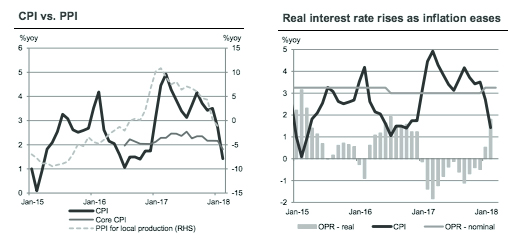
(24 March 2018) Department of Statistics Singapore said the country’s Consumer Price Index, which is the principal measure of inflation has risen 0.5 percent in February compared to economists’ estimates of a 0.4 percent increase. It is said that the key consideration for the Monetary Authority of Singapore’s (MAS) monitory policy moves is the core inflation which excludes the cost of accommodation and the private road. Core inflation for Singapore came in at 1.7 percent in February, an increase from 1.4 percent in January. For Malaysia, Consumer Price Inflation was dragged to a 16-month low at 1.4 percent in February. Despite low inflation, Bank Negara Malaysia during the release of its annual report recently maintained its positive growth outlook and revised upwards its projection for the Malaysian economy to revised inflation rate at 2.8 percent in the second quarter of 2018.

ASEAN

ASEAN in need to set clear policy and regulation to attract renewable energy investment
(28 March 2018) According to a study by IRENA, an inter-governmental organisation founded in 2009 to promote the adoption of renewable energy, Southeast Asian countries need to set clear policy and regulatory frameworks in order to attract investment in renewable energy. IRENA added that reliable policy framework is the most crucial factor that will create market opportunity and thus, attract investments from the private sector. ASEAN has set for itself a target of having renewable energy contribution of 23 percent of its energy mix by 2025 and to reach the target, the region would need investments worth of US$27 billion annually. Between 2006 and 2016, six major Southeast Asian markets, Indonesia, Malaysia, the Philippines, Singapore, Thailand, and Vietnam have attracted investment with a combined total of US$27 billion into the renewable power sector.

VIETNAM

Vietnam focuses on private sector to boost its economic growth
(27 March 2018) According to the Prime Minister of Vietnam Nguyen Xuan Phuc, Vietnam is determined to make private enterprise the main engine of its economy within two years’ time as the private sector is an important boost for the economy of the country. As such, he added that the government will try to create the most favourable policies and environment so that the country will be able to meet its target of having over 1 million private enterprises in Vietnam, which will make up about 50 percent of Vietnam’s GDP by 2020. To date, private enterprises in the country contribute to about 43 percent of the country’s total GDP.

INDONESIA

Indonesia and New Zealand to boost comprehensive bilateral partnership
(28 March 2018) In celebration of six decades of Indonesia and New Zealand’s diplomatic relations, both countries have agreed to boost their bilateral ties to the level of comprehensive partnerships in various fields including the economy, education, and disaster mitigation. The two leaders, President of Indonesia President Joko Widodo and Prime Minister of Switzerland Jacinda Ardern, during President Widodo’s state visit to New Zealand reaffirmed both countries’ commitment to increase bilateral trade to US$2.9 billion (Rp40 trillion) by 2024. In 2017, bilateral trade between Indonesia and New Zealand had increased by 15.72 percent to US$1.19 billion compared to 2016. In the same year, Indonesia’s total exports to New Zealand had reached US$437.8 million and New Zealand’s total exports to Indonesia were valued at US$751.1 million.

THAILAND

Investment by Thailand driven by strong economic growth in Asean especially CLMV
(26 March 2018) Strong economic growth in Asean, especially in CLMV countries (Cambodia, Laos, Vietnam, and Myanmar) has encouraged and attracted Thai investors to expand their regional investment by focusing on alternative energy, food and agriculture processing, tourism, and service business sectors. CLMV countries are expected to be in the top five countries for Thailand investors from this year onward till 2022, in line with the Thai government’s policy to encourage more local investors to expand their investment to CLMV countries. Deputy Prime Minister Somkid Jatusripitak said, in furthering the collaboration with the CLMV subregion, the Thai government also has to draft a master plan for trade and investment between the regions.

SINGAPORE

Singapore SMEs expected to deliver their strongest income and revenue outcomes in three years
(29 March 2018) According to the Singapore Business Federation-DP data (SBF-DP) SME Index, SMEs anticipate the subsequent quarters to record their strongest income and revenue outcomes in three years. The index rose from 51.2 to 51.8 in its latest poll, signalling a better outlook for Q2 and Q3 of 2018. Among the six industries that were included, business services sector continues to be the most optimistic with an overall index score of 52.1. This is then followed by the commerce/trading sector with a score of 52.0, and the transport/storage sector with a score of 51.9. All six industries expect their turnover to rise in the subsequent six months, lifting the turnover.

THAILAND

Thailand to impose 15 percent tax for trade on digital currencies
(28 March 2018) Transaction involving cryptocurrencies, including digital currencies, will be subjected to a 15 percent withholding tax under a measure approved by the Cabinet of Thailand, the executive branch of the country’s government. Thailand Finance Minister Apisak Tantivorawong said the cabinet approved the draft bill on digital asset business after it was reviewed by the Thailand Council of State. Adding to that, Thailand Deputy Finance Minister Wisudthi Srisuphan said the value-added tax (VAT) that was included in the 15 percent tax would be collected on digital-currency transactions. If there is a digital-currency exchange without any profit generated, only VAT would be levied. On 13th March, the Cabinet approved a draft emergency decree relating to businesses involving trading of digital assets and drafted an amendment to the Revenue Code for the collection of taxes on investments in the emerging sector.

PHILIPPINES

Philippines eye 3 new product categories for export
(28 March 2018) The government of the Philippines has identified three product categories that could serve as the new approach for growth and expansion for Filipino exporters in 2018. The Philippine Exporters Confederation Inc. citing the Philippines Department of Trade and Industry (DTI) said the three new product categories, which are organic, halal, and kosher, would open up new opportunities for exporters. According to DTI Export Marketing Bureau, the consumer market has continued to grow rapidly annually, whereas halal products and services have been few of the fastest growing consumer segments in the world, accumulating a total of US$2.6-trillion, where it is expected to grow up to US$10 trillion by 2030. On the other hand, US kosher market alone has gathered more than 12 million consumers and has seen a double-digit growth of 10 percent to 15 percent annually since 2004.

Malaysia: BNM Annual Report – Premature to pull back the reins


HIGHLIGHTS

BNM Annual Report – Premature to pull back the reins

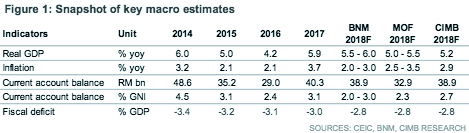
  • BNM’s more optimistic growth forecasts for Malaysia – relative to our numbers and consensus – assumes higher contributions from the private sector and net exports.
  • BNM is closer to the next OPR hike than we thought as the output gap turns positive,
    but weak domestic inflation and external risks are near-term hurdles.
  • We think said hurdles will outlast this year, delaying further upward revisions in policy rates to next year, and keeps our end-2018 OPR forecast unchanged at 3.25%.

BNM projects rosy growth outlook in 2018
At today’s briefing, Bank Negara Malaysia (BNM) held the view that last year’s solid expansion of 5.9% has more room to run, projecting GDP growth of 5.5%-6.0% in 2018, which exceeds the Ministry of Finance’s assumption of 5.0%-5.5% made last Oct in the Budget 2018. It is a tad higher than our forecast of 5.2% and the Bloomberg consensus estimate of 5.4%.

Sources of deviation between BNM and CIMB forecasts
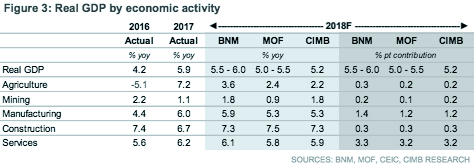
BNM has penciled in higher growth in the manufacturing, services and agriculture sectors than in our base case scenario. From an expenditure angle, we differ from the central bank in assigning lower contributions to growth from private consumption and investment in lieu of a stronger boost from the public sector. The variance appears most glaring for household spending, as we believe improving returns to labour through the creation of more jobs and wage growth is a more drawn-out process.

Differing views on the trade cycle
Policymakers expect more robust net trade growth than we or the MOF had factored in, and accounts for BNM’s more optimistic view of the manufacturing and services sectors due to positive spillovers from the external sector. BNM expects continued global demand growth for electronics, resource-based manufacturers’ capacity expansions, and a pickup in O&G production, destined for exports. On the other hand, we take a more conservative view on real trade volumes in anticipation of a moderating electronics and smart devices demand cycle, dampened export competitiveness from a stronger ringgit in real trade-weighted terms and a plateauing agriculture export recovery as one-off gains in 2017 fade. Sequential growth of Asian exports has shown signs of lethargy in recent months.

Trade and capital account openness can be a blessing or a curse
While exposure to external trade is a blessing during a synchronised global recovery, the tables may turn if external risks emerge, including

  1. the premature monetary tightening in advanced economies stymieing global growth momentum,
  2. sharp corrections in the commodity and financial markets,
  3. retaliatory trade protectionism and 4) a marked slowdown in China’s enduring expansion.

Output gap has closed but runaway inflation stays out of sight
BNM estimates that the output gap is +0.2% of potential GDP, and potential growth of 5.0-5.5%. Yet, the diminishing of slack in the economy has not led to greater cost passthrough to prices nor significant demand-driven pressures. BNM expects inflation of 2-3% in 2018 (CIMB: +2.9%), but has acknowledged that risks to the outlook are oil prices trending higher than its average Brent forecast of US$63/bbl and persistent tightness in labour and capital stock.

Is BNM a hawk in a dove’s clothing? Not yet
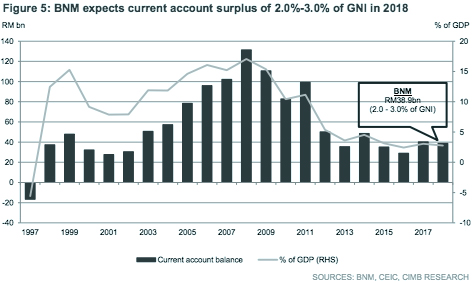
Our key takeaways from the briefing and report are BNM may be closer to the next interest rate increase than we had thought, as its expects the output gap to turn positive but weak inflation buys policymakers some time to wait for improvements in consumer sentiment, for evidence of more equitable distribution of economic gains, and for assurance that external risks remain at bay. Domestic inflation becomes a key barometer to assess a change in policy stance. So is BNM a hawk in dove’s clothing? We think not yet, but it leads its ASEAN peers in the process of interest rate normalisation. We maintain our end-2018 OPR forecast at 3.25%, and look ahead to 2019 for the next OPR hike.

img-my6-1

unnamed (21)

img-my6-3

img-my6-4

img-my6-5

img-my6-6

img-my6-7

img-my6-8

img-my6-9

img-my6-10

img-my6-11


Originally published by CIMB Research and Economics on 28 March 2018.

Myanmar Monitor


Photo

Photo credit: The Myanmar Times

Economy, Investment and Trade

Myanmar government to come up with new National Logistic Master Plan
(26 March 2018) Myanmar’s Ministry of Transport and Communications, with the assistance from Japan International Cooperation Agency (JICA), is drafting a National Logistics Master Plan to enhance the current National Transport Master Plan. The new plan aims to create efficiency and competitive logistics system that supports multimodal transportation in the country, which targets to attract more foreign direct investments and enhance the industrial development in Myanmar. According to JICA, under the new logistic plan, a total of 167 projects have been included, of which 108 projects have been identified under the previous transport plan with the addition of 59 new logistics projects.
Read More >

India and Myanmar to explore partnership in business and investment
(22 March 2018) Vikram Misri, Indian Ambassador to Myanmar, during an introductory remark at the second edition of Myanmar-India Business Conclave that was held on 22 March in Yangon, said that it is now the right time for Indians to invest in Myanmar. Mr. Misri added that it is currently an opportune time as Myanmar at the time being is in a political and economic transition phase, therefore providing opportunities for the private sector to explore potential partnerships with local businesses in Myanmar. In addition, with the formation of India-Myanmar Chamber of Commerce, cooperation and communication for business communities of both countries will be enhanced, simultaneously improving the interaction between Myanmar and India. Union of Myanmar Federation of Chambers of Commerce and Industry (UMFCCI) also stressed that it is important for India to take part in the transformation of Myanmar given the country’s strategic position as an entry for India to ASEAN and GMS region.
Read More >

Myanmar FDI flow for the 2017-18 financial year exceeds target
(24 March 2018) Myanmar’s foreign direct investment (FDI) reached its expected targeted value of over US$6.11 billion a week before its targeted date for 2017 -2018 financial year that ends on 31 March 2018 with manufacturing, real estate, and services sectors coming in as the top three major investment areas in the country. Meanwhile, Myanmar Investment Commission (MIC) is expecting US$3 billion in foreign direct investments (FDI) for the six-month interim period between April 1 and September 30. In comparison, Myanmar’s total FDI value during the 2016-2017 financial year was US$ 6.64 billion. Singapore and China were the two largest investors in Myanmar, representing more than 60 percent of the total approved FDI into Myanmar during the 2017-2018 financial year, with both countries contributing US$2.1 billion and US$1.3 billion respectively. A year ago, Myanmar enacted a new Investment Law to attract more investment, stimulate the job market, and to improve the Myanmar economy.
Read More >

Top companies find doing business in Myanmar is still challenging
(26 March 2018) According to a study that has been released by Myanmar Center for Responsible Business (MCRB), Myanmar’s top companies find that doing business in Myanmar is still very challenging, citing family-run firms, lack of transparency and underground business as some of the few crucial factors that contributed to the sentiment. The study ranked 182 public, private and listed Myanmar companies based on factors such as auditing practices and ethics. The study pinpointed that cronyism and corruption in addition to a legacy of 50 years military rule, will continue to loom and hinder economic development in Myanmar, particularly in jade and mining industries.
Read More >

Foreign partnerships to boost transparency of Myanmar companies
(28 March 2018) Yangon-based Myanmar Centre for Responsible Business (MCRB) has launched the fourth Pwint Thit Sa report on Transparency in Myanmar Enterprises which assesses information disclosure on the corporate websites of 182 large domestic companies. The 2018 scoring on the report was done based on the ASEAN Corporate Governance Scorecard which was created by the ASEAN Capital Markets Forum (ACMF) and launched in 2011 as one of the initiatives in preparation for the ASEAN economic integration in 2015. According to the assessment, many of the companies in Myanmar still yet to have corporate websites. Even when the companies do have corporate websites, the transparency of corporate information still does not meet any criteria that are covered in the survey such as the companies’ biannual, annual, and financial reports, which should be released in accordance to the Companies Act.
Read More >

China-ASEAN Monitor


China-ASEAN Monitor

Photo Credit: Getty Images


Economy, Investment and Trade

Southeast Asia’s e-commerce market to be boosted by investments from Chinese companies
(23 March 2018) According to Credit Suisse’s Head of Emerging Asia Economics, Chinese companies will be penetrating into Southeast Asia’s e-commerce market by bringing investment and technology into the region, with Alibaba announcing an additional US$2.0 billion investment in Southeast Asian retailer Lazada. In addition to capital injection, Chinese giants like Tencent and Alibaba are also bringing in their technological expertise that will help to overcome the two key problems of e-commerce in the region, which are payments and logistics. Credit Suisse added that currently, e-commerce penetration makes up only at 2 percent in the Southeast Asia region.
Read more>>

China and the Philippines to proceed with oil and gas discussion
(22 March 2018) China and the Philippines will cautiously proceed with discussions on joint oil and gas exploration in the South China Sea. Chinese Foreign Minister Wang Yi said both of the countries are looking forward to advance cooperation on offshore oil and gas exploration with Philippines President Rodrigo Duterte describing the proposed deal as similar to “co-ownership” of the contested areas. President Duterte’s willingness to cooperate with China marks a turnaround from the stance of the former Philippines President Benigno Aquino who had accused Beijing of encroaching, occupying, and building structures on the South China Sea territory that Manila had claimed as part of its exclusive economic zone. Under the Duterte leadership, territorial disputes were put aside in exchange for trade opportunities and financial assistance for domestic infrastructure projects.
Read more>>

Thailand rural communities protest China’s infrastructure projects
(26 March 2018) Rural communities in Thailand have been challenging Chinese companies to stop their environmentally-damaging projects with street protests and court petitions. For instance, grassroots activists in the northern province of Chiang Rai have successfully lobbied the state power utility, Electricity Generating Authority of Thailand (EGAT), to suspend its decision to buy electricity from a controversial hydropower dam proposed by one of the Chinese company, thus forcing the company to put its plans to blast stretches of the Mekong River on hold. However, despite the opposition from local communities, other China’s state-owned company is pressing ahead with its plans to exploit rich potash deposits in Sakhon Nakhon.
Read more>>

China and new technology key to drive change in ASEAN
(27 March 2018) Maybank Kim Eng said the rise of China and new technology will be the two key forces driving the biggest change in ASEAN in the next decade. Between 2006 and 2016, China’s outward investment into ASEAN has risen at a compounded annual growth rate (CAGR) of 45 percent, simultaneously making it the third largest foreign direct investment contributor to ASEAN. In addition to that, driven by innovations in e-payments and technology, e-commerce transaction will be also likely to grow exponentially in ASEAN. However, the majority of Asean’s technology deals are still at the beginning stage with relatively low penetration rates of between 2 percent and 5 percent compared to China, South Korea, and the United States that has a penetration rate of 19 percent, 20 percent, and 10 percent respectively.
Read more>>

China authorities freeze Myanmar traders’ accounts due to illegal gambling activities
(27 March 2018) Chinese authorities have frozen a total of seven bank accounts owned by traders from Myanmar who are doing business along the border in northern Shan state after claiming that the funds obtained by the Myanmar traders were from illegal gambling activities. In June 2017, 3 Chinese banks that have local branches in Myanmar’s border area had frozen a total of 132 bank accounts owned by Myanmar businesses who operates in the 105-mile Muse border trade zone across the Shweli River, claiming that their funds were linked to smuggling, gambling, and drug dealing activities.
Read more>>

Malaysia: February 2018 consumer price inflation


HIGHLIGHTS

February 2018 consumer price inflation

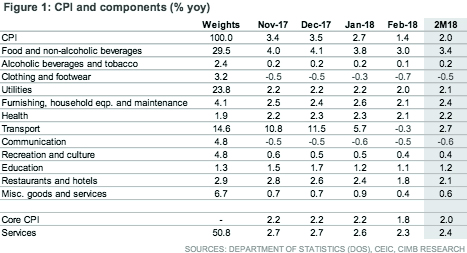
  • Headline inflation eased sharply to 1.4% yoy in Feb, due to diminishing food inflation and deflation in the clothing, transport and communication price indices.
  • Our inflation outlook remains unchanged at 2.9% in 2018, as we think Feb’s headline print likely marks the trough for the year.
  • We expect no further OPR hikes this year as core inflation remains subdued.

img-my5-1

Lowest headline inflation since Oct 2016
Malaysia’s consumer price inflation eased sharply again in Feb to 1.4% yoy (CIMB: +1.9% yoy, Bloomberg consensus: +1.9% yoy, +2.7% yoy in Jan), marking the lowest reading since Oct 2016. Sequentially, the seasonally adjusted headline CPI was flat in Feb (+0.3% mom in Jan). Core inflation cooled further to 1.8% yoy in Feb (+2.2% yoy in Jan), indicating that underlying demand pressures are not threatening yet.

Deflation in fuel prices a drag on headline inflation
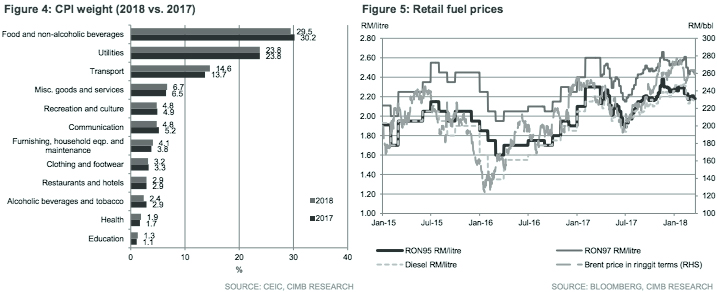
The transport index slipped into deflation in Feb (-0.3% yoy vs. +5.7% yoy in Jan), for the first time since Dec 2016 as the fuel index declined 1.6% yoy (+8.5% yoy in Jan). Fuel prices, which now account for 8.5% of the CPI in 2018 (7.8% in 2017), are expected to remain a drag on transport prices in Mar, as average retail fuel prices have fallen 2.6% to 3.2% mom over the period 1-21 Mar.

CNY food inflation more modest than recent years
Food inflation moderated to 3.0% yoy in Feb (+3.8% yoy in Jan), as price gains of food consumed at home and food away from home both eased. Ahead of this year’s CNY period, food prices rose by a cumulative 1.8% versus 3.2% in 2017 and 2.0% in 2016. Key grocery items that recorded more muted gains this year included rice, meat, fresh fish, vegetable oil, fruits, fresh vegetables and spices. Aside from the festive season price controls and government initiatives such as KR1M 2.0, the stronger ringgit (+13.5% yoy in Feb) was a major factor in helping to alleviate the cost of imported foods.

Broad-based moderation in non-food and transport inflation
Beyond the volatile food and transport price components, inflationary pressure also generally weakened across the economy. Prices of clothing and communication equipment remain mired in deflation. Services inflation moderated again to 2.3% yoy in Feb (+2.6% yoy in Jan), reflecting gentler mark-ups in costs of household services, healthcare, and education.

Feb potentially marks the trough for headline inflation in 2018
Feb’s print likely marks the lowest point for headline inflation in 2018, as we maintain our headline inflation forecast of 2.9% in 2018 (+3.7% in 2017). However, we believe the previously cited upside risks to our inflation outlook have moderated, including:

  1. higher retail fuel prices,
  2. higher electricity tariffs, and
  3. faster wage growth and core inflation.

Weak inflation pulls the brake on further OPR hikes
Muted inflation readings, coupled with less upbeat trends in the manufacturing sector, tones down Bank Negara Malaysia’s (BNM) appetite for a second Overnight Policy Rate (OPR) hike. The next policy decision is due on 10 May, where we expect the Monetary Policy Committee (MPC) to maintain the OPR at 3.25%. We reiterate our end-2018 OPR forecast of 3.25%, implying no further interest rate increases this year.

img-my5-2

img-my5-3

img-my5-4

img-my5-5


Originally published by CIMB Research and Economics on 21 March 2018.

CARI Captures 348

c348_graphic


PHILIPPINES

Philippines ranks first among US “Best Countries to Invest In”
(5 March 2018) Based on a report published by Business Insider, Philippines was ranked as number one ahead of the other ASEAN countries for the Best Country to Invest In. The scores were primarily tabulated from more than 6,000 business decision makers on a compilation of eight equally weighted country attributes. Ranked second in the report was Indonesia, followed by Poland, Malaysia and Singapore in the top five. According to United Nations data, the Philippine continued to perform well despite the declining inflows of foreign direct investment (FDI) to Southeast Asia. As of November 2017, the latest data from Bangko Sentral ng Pilipinas showed that net FDI inflows worth US$8.7 billion have exceeded the US$8 billion target for 2017.

VIETNAM, THAILAND

Banks compete for digital technology to enhance banking services
(5 March 2018) Banks in Vietnam and Thailand are racing to adopt digital banking technology in order to enhance their services in the age of smart technology. In Vietnam alone, as of November 2017, 67 percent of its total population had internet access. In recent years, the Vietnam Government has encouraged e-payment development to minimize cash payment. While in Thailand, the volume of internet and mobile banking transactions continues to expand as both internet and mobile penetration improve. In 2014, Kasikornbank (KBank) began investing around US$15.3 million (THB 480 million) annually to enhance its digital banking services, while Bank of Ayudhya said that the bank would invest US$640 million (THB 20 billion) on the development on its technology infrastructure and digital banking platform. Siam Commercial Bank on the other hand, has voiced plans to invest in its digital banking capability, with allocations amounting to US$1280 million (THB 40 billion).

THAILAND

Thailand to seek new markets and direct trade negotiations with the United States
(7 March 2018) Thailand will likely see impacts as a producer of intermediate goods that are exported to the US’s key trading partners, such as China. The Thailand Development Research Institute (TDRI) said the country should explore new markets and pursue direct trade negotiations with the United States against the backdrop of heightened fears of a global trade war, as US will impose tariffs of 25 percent on steel imports and 10 percent on aluminium imports to shore up the country’s struggling heavy industries. The Joint Foreign Chambers of Commerce in Thailand said the Thailand should not panic over the global trade measures if the country has strong competitive advantage compared to other nations.

SINGAPORE

Singapore local business confidence rose for 2nd straight quarter
(6 March 2018) According to a survey released by the Singapore Commercial Credit Bureau (SCCB), local business confidence rose for the second consecutive quarter this year. The index for the second quarter showed quarter-on-quarter expansion in five indicators, where services and transportation were the most buoyed by growth. Business Optimism Index on the other hand showed an increase from 4.29 percentage points at the first quarter of 2018 to 8.5 percentage points for the second quarter. On a year-on-year basis, the index was up from 2.66 percentage points from the second quarter of last year.

MALAYSIA

Malaysian exports surge 17.9 percent to US$21.2 billion in January
(5 March 2018) Malaysia’s trade exports in January surged 17.9 percent year-on-year to US$21.2 billion (RM82.86) billion, underpinned by growth in all major sectors and increased trade with its major trading partners. The Malaysia Ministry of International Trade and Industry (MITI) said exports of manufactured goods rose to 20.4 percent, which is equivalent to US$17.49 billion (RM68.34) billion, accounting for 82.5 percent share of the country’s total exports. The main contributors to the increase were exports of electrical and electronic (E&E) products, followed by chemicals and chemical products, iron and steel products, optical and scientific equipment, manufacturers of metal as well as transport equipment. Expansion in the trade with Malaysia’s major trading markets was seen across the board with export growth driven by Asean, Hong Kong SAR, the EU, China, India, Taiwan and South Korea.

VIETNAM

Vietnamese opens businesses to foreign investors
(3 March 2018) Vietnamese manufacturers are calling for foreign capital investment and this, according to analyst, may result in the disappearance of Vietnamese brands. The Steering Committee on Enterprise Renovation and Development said rather than worrying about Vietnamese brands, it would be better to think about the gains that Vietnamese businesses will receive when the shares are sold to the foreign investors, in addition to having access to capital and sharing of experience from international groups. Analysts said Vietnam still remains one of the most attractive destination points for foreign investors. Particularly, foreign investors do not just aim for real estate projects, but they are also targeting to invest in industries in which they can exploit more advantages from the Free Trade Agreements (FTAs).

INDONESIA

Indonesia to accelerate CEPA talk with EFTA
(2 March 2018) In order to boost investment and trade, the Indonesian government has been advised to accelerate its Comprehensive Economic Partnership Agreement (CEPA) negotiations with the European Free Trade Association (EFTA). Centre for Strategic and International Studies (CSIS) said the deal with EFTA was expected to ease trade barriers for Indonesian products, not only exports going to EFTA member countries but also to countries in the European continent. This move will improve Indonesia’s relationship with the European Union and will eventually lead Indonesia into the European market. In 2017, investment from EFTA member countries increased to 4 percent from 0.5 percent that was accounted in 2014.

LAOS

Laos government sets the target on agriculture, forestry sectors
(7 March 2018) The agriculture and forestry sectors in Myanmar, which represents 15.75 percent of the country’s GDP will strive to expand at a sustainable level of 2.8 percent in 2018. To attain this target, the Laos Ministry of Agriculture and Forestry will continue to implement projects that gives better attention to commercial production and food security. In addition, more cooperation and assistance would also be required to implement essential measures and policies to fill the country four major plans concerning food security, commercial agriculture promotion, forestry and forest resource management, and rural development for poverty reduction. In 2017, The agriculture, forestry and rural development sector underwent a slow projection due to extreme climate change, damage to irrigation systems, and locust outbreaks.

MALAYSIA

Malaysia furniture exports experienced an increase of US$2.59 billion in 2017
(8 March 2018) Malaysia rose to become among the top 10 furniture manufacturers in the world with products exported to more than 160 countries. To further develop the industry, Malaysia Prime Minister Datuk Seri Najib Razak has announced US$51.04 million (RM200 million) of export credit facility to local small and medium enterprises (SMEs) and US$260 million (RM1 billion) for credit insurance for companies during Budget 2018. Loan facility amounting to US$25.52 million (RM100 million) with 70 percent government surety will be provided to encourage automation among the local furniture companies, which will boost production for export. In 2017, exports in furniture saw an increase of US$2.59 billion (RM10.14 billion) compared to US$1.93 billion (RM7.58 billion) in 2016.

INDONESIA

Indonesia issues rules to tackle money laundering and terrorism
(7 March 2018) As part of Indonesia’s efforts to tackle money laundering and terrorism financing in Southeast Asia’s largest economy, the country has issued rules requiring corporations to reveal details of beneficial ownership to the government. The regulation signed by Indonesia President Joko Widodo on March 1, 2018 stated all institutions and organisation need to disclose at least one person as their beneficial owner upon registration for businesses. In 2012, Indonesia was put on the list of Financial Action Task Force (FATF) jurisdictions due to the country’s weak measures to combat money laundering and terrorism financing.

INDONESIA, VIETNAM

Indonesia to reopen automotive exports to Vietnam
(1 March 2018) In an effort to reopen Indonesian automotive exports to Vietnam, the Indonesian government is planning to inform Vietnam about a change in the vehicle type approval (VTA) certificate. In March 2018, the new regulations issued by the Vietnamese government forced Indonesia to stop the export of completely built-up (CBU) vehicles to Vietnam . This is due to Indonesian government that does not meet the requirement set by the 2017 ministerial decree on manufacturing, assembly, and import of motor vehicles and motor vehicle warranty and maintenance services; and the 2018 circular on the inspection of imported automobiles for technical safety and environmental protection.Last year, Indonesia exported 38,832 CBU vehicles worth US$718 million to Vietnam.

Indonesia: Fiscal impact for maintaining subsidised fuel and electricity prices


HIGHLIGHTS

Fiscal impact for maintaining subsidised fuel and electricity prices

  • Government plans to keep current fuel and electricity prices unchanged until end2019, and raise per litre subsidy for solar diesel from Rp500 to Rp700-1,000.
  • This translates to additional subsidy expenditure of c.Rp8.1tr-12.8tr (0.1% of GDP).
  • Fuel subsidy has fallen to <1% of GDP since reforms in 2015-2016. As diesel subsidy only accounts for 15% of fuel subsidy, we think the fiscal impact is manageable.
  • We revise our 2018 inflation forecast lower to 3.4% yoy. Our previous projection had assumed a 7-10% increase in fuel price, which translates to +31bp to inflation rate.
  • Reiterate our GDP forecast of 5.3% yoy for 2018F, as retaining fuel prices at current level should support consumption recovery.

img-ind9-1

Government to retain current fuel and electricity prices till end-2019
The government plans to keep fuel and electricity tariffs unchanged until end-2019, with the aim of preserving household purchasing power. It will also seek parliament approval to raise solar diesel subsidy from Rp500 per litre to Rp700-1,000 per litre. This suggests that government and state-owned enterprises i.e. Pertamina and PLN are likely to share the burden of higher subsidies, given that oil prices are 33% higher than the US$48 per barrel assumed under the State Budget, whereas Rp/US$ is 1% weaker.

Additional subsidy spending of Rp8.1tr-12.8tr for 2018F
This will translate to an additional subsidy expenditure of about Rp8.1tr-12.8tr (0.1% of GDP) for the government – Rp3.1tr-7.8tr for solar diesel and Rp5tr for electricity. We think the fiscal impact is manageable given that the government will also receive higher O&G revenue as a result of higher oil prices. Under the State Budget 2018, O&G revenue accounts for 0.9% of GDP, higher than the 0.6% of GDP for subsidy spending.

Diesel subsidy accounts for 15% of total fuel subsidy
After the flagship fuel subsidy reform in 2015-2016, where gasoline subsidy was scrapped and fixed (instead of variable) subsidy was introduced for diesel, fuel subsidy has fallen dramatically from a high of 2.5% of GDP in 2012 to a projected 0.3% of GDP under the State Budget 2018. As diesel subsidy only accounts for 15% of total fuel subsidy (vs. 80% for 3kg LPG), the risks of keeping a large price gap for diesel on fiscal position should be manageable, in our view.

Revise 2018 average inflation forecast lower to 3.4% yoy
We revise our 2018 inflation forecast lower to 3.4% yoy. Our earlier forecast of 3.7% yoy factored in a mild 7-10% increase in fuel prices, and 31bp contribution to the full-year inflation rate. As the gap between pump and market prices widens, the government risks making larger adjustments later (after 2019), which may pose upside pressure on inflation rate, and perhaps monetary policy. Based on Ministry of Finance (MoF) Regulation No.124 of Year 2017, the government intends to bring inflation rate lower, from 2.5-4.5% in 2018-2019 to 2-4% in 2020-2021.

Reiterate our 2018 GDP growth forecast of 5.3% yoy
Keeping both fuel and electricity prices unchanged should bode well for private consumption, especially among the lower-income households. We reiterate our GDP growth and end-year policy rate forecasts of 5.3% yoy and 4.25% for 2018F, respectively.

Downside risks to our base case scenario
The price gaps will have to be borne by either the government, Pertamina, or the consumers. In our base case scenario, we have assumed that Pertamina will absorb the fuel subsidy costs. In the event that Pertamina’s financial constraints turn out to be more severe, this may impact the government’s deficit position by up to 0.4% of GDP.

img-ind9-2

Fiscal impact for maintaining subsidised fuel and electricity prices

Current subsidised fuel prices to stay

The relation between oil prices and state budget
The key concern for subsidised fuel price adjustment arise mainly due to the impact on the state budget, as the YTD average oil price is much higher than the US$48 per barrel assumed under the State Budget 2018. The oil price movement affects Indonesia’s fiscal position through both the revenue and expenditure channels:

  1. O&G revenue (0.9% of GDP under the State Budget 2018). Key components are 1) O&G income tax (0.3%), 2) O&G non tax revenue (0.5%), 3) dividend payments by Pertamina and PLN (0.1%).
  2. Energy subsidies (0.6% of GDP under the State Budget 2018). Key components comprise of fuel subsidies (0.3%) and electricity subsidies (0.3%). Fuel oils (i.e. diesel, kerosene) accounted for 20% of total fuel subsidy, whereas LPG 3kg subsidy takes up the remaining 80%.

img-ind9-3

Fuel subsidies after reforms in 2015-2016 till end-2019

Premium gasoline passes the baton to 3kg LPG
Major reforms on fuel subsidy began in Jan 2015, an opportunistic move undertaken by the government at a time when global crude oil prices were going downhill, therefore it did not result in a net increase in fuel prices. Such a decision has been positively lauded by international organisations and market observers, as it alleviates the subsidy burden on government budget, and channels the savings into more productive spending such as infrastructure, education, healthcare and more targeted social assistance programmes. Following the reforms, fuel subsidies declined significantly to 0.5% of GDP or lower (vs. 2.5% of GDP in 2012 and 2.6% of GDP in 2008). Key reforms included the removal of gasoline subsidy, as well as the replacement of variable subsidy scheme for diesel with a fixed subsidy scheme:

  • Premium (RON 88) gasoline. The abolishment of subsidies for premium gasoline translated into significant savings for the government as it accounted for 48% of total fuel subsidies, or 1% of GDP in 2010-2014, and more importantly, insulated the government finances from oil price fluctuations. Given that the government still sets retail fuel prices, the burden of absorbing the differences between retail and market prices falls on the state-owned O&G giant Pertamina.
  • Solar diesel. In Jan 2015, the government replaced the variable subsidy scheme for solar diesel with a fixed subsidy, starting at Rp1,000 per litre. The quantum was subsequently lowered to Rp500 per litre on 1 Jul 2016. With this, the solar diesel subsidy by the government is only dependent on volume consumed. Again, the price differential in excess of the aforementioned fixed quantum will be covered by Pertamina.
  • Kerosene. The government continues to adopt a variable subsidy scheme for kerosene. The retail price of kerosene has been set at Rp2,500 per litre since May 2008, with the deviation from market price being subsidised by the government. Nonetheless, since the launch of the kerosene-to-LPG programme in 2007, the consumption of kerosene has declined substantially. As such, subsidy for kerosene only accounts for 5% of fuel subsidy in 2017- 2018F (vs. 30% in 2008).
  • 3kg LPG. The government adopts a variable subsidy scheme for 3kg LPG cylinder, with retail prices being fixed at Rp4,250 per kg. Consumption for LPG has increased steadily over the years following the introduction of the government’s kerosene-to-LPG programme in 2007. The subsidy for 3kg LPG cylinder currently accounts for 80% of fuel subsidy, overtaking that of premium gasoline as a result of the subsidy reform. Given that 3kg LPG cylinder subsidies are more targeted at lower income households than gasoline/diesel, the price revision for 3kg LPG cylinder (initially scheduled for 2017) has been delayed on account of weak household purchasing power and subdued recovery in consumption growth.

img-ind9-4

img-ind9-5

img-ind9-6

Analysis on subsidised fuel prices

Sensitivity to oil prices and the exchange rate
Please note the analysis only focuses on solar diesel and premium gasoline. Fuel subsidy also includes kerosene and 3kg LPG tanks, which is not discussed in this section.

We calculated the market prices for solar diesel and premium gasoline based on the formulae stipulated in the Ministry of Energy and Mineral Resources (ESDM) Decree No. 2856 of Year 2015 and Decree No. 2371 of Year 2017. According to the Decree No. 2856 of Year 2015, the market fuel price is made up of base price and taxes (value-added tax and motor vehicle fuel tax). The base price comprises the production costs, distribution costs, and storage costs as well as a predetermined margin. Both production costs and distribution costs are a function of market price index, which are outlined in the Decree No. 2371 of Year 2017.

img-ind9-7

The two determinants of market fuel prices in Indonesia are global oil prices and the Rp/US$ exchange rate. Hence, we compare the current subsidised price of Rp5,150 per litre for solar diesel and Rp6,450 per litre for premium gasoline against the market prices, at various oil price and Rp/US$ levels (Figs 11 and 12). Our calculation indicates that the current subsidised price is below market price, at US$40 per barrel and above for solar diesel, and US$46 per barrel and above for premium gasoline. Furthermore, we estimate that every 1% increase in oil price and/or 1% depreciation in Rp/US$ would raise market prices by an average of 0.92% for solar diesel, and 0.87% for premium gasoline. If the government chooses not to alter retail fuel prices in line with market fuel prices, there should be no material impact on fiscal subsidy expenditure, all else being equal, as the burden of the adjustment will be borne by Pertamina. This was evident in 2017, when solar diesel subsidies declined 7% due to lower consumption, despite oil prices exceeding the revised State Budget assumption by 7%.

img-ind9-9

img-ind9-8

Opportunity costs for keeping fuel prices below market prices

While keeping solar diesel and premium gasoline prices unchanged does not directly increase the government’s fuel subsidy spending, there are still opportunity costs to the State Budget in the form of revenue foregone. As a base case scenario, we estimate the revenue foregone (i.e. VAT, motor vehicle fuel tax, income tax, and dividend payment by Pertamina) under the existing fuel pricing mechanism (no subsidy for premium gasoline and Rp500/litre subsidy for solar diesel by the government). Based on average Brent price of US$67.45 per barrel and Rp13,486 per US$ in the first two months of the year, we deduce that solar diesel is underpriced by 40%, and premium gasoline by 29%. Further dissecting the deviation shows that 87% of the price gap represents revenue foregone by Pertamina (in the form of implicit subsidy), whereas 13% reflects tax revenue loss by the government for not adjusting retail fuel prices higher. The revenue foregone by Pertamina translates to lower income tax and dividend payment to the government. We estimate that by keeping fuel prices at the current level, the government is giving up extra revenue of Rp75.5tr p.a., or 0.5% of GDP, assuming corporate income tax of 25%, dividend payout ratio of 35%, and annual consumption of 15.6m kl for solar diesel and 29.6m kl for premium gasoline.

img-ind9-10

img-ind9-11

Impact on fiscal position for raising diesel subsidy
The government intends to raise solar diesel subsidy from Rp500 per litre to Rp700-1,000 per litre, reflecting a 40-100% increase. We see this as a move to reshuffle the subsidy burden between the government and Pertamina on the back of rising global oil prices, as well as compensation to the state-owned O&G giant for continuing to sell subsidised fuels at current pump prices until 2019. Note that Pertamina is the one bearing the costs of selling subsidised fuels at below-market prices over the past two years, as fuel prices were last changed in Apr 2016. Furthermore, the reduction in diesel subsidy on 1 Jul 2016 did not lead to any changes in diesel pump price. Hence, the increase in per litre subsidy this time round will not translate into lower pump price, in our view. If diesel subsidy is raised to Rp700-1,000 per litre, we estimate an additional Rp3.1tr-7.8tr in subsidy spending by the government, but this will be partly compensated by the increase in government revenue of Rp1.8tr-4.5tr. Hence, the net increase on fiscal deficit is Rp1.3tr-3.3tr, a miniscule increase of 0.01- 0.02% of GDP.

img-ind9-12

We have assumed consumption volume would remain at 15.6m kl for solar diesel (as per State Budget 2018). Nevertheless, there could be substitution effect between non-subsidised and subsidised fuels, especially as Pertamina has raised the retail prices of non-subsidised fuels multiple times in the past 1.5 years, leading to a widening price gap between subsidised and non-subsidised fuels. This may prompt consumers to switch back to less-efficient lower grade subsidised fuels as non-subsidised fuel prices become unattractive/unaffordable. For instance, Dexlite is currently sold at 57% premium compared to solar diesel vs. 31% when the fuel was first launched by Pertamina in Apr 2016.

img-ind9-13

Electricity subsidy

Keeping electricity tariffs unchanged to cost government an additional Rp5tr in subsidy

On the back of rising oil and coal prices, the government recently decided to cap the domestic sales of coal to the power industry at US$70 per metric tonne. This move aims to alleviate the financial burden of PLN, by allowing PLN to purchase coal at below-market price, effective 12 Mar 2018 until 31 Dec 2019 (through ESDM Decree No.1395 of Year 2018 and Decree No.1410 of Year 2018), hence reducing the pressure on the government to revise electricity tariffs higher. Since electricity reforms commenced in 2013, the electricity subsidy has declined significantly from the peak of 1.2% of GDP in 2011 to a projected 0.3% of GDP under the State Budget 2018. The subsidy is currently provided for 23.2m 450VA customers and 6.5m 900VA household customers. By keeping electricity tariffs unchanged, the ESDM estimated that the government would incur an additional Rp5tr (0.03% of GDP) in electricity subsidy this year, a 10% increase from Rp47.6tr under the State Budget 2018.

img-ind9014


Originally published by CIMB Research and Economics on 19 March 2018.