Cambodia, China ink nine agreements during the Belt and Road Forum
(28 April 2019) Cambodian Prime Minister Hun Sen and his delegation signed nine agreements during the 2nd Belt and Road Forum (BRF) held in Beijing from April 25 to 27. This included the Action Plan on Cambodia-China Community of Shared Future, Agreement on Economic and Technical Cooperation under Grant Aid, as well as memoranda of understanding (MoU) for cooperation in areas such as tax affairs, productivity capacity and investment, as well as collaboration between Cambodia’s Rectangular Strategy and China’s Belt and Road Initiative (BRI). Furthermore, China also agreed to import 400,000 tonnes of Cambodian rice and pledged to provide further support if the country does indeed lose its EU Everything But Arms (EBA) privileges. On the technological side, an MoU was also signed with Chinese tech giant Huawei to build a 5G network in Cambodia — the first ASEAN country to do so, according to Huawei Group’s regional head James Wu. Meanwhile, the Cambodian Ministry of Tourism and Bank of China signed a MoU to allow Cambodian banks to use the Chinese yuan in digital transactions through Union Pay, WeChat Pay and Alipay, in order to attract more Chinese tourists to Cambodia. According to the National Bank of Cambodia director-general Chea Serey, 15 local banks have so far received authorisation to use the yuan while another 12 have expressed interest in the scheme. Read more>>
The Philippines, China ink trade and investment deals worth US$12.16 billion
(28 April 2019) President Rodrigo Duterte and Filipino cabinet members present at the BRF in Beijing witnessed the signing of 19 agreements with Chinese firms worth US$12.16 billion. According to the Philippines’ Department of Trade and Industry (DTI), the agreements will create 21,000 jobs in the coming years. Among the larger deals were a US$1.5 billion framework agreement for thermal, hydro and renewable power plants; a US$1.5 billion MoU to develop the Tubalan Cove Business and Industrial Park petrochemical refinery processing plant complex; a US$1.5 billion framework agreement to develop Yatai Industrial Park; a US$4 billion MoU for the construction of Manila’s Light Rail Transit, as well as housing and roads in North Luzon; and six MoUs worth US$1.9 billion for developments in the Cagayan Economic Zone. Separately, Philippine ambassador to China Jose Santiago Sta. Romana reassured reporters on April 24 that the proposed Philippines-China joint oil and gas exploration project will proceed despite ongoing diplomatic tensions between the countries in the West Philippine Sea. Nevertheless, he said, there are still “many steps” left before the parties can finalise an agreement that builds on the MoU that was signed last year. Read more>>
Malaysia, China sign major infrastructure and investment agreements at the BRF
(29 April 2019) The Malaysian delegation led by Prime Minister Mahathir Mohamad inked three major agreements during their attendance at the BRF in Beijing. The three documents were a framework agreement formalising the revival of the Bandar Malaysia project between Malaysia and China Railway Group Ltd; an MoU to develop an industrial park and logistic hub along the East Coast Rail Link (ECRL); and a MoU to boost bilateral palm oil trade and investment, which includes a commitment from China to import at least 1.9 million tonnes of palm oil from Malaysia over a five-year period starting in 2019. Furthermore, Malaysian national carmaker Proton secured a US$455 million loan from China Construction Bank to fund its expansion plans as Proton looks to become the number one automotive brand in Malaysia and number three in ASEAN by 2027. Other private sector agreements inked during the trip included an agreement between Malaysia’s Sunsuria and China’s Sinotrans to develop a smart logistics park in Malaysia; an agreement between Sunsuria and China’s IAT Automobile to develop an ASEAN automotive design hub; MoUs between eight Chinese companies and Malaysia’s Syarikat Perumahan Negara Berhad (SPNB) to help develop Malaysia’s expertise in developing Industrialised Building Systems (IBS); and agreements between two Malaysian and two Chinese companies to import and promote durian products in China. Read more>>
Myanmar, China sign three agreements to collaborate on infrastructure and technology
(26 April 2019) Myanmar state counsellor Daw Aung San Suu Kyi and Chinese premier Li Keqiang witnessed the inking of three agreements during the BRF held in Beijing recently. According to a statement by Myanmar’s Ministry of Information, the first agreement is a MoU that builds on the existing China-Myanmar Economic Corridor (CMEC) MoU that was signed in September last year. According to the initial MoU, the 1,700-kilometre economic corridor will connect China’s Yunnan province with Myanmar’s Kyaukphyu Special Economic Zone (SEZ) through major economic hubs such as Mandalay and Yangon. This was followed by the signing of another MoU outlining a five-year bilateral trade and economic cooperation plan, and an agreement letter outlining bilateral technological collaboration. According to the statement, both leaders also discussed maintaining Myanmar’s 100,000-tonne rice export quota to China and the implementation of BRI projects in Myanmar. However, no announcements were made regarding discussions on the controversial Myitsone dam. Read more>>
China, Brunei to use Brunei-Guangxi Economic Corridor as an example of cooperation
(26 April 2019) Chinese President Xi Jinping and Brunei’s Sultan Haji Hassanal Bolkiah expressed their interest to further align the BRI with Brunei’s Vision 2035 development strategy during their bilateral meeting on the sidelines of the BRF in Beijing. President Xi also proposed that they use the development of the Brunei-Guangxi Economic Corridor as an “example of cooperation” and urged both sides to deepen cooperation in agriculture, aquaculture, and the halal food market. Separately, Chinese e-commerce giant JD.com announced that Brunei has opened a national store on its platform, with its first offering being blue shrimps. According to Bruneian finance and economy minister Mohd Amin Liew, its offerings on the platform marks the country’s first step in penetrating the Chinese market. He added that in the future, trade cooperation between the two countries will go beyond food to include logistics and agriculture. Read more>>
Dag Juhlin-Dannfelt has a background in law and began his career as a Junior Judge at the County Court of Strömstad, Sweden. He joined the foreign service in 1990, working with European affairs until 1994. From 1994 to 2005, he worked at the Swedish Embassies in Teheran, Tel Aviv and Islamabad (covering Pakistan and Afghanistan). 2005-2011 he worked at the Ministry for Foreign Affairs in Stockholm, holding the positions of Coordinator for Development Cooperation and Human Rights for Middle East (2005-2006), Head of the Gulf Section (2006-2008) and then Deputy Head of the Middle East and North Africa Department (2008-2011). From September 2011 to August 2016, Juhlin-Dannfelt was Ambassador of Sweden to the Kingdom of Saudi Arabia, and Non-resident Ambassador to the Sultanate of Oman, State of Kuwait and Republic of Yemen. Since 1 September 2016, Juhlin-Dannfelt is Ambassador of Sweden to Malaysia, having presented Letter of Credence on 2 December 2016.
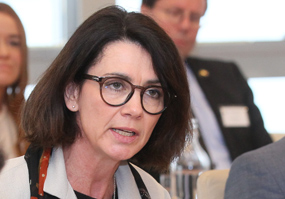
Dr. Cecilia Ruthstrom-Ruin
Deputy Director-General, Head of the Department for Asia and Ocenia,
Ministry of Foreign Affairs
Read more
(will be updated)
Prof. Kuik Cheng-Chwee
Associate Professor, Institute of Malaysian and
International Studies (IKMAS), Universiti Kebangsaan Malaysia
Read more
Dr. Kuik Cheng-Chwee is an associate professor at the Institute of Malaysian and International Studies (IKMAS), the National University of Malaysia (UKM). He is concurrently a nonresident fellow at the Foreign Policy Institute, Johns Hopkins SAIS, Washington, DC. He is co-founder of the East Asian International Relations (EAIR) Caucus, a research platform for exchange, engagement, and empowerment among foreign affairs professionals in Malaysia. Previously he was a postdoctoral research associate at the Princeton-Harvard “China and the World” Program (CWP) and a visiting research fellow at Oxford’s Department of Politics and International Relations.
Dr. Kuik’s research concentrates on weaker states’ foreign policy behavior, state alignment choices, regional multilateralism, East Asian security, China-ASEAN relations, and Malaysia’s external policy. His publications have appeared in peer-reviewed journals such as Journal of Contemporary China, Contemporary Southeast Asia, Chinese Journal of International Politics, Asian Security, China: An International Journal, Asian Politics and Policy, East Asian Policy, Shijie Jingji yu Zhengzhi, as well as edited books. Dr. Kuik’s essay, “The Essence of Hedging” was awarded the biennial 2009 Michael Leifer Memorial Prize by the Institute of Southeast Asian Studies for the best article published in any of the three ISEAS journals. He is a co-editor (with Alice Ba and Sueo Sudo) of Institutionalizing East Asia: Mapping and Reconfiguring Regional Cooperation (Routledge 2016).
Dr. Kuik is a regular invited speaker to international conferences and closed-door policy roundtables. His current projects include: hedging in international relations, ASEAN states’ responses to China’s Belt and Road Initiative (with Lee Jones), and politics of China-related railroad projects in Southeast Asia (with David Lampton and Selina Ho). Cheng-Chwee serves on the editorial boards of Contemporary Southeast Asia, Australian Journal of International Affairs, and Routledge’s “IR Theory and Practice in Asia” Book Series. He holds an M.Litt. from the University of St. Andrews, and a PhD from the Johns Hopkins University’s School of Advanced International Studies.
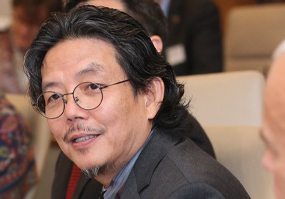
Dato’ Dr. Ooi Kee Beng
Executive Director, Penang Institute
Read more
Dr. Ooi Kee Beng is the Executive Director of Penang Institute. He was the Deputy Director (2011-2017) of Singapore’s ISEAS – Yusof Ishak Institute, where he had been a fellow since 2004. Born in Penang, Malaysia, he received his PhD in Sinology from Stockholm University.
He is also a Förvaltningsocionom, graduated from Socialhögskolan i Stockholm. He represented Sweden in the first World Wushu Championships in 1991 held in Beijing, and in the European Wushu Championships in 1992 (where he was runner-up in Taijiquan) and 1993. His published translations of Chinese war strategy such as Sunzi’s Art of War, Wuzi’s Art of War and Weiliaozi’s Art of War are the first from classical Chinese to Swedish.
His many books include The Eurasian Core and Its Edges: Dialogues with Wang Gungwu on the History of the World. His book, The Reluctant Politician: Tun Dr Ismail and His Time, won the “Award of Excellence for Best Writing Published in Book Form on Any Aspect of Asia (Non-Fiction)”. His latest book is Catharsis: A Second Chance for Democracy in Malaysia. His personal website is: wikibeng.com.
Tobias Glitterstam
Senior Vice President and Head of Asia & Oceania,
Business Sweden
Read more
Tobias Glitterstam is the Vice President and Regional Manager of Asia Pacific at Business Sweden. Being based in Shanghai, he is leading the organisation with 11 Trade Commissioners, 15 offices and 150 market expansion consultants in the region.
Glitterstam has extensive experience of consulting multinationals and leading Asian enterprises in the area of internationalisation and business growth, formerly as a Partner of the renowned consulting firm Accenture. He has operated in Asia since 2003, with a particular focus on the Chinese market.
Glitterstam was appointed to VP Asia Pacific in 2016, after having first joined Business Sweden as the Trade Commissioner to China back in 2015. In his current capacity he is steering business promotion efforts across the region, in areas such as Smart Cities, Industry 4.0, future transportation, life science and environment, always under the theme of Sweden as a leader in Innovation and Sustainability.
Furthermore Glitterstam is a senior advisor to Swedish enterprises in the area of market entry and business growth in Asia Pacific, often in the direction of exploring frontier markets, strategic innovation, expansion into new segments, market partnerships and M&A. Glitterstam also oversees the Swedish Invest promotion organisation in Asia Pacific with the objective of attracting investments into Sweden.
Tobias Glitterstam holds a degree in Business from Lund School of Economics and Management. He lives in China with his wife Karin and their three children.
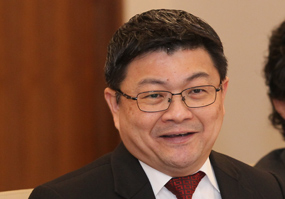
Ng Lip Yong
Honorary Advisor, Malaysia-China Chamber of Commerce
Read more
Mr Ng Lip Yong was appointed to the Board of Industrial and Commercial Bank of China (Malaysia) Berhad on 7 February 2019. He holds a Bachelor of Engineering (Hons) in Electronic Engineering from University of Sheffield and Master of Science in Microwave and Communications Engineering from University of
Leeds, UK.
He held various positions/advisory roles in the government agencies and corporate companies. He joined Standard Telephone & Cables Ltd in England as an engineer in 1975 and subsequently worked as
an engineer with Telecommunications Authority of Singapore before returning to Malaysia to take up the position of Resident Manager of GTE International Incorporated, USA (Malaysia Representative Office). Mr Ng also was involved in several family companies in housing development, construction and oil palm plantation. He also served for a short period as Managing Director of Hai-O Marketing Sdn Bhd and Hai-O Energy Sdn Bhd as well as Business Advisor of Hiap Teck Venture Berhad.
Mr Ng was elected as the Member of Parliament for Batu Constituency in 1999 to 2008. He served in the Malaysian Government as Deputy Minister of Ministry of International Trade and Industry (MITI) (2006- 2008) and Parliamentary Secretary of Ministry of Plantation Industries & Commodities (2004-2006). He also was the Chairman of Malaysian Logistics Council as well as Chairman of Federation of ASEAN Shippers Council. He served as Chairman/Director of Malaysian Futures Clearing Corporation and Deputy Chairman/Director of Kuala Lumpur Commodity Exchange.
Since 2009, Mr Ng has been an Honourary Advisory of Malaysia-China Chamber of Commerce.
Tan Sri Dr. Munir Majid
Chairman, CIMB ASEAN Research Institute
President, ASEAN Business Club
Read more
Tan Sri Dr. Munir is currently Chairman of CIMB ASEAN Research Institute, of Bank Muamalat Malaysia Berhad, of the Financial Services Professional Board, of ASEAN Business Advisory Council, Malaysia, as well as President of the ASEAN Business Club. He is a member of the Economic Action Council chaired by the Prime Minister of Malaysia. He also sits on the board of the Institute of Strategic and International Studies (ISIS) Malaysia. He is an active advocate of deeper ASEAN economic integration.
He has an extensive experience and is well known in the Malaysian corporate world. He had been the Group Editor of the New Straits Times, first executive chairman of CIMB and founding chairman of the Malaysian Securities Commission. After stepping down from the Securities Commission, he became Independent Non-Executive Director of Telekom Malaysia Berhad, Chairman of Celcom (Malaysia) Berhad and Non-Executive Chairman of Malaysian Airline System Berhad. He was Founder President of the Kuala Lumpur Business Club, established in 2003 and is a member of the Court of Fellows of the Malaysian Institute of Management.
Tan Sri Dr. Munir obtained a B.Sc (Econ) and Ph.D in International Relations from the London School of Economic and Political Science (LSE) in 1971 and 1978. He is an Honorary Fellow of LSE and continues the long association with his alma mater as Visiting Senior Fellow at the Centre of International Affairs, Diplomacy and Strategy. Tan Sri Dr. Munir is an associate of Southeast Asia Centre (SEAC) at LSE.
ASEAN will continue hedging between great powers due to credibility lag with the US and trust deficit with China, and must build up ASEAN community in order to formulate more coherent external policy
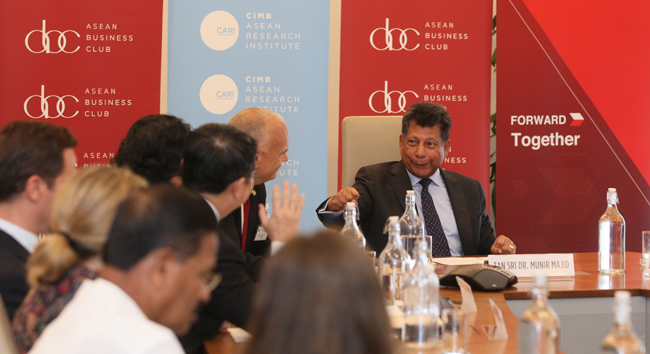
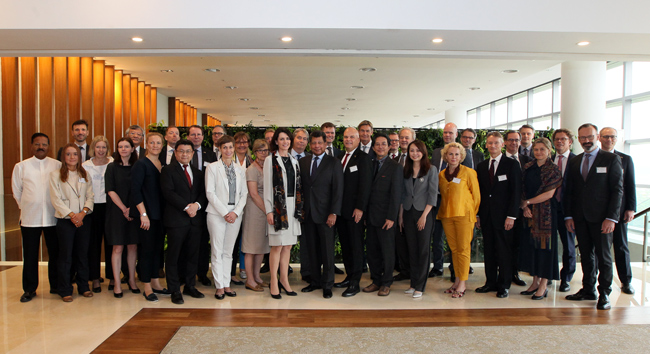
The CIMB ASEAN Research Institute (CARI) and the ASEAN Business Club (ABC) in partnership with the Embassy of Sweden held an ASEAN Roundtable Series on 1 April 2019 in Kuala Lumpur, which sought to analyse how ASEAN can navigate current uncertainties in the global trade environment, especially in relation to the ongoing US-China Trade War, rising protectionist sentiments, and challenges to the rules-based liberal order. The event also sought to analyse ways in which Sweden and Europe could work alongside ASEAN to respond to these economically difficult times.
Titled ‘How does ASEAN navigate the new trade [dis]order?’, the roundtable looked into the external challenges which have raised concerns over the future of open, free trade and the health of global markets. To bring clarity to these complex issues, the roundtable featured a group of eminent speakers including His Excellency Dag Juhlin-Dannfelt, Sweden’s Ambassador to Malaysia since September 2016, Dr. Cecillia Ruthstrom-Ruin, PhD, Deputy Director-General and Head of the Department for Asia and Oceania at Sweden’s Ministry of Foreign Affairs, Professor Kuik Cheng-Chwee, associate professor at the Institute of Malaysian and International Studies (IKMAS) at the National University of Malaysia and Non-Resident Fellow at the Foreign Policy Institute at John Hopkins SAIS in Washington D.C., Dato’ Dr. Ooi Kee Beng, Executive Director at the Penang Institute, Mr. Tobias Glitterstam, Vice-President and Regional Manager of Asia-Pacific at Business Sweden, and Mr. Ng Lip Yong, Board Member of the Industrial and Commercial Bank of China (Malaysia) Berhad and former Deputy Minister of the Ministry of International Trade and Industry (MITI).
Moderating the roundtable was Tan Sri Dr. Munir Majid, Chairman of the CIMB ASEAN Research Institute, President of the ASEAN Business Club, and a member of Malaysia’s Economic Action Council chaired by the Prime Minister.
The speakers and attendees of the event concurred that in light of the ongoing trade tensions between the US and China, ASEAN will attempt to navigate the current global uncertainties by hedging against both. Furthermore, it was agreed that Europe can partner with ASEAN in upholding a rules-based international trade order.
Opening remarks
Dr. Majid opened the discussion by noting that the roundtable was concerned about how ASEAN could navigate the current disorder in the international system, including the possibility of another global recession. He wondered how ASEAN could emerge from this global uncertainty while currently enjoying high growth rates, especially when efforts to integrate the bloc continue to stall (such as through the rise in Non-Tariff Barriers). He also noted that Sweden has always remained interested in ASEAN and its growth.
His Excellency Dag followed by noting that Asia is currently one of the fastest growing regions in the world now, with ASEAN’s forecasted growth looking appealing from a European perspective. Dr. Cecilia concurred with Ambassador Dag, stating that Sweden’s new government has sought to promote democracy around the world, and see Malaysia as a positive example to be studied. She also added Europeans are recognising that the world is entering a century where Asia will become increasingly influential both politically and economically, and the former are keen to expand relations with ASEAN and further deepen cooperation. She believes that Europe and ASEAN share basic values, including an emphasis on a rules-based system and multilateralism. She noted that Europe is also increasingly recognising the rise of China, and are seeking to strategise accordingly.
ASEAN’s hedging behaviour in a changing geopolitical environment
Professor Kuik Cheng-Chwee opened the discussion by elaborating how ASEAN seeks to navigate a changing global order with the rise of China. From the perspective of small powers, he noted, there are three main points to consider about the current trade tensions between the US and China:
Not just about trade: the tensions are not simply about trade tensions, but larger great power competition and rivalry.
Not necessarily disorder: Professor Kuik argues that the current regional system is not necessarily disorder, but rather that the power structures are simply evolving.
Navigation is an art: ASEAN practices ambiguity in their relations with both China and the US, hence the region’s seemingly contradictory behaviour at times. When conditions are uncertain and stakes are high, smaller, vulnerable states will be prone to hedging.
He discusses why smaller states feel compelled to hedge. He states that the key point in all three reasons put forth is to do with the issue of global uncertainties and lack of credibility with regional powers:
Professor Kuik then moved on to discussing how states seek to hedge in times of uncertainty:
Professor Kuik concluded by presenting examples of the great power contestations between the US and China currently in action in Southeast Asia, such as the US’ freedom-of-navigation-operations (FONOPs) in the South China Sea, or China’s Belt and Road Initiatives. He stressed that while ASEAN countries will welcome some form of US involvement in the region to constrain China, they will not want this constrainment to shift to containment. He believes that any attempt to contain China would only add to regional instability.
On the other hand, while ASEAN countries will welcome the development that comes from China’s Belt and Road Initiative, they will also be concerned about economic dependence on China and the security implications.
Ultimately, he believes that ASEAN countries will pursue policies of ambiguity and contradiction to keep their distance between each superpower. ASEAN governments will want to be seen to not be taking sides in the ongoing rivalry between the US and China.
The historical relationship between China and Southeast Asia
Dato’ Dr. Ooi Kee Beng followed with a presentation on how history has shaped ASEAN and China’s dealings with the outside world. He started by discussing how an analysis of the relationship between ASEAN and China can be broken down at three levels:
The national level: experiences of colonialism and Japanese occupation have made modern Southeast Asian countries introverted and defensive. Southeast Asian countries are inherently insecure countries, which guides how they approach foreign policy.
The regional level: regionalism has always been an extension of national policy. ASEAN as a project has been successful as a forum for major powers to meet on neutral ground, thereby heightening the significance of its centrality to regional affairs. Indeed, projects such as the BRI and the Indo-Pacific consider ASEAN as instrumental to the wider ambitions of major powers today, which will challenge the bloc’s ability to assert themselves as a coherent and united organisation.
Through analysing China’s rise in a historical context: China should be considered a ‘normal’ country whose relations with the outside world is strongly affected by its domestic politics and economy. China now seeks integrative national-economy building and to build global influence through free trade. Dato’ Ooi urges dialogue between ASEAN and China in order to gain mutual understanding, and that ASEAN must view China as a new nation and economy facing similar uncertainties of their own.
Swedish companies’ APAC market outlook
The next briefing was provided by Mr. Tobias Glitterstam concerning the market outlook for the APAC region provided by Swedish companies operating in the region. Mr. Glitterstam started by discussing the economic potential that the APAC provides to Swedish companies. As he notes, ASEAN presently consists of 33% of global GDP and 55% of global growth (among other factors), thereby providing the region with a strong foundation for further growth.
He also proceeded to discuss the specific factors which have made the Asia Pacific an attractive market for Swedish companies to operate in. He believes that Swedish industries possess the industrial foundations to thrive in the region.
He then proceeded to discuss the performance of Swedish companies operating in the Asia-Pacific by export growth. He noted that between 2014 and 2018, export growth remained consistent at 11%.
He analyses the economic performance of Swedish companies through total sales, which he notes is five times the export figures.
He concludes by looking at the current market outlook for Swedish companies operating in Asia, breaking it down by surveying both headquarters in Sweden and the front-line businesses based in Asia. While headquarters seemed pessimistic about their business prospects for the first quarter of 2019, the front-line businesses were more optimistic when looking at long-term prospects for the next three years. He also discusses the nature of Chinese investments in Asia and how it presents business opportunities, and finally how the trade war has accelerated the offshoring of manufacturing from China to Southeast Asia.
The Trade War and ASEAN
Finally, Mr. Ng Lip Yong discussed the China-ASEAN relationship where he made several observations:
He observed that despite being considered an economic bloc, ASEAN will not respond to the trade tensions in a cohesive manner. Most negotiations will be conducted bilaterally.
In the ongoing trade tensions, it is likely that individual ASEAN countries will put their own interests above that of the bloc. They will also seek to demonstrate they are not taking sides.
He believes that ASEAN will put more initiative into regional economic blocs such as the TPP and the RCEP.
He concurred with Professor Kuik that the ongoing trade tensions are less about trade and more about geopolitics.
ASEAN is currently aligned to different powers. Ng believes that Vietnam and Singapore have aligned more closely with the US, while Cambodia, Laos, and Thailand are aligning with China. The remaining countries are neutral at this moment. He agrees with Professor Kuik that ASEAN countries will ultimately hedge against both powers and side with the strongest one.
The intentions of the US is very unpredictable right now. Prominent members of the Trump administration may seek another Cold War with China.
Looking at China’s history, it is evident that the Chinese think long term in terms of grand strategy.
Ng believes the Chinese are not inherently aggressive or expansionary, despite actions in the South China Sea. He believes the Chinese instead will attempt to spread their influence through trade, investment, and culture.
Panel discussions and concluding thoughts
During the final Q&A session, a few themes emerged:
ASEAN requires cohesiveness
While it is natural for ASEAN to hedge due to their relative lack of resources, it will become increasingly incumbent on the member states to push for greater integration should they wish to become an international player, as this will inevitably come with responsibilities. There was a common consensus among both speakers and attendees that ASEAN’s regional influence is still hindered by the bloc’s lack of cohesiveness.
Where China is on the growth curve in terms of global power
The panel speakers were queried on where they thought China was on the growth curve in terms of their global power (economic, military, political, etc). Professor Kuik stated it is difficult to determine where China is heading nowadays, terming China as a ‘fragile superpower’ with a lot of domestic uncertainties. Tan Sri Munir believed that Chinese power is growing, but at what speed is undetermined. His Excellency Dag also believed that China is growing, albeit starting from the early growth stage. He pointed to China’s continuing dependence on foreign tech transfers as it tries to play catch up with regards to the latest technologies.
The bedrock for an EU/ASEAN partnership
The panellists were also queried on what they thought could be the bedrock of an ASEAN-EU partnership. Comparisons were drawn between both blocs, insofar as they are composed of multiple member states with their own interests (thereby giving both blocs flexible cohesiveness). Professor Kuik stated that, like ASEAN, the EU will practice hedging with regards to both China and the United States. Dr. Cecilia concurred, but stated that despite not seemingly taking sides on the surface, both ASEAN and the EU will stand for a rules-based liberal international order, since both blocs are heavily dependent on foreign trade for their survival. Tan Sri Munir believed that the EU can be the new standard bearer for global liberal values as US and British soft power declines concurrently.
The IPI contracted by 4.8% yoy in March due to declines in all clusters except for biomed, transport engineering and general manufacturing.
External headwinds and benign core inflation risks to keep MAS monetary policy settings on hold for 2019, in our view.
The first IPI contraction since Dec 2017
Singapore’s industrial production index (IPI) fell 4.8% yoy in March while the preceding month’s growth was revised upwards to 2.6% yoy (+0.7% yoy previously), in contrast to the improvement in manufacturing PMI. IPI excluding biomed slumped 8.7% yoy in March (+0.3% yoy in February), the most severe decline in over three years. On a seasonally adjusted basis, IPI dropped 2.6% mom in Mar after a decrease of 3.8% mom in February.
Cooling period of electronics persists
The tech cycle downturn exerted itself in March as electronics production plunged (-15.3% yoy vs. +2.8% yoy in February), with pronounced slippages in semiconductor (-16.4% yoy), computer peripherals (-24.9% yoy) and data storage (-38.9% yoy). The tumble was consistent with the worsened electronics shipments in March (-26.7% yoy vs. -8.2% yoy in February).
Strikes in chemical and precision engineering industries
Chemical production fell into the negative territory (-2.7% yoy in March vs. +1.5% yoy in February) particularly due to sharp moderation in ‘other chemicals’ output expansion (+3.0% yoy vs. +30.3% yoy in February) alongside continued deteriorations in petrochemicals and specialty chemicals. Precision engineering sector’s contraction stayed steady at 13.3% yoy in March as the rebound in precision modules & components did not last long (-22.8% yoy vs. +7.8% yoy in February) and machinery & systems experienced its third consecutive month of decline (-6.9% yoy vs. -25.5% yoy in February). Last year’s higher base has started to show effects on transport engineering, where output growth continued to moderate to 1.8% yoy in March (+5.0% yoy in February) primarily weighed down by subdued work done in the marine & offshore engineering as well as land transportation segments.
Biomedical manufacturing sector still stands strong
Biomedical manufacturing maintained its double-digit growth in March albeit at a slower pace (+13.7% yoy vs. +14.6% yoy in February), buttressed by production of pharmaceutical drugs (+16.5% yoy) and medical technology (+7.0% yoy).
Monetary policy settings to remain unchanged in 2019
Headwinds from the tech and export cycles may subside by the middle of the year, providing a modest cyclical lift in 2H19. Nonetheless, Singapore’s economic expansion is poised to moderate to 2.3% in 2019 (+3.2% in 2018), which should keep core inflation pressures well under control. Against this backdrop, current monetary policy settings are likely to remain on hold and we reiterate our view that S$NEER policy band parameter will be left unchanged in October.
ASEAN economic ministers ink two agreements to deepen regional economic integration
(23 April 2019) The 25th ASEAN Economic Ministers’ (AEM) Retreat held in Phuket, Thailand on April 22 to 23 culminated with the inking of two vital agreements to further integrate services and investments in ASEAN. The two agreements were (i) the ASEAN Trade in Services Agreement (ATISA) which builds on the existing framework agreement on services and provides a mandate for member states to move towards a “negative list approach”, where all service sectors are considered liberalised by default, and (ii) the Fourth Protocol to Amend the ASEAN Comprehensive Investment Agreement (ACIA), which builds on the existing ACIA by adding investor protection provisions, such as provisions to prevent governments from imposing performance requirements on investors and compensation for parties affected when a government modifies its commitments. The AEM Retreat concluded with the endorsement of the 13 priority economic deliverables set forth by this year’s ASEAN Chair, as well as a commitment to strive to conclude negotiations on the 16-country Regional Comprehensive Economic Partnership (RCEP) by November 2019.
ASEAN
Growth in Southeast Asian economies expected to moderate as global headwinds persist
(24 April 2019) The World Bank’s latest edition of its East Asia and the Pacific (EAP) Economic Update published on April 24 projects growth in the EAP to soften to 6% in 2019 and 2020, down from 6.3% in 2018 — largely due to global uncertainties and a slowing Chinese economy. As for ASEAN, the World Bank’s 2019 growth projections for Indonesia (5.2%) and Malaysia (4.7%) remains unchanged, while growth rates in Thailand (3.8%), Vietnam (6.6%) and the Philippines (6.4%) are also expected to slow this year. Furthermore, the World Bank projects growth in smaller economies such as Cambodia (7%), Laos (6.6%), and Myanmar (6.5%) to remain robust in 2019, albeit at a slower pace than in 2018.
ASEAN
Southeast Asia beginning to displace traditional investment destinations
(24 April 2019) Southeast Asia is slowly beginning to displace conventionally-favoured investment destinations such as Europe, Britain and the US, according to a Baker McKenzie survey of 600 executives in Asia Pacific. According to the firm’s M&A partner Bee Chun Boo, this is because Southeast Asia is seen as a hotspot for Belt and Road Initiative (BRI) investments, with great potential for development in the infrastructure, power, manufacturing, financial services and e-commerce industries. Furthermore, the report found that Chinese investors also favoured Southeast Asia as it is perceived to offer solid economic growth rates, a substantial market size and a degree of cultural rapport for Chinese companies that they may not enjoy in Western markets. Having said that, Chinese companies will need to step up their trust-building efforts in the region as a recent study by the Brunswick Group found that Japanese, German, British and American firms were perceived more favourably throughout Southeast Asia.
INDONESIA
Indonesia seeks spending boost as it targets growth of 5.3% – 5.5% for 2020
(23 April 2019) Indonesian President Joko Widodo chaired his second cabinet meeting in two days on April 23 as he looks set to win a second five-year term based on unofficial quick counts which showed him ahead of presidential contender Prabowo Subianto by almost 10 percentage points. While official results will only be released by May 22, incumbent Joko went ahead with laying out the country’s 2020 budget targets during the cabinet, and called on his cabinet to “formulate a clear and measurable roadmap.” According to Bloomberg, Joko’s 2020 budget targets sees economic growth at 5.3%-5.5%, inflation at 2%-4%, consumption growth at 5.2%, investment growth at 7.5%, exports growth at 7%, imports growth at 6%, and crude oil price at US$60-70 per barrel. The president also emphasised the need for increased investment and exports to support growth as the country continues to navigate the effects of the US-China trade tensions.
MYANMAR
Trade laws protecting local producers being drafted
(23 April 2019) Myanmar’s commerce minister U Than Myint announced on April 23 that the ministry is drafting new trade laws to protect local producers and promote local goods. These laws, he said, will include a new Safeguard Law on Increased Import and Antidumping, as well as a Countervailing Law. Furthermore, the government has added new priority sectors to its National Export Strategy (NES) 2020-2025. The new priority sectors are the digital economy, gems and jewellery, fruits and vegetables, agricultural product-based food products and industrial art products. According to International Trade Centre head Arancha Gonzalez, the new priority sectors will indeed help Myanmar fulfill its potential as a value-add exporter of goods. She added that Myanmar’s exports must improve in three key areas, i.e., value-addition, expertise and innovation. In the first six months of financial year 2018-19, export earnings totalled US$8 billion, up from US$650 million from the same period last year.
CAMBODIA-ASEAN
Cambodia looks to ASEAN members for support in EU tariff dispute
(24 April 2019) Cambodian commerce minister Pan Sorasak put forward a formal request asking fellow ASEAN member states to issue a joint statement to the European Union objecting to the bloc’s decision to impose safeguard measures against Cambodian rice imports. In January, the EU imposed tariffs on Cambodian and Burmese rice to stem the rising imports of rice from these countries. Further, the minister also urged each country’s permanent missions to the World Trade Organization (WTO) to issue statements to support Cambodia’s declaration. These requests were made during the ASEAN Business Advisory Council Consultation meeting held in Thailand on April 22. According to the Cambodian Ministry of Commerce, the ASEAN economic ministers in attendance agreed to the requests. Meanwhile, the World Bank announced on April 24 that Cambodia’s economy grew by 7.5% last year — its highest in four years. However, the World Bank also predicts slowing economic growth for the country in the coming three years due to greater uncertainty over Cambodia’s trade privileges under the EU’s Everything But Arms (EBA) scheme.
VIETNAM-EU
Drastic measures needed to lift EU yellow card on Vietnamese fisheries
(24 April 2019) Vietnam’s agriculture and rural development minister Nguyen Xuan Cuong said that the government needs to make drastic changes in its fisheries sector if it wants the EU to lift the ‘yellow card’ warning that was imposed in October 2017 due to reports of rampant illegal, unreported, and unregulated (IUU) fishing in the country. Otherwise, he said, the country is also at risk of receiving a ‘red card’ warning when the EU’s Directorate for Maritime Affairs and Fisheries conducts its final check in late May. This would lead to a complete ban on Vietnamese fisheries exports to European markets. According to the minister, the country has yet to fulfill four of the EU’s recommendations, including one to put a stop to illegal fishing by Vietnamese vessels in other countries’ territories. As such, he urged Prime Minister Nguyen Xuan Phuc to approve the establishment of a National Steering Committee to regulate IUU fishing as soon as possible.
THAILAND-UK
Thailand to seek greater access to the UK market after Brexit
(23 April 2019) Thailand is keeping a close eye on trade opportunities resulting from the UK’s departure from the EU as the country hopes for an amendment to the tariff quota on Thai exports to boost its access to this key market, said Thai Department of Trade Negotiations (DTN) head Auramon Supthaweethum. According to Supthaweethum, uncertainties surrounding the Brexit process has so far led to the weakening of the British pound, which subsequently made Thai exports to the UK less competitive. However, she said, Brexit could turn out to be beneficial to Thailand in the long run. For instance, the UK announced that it would stop imposing anti-dumping taxes on certain Thai exports, i.e., sweet corn, fireglass, hand pallet trucks and steel pipe joints. The Commerce Ministry is also in negotiations with the UK and the EU to amend the tax quota for Thai goods entering their markets after Brexit. The quota currently affects exports such as rice, canned fish and cassava. The UK is Thailand’s 20th largest trading partner, with a total trade value of US$7 billion in 2018.
MALAYSIA-TURKEY
Malaysia and Turkey consider expanding existing free trade agreement
(24 April 2019) Turkey and Malaysia are currently reviewing the countries’ existing bilateral free trade agreement (FTA), said Turkish ambassador to Malaysia Dr Merve Safa Kavakci during an interview with Malaysian national news agency Bernama. The FTA is Turkey’s first with an ASEAN country and has doubled the trade volume between the two countries to US$3.14 billion in 2017. According to the ambassador, the countries are looking to expand the FTA’s scope to reduce the existing bilateral trade imbalance and align the FTA with the policies of Malaysia’s new government. She added that Turkey sees great potential for cooperation in defence, pharmaceuticals, high-technology products, and food and beverages. Furthermore, she revealed that Turkey hopes to revitalise the Ankara-Kuala Lumpur and Istanbul-Johor Bahru sister-city relationships through concrete projects soon.
ASEAN
Cash still reigns supreme in ASEAN transactions
(25 April 2019) A study on digital payments and card usage for transactions in ASEAN by Standard Chartered found that card penetration in the region remains under 50%, while cash is still used in 70% of transactions in countries such as Indonesia and the Philippines. According to the report, the top reasons for the strong preference for cash were a low awareness of how digital payments work, privacy concerns over financial records, reluctance by small and medium businesses (SMEs) to bear digital payment transaction costs, as well as the perception that cash remains the simplest payment option. The study also found cheques to be a relatively popular option in Thailand and the Philippines. However, the report noted Bank Indonesia’s efforts to introduce a direct debit feature in 2016, and cheque usage in the country falling by 32% between 2014 to 2019. The report also noted Singapore’s target to eliminate the use of cheques by 2025 and Malaysia’s goal of reducing its cheque volume to 100 million per year by 2020.
Cambodia and Thailand re-open cross-border rail link after 46 years
(22 April 2019) Thai Prime Minister Prayut Chan-o-cha and Cambodian Prime Minister Hun Sen officiated the railway linking Klong Luek station in Thailand’s Aranyaprathet district with Poi Pet station in Cambodia’s Banteay Meanchey province on April 22 — 46 years after it was closed in 1973 due to Cambodia’s civil war. Speaking at the opening ceremony, Prayut said that the link will boost trade, tourism, transportation and economic opportunities between the countries. Hun Sen, for his part, said that the restored rail link will not only help the two countries, but also contribute to greater ASEAN integration and Greater Mekong Subregion development. In a symbolic show of support, Thailand donated a four-carriage train to the project, which both leaders rode on to officiate the reconnection. The rail service will begin operations later this year once both countries finalise the relevant transportation regulations. Read more>>
THAILAND, MYANMAR
Thailand and Myanmar ink sustainable tourism promotion cooperation agreement
(19 April 2019) The Thai Designated Areas for Sustainable Tourism Administration (DASTA) and Myanmar’s Myeik city authorities signed a memorandum of understanding (MoU) to jointly develop and promote sustainable travel routes that connect cultural heritage sites in both countries. According to DASTA deputy director Chumpol Musiganont, the five new travel routes will be managed in accordance with the Global Sustainable Tourism Council’s criteria and is expected to boost tourism in the region. He also expressed his hope for the Singkhon border checkpoint in Prachuap Khiri Khan to be upgraded to permanent status in the near future in order to serve as the key gateway between Thailand and southern Myanmar. Under the current MoU, historical sites in Thailand’s ancient city of U Thong and Myanmar’s ancient city of Tanintharyi will be connected through five new travel routes, i.e., U Thong-Suphan Buri, U Thong-Kanchanaburi, U Thong-Nakhon Pathom, U Thong-Prachuap Khiri Khan and U Thong-Myeik. Read more>>
VIETNAM, CAMBODIA
Vietnamese investments in Cambodia reach US$2.9 billion
(22 April 2019) Vietnam presently has almost US$2.9 billion of registered investments in 190 projects in Cambodia with most of them in the agriculture and forestry sector. This is in addition to the import-export turnover between the countries expanding by nearly 24% to reach US$4.7 billion during the same period. Vietnam’s exports to Cambodia accounted for US$3.7 billion of the sum, while Cambodia’s exports to Vietnam accounted for under US$1 billion of the amount. Meanwhile, Cambodia has 19 investment projects in Vietnam worth US$65 million. According to the report, the strengthened economic and investment cooperation between the two countries can be attributed to the increased transparency and visibility of the two countries’ taxation environment. Read more>>
CLMV, INDIA
Indian companies urged to step up investments in CLMV countries
(23 April 2019) Vietnamese ambassador to India Pham Sanh Chau urged Indian companies to expand their footprint in the CLMV subregion by developing greater institutional linkages with the countries in line with the Indian government’s Act East Policy. The ambassador’s remarks were made during an event hosted by the Observer Research Foundation (ORF) on April 11. According to ORF fellow Dr Malancha Chakrabarty, despite the high growth opportunities that CLMV countries present, Indian private sector investment in the subregion accounts for only 0.2% of India’s overseas direct investment in the last decade. Furthermore, these investments have mostly gone to Vietnam (54.9%) and Myanmar (39.8%). Ambassador Pham remarked on the need for an integrated approach to trade goals and development cooperation. Read more>>
THAILAND, CAMBODIA
Thai AirAsia adds new route to deep-sea port and tourist destination Sihanoukville
(22 April 2019) Thai AirAsia announced that it will begin operating a direct flight from Thailand’s Don Mueang airport to Cambodia’s Sihanoukville province on July 1. According to the airlines’ chief executive Santisuk Klongchaiya, Sihanoukville was selected as it was a popular beach and cultural destination. It also happens to be home to the country’s main deep-sea port and many Chinese investments. The move comes on the back of the Cambodian government’s earlier announcement that it has selected Sihanoukville province (also known as Preah Sihanouk province) as the location for the ASEAN Summit and related meetings in 2022. According to Sihanoukville governor Yun Min, summit preparations have begun and the province’s O’Tres Beach has been selected as the summit’s main location. Read more>>
About Greater Mekong Subregion (GMS)
The Greater Mekong Subregion (GMS) Economic Programme was launched by the Asian Development Bank in 1992 connecting five developing ASEAN countries, namely Cambodia, Laos, Myanmar, Vietnam and Thailand, and Chinese provinces of Yunnan and Guangxi Zhuang Autonomous region. The region has some of the most robust economies sharing the Mekong River Basin thanks to its reform and liberalisation. The subregion is growing at a faster pace than the whole of East Asia and the Asia Pacific as the GDP growth rate for 2017 was at 6.4 percent, according to the World Bank. The population at the subregion as of 2016 is at 340 million while the GDP at PPP is at US$3.1 trillion in 2016. In 2015, trading within the region was at US$444 billion.
ASEAN leaders head to Beijing for the Belt and Road Forum on April 25-27
(22 April 2019) All 10 ASEAN heads of state will attend the second Belt and Road Forum for International Cooperation (BRF) set to be held in Beijing from April 25 to 27, as confirmed by Chinese foreign minister Wang Yi during the recent BRF press briefing. According to Wang, the event will comprise 12 thematic forums, a CEO conference, an opening ceremony, a high-level meeting, and a leaders’ roundtable — all held with the primary aim of promoting “the high-quality development of Belt and Road cooperation”. A total of 37 heads of state and government, senior representatives from major European and Asian economies, as well as the heads of the International Monetary Fund and United Nations will attend the BRF. Chinese state-owned news agency Xinhua has published several interviews with participating leaders in the run-up to the event, including one with Malaysian Prime Minister Mahathir Mohamad, who lauded the Belt and Road Initiative’s (BRI) role in increasing trade between Southeast Asia and China, and his hope for Malaysia to serve as a hub for Sino-ASEAN maritime trade. Meanwhile, a Philippines’ foreign affairs representative told local media that President Rodrigo Duterte is expected to sign at least five agreements during his trip to Beijing. While in Cambodia, a Foreign Affairs Ministry statement also provided that a number of aid and cooperation agreements will be signed during Prime Minister Hun Sen’s BRF visit. Read more>>
The Philippines hosts Boao Forum for Asia in Manila ahead of the BRF
(22 April 2019) The Philippines played host to the Boao Forum for Asia (BFA) Manila Conference on April 22 and 23, an event that aims to convene high-level private sector leaders from Asia to discuss the BRI and regional development. According to Executive Secretary Salvador Medialdea, who represented President Rodrigo Duterte at the conference, the BFA was a prelude to the Belt and Road Forum that will be held in Beijing later this week. In her keynote speech at the BFA, Philippines speaker Gloria Macapagal Arroyo said that economic and trade cooperation between the countries was “better than it has ever been”, that China’s economy was in “a class of its own”, and that the local business community was “elated” during Chinese President Xi Jinping’s visit to the Philippines last November. She added that with the Chinese investments in place, the Philippines must now focus on the implementation and on improving the ease of doing business in the country. Under the Duterte administration, Chinese investment pledges into the Philippines soared by 2,072% in 2018 compared to 2017. Read more>>
Malaysia’s Sabah to become “sister provinces” with Jiangxi, hopes to boost industrialisation
(21 April 2019) Sabah chief minister Datuk Mohd Shafie Apdal and China’s Jiangxi province governor Yi Lianhong inked a letter of intent in Nanchang City on April 21 to establish a “Sister Province” relationship between the parties. According to Shafie, such a relationship would help boost industrialisation in Sabah and draw more investments to the state. He added that Jiangxi province was an ideal partner due to its geographical proximity and strong economic growth — the province’s GDP notably grew 8.7% last year, reaching US$327.12 billion. Furthermore, Shafie noted that while Sabah has the largest share of Chinese tourist arrivals in Malaysia, the state also had plenty to offer Chinese investors especially in the oil and natural gas industries. Governor Yi, in turn, said that the parties should also look beyond doing business and collaborate in areas such as culture and education. Read more>>
Thailand’s EEC to sign MoU with China’s Zhengzhou Airport Economy Zone (ZAEZ)
(22 April 2019) Thai Deputy Prime Minister Somkid Jatusripitak is slated to visit China’s Zhengzhou Airport Economy Zone (ZAEZ) located on Hainan Island on April 27 to 29 to oversee the inking of a memorandum of understanding (MoU) between Thailand’s Eastern Economic Corridor (EEC) and the ZAEZ, according to EEC Office head Kanit Sangsubhan. The MoU will help boost investments, aviation connectivity and integrated supply chains in both economic zones, as well as increase knowledge sharing between the parties on aviation hub development. Furthermore, the Thai government expects the collaboration to boost the country’s GDP by two percentage points every year starting next year. The ZAEZ is China’s first national-level experimental “aerotropolis” which integrates aviation services with a high-speed rail, intercity rail, subway and expressway in order to boost connectivity throughout the supply chain. Read more>>
Thailand, Laos and China to ink deal on railway links
(23 April 2019) Thailand, Laos and China are expected to sign a memorandum of cooperation (MoC) on the Nong Khai-Vientiane Railway Connecting Line during the upcoming Belt and Road Forum in Beijing. According to Thai Department of International Economic Affairs head Vilawan Mangklathanakul, the MoC provides that the connecting line will include a bridge to link Thailand with Laos and China. While Vilawan did not elaborate on the details of the project, he shared that Prime Minister Prayut Chan-o-cha intends to discuss the possibility of connecting initiatives such as the Master Plan on ASEAN Connectivity (MPAC) and the Ayeyawady-Chao Phraya-Mekong Economic Cooperation Strategy (ACMECS) with China’s BRI during his trip to Beijing. Furthermore, Prayut is also expected to tout the Eastern Economic Corridor (EEC) as the country looks to position the corridor as the region’s supply chain and logistics hub. Read more>>
The economic challenges facing Indonesia’s election winner
(15 April 2019) 193 million Indonesian citizens voted during the country’s national elections on April 17, making it the world’s largest one-day election. While preliminary results point to a second term for incumbent presidential candidate Joko Widodo, the final official results will only be announced between April 28 and May 22, with the inauguration ceremony to be held on October 20. Prior to the elections, the Indonesian public were treated to a series of televised debates between presidential candidates Joko Widodo and Prabowo Subianto, where both contenders touted their many plans to grow the economy, create jobs and spur domestic industries. However, analysts say that regardless of who wins the elections, the eventual winner will inevitably face significant challenges in steering Southeast Asia’s biggest economy as he will be doing so against a backdrop of slowing global economic growth, unresolved US-China trade tensions and volatile oil prices. Indonesia’s GDP grew by 5.17% in 2018, lower than the 7% growth promised by Jokowi during his first term. Furthermore, the country’s current account deficit of almost 3% of GDP makes it vulnerable to external risks and dependent on foreign capital. Closer to the ground, issues such as unemployment, underemployment and cost of living continue to persist.
INDONESIA
Indonesia looks for ways to boost palm oil use as it sees lower exports to Europe
(15 April 2019) The Indonesian agriculture ministry commenced on April 14 a trial period for the use of a 100% biodiesel or “B100” fuel made of fatty acid methyl ester from crude palm oil (CPO) as the country looks for ways to expand the domestic palm oil market and reduce dependency on conventional fuels. The announcement was made by agriculture minister Amran Sulaiman, who said that the trial will be conducted by fueling 50 of the ministry’s cars and tractors with B100 fuel. The move comes in addition to the government’s push for widespread domestic use of 20% and 30% blended biodiesel — known as B20 and B30 fuel respectively — to combat the drop in exports of CPO to Europe due to the European Union’s proposed phasing out of palm oil in biodiesel. According to Statistics Indonesia (BPS), CPO exports in March to the Netherlands dropped by 39%, while exports to the UK dropped by 22%. Exports to Germany, Italy, Spain and Russia also declined. Meanwhile, an Indonesian delegation led by coordinating economic minister Darmin Nasution is in Brussels to discuss the matter with EU representatives.
MALAYSIA
Malaysian palm oil industry hopes to tap the domestic aviation fuel market
(16 April 2019) The Malaysian Palm Oil Board (MPOB) is pushing for the use of palm oil fuel in the aviation industry to expand the commodity’s domestic market as it faces the threat of palm oil restrictions in the EU. According to MPOB head Dr Ahmad Kushairi Din, this can be done by blending palm oil fuel with conventional fossil fuels to produce aviation fuel. He added that a study has been done in the US where palm fatty acid distillate (PFAD) and palm oil were found to be viable feedstock for sustainable aviation fuel. As such, he hopes that the government will lobby for the acceptance of palm oil as biojet fuel blend at the International Civil Aviation Organization (ICAO), as well as consider domestically producing biojet fuel to meet the demands of the 80 airlines currently operating to and from Malaysian airports. Meanwhile, the Ministry of Trade and Industry said that negotiations for the proposed Malaysia-EU FTA will resume when the EU returns to a balanced and fair treatment of the country’s palm oil. This is crucial as the EU is Malaysia’s largest market for palm oil exports with the top destinations being the Netherlands (50%), Spain (17%) and Italy (12%) in 2018.
MALAYSIA
Malaysia to prioritise improving existing railway systems over rail link with Singapore
(17 April 2019) Malaysia will improve its existing railway system before revisiting plans to build the Malaysia-Singapore high-speed rail (HSR) service in two years, said Prime Minister Mahathir Mohamad at a dialogue with the Malaysian Rail Industry Corporation (MARIC) on April 16. According to Mahathir, the HSR is not a priority as it only reduces the travel time by around 30 minutes. He added that the rail link would be more attractive if it was able to help commuters save two to six hours. As such, the government is also considering a high-speed rail project connecting the peninsula’s southern Johor state to the northern Penang state or even up to the border with Thailand. Malaysia’s current major rail projects include the Gemas-Johor Bahru Electrified Double-Track Project (EDTP) that will be completed in 2021, as well as the recently-revived East Coast Rail Link (ECRL) double-track network that will link Port Klang in Selangor to Kota Bharu in Kelantan through five states.
ASEAN
Malaysia and Indonesia share top spot in global Muslim travel index
(15 April 2019) Malaysia and Indonesia share the top spot as the leading Muslim-friendly travel destination among Islamic countries in this year’s MasterCard-CrescentRating Global Muslim Travel Index (GMTI) 2019 published on April 10. Other ASEAN nations also fared well in the rankings, with Singapore, Thailand and the Philippines placing in the top 10 among non-Islamic countries. The rankings were calculated based on criteria in four key areas, i.e., access, communications, environment and services. According to the CrescentRating report, an estimated 140 million Muslims traveled in 2018, up nine million from the previous year. The report also estimates that this number will reach 230 million and contribute some US$300 billion to the global economy by 2026.
THE PHILIPPINES
The Philippines to up its game in Halal trade, tourism and banking
(12 April 2019) The Philippines’ Department of Trade and Industry (DTI) aims to grow its revenue from halal exports by 6-8% this year by increasing the volume of local halal-certified products. In 2018, revenue from halal exports reached US$560 million, while the target growth for 2019 translates to between US$594 million to US$605 million. According to trade promotions undersecretary Abdulgani Macatoman, the government hopes that at least 100 small and medium enterprises (SMEs) will receive halal certifications every year in order to boost the country’s participation in the US$3.2 billion halal market. The DTI intends to work towards this target through continuous promotion of halal certification for food products and tourism facilities, as well as through the rolling out of the Philippine National Halal Certification Scheme and Accreditation Guidelines in August this year. Furthermore, the undersecretary noted that at least six Islamic banks from Malaysia and the Middle East have expressed interest in setting up shop in the Philippines once the country’s Islamic Banking bill — now in its second reading in both Houses of Congress — becomes law.
THE PHILIPPINES-UK
UK assures the Philippines of continued access to GSP+ privileges after Brexit
(14 April 2019) The Philippines’ Department of Trade and Industry (DTI) published a statement saying that the British government has provided reassurance that the Philippines will be accorded similar trade privileges to those they currently enjoy under the European Union’s Generalized Scheme of Preferences Plus (EU GSP+) even after the UK leaves the EU. The reassurance comes as the possibility of a “no-deal Brexit” looms ever closer, leading to growing concerns over what effect this scenario would have on the UK’s trade partners. Under the present EU GSP+, some 6,274 Filipino products enjoy duty-free entry into the EU bloc. Nevertheless, the Philippines’ trade secretary Ramon Lopez also appears unfazed by the possibility, as he was quoted by Philstar as saying that any post-Brexit scenario would not have a significant impact on the country. Meanwhile, the Philippines’ negotiations with the EU for a free trade agreement has reportedly taken a back seat due to evaluations of the Philippines’ commitments under the existing GSP+ framework. According to a DTI representative, the issues under consideration include the utilisation rate of GSP+ privileges, as well as non-tariff factors such as competitiveness, supply capacity and importers’ sentiment.
THE PHILIPPINES-ROK
The Philippines and South Korea aim to conclude FTA negotiations by November
(17 April 2019) The Philippines and South Korea announced plans to commence negotiations for a bilateral free trade agreement (FTA) as soon as possible and aim to conclude talks before the ASEAN-ROK commemorative summit in November. According to a joint statement by trade secretary Ramon Lopez and South Korean trade minister Yoo Myung-hee after their meeting in Manila on April 17, both sides will begin negotiations once they have completed the required domestic procedures. South Korea is presently the Philippines’ fifth largest trade partner with bilateral trade in goods reaching US$13.7 billion last year. South Korea mainly imports bananas, pineapples and copper from the Philippines, while it mainly invests in the Philippines’ real estate and manufacturing sectors.
CAMBODIA-EU
Cambodia takes EU to court over rice import tariffs
(12 April 2019) Cambodia has filed a lawsuit at the European Court of Justice to challenge the EU’s imposition of duties on the country’s rice exports. The lawsuit was made in response to the European Commission’s decision in January to impose duties on Indica rice from Cambodia and Myanmar in order to safeguard the market share of EU rice producers. According to a Commission report, Indica rice imports from the two countries rose by 89% in the past five seasons, leading EU producers’ European market share to fall from 61% to 29%. However, the Cambodian Ministry of Commerce claims that the 89% figure was calculated based on flawed information and called the EU’s decision a “weapon to kill Cambodian farmers.” The Cambodian Rice Federation also protested the safeguard measure, saying that it was uncalled for as the rise in rice imports to Europe were not a consequence of dishonourable conduct on the Cambodian side.
ASEAN-MEXICO
ASEAN and Mexico to boost cooperative ties
(14 April 2019) Mexico is a key market for ASEAN in Latin America (LATAM) and a gateway to elevate ties between the Southeast Asian bloc with countries in the LATAM region, said the chairman of the ASEAN Committee in Mexico (ACMC) and Vietnamese ambassador to Mexico Nguyen Hoai Duong. The chairman’s remarks were made at a business cooperation forum organised by the ACMC and the Western Mexican Business Council for Foreign Trade (COMCE Occidente) on April 11 and 12 in Mexico’s Jalisco state. The event sought to foster greater relations between Mexico and ASEAN countries, especially in trade, investment, education and tourism. According to the chairman, Mexico is Vietnam’s third largest trade partner in LATAM and Vietnam is Mexico’s eighth largest trade partner in Asia, with bilateral trade between the countries reaching almost US$5 billion in 2018. Furthermore, figures from the Mexican government show that trade between the country and Indonesia, Malaysia, Thailand, Vietnam and the Philippines saw a year-on-year increase of 10% reaching US$25.51 billion in the first 11 months of 2018.
Vietnam agrees to sell an additional 50MW of electricity to Cambodia
(15 April 2019) Vietnamese Prime Minister Nguyen Xuan Phuc has agreed to sell an additional 50 megawatts (MW) of electricity to Cambodia on top of the existing 200MW. The Vietnamese premier’s decision was made in response to Cambodian Prime Minister Hun Sen’s request for assistance as the country faces a 400MW electricity shortage due to the dry weather. According to a previous report, Cambodian mines and energy minister Suy Sem has also submitted a request to Vietnam to release water from 14 upstream hydropower dams in the country to the Cambodian Lower Sesan II hydropower dam to help the dam generate more electricity. Read more>>
LAOS, THAILAND
Laos, Thailand and China agree to speed up work on regional rail links
(13 April 2019) The governments of Laos, Thailand and China agreed to expedite the construction of the Laos-China and Thailand-China railway projects in order to boost connectivity between the three countries as soon as possible. According to Lao public works and transport minister Dr Bounchanh Sinthavong, a meeting was held in Beijing recently where the parties agreed to complete the Laos-China railway by early December 2021 and the Thailand-China railway by 2023. Once completed, both rail links will be connected to the larger regional rail networks that connect China with Singapore through Laos, Thailand and Malaysia. Furthermore, the Beijing meeting also resulted in agreements to build a new Laos-Thailand Mekong Friendship Bridge to accommodate the railway, as well as logistics centres in both countries to complement the railway line. Read more>>
CAMBODIA, THAILAND
Border checkpoint upgraded to permanent status to facilitate cross-border trade
(16 April 2019) The Thai Ministry of Commerce’s foreign trade department confirmed that the Baan Khao Din border checkpoint in Sa Kaeo province’s Khlong Hat district has been elevated to “permanent” status. The checkpoint has enabled goods to be transported between Siem Reap and Phnom Penh within approximately three hours. Moreover, the checkpoint recorded US$197.66 million in cross-border trade in 2018 and US$41.17 million of the same in the first two months of 2019 alone. As such, the checkpoint was upgraded in recognition of its role in promoting trade between the countries. Read more>>
THAILAND, MYANMAR
Thailand looks to boost spending by Myanmar tourists
(11 April 2019) The Tourism Authority of Thailand (TAT) held a travel fair in Yangon recently as it aims to not only increase the number of visitors from Myanmar this year but also the amount spent by these visitors when visiting Thailand. According to TAT, a total of 368,170 tourists from Myanmar visited Thailand last year, generating US$525 million in revenue for the country. These tourists spend an average of US$1,572 for every trip they make to Thailand — a sum that has caught the TAT’s attention as it is considered to be fairly high. Of the sum, 88.7% is spent on clothes, 55.4% on food, 40.5% on souvenirs, 36.6% on cosmetics and fragrances, and 19.1% on leather goods. As for activities, 92.3% is spent on Thai food and cuisine, 46.1% on massages and spas, 44.3% on historical site visits, 27.8% on healthcare or surgery, and 24.9% on nightlife. Read more>>
THAILAND-CLMV
Thai exporters urged to seek new markets, especially in the Mekong region
(17 April 2019) Industry players in Thailand’s public and private sectors have urged local exporters to focus on expanding to new markets in order to offset the drop in shipments to China and the US — the country’s current top export destinations. According to data from the Ministry of Commerce, Thai exports of automatic data processing machines and parts saw a year-on-year decrease of 18.9% in the first two months of 2019, while its exports of automobiles, parts and accessories fell by an alarming 65% in the same period. As such, industry players interviewed by The Nation such as Amata Corporation head Vikrom Kromadit urged exporters to expand their production bases to neighbouring CLMV (Cambodia, Laos, Myanmar, Vietnam) markets. He added that these markets were a potential long-term solution for exporters as their labour costs were even lower than Thailand’s. Read more>>
About Greater Mekong Subregion (GMS)
The Greater Mekong Subregion (GMS) Economic Programme was launched by the Asian Development Bank in 1992 connecting five developing ASEAN countries, namely Cambodia, Laos, Myanmar, Vietnam and Thailand, and Chinese provinces of Yunnan and Guangxi Zhuang Autonomous region. The region has some of the most robust economies sharing the Mekong River Basin thanks to its reform and liberalisation. The subregion is growing at a faster pace than the whole of East Asia and the Asia Pacific as the GDP growth rate for 2017 was at 6.4 percent, according to the World Bank. The population at the subregion as of 2016 is at 340 million while the GDP at PPP is at US$3.1 trillion in 2016. In 2015, trading within the region was at US$444 billion.
Malaysia and China revive rail link project on a revised US$10.7 billion budget
(15 April 2019) Malaysian Prime Minister Mahathir Mohamad announced on April 15 that the government has come to an agreement with state-owned China Communications Construction Company Ltd. (CCCC) to reduce the cost of the East Coast Rail Link (ECRL) rail project by a third to US$10.7 billion, thereby reviving the project which was previously stalled due to concerns over project costs. Based on the revised rate, the rail will now cost US$16.7 million per kilometre, down from the initial US$23.2 million per kilometre. The 20-station double-track rail will also be shortened by 40 kilometres to 648 kilometres, pass through five states instead of four, and be completed by the end of 2026. According to Mahathir, Malaysia Rail Link and CCCC will move forward as equal partners in a 50:50 joint venture — in order to share technical support and operational risks, and the latter will help to bring in Chinese investment along the ECRL corridor. Furthermore, the CCCC has also agreed to refund US$243 million of the US$753.4 million advance payment in the next two months, and the Malaysian government will not need to pay the US$5.3 billion cancellation fee. Read more>>
Indonesian presidential candidates debate pro-China policies ahead of elections
(14 April 2019) Indonesia’s pro-China trade and investment policies were a focal point in the country’s presidential debate as President Joko Widodo’s primary contender Prabowo Subianto called for a review of all BRI initiatives. Prabowo, who is trailing behind incumbent Joko in pre-election polls by double digits, has been a strong proponent of “smart nationalism” that puts “Indonesia first”. According to analysts, criticising pro-China policies has served opposition politicians in other countries well, though the credibility of their claims remains wanting. For instance, Murdoch University’s East Asian political economy specialist Trissia Wijaya pointed out that Chinese investment in Indonesia were largely in industries such as mining, and that they had little stake in strategic or sensitive assets. She added that most investments so far were formed through private sector partnerships and injected much-needed capital for industrial development. Not to be left behind, President Joko Widodo has also been burnishing his own nationalist credentials on the campaign trail, such as the government’s takeover of the Grasberg gold and copper mine from US operator Freeport-McMoRan last year — in addition to claims of a solid economic record, low inflation levels and a steady annual growth rate. Indonesia goes to the polls on April 17. Read more>>
A third of the Philippines’ US$2.8 billion February trade gap was with China
(12 April 2019) China accounted for 34.17% or US$952.66 million of the Philippines’ US$2.79 billion trade deficit in February, based on the latest figures published by the Philippine Statistics Authority (PSA). Next to China, the Philippines recorded large trade deficits with South Korea (US$455.88 million), Indonesia (US$406.57 million), and Thailand (US$354.34 million). The Philippines’ total external trade in goods in February amounted to US$13.14 billion, reflecting an increase of 1.2% from the US$12.99 billion during the same month last year. Of the total external trade, US$5.18 billion (39.4%) were exported goods, while US$7.97 billion (60.6%) were imported goods. In response to comments that the figures indicate that the country remains heavily dependent on trade with China, the Philippines’ National Economic and Development Authority (NEDA) said that it has been working on strengthening bilateral economic relations with countries such as the UK, Hungary, Indonesia and the Czech Republic. Nevertheless, in speaking at the China-Philippines Summit on March 29, trade secretary Ramon M. Lopez said that the Philippines’ will continue pursuing more trade and investment activity with China through initiatives that include having a much bigger presence at the second China International Import Expo (CIIE) in November. Read more>>
Myanmar military chief reiterates support for BRI projects
(11 April 2019) Myanmar military chief Senior General Min Aung Hlaing reaffirmed his commitment to supporting projects under China’s Belt and Road Initiative (BRI) during a meeting with Chinese President Xi Jinping during his goodwill visit to Beijing. The senior general said that Myanmar’s military stands ready to facilitate the implementation of the projects, as such economic opportunities were beneficial to Myanmar’s rural majority. The senior general’s visit comes at the invitation of China’s Joint Staff Department chief General Li Zuocheng two weeks ahead of Myanmar State Counselor Daw Aung San Suu Kyi’s visit to China to attend a BRI forum, where she is expected to negotiate major agreements under the China-Myanmar Economic Corridor (CMEC). Read more>>
China-Singapore Suzhou Industrial Park a model for further bilateral projects
(13 April 2019) The China-Singapore Suzhou Industrial Park (SIP) is an appropriate example of bilateral cooperation between the two countries in the past 25 years, said Singaporean Deputy Prime Minister Teo Chee Hean in his speech at the project’s 25th anniversary ceremony during his official visit to China. He also noted that based on the SIP model, the two countries launched subsequent projects such as the Sino-Singapore Tianjin Eco-City launched in 2018 and the China-Singapore (Chongqing) Demonstration Initiative on Strategic Connectivity in 2015. According to Singapore’s Ministry of Trade and Industry, the SIP has topped the Chinese Commerce Ministry’s list of 200 Economic and Technological Development Zones for three consecutive years since 2015. Furthermore, trade between Singapore and SIP alone saw a year-on-year 20.2% growth in 2018 reaching US$2.02 billion. Read more>>
MAS kept its monetary policy stance unchanged today as real GDP growth eased to 1.3% yoy in 1Q19 amid accelerating headwinds in manufacturing
MAS expects 2019F GDP growth slightly below midpoint of 1.5-3.5% range (CGS-CIMB: +2.3%) while downgrading its core inflation forecast to 1-2%.
Cautious policy language and lower GDP growth/core inflation projections reinforce our view that MAS will leave its policy settings unchanged in October.
MAS halts monetary policy tightening
The Monetary Authority of Singapore (MAS) maintained the slope, width and centre of the S$ nominal effective exchange rate (NEER), after two consecutive rounds of modest tightening in April and October 2018. The decision was in line with our forecast as well as those of the majority of economists surveyed by Bloomberg.
Dovish pivot on weaker growth outlook
MAS’s dovish turn came as policymakers turned more cautious on the growth outlook, citing significant uncertainties in near-term external economic conditions. Today’s release of Singapore’s advanced GDP readings for 1Q19, which showed moderating growth (+1.3% yoy vs. +1.9% yoy in 4Q18; +2.0% qoq SAAR in 1Q19 vs. +1.4% qoq SAAR in 4Q18), confirms the run of subdued data outturn in trade and manufacturing activity. To reflect 1Q19 growth disappointments and the delayed resolution from US-China trade negotiations, we cut our full-year GDP growth forecast from 2.6% to 2.3%. Likewise, MAS expects GDP growth to be slightly below potential in 2019F, landing slightly below the midpoint of its 1.5-3.5% range.
Setback from manufacturing offsets uptick in other sectors
The manufacturing sector declined 1.9% yoy in 1Q19 (+5.1% yoy in 4Q18), its first contraction since 1Q16, attributable to slippages in electronics, precision engineering, and chemicals segments. Domestic-oriented sectors fared better. The construction sector posted its first rebound after 10 consecutive quarters of contraction (+1.4% yoy vs. -1.0% yoy in 4Q18), primarily supported by private construction activities. Growth in the services sector (+2.1% yoy in 1Q19 vs. +1.8% yoy in 4Q18) was backed by higher demand for information & communications and financial & business services.
Core inflation projections lowered
MAS downgraded its core inflation projection for 2019 to 1-2% (+1.5-2.5% previously) to reflect larger-than-anticipated electricity price declines following the implementation of the Open Electricity Market (OEM). Moreover, waning growth momentum lowers the risks of demand-pull inflation pressures materialising.
Monetary policy settings to remain on hold
The cautious language in MAS’s policy statement, as well as the downgrade in its growth and core inflation projections, cement our belief that further monetary tightening is off the table for the rest of 2019F. We retain our view that the slope, width and midpoint of the S$NEER policy band will remain unchanged at the next policy review in October 2019.