CARI Captures 441: Indonesia’s productivity lags behind most ASEAN countries, according to survey


INDONESIA

Indonesia’s productivity lags behind most ASEAN countries, according to survey
(12 February 2020) Indonesia’s productivity in the manufacturing industry is lower than that of other countries in Southeast Asia, according to a survey conducted by the Japan External Trade Organization (JETRO) on the business conditions of Japanese companies. The survey results showed that Indonesia’s productivity of plants in the manufacturing industry scored 74.4. This productivity score is lower than that of the Philippines (86.3), Singapore (82.7), Thailand (80.1) and Vietnam (80.0). Indonesia’s productivity score is also slightly lower than that of Laos (76.7) and Malaysia (76.2). The country’s industrial sector lags behind Thailand or Vietnam due to its dependence on commodities that hampers the manufacturing sector’s development, JETRO Jakarta senior director Wataru Ueno said. The survey was conducted to discover Japanese companies’ perception of the business climate in 20 countries in Asia and Oceania and gathered answers from 13,458 respondents between 26 August and 24 September 2019.

MALAYSIA

Malaysia’s 2019 GDP growth at 10-year low
(13 February 2020) Malaysia’s GDP growth moderated to 4.3% in 2019, the lowest level (according to a rebased constant of 2015) since 2009, compared with 4.7% growth in 2018. The country’s fourth quarter of 2019 (4Q19) growth slowed down to 3.6%, the lowest since the third quarter of 2009 (3Q09). The 2019 growth rate, however, was still within the range of the central bank’s target of between 4.3% to 4.8%. During a media briefing on 12 February, Bank Negara Malaysia (BNM) governor Nor Shamsiah Mohd Yunus said that 2019’s annual growth was adversely affected by supply disruptions, especially in the commodity sector, while growth was supported by resilient private sector spending and continued expansion in the services and manufacturing sectors. According to Nor Shamsiah, while “it is too hard to predict” the effects of the COVID-19 outbreak on Malaysia’s growth going forward, the economic growth of the country will be affected by it, particularly in the first quarter of 2020. Nevertheless, due to the diversified nature of Malaysia’s economy, other factors may be able to cushion the impact of COVID-19 on selected sectors of the economy.

MALAYSIA

Malaysia backs off filing WTO suit against EU over palm oil phase out
(13 February 2020) The Malaysian government has seemingly backed off threats of filing a WTO suit against the European Union (EU) over the latter’s phasing out of palm oil-based biofuel. The EU in 2019 concluded that palm oil cultivation results in excessive deforestation and that palm oil-based biodiesel will eventually be phased out of renewable energy targets from 2024 onwards. Malaysia had previously indicated in July 2019 that it would launch a WTO case by November 2019. However, Malaysia’s Primary Industries Minister Teresa Kok indicated on 13 February that they wouldn’t file the suit “hastily,” and would instead seek to convince Europe to change its treatment of the crop in a review scheduled for 2021. The EU’s consumption of palm oil in food has been in steady decline, but its use of palm oil as a biofuel has increased. In 2019, the EU consumed more than 7 million tonnes, with some 65% for energy.

VIETNAM

Vietnam Airlines losing US$10.8 million in revenue a week due to COVID-19
(13 February 2020) Vietnam Airlines revealed that it was losing up to US$10.8 million per week in revenue due to travel restrictions put in place to curb COVID-19. It is now reducing operations and trying to cut costs in order to mitigate the impact of the epidemic and attain a positive financial result for 2020, it said in an emailed statement. The airline has suspended all flights to and from mainland China since the end of January, directly affecting 70,000 visitors per month between the two countries. According to the Vietnamese government, the virus has so far cost Vietnam Airlines about US$430 million in lost revenues. Since the end of January, the number of passengers on its domestic routes has also fallen by 20%-30%. In 2019, the airline’s pre-tax profit increased 1.72% to US$145.4 million.

INDONESIA

Indonesian government to support aviation and tourism industries impacted by coronavirus outbreak
(13 February 2020) The Indonesian government has stated they will provide support for the aviation and tourism industries impacted by the coronavirus outbreak. The Transport Ministry has projected a 30% drop in passenger volume for airlines because of the outbreak. Since the beginning of February, the government has halted all flights to mainland China. Among the measures to be implemented include cutting land charges and airport fees for carriers, as well as providing incentives for hotels and tourism businesses in areas popular among Chinese tourists such as Bali, Manado and the Riau Islands. Chinese holidaymakers make up the second-largest group of travellers to Indonesia, after Malaysians. Tourism is a significant industry for Indonesia and a large source of foreign exchange revenue needed to address its current account deficit.

INDONESIA

Indonesian government to designate state firm to carry out upstream oil and gas activities
(13 February 2020) The Indonesian government plans to set up or designate a state firm to carry out upstream oil and gas activities in order to curb red tape and regulations in the energy sector. The plan was included in a new omnibus bill submitted to parliament and made public on 12 February, and will require private companies in the energy sector to conduct business with the state firm through a production sharing contract (PSC). The new plan will also drop the need for an upstream oil and gas regulator, which is currently SKK Migas. The responsibilities of SKK Migas under existing PSCs with private companies will be switched to the new state company once it is formed, according to the bill. It is unknown which state company might be designated.

THAILAND

Thailand hopes to generate more than US$2 billion from auction of 5G spectrum
(14 February 2020) Thailand projects to earn more than US$2 billion from the auction of spectrums of 5G mobile services scheduled to take place on 16 February. The National Broadcasting & Telecommunications Commission expects bidders to buy 28 of the 56 licenses available. The agency stated that its goal isn’t to maximise revenue but to spur investments into faster data connections. Three private sector firms and two state-owned firms will be taking part in the auction. The agency estimates an economic benefit of US$15.3 billion by 2022 from the 5G roll-out, up from an estimated US$5.7 billion in 2020.

THE PHILIPPINES, ASEAN

BSP to promote interoperable QR code standard for ASEAN
(10 February 2020) The Philippines’ central bank, Bangko Sentral ng Pilipinas (BSP), is intensifying its efforts to achieve a cash-lite economy by pursuing an interoperable QR (quick response) code in Southeast Asia. According to BSP Governor Benjamin Diokno, the central bank is working with its peers in the Association of Southeast Asian (ASEAN), particularly Bank Indonesia and Bank of Thailand for an interoperable QR code to benefit the region’s 620 million people. Asked on when the interoperable QR code standard would be utilised in the region, he said “soon.” Diokno expects 50% of total transactions in the Philippines to be done through electronic means by the middle of 2023. In November 2019, the BSP and the Philippine Payments Management Inc. launched the National QR code standard (QR Ph) and the government electronic-payments (EGov Pay) facility. Prior to that, the BSP launched the National Retail Payment System (NRPS) in 2015 to increase the share of digital transactions to 20% by 2020.

SINGAPORE

Singapore to introduce new corporate structure designed to attract international funds
(14 February 2020) The Singaporean government introduced a new corporate structure in January, known as the Variable Capital Companies Act, designed to attract international firms looking to domicile funds. The law will make it easier for overseas and domestic firms to register funds in Singapore provided they have a local fund manager. The new rules will allow asset managers to use a single locally incorporated structure to hold a pool of assets and multiple sub-funds. The structure can house traditional and alternative strategies and will only require a single set of service providers, financial statements and board of directors for multiple sub-funds. The government hopes to create more jobs in the legal and accounting sectors.

ASEAN

Tech investment in Southeast Asia falls 36% in 2019
(8 February 2020) Total investment by tech investors in Southeast Asia dropped 36% to US$7.7 billion in 2019 from US$12.0 billion in 2018, according to a report by Cento Ventures. The number of “mega deals” in the region were fewer while the number of smaller deals worth less than US$50 million saw a significant increase. The value of the smaller deals totalled US$2.4 billion, up from US$1.5 billion in 2018. On the other hand, the total amount invested in the larger deals totalled US$5.3 billion in 2019, a marked decrease from US$10.5 billion in 2018. The report observed that Grab and Gojek, the region’s two established tech firms, had major funding rounds in 2019, which “appeared to be smaller than in the previous year.” Indonesia remains the largest beneficiary even though its share declined to 59% in 2019 from 76% in 2018. Funding for Vietnam-based tech startups exceeded Singapore for the first time, capturing 18% of total investment in the region whereas it had only captured 4% in 2018. The report also noted that although total investment in the region saw a decline, it remained an attractive region for tech investors in 2019.

Mekong Monitor: EU partially strips Cambodia of preferential market access over human rights violations


Photo credit: Reuters


TRADE, ECONOMY, AND INVESTMENT


CAMBODIA

EU partially strips Cambodia of preferential market access over human rights violations
(12 February 2020) The European Union (EU) stated on February 11 that it will partially strip Cambodia of its preferential market access under the Everything But Arms trade programme over alleged human rights violations. Starting 12 August 2020, some of the preferential tariffs will be replaced with standard EU duties. This will hit one-fifth of Cambodia’s annual exports to the EU, amounting to around US$1.09 billion in goods. The goods to be impacted include sugar and travel goods, as well as clothing and footwear. In 2018, some 45% of Cambodia’s exports went to the EU.
Read more>>

THAILAND

COVID-19 expected to moderately impact Thailand’s nominal GDP
(13 February 2020) A Thai research house projected that the COVID-19 outbreak would shave off 0.09%-0.13% of Thailand’s nominal GDP should the outbreak last longer than three but less than six months. Economic damage is estimated to amount to US$500-US$700 million. The research house stated that although Thailand has a diversified economy with only medium-level reliance on China, it is still reliant on the ASEAN economy to some extent, and that it could be impacted by any regional economic slowdown.
Read more>>

VIETNAM

Vietnam ministry calls for stimulus package
(12 February 2020) Vietnam’s planning and investment ministry has urged the government to develop a stimulus package in February to help businesses affected by the COVID-19 outbreak, which they claimed would prevent Vietnam from achieving its 6.8% growth target in 2020. The ministry stated that the epidemic had impacted global supply chains, and urged the central bank to offer credit support to small-and-medium sized enterprises and farmers. The ministry also urged the finance ministry to consider cutting taxes and delay tax and land rent payments for certain affected businesses. The industries hardest hit by the epidemic include tourism, transport, electronics, agriculture, and insurance.
Read more>>

THAILAND, VIETNAM

Thailand risks slipping to third place in global rice exports due to weaker competitiveness
(12 February 2020) Thailand risks losing its status as the world’s second-largest rice exporter in 2020 due to weaker competitiveness and lack of diversity in its exports. The Thai Rice Exporters Association stated that the challenges to Thai rice exports include relatively higher production costs than rivals including Vietnam, a strong baht, a widespread drought, and a lack of variety in rice exported. The association stated that Vietnam risks taking over Thailand in second place. It added that Vietnam could also benefit from the European-Vietnam Free Trade Agreement and the Comprehensive and Progressive Agreement for Trans-Pacific Partnership (CPTPP).
Read more>>

MYANMAR

Myanmar ranked highest among world’s 20 fastest growing tourism destinations in 2019
(11 February 2020) Myanmar ranked number one among the world’s 20 fastest growing tourism destinations in 2019, according to the United Nations World Tourism Organisation. The country enjoyed a year-on-year increase of 40.2% in tourist numbers, according to Myanmar Tourism Marketing. The government has introduced new regulations to facilitate easier access for tourists wanting to visit the country. From May to September 2020, the Myanmar Tourism Marketing will host its annual “Green Season” campaign to coincide with the country’s annual monsoon season.
Read more>>


mekong-monitor-map

About Greater Mekong Subregion (GMS)

The Greater Mekong Subregion (GMS) Economic Programme was launched by the Asian Development Bank in 1992 connecting five developing ASEAN countries, namely Cambodia, Laos, Myanmar, Vietnam and Thailand, and Chinese provinces of Yunnan and Guangxi Zhuang Autonomous region. The region has some of the most robust economies sharing the Mekong River Basin thanks to its reform and liberalisation. The subregion is growing at a faster pace than the whole of East Asia and the Asia Pacific as the GDP growth rate for 2017 was at 6.4 percent, according to the World Bank. The population at the subregion as of 2016 is at 340 million while the GDP at PPP is at US$3.1 trillion in 2016. In 2015, trading within the region was at US$444 billion.

China-ASEAN Monitor: Malaysian manufacturing sector likely to feel impact of Wuhan virus


Photo Credit: The Sun Daily


Economy, Investment and Trade


Malaysian manufacturing sector likely to feel impact of Wuhan virus
(9 February 2020) Supply chain disruptions due to the coronavirus outbreak in China could potentially curtail growth in the manufacturing segment in Malaysia, according to an economic research firm. Pong Teng Siew, head of research at InterPacific Securities foresees difficulties for Malaysian manufacturers, particularly in the short-term. He added that the impact from this disruption could be seen as early as in the February manufacturing results. In December 2019, Malaysia’s Industrial Production Index (IPI) growth slowed down to 1.3% from 2.0% in November 2019, due to a slump in the mining index. Meanwhile, manufacturing sales in December 2019 expanded 5.2% to RM76.1 billion from RM72.3 billion a year ago, on the back of an increase in transport equipment & other manufactured products (7.7%), petroleum, chemical, rubber and plastic products (5.9%) and electrical & electronics products (2.7%).
Read more>>

Most Southeast Asia Stocks rise as new virus cases slow
(11 February 2020) Stock markets in most Southeast Asian countries rose on 11 February as the number of new coronavirus cases slowed in China. However, the rising death toll prompted concerns over how soon Chinese factories could return to work and kept the gains in check. Singapore stocks closed 0.4% higher, after rising as much as 1.0% earlier in the session while Indonesian shares gave up early gains to end flat. The Philippine index closed slightly higher, lifted by gains in big caps Globe Telecom and GT Capital Holdings while Malaysian stocks gained 0.6%, aided by shares of Tenaga Nasional and Petronas Chemicals Group. Bucking the trend, the Thai index fell 0.7%, marking its worst day in a week.
Read more>>

Thailand cancels China-led project that involves blasting open the Mekong River
(5 February 2020) The Thai government has scrapped a Chinese-led project to blast rapids on the Mekong River, according to a government spokeswoman. The plan to dredge the Mekong River was initiated by China in 2001 to make room for large ships carrying goods from its landlocked southern province of Yunnan to several ports in Thailand, Laos and the rest of Southeast Asia. The plan was, however, opposed by conservationists and Thai communities living along the Mekong River who voiced concerns of environmental harm of the plan that was seen to only benefit China. The Thai Cabinet agreed to scrap the dredging plan during a weekly meeting on 4 February. The Mekong River flows from China, where it is known as the Lancang river, through five Southeast Asian countries.
Read more>>

ADB approves US$2 million funding for COVID-19 tests
(9 February 2020) The Asian Development Bank (ADB) has approved US$2 million in new funding to support efforts to combat the spread of the novel coronavirus, recently renamed by the World Health Organization (WHO) to COVID-19. According to the ADB, the funds will supplement an ongoing regional technical assistance programme and strengthen response capacity in Cambodia, China, Laos, Myanmar, Thailand and Vietnam. The new funding will support the development of recommendations for improved outbreak investigation and surveillance, including in rural areas, and the strengthening of health systems’ resilience and capacity for epidemic response. The ADB said that additional technical assistance is under preparation to help other developing member countries improve key economic and health systems, including disease surveillance, provision of medical supplies, outbreak response plans and regional cooperation.
Read more>>

CARI Captures 440: Vietnam reports trade deficit of U$100 million in January 2020


VIETNAM

Vietnam reports trade deficit of U$100 million in January 2020
(2 February 2020) Vietnam reported an estimated trade deficit of US$100 million in January 2020, according to the General Statistics Office (GSO). The country’s exports totalled US$19 billion in January, a year-on-year drop of 15.8% while imports amounted to $19.1 billion, a reduction of 14.4%. The domestic sector reported an estimated trade deficit of US$2.4 billion while the foreign direct investment (FDI) sector recorded a trade surplus of $2.3 billion. The exports of electronics, computers and components increased 5.6% to US$2.6 billion while timber and wooden products increased 1.4% to US$1 billion. However, exports of textiles and garments dropped by 21.0% to US$2.6 billion, phones and their parts also valued at US$2.6 billion, dropped 22.4%; and footwear dropped 9.7% to US$1.6 billion. The US remains Vietnam’s largest export market even though its imports from Vietnam dropped 7.6% to US$4.8 billion. China and the EU were the second and third-largest export markets for Vietnam.

ASEAN

Central banks in Southeast Asia roll out measures to curb impact from coronavirus
(6 February 2020) Central banks from Indonesia, the Philippines, Singapore, and Thailand made announcements this week in relation to the coronavirus outbreak. The Bank of Thailand cut its benchmark interest rate on 5 February to a historic low of 1% after its monetary policy committee voted unanimously for the decision. The Monetary Authority of Singapore indicated on the same day that there may be further easing of the currency in the future. In the Philippines, the Bangko Sentral ng Pilipinas reduced its benchmark interest rate by 25 basis points to 3.75% on 6 February. This year’s round of easing in Southeast Asia began on 22 January when Malaysia announced an interest-rate cut, citing broad worries about the economic growth outlook. Meanwhile, Indonesia’s central bank is scheduled to have a meeting on 20 February. Bank Indonesia Governor Perry Warjiyo said on 5 February that the central bank would keep its policies accommodative in 2020 while adding that the benchmark interest rate is not the only tool officials will use.

THAILAND-UK

Thai trade negotiators to review Thai-UK trading relationship
(4 February 2020) The Thai Department of Trade Negotiations at the Ministry of Commerce is preparing for future meetings with UK negotiators to allow for discussions on the possibility of a free trade agreement between Thailand and the UK, after Brexit was announced on 31 January. Key meetings are expected to take place on 7 and 13 February as officials review the trade details between Thailand and the UK in both directions, according to Department of Trade Negotiations Director-General, Auramon Supthaweethum. The UK is currently the kingdom’s 21st biggest trading partner while the EU is its third-largest. Trade between Thailand and the UK is worth US$6.2 billion and currently, Thailand has a trade surplus of US$1.4 billion. Thailand’s exports to the UK include automobiles, jewellery, poultry and electronics while its imports comprise electronics, pharmaceuticals, machinery and beverages.

THAILAND

Thai economy expected to grow by 3.0% in 2020, amidst risks from coronavirus outbreak
(5 February 2020) Thailand’s economy is forecasted to grow by 3.0% in 2020, but with heightened risks from the coronavirus, according to a report by Fitch. Factors that would help boost economic growth include supportive fiscal measures, better household consumption and FDI, and more accommodative monetary conditions. The tourism sector, which contributed some 14% to the country’s GDP in 2019, may be particularly impacted by the travel restrictions imposed by the Chinese government due to the coronavirus outbreak. The Tourism Authority of Thailand expects two million fewer Chinese tourists will visit the country in 2020. The economy’s recovery may struggle further as exports, investment, and consumption growth shrink.

INDONESIA

Indonesian economic growth slowed down to 5.02% in 2019
(5 February 2020) Indonesia’s economy slowed down to 5.02% in 2019, down from 5.17% in 2018 due to weakness in exports and softer manufacturing output, according to government data. This figure missed forecasts of a 5.30% expansion. In December 2019, the World Bank warned that forest fires which raged across Indonesia last year would cost the economy an estimated US$5.20 billion. The country was also grappling with slumping prices for key commodities such as coal and palm oil, and the effects of the China-US trade war which has impacted economies around the globe. A research institute has warned that growth in the first quarter of 2020 would be weaker due to the impact of the coronavirus on exports and tourism.

INDONESIA-AUSTRALIA

Indonesia’s House of Representatives ratifies free trade agreement with Australia
(6 February 2020) Indonesia’s House of Representatives officially ratified the Indonesia-Australia Comprehensive Economic Partnership Agreement (IA-CEPA) on 6 February. Indonesia hopes the deal can help boost its export performance to positively affect the country’s negative trade balance. The IA-CEPA may see cuts on tariffs for commodity exports as well as investment privileges for those wanting to invest into Indonesia. The country recorded a trade deficit of US$3.2 billion in 2019, which was a significant improvement from the US$8.7 billion it recorded in 2018. Both Indonesia and Australia are set to launch a plan of action between 2020 to 2024 with regards to the implementation of the IA-CEPA.

CAMBODIA-SOUTH KOREA

Cambodia’s trade volume with South Korea exceeds US$1 billion
(5 February 2020) Trade volume between Cambodia and South Korea in 2019 reached more than US$1billion, according to Prime Minister Hun Sen who addressed more than 1,000 Cambodians in Seoul during the Universal Peace Federation (UPF) World Summit 2020 on 4 February. The two-way trade volume amounted to US$1.032 billion out of which, exports to South Korea amounted to US$335 million while imports from South Korea totalled US$696 million. Hun Sen noted the imbalance in trade was due to the high demand by Cambodians for South Korean goods, mostly automobiles and televisions. Cambodian exports to South Korea consist of mostly garments, electronics, shoes, beverages, bags, rubber, pharmaceuticals, cardboard and agricultural products.

MYANMAR

Myanmar aims to export 2.5 million tonnes of rice this fiscal year
(4 February 2020) Myanmar has set a target of exporting 2.5 million tonnes of rice in the current 2019-2020 fiscal year which began in October 2019. According to the Myanmar Rice Federation (MRF), the country exported 986,345 tonnes of rice and broken rice, earning over US$282.9 million as of 10 January 2020. Between 1 October 2018 and 10 January 2020, Myanmar earned US$245 million from the export of 842,342 tonnes of rice via sea routes and earned US$37.8 million from 144,002 tonnes of rice that were exported through border gates. During the same period, 29% of Myanmar’s rice and broken rice were shipped to China, EU member states and African countries.

LAOS

Twelve special economic zones in Laos attracted investments of US$5.7 billion as of 2018
(6 February 2020) Twelve special economic zones (SEZs) established across the country have attracted a total of US$5.7 billion since 2018, according to a recent official report. The zones’ developers have invested a total of US$4.3 billion, private companies US$1.4 billion, and the government underwriting the remaining US$52.0 million. A total of 806 companies have invested in the zones comprising 26.3% in the industrial sector, 25.3% in trade, and 48.4% in the services sector. Manufactured goods exported from the zones were valued at US$1.8 billion as of 2018. In addition, the zones have contributed more than US$39.3 million in the form of various taxes and fees to the state budget. The zones have reportedly created a total of 55,771 jobs, including 12,596 positions for Lao workers. The authorities are mulling the establishment of another special economic zone called “Smart & Eco-City” which would be based in both Luang Namtha and Oudomxay provinces.

INDONESIA

59% of Indonesian economy still concentrated on Java Island in 2019
(5 February 2020) Around 59% of Indonesia’s economy is still concentrated on the island of Java, marking only a minor change from when it stood at 58.48% in 2018, according to Indonesian central statistics agency, BPS. The figure was obtained from Java’s contribution to the country’s GDP in 2019. After Java, the second largest contribution came from Sumatra (21.32%), Kalimantan (8.05%), Sulawesi (6.33%). In the lowest spots are Bali and Nusa Tenggara (3.06%), and Maluku and Papua (2.24%). Of the six islands, Sulawesi recorded the highest growth in 2019 with 6.65%, which matched the country’s overall economic growth in 2018.

Mekong Monitor: Myanmar’s border trade reaches US$3.3 billion in 2019/2020 fiscal year


Photo credit: Myanmar Times


TRADE, ECONOMY, AND INVESTMENT


MYANMAR

Myanmar’s border trade reaches US$3.3 billion in 2019/2020 fiscal year
(3 February 2020) Myanmar’s border trade during the period 1 October to 24 January in the current 2019/2020 fiscal year increased to US$3.28 billion from US$2.68 billion in the same period during the previous fiscal year. Its exports via border gates totalled US$2.24 billion while imports reached US$1.04 billion. Compared with the 2018/2019 fiscal year, export earnings went up by more than US$459 million while the import value increased by US$136 million. Of the 18 border trade camps involved, the Muse border gate saw the largest volume and value of border trade with an estimated value of more than US$1.7 billion in the 2019/2020 fiscal year, followed by Htikhee with US$559 million and Myawady with US$338 million.
Read more>>

VIETNAM

Vietnam’s customs sector targets collecting US$14.6 billion in 2020
(4 February 2020) Vietnam’s General Department of Customs aims to collect US$14.6 billion for the State budget for 2020, a year-on-year increase of 12.5%. The target is calculated based on 6.8% GDP growth, crude oil price at US$60 per barrel, total export turnover increase of 7% and import turnover increase of 9%. The goal, however would be difficult to achieve as new free trade agreements (FTAs) ​​are expected to come into effect this year with many products having import tax rates cut to 0%, according to the General Department of Customs. To achieve the State budget collection for this year, the customs sector will need to implement proposed budget collection solutions. Last year, the customs department strengthened measures to combat loss of revenue such as inspection and examination of enterprises. It also boosted controls over the price of imports and exports. The efforts resulted in the department saving some US$200 million of lost revenue.
Read more>>

VIETNAM

Vietnamese PM approves national financial inclusion strategy until 2025
(3 February 2020) Under its national financial inclusion strategy, Vietnam is targeting for at least 80% of its adult population to have bank accounts by 2025. The national financial inclusion strategy until 2025 with a vision to 2030 was approved by Prime Minister Nguyen Xuan Phuc and is aimed at ensuring individuals and enterprises, particularly low-income and vulnerable people, micro-, small-, and medium-sized enterprises, to have access to basic financial products and services in a convenient way and at affordable prices. By the end of 2025, the strategy is targeting at least 50% of communes nationwide to have offices that provide financial services and at least 25%-30% of adults have saving accounts at credit institutions.
Read more>>

LAOS

Laos’ wood pulp, waste paper exports hit US$251 million in 2019
(30 January 2020) Laos’ wood pulp and waste paper exports between January and October 2019 amounted to US$251 million, placing these commodities in fourth place overall in terms of export revenue. Wood pulp and waste paper exports from Laos to China totalled US$250 million, while exports to Thailand and Vietnam were valued at US$800,000 and US$200,000 respectively, according to the Lao Ministry of Industry and Commerce. Despite the country’s significant wood pulp and waste paper exports, its imports of these two commodities are worth about US$24 million. Of this figure, imports from China are valued at US$86 million, the US about US$9 million, South Korea US$77,000, and Thailand US$62,000. In terms of overall export revenue during the same period, electricity came in first place with exports totalling US$1.07 billion, followed by gold ore with exports of US$550 million and copper with US$401 million.
Read more>>

THAILAND

Thai Government says strong baht hurting cross border trade
(30 January 2020) The strong Thai baht may once again affect border trade with Cambodia, Laos and Myanmar, according to a senior official from the Thai Ministry of Commerce. Thailand missed the target of cross border trade volume in 2019 due to mainly the baht’s appreciation, said Keerati Rushchano, director-general of the ministry’s Foreign Trade Department. Border trade in 2019 dropped 3.43% to US$43.1 billion. Besides the strengthening of the Thai baht, the global economic slowdown, trade frictions and overall volatile foreign exchange have also affected Thailand’s border trade, Keerati added. Of total trade figures, exports from Thailand accounted for US$24.3 billion, down 2.72% from 2018, while imports were worth US$19 billion, down 4.31%.
Read more>>


mekong-monitor-map

About Greater Mekong Subregion (GMS)

The Greater Mekong Subregion (GMS) Economic Programme was launched by the Asian Development Bank in 1992 connecting five developing ASEAN countries, namely Cambodia, Laos, Myanmar, Vietnam and Thailand, and Chinese provinces of Yunnan and Guangxi Zhuang Autonomous region. The region has some of the most robust economies sharing the Mekong River Basin thanks to its reform and liberalisation. The subregion is growing at a faster pace than the whole of East Asia and the Asia Pacific as the GDP growth rate for 2017 was at 6.4 percent, according to the World Bank. The population at the subregion as of 2016 is at 340 million while the GDP at PPP is at US$3.1 trillion in 2016. In 2015, trading within the region was at US$444 billion.

China-ASEAN Monitor: Indonesia to restrict import of Chinese livestock over coronavirus concerns


Photo Credit: Free Malaysia Today


Economy, Investment and Trade


Indonesia to restrict import of Chinese livestock over coronavirus concerns
(4 February 2020) Indonesia’s government has announced that it intends to restrict the import of live animals from China due to the coronavirus outbreak. The government stressed that the restrictions would only apply to live animals, and not all food and beverages. Expecting an impact on tourism, the government also announced that it will encourage airlines to implement special rates for top tourism destinations such as Bali and the Riau Islands to attract tourists from other countries besides China. Indonesia will bar all flights to and from China starting on 5 February.
Read more>>

Coronavirus expected to have much wider and deeper impact on the Singaporean economy
(3 February 2020) The Singapore Minister for Trade and Industry stated that he believes the impact of the coronavirus will have a “much wider and deeper impact” on the world economy than the severe acute respiratory syndrome (SARS) outbreak in 2003, in part due to China’s larger economy and more extensive trade relations. Steps taken by the government include barring Chinese nationals from entering the country save some exceptions, as well as announcing the waive of licence fees for hotels, travel agents and tourist guides to cushion the impact on the tourism industry. The government is also studying the provision of temporary bridging loans for affected businesses.
Read more>>

Thailand stands to lose US$64.6 million in exports to China in Q1 2020
(4 February 2020) Thailand stands to lose US$64.6 million in exports to China in the first quarter of 2020 due to the impact of the coronavirus on global supply chains. This was stated by a Thai shipping association, which also claimed that the exports of fresh fruits and vegetables will be the worst affected. China was Thailand’s second-largest export market in 2019, with its market amounting to US$29.2 billion. The association has maintained its forecast for overall export growth of 0-1% in 2020, although the coronavirus is expected to cut shipments by 0.11%.
Read more>>

Vietnam stock market plunges more than 6% after Lunar New Year
(5 February 2020) Vietnam’s benchmark VN Index dropped by more than 6% since January 30, when it was closed for the Lunar New Year, due to the coronavirus outbreak in China. It is the second-largest plunge in the world after China’s own bourse. The Vietnamese benchmark has been in a bear market since 2018 and is 23% away from a record high hit in April of that year. Vietnamese-Chinese connectivity has been impacted by the virus, with agricultural exports to China possibly impacted by the closing of land borders and travel restrictions. Vietnamese imports of textile products and machinery for its factories are also expected to be impacted.
Read more>>

The Philippines to assist migrant workers affected by China travel bans
(4 February 2020) The Philippines’ Overseas Workers Welfare Administration (OWWA) will provide around US$200 cash to overseas Filipino workers affected by the recent travel restrictions to China due to the coronavirus outbreak. On 2 February, an indefinite prohibition was imposed on Filipinos from travelling to China, Hong Kong, and Macau. The OWWA will also provide accommodation and transportation for the stranded workers. At least 300 Chinese nationals are also stranded in the Philippines.
Read more>>

CARI Briefings on ASEAN 2020 Outlook and Vietnam’s ASEAN Chairmanship 2020

Published on 5 February 2020

ASEAN Roundtable Series

CARI Viewpoint: ASEAN 2020 Chair should lead region on pressing global issues alongside world economic peace and intra-ASEAN trade

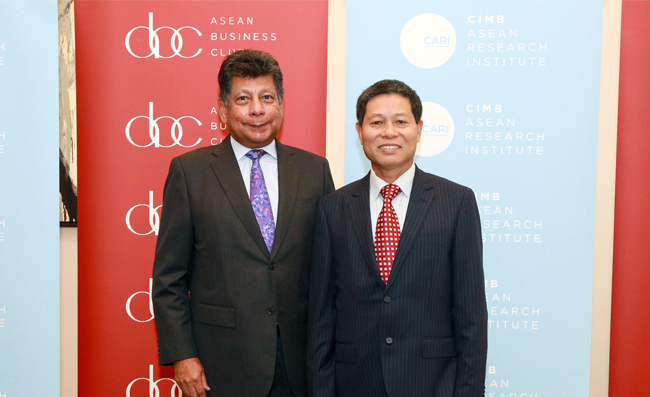
The CARI Briefing titled “ASEAN 2020 Outlook and Vietnam’s ASEAN Chairmanship 2020″ featured presentations by Tan Sri Dr. Munir Majid, Chairman of CARI and ASEAN-BAC Malaysia; and H.E. Dr. Le Quy Quynh, Ambassador of Vietnam to Malaysia.


1. Vietnam’s priorities for 2020


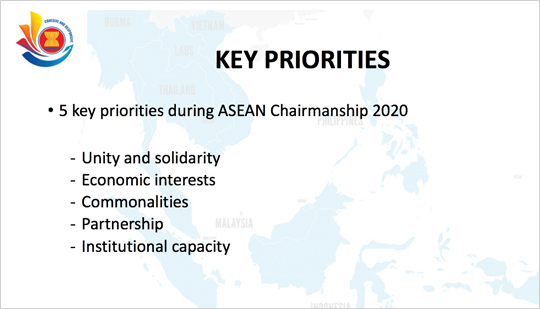
During his presentation, H.E. Dr. Quynh spoke of Vietnam’s theme and priority areas for the year. As unveiled by his government in Hanoi on 6 January, the ASEAN 2020 theme of “Cohesive and Responsive” will be centered on five priorities: 1) strengthening ASEAN unity and regional centrality, 2) intensifying economic integration, 3) promoting the ASEAN identity, 4) enhancing ASEAN’s global partnership for peace and stability, and 5) developing the bloc’s institutional capacity and effectiveness.

ASEAN Roundtable Series

ASEAN Roundtable Series

According to Dr. Quynh, the theme of cohesiveness meant the need to enhance ASEAN unity and solidarity, economic integration, ASEAN awareness and identity and efforts towards creating a “people-centered” community. As for the theme of responsiveness, Vietnam would like to promote ASEAN proactiveness, creativity and capacity in grasping opportunities and coping with challenges. Among the challenges ahead include the uneven implications from the Fourth Industrial Revolution (4IR), the escalation of traditional security issues, the rise of non-traditional security threats and the strategic competition between major powers.


2. Leveraging upon ASEAN unity and solidarity on the international stage

With the many challenges facing ASEAN, one of Vietnam’s focus for ASEAN in 2020 is unity and solidarity. Under this priority area, Vietnam intends to forge close relations among ASEAN Member States and respond effectively to challenges and threats, said Dr. Quynh.

Tan Sri Munir asserted that ASEAN needs to work through its Member States’ individual membership in prominent international avenues in order to have a louder voice on the global stage. According to him, ASEAN countries already have representation at the G20 meetings. Indonesia is a firm member of G20, Singapore is usually invited to the G20 through the Forum of Small States (FOSS) and in 2020, Malaysia, as the chair of the Asia-Pacific Economic Cooperation (APEC), is invited to the G20 meetings as an observer.

“ASEAN needs to work together now and prepare the groundwork for the position it is going to take in these meetings.”

While ASEAN has performed well in terms of GDP growth in this decade (it became the fifth-largest economy in the world in 2018 ), its share of intra-ASEAN trade in goods has remained below 25% in the last 10 years. The number of non-tariff measures (NTMs) has increased as well. The cost of intra-ASEAN trade should be brought down in line with the reduction in the number of NTMs, he said.

In 2018 ASEAN has risen to fifth place among the largest economies in the world, with nominal GDP estimated at USD 3.0 trillion, an increase of more than 50% from its 2010 level

ASEAN Roundtable Series

ASEAN Roundtable Series

Between 2008 and 2018, the total number of NTMs imposed by ASEAN jumped by 118.8%, from 4,356 measures in 2008 to 9,502 in 2019.

ASEAN Roundtable Series


3. Equally important issues for ASEAN to address – the environment and sustainability


Aside from the essential, key issues of multilateral trading system, the promotion of intra-ASEAN trade and efforts to reduce the number of NTMs, Tan Sri Munir highlighted other issues the regional bloc has failed to deal with in any vigorous fashion: the environment and equitable development.

“ASEAN has shown a surprising lack of attention to the environment, particularly when it has experienced the transboundary haze issue for many, many years now. ASEAN must begin to address these issues for its own sake. The topic that is frequently discussed has always been growth, economy and investment. Issues like the quality of life of the ASEAN people, their income level and the environment has not received the same amount of attention,” he said.

He added that the haze has been going on for a generation. Has ASEAN been able to stand up and talk about the environment and other business? This is disgraceful. Are we waiting for August to come again this year and go through the whole thing again?” he added.

He added that the haze has been going on for a generation and it is a regret that ASEAN could not resolve this annual problem. The cost of the haze in 2019 on the Indonesian economy according to World Bank estimates was US$5.2 billion. This amount is equivalent to 0.5% of the Indonesian economy and caused US$157 million in direct damages and US$5.0 billion in losses from affected economic activities. He further pointed out that these figures, however, do not include the economic cost to other affected ASEAN countries, as well as the cost to health. ASEAN must make the effort to address the haze, be it at the bilateral, trilateral or quadrilateral level, or risk it happening again this year.

Another issue vital for ASEAN is equitable development. The rise of anti-globalisation sentiments around the world in the form of large scale protests are due to many factors including income disparity and inequitable growth. Tan Sri Munir stressed that if the disparities between ASEAN countries, and within ASEAN countries continue without being addressed, ASEAN could face the possibility of political upheaval.

One political issue that ASEAN cannot afford to avoid, however, is security in the South China Sea. According to H.E. Dr. Quynh, the South China Sea is a peaceful region that is crucial to not only ASEAN countries but other countries such as the EU, Japan and South Korea as well. Any conflict in the South China Sea will affect trade between ASEAN and other countries. He opines that it is a good timing for Vietnam to be the chair of ASEAN as it also holds a non-permanent seat on the United Nations Security Council.

Dr. Quynh pointed that the areas that Vietnam would also pursue the sustainability agenda in the form of the circular economy, and the Digital Integration Index.

“Sustainability is important for Vietnam. Our GDP growth was 7% last year, we can achieve more but we need to focus on sustainability,” he said. Under the fourth priority of enhancing ASEAN’s global partnership for peace and stability, Vietnam will promote partnerships for sustainable development. The country also intends to create a platform that would allow the sharing of best practices in the circular economy and develop the Digital Integration Index to monitor and improve the effectiveness of areas under the ASEAN Digital Integration Framework, which was endorsed at the 33rd ASEAN Summit in Singapore in December 2018 and had its action plan adopted at the 35th ASEAN Summit in Bangkok in November 2019.


Conclusion


The year 2020 marks the mid-term mark of the ASEAN Community’s Master Plan 2015-2025 and ASEAN Vision 2025. It also marks 25 years of Vietnam’s participation in ASEAN. How Vietnam goes about implementing the priorities the country has laid out for its chairmanship will have much bearing on the direction of the regional bloc going forward. One of the priorities, which aims to strengthen ASEAN’s institutional capacity bears much promise but it is not without its challenges. Nevertheless, if ASEAN-led mechanisms and processes could be made more efficient and outcome-driven through institutional reform and improvements of rules and procedures, ASEAN could fully realise its economic potential.

CARI Captures 439: Bank Indonesia working to stabilise financial markets over coronavirus outbreak


INDONESIA

Bank Indonesia working to stabilise financial markets over coronavirus outbreak
(30 January 2020) Indonesia’s central bank is working towards stabilising financial markets in the aftermath of the coronavirus outbreak in China. Although the effects on the real economy have yet to be felt, the financial market has been impacted. The coronavirus outbreak has seen foreign investors of Indonesian government bonds turn into net sellers, selling off almost US$564 million worth of government bonds in three days through 29 January. The local currency has also come under pressure this week, trimming gains this year to 1.5%. The governor of Bank Indonesia Perry Warjiyo stated that monetary policy remains accommodative, though the bank has other instruments it can use besides interest rates, such as reserve requirements or injecting more liquidity.

SINGAPORE

Singaporean economy may be impacted by coronavirus outbreak but diversified enough to mitigate uncertainty
(30 January 2020) While the coronavirus outbreak will cause economic uncertainty to escalate, the Singaporean economy remains diversified enough to withstand it, said Singaporean Manpower Minister Josephine Teo. She admitted that “investment decisions are bound to be reexamined” as the virus causes global economic uncertainty to be heightened, but pointed out that the economic contributions of affected sectors such as tourism and hospitality are “relatively modest.” She added that the current circumstances are “significantly different” than during the 2003 Severe Acute Respiratory Syndrome (SARS) epidemic and said that while no one knows how long the health crisis will last, it is unlikely to persist. “It will not be business as usual because we know businesses have to take more precautions than before, but life must somehow go on, businesses must operate, workers must still be able to go to work,” she said.

THE PHILIPPINES

Coronavirus outbreak expected to have a negative impact on Philippines economic growth
(29 January 2020) The coronavirus outbreak is projected to have a negative effect on the Philippines economy, according to a report released by a global bank. The drop in economic activity in China due to the virus is expected to affect Asian economies dependent on Chinese trade and tourism channels. The report stated that a 75% decline in the number of visitors and tourists from China in three months could cut 0.11 percentage points off the annual Philippines economic growth since Chinese nationals account for 20.9% of total foreign arrivals in the country. Meanwhile, a 20% drop in imports from China could slash Philippine economic growth by 0.08%. The report predicted however, that any effect on Philippine financial markets would be short-lived.

THAILAND

Bank of Thailand asks banks and non-bank financial institutions to soften credit rules
(30 January 2020) The Bank of Thailand has requested banks and non-bank financial institutions to temporarily lower credit rules to help debtors affected by the coronavirus outbreak in China. Among the requests made to institutions under their supervision included temporarily lowering the minimum amount due on credit cards to below 10% of the outstanding balance and loosening the ceiling for personal loan credit lines in the case of emergency. Other requests to these lenders included offering additional working capital and cutting or waiving interest rates, and easing debt repayment requirements. The relaxation, aimed at alleviating impacts from the deadly virus among affected borrowers, will run through the end of 2020, said Ronadol Numnonda, deputy governor for financial institutions stability. Two of Thailand’s largest banks, Kasikornbank (KBank) and Siam Commercial Bank (SCB), launched the relief measures on 29 January for their debtors affected by the virus outbreak.

CAMBODIA

Cambodian economy projected to grow 7.1% in 2020
(29 January 2020) Cambodia’s economy is projected to reach 7.1% in 2020, supported by robust construction activities, strong domestic credit growth and buoyant domestic demand, according to the ASEAN+3 Macroeconomic Research Office (AMRO). Inflation is expected to increase to 2.3% in 2020, a slight increase from 2.1% in 2020, AMRO said in a statement released on 29 January. It added that Cambodia’s major external vulnerabilities will stem from its high reliance on a few markets, particularly the European market. If the European Union (EU) suspends the Everything but Arms (EBA) trade scheme from Cambodia, the country’s exports will be affected. The country’s export to the EU in 2018 was valued at US$5.86 billion, out of which 95% entered the EU duty-free under the EBA trade scheme, EU data showed. The Cambodian government announced in March 2019 a number of measures that included lowering logistics and production costs and cutting red tape to support local manufacturers and exporters in case the EU withdrew the EBA preferences.

VIETNAM

Vietnam expects US$100 million trade deficit in January
(30 January 2020) Vietnam’s trade balance is expected to slip into a deficit of US$100 million in January, from a surplus of US$259 million in December 2019, according to preliminary government data. Exports in January are expected to fall 14.3% from a year earlier to US$19 billion, while imports are forecasted to slump 11.3% to US$19.1 billion, the General Statistics Office said in a statement. The US remained the largest buyer of Vietnamese goods, purchasing US$4.8 billion in January, followed by China and the EU with US$3.7 billion and US$2.6 billion, respectively. Vietnamese exports to ASEAN and Japan were both at US$1.6 billion while exports to South Korea totalled US$1.3 billion. China was the largest source of Vietnam’s imports, with an estimated US$6.2 billion in January, followed by South Korea and ASEAN at US$3.2 billion and US$2.4 billion, respectively.

INDONESIA

Indonesia’s investment realisation exceeded its set target for 2019
(29 January 2020) Indonesia’s investment realisation in 2019 has exceeded its target to reach US$59.3 billion during the January-December period, according to Investment Coordinating Board (BKPM) head Bahlil Lahadalia. The amount of investment realised in the fourth quarter of 2019 (October to December 2019) reached US$15.2 billion, marking an increase of 12% from the corresponding period in 2018. Foreign investment during the fourth quarter of 2019 increased 6.4% to US$7.7 billion while domestic investment increased 18.5% to US$7.5 billion as compared to the same period in 2018. Investment in Java Island in the fourth quarter of 2019 increased 3.2% to reach US$7.7 billion, while investment in the regions outside of Java Island rose 22.6% to US$7.6 billion as compared to the same period in 2018. Lahadalia said that investment outside of Java Island should be increased further to encourage equalisation of the economy in the country.

THAILAND, LAOS

Thailand and Laos aim to double bilateral trade to around US$11 billion by 2021
(27 January 2020) Thailand and Laos aim to nearly double bilateral trade from US$5.9 billion in 2016 to around $11.0 billion by 2021, according to Auramon Supthaweethum, director-general of Thailand’s Trade Negotiations Department. In 2018, bilateral trade amounted to US$6.73 billion, increasing by 9.21% over 2017 with Thailand enjoying a trade surplus. Thai exports to Laos in 2018 amounted to US$4.12 billion, while Thai imports amounted to US$2.61 billion. Thailand and Laos intend to hold a meeting on 25-26 February to promote cooperation in trade and investment. The ministerial-level meeting will be held between the Ministry of Commerce of Thailand and the Ministry of Industry and Trade of Laos in Bangkok. Laos is currently Thailand’s 21st-largest trading partner and eighth-largest trading partner within ASEAN.

MALAYSIA, BRUNEI

Malaysia eyes 20% increase in Bruneian tourist arrivals in 2020, despite the spread of Wuhan coronavirus
(30 January 2020) Malaysia has set a target of 1.5 million tourist arrivals from Brunei in 2020, exceeding its 1.2 million annual average, according to Tourism Malaysia’s Brunei office Director Hj Ibrahim Seddiqi Talib. Bruneians spent US$1.16 billion in Malaysia in 2019, a 3% increase compared to 2018, Tourism Malaysia statistics showed. In 2018, Malaysia registered US$1.12 billion in tourism receipts from Bruneians. Estimates show each Brunei resident spent an average of US$2,755 in Malaysia in 2019. Malaysia is a popular destination for Bruneians due to its proximity and favourable currency exchange. Tourism Malaysia data showed that Brunei continues to be the fifth-largest source of tourist arrivals in Malaysia from January to September 2019, with 929,789 arrivals. The top four countries were Singapore with 7.9 million arrivals; Indonesia with 2.8 million, followed by China and Thailand with 2.3 million and 1.4 million arrivals respectively. Hj Ibrahim said he does not expect tourist arrivals from ASEAN countries to be affected by the 2019 novel coronavirus outbreak as the source of the epidemic is China’s central city of Wuhan in Hubei province.

THE PHILIPPINES

The Philippines goes live on ASEAN Single Window platform
(25 January 2020) The Philippines has officially joined the live operations of the ASEAN Single Window (ASW), according to the Department of Finance (DOF). The Bureau of Customs, along with its Export Coordination Division (ECD) and Export Divisions in three pilot ports, are now issuing the electronic Certificate of Origin (eCO). The ASW officially went online in the Philippines on 30 December 2019 using the country’s National Single Window (NSW), or the TRADENET.gov.ph platform. Finance Undersecretary Gil S. Beltran said going live on the ASW “lowers communication costs to as low as 10% of the original amount and encourages small enterprises to take advantage of preferential tariffs under ATIGA (ASEAN Trade in Goods Agreement).” The Philippines’ NSW, called TRADENET, will be connected and integrated to the NSWs of the other ASEAN members to expedite cargo clearance and promote regional integration.

New Chair of ASEAN: Don’t Hold Your Breath


New Chair of ASEAN: Don’t Hold Your Breath
Originally published in TheEdge Malaysia, 27 January – 2 February 2020.

Every year, in alphabetical order, a member state takes over as chair of ASEAN. Thailand last year, Vietnam this year, Brunei next.

Vietnam has launched its chairmanship of ASEAN based on the theme “cohesive and responsive.” These themes have become par for the course. The test is whether there is actually action against challenges that confront ASEAN and whether ASEAN is pro-active in addressing disturbing global trends.

In Hanoi on 6 January, on launching its chairmanship, Vietnamese Prime Minister Nguyen Xuan Phuc offered stirring words about thinking, acting and sharing community values, and about there being no more enduring quality than unity of the hearts.

Hardened businessmen would want more than that. At the ASEAN Business Advisory Council (ASEAN-BAC) meeting in Hanoi on 9 January, a specific Vietnam legacy project to promote ASEAN digital stars was pronounced. Good objective, the sixth in the series of specific legacy projects that I had started when Malaysia was chair of ASEAN in 2015.

The one we are driving – AFIS (ASEAN Financial Inclusion Solutions) – will be promoted further this year when we meet the finance ministers and central bank governors in March. It took ASEAN-BAC four years just to get to have a dialogue with them.

We are looking at promoting digital products for use by consumers, savers and investors across ASEAN borders, not an easy task, given how financial market sovereignty is most stubbornly defended.

But the power of technology will win in the end. Not just in the financial field but also in other areas such as healthcare, smart cities, logistics and trade facilitation.

Barriers to trade, however, are increasing. As tariffs come down, non-tariff barriers and measures (NTBs/NTMs) are going up. In 2015, when the ASEAN Economic Community (AEC) was declared, there were less than 6,000. Now they have shot up to about 10,000.

Vietnam must show true leadership in 2020 to get a handle on this before it makes utter nonsense of the AEC, the single market and production base that was promised with much ceremony in 2015.

At a symposium on intra-ASEAN trade and investment in Hanoi on 10 January, a proposal was put forward that a specific body be set up to take on the issue of NTBs/NTMs and not leave it at the ASEAN Trade Facilitation Joint Consultative Committee (ATF/JCC) officials level.

This is something that Vietnam should push to be taken up by ASEAN.

The biggest challenge in Vietnam’s chairmanship year, however, is to get ASEAN to act together against disturbing global trends: dissembling of the free trade regime and a rules-based economic order, major powers acting with impunity in matters affecting international peace and security, such as the US in the Middle East, and China in the South China Sea.

ASEAN must stand up and be counted. Unity of the hearts is one thing, but proving commitment to world order in trade or security, as well as voicing desire for it is quite another. ASEAN must come out and be an exemplar even if it cannot determine how the big powers would act.

In 2020, therefore, Vietnam should provide leadership to show ASEAN’s commitment in practice to free trade and a rules-based order, and to voice a single ASEAN position for world economic peace in forums such as the Asia-Pacific Economic Cooperation (APEC) and the G-20, where ASEAN is well-represented but has not got its act together.

The thing is, ASEAN is doing well economically relative to the rest of the world (see charts) that it does not think enough about how it could be doing better – or what could happen if the music stopped.


​​The ASEAN economy has consistently outperformed the global economy. The region’s GDP growth has remained close to 5 % since 2011, while global GDP stayed below 4% over the same period.

ASEAN celebrates being a US$3 trillion (RM12.2 trillion) economy, the fifth-largest in the world. But that is on an aggregated basis. Just imagine if it was truly one economy. The leverage of that single platform would generate greater internal regional growth while also propelling ASEAN in trade and investment with extra-regional economies.


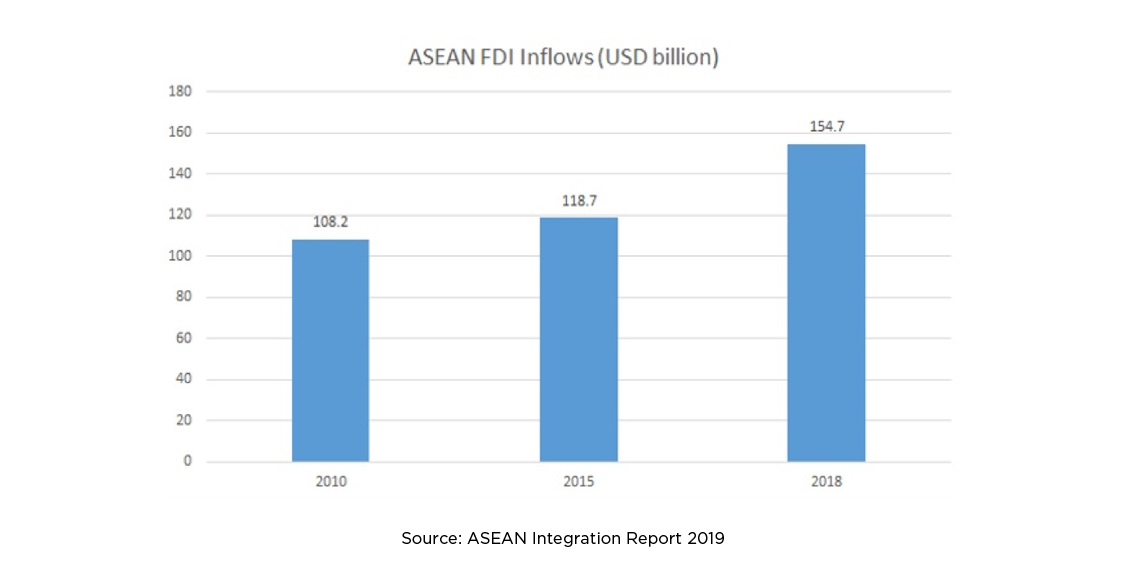
​​In 2018, ASEAN received US$154.7 billion or 11.9% of total global FDI inflows, the highest in its history, ranking third after the EU and the US

ASEAN is excited by the prospect of an additional US$1 trillion to its economy from greater application of new technologies by 2025, based on a projection in 2016 by a leading consulting firm, but it does not give enough attention to harmonisation of regulations and allowing free service flows in Industry 4.0.

Indeed, the other side of the challenge of the new economy – upskilling and reskilling – must be addressed in tandem if displacement of employment is not to become a grave regional social problem.

Employment can be protected, of course, by putting up barriers (which ASEAN has been showing a propensity to do) but that would mean continued inefficiency, which in the end, will leave the protected country and economy behind – thereby widening disparities that will undermine national and regional cohesion.

ASEAN has not taken on board the lessons to be learnt from the alienation and political tumult in developed countries caused by disparities experienced by the underserved in society, from the rise of tribalism (racism) and anti-globalism.

ASEAN must stop looking at economic growth alone. It has to carve policies from now to anticipate employment and social stresses that can undermine the regional idea, not to mention national integrity.

The issue of sustainable development and environmental protection must be vigorously addressed now before it gets too late. It is disgraceful that the so-called haze, which has blanketed countries in the region (for a whole generation!) was not even mentioned at the last ASEAN summit in Bangkok.

Have we to wait for the smog to come again next August?

ASEAN therefore, cannot be smug because its economies are doing relatively well, as the music could stop, and because there are social and environmental issues to address.

Vietnam would do well to take the lead in bringing attention to these existential matters.

More than that, ASEAN leaders must show leadership, give instruction, and take a handle on ASEAN’s direction, instead of going through the ritual year in and year out of summits and statements prepared well in advance by officials for them to adopt.

ASEAN leaders should look closely at Article 32 of the ASEAN Charter, which clearly gives a mandate to the chair to pursue the ASEAN interest in the fullest sense, give the chair their full support, actively inject their ideas and make sure there is meaningful content in ASEAN activities in the year ahead.

Without their active involvement and support, ASEAN will, year after year, not fulfill its full promise, and could be storing big, explosive problems in the years ahead.

Mekong Monitor: Border trade in Vietnam and Myanmar affected by dwindling border crossings


Photo credit: Reuters


TRADE, ECONOMY, AND INVESTMENT


MYANMAR, VIETNAM

Border trade in Vietnam and Myanmar affected by dwindling border crossings
(29 January 2020) Border towns in Myanmar and Vietnam dependent on cross-border trade and tourism with China have started to be affected by the recent coronavirus outbreak in Wuhan. A border official at the Lao Cai border crossing stated that permissions for Chinese tourists to cross were suspended effective 27 January 2020. The Mong Cai border crossing in Quang Ninh Province only saw 3,379 Chinese tourists cross during the Lunar New Year, down by 38% from the same period in 2019. Quang Ninh province as a whole just saw 6,700 Chinese tourists arrive during the holidays, compared to the 45,000 tourists over the same period last year. In Myanmar, it was reported that border crossings to China had declined significantly since the confirmation of coronavirus cases in Yunnan.
Read more>>

MYANMAR

Myanmar received over 4.36 million foreign visitors in 2019
(29 January 2020) Myanmar received over 4.36 million foreign visitors in 2019, an increase of 23% compared to the previous year, according to the Ministry of Hotels and Tourism. The ministry also recently announced granting visa-on-arrivals to ordinary passport holders from certain countries for a three-year probation period lasting until 31 December 2022. These countries included Austria, Hungary, and New Zealand. In addition, visa-exemption days were extended to 30 days for Vietnamese tourists in Myanmar starting from 1 January 2020.
Read more>>

MYANMAR

Singaporean sovereign wealth fund to buy 20% stake in Myanmar’s Yoma Bank
(29 January 2020) Singapore’s sovereign wealth fund GIC Pte intends to buy 20% of Myanmar’s Yoma Bank Ltd for US$88.7 million. The Yoma Bank chief executive officer stated that the bank will benefit from the experience GIC can bring. Yoma Bank was founded by local tycoon Serge Pun in 1993 and is one of Myanmar’s largest lenders, with 80 branches in the country. Its existing shareholders include the World Bank’s investment arm International Finance Corp (IFC). Myanmar’s banking sector opened to foreign investors in January 2019, attracting foreign investors interested in serving the country’s large underbanked population.
Read more>>

THAILAND

Thai stocks drop most since 2016 after China bans outbound group tours
(30 January 2020) Thai stocks have dipped the most since 2016 on fears of economic turbulence after China banned outbound group tours in light of the coronavirus outbreak. The SET index slid 2.9%, with tourism-related shares among those bearing the brunt of the drop. The baht also weakened in line with emerging-market currencies over concerns of a fallout from the virus. In 2019, Chinese nationals spent almost US$18 billion in Thailand, composing around a quarter of all foreign tourism receipts. As of 26 January, Thailand has confirmed eight cases, with five already discharged.
Read more>>

THAILAND

Thailand ranked sixth destination where Chinese tourists prefer to use mobile payments
(29 January 2020) Thailand ranked sixth out of top 10 countries where Chinese tourists prefer to use mobile payments, according to a recent report by Nielsen and Alipay. The report surveyed 4,837 Chinese travellers, and found Southeast Asia was the leader in mobile payment usage by Chinese tourists. Singapore ranked number one, with 77% of Chinese tourists in Singapore using mobile payments for transactions. The total amount spent by Chinese tourists increased by 14% in Singapore and Thailand between 2018 and 2019.
Read more>>


mekong-monitor-map

About Greater Mekong Subregion (GMS)

The Greater Mekong Subregion (GMS) Economic Programme was launched by the Asian Development Bank in 1992 connecting five developing ASEAN countries, namely Cambodia, Laos, Myanmar, Vietnam and Thailand, and Chinese provinces of Yunnan and Guangxi Zhuang Autonomous region. The region has some of the most robust economies sharing the Mekong River Basin thanks to its reform and liberalisation. The subregion is growing at a faster pace than the whole of East Asia and the Asia Pacific as the GDP growth rate for 2017 was at 6.4 percent, according to the World Bank. The population at the subregion as of 2016 is at 340 million while the GDP at PPP is at US$3.1 trillion in 2016. In 2015, trading within the region was at US$444 billion.