China-ASEAN Monitor: Indonesian tourism sector starts to feel the effects of COVID-19


Photo Credit: The Jakarta Post


Economy, Investment and Trade


Indonesian tourism sector starts to feel the effects of COVID-19
(2 March 2020) Tourist arrivals to Indonesia in January 2020 totalled 1.27 million, which is around 5.85% higher than the 1.20 million recorded in January 2019, according to Statistics Indonesia (BPS). However, the January 2020 growth rate is much lower than the 9.50% increase recorded in the same month in 2019. BPS deputy for statistics distribution and service Yunita Rusanti said the impact from the coronavirus can be seen to have a significant impact in the last week of January 2020. The number of Malaysian tourists to Indonesia fell 10.6% year-on-year to 206,532 arrivals in January, the highest among other countries. Chinese tourist arrivals came in second with 181,281 arrivals, a slight rise of 1.46% year-on-year, which is drastically lower than the 73.0% annual growth rate recorded in January 2019. To contain the spread of the COVID-19, Indonesia has closed its borders for those travelling to and from China. On 2 March 2020, President Joko Widodo announced the first two COVID-19 cases in Indonesia after a Japanese tourist’s stay in Jakarta.
Read more>>

Thailand says tourism numbers for February likely down 40%
(2 March 2020) The Tourism Authority of Thailand (TAT) said that tourism numbers for February 2020 were likely down about 40% year-over-year and that the numbers for March and April are likely to fall by as much as 60%. The number of tourists visiting Thailand may fall by 6 million in 2020 to 33.8 million, the lowest in four years, due to growing fears over the COVID-19 outbreak. TAT Governor Yuthasak Supasorn said that April 2020 is likely to be the worst performing month based on current developments and expects a very quiet Songkran festival, normally one of the busiest tourism events of the year, along with Christmas and New Year’s week. Up to 90% of events in Thailand such as the LPGA tour, the MotoGP and major concerts such as Green Day in Bangkok have been cancelled out of precaution. Yuthasak added that TAT is currently focusing on domestic tourism efforts and preparing promotions and discounts for Thai Nationals to boost travel.
Read more>>

Cambodia inaugurates China-funded road
(27 February 2020) China-backed National Road 58 was inaugurated by Cambodian Prime Minister Hun Sen and Chinese Ambassador to Cambodia Wang Wentian on 26 February. The 174-km road stretches along the Cambodia-Thailand border, connecting Poipet city in Banteay Meanchey province to Samraong city in Oddar Meanchey province and is expected to be crucial for economic and tourism development in the western provinces of Cambodia. Built by the Shanghai Construction Group Co., Ltd in 43 months, the road was funded by the Chinese government with a concessional loan. According to him, China has built more than 3,000 km of roads and eight river bridges in Cambodia.“The road has not only helped connect Cambodia internally but also linked our neighbouring provinces with Thailand,” he said. “It plays a very important role in further promoting trade and tourism between Cambodia and Thailand.”
Read more>>

Tech giants move production to Vietnam amidst COVID-19 outbreak
(2 March 2020) Tech companies Google and Microsoft have reportedly shifted production from China to Vietnam due to the US-China trade war and COVID-19 outbreak. Google has moved the production of one of its smartphones, Pixel 4a, to a facility in northern Vietnam and production is expected to begin in April 2020, according to a report by a regional media outlet. The search giant is also reportedly planning to begin the production of the Pixel 5 series in Vietnam, with production scheduled to begin in the second half of 2020. Furthermore, Google has also reportedly asked a long-time manufacturing partner to help prepare production lines in Thailand for its “smart home” related products. Meanwhile, Microsoft is scheduled to start producing its Surface line, including notebooks and desktop computers, in northern Vietnam in the second quarter of 2020.
Read more>>

Vietnam Airlines managers’ take salary cut as revenues take hit
(29 February 2020) Vietnam Airlines has cut the salaries of its senior managers in 2020 by 40% in a bid to mitigate the loss in revenue caused by the COVID-19 outbreak. The salaries of mid-level managers have also been cut by 20%-30%, according to CEO Duong Tri Thanh. The company expects the number of passengers to drop by 2.5 million in 2020 and with it, the revenues to fall by US$519 million. The airline has seen a sharp decline in the number of Chinese passengers but it is also seeing a decline in the number of passengers on other international and domestic routes. In view of recent developments, the airlines has also cut many flights to South Korea’s Seoul and Busan. The COVID-19 outbreak is estimated to cost the Vietnamese aviation industry US$1.08 billion in revenues in 2020, according to the Civil Aviation Authority of Vietnam. Although all 16 COVID-19 patients in Vietnam have been discharged and the country has seen no new cases in the last two weeks, the global death toll has reached more than 3,000.
Read more>>

Loong on China | China and Myanmar – Friends with benefits

Originally published in TheEdge Malaysia, 2 – 8 March 2020 edition.

The state visit of Chinese President Xi Jinping to Myanmar in January could not have been better timed.

Just weeks before, Myanmar’s leader Aung San Suu Kyi was at The Hague to defend her government against accusations of genocide of its Rohingya Muslims. And weeks later, the International Court would be issuing the equivalent of a restraining order on Myanmar’s treatment of the minority group – ruling in effect that the charges, which Myanmar strongly denies, are credible.

China seized the moment. As Myanmar’s leaders stared into the abyss of international isolation and sanctions, along came the president of the world’s second-biggest economy on the first state visit to the country in almost two decades. He arrived bearing not just economic gifts but also tacit reassurances that China will be in Myanmar’s corner should the issue be taken further at the United Nation’s Security Council.

The commercial side of the visit, however, hogged the headlines – understandably so given the impact of multi-billion dollar developments on Myanmar’s tiny $68 billion economy. Even Indonesia, which boasts $1.1 trillion in economic output, has been enthusiastically courting China’s Belt-Road investments.

The balance of power in the bilateral relationship is weighted heavily towards China. Not only is it Myanmar’s largest trading partner by a wide margin, it is also an important source of foreign investment. On the economic front, Myanmar has hardly any leverage with its giant neighbour.


Location, location, location

But this Southeast Asian lightweight has geography on its side.

Myanmar sits strategically at the heart of Asia – with China to the east, India to the west, the rest of ASEAN to the south, and the major shipping lanes of the Indian Ocean off its coast. A friendly Myanmar has much to offer a security-conscious China.

Consider the much-lauded 33 agreements signed during the visit. They are really about four key developments:

  • Building a hi-speed rail link from Kunming in southern China across central Myanmar to the Rakhine State off the Bay of Bengal in the Southwest.
  • Reviving the stalled Kyaukpyu project, a deep-sea port on the Bay of Bengal.
  • Establishing a mega city next to Yangon, the country’s commercial hub.
  • Setting up an economic zone straddling the China-Myanmar border.


These are not new deals so much as renewed deals to expedite or revive previously agreed projects that had stalled or had been scaled down by the Myanmar government over costs or political issues.

The developments are part of the multi-billion-dollar Economic Corridor project stretching from the Chinese city of Kunming to Myanmar’s Kyaukpyu port, the respective terminals of the China-Myanmar oil and natural gas pipelines.

Photo credit: Google Maps


Kyaukpyu connects China to the sea lanes of the Indian Ocean through the Bay of Bengal. This access is important. About 80% of China’s oil imports from the Middle East is shipped across the Indian Ocean through the Strait of Malacca to the South China Sea. The Malacca chokepoint is a major vulnerability in the event of a blockade-level confrontation with another country. The Kyaukpyu-Kunming link offers China an alternative route.

Not only could the small Southeast Asian nation play an outsized role in China’s energy security, it could help advance and strengthen China’s strategic position in the region.

The Kyaukpyu-Kunming link would reduce Beijing’s reliance on Pakistan’s Gwadar Port for Malacca-free access to the Indian Ocean and give it more leverage over Islamabad.

A friendly Myanmar also means Beijing would have its allies sandwiching a geopolitical rival and potential adversary, India. That sub-continent is flanked by Pakistan to the west and Myanmar to the east.

Myanmar belongs to the 10-member Association of Southeast Asian Nations, as does Cambodia, which is one of China’s most loyal supporters. Two friendly members in the bloc could increase Beijing’s influence over ASEAN policies.

And then there is the rare earths connection. These minerals are critical to modern technology and are used in products from cell phones to aircraft engines to the anti-counterfeiting mechanisms embedded in banknotes.

China is the world’s biggest rare earths producer. Less well known is that it has become a major importer as well. Manufacturers in China have been facing shortfalls in feedstock due to government restrictions on upstream output. The cutbacks are in response to a shift in the national strategy to consolidate China’s global dominance by further developing value-added downstream manufacturing, such as producing the hi-tech specialised magnets that are the single biggest end users of the minerals.

Myanmar meets China’s needs. In 2018 it supplied 60% of all Chinese imports of rare earth oxides and oxide equivalents.


Money Talks

But on the economic front, there is no question but that Beijing calls the shots.

China accounted for 33% of Myanmar’s exports in 2018. This compares with 18% for Thailand, 8% for Japan and just over 3% for both India and Hong Kong. In that period, China provided 32% of Myanmar’s imports against Singapore’s 19% and Thailand’s 14%.

Photo credit: Tetra Inspection


Even more important for Myanmar is Chinese investment – particularly with the Rakhine conflict and the looming threat of international sanctions dampening business and investment sentiment.

Official data ranked China as the country’s second-largest investor after Singapore – contributing a quarter of overseas inflows for the financial year ending September 2019. But in today’s globalised world of transnational businesses with their many local affiliates, conventional record-keeping likely understates the size of Chinese investment.

Both Hong Kong and Singapore are international financial centres where companies set up regional headquarters. Hong Kong, itself a part of China, is an important gateway for large fund flows to and from the Chinese mainland. The actors and funds behind investments booked through these centres could be from any jurisdiction.

Further blurring the picture are ubiquitous cross-border ownerships and partnerships. Chinese-owned CNPC, for example, is expanding its investment in petrol stations in Myanmar. But it is making its foray through Singapore Petroleum Company – a wholly-owned Singapore-based refinery that it acquired in 2009 – under the SPV brand rather than PetroChina.

Myanmar is also heavily in debt. Of its estimated national debt of US$10 billion, about $4 billion is owed to the Chinese. With foreign exchange reserves at only US$6.35 billion (2018), a lawmaker recently suggested in all seriousness that his country repay China with rice rather than dollars.

Myanmar’s edge is that China is keen to have it for an ally. Beijing has been wooing the strategically-positioned Southeast Asian nation since before the Suu Kyi government. Its overtures to develop the port and rail link predated the Belt and Road Initiative with the first memorandums of understanding going back to 2009.

The China-Myanmar relationship is and has always been transactional and driven by mutual self-interest. For all the media hype, the January meeting is not about the blossoming of true love. It is about securing friends with benefits.


Pauline is a veteran China policy risk analyst specialising in the broader political economy based in Hong Kong. She is a Senior Fellow of the CIMB ASEAN Research Institute with a special focus in ASEAN-China relations. Pauline Loong has earned an outstanding reputation as among the best-informed analysts of China’s political economy. She authors the well-known ‘Loong on China’ newsletter which has won accolades for its perceptiveness as well as its meticulous research and reliability. Pauline is the Managing Director of Asia-Analytica.

ASEAN Roundtable Series on Malaysia-Thailand: Towards Connectivity Beyond Borders

Published on 28 February 2020

CARI Viewpoint: Investments into border infrastructure and more continuity in consultation mechanisms can facilitate greater connectivity between Malaysia and Thailand, boosting the growth of bilateral trade

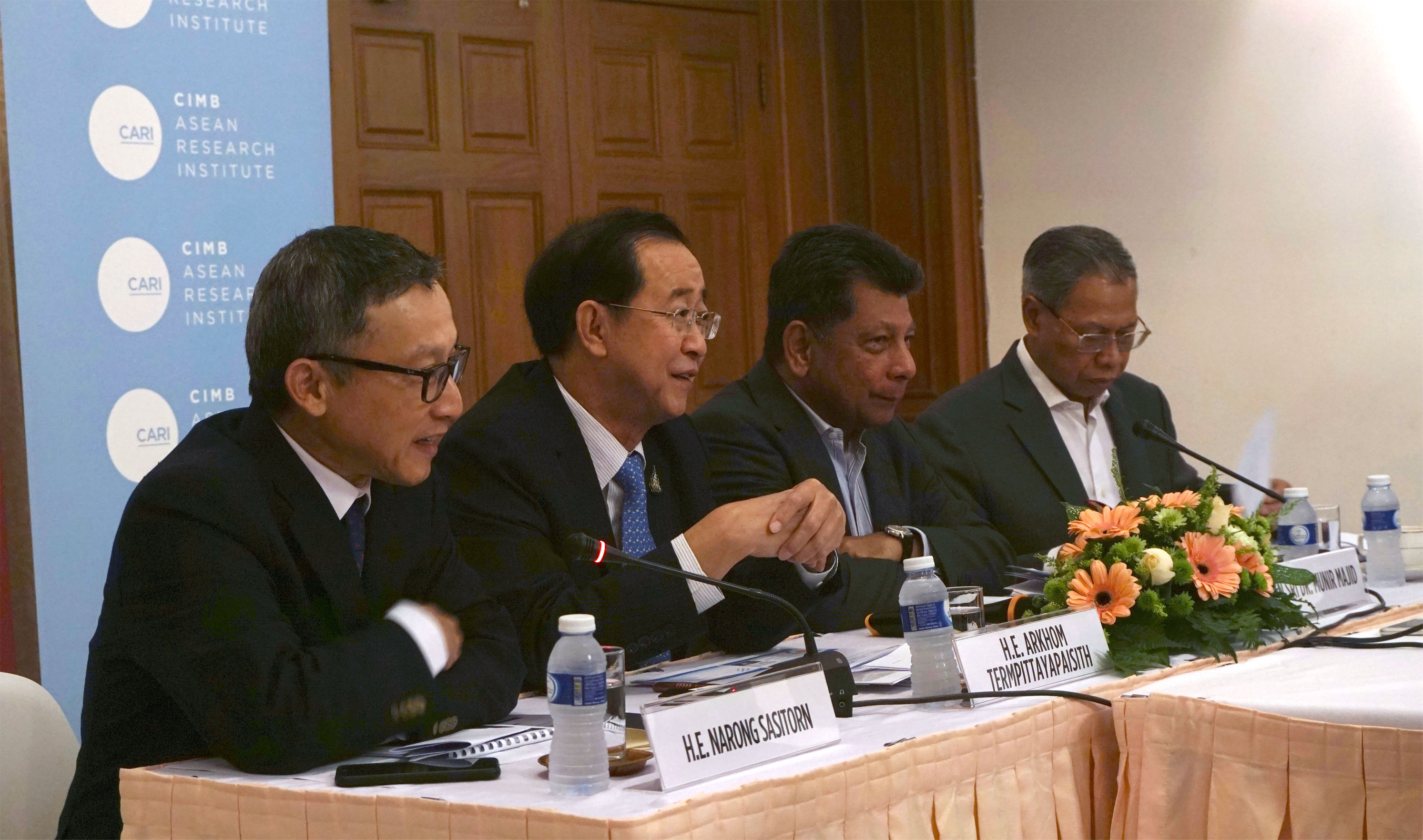
The CIMB ASEAN Research Institute (CARI) in collaboration with the Royal Thai Embassy in Malaysia organised an ASEAN Roundtable Series (ARS) on 18 February 2020 at the Embassy of Thailand in Kuala Lumpur. Titled “Malaysia-Thailand: Towards Connectivity Beyond Borders,” the roundtable looked at how Thailand and Malaysia can facilitate greater connectivity encompassing infrastructure, trade, investments, and peoples. Panellists at the roundtable also discussed how better bilateral connectivity can catalyse greater regionalism within the larger ASEAN bloc.

To bring clarity to such issues, the roundtable gathered eminent speakers such as H.E. Narong Sasitorn, Ambassador of Thailand to Malaysia; H.E. Mr. Arkhom Termpittayapaisith, former Minister of Transport for Thailand; and YB Dato’ Sri Mustapa bin Mohamed, Former Minister of International Trade and Industry and currently Chairman of the Bumiputera Agenda Steering Unit (Teraju).

Moderating the discussion was Tan Sri Munir Majid, Chairman of CIMB ASEAN Research Institute (CARI), President of the ASEAN Business Club.


A need for a common vision


In his opening remarks, H.E. Narong Sasitorn noted that while connectivity is always discussed at every level, besides the 24/7 opening of the border crossing at the Bukit Kayu Hitam-Sadao area, there hasn’t been much progress on the ground. He attributed this to changes in governments and budgetary constraints.

He also observed that even when government leaders agree to certain proposals, these proposals are then assigned to certain departments or agencies who work in silos. He posits that no one has an overall “common vision” of what connectivity means for both countries and the region. He argues that a common vision will provide the commitment needed to push projects through. He also argues that the US-China Trade War and the coronavirus outbreak has forced shifts in global supply chains from China towards ASEAN. In order to attract investors, ASEAN’s leadership must signal that they understand the opportunities this will bring. Ambassador Narong believes that Malaysia and Thailand can serve as the “core anchor” for greater ASEAN connectivity.

Tan Sri Munir Majid added to Ambassador Narong’s comments about a common vision, pointing out that traditionally Thailand has looked towards the Mekong region while Malaysia looked towards the Malay archipelago. He stresses that ultimately there must be trust between both countries in order for anything to happen.


Building greater connectivity within ASEAN


Arkhom shared his experience as former Minister of Transport for Thailand in promoting greater connectivity both within Thailand and the larger ASEAN region. He noted that there are several connectivity frameworks at different levels in place in Southeast Asia, including the Master Plan on ASEAN Connectivity 2025, sub-regional cooperation agreements such as the Indonesia-Malaysia-Thailand Growth Triangle (IMT-GT), and larger global projects such as China’s Belt and Road Initiative.

Arkhom discusses the difficulties in establishing seamless connectivity within the larger ASEAN region; most notably the wide disparity in the infrastructure of different member states. For instance, efforts to build a regional highway connectivity under the ASEAN Highway Network are complicated by the fact that the quality of highways differs depending on the respective Member State (including Malaysia and Thailand). The cross-border movement of trade and peoples are also hindered by the “soft infrastructure” of different rules and regulations in each country, which are being resolved through ongoing initiatives such as the ASEAN Single Window. Arkhom warns that ambitions to see the seamless movement of trucking between ASEAN countries can be hindered by simple differences such as differing driving regulations in each country.


Investing in Border Areas


Arkhom noted that during his time at the Ministry of Transport of Thailand, there was a proposal to build ten special economic zones at the border areas but in order to attract industries to set up in the zones, he states that infrastructure would have to be built to facilitate them.

Dato’ Sri’ Mustapa Mohamed made similar observations during his discussions on cross-border connectivity from the standpoint of his own constituency of Jeli, a border district located in Kelantan state. He believes that the relative underdevelopment (particularly in infrastructure) of southern Thailand and north-east Malaysia is a reason for the lack of connectivity between both countries. He also stated that currently there is a disproportionate amount of development occurring on the west coast of peninsular Malaysia instead of the east.

Ambassador Narong Sasitorn discussed that Thailand is currently undergoing large-scale infrastructure transformation. He stresses that Malaysian companies would be able to take advantage of these newly built logistical networks to access fast-growing markets such as Cambodia and Laos, southern China, and Bangladesh. But before these could be exploited, congestion at the Malaysia-Thailand border would have to be resolved first. Ambassador Narong notes that given the slowing global economy, infrastructure development at the border could provide a useful form of stimulus for the local economy. Tan Sri Munir also warned that entry points at the border risk becoming “chokepoints” without proper development. He stressed that development at the border areas should commence immediately before land value rises in the future.


Making consultation mechanisms more “business-as-usual”


Dato’ Sri Mustapa observed that another major challenge to building greater connectivity between both countries has been that present bilateral consultation mechanisms often lack effective follow-up. He stresses that these consultations need to be taken more seriously. In particular, he argues that while there is a lot of sharing at the central level (between Kuala Lumpur and Bangkok), these are often lacking at the local level. Dato’ Sri’ Mustapa believes that regional authorities such as the East Coast Economic Region (ECER) and the Northern Corridor Implementation Authority (NCIA), should collaborate more with their Thai counterparts. Ambassador Sasitorn pointed out that a problem with central collaboration is that government initiatives can often be interrupted or new ones introduced to the detriment of long-term continuity.

Tan Sri Munir concurs that a lack of political will and consistency have held back greater connectivity between both countries. He noted that the Malaysia-Thailand Joint Authority (MTJA) set up in the Gulf of Siam (which saw oil resources exploited by a company jointly held by both countries) was one example of both countries effectively solving bilateral problems together. On why this example of joint connectivity development could not be implemented again, he believes there ultimately needs to be “leaders and champions” in both governments to push for greater cross-border connectivity. Tan Sri Munir states that since Malaysia will be organising the next consultation (the last being in 2016), the onus is now on Malaysia to revive the current laxity in present relations.

The panellists also believe that future conversations must also involve feedback from the grassroots and private sector. Tan Sri Munir pointed to the ASEAN Business Club (ABC) as being one possible avenue within the private sector to expand cooperation.


Beyond economic ties


One participant in the audience noted that while there is lots of talk of infrastructure development and business cooperation, he questioned what is being done to facilitate people-to-people connectivity between the Thai and Malaysian peoples. Dato’ Sri’ Mustapa pointed out that while there are a lot of Thai students studying in Malaysia, there are fewer Malaysians studying in Thailand. Bilateral tourism flows should also be increased. He stressed that mechanisms should be sought to better connect younger people from each country.

Also discussed was the ongoing security situation in southern Thailand, with Dato’ Sri’ Mustapa pointing out that many Malaysians are worried about violence spilling over the border. He stated that the Malaysian government is currently facilitating peace talks in southern Thailand, with the hope that more security will allow more fluid traffic.


Concluding thoughts


In conclusion, panellists believe that ASEAN can no longer rely too heavily on external markets such as China in light of present circumstances. ASEAN must ultimately look more to their “inner strengths” moving forward, and find ways to increase intra-trade through greater liberalisation as well as infrastructure development. Ultimately, Malaysia and Thailand can lead the way in propelling ASEAN connectivity with a common vision and stronger political commitment.

CARI Captures 443: Growth forecasted for Thai exports in 2020


THAILAND

Growth forecasted for Thai exports in 2020
(25 February 2020) The Thai government remains upbeat on overall exports remaining positive in 2020 despite several negative factors including the COVID-19 outbreak. According to the Trade Policy and Strategy Office, exports are forecasted to grow between 0%-2% this year if shipments average between US$20.6-US$21.0 billion a month. The weakening baht is expected to improve price competitiveness for certain products while trade missions set up by Commerce Minister Jurin Laksanavisit in South Africa, the Middle East, Russia, Britain, Germany, Australia, Vietnam, Cambodia, Bangladesh and India are expected to help boost export growth. The Commerce Ministry also aims to conclude ongoing free trade agreement (FTA) negotiations with Turkey, Pakistan and Sri Lanka, and prepare for potential FTA negotiations through more comprehensive partnerships. On 24 February, the Commerce Ministry reported that customs-cleared exports rose 3.35% year-on-year in January 2020, fetching US$19.6 billion. This was the first rise in six months and was largely driven by higher shipments of oil and gold.

MALAYSIA

Malaysian government introduces US$4.7 billion stimulus package
(27 February 2020) Malaysian interim Prime Minister Tun Mahathir Mohamad unveiled a US$4.7 billion stimulus package to offset the negative impacts of the COVID-19 outbreak. Among the measures introduced included requiring banks to postpone payments or reschedule loans, service tax breaks for hotels, the central bank’s provision of US$474 million guaranteed financial aid to SMEs at 3.75% interest, and import duty and sales tax exemption on importation or local purchase of machinery and equipment used in port operations for three years. The Malaysian government expects economic growth in 2020 to range between 3.2% and 4.2%. After a political crisis triggered on 23 February, Malaysia currently has no sitting government after its King, the Yang Di-Pertuan Agong accepted Mahathir’s resignation as the seventh prime minister on 24 February. Mahathir was subsequently appointed as interim prime minister and will serve in the role until the appointment of the next cabinet.

THE PHILIPPINES

The Philippines expected to experience slower growth in first quarter of 2020/a>
(27 February 2020) The Philippines is forecasted to experience slower growth in the first quarter of 2020 due to the effects of the COVID-19 outbreak, according to a UK-based think tank. While the Philippines is relatively insulated compared to other countries, it will be impacted by a drop in tourist arrivals from countries such as China and South Korea. The Philippines imposed a ban on travellers coming from China, Hong Kong and Macau in early February while a ban on travellers from a South Korean province heavily affected by the COVID-19 outbreak is now in force. In the fourth quarter of 2019, the Philippines’ domestic economy grew 6.4% from a downwardly revised 6.0% in the third quarter of 2019. Travel and tourism contribute 12.7% to the country’s GDP. Estimates by the National Economic and Development Authority (NEDA) made in early February noted that if the outbreak lasted for one month, 0.06% would be shaved off the country’s GDP and if the contagion lasted up to five months, the GDP would decrease by 0.3%.

ASEAN-EU

EU eyes FTAs with ASEAN as a whole
(24 February 2020) The European Union has expressed interest in pursuing a number of free trade agreements with countries like Thailand in the Southeast Asian region, and eventually with ASEAN as a whole, according to EU-ASEAN Business Council Chairman Donald Kanak. Thailand and the EU have engaged in exploratory talks about a potential FTA but there has been no announcement on whether either side is willing to enter official negotiations. Among ASEAN Member States, the EU has already signed FTAs with Singapore and Vietnam and is currently in negotiations with Indonesia. An eventual FTA typically takes many years to negotiate. The EU-Singapore agreement took nine-years to conclude while the agreement with Vietnam took seven years. Kanak said although there have been interest shown with regards to an EU-ASEAN FTA, it would probably require more bilateral FTAs to be signed before the possibility of holding talks with ASEAN.

ASEAN-US

Special summit between the US and ASEAN to be held in March
(24 February 2020) The US is reportedly gearing up for a special summit with the 10 ASEAN Member States to be held on 14 March 2020 in Las Vegas. Washington is also planning bilateral meetings between US President Donald Trump with ASEAN leaders. According to analysts, the summit will be held to boost ties between the US and ASEAN. Key areas to be discussed at the summit will likely cover areas of shared concern including infrastructure development, navigation in the South China Sea, cybersecurity and international terrorism and smuggling. Separate discussions on technology, development in the Mekong region and women’s empowerment are expected to be organised as well. Anthony Nelson, director of the East Asia and Pacific practice of a global business strategy firm said the special summit is a necessary effort by the US administration to repair “hurt feelings in Southeast Asia” after President Trump missed two consecutive East Asia summits. He added that there is “eagerness” from ASEAN leaders and US policymakers to “strengthen ties, as there has been great concern in the region over Washington’s drifting interest.”

CAMBODIA

Revenue from customs and excise unlikely to meet target due to COVID-19 outbreak
(27 February 2020) Cambodia’s General Department of Customs and Excise (GDCE) is unlikely to meet its revenue target for 2020 as trade activity in the country slows down due to the COVID-19 outbreak, its director-general Kun Nhem told the press on 26 February. The 2020 National Budget Law, which was approved in November 2019, targets US$2.91 billion in customs and excise, and US$2.36 billion from taxes. “Revenue collection in January and February has already suffered from the outbreak. We hope the supply chain will recover shortly, but we cannot make any predictions,” Kun Nhem said. He added that the GDCE collected US$2.21 billion in 2019, which exceeded its target by US$1 billion. In 2019, revenue from import taxes amounted to US$593 million, up 31% from 2018, while revenue from special taxes totalled US$1.32 billion, a 33% increase. Revenue from value-added tax (VAT) rose by 29% year-on-year to US$1.15 billion. For customs and excise revenue, the largest contributors were vehicles and machinery (US$1.69 billion), petroleum and energy (US$537 million), and other products and construction materials (US$984 million).

INDONESIA

E-payment transactions in Indonesia jump by 173% year-on-year in January 2020
(27 February 2020) Indonesia’s central bank revealed that electronic money (e-money) transactions in the country jumped by 173% in January 2020 from a year earlier. E-money transactions in Indonesia rose to US$1.1 billion in January from US$410 million in January 2019. The growth of e-money transactions in the retail sector has grown significantly, especially in the past two years, according to Bank Indonesia (BI) senior deputy governor Destry Damayanti. E-money transactions were dominated by non-bank fintech firms, as Indonesian consumers moved away from traditional ATM and debit cards as payment options. The central bank recorded 41 licensed e-money platforms as of February 2020, up from 38 in 2019. In addition, online shopping is projected to increase to US$ 48.3 billion in 2025.

MYANMAR

Myanmar gold prices rise as COVID-19 spreads
(27 February 2020) Gold prices in Myanmar have risen amidst the COVID-19 outbreak, currently trading at a high of around US$867.78 per tical (1 tical is equivalent to 0.5 ounce). Domestic gold prices follow global prices, which have surged recently as investors abandon riskier investments in favour of the safe haven asset. Global gold prices hit US$1645 per ounce on 27 February, a slight reduction from the high of US$1690 per ounce earlier in the week. If the virus continues to spread, U Kyaw Win, chair of the Myanmar Gold Entrepreneurs Association, sees prices rising further to US$902.49, attracting more buyers of gold. The global gold price has hit a record ten year high due to people saving an increasing amount of gold and due to the daily price variation of between US$10 and US$40, according to the heads of other local gold entrepreneurs organisation.

MYANMAR

Passenger arrivals in Myanmar’s international airports drop by 36% month-on-month in February 2020
(26 February 2020) Passenger arrivals at Myanmar’s three international airports have dropped by 36% in February 2020 from the previous month. This has been attributed to the travel curbs imposed because of the COVID-19 outbreak. This has been particularly pronounced when it comes to Chinese visitors, with 2,000 arrivals per week from the usual average of 30,000. Before the virus outbreak, 17 airlines flew 30 routes from Myanmar to mainland China and Hong Kong. This number has now fallen to eight airlines and seven routes. “The virus has negatively affected all airlines, routes and destinations,” Ne Win, director of air transport at the Department of Civil Aviation said in an interview on 25 February. He added that the impact of the outbreak on local airlines could last up to a year.

THAILAND

Thailand’s equities benchmark ranks as world’s worst performer in 2020 due to COVID-19 outbreak
(27 February 2020) On 26 February, Thailand’s SET Index fell 5.1%, the most in six years. The benchmark gauge’s 14% decline in 2020 is the most among the world’s key equity indexes, making it the worst performing equities benchmark in the world. The decline has been attributed to the COVID-19 outbreak, which has impacted Thailand’s tourism industry (particularly due to the fall in the number of Chinese tourists, its largest source of foreign visitors). Tourist income accounts for about a fifth of its economy. Overseas investors have pulled out US$1.18 billion from Thai equities in 2020, adding to the US$11 billion withdrawal it has already experienced in the previous three years.

Mekong Monitor: Vietnamese steel products hit with Thai anti-dumping duties


Photo credit: VietNam News


TRADE, ECONOMY, AND INVESTMENT


THAILAND, VIETNAM

Vietnamese steel products hit with Thai anti-dumping duties
(25 February 2020) Thailand will impose anti-dumping tariffs ranging from 6.97% to 51.61% of cost, insurance and freight (CIF) prices on some imported steel products from Vietnam, according to the Trade Remedies Authority of Vietnam under the Ministry of Industry and Trade. The authorities in Vietnam were informed of Thailand’s final conclusion of an anti-dumping investigation on a number of iron and steel pipes and tubes imported from Vietnam by the Vietnam Trade Office in Thailand. The move was reportedly made to protect the Thai domestic manufacturing sector. However, the anti-dumping duties are exempted from the importation of related goods for production for export, goods imported for special use or goods classified as special categories. Further to that, the anti-dumping duty will be applied for a maximum period of five years and affected members can carry out reviews annually. The Trade Remedies Authority of Vietnam has therefore advised that relevant Vietnamese exporters continue to participate in the reviews to ensure the protection of their rights and interests.
Read more>>

VIETNAM

Vietnam maintains macroeconomic targets despite COVID-19 epidemic
(26 February 2020) The Vietnam government will strive to meet dual targets of containing the spread of COVID-19 and ensuring the safety of people while achieving the macroeconomic indicators set, said Prime Minister Nguyễn Xuân Phúc during a meeting of the National Financial and Monetary Policy Advisory Council held on 25 February. He noted that in the current climate, the authorities need to take strong, drastic and comprehensive measures to fight against the outbreak, boost production and business. Phúc has directed ministries, agencies, cities and provinces throughout the country to come up with plans to deal with socio-economic impacts caused by the virus. At the same meeting, the State Bank of Vietnam said it would keep inflation in check by applying a cautious monetary policy. It has also set the direction for banks to consider rescheduling payments, reduce interest rates and temporarily suspending debts.
Read more>>

MYANMAR

Myanmar’s garment factories expect to feel the impact of COVID-19 by March 2020
(24 February 2020) The garment industry in Myanmar fears that half of the garment factories in the country may have to temporarily shut down in March 2020 due to the shortage of raw materials from China. According to the Myanmar Government Manufacturers Association (MGMA), some 90% of raw materials including fabrics, textiles and zips used by garment factories in Myanmar depend on supply from China and the supplies have suffered disruption due to the COVID-19 outbreak in China. Garment factories in Myanmar have started to cope with the situation by reducing operations and work hours. There are currently around 500 garment factories in the Yangon region, including of 263 Chinese-owned factories, 67 South Korean-owned and 92 locally-owned. These factories are estimated to employ a total of 500,000 workers. According to the Korea Garment Association in Myanmar, under the current circumstances, South-Korean owned factories may stop operating in early March 2020 and without any improvement in the situation, the stoppage may continue until the end of April 2020.
Read more>>

CAMBODIA

Cambodia will not fight to retrieve 20% of EBA trade scheme
(27 February 2020) Cambodia’s Prime Minister Hun Sen affirmed that Cambodia will not fight to retrieve the 20% of the Everything But Arms trade scheme from the European Union, as the country had already taken measures in preparation for the partial withdrawal of the preferential trade system. The measures include tax exemptions for businesses for six months to one year to cope with the partial withdrawal of the EBA and COVID-19. According to the Center for Policy Study, the impact of the partial withdrawal of the EBA’s preferential tariff affects 20% of Cambodia’s total exports to the EU. “The decision of the European Commission on 12 February 2020 requires Cambodia to pay 20% on all exports to the EU, which costs approximately US$ 100 million per annum. This is only 0.35% of the Kingdom’s total GDP. Thus it does not severely affect the Kingdom’s economy,” the director of Center for Policy Study, Chan Sophal wrote on his Facebook in mid-February.
Read more>>

LAOS

Laos takes steps to ease business start-ups
(25 February 2020) Laos has eased the registration process in the country for foreign investors, local entrepreneurs and those who want to start a new business. According to the Enterprise Registration and Management Department, Ministry of Industry and Commerce, the business registration process was made easier with the aim of improving Laos’ global ranking in the ease of doing business. The country was placed 181 in a 2020 global ranking of 190 countries on the ease of starting a business. The department said the earlier 10-step enterprise registration process has been cut down to three steps but this excludes the process of obtaining a business permission licence. The current registration process has also been reduced to 30 days whereas the earlier process took 178 days, said Director General of the Enterprise Registration and Management Department, Somphuang Phienphinith. The process to speed up business registration was launched in late 2018 and completed in 2019.
Read more>>


mekong-monitor-map

About Greater Mekong Subregion (GMS)

The Greater Mekong Subregion (GMS) Economic Programme was launched by the Asian Development Bank in 1992 connecting five developing ASEAN countries, namely Cambodia, Laos, Myanmar, Vietnam and Thailand, and Chinese provinces of Yunnan and Guangxi Zhuang Autonomous region. The region has some of the most robust economies sharing the Mekong River Basin thanks to its reform and liberalisation. The subregion is growing at a faster pace than the whole of East Asia and the Asia Pacific as the GDP growth rate for 2017 was at 6.4 percent, according to the World Bank. The population at the subregion as of 2016 is at 340 million while the GDP at PPP is at US$3.1 trillion in 2016. In 2015, trading within the region was at US$444 billion.

China-ASEAN Monitor: Malaysian durian exports to China slows to a halt due to COVID-19 outbreak


Photo Credit: Reuters


Economy, Investment and Trade


Malaysian durian exports to China slows to a halt due to COVID-19 outbreak
(21 February 2020) Malaysian exports of frozen durian to its primary market of China has trickled to a halt in recent weeks due to the COVID-19 outbreak. A shortage of labour and electricity power outlets in backed-up Chinese ports have disrupted shipments of Malaysian durians. Malaysia is the world’s second-largest exporter of durians in the world after Thailand, having shipped US$38.61 million worth of the fruit to China in 2018. China normally accounts for 79% of Malaysia’s frozen durian market. One top durian exporter claimed it stands to lose up to US$3.58 million in the second quarter of 2020 if normal shipments does not resume soon.
Read more>>

Indonesian manufacturing industry expected to be impacted by coronavirus outbreak
(24 February 2020) Indonesia’s manufacturing sector is expected to be impacted by the COVID-19 outbreak in China. This is due to the expected halt to imports of Chinese capital goods and raw materials for the manufacturing sector. The government expects the impact to be felt around March 2020, due to a two to three-month lag. Indonesia imported an estimated US$10 billion worth of machinery and mechanical appliances from China every year. The secretary of the Coordinating Minister for Economic Affairs stated that the country’s inventory of raw materials for its manufacturing industry is expected to run out within the next few weeks. Indonesian imports from China in January 2020 were already down 4.6% year-on-year.
Read more>>

Singaporean companies with production facilities in China hit by COVID-19 outbreak
(24 February 2020) Singaporean-listed companies with production facilities in China have been affected by the COVID-19 outbreak. Although businesses were allowed to resume operations starting 10 February, quarantines and traffic restrictions mean that production supply chains will take time to reach normal capacity. Credit Suisse projected a 15% shortfall in production for the first quarter of 2020. Among the Singaporean companies impacted include computer parts distributor Powermatic Data Systems, precision components producer Broadway Industrial Group and precision metal part maker InnoTek.
Read more>>

Singapore to ease hiring rules for Chinese workers to deal with labour shortage
(26 February 2020) Singapore intends to loosen restrictions on Chinese workers holding work permits to help manufacturing and services industries that have been hit by labour disruptions due to the COVID-19 outbreak. For a six-month period starting 2 March, the Ministry of Manpower will allow companies to hire Chinese workers already in the country, with the permission of their existing employees. This is because some companies are currently facing labour shortages due to travel restrictions from China, while others have excess workers due to low demand. The government hopes to help transfer excess Chinese workers to companies that require them.
Read more>>

Border trade between Myanmar and China decline by US$209 million
(25 February 2020) Bilateral border trade between Myanmar and China declined by US$209 million year-on-year from 23 January to 18 February, due to the COVID-19 outbreak. The value of border trade in the border trade zones of Muse, Chinshwehaw, Lweje, and Kanpiketi totalled some US$270 million in the period, a drop from US$479 million achieved in the same period in 2019. Daily trade in the border trade zones declined to US$1 million and US$2 million, from US$10 million and US$14 million before the outbreak. Manufacturers have also been affected due to a shortage of raw materials being imported from China.
Read more>>

CARI Captures 442: Economic fallout expected for ASEAN countries, according to AMRO


ASEAN

Economic fallout expected for ASEAN countries, according to AMRO
(17 February 2020) A modelling exercise by the ASEAN+3 Macroeconomic Research Office (AMRO) has estimated that China’s GDP will drop by 0.5% and ASEAN+3 (ASEAN member countries, China, Japan, South Korea) economies by 0.2% in 2020 due to the COVID-19 outbreak. For its estimate, AMRO used the assumption that the outbreak would last for four months, similar in time length to SARS but with a fatality rate that is lower coupled with a higher contagion rate. The possible factors of slow growth include a sharp drop in outbound travel and tourism from China, a decrease in intra-regional tourism, a reduction in China’s imports from the region and the spread of COVID-19 in other countries in the region. Intra-regional trade in goods is expected to be hit by demand and production disruptions in China but based on the assumptions made by AMRO of previous epidemics like SARS, the disruptions are expected to be transitory and trade is expected to bounce back in tandem with China’s demand for intermediate and final goods.

SINGAPORE

Singapore unveils support package for businesses affected by COVID-19 outbreak
(18 February 2020) Singapore will spend US$2.9 billion on a series of new measures and improvements to existing schemes to stabilise its economy which has been affected by the near-term uncertainties caused by COVID-19. The announcement was made by Deputy Prime Minister Heng Swee Keat as he presented Singapore’s budget for 2020 on 18 February. The special Stabilisation and Support Package will help workers to remain employed and assist companies with cash flow. According to Heng, the sectors that have taken a direct hit from the coronavirus outbreak, such as tourism, aviation, retail, and food services, will receive additional help. The measures to help with employment consist of two: the Jobs Support Scheme (US$ 930 million), which aims to help firms retain local workers during this period of uncertainty and the enhancement to the Wage Credit Scheme worth US$760 million, which will allow firms to provide higher wage increases to its employees. Other measures under the package include the increase in the provision of government co-funding, income tax rebates and flexible rental payments for government-managed properties.

MALAYSIA

Malaysia may spend up to US$3.6 billion for fiscal stimulus package
(17 February 2020) The Malaysian government is expected to spend up to US$3.6 billion for a fiscal stimulus package to stimulate its economy and alleviate any adverse effects from the COVID-19 outbreak, along with other external uncertainties. An academic said the government had spent more than US$1.9 billion to stimulate the economy during the SARS outbreak in 2003 and therefore expects the government to allocate a stimulus package in phases in the range of US$2.4 billion and US$3.6 billion. On 14 February, the government said Prime Minister Mahathir Mohamad will announce a stimulus package on 27 February to spur the economy which expanded at 4.3% in 2019, its slowest pace in 10 years. Finance Minister Lim Guan Eng reportedly said the stimulus package would neither be a new budget nor part of Budget 2020. According to the academic, the new initiatives under the stimulus package could be in the form of assistance to the business owners especially small and medium enterprises (SMEs), especially the ones in critical industries like tourism, transport, food and beverages and aviation.

VIETNAM

Vietnam chairs first meeting of ACCC in 2020
(18 February 2020) The first meeting of the ASEAN Connectivity Coordinating Committee (ACCC) in 2020 was chaired by the head of Vietnam’s Permanent Mission to ASEAN, Ambassador Tran Duc Binh in Indonesia on 18 February. The meeting was primarily focused on the implementation of the 2025 Master Plan on ASEAN Connectivity (MPAC 2025). Twelve out of 15 initiatives in the five strategic fields of sustainable infrastructure, digital innovation, seamless logistics, regulatory excellence and people mobility were already in progress while the remaining initiatives are in the process of preparation. The ACCC was established to supervise the implementation of MPAC 2025 and report to the ASEAN Coordinating Council and the ASEAN Summit. The MPAC 2025 was adopted at the 28th ASEAN Summit in Vientiane, Laos in September 2016.

THAILAND

Thailand to decide on TPP participation around April, says Japan minister
(17 February 2020) Thailand will likely decide whether to join a revised Trans-Pacific Partnership (TPP) around April 2020, said Japan’s economy minister Yasutoshi Nishimura on 17 February. He was speaking to reporters after a meeting with Thai Deputy Prime Minister Somkid Jatusripitak in Tokyo. Nishimura hopes that the current members of the free trade agreement will decide on starting accession talks with Thailand at a ministerial meeting scheduled to take place in August 2020. The TPP, formally known as the Comprehensive and Progressive Agreement for Trans-Pacific Partnership (CPTPP), entered into force in December 2018 with 11 members after the US withdrew in January 2017. Japan, Australia, Canada, New Zealand, Mexico, Singapore and Vietnam have ratified the pact while Chile, Peru, Brunei and Malaysia have not. Nishimura noted that Chile and Peru may finish their domestic procedures soon and this would bode well as negotiations with Thailand could then be started with more countries that have ratified the pact.

INDONESIA

Indonesian Central Bank cuts interest rate and purchases government bonds to mitigate impact of COVID-19
(20 February 2020) Indonesia’s central bank cut its key interest rate for the first time in four months due to the COVID-19 outbreak. The bank lowered its benchmark seven-day reverse repo rate by 25 basis points to 4.75%. The central bank also purchased US$2 billion worth of government bonds to combat capital outflows. Although Central Bank Governor Perry Warjiyo stated that the impact of COVID-19 will be limited, the bank nonetheless downgraded its GDP growth forecast for 2020 to between 5.0%-5.4% from 5.1%-5.5%. Indonesia is relatively shielded from the global economic slowdown due to its lack of integration with global supply chains but is expected to be impacted by low commodity prices.

THE PHILIPPINES

Global credit watchdog trims the Philippines’ GDP growth forecast for 2020 to 6.1%
(19 February 2020) Global credit watchdog Moody’s Investors Service has trimmed the Philippine’s GDP growth forecast for 2020 by 0.1%, from 6.2% to 6.1%. This was due to the impact of the COVID-19 outbreak on economic growth in the Asia Pacific, particularly through its impact on Chinese demand and tourism, as well as supply chain disruptions. Despite the revised forecast, the Philippines is expected to remain the second-fastest growing economy in Asia (behind Vietnam). For 2021, Moody’s sees the country’s GDP growth accelerating to 6.4%. The country’s central bank has also resumed its easing cycle, slashing interest rates by 6% on 6 February.

MYANMAR

Myanmar to allow foreigners to trade local stocks from March onwards
(19 February 2020) Myanmar is preparing to allow foreigners to trade local stocks on the Yangon Stock Exchange from March 2020 onwards, to help expand the country’s bourse. Expatriates living in the country will be allowed to trade first, with permission for other foreigners to be given later. Existing rules allow overseas investors to own a maximum of 35% of a local company. The country will also set up a second board with looser listing rules than the main market. To list on the Main Board, firms must meet 17 criteria, such as being profitable for at least two years and having at least 100 shareholders. The proposed second board will allow foreigners to trade in it, and will be set up by the third quarter of 2020. In addition, efforts are underway to allow companies to issue bonds as early as the second half of 2020.

VIETNAM

Vietnam to increase power generating capacity over the next decade
(19 February 2020) Vietnam intends to more than double its power generating capacity over the next decade, according to new guidelines for a national energy development strategy. The country intends to boost capacity to 125-130 gigawatts (GW) by 2030, from about 54 GW currently. As one of Asia’s fastest-growing economies, Vietnam will need to tackle “severe” power shortages from 2021 onwards as demand outstrips construction of new power plants. Vietnam intends to raise its portion of renewable energy to 15%-20% by 2030, while also cutting its reliance on coal, which currently contributes 38% to the country’s power generating capacity. The country will seek domestic and foreign private investment to help fund new power plants.

LAOS

Laos government pro-actively seeking to improve business environment in 2020
(19 February 2020) Laos is pro-actively seeking to improve the environment for businesses in the country, according to its Deputy Prime Minister and Minister of Finance, Somdy Duangdy. The issues that will be looked at to improve the business environment include access to finance for SMEs, minimising the time taken to register a business and bolstering the sale of goods made in Laos. In 2019, the government distributed US$11.2 million to various banks for the promotion of SMEs and this amount is expected to be increased in 2020. Somdy also called upon the Lao National Chamber of Commerce and Industry to collect requests made from the private sector and to forward them to the government. The government is also focusing on boosting macroeconomic stability and the stability of the local currency.

Mekong Monitor: Thailand’s economic growth slips to 5-year low, tourism sector hit hard by virus outbreak


Photo credit: Bangkok Post


TRADE, ECONOMY, AND INVESTMENT


THAILAND

Economic growth slips to 5-year low, tourism sector hit hard by virus outbreak
(17 February 2020) Thailand’s economy grew 2.4% in 2019, the slowest rate since 2014, due to slowing exports and public investments while the impact of the COVID-19 outbreak is expected to exert more pressure in 2020. Southeast Asia’s second-largest economy has been affected by the US-China trade war, soft domestic demand, a delayed fiscal budget and drought. The authorities had hoped the tourism sector would offset the slowdowns in other sectors. The country’s GDP expanded 1.6% during the fourth quarter of 2019 (Q42019) compared to the same period in 2018, lower than the 2.1% forecast in a news poll. According to the National Economic and Social Development Council (NESDC), on a quarterly basis, Thailand’s economy grew 0.2% in Q42019. Thailand’s state planning agency said on 17 February that it has cut forecasts for the 2020 economic growth to 1.5%-2.5% from 2.7%-3.7% and lowered its outlook for exports to 1.4% from 2.3%. The agency also expects foreign tourist numbers to fall to 37 million in 2020 down from 2019’s record of 39.8 million, due to the virus outbreak. The Tourism Authority of Thailand expects a loss in revenue from the fall in tourist numbers to reach as high as US$16 billion.
Read more>>

VIETNAM

Vietnam to woo Taiwanese tourists to counter drop in Chinese visitors
(15 February 2020) Vietnam will accelerate plans to diversify its tourism industry by attracting visitors from Taiwan, among other countries, to mitigate the impact of a drop in Chinese tourists due to the COVID-19 outbreak. According to its tourism authorities, the country is expecting no tourist arrivals from China in the next three months, along with a decline in the number of international and domestic travellers by up to 50%-70%. In 2019, Chinese tourists accounted for 32%, or 5.8 million, of total inbound visitors. According to a news outlet, at least 5,000 workers in the travel industry have been laid off in Vietnam’s central province of Khanh Hoa due to the fall in the number of visitors. Vietnam’s tourism sector intends to implement measures to prop up the tourism sector by targeting countries that already have established frequent flights with Vietnam such as Taiwan, South Korea, Japan and ASEAN member countries.
Read more>>

CAMBODIA

Cambodia’s industrial product exports valued at US$11 billion in 2019
(17 February 2020) Cambodia’s export of industrial products reached US$11.2 billion in 2019, marking a 14% year-on-year increase. A report from the Ministry of Industry and Handicraft showed that the export of garment, footwear and travel goods accounted for 83% of the country’s total industrial product exports, worth US$9.3 billion and increased 11% from 2018. Meanwhile, non-garment exports such as milled rice, white sugar, animal feed, bicycle, beer cans, beer, soft drinks, cigarettes, electronic appliances and so on increased 27% to US$1.8 billion. The total of industrial products produced in 2019 increased 7% to US$14.9 billion, out of which US$3.7 billion worth of goods was produced for the domestic market.
Read more>>

MYANMAR

Total border trade value exceeds US$3.9 billion
(16 February 2020) Myanmar’s total border trade from 1 October 2019 to 7 February 2020 of the 2019/2020 fiscal year exceeded US$3.9 billion, according to its Ministry of Commerce. The total border trade increased to US$3.981 billion, up from US$584 million compared with the same period in the previous fiscal year. Out of the total, US$2.57 billion was in exports while US$1.41 billion was in imports. Compared with the 2018/2019 fiscal year, export earnings in the current fiscal year increased by more than US$221 million while import earnings increased by US$362 million. Among all the border points, the Muse border point captured the largest volume and value of border trade, with an estimated value of more than US$1.92 billion in the current fiscal year followed by Hteekhee with $668 million and Myawady with $390 million. Myanmar’s major export items include farm, animal, marine, forest, mining and other products. The country mainly imports capital goods, industrial raw materials, and personal goods.
Read more>>

VIETNAM

Vietnam-based South Korean manufacturer flies electronic components from China to Vietnam
(18 February 2020) South Korean smartphone maker Samsung has resorted to flying in electronic components for its smartphones from China to its factories in Vietnam to address the disruption in supply chains caused by the COVID-19 outbreak. Samsung produces nearly two-thirds of its phones, including its latest range, at factories in Vietnam’s Bac Ninh and Thai Nguyen provinces. It recently unveiled its latest foldable smartphone and Galaxy S20 5G range on 11 February 2020. The COVID-19 outbreak has left Vietnam’s local and foreign-owned manufacturers in areas ranging from electronics to textiles and footwear in a vulnerable position because many have supply chains that rely on China. The vice-chairman of the Korea Chamber of Business in Vietnam said many South Korean manufacturers carry inventory of only two to four weeks at their Vietnamese manufacturing sites. As such, many manufacturers are concerned that if the parts are not enough, they would not be able to make the final product.
Read more>>


mekong-monitor-map

About Greater Mekong Subregion (GMS)

The Greater Mekong Subregion (GMS) Economic Programme was launched by the Asian Development Bank in 1992 connecting five developing ASEAN countries, namely Cambodia, Laos, Myanmar, Vietnam and Thailand, and Chinese provinces of Yunnan and Guangxi Zhuang Autonomous region. The region has some of the most robust economies sharing the Mekong River Basin thanks to its reform and liberalisation. The subregion is growing at a faster pace than the whole of East Asia and the Asia Pacific as the GDP growth rate for 2017 was at 6.4 percent, according to the World Bank. The population at the subregion as of 2016 is at 340 million while the GDP at PPP is at US$3.1 trillion in 2016. In 2015, trading within the region was at US$444 billion.

China-ASEAN Monitor: China-ASEAN summit over COVID-19 to be held from 20-21 February 2020


Photo Credit: The Sun Daily


Economy, Investment and Trade


China-ASEAN summit over COVID-19 to be held from 20-21 February 2020
(17 February 2020) A special meeting between China and ASEAN countries to discuss responses to COVID-19 is scheduled to be held in Vientiane, Laos, from 20-21 February. The meeting will be attended by ASEAN delegations and Chinese Foreign Affairs Minister Wang Yi. The participants are expected to discuss joint prevention and control measures against the virus. According to a Chinese Foreign Affairs Ministry spokesperson, the meeting would also explore ideas on the setting up of a long-term and effective collaboration mechanism on public health to safeguard people in these regions. On 17 February 2020, 694 new cases of COVID-19 have been confirmed in 25 countries outside China, with a total of three deaths. China has criticised some countries for their “overreaction”, which “triggered unnecessary panic”. Japan, Singapore, the Philippines, Indonesia and Australia are among the countries that have ordered more stringent measures that effectively prevent the entry of Chinese nationals.
Read more>>

COVID-19 outbreak impacts Belt and Road projects in Indonesia and Cambodia
(18 February 2020) The COVID-19 outbreak in China has impacted Belt and Road Initiative (BRI) projects in countries such as Indonesia and Cambodia, due to the restrictions imposed on the travel and the import of Chinese goods. Construction works for a US$6 billion high-speed railway project in Indonesia connecting Jakarta to Bandung, overseen by the China Railway International Group, was affected due to 100 Chinese personnel being unable to return to Indonesia. The company is now focusing on less critical aspects of the project while awaiting the return of its key staff. Chinese nickel and cobalt projects in Indonesia have also been disrupted by the travel restrictions. Meanwhile, Chinese-run factories in the Cambodia Sihanoukville Special Economic Zone have been impacted as well. Although the employees at the factories are local, these factories are highly dependent on supplies from China.
Read more>>

Indonesian palm oil exports to China decrease due to COVID-19 outbreak
(17 February 2020) Indonesia’s farming ministry revealed that palm oil exports to China have declined due to the COVID-19 outbreak. As of February 17, Indonesia has exported only 84,000 tonnes of palm oil to China in February 2020, compared to the 371,000 tonnes exported in the full month of February in 2019. In January 2020, it exported a total of 483,000 tonnes to China. Although demand from China has been impacted, the export volume is still expected to increase, according to a farming ministry official. In 2019, data from the Indonesia Palm Oil Association shows that China was the main destination for Indonesian palm oil exports, accounting for 19% of total exports.
Read more>>

China and Cambodia to sign free trade agreement by the end-2020
(17 February 2020) Cambodia and China hope to sign a free trade agreement (FTA) by the end of 2020, with the first round of negotiations concluded in January 2020. Negotiations are expected to be completed by the middle of this year. The Cambodian Ministry of Economy and Finance has stated that the trade agreement will help Cambodia to expand its exports to China while allowing Chinese investors to expand their businesses in the country (as well as attract new ones). The FTA would also allow medium-sized Chinese manufacturers to invest in Cambodia and export their products to large-scale companies back in China, thereby strengthening Cambodia’s value chain. According to government figures, trade volume between Cambodia and China has increased from US$5.16 billion in 2016 to US$6.04 billion in 2017 and US$7.4 billion in 2018. The two countries aim to reach US$10 billion in bilateral trade annually by 2023.
Read more>>

Myanmar mulling temporary halt to tourist travel with China to tackle COVID-19 outbreak
(18 February 2020) Myanmar’s Ministry of Hotels and Tourism proposed a temporary halt to tourist travel to and fro China in order to combat the spread of COVID-19. The government has already stopped issuing visas on arrival for Chinese tourists and is considering closing its land borders. Due to airlines halting flights, tour bookings from China have already declined by half. The ministry has stated that the virus outbreak provides an opportunity for Myanmar to review its newfound dependence on Chinese tourists to make up for a decline in Western tourists. Tourism operators echoed this sentiment and said the outbreak will give the industry an opportunity to diversify its tourist mix. Since late 2018, the rise of Chinese tourists has caused a significant increase in foreign tourists but did not result in significant increase in tourism revenue.
Read more>>

Press Release: Malaysia and Thailand to lead the way in pursuit of an integrated ASEAN through facilitating greater connectivity between both economies, catalysing greater regionalism within the bloc


Malaysia and Thailand to lead the way in pursuit of an integrated ASEAN through facilitating greater connectivity between both economies, catalysing greater regionalism within the bloc


(L-R): H.E. Narong Sasitorn, Ambassador of Thailand to Malaysia; H.E. Arkhom Termpittayapaisith, Former Minister of Transport Thailand; YB Dato’ Sri Mustapa Mohamed, Chairman, Bumiputera Agenda Steering Unit (Teraju)* and Member of Parliament for P30 Jeli; and Tan Sri Dr. Munir Majid, Chairman, CIMB ASEAN Research Institute and President, ASEAN Business Club.


Kuala Lumpur, 18 February 2020 – Former ministers from Malaysia and Thailand believe that ASEAN’s third- and second-largest economies in ASEAN respectively, can lead the way in pushing for an integrated region encompassing infrastructure, trade and investments, and people. This can be facilitated through better connectivity between both economies, catalysing greater regionalism within the bloc itself.

This was the call made during the ASEAN Roundtable Series organised by the CIMB ASEAN Research Institute (CARI) in collaboration with the Royal Thai Embassy in Malaysia. The theme of the roundtable discussion concerned the future of Thai-Malaysia connectivity and its implications for ASEAN regionalism.

Tan Sri Dr Munir Majid, Chairman of CARI and President of the ASEAN Business Club, observed in his opening remarks that in the face of an unstable international security and trade environment, it is imperative for ASEAN to push for greater seamless trade connectivity.

Noting that the intra-ASEAN shares of trade and investment have remained stagnant over the years, he argues that the political impetus for greater integration has been absent among ASEAN leadership, hindering the bloc from reaching its full potential. He believes that Malaysia and Thailand can serve as a vanguard to help expedite the Master Plan on ASEAN Connectivity (MPAC) 2025 which encompasses the physical, institutional, and people-to-people linkages, providing the foundational means to achieving the ASEAN Community 2025.

“The current COVID-19 crisis points to the need for greater integration in ASEAN and between Malaysia and Thailand. Setting standards and confidence in common adherence to them will increase connectivity at all levels, and in their quality. In the present situation what is required is the need for common standards in health and hygiene. Not to be forgotten are high common standards of transparency and disclosure,” said Tan Sri Dr. Munir Majid.

H.E. Narong Sasitorn, Ambassador of Thailand to Malaysia, pointed out that connectivity is the top agenda for both countries but there has not been much progress as the works are compartmentalised, no one has the big picture. He noted, “Connectivity is a key growth engine in ASEAN where Malaysia and Thailand have a strategic role to play. We are the second and third-largest economies. Our countries are located right in the middle where mainland and maritime ASEAN meet. Our bilateral trade makes up almost 40% of the total intra-ASEAN trade. What our countries need is a ‘shared vision’ to achieve this common goal of shared prosperity.”

Given the ongoing uncertainties from US-China trade war to the recent outbreak of COVID-19 which has threatened the global supply chains, H.E. Narong emphasised that ASEAN must act fast on connectivity as investors do not invest in countries but locations, and the regions that guarantee smooth logistics for their supply chains.

During the subsequent panel discussion, panelist H.E. Arkhom Termpittayapaisith, Thailand’s former Minister of Transport, discussed what the implications from improved Malaysia-Thailand connectivity would have for regional trade, logistics, and investment. He pointed out that Thailand has been making its biggest investment yet to upgrade its transport infrastructure including a double-track railway down through the south of Thailand to Malaysia. Through its well-connected highway and railway networks, Thailand can provide access to the growing markets in Cambodia, Laos, Myanmar, Vietnam and inland China for Malaysian businesses. He asked for continued and even closer cooperation between government officials of the two countries. The building of two bridges over Golok river which has been long overdue and the early conclusion of the Cross Border Transport Agreement are among the connectivity projects that should be given priority.

“Improved physical and institutional connectivity between Malaysia and Thailand does not only improve the efficiency of logistics and trade flows between the two countries,” H.E. Arkhom pointed out. “Internationally, it would also stimulate even more investment and economic dynamism along the integrated belt of regional supply chain.”

The other panellist, YB Dato’ Sri Mustapa bin Mohamed, illuminated his own experiences in helping execute Malaysia-Thailand bilateral cooperation initiatives while he was the former Minister of International Trade and Industry. He pointed out that there needs to be more follow-through of projects and existing mechanisms for bilateral talks need further enhancement.

“While there are several bilateral mechanisms already in place, such as the Joint Commission or the Joint Development Strategy for Border Areas, these have often been more ceremonial in character where both sides exchange scripted statements rather than engage in meaningful discussions,” said the former minister.

“I would like to propose a number of ways forward for the bilateral relationship. One would be to make more frequent high-level visits and to focus more on socio-economic issues, including enhancing connectivity and increasing bilateral trade and investment. Secondly, instead of ambitiously trying to cover all bases, it would be better to identify a few clear key priorities. To ensure effective follow-up, Joint steering committees, preferably at the ministerial level, could be set up to champion each of those identified priorities.”

Dato’ Sri Mustapa also stated that ‘demand-driven business areas’ should be identified and so that targeted trade facilitation can be provided while emphasising the importance of public-private-partnership investment in infrastructure projects.


*Dato Sri Mustapha bin Mohamed
– Chairman of Bumiputera Agenda Steering Unit (Teraju) (Dec 2019 – March 2020)
– Minister in the Prime Minister’s Department for Economics Affairs (March 2020 – present)