
Media Release: Effective responses toward COVID-19 pandemic require country assessment of needs and priorities while ASEAN needs to strengthen the mechanism for immediate and accurate exchange of information
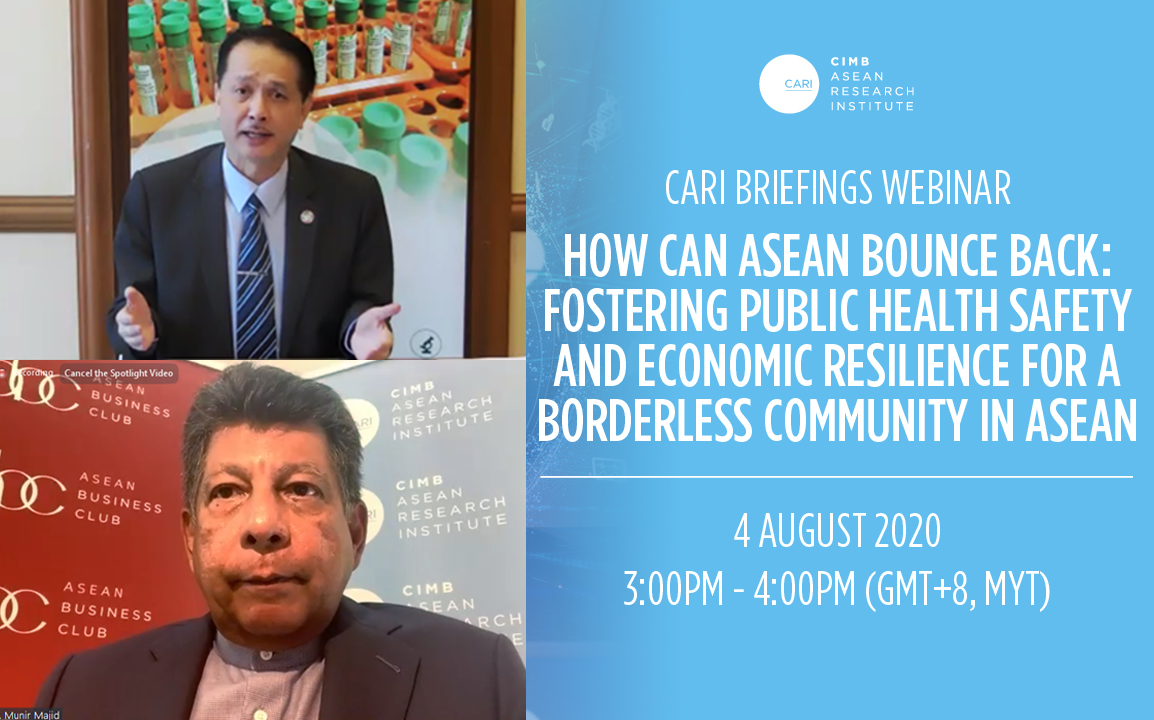

Effective responses toward COVID-19 pandemic require country assessment of needs and priorities while ASEAN needs to strengthen the mechanism for immediate and accurate exchange of information


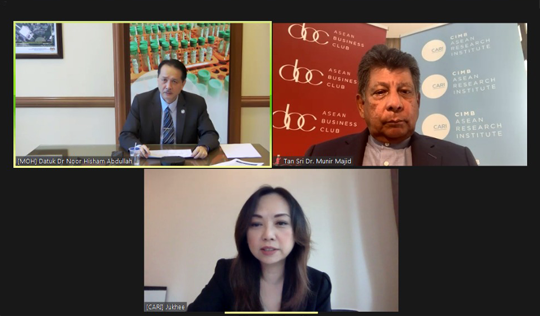
From top: Datuk Dr. Noor Hisham Abdullah, Director-General of Health, Ministry of Health, Malaysia; and Tan Sri Dr. Munir Majid, Chairman of CIMB ASEAN Research Institute


Kuala Lumpur, 4 August 2020 – CIMB ASEAN Research Institute (CARI) hosted the CARI Briefings webinar under its COVID-19 Economic Recovery Plan Series, titled “How Can ASEAN Bounce Back: Fostering Public Health Safety and Economic Resilience for a Borderless Community in ASEAN.” The session featured Datuk Dr. Noor Hisham Abdullah, Director-General of Health Malaysia.

Moderated by Tan Sri Dr. Munir Majid, Chairman of CARI, the discussion centred on Malaysia’s management of the COVID-19 pandemic, the country’s cooperation with ASEAN and the international community in addressing COVID-19, as well as how to strike a balance between public health safety and the survival of the economy.


1. Each country needs to assess and mitigate public, economic and social risks of COVID-19 impact


Dr. Noor Hisham noted that, “As each country in ASEAN is confronted by varying degrees of preparedness and challenges, in-country responses will have to take priority during the onset of the COVID-19 pandemic. Each country should assess its risk and rapidly implement the necessary measures at the appropriate scale to reduce both COVID-19 transmission as well the economic, public and social impacts,” said Dr. Noor Hisham.

For example, Malaysia opted for targeted testing that focused on high-risk groups instead of mass-testing. New daily COVID-19 cases in Malaysia came from being the highest in ASEAN within the range of hundreds back in March and April, to within single digits since early July. With the daily cases under control, Malaysia currently has the fourth-highest cumulative number of cases in ASEAN, behind Indonesia, the Philippines and Singapore.

“The Malaysian government gave space to the professionals to drive the fight and propose measures against the COVID-19 pandemic. Malaysia has also been fortunate in having Datuk Dr. Noor Hisham who leads a team of informed professionals dedicated to the fight against COVID-19 to secure our lives and to save our livelihoods. His sure hand and reassuring voice have given the Malaysian nation a sense of comfort in these dark and challenging times,” commented Tan Sri Munir.


2. A successful COVID-19 policy requires an engaged community


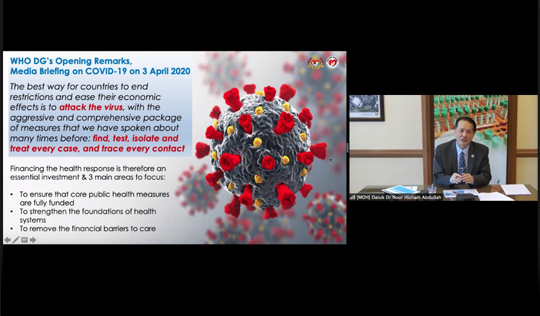
“There are no shortcuts out of this pandemic. An empowered, engaged community that takes individual behaviour measures in the interest of each other is very critical to bring this pandemic under control. As the widespread effect of this pandemic goes beyond borders, by extension, cooperation at the regional level must be built upon consultation with regional constituents. In this case, we in Malaysia have been working with our ASEAN neighbours to curb the spread of the pandemic,” commented Dr. Noor Hisham.

At the regional level, the respective ASEAN members were able to come together and exchange insights in ensuring that their citizens are safe and border crossings are closed.

At the Special ASEAN Summit held via video conferencing, ASEAN member states committed to enhance effective and transparent public communication through timely updates of relevant policies, public health and safety information, and clarifications on misinformation. The ASEAN Health Ministers have also agreed to coordinate cross-border health responses, scale up the use of technology for efficient information exchanges, and strengthen and institutionalise preparedness. ASEAN countries have also discussed capacity needs and gaps in national responses that could possibly be supported through cooperation at the national or regional levels with dialogue partners such as China, Japan, Korea, the US and the EU.

3. Gaining people’s trust requires a comprehensive strategy that is clearly and regularly communicated


“With the risk of loss of income of individuals and businesses due to lockdowns, a reluctance to adhere to COVID-19 related government measures is understandable. A comprehensive strategy to mitigate COVID-19 must include initiatives that cover public health, social security and economic recovery. The most critical ingredient of any response is — trust,” said Dr. Noor Hisham.

Across ASEAN, member states have implemented economic relief packages that include bank loan moratorium, wage subsidy, financing for small businesses, cash assistance for informal/gig workers, distribution of face masks, and subsidised COVID-19 testing. These strategies need to be communicated in a regular and transparent manner to gain trust and to stem out fake news, which risks negating helpful information released by the government.

The Quick Response Team of Malaysia’s Ministry of Multimedia and Communication has been actively debunking COVID-19 related fake news on social media since March 2020. Singapore even convened a parliamentary select committee to investigate deliberate online fake news earlier this year.

Datuk Dr. Noor Hisham Abdullah


Conclusion: Regional cooperation and economic resilience


“In the fight against COVID-19 there is no bragging right. A country, relatively successful at the public health end of the battle will still face serious suffering at its economic end – especially if it is an open economy like so many ASEAN countries,” said Tan Sri Munir.

“Economies that have been frozen by lockdowns are not going to be open to those easing out of those containment measures which are dependent on cross-border exchange of goods and services. Interdependence has no greater significance than when fighting a virus which respects no borders and boundaries,” he commented.

Tan Sri Munir reminded that in view of the possibility of a second wave of COVID-19 infection, ASEAN countries must further strengthen ASEAN’s information-sharing mechanism to allow for immediate and accurate information on local conditions and incentivise the private sector to increase the production of face masks and personal protection equipment (PPE) to a strictly-enforced ASEAN standard. When the situation begins to improve in the future, ASEAN should also adopt the available technology to develop an ASEAN-wide contact tracing system to support the reopening of borders and resumption of travel and tourism.

Mekong Monitor: Thailand to sever link between gold trading and baht to limit currency’s gain


Photo Credit: Bloomberg


TRADE, ECONOMY, AND INVESTMENT


THAILAND

Thailand to sever link between gold trading and baht to limit currency’s gain
(29 July 2020) The Bank of Thailand (BOT) plans to sever the link between gold trading and the baht as a way to limit the currency’s gains without being labelled by the US as a currency manipulator. The BOT is in negotiations with market participants to convert local gold trading to US dollars, including the sale of gold futures, to reduce the baht’s strength. The recent surge in gold prices has encouraged Thais to reduce their holdings, forcing local shops to sell in the international market and therefore pushing up the value of the baht. The baht has been one of Asia’s best performing currencies over the past four years, appreciating around 10% against the dollar over the period. Whether the gold-trading proposal is implemented will depend on the approval of the incoming governor of the Bank of Thailand. The kingdom is in the process of selecting a new central bank chief for the term starting 1 October 2020.
Read more>>

THAILAND

Myanmar approves US$171.27 million from ADB for rural electrification
(27 July 2020) Myanmar’s parliament approved a US$171.27 million loan from the Asian Development Bank (ADB) to improve rural electrification through its Accelerated Rural Electrification Project. The loan will be used for the electrification of 400,300 households in 2,815 villages in Karen State and Ayeyarwady, Magwe and east Bago regions. The locations were identified as areas where small percentages of households have access to electricity. The seven-year project is expected to start in 2021. As of December 2019, Myanmar’s electricity grid has provided power to 50% of the country’s energy needs. As of 31 March, Myanmar had US$10.2 billion in foreign debts, representing 12.9% of GDP, according to its finance ministry.
Read more>>

MYANMAR

Myanmar government to arrange relief flights for citizens to travel abroad
(28 July 2020) The Myanmar government is planning on arranging relief flights for citizens to travel abroad for urgent matters. Matters considered urgent include emergency medical treatment, citizens and seamen having to return to overseas workplaces on time, and scholars and students going abroad for studies on government programmes. Eligible citizens who are approved to fly can apply for COVID-19 tests at the National Health Laboratory in Yangon or Public Health Laboratory in Mandalay. Citizens are advised to carefully read and adhere to COVID-19 measures and immigration requirements of the respective countries they are travelling to as most of the foreign countries are still imposing entry restrictions.
Read more>>

CAMBODIA

Flights from Indonesia and Malaysia to be banned from 1 August 2020
(27 July 2020) All flights to Cambodia from Malaysia and Indonesia will be banned from 1 August 2020 onwards in order to stop the spread of COVID-19. The recommendation to temporarily ban the flights came after 23 COVID-19 cases were recorded in Malaysia. The ban is meant to control the spread of COVID-19 as Cambodia celebrates the Khmer New Year, which has been deferred from 13 April to 17 August. At least 108 cases have been recorded among passengers from Malaysian and Indonesian flights. Almost all of those tested positive were Cambodian citizens returning from Russia and the Middle East via transit flights through Malaysia. The decision to temporarily ban the flights comes a day after Malaysia announced that Cambodia was a potential partner for a “travel bubble.”
Read more>>

LAOS

Thai renewable energy company plans to build ASEAN’s largest wind farm in Laos
(29 July 2020) BCPG Plc, the renewable energy arm of Thai energy conglomerate Bangchak Corporation Plc, is planning on building ASEAN’s largest wind farm in Laos. The facility will cost US$840 million with a capacity of 600 megawatts. The farm will be located near the Mekong River across Ubon Ratchathani in southern Laos. The electricity will be sold to Vietnam’s state-run firm Electricity Vietnam (EVN). BCPG Plc will sign a power purchase agreement with EVN in October 2020. BCPG invests in the project through its subsidiary, Impact Energy Asia Development Co, acquiring 45% ownership while the other 55% is held by Impact Electrons Siam. Construction of the wind farm is scheduled to start after the agreement is signed and is expected to operate by 2023.
Read more>>


mekong-monitor-map

About Greater Mekong Subregion (GMS)

The Greater Mekong Subregion (GMS) Economic Programme was launched by the Asian Development Bank in 1992 connecting five developing ASEAN countries, namely Cambodia, Laos, Myanmar, Vietnam and Thailand, and Chinese provinces of Yunnan and Guangxi Zhuang Autonomous region. The region has some of the most robust economies sharing the Mekong River Basin thanks to its reform and liberalisation. The subregion is growing at a faster pace than the whole of East Asia and the Asia Pacific as the GDP growth rate for 2017 was at 6.4 percent, according to the World Bank. The population at the subregion as of 2016 is at 340 million while the GDP at PPP is at US$3.1 trillion in 2016. In 2015, trading within the region was at US$444 billion.

China-ASEAN Monitor: Singapore-China green lane leads to slight increase in passenger numbers at Changi Airport


Photo Credit: The Straits Times


TRADE, ECONOMY, AND INVESTMENT


Singapore-China green lane leads to slight increase in passenger numbers at Changi Airport
(21 July 2020) The opening of the Singapore-China green lane and the restarting of transit flights helped to increase passenger numbers at Changi Airport in June, but only by a small margin. Data released by Changi Airport Group (CAG) on 20 July showed that the number of passengers at 48,200 was still 99.2% lower than what it was in the same period in 2019. The Singapore Airlines (SIA) Group reported a similar fall in passenger numbers, with the 17,700 passengers it carried in June equivalent to a 99.5% drop from 2019. CAG told a local news outlet that it has handled more than 10,000 transit passenger movements since the gradual reopening to transit flights on 2 June but noted the numbers remain very low compared to pre-pandemic levels. Currently, only flights by the SIA Group, comprising SIA, SilkAir and Scoot, from selected cities are allowed to transit at Changi..
Read more>>

China, Singapore pledge to safeguard smooth supply chain, trade amid pandemic
(28 July 2020) Officials from China and Singapore have pledged to maintain a smooth supply chain and trade amid the COVID-19 pandemic. During a minister-level video conference held between China’s National Development and Reform Commission and Singapore’s Ministry of Trade and Industry on 28 July, both sides emphasised cooperation under the Belt and Road Initiative. The two sides expressed confidence that their third-party market cooperation has been running smoothly and provided a list of the first batch of major projects under such cooperation. They also discussed strengthening bilateral cooperation in infrastructure and finance.
Read more>>

China remains the Philippines’ top export market, import supplier
(23 July 2020) China remains the Philippines’ top export market with almost 27% of the Philippines’ total exports being shipped to the world’s second-largest economy, according to the Philippines’ Department of Trade and Industry (DTI). China is also the Philippines’ top import supplier, accounting for 23% of the Philippines’ total imports, as well as the Philippines’ top trading partner. Philippine Trade and Investment Center (PTIC) Shanghai’s Commercial Vice Consul Mario Tani expects this trend to continue. According to Tani, Philippine exports to China grew by almost 9% annually from US$8.02 billion in 2017 to US$8.70 billion in 2018, while imports from China grew at an average of almost 3% annually from US$17.46 billion in 2017 to US$21.39 billion in 2018.
Read more>>

Bridge beams installation on railway’s two Mekong River crossings completed
(21 July 2020) The task of beam setting on two bridges that cross the Mekong River in northern Luang Prabang province has been completed by China Railway No. 8 Engineering Group (CREC-8). The two bridges form part of the Laos-China Railway construction project. The Laos-China Railway crosses the Mekong River twice with passenger trains that will travel at around 160 km per hour with freight making its way past at 120 km per hour. Construction of the bridges is currently ongoing. The Laos-China Railway is a strategic docking project between the China-proposed Belt and Road Initiative and Laos’ strategy to convert from a landlocked country to a land-linked hub. The railway is scheduled for completion at the end of 2021 and will be the first rail route linking Laos to China’s network.
Read more>>

Cambodia and China conclude FTA negotiations
(22 July 2020) Cambodia and China officially concluded negotiations on the establishment of a free trade agreement (FTA), after half a year, on 20 July 2020. Cambodian Minister of Commerce, Pan Sorasak and his Chinese counterpart, Zhong Shan made the official announcement on the conclusion of the FTA negotiations via video conference. The FTA is expected to bring many economic and social benefits to the people of the two countries through the liberalisation of trade in goods and services, the promotion of comprehensive investment, as well as cooperation in a number of areas. For the next step, both sides will implement their respective internal procedures leading to the signing of the bilateral FTA this year.
Read more>>

Tan Sri Dr. Munir Majid shares his thoughts on ASEAN’s response to COVID-19 on BFM


Tan Sri Dr. Munir Majid, chairman of CIMB ASEAN Research Institute spoke to Malaysian radio station BFM 89.9 on the economic impact of the COVID-19 pandemic across ASEAN, how the region has responded and what can be done to steer ASEAN’s post-pandemic economic recovery, including a bold proposal from the private sector.

The interview with Tan Sri Dr. Munir Majid starts from timecode 12:07.

If you are unable to listen to the podcast, click here.

ASEAN’s biggest hope is ASEAN itself

Originally published in TheEdge Malaysia, 27 July – 2 August 2020 edition.

The COVID-19 global pandemic has already had a major impact on the global trading system. Supply chains are being disrupted and trade restrictive measures have been adopted by several countries on products ranging from agriculture to food and from medical devices to personal protective equipment. In general, protectionism and economic nationalism continue to be on the rise.

Some of the recent trade data is frightening, with the World Trade Organization (WTO) projecting that world merchandise trade could drop between 13% and 32% in 2020. Within ASEAN, even a strong and resilient economy such as Singapore’s has contracted a record 41.2% in the three months to June 2020, entering a technical recession for the first time since 2009. No other ASEAN Member States has been spared, whether from severe economic contractions or greatly reduced growth prospects.

Other dark clouds loom on the horizon. These include continued turbulences in the US-China economic and geopolitical tensions, threats to established global value chains with potential reshoring and onshoring of certain processes away from Asia-Pacific, reduced flows of foreign direct investment and major reductions in other drivers of ASEAN GDP such as tourism. Matters could worsen if COVID-19 is not contained and new waves will force further lockdowns and travel restrictions.

Can ASEAN bounce back?

ASEAN in many ways has long been the poster child of economic development – as a young region that has continuously been able to attract new investments and benefitted from globalisation. It is also a region that has learnt the lesson of past crises well such as the 1997 Asian economic crisis, bouncing back stronger, better regulated and more resilient. In the meantime, the ASEAN Economic Community (AEC) came to being in 2015 and the economies of all ASEAN Member States have grown exponentially, driving millions out of poverty and integrating ASEAN into the global value chains.

Yet, behind that narrative and many of the incredible economic numbers of the region hides a reality that has many investors, traders and economic commentators quite worried. In fact, the reality is that of a region that depends dangerously on the outer world when it comes to trade, of growing inequalities within each of the 10 countries, and a level of ambition proclaimed in most of the ASEAN legal instruments and Leaders’ statements that ASEAN is struggling to achieve.

The AEC Blueprint 2025 states, in one of its first preambles, that the AEC aims to “create a deeply integrated and highly cohesive ASEAN economy that would support sustained high economic growth and resilience even in the face of global economic shocks and volatilities.” These words were written many years before COVID-19 struck, but they could not have been more visionary. Unfortunately, the “deeply integrated and highly cohesive ASEAN economic region” is far from being realised. In fact, economically speaking, ASEAN Member States continue to interact more as competitors rather than partners and “architects” of a single ASEAN market.


A few comparisons with the EU

The European Union and ASEAN are very distinct legal, economic and political experiments, but when it comes to trade and regional economic integration, they are “like products,” at least in terms of the ambition to create an “internal market” based on the “free flow of goods” across borders.

The AEC Blueprint 2025 expressly aims at facilitating the “seamless movement of goods, services, investment, capital, and skilled labour within ASEAN in order to enhance ASEAN’s trade and production networks, as well as to establish a more unified market for its firms and consumers.”

The actual trade figures reveal, however, a very different reality between the two regions: Intra-ASEAN merchandise trade constituted only 23% of total trade in the region in 2018 (down about 10% from 25% in 2010), while intra-EU trade accounted for about 69% of the EU’s total trade in 2018 (up roughly 10% from 63% in 2010).

This difference is staggering, even if one takes into the account the fact that ASEAN is a free trade agreement and not a customs union like the EU, and even accounting for the difference in the level of development and the longer process of economic integration in the EU.

The worrying sign is that, despite the AEC and its relative success in trade liberalisation through tariff reductions within the region, ASEAN remains over-reliant on external export markets. Intra-ASEAN trade is hampered by a plethora of import procedures, recommendations, approvals, permits, often disproportionate non-tariff measures (NTMs) and restrictive or discriminatory non-tariff barriers.

Intra-ASEAN trade is the biggest, most natural and arguably easiest opportunity for ASEAN to stop depending on exports to third-country markets, especially at a time when global trade is contracting and competition is fierce, and to build a truly integrated, cohesive and resilient “internal market.” Is there anything that ASEAN can do to address this missed opportunity? Can the EU provide any comparative guidance and a model for greater integration? Two lenses of interpretation stand out: regulatory transparency and enforcement mechanisms.

Regulatory transparency holds the key to regional economic integration

Trade-related regulatory transparency is a fundamental catalyst to facilitate greater regional economic integration in ASEAN, just as it is and has been for the EU. Traders wishing to engage in cross-border trade must first and foremost be able to know and understand the applicable rules and procedures of each ASEAN or EU country. Only transparency allows for traders to identify opportunities, understand their obligations and rights, and cross borders with their goods or services.

ASEAN’s key legal instruments on trade in goods have plenty of very ambitious commitments and mechanisms for trade-related regulatory transparency. Among them are the ASEAN Trade Repository (under Article 13 of the ASEAN Trade in Goods Agreement – ATIGA) and the procedures that oblige ASEAN Member States (under Articles 11 and 40 of the ATIGA and under several principles of the so-called ASEAN NTMs Guidelines) to notify other ASEAN Member States of new trade-related measures ahead of adoption.

Unfortunately, these legal commitments are largely not complied with by ASEAN Member States. Reportedly, a total of only 180 notifications were made between 2013 and 2018 by the 10 countries together, but none were notified within the prescribed 60 days of advance notice, and the ASEAN Trade Repository is still largely incomplete. Clearly, while the rules are there and are very ambitious, the political will to deliver transparency is, for the most part, not there.

By mere comparative example, the EU’s Technical Regulation Information System (TRIS) has required since 1983 EU Member States to notify the European Commission of all their draft technical regulations (technical barriers to trade measures) before they are adopted into national law. An average of more than 700 notifications are made every year. Breach of the TRIS notification procedure by EU Member States may result in their laws being declared inapplicable. No such enforcement mechanisms exist within ASEAN.


Enforcement is crucial

The rules and the mechanisms to achieve regional economic integration are mostly there, but ASEAN does not seem to have the “appetite” to use them. The Protocol on Enhanced Dispute Settlement Mechanism (EDSM) for government-to-government dispute settlement has never been activated, despite having been twice revised and being a carbon copy of the very effective WTO dispute settlement system.

At the same time, ASEAN has launched a very innovative electronic platform known as the ASEAN Solutions for Investment, Services and Trade (ASSIST) to allow for ASEAN enterprises to challenge ASEAN governments and identify solutions to their cross-border intra-ASEAN trade problems through a non-judicial mechanism. ASSIST has seen only 10 cases since 2016, with a very modest track record of resolving the cases at stake.

This is in stark contrast with the EU, where the European Court of Justice is an active arbiter of cases between EU Member States and the European Commission (the latter being the EU’s “police officer” on the internal market) and between EU citizens/companies and EU Member States. The EU’s SOLVIT facility, which in many ways is a similar system to ASEAN’s ASSIST, went from 38 cases in 2002 to 2,295 in 2018, with more than 10,000 cases in the same period of implementation of ASSIST. More than 70% of the business cases resolved in an average of 10 weeks.

Again, the issue in ASEAN seems to be one of lack of will to use the available instruments to hold governments accountable, enforce the commitments and obligations that were undertaken, and effectively achieve the rule of law that ASEAN calls for as one of the fundamental drivers of its process of regional integration.

This is not just a lack of will on the part of governments, but also of the ASEAN private sector, with businesses clearly sceptical about the ability of the regional institutions to uphold their rights and to enforce ASEAN law.

Will COVID-19 trigger change?

The significant drop in global trade, and possibly also in the investment flows coming into the region because of the COVID-19 pandemic, may provide the impetus for ASEAN policymakers to re-evaluate the bloc’s current stand on critical aspects such as trade-related regulatory transparency, enforcement and compliance.

There is no doubt that more trade-related regulatory transparency is critical and that greater compliance with and enforcement of the existing rules, obligations and commitments must occur. One need not even look at the relevant example of the EU to find compelling evidence that these two ingredients are essential. Even within ASEAN, the Member States that are the most transparent and in which compliance and enforcement are the strongest, are the countries with a higher degree of socioeconomic development.

ASEAN should certainly consider updating certain provisions and mechanisms under the ATIGA and other key ASEAN legal instruments. In general terms, however, emphasis should be placed on implementing the existing legal instruments, most of which are very well written and incredibly ambitious, rather than constantly calling for, negotiating and adopting new legal instruments, protocols, frameworks, blueprints, roadmaps and initiatives.

ASEAN’s biggest hope is in ASEAN itself and the only real indicator of economic success and regional integration is the percentage of intra-ASEAN trade. If ASEAN can grow its internal market, to the primary benefit of its own Member States, it will grow in economic significance, become more resilient and acquire greater geopolitical relevance. Only then it will serve its people, businesses and future aspirations well.


Paolo R. Vergano is a Senior Fellow of CIMB ASEAN Research Institute and Partner at FratiniVergano – European Lawyers, with offices in Brussels, Singapore and Jakarta, where he has been advising the ASEAN Secretariat and ASEAN Member States on legal matters of regional economic integration since 2006. He remains an enthusiastic supporter of the ASEAN project.

CARI Captures 464: Vietnam’s technology skills set ranks second in Asia Pacific, first in ASEAN


ASEAN

Vietnam’s technology skills set ranks second in Asia Pacific, first in ASEAN
(21 July 2020) Data from Coursera’s Global Skills Index 2020 report rated Vietnamese technology skills second in Asia Pacific, 22nd globally and first in ASEAN. In the report published last week, the higher education online learning platform benchmarked 60 countries and 10 industries for business, technology, and data science skills, which are deemed critical to compete in an increasingly digital world. The report gave Vietnam’s technology skills a “competitive” rating, the second-highest proficiency level behind “cutting-edge” and above “emerging” and “lagging.” The country’s strongest skill in the technology domain is operating systems (Android and iOS software development) at “competitive” level. The rest of the ASEAN countries assessed in the report received an overall technology skills rating of “emerging” except for Malaysia which obtained “lagging.” According to Coursera data, every skill proficiency percent gained in a country’s average proficiency (across domains) is associated with a US$600 increase in per capita GDP.

INDONESIA

ASEAN+3 discusses COVID-19 response plans
(21 July 2020) China, Japan and South Korea affirmed their support for ASEAN’s initiatives in promoting cooperation in response to the COVID-19 pandemic at the ASEAN+3 Senior Officials’ Meeting held via video conferencing on 20 July. During the meeting, South Korea pledged to allocate US$1 million for the COVID-19 ASEAN Response Fund while Japan will continue to support ASEAN in establishing a regional centre for disease control and response. China committed to support ASEAN countries through programmes aimed at strengthening preventive medicine capacity. ASEAN leaders also suggested China, Japan and South Korea enhance coordination in the research and production of vaccines against COVID-19, as well as in regional common efforts to mitigate the impact of the pandemic

ASEAN

ASEAN Online Sale Day set for 8 August
(21 July 2020) The ASEAN Online Sale Day (AOSD) is set to take place on e-commerce platforms across ASEAN on 8 August, the Vietnam e-Commerce and Digital Economy Agency (IDEA) under the Ministry of Industry and Trade have announced. An initiative of Vietnam within ASEAN’s cooperative framework, the AOSD will be the first online shopping event conducted simultaneously throughout the entire ASEAN region. A website dedicated to AOSD featuring businesses participating in the programme has been launched. More than 100 e-commerce businesses from ASEAN member nations are expected to join the online retail gala. The event is expected to support and facilitate the development of commerce and e-commerce in the region, while promoting digital integration and building trust and credibility for ASEAN businesses, especially small and medium-sized enterprises trying to overcome the difficulties caused by the COVID-19 pandemic.

THE PHILIPPINES

Government aims to conduct “targeted lockdowns” while rebuilding economy
(22 July 2020) The second phase of the Philippine government’s National Action Plan (NAP) to fight the COVID-19 pandemic will focus on balancing Filipinos’ health and the gradual reboot of the economy, National Action Plan (NAP) on COVID-19 chief implementer, Secretary Carlito Galvez Jr., said on 22 July. According to him, NAP Phase II will be based on the “hammer and dance” theory whereby the government shall continue to contain the spread of the virus through its targeted lockdowns, while slowly rebuilding the economy. If required, local government units (LGUs) will be tasked to impose “granular targeted lockdowns,” to further contain the transmission of the virus within their areas. Galvez said that the government was also strengthening the expansion of the country’s actual testing capacity and is aiming to test as much as 10% of the population.

SINGAPORE

New framework for Singapore business events to resume safely
(22 July 2020) A risk management framework for business events with up to 50 attendees has been developed by the Singapore Tourism Board (STB), as it prepares for the safe resumption of business-to-business (B2B) events in the coming months. STB will conduct a trial of the new framework with two pilot “hybrid” events before gradually scaling up to other events and event organisers. Hybrid formats will have a combination of face-to-face and virtual interactions. STB said event organisers and event venues must demonstrate readiness and capabilities which will meet five outcomes needed for the resumption of B2B events in a safe and controlled manner. The five outcomes are infection control measures for every stage of an event attendee’s journey (pre to post-event), limits on crowd density, limits on close contact between individuals, ensuring a safe and clean environment, and preparing for COVID-19-related emergencies.

THAILAND

Thai professor calls for delay of travel bubble for at least six months
(22 July 2020) A Thai top medical professor has suggested that the government’s proposed “travel bubble plan,” should be shelved for at least another six months due to the high-risk of COVID-19 infections and second wave spikes in many parts of the world. The Thai government’s proposed “travel bubble plan” will allow small groups of foreign tourists to visit the country. Dr Thira Woratanarat, Associate Professor at the Faculty of Medical Science of Chulalongkorn University warned against the opening up of Thailand, saying that not a single country has escaped a second wave of infections after allowing foreign arrivals, noting that the screening system is not 100% accurate. Out of around 30,000 arrivals, Thira said 0.5%, or 150 might be found to be infected. Out of these, 20 might escape detection, and therefore, the need for quarantine.

INDONESIA

Indonesia to produce 100 million doses of COVID-19 vaccine
(22 July 2020) Indonesia’s state-run pharmaceutical company Bio Farma plans to produce 100 million doses of COVID-19 vaccine once the final stage of clinical tests have been completed, President Joko Widodo announced on 22 July. The vaccine is being developed by China’s Sinovac Biotech which is currently conducting Phase 3 clinical trials in Brazil. According to Jokowi, Indonesia will join in the Phase 3 trials involving 1,620 volunteers and the process will be overseen by the BPOM (Drug and Food Control Agency). At the initial stage, the company will produce 40 million doses of the vaccine before expanding it to 100 million. Sinovac was appointed as Bio Farma’s partner due to the similarity in the two companies’ vaccine production platform. Before human trials begin, the Sinovac vaccine must undergo laboratory tests at Bio Farma. According to the company, human trials are expected to take place at Padjadjaran University’s Medical Faculty in Bandung, West Java.

INDONESIA

Government admits slow disbursement to small businesses
(23 July 2020) The Indonesian government has disbursed US$809.1 million (Rp 11.84 trillion) from the COVID-19 stimulus package to small businesses and cooperatives as of 21 July but conceded that it had been slow in disbursing the funds. The disbursement is part of the government’s national economic recovery (PEN) programme, which will allocate US$8.5 billion (Rp 123.46 trillion) to aid small businesses and cooperatives amid the ongoing COVID-19 pandemic. The amount disbursed made up only 9.59% of the total budget. According to ministry data, most of the stimulus was disbursed through state-owned banks in the form of debt restructuring funds, US$26.2 million (Rp 381.4 billion) went to investment funds for 34 cooperatives, while the remaining was used for interest subsidies for MSMEs. The government aims to disburse all the funds by September 2020 by accelerating spending with the issuance of the Finance Ministry’s budget execution lists (DIPA).

BRUNEI

Brunei to enter final phase of de-escalation plan on 27 July
(23 July 2020) Brunei will loosen the limit on public and social gatherings from 50 to 100 people as it enters the fourth and final phase of its de-escalation plan on 27 July, following no reports of new COVID-19 cases for over two months. The revised mass gathering guidelines will apply to workplace events, weddings, religious activities, family get-togethers and charity events. Health minister Dr Mohammad Isham made the announcement during a press conference attended by seven cabinet ministers on 22 July. However, he warned that the pandemic is not over and that the public should stay vigilant and practise social distancing as part of the “new normal.” Members of the public will still be required to comply with physical distancing guidelines even when businesses and public services return to full operations.

MYANMAR

Suu Kyi and U Win Myint to represent Yangon constituencies in election
(23 July 2020) Myanmar’s State Counsellor Aung San Suu Kyi and President U Win Myint are slated to take part in an upcoming general election by representing two constituencies of Yangon region, Zaw Myint Maung, vice chairman of the ruling National League for Democracy (NLD) party told media on 23 July. Suu Kyi, in her capacity as the party’s chairperson, will run for the election in Kawhmu township while U Win Myint will represent Tamwe township constituency of Yangon region. Over 1,100 representatives from the ruling NLD party will take part in the general election scheduled to be held on 8 November 2020, he said. It is estimated that around 37 million people are eligible to vote in the election while 97 political parties are registered to take part in the vote. The five-year term of the incumbent NLD government will end in March 2021.

Mekong Monitor: Japan helps companies shift factories to Vietnam


Photo Credit: Cao Thang


TRADE, ECONOMY, AND INVESTMENT


VIETNAM

Japan helps companies shift factories to Vietnam
(21 July 2020) Fifteen out of more than 80 Japanese enterprises have received support from the government to move factories to Vietnam, according to the Japan External Trade Organisation (JETRO). The initiative was implemented to improve the gap in the Japanese supply chain since the supply chain disruptions caused by the COVID-19 pandemic. An international business news outlet reported that the Japanese government would start paying some companies to move factories out of China back to their home country or to Southeast Asia to improve supply chains and reduce dependence on manufacturing in China. According to a regional news outlet, the Japanese government would pay a total of US$653 million (70 billion Japanese yen) for 87 companies or groups to move production lines. Thirty of these will receive money for investments in Southeast Asia including Vietnam, Myanmar, Thailand and others, while the remaining 57 projects will move to Japan.
Read more>>

THAILAND

Prayut Chan-o-cha finalises new cabinet line-up
(22 July 2020) Prime Minister Prayut Chan-o-cha said he has completed his new cabinet line-up and all that remains is for the qualifications of the new ministers to be checked. Speaking after the cabinet meeting on 22 July, the PM said that following the resignations of six ministers he would announce the cabinet line-up as soon as possible. The energy portfolio, which has garnered attention, is expected to be given to someone outside of the ruling Palang Pracharath Party (PPRP). The reshuffle comes after the resignations of Deputy Prime Minister Somkid Jatusripitak, Finance Minister Uttama Savanayana, Energy Minister Sontirat Sontijirawong and Higher Education, Science and Innovations Minister Suvit Maesincee last week. This was followed by the resignations of Chart Pattana Party’s Tewan Liptapanlop from the position of PM’s office minister, and Chatu Mongol Sonakul from the position of labour minister.
Read more>>

THAILAND

Cabinet approves three projects worth US$126 million to resuscitate economy
(21 July 2020) The Thai cabinet approved three projects worth around US$126 million (Bt4 billion) under the US$12.6 billion (Bt400 billion) budget earmarked to revive its battered economy. The first project, an Interior Ministry project for volunteers to take care of the elderly, was approved with a budget of more than US$31.6 million (Bt1 billion). The year-long project will begin in July and create 15,548 jobs. The second project is the Interior Ministry’s so-called integrated sub-district development worth US$85.3 million (Bt2.7 billion), which aims to generate 14,510 jobs nationwide. The project will commence from August to September 2021. The third project is the Department of National Park, Wildlife and Plant Conservation’s plan to build firebreaks at a cost of US$7.7 million (Bt246 million). The project will run from July to May 2021 and create 9,137 jobs.
Read more>>

CAMBODIA

Cambodia’s rubber export increased 18% in first half of 2020
(20 July 2020) Cambodia exported 123,151 tonnes of dry rubber in the first half of 2020, up 18% compared to the same period in 2019, according to a General Directorate of Rubber report released on 20 July. The country made a gross revenue of US$160.7 million from exports of the commodity during the January-June period in 2020, up 15% over the same period last year. The report noted that a tonne of dry rubber had an average cost of US$1,305 in the first semester of 2020, around 33 dollars lower than that of the first semester of 2019. Cambodia exports the commodity to mainly Malaysia, Vietnam, Singapore and China. The country has so far planted rubber trees on a total area of 404,701 hectares, and the trees in 62% of the total area have grown big enough to be tapped.
Read more>>

MYANMAR

Domestic investments in 10 months exceed US$1 billion
(21 July 2020) Domestic investment in Myanmar totalled US$1.01 billion (K1.4 trillion) in the current fiscal year 2019/2020, an increase of over US$144 million (K200 billion) compared to the corresponding period in the previous fiscal year, according to data released by the Directorate of Investment and Company Administration (DICA). Between 1 October 2019 and 10 July 2020 in the current fiscal year, 104 local enterprises were allowed to invest in the country by the Myanmar Investment Commission, and the state and region investment committees. Domestic investors poured US$910 million (K1.3 trillion) into 138 projects in the corresponding period of the 2018/2019 fiscal year. During the ten months, the manufacturing sector brought in the largest domestic investments, followed by real estate development and other services sectors.
Read more>>


mekong-monitor-map

About Greater Mekong Subregion (GMS)

The Greater Mekong Subregion (GMS) Economic Programme was launched by the Asian Development Bank in 1992 connecting five developing ASEAN countries, namely Cambodia, Laos, Myanmar, Vietnam and Thailand, and Chinese provinces of Yunnan and Guangxi Zhuang Autonomous region. The region has some of the most robust economies sharing the Mekong River Basin thanks to its reform and liberalisation. The subregion is growing at a faster pace than the whole of East Asia and the Asia Pacific as the GDP growth rate for 2017 was at 6.4 percent, according to the World Bank. The population at the subregion as of 2016 is at 340 million while the GDP at PPP is at US$3.1 trillion in 2016. In 2015, trading within the region was at US$444 billion.

China-ASEAN Monitor: Laos and China to cooperate on low carbon emissions project


Photo Credit: Yunnan Provincial Overseas Investment


TRADE, ECONOMY, AND INVESTMENT


Laos and China to cooperate on low carbon emissions project
(20 July 2020) Laos and China will cooperate on a climate change mitigation project through the construction of a low carbon dioxide (CO2) emissions demonstration area in Saysettha Development Zone (SDZ), Vientiane. China will support the area in SDZ by creating a project plan as well as providing construction equipment and upgrading low CO2 emissions expertise through training and other activities. The low CO2 emissions demonstration area in SDZ is one of 10 of China’s low CO2 emissions demonstration projects in developing countries. The project will implement a low CO2 emissions plan as a model for transportation by using electric vehicles, and assist other sectors, as well as communicating the project publically to strengthen Laos’ climate change mitigation efforts and support sustainable development plans.
Read more>>

Laos to increase export of agricultural products to China
(18 July 2020) Laos is cooperating with different sectors and entrepreneurs to improve the quality of agricultural products in order to increase exports to China. The ministry has successfully negotiated market opportunities and regulated hygienic conditions for export crops and related products, including rice, corn, cassava, bananas, watermelons and sweet potatoes, to China. The ministry is also currently coordinating with the General Administration of Customs of China to draft conditions and specifications for the export of dried tobacco leaves, passion fruit and oranges. According to a report in a local daily, the two sides have also agreed on market openings for durian, longan, dragon fruit, jackfruit and job’s tears.
Read more>>

Malaysia’s InvestKL to roll out global B2B platform with CCB
(15 July 2020) InvestKL Corporation and China Construction Bank (Malaysia) Bhd (CCB) have launched “CCB Match Plus,” a global business-to-business (B2B) one-stop smart matchmaking service platform. The platform, which utilises big data, would allow enterprises to source for financial resources, projects, suppliers and list of products/services internationally. InvestKL chief executive officer Muhammad Azmi Zulkifli said the platform will allow InvestKL to leverage on the bank’s well-established network, primarily Chinese companies looking to expand their operations in ASEAN, particularly those operating in the digital and Industry 4.0 initiatives. CCB Corp will act as a third-party service provider, connecting online and offline channels, domestic and overseas markets, internal and external systems.
Read more>>

Thailand begins 2-prong strategy to deliver perishable goods to China
(19 July 2020) Thailand is bypassing supply-chain roadblocks to deliver its perishables, mainly agricultural and food products, to China, its biggest market in Asia. Since Thailand shares no border with China, perishable goods like fruit and vegetables have traditionally been sent from Thai farms and warehouses by trucks going through either Vietnam or Laos. While ships and planes have also been used, the COVID-19 pandemic has disrupted this delivery option. Around 80% of farm products from Thailand are normally transported by land to China. Tropical fruits like durian, mangosteen and longan are among the crucial, and most vulnerable, items. In July, Thailand began a 2-stage system, trucking products to Vietnam, where the products are moved into containers on trains, which complete the deliveries to China. There is currently no direct train route between Thailand and China, but the plan to connect the two countries via rail is in the works.
Read more>>

Fruit exports via Vietnam’s Lao Cai border gate increases in first half of 2020
(16 July 2020) Turnover of fruit exports via the border gates with China in the northern Vietnamese province of Lao Cai increased 7% year-on-year in the first half of 2020 to US$14.8 million despite the COVID-19 pandemic. According to the Lao Cai province’s department of customs, during this period, close to 27,000 tonnes of lychees were shipped to China through the Kim Thanh border gate. Vietnam sold more than 18,800 tonnes of bananas in the January-June period, a six-fold increase year-on-year while watermelon exports rose 94% year-on-year to US$12.4 million. According to the Lao Cai border gate customs sub-department, the increases were attributed to the effective implementation of e-customs procedures and the one-stop-shop model, speeding up the settlement of administrative procedures.
Read more>>

CARI Captures 463: Asset quality of banks in ASEAN economies expected to weaken due to COVID-19


ASEAN

Asset quality of banks in ASEAN economies expected to weaken due to COVID-19
(13 July 2020) The challenging economic and credit conditions caused by the COVID-19 pandemic is expected to weigh on the asset quality and profitability of banks in ASEAN countries and India, according to Moody’s Investors Service. The bond credit rating firm expects asset quality and profitability to deteriorate from “good” levels in 2019 across most banking systems. It noted that while government support measures will offset some of the pressure, they will not fully eliminate the negative impact. Despite the challenging outlook, the majority of banks are adequately capitalised, and Moody’s expects their funding and liquidity to remain sound and stable in 2020 and 2021. For instance, regulators in Thailand, Vietnam and India have restricted bank dividends; a credit positive for banks, while the largest banks will continue to benefit from deposit inflows as they are seen as safe-havens in times of stress.

INDONESIA

COVID-19 pandemic wipes out US$5.9 billion of Indonesia’s tourism revenue
(14 July 2020) The Indonesian tourism industry has seen its revenue fall by US$5.9 billion (Rp 85 trillion) so far in 2020, forcing business associations to call on the government to provide a greater stimulus for the industry. According to Indonesian Hotel and Restaurant Association (PHRI) chairman Hariyadi Sukamdani, more than 95% of workers in the tourist sector are being furloughed without pay and 2,000 hotels and 8,000 restaurants have closed during the first three months of the outbreak. Data from PHRI has shown that the hotel and restaurant industry has lost nearly US$4.8 billion (Rp 70 trillion) in revenue as leisure travel has come to a complete halt, while aviation and tour operators have lost US$1.0 billion (Rp 15 trillion) in revenue. Indonesia’s foreign visitor arrivals fell 86.9% year-on-year in May to 163,646, according to Statistics Indonesia (BPS) data.

THAILAND

Nearly one-third of tourism business operators at risk of closure
(13 July 2020) The Tourism Council of Thailand estimates that up to 30% of tourism-related businesses in Thailand are at risk of shutting down permanently in the next three months as the firms will run out of liquidity to keep their businesses afloat in the second half of 2020. The council had previously proposed five measures to help tourism business operators to the Prime Minister during a meeting on 10 July. The proposed measures included providing soft loans to tourism entrepreneurs, moving up the schedule to open the country to foreign tourists, offering discounts on electricity bills, having the Social Security Office extend the compensation payment to temporarily unemployed staff from June to December, and reducing the employer’s contribution to Social Security Fund from 4.0% to 1.0%.

MALAYSIA, SINGAPORE

Malaysia and Singapore to start green lane for business travel
(14 July 2020) Malaysia and Singapore will implement a reciprocal green lane for cross-border travel between both countries, according to a press statement from the two countries’ ministries of foreign affairs. The green lane will enable cross-border travel for essential business and official purposes. Officials from both countries are working toward a target start date of 10 August. Eligible travellers will need to abide by existing COVID-19 prevention and public health measures which have been mutually agreed upon by both countries. The travellers will be expected to submit a controlled itinerary and adhere to it. Both countries will allow residents who hold long-term passes for business and work purposes in the other country to enter that country for work. After three consecutive months in their country of work, they may be permitted to return to their home country for short-term leave and then re-enter for at least another three months.

MALAYSIA

Malaysia vulnerable to sovereign ratings downgrade
(17 July 2020) Malaysia is at risk of a sovereign ratings downgrade due to its limited fiscal space and higher exposure to the global exports markets, according to Nomura. In a media conference call held on 17 July, Nomura said that Malaysia has less fiscal room due to its fairly high level of government debt. Nonetheless, it is believed that Malaysia may benefit from China’s diversification or trade relocation. Nomura expects Malaysia’s GDP to contract 5.8% in 2020, in comparison to Bank Negara Malaysia’s growth forecast of between -2.0% and 0.5% in the same year. The firm also expects further easing of another 25 basis points from the central bank in 2020. This is in line with the Malaysian government’s expectation that fiscal deficit is to increase to between 5.8% and 6.0% of GDP in 2020, following the implementation of the government’s stimulus programmes.

INDONESIA

Indonesia’s central bank cuts interest rates for the fourth time in 2020
(16 July 2020) Indonesia’s central bank has cut its interest rate for the fourth time in 2020, with policymakers at Bank Indonesia reducing the key lending rate by 25 basis points to 4.0%. Central bank governor Perry Warjiyo stated that the latest rate cut was the “further step” to boost the country’s struggling economy. Indonesia’s finance minister Sri Mulyani Indrawati warned that Indonesia’s economy is set to contract by 4.3% in the second quarter of 2020, and shrink again in the July-September period. Two consecutive quarters of negative growth would mark Indonesia’s first recession since the 1998 Asian Financial Crisis. Indonesia has announced a stimulus package worth more than US$48 billion to help offset the impact of COVID-19, which forced a large-scale shutdown that impacted growth, particularly in the key tourism sector.

THE PHILIPPINES

BOI-approved foreign investments drop 73% in first half of 2020
(13 July 2020) Foreign investment pledges approved by the Board of Investments (BoI) fell by more than 70% in the first half of 2020 as investors abroad hold off expansion plans amid the onslaught of the COVID-19 pandemic. According to data from the Department of Trade and Industry (DTI) released on 13 July, BOI-approved pledges by foreign businessmen declined by 73% in the first six months of 2020 to US$375.4 million (P18.6 billion), lower than US$1.4 billion (P68.9 billion) registered in the same period in 2019. On the other hand, BOI-approved pledges by Filipino businessmen soared 166% year-on-year to US$12.7 billion (P626.7 billion) from January to June 2020, data showed. If both foreign and domestic investment commitments are combined, total BOI-approved investment in the first half of 2020 stood at US$13.0 billion (P645.3 billion), 112% higher compared to the same period last year.

MYANMAR

Myanmar’s trade expected to hit US$34.7 billion in the new 2020/2021 fiscal year
(17 July 2020) Myanmar’s trade is expected to hit US$34.7 billion in the new 2020/2021 fiscal year, despite the impact of the COVID-19 pandemic. Trade in the new fiscal year is expected to grow by US$1.6 billion compared to the forecasted US$33 billion for the current fiscal year. Exports in the new fiscal year are expected to total US$16.2 billion, while imports are expected to reach US$18.5 billion, meaning a trade deficit of US$2.3 billion. The Myanmar government expects better trade prospects in 2021 based on the premise that the marine export business is still growing and demand for fisheries and agricultural produce has been on the rise. However, the lack of new cut-make-pack orders in the garment manufacturing sector remains a concern.

BRUNEI

Brunei’s economy grows by 2.4% in Q1 2020 due to growth in non-oil & gas sector
(16 July 2020) Brunei’s GDP grew by 2.4% year-on-year in the first quarter of 2020, due to growth in the non-oil and gas sector. Brunei’s GDP at current prices grew to US$3.28 billion in the first quarter, up from US$3.27 billion in the fourth quarter of 2019. The oil and gas sector accounted for 52.3% of the total gross value added, while the non-oil and gas sector accounted for 47.7%. The non-oil and gas sector grew by 10.9%, mainly due to downstream activities including a new production of petroleum and chemical products, with a gross value added of US$211.9 million at constant prices. Meanwhile, the oil and gas sector recorded a decrease of 4%, which was mainly due to the year-on-year decrease in crude oil production.

THAILAND, VIETNAM

Thai businesses to help Vietnamese partners join supply chains
(14 July 2020) Thai businesses will support their Vietnamese partners in taking part in regional supply chains and industrial production in the near term, the Director of the Thai Department of International Trade Promotion (DITP), Suparporn Sookmark said on 14 July. In the context of the COVID-19 pandemic, the department plans to hold both online and offline trade exchanges to help maintain links between enterprises. The DITP will continue diversifying trade promotion activities and making it easier for Vietnamese and Thai firms to tap into potential markets and seek business cooperation opportunities. Chairwoman of the Thai Business Association in Vietnam, Saranya Skontanrak, said Vietnam and Thailand, both members of the ASEAN Economic Community, should join hands to boost economic diversity and attract international investors as well as set up production and supply networks in the region.

Mekong Monitor: Thailand’s economic activity may not return to pre-COVID-19 levels until 2022


Photo Credit: Indochina Pioneer


TRADE, ECONOMY, AND INVESTMENT


THAILAND

Thailand’s economic activity may not return to pre-COVID-19 levels until 2022
(14 July 2020) Thailand’s central bank, the Bank of Thailand (BOT) said the country’s economic activity is not expected to return to pre-COVID-19 levels until 2022, but the country’s interest rate of 0.5% is unlikely to reach 0%. The BOT forecasts the economy will shrink by a record 8.1% in 2020, although the economy is expected to gradually recover in the second quarter. The central bank has cut its interest policy rate three times this year to 0.5% to cushion the impact of the coronavirus. The BOT will allow more trading of gold and commodities to reduce the impact on the baht.
Read more>>

THAILAND

Thai mall operator seeking to reach 90% of Vietnam’s provinces in the next five years
(13 July 2020) Thailand’s Central Retail, an arm of Thai retail conglomerate Central Group, seeks to expand to nearly 90% of Vietnam’s provinces in the next five years. The retailer intends to have operations in 55 of Vietnam’s 63 provinces and nationally run cities, up from the current 39. It will open six new GO! Mall locations and convert four Big C supermarkets into malls in Vietnam in 2020. Central Retail currently operates 35 malls and 230 supermarkets, electronics stores and other retailers in Vietnam. Vietnam accounted for 20% of the company’s total revenue in 2019, making it the company’s second-largest market after Thailand.
Read more>>

MYANMAR

Myanmar’s airports may not open to international commercial flights until October 2020
(13 July 2020) Myanmar’s airports may not open to international commercial flights until October 2020, according to the National Tourism Development Central Committee. Even when its airports reopens, however, it remains to be seen if there would be any takers, other than those who wish to be repatriated from overseas. Domestic flights are currently operating, but are restricted to only Myanmar citizens and foreign residents registered in the country. The government stated that when commercial flights are resumed, they will be restricted to routes serving neighbouring cities in the ASEAN region and later, other Asian countries. Myanmar has banned all international commercial passenger flights since 31 March, with the latest ban to last until 31 July 2020.
Read more>>

MYANMAR

Myanmar’s garment manufacturing industry’s strong growth expected to continue
(16 July 2020) Fitch Solutions expect Myanmar’s garment manufacturing industry to continue displaying high growth potential, alongside other countries such as Cambodia, Vietnam, and Bangladesh. The research firm based these projections on the fact that Myanmar has relatively low costs of labour, proximity to China, special market privileges granted by the EU under the Generalised Scheme of Preference (GSP), and low logistics and transport costs. However, Fitch warned about the risks of the EU’s withdrawal of the GSP over the ongoing human rights issue in the Rakhine state. Myanmar’s apparel exports grew at a compound annual growth rate of 37% between 2010 and 2019.
Read more>>

CAMBODIA

An estimated 390,000 job losses projected for Cambodia in 2020
(15 July 2020) The Asian Development Bank (ADB) projected Cambodia will lose some 390,000 losses in 2020 due to the COVID-19 pandemic. On 15 July 2020, ADB approved a US$250 million loan to help the Cambodian government respond to the pandemic. The loan will incur a 1.0% per annum interest rate during an eight-year grace period, and 1.5% thereafter. Besides the loan, the ADB will provide grants as well as technical assistance for its cash transfer programme. The ADB’s financial support is targeted towards businesses, households and individuals that have been adversely affected by the crisis, with emphasis on poor and vulnerable groups.
Read more>>


mekong-monitor-map

About Greater Mekong Subregion (GMS)

The Greater Mekong Subregion (GMS) Economic Programme was launched by the Asian Development Bank in 1992 connecting five developing ASEAN countries, namely Cambodia, Laos, Myanmar, Vietnam and Thailand, and Chinese provinces of Yunnan and Guangxi Zhuang Autonomous region. The region has some of the most robust economies sharing the Mekong River Basin thanks to its reform and liberalisation. The subregion is growing at a faster pace than the whole of East Asia and the Asia Pacific as the GDP growth rate for 2017 was at 6.4 percent, according to the World Bank. The population at the subregion as of 2016 is at 340 million while the GDP at PPP is at US$3.1 trillion in 2016. In 2015, trading within the region was at US$444 billion.