Expectations of Singapore as chair of ASEAN

Expectations of Singapore as chair of Asean 
Originally published in TheEdge Malaysia, 1st – 7th January 2018 edition.

img-tsmm-commentary-010118

Singapore has punched above its weight in its international relations. But it cannot always be the mouse that roared.

Its principled stand on importance of adhering to international law and the UN Convention on the Law of the Sea, after the tribunal ruling against China in July 2016 on its South China Sea claims, earned the island republic opprobrium as the “little red dot” in Chinese media, and the detention by Hong Kong authorities in November that year of nine armoured vehicle carriers on their way back to Singapore after a routine training exercise in Taiwan.

So it cannot be expected that, as ASEAN chair in 2018, Singapore would lead any great ASEAN resolution on respect for international law in the South China Sea. China’s fait accompli in what has become a Chinese lake would be quietly accepted de facto.

Nevertheless, what can be expected under Singapore’s lead is an attention to detail in respect of the code of conduct in the South China Sea, which Beijing has accepted even if not whether it would be legally binding. There will, therefore, be this element of dealing with South China Sea issues, albeit softly-softly, on honouring principles of international law.

Singapore’s reputation as the most competent of Asean countries is a double-edged sword. It is accepted but not always liked. Old Singapore Asean hands say quietly Asean is a Singapore idea, Indonesia and Malaysia particularly, coming in only later, although they were made to feel they were in from the start. Those countries, on the other hand, often feel Singapore does not really believe in Asean, only using it to serve its interests.

Well, who doesn’t, but it cannot be said out loud.

It is essential to understand this background when any member state takes over the Asean chair, Singapore in particularly. Member states really should stop taking the high Asean ground by saying that ZOPFAN (Zone of Peace Freedom and Neutrality) or the EAS (East Asia Summit) was their idea, and AFTA (Asean Free Trade Area) or the Asean Charter.

They should be working together to fully achieve many of these half-realised initiatives. A leading Asean voice in Singapore has suggested the island republic should take the lead on reform of the Secretariat’s budgetary contribution to base it on the UN’s ability-to-pay formula, to make it more efficient than one based on equal contribution, as presently, which results in a puny budget and low staff capability.

Indeed, the suggestion extends to offering Singapore’s retired civil servants to help achieve that more efficient Secretariat, which would lead to a more effective Asean. Business people would love it. But would Singapore put forward the suggestion and would the other Asean leaders accept it?

The island republic’s diplomacy will have to be so delicate that the others do not feel Singapore is trying to show it is so clever. This is one of the problems with Asean. It would accept expertise from Australia, Canada, Japan or the EU, but not from its midst staring it in the face.

A more efficient Secretariat would report on, and monitor, for instance, the further tariff removals Vietnam needs to make in 2018 for motor vehicles and spare parts, vegetable oil, refrigerators, air conditioners and dairy products – in fact 669 tariff lines – and whether or not non-tariff barriers have been established in their stead.

That more efficient Secretariat, for example, could even make the simple proposal that there be among all member states an Asean rate of airport tax, lower than the international rate – and offer a cost-benefit analysis of such a step. At present, only Malaysia appears to have an Asean rate.

So far, Singapore, through its foreign minister Vivian Balakrishnan, has said it would follow up on the code of conduct. This makes sense. With China’s acquiescence, it is a useful way to push ahead on the South China Sea without Asean – or Singapore for that matter – appearing to be totally going away with its tails between its legs. Singapore might as well also lead Asean into engaging China more deeply on environmental protection and sustainable development in the South China Sea, agreed at the China-Asean summit in Manila in November.

More broadly, Singapore has stated the concentration in its year as chair of Asean would be on innovation and technology – in other words the digital economy or the fourth industrial revolution (4IR). This is timely. And Singapore is well positioned to take the lead.

There are many opportunities and challenges of 4IR. The best way Singapore could contribute to Asean is by using the broad brush of technology to bring benefits in selected areas. Here, the facilitative use of technology at the Secretariat – therefore needing a bigger budget – could be the means to argue for contributions based on ability-to-pay formula for ASEAN’s greater good, without Singapore appearing to be the know-all.

The fact of the matter is Singapore is well ahead in 4IR. It has to offer its knowledge and experience, especially in education and training for the digital economy, even as it would want to push for its benefits in such areas as e-commerce, e-payments and logistics.

Most Asean countries are not only well behind in e-capable human capital but also will experience the displacement of employment particularly in manufacturing and basic service industries. The digital divide threatens seriously to widen the existing economic divide among Asean countries. This is the gravest challenge to ASEAN’s continued cohesion, which must be addressed if Singapore’s concentration on the digital economy is not to be seen as self-serving.

As Asean chair in 2017, the Philippines emphasised the need for shared prosperity and championed the cause of the micro, small, and medium enterprises (MSMEs). The Asean Mentorship for Entrepreneurs Network (AMEN), which was conceived by the Asean Business Advisory Council, was launched to help MSMEs and to bring them on to the supply chains of the big companies.

Greater use of technology – with better access to finance and management methods – would help them. MSMEs, which employ most of ASEAN’s working population, are the backbone of the regional bloc’s economy. If the backbone breaks with high unemployment and social turmoil, Asean breaks up. This has to be fully understood.

Singapore has stated that the Philippines MSMEs initiatives, including AMEN, will continue to be pursued during its time as ASEAN chair. It has to follow this through with 4IR initiatives to help the small companies as well.

Thus, even with concentration just on economic and functional matters, there is plenty for Asean to do. With its great competence and expertise, Singapore should lead the region to apply its resources to be better integrated and performing – at least economically.

While some more political matters, such as the code of conduct in the South China Sea, might need attention, it would be best for Asean to spend more time on what it can do best, which is regional functional integration.

After so many years of effort to provide this great platform as well for the geopolitics of the region – with some success even if only as a talking shop – it would not be easy to avoid commentary on big issues, be it on North Korea, the Middle East or even those protected within the borders of Asean member states, like the Rohingya issue. Be that as it may, Asean must however spend more time on core issues on which it can forge common interests and benefit.

If it succeeds it can then become that greater entity whose voice may carry more weight. If the period of Singapore’s chairmanship of Asean results in yet another same old same old way of discussing issues, leaders moving around like headless chickens to pronounce on matters over which Asean has limited actual influence, progress towards that future will just not be made.

CARI Captures 339

c338_graphic


THAILAND

Thailand digital economy continues to grow rapidly
(26 December 2017) The Center for Economic and Business Forecasting of the University of the Thai Chamber of Commerce (UTCC) expects the Thai digital economy to expand 25 percent in 2018 to US$1 billion (baht 3.2 trillion), making up approximately 19 percent of the economy. Recently, the government implemented the PromptPay scheme, which is aimed at hastening Thailand’s transition to a cashless society while other banks are building up the financial infrastructure to support digital payments. This is all part of Thailand’s 4.0 policy to implement e-government services and expand Internet infrastructure to all communities.

ASEAN

Economists upbeat about growth of ASEAN-5 in 2018
(26 December 2017) Economists are upbeat about growth in ASEAN countries, with most raising their growth forecasts for 2018. In the the most recent quarterly survey of major economies in Asia, The Japan Center for Economic Research and Nikkei, found that economists felt that Southeast Asia will see faster growth aided by a combination of strong exports, namely in the electronics sector, and solid domestic demand. The weighted average growth forecast for the ASEAN-5 in 2017 was revised upward 0.2 point to 5. percent from the previous survey, as estimates for Malaysia, the Philippines, Singapore and Thailand were raised.

VIETNAM

Pharmaceutical sector to expect higher growth in 2018
(26 December 2017) Vietnam’s pharmaceutical market is estimated to hit revenues of US$5.2 billion in 2017, a 10 percent increase from 2016. The average Vietnamese spent US$9.85 in 2005 on drugs which rose to US$56 in 2017. Spending on drugs is forecast to double to US$85 per person in 2020 and US$163 in 2025. Approximately 75 percent of Vietnamese pharmaceutical companies expect to grow by 10 percent in 2018. The market is considered promising to foreign investors and multinational groups in 2018 with foreign firms like Sanofi, Taisho and Abbott entering the market.

INDONESIA

Import tariff on tobacco to be raised in 2018
(28 December 2017) In 2018, Indonesia will increase the excise duties on tobacco products and import tariffs on tobacco in order to increase government revenue as well as enhance the welfare of Indonesia tobacco producers. However, the exact rate of increase is yet unknown. Currently, the Indonesia government imposes a 5 percent import duty on tobacco which is considered low by Indonesian cigarette manufacturers. According to the Indonesia Central Bureau of Statistic, tobacco imports have reached US$318.49 million in value in the period between January to July 2017, an increase of 16.11 percent compared to the same period last year.

PHILIPPINES

Tax law first legislative victory for Duterte Administration
(26 December 2017) According to Philippines Finance Secretary Carlos G. Dominguez III, the Tax Reform for Acceleration and Inclusion (Train) Act will benefit even those who are not paying taxes. He said that as a result of the Train Act and taxes collected all Filipinos will benefit from higher spending for education, healthcare and other forms of human capital development allowing many to lift themselves out of poverty in what he called “the first major legislative victory for the Duterte administration and the Filipino people in 2017”. Recently, package 1A of the Train Act was signed into law and it would slash and restructure personal income tax rates which have been the same for two decades starting January 2018. The new regulation would also see new taxes or higher tax rates for the consumption of oil, cigarettes, sugary drinks, and vehicles.

SINGAPORE

Consumer prices rise 0.6 percent in November
(26 December 2017) Singapore inflation continued to remain subdued in November despite the increase in prices of healthcare, transport and education. The biggest gains in consumer prices came from transport and education at 2.6 percent increases year-on-year.This was followed by healthcare at 2 percent, and food and communication at 1.5 percent each. Inflation was up 0.6 percent against year-ago prices and up 0.4 percent on the the previous month’s prices. Core inflation which excludes accommodation and private road transportation costs, was 1.5 percent, unchanged from the previous month.

PHILIPPINES

Government to attract buyers for small idle properties
(26 December 2017) The government is looking at bundling together small idle real estate properties in its efforts to make them more attractive to buyers. Philippines Finance Secretary, Carlos G. Dominguez III has instructed the Privatization and Management Office as well as the Philippine Deposit Insurance Corporation to dispose of the properties in packages beginning mid-2018. Currently, Bangko Sentral Ng Pilipinas has about 26,000 titles of foreclosed properties.

CAMBODIA

Industrial development plan at 90 percent on track but SMEs struggling
(25 December 2017) An ambitious 10-year plan to boost the country’s industrial development is “90 percent” on track. Council of Ministers spokesman Phay Siphan said the main areas of progress so far included the development of the agriculture industry, promotion of small and medium-sized enterprises (SMEs), expanded opportunities for vocational training, promotion of human resources, and further development of transportation logistics. However, Te Taing Por, president of the Federation of Association for Small and Medium-Sized Enterprises of Cambodia, said the SME sector has been stunted due to the government’s failure to adopt SME-friendly regulations.

BRUNEI

Increase in number of registered companies in Brunei
(25 December 2017) There has been a 12 percent increase in the number of companies registered in Brunei in the third quarter of 2017. According to a statement from Autoriti Monetari Brunei Darussalam (AMBD), Brunei’s central bank, the increase is due to the reforms in the country’s business infrastructure and improvements in the economic climate. Brunei was listed as the world’s most improved country in the Doing Business 2018 report released by the World Bank, with its ranking improving from 72nd to 56th.

LAOS, VIETNAM

Laos to benefit over US$5 billion investment from Vietnamese companies
(22 December 2017) According to the Lao Ministry of Planning and Investment, 423 Vietnamese projects, in hydropower, mining, transport, industrial tree plantations and services, worth more than USD $5 billion have been given licenses. Investment by Vietnamese companies are expected to add US$350-400 million to the Lao state budget and create approximately 40,000 jobs.

Myanmar Monitor


aw_ysx1

Photo Credit: Frontier

Economy, Investment and Trade

Businesses provide feedback on new business tax law
(23 December 2017) More than 150 executives from different companies gathered at the Union of Myanmar Federation of Chamber of Commerce and Industry (UMFCCI) office to provide feedback on the draft Union Tax Law to be enacted in 2018. Currently, Myanmar allows companies listed on the Yangon Stock Exchange (YSX) to pay 20 percent corporate income tax while other businesses have to pay 25 percent, which many businesses consider unfair. Vice President of UMFCCI Ye Min Aung, urged that the taxation policies and practices should enable a conducive business ecosystem as expected by the private sector and foreign investors.
Read More >

Loans to be equally allocated for SMEs in Myanmar
(26 December 2017) The Myanmar Ministry of Industry is planning to proportionally allocate loans for Small and Medium Enterprises (SMEs) throughout its regions and states in 2018. Reportedly, loans are not accessible for all SMEs in the country with those in major cities more likely to have easier access to loans. ‘‘People in remote places such as Chin and Kachin can’t get loans if they go straight to the bank, so we will allocate loans propor­tionally. So they will get equal access to the loans and more opportunities,’’ said Daw Aye Aye Win, Direc­tor General of the Minis­try of Industry. In the past two years, the government has granted over K59 billion (US$437 million) to SMEs. Read More >

Slowdown in gem sales due pending gemstone bill
(21 December 2017) Gem sales declined at the 2017 Myanmar Gems Emporium as the industry waits for the new Gemstone Bill to be passed. Since, the new bill has not been passed, gemstone blocks with expired licenses cannot be renewed hence the blocks remain unsold. As a result the number of gem and jade lots put up for sale has also declined aalong with total sales and revenue. This year, a total of 3,520 jade lots worth US$242 million were sold on open tender in contrast to US$389 million worth of gemstones and jade sold in 2016.
Read More >

Myanmar Investment Commission looks to import-substitution
(23 December 2017) The Myanmar Investment Commision (MIC) has invited companies to submit proposals for investment in import substitution industries. The commission has identified the industries in which they would like to encourage import substitution and these include auto and auto parts, telephone and telecom equipment, power distribution and installation and, iron and steel construction materials. Myanmar has a trade deficit of over US$3.1 billion which comes from export values amounting to US$9.75 billion and an import value of US$12.86 billion.
Read More >

Growth in Myanmar trade drives development of Thilawa port
(22 December 2017) Myanmar’s rapid growth in trade is driving the development of Thilawa with a number of expansion projects already underway including a grain and a container terminal. Development of the port is expected to raise the efficiency of the industrial park. A senior executive of a Japanese company operating at the port, said that it will also help cut procurement costs. In 2016, 1.02 million twenty-foot equivalent units of containers were handled by Myanmar, up 170 percent from five years earlier. A majority of these containers went through Yangon port, which is close to capacity and cannot be easily expanded prompting the development of Thilwa port.
Read More >

Loong on China: Chinese investment: ASEAN’s strong hand

Loong on China: Chinese investment: ASEAN’s strong hand 
Originally published in TheEdge Malaysia, 25th – 31st December edition.

img-commentaries-251217

China’s Belt-Road programme is breath-taking in its ambitious vision of how the world’s economic and financial relations could be reshaped. For many participating nations, a major attraction is the chance to start a commercial relationship with the world’s second biggest economy on a scale which had not previously seemed possible.

ASEAN is different. The 10-member group has long had commercial dealings with China. Business ties date back four decades to when Deng Xiaoping opened up the country to the outside world. China has since become ASEAN’s biggest trade partner and is now its fourth largest investor after the United States, Japan and Hong Kong. Initial ASEAN estimates put inflows from China last year at US$9.8 billion and the United States at US$12.2 billion.

ASEAN too has come of age during this time. The recently-established ASEAN Economic Community links 625 million consumers in 10 nations with a combined GDP of more than US$2.6 trillion. Although lacking the unity and clout of the single-currency European Union, its economic maturity as a group among Belt-Road participants gives it a significant edge in its commercial dealings with China.

Beijing is keen to expand its footprint in the region. And investment in ASEAN can make good commercial sense, which is not necessarily the case with the peripheral economies in the Belt-Road programme where the focus is on the strategic dimension.

ASEAN as a unit is now the world’s sixth-largest economy and on track to become fifth-largest by 2020. The region is emerging as a strong manufacturing alternative to China with its lower labour costs and a young expanding workforce. Domestic demand is rising – with consumer spending supported by a burgeoning middle class of some 150 million people. Even Vietnam now boasts of 10 million middle income consumers.

But China must make some tough choices in 2018.

Domestically, it has pledged to double the size of the economy within this decade, implement structural reforms to the economy and, most importantly, maintain employment. Externally, it is committed to Belt-Road investments, trumpeted as the nation’s foreign policy centrepiece.

Crucially, it must decide where and how to allocate limited resources to achieve its goals – including hard targets laid out in the nation’s Five Year Plan which ends in 2020.

Outside China there is a perception encouraged by media hype that the nation has unlimited funds at its disposal. Its $3 trillion in foreign exchange reserves is often cited as evidence of endless wealth – even though those reserves are no more the state’s own assets (akin to tax revenues) than, say, customer deposits are a bank’s own money free of obligations.

The better measure of China’s wealth is good old GDP. And the pace of Chinese GDP growth is falling. Beijing itself admits to a “new normal” of a decelerating economy. Yet a stubborn belief persists that the current slowdown is but a hiccup and that a return to the days of heady expansion is just around the corner. Every decimal point increase in the monthly numbers is regularly seized upon by die-hard bulls as a sign of the impending “rebound”.

In the opposite corner are the prophets of doom who see systemic implosion at every turn as though China’s highly controlled hybrid economy responds similarly and in a comparable time frame to the stresses that would bring an advanced market economy to its knees.

Reality is less dramatic – and far more reassuring for client countries in the Belt-Road programme. The Chinese economy is no more likely to implode than it is to make a miraculous recovery to headline-grabbing growth over the next few years. A modest expansion of between 6.3% – 6.5% a year on average until the end of the decade is the most likely scenario.

Modest is good. A modest pace of growth is both desirable and achievable for China. Desirable because it would deliver the promised doubling of GDP by the end of the decade, ensure full employment and improve living standards in a nation where official show 43.4 million people living on less than $1 a day. Desirable because it frees up resources for much-needed structural reforms of the economy. And desirable because China’s incremental output ratio or the bang-for-buck gauge is already unsustainably high. By one estimate the economy now needs six renminbi in investment to produce one additional renminbi of output.

And modest is achievable. China’s policy toolbox is the envy of mature market economies everywhere. Beijing can respond to crisis and reverse regulatory policies literally overnight without the distractions of public debate and political opposition. Should a slowdown in Chinese exports drag down overall economic growth, Beijing has its own remedies: give imports a little regulatory squeeze, for instance, to boost net exports and increase its contribution to GDP.

Of course, funding for the Belt-Road programme is not restricted to Chinese sources. But the reality is that most of the action to date has come from China. Even special purpose institutions set up to support regional development, such as the Asian Infrastructure Investment Bank and the five-nation New Development Bank, have been taking a back seat.

China is therefore key to how much infrastructure financing might flow to the region in the near and mid- term. The outlook for Belt-Road investment into ASEAN hinges very much on the outlook for the Chinese economy.

Not imploding is one thing. A sound economy is quite another. And a sound economy with solid growth is still a work in progress for China. In other words, if ever there had ever been free lunches for ASEAN, they are now over.

Money will continue to be made available for Belt-Road projects given its central role in China’s foreign policy strategy. And China will doubtless use its influence to raise funds for the programme from other sources. But ASEAN can expect every deal, every loan, and every contract to face the toughest negotiations.

In the background is an important historical legacy that is seldom highlighted. ASEAN nations have significant numbers of Overseas Chinese who made Southeast Asia their home generations ago. Malaysia and Singapore are the obvious examples of states which have the advantage of business people and professionals who retain family ties with China, and many of whom are literate in Chinese.

All things considered, ASEAN is in a strong position to profit from the Belt-Road programme. But there is an important caveat.

Success is contingent on Belt-Road partners being fully conversant with China’s distinctive approach to doing business. China’s governing ideology of “socialism with Chinese characteristics” diverges from current practices in the international marketplace which are predicated on the primacy of market forces. Getting this wrong will not be good for the bottom line.

China-ASEAN Monitor


img-ca-201217


Economy, Investment and Trade

Tariff cuts on over 400 items under ASEAN-China FTA
(26 December 2017) As part of the ongoing process of removing barriers to trade under the ASEAN-China Free Trade Agreement (FTA), import tariffs on approximately 400 items traded between ASEAN and China will be cut beginning January 1, 2018. This is expected to help double the trade value between ASEAN and China. Thus far, the FTA has pushed trade value between the two sides from US$65.8 billion in 2006 to US$450 billion in 2016. Ms. Chutima Bunyapraphasara, Thailand Deputy Minister of Commerce mentioned that the ASEAN-Hong Kong FTA will also boost the trade between the participating countries in the near future.
Read more>>

China consortium of eight companies to bid for Malaysia-Singapore HSR project
(26 December 2017) A consortium comprising eight of China’s biggest companies are expected to submit a proposal to build the Malaysia-Singapore High Speed Rail (HSR). The consortium, led by China Railway Corp (CRC) will submit the proposal by June 2018 for the construction of the HSR which is to be completed in 2026. One of the consortium members, China Communications Construction Co Ltd is already building the RM55 billion (US$13.5 billion) East Coast Railway Link in Malaysia. The HSR project will reportedly cost RM60 billion (US$15 billion) to build.
Read more>>

China-ASEAN Entrepreneurs Forum seeks more mutual cooperation
(20 December 2017) The 2nd China-Asean Entrepreneurs Forum under the themes “Jointly Progressing on Innovative-Driven Ground” and “Embracing a New Economic Era in Asia” took place in Kunming, China. The forum aims to achieve sustainable cooperation, innovation and economic development. The forum was jointly hosted by the China-Asean Business Council, the Finance Centre for South-South Cooperation, the Hong Kong Ta Kung Wen Wei Media Group, Ali Research and TAETEA Group.The forum was founded in 2016 by TAETEA Think Tank a group of renowned experts and scholars from China and ASEAN member states.
Read more>>

Foreign Affairs

China expands in the South China Sea
(26 December 2017) China has “reasonably” expanded its islands in the disputed South China Sea. The world’s second largest economy has conducted extensive land reclamation work on some of the islands and reefs including building airports in 2017. A report by Asia Maritime Transparency Initiative of Washington’s Center for Strategic and International Studies noted that Chinese activity has involved work on facilities covering 72 acres of the Spratly and Paracel islands. Besides China’s territorial claims in the area, Vietnam, Malaysia, Brunei, the Philippines and Taiwan have rival claims as well.
Read more>>

China willing to assist Philippines’ tropical storm victims
(26 December 2017) Chinese President Xi Jinping has sent his condolences to the Government of Philippines and extended a helping hand saying that China is willing to offer assistance to the Philippines in light of the natural disaster. Foreign Minister of China, Hua Chunying expressed his belief that the people of the Philippines will eventually be able to overcome the difficulties and rebuild their homes. The Philippines suffered from heavy casualties and damage from tropical storm Tembin which hit the Mindanao province triggering large scale flash-floods and mudslides.
Read more>>

CARI Captures 338

c338_graphic


MALAYSIA

Critics voice concern over Malaysia’s plan to increase airport tax
(18 December 2017) The Malaysian government announced that it will be imposing higher passenger service charges at Kuala Lumpur International Airport 2 (KLIA2) to bring KLIA2 in line with taxes charged at the full-service carrier terminal, KLIA. Critics say that the move could erode Malaysia’s competitiveness as the regional hub for low-cost carriers. Abdullah Ahmad, the Executive Chairman of the Malaysia Aviation Commission (MAVCOM) said the government will have to fork out 60 million ringgit in subsidies if it does not raise charges at KLIA2. In 2016, 27 million passengers used KLIA2, compared to the 25.5 million that used KLIA.

SINGAPORE

Gold and chemicals push Singapore exports up 9.1 percent in November
(18 December 2017) Singapore’s key exports rose 9.1 percent in November. The better-than-expected results came from the gold and chemicals industries. According to International Enterprise Singapore, electronics exports increased by 5.2 percent, while shipments of semiconductors grew 9.6 percent and exports of disk media products were up 21.6 percent from a year ago. According to a quarterly survey by the Monetary Authority of Singapore, the region is expected to grow by 3.3 percent this year, which will be the fastest in three years due to a surge in electronics manufacturing.

VIETNAM

Vietnam to face further tariff removals in 2018
(18 December 2017) According to the ASEAN Trade in Goods Agreement (ATIGA), Vietnam will have to cut 669 tariff lines to zero percent in January 2018. Among some of the products that will be affected are automobiles and spare parts, vegetable oil, refrigerators, air conditioners and dairy products. As a result, the prices of products will be more competitive and their quality will be higher. Observers expect that the Vietnam government will experience an estimated of US$194 million (VND 4.4 trillion) of revenue loss when the import tariffs on automobiles go down to zero.

PHILIPPINES

Investment approvals in Philippines hit record high in 2017
(19 December 2017) Investment approvals by the Philippines Board of Investments (BOI) soared to an all-time high as this year hitting P617 billion (US$12.3 billion), the highest in the agency’s 50 year history, and surpassing its target of P500 billion (US$9.9 billion). This year investment pledges came from a total of 426 projects mainly in infrastructure and power that will generate around 76,065 jobs once they are operational. Philippines Trade Undersecretary and BOI managing head Ceferino Rodolfo said that the increase in infrastructure projects this year has supported the BOI’s focus on growth in economic activities outside Metro Manila as well as the massive infrastructure program of the administration.

LAOS

Laos continues to attract Vietnamese investors despite slow progress in trade ties
(18 December 2017) Despite a slowdown in outbound investment, Vietnamese investors see Laos as an attractive destination and will continue to invest in the country. However, Laos Prime Minister, Thongloun Sisoulith urged the Laos-Việt Nam Co-operation Committees to make greater efforts, considering that bilateral economics and trade ties have remained stagnant and failing to meet the expectations of their leaders.

VIETNAM

Vietnam businesses need to adapt to increasing competition
(20 December 2017) Prime Minister of Vietnam, Nguyen Xuan Phuc urged ministries, sectors and localities to comprehensively implement the international integration action plan in parallel with the reform process. Speaking at the Vietnam International Economic forum, Prime Minister Phuc highlighted that Vietnam’s trade surplus exceeded US$3 billion for the first time and noted that its import-export turnover in 2017 is likely to reach US$420 billion. Prime Minister Phuc underlined the important role played by businesses and called for more efforts from businesses to study Free Trade Agreements thus building their own business plans and overcoming challenges. He also urged small and medium-sized enterprises to foster linkages through associations to protect their legitimate rights in a climate of increasing competition and new international trade barriers.

SINGAPORE, MALAYSIA

Bidding to begin for Singapore-Malaysia high-speed rail
(20 December) Bidding for high-speed railway project connecting Singapore and Kuala Lumpur is shaping up to be an intense battle between Chinese and Japanese contractors. The tender, open to both domestic and international players, seeks an “assets company” to handle everything from planning, execution, to maintenance and operation of the project. Authorities said that the proposals will be evaluated openly with fair and transparent procurement process. This will be Southeast Asia’s first cross-border high-speed line, and the entire project is expected to cost around 60 billion ringgit ($14.7 billion).

INDONESIA

Industry group sees huge potential in Indonesian gaming industry
(18 December 2017) The gaming and animation industry has the potential to boost the Indonesian economy as it is one of the largest markets in the world. Indonesia earned US$879.7 million in revenues from the industry this year with about 43.7 million active gamers. Ardian Elkana, Chairman of Indonesian Animation and Creative Industry Association (AINIKI) said that the gaming and animation industry was a cost-efficient business. To boost profits, he advised the gaming industry to collaborate with other businesses such as publishers of comics and merchandisers.

VIETNAM

Vietnam urges firms to proactively seek out more FDI
(18 December 2017) Vietnam Foreign Investment Agency (FIA) held a Workshop titled, Supporting Industry Development – Strengthening Linkages Between FDI and Domestic Enterprises to commemorate 30 years of incoming foreign investment. According to data from the FIA, Vietnam’s foreign direct investment hit US$33 billion in 2017. Professor Nguyen Mai, President of the Vietnam Association of Foreign Investment Enterprises said that Vietnamese firms should improve technology and the quality of human resources to move up the global value chain and to strengthen linkages Vietnamese firms need to proactively reach out for FDI.

BRUNEI

Economic reforms boost foreign investment in Brunei
(16 December 2017) The Brunei government’s reform agenda to ensure a pro-business and conducive investment climate has started bearing fruits. An increased number of foreign companies are choosing Brunei as their preferred investment destination. For example, recently, United Arab Emirates-based Saahtain Group launched its Bruneian subsidiary Saahtain Asia Sdn Bhd which manufactures Halal ready-to-eat meals for export.

Myanmar Monitor


aw_ysx1

Photo Credit: Frontier

Economy, Investment and Trade

DICA rejects criticism on delay in new companies law
(18 December 2017) The Directorate of Investment and Company Administration (DICA) has rejected criticism of an eight-month preparation period to implement a major law reform. The new legislation combines elements of the 1914 Companies Act and the 1950 Special Companies Act and significantly eases restriction on foreign business activities allowing any Myanmar company to have up to 35 percent foreign ownership while retaining its status as a domestic entity. The Asian Development Bank which supports the change in the law emphasised that smooth implementation is crucial. Under previous legislation, companies with even a single foreign-held share were regarded as foreign and subject to a range of restrictions.
Read More >

Myanmar rice exports reach a record high
(19 December 2017) Demand for production of rice in Myanmar has risen to its highest level in 50 years. The rise in exports is due to a higher demand from African countries and government-to-government facilitated agreements between Myanmar and Sri Lanka as well as Bangladesh. Dr. Aung Thu, Myanmar Minister of Agriculture, Livestock and Irrigation, said that the country has exported over 2 million tonnes of rice worth US$600 million in the first 8 months of the current fiscal year.
Read More >

Hotel and tourism sector in Myanmar attract local investments
(17 December 2017) Directorate of Investment and Companies Administration (DICA) mentioned that at the end of November 2017, a total of 115 local investments worth over US$686 million (934 billion kyat) took place in the hotel and tourism sector. This sector stood at number four, garnering 9.52 percent of all local investment. Foreign investment in the hotel and tourism sector stands sixth among sectors at 4.01 per cent. The government has made the tourism sector an investment priority as it has the potential to create jobs and bring in foreign currency.
Read More >

Mobile money service gain attention in Myanmar
(14 December 2017) The use of mobile money services offered by telecommunications operators has been increasing throughout Myanmar. These digital money transfer services do not require bank accounts to move cash from senders to receivers. The two leading telecommunication operators in Myanmar, Telenor and Ooredoo have been providing their mobile money services in the country. Telenor’s Wave Money service is available in 265 townships with 13,800 Wave Money shops, while Ooredoo’s M-Pitesan service is available in 55 cities with 3000 Wave Money shops.
Read More >

Myanmar to become a member of Asian Payment Network
(19 December 2017) Myanmar will become a member of the Asian Payment Network (APN). U Mya Than, Non-Executive Director and Former Chair Person of Myanmar Payment Network (MPU), said as a member of APN, Myanmar will have more opportunities to utilise the network’s card system for payment involving cross-border trade between Asian countries. The MPU was established in 2011 and aims to transform Myanmar from a cash-based to cashless society by harnessing an inter-bank electronic payment network among member banks.
Read More >

China-ASEAN Monitor


img-ca-201217


Economy, Investment and Trade

Shenzhen Stock Exchange and Lao Securities Exchange sign MoU
(18 December 2017) The Shenzhen Stock Exchange (SZSE) and Lao Securities Exchange (LSX) signed a memorandum of understanding to deepen their collaboration on information sharing, personnel exchanges, platform construction, market and product development. General Manager of SZSE Wang Jianjun said the MoU was a significant measure taken to implement the “Belt and Road Initiative” and build a “Sino-Laos economic corridor”. In August, the SZSE held an online business roadshow in Lao, which was well received by the domestic investors.
Read more>>

Indonesia keen to strengthen cooperation in tourism with China
(16 December 2017) Indonesia is keen to expand cooperation in tourism with China as Chinese tourists to the country continue to grow. Indonesia expects 3.5 million of the total 17 million foreign tourists to visit Indonesia in 2018 to be from China. Indonesian Minister of Tourism Arief Yahya said that the Ministry of Tourism has been actively promoting Indonesia as a holiday destination by providing more accommodation, Mandarin-speaking guides and supporting more direct flights from China to more cities in Indonesia. As of October this year, Indonesia had received 1.8 million Chinese tourists.
Read more>>

Bilateral trade between China and Malaysia grows by 24 percent
(14 December 2017) Malaysia-China bilateral trade reached US$58.37 (RM 237.96) billion for the first 10 months of this year, up 24.1 percent from US$47.01 (RM191.65) billion in the same period last year. China has remained the largest trading partner for Malaysia for the ninth consecutive year. Dato’ Chu Tee Yong, Deputy Minister of International Trade and Industry Malaysia, said that apart from relying on E&E products, palm oil and other commodities, increasing exports from growing sectors such as food has been the main reason for the growth in Malaysia’s export value to China.
Read more>>

China to drive technology investment across ASEAN
(15 December 2017) There is an increasing demand for new data centers across Southeast Asia developed by big technology firms from China. According to a report by Google and Singapore’s Temasek Holdings Southeast Asia is expected to have 330 million active internet users by the end of 2017. China’s interest is a response to surging demand in Southeast Asia for digital services, including e-commerce, mobile payments and internet access. Alibaba Cloud, opened a data center in Malaysia in late 2017 while its first centre was in Singapore which opened in 2015. Meanwhile, Huawei Technologies announced in November it will invest at least US$10 million next year in a data center in Thailand.
Read more>>

Foreign Affairs

Malaysia, China accelerate diplomacy via marine programme partnership
(16 December 2017) Malaysia and China have further strengthened their “soft diplomacy” through research collaboration in marine science and technology programmes in the South China Sea area. During the 5th China-Southeast Asia Cooperation Forum, Dato’ Dr. Abu Bakar Diah, Malaysia Deputy Minister Of Science, Technology and Innovation said that these efforts have increased not only the understanding of the significant processes in the surrounding sea but also soft diplomacy in building trust and good conduct. The forum was hosted by the State Oceanic Administration of China with the ministry’s support, and jointly organised by University of Malaya and China’s First Institute of Oceanography.
Read more>>

ASEAN Roundtable Series: Broadening Investor Base in ASEAN Bond Market

Published on 19 December 2017

img-rtroundup-rt7.jpg

img-text-speakers

Dr. Donghyun Park

Dr. Donghyun Park

Principal Economist, Economic Research and Regional Cooperation,
Asian Development Bank

Read more

Dr. Donghyun Park is currently Principal Economist at the Economic Research and Regional Cooperation Department (ERCD) of the Asian Development Bank (ADB), which he joined in April 2007. Prior to joining ADB, he was a tenured Associate Professor of Economics at Nanyang Technological University in Singapore. Dr. Park has a Ph.D. in economics from UCLA, and his main research fields are international finance, international trade, and development economics. His research, which has been published extensively in journals and books, revolves around policy-oriented topics relevant for Asia’s long-term development, including population aging, financial sector development, and bond market development. Dr. Park plays a leading role in the production of Asian Development Outlook, ADB’s biannual flagship publication on macroeconomic issues, and manages the team that produces Asia Bond Monitor, ADB’s quarterly flagship report on emerging Asian bond markets.

Datuk Chung Chee Leong

Datuk Chung Chee Leong

Chief Executive Officer, Cagamas Berhad Chairman, ASEAN Capital Markets Forum (ACMF)

Read more

Datuk Chung Chee Leong is currently the Chief Executive Officer and an Executive Director of Cagamas Berhad, Malaysia’s national mortgage corporation, a post he held since 1 April 2012. He spearheaded Cagamas’ entrance into the international bond market. Starting with the A3 Sovereign Equivalent International Rating by Moody’s Investors Services, Datuk Chung was instrumental in establishing the company’s USD5 billion Multicurrency EMTN Programme under which Cagamas’ inaugural and South East Asia largest Offshore Renminbi bond was issued. Under his leadership, Cagamas also concluded the country’s largest Sukuk issuance in 2013.

Datuk Chung served as the first Chairman of the Asian Secondary Mortgage Market Association in 2015. He is currently a member of the Bond Market Sub-Committee established by Bank Negara Malaysia focusing on development of the bond market in Malaysia.

Prior to his appointment, Datuk Chung has 29 years of experience in central banking focusing mainly on financial system stability and the financial sector. He has served as the Director of Bank Negara Malaysia’s (BNM) Banking Supervision Department as well as the Risk Management Department. During his service with BNM, Datuk Chung also carried out assignments for the International Monetary Fund and the Islamic Financial Services Board.

He was involved in the development of Malaysia’s Financial Sector Blue Print 2011- 2020, establishment of the deposit insurance scheme and the Malaysian Corporative Commission. He has previously served as a board member of the Credit Guarantee Corporation Berhad as well as a member of the Small Debt Resolution Committee.

Datuk Chung holds a Bachelor of Economics degree, majoring in Business Administration from the University of Malaya. He also attended the Summer School Programme at the University of Cambridge.


Dr. Shu Tian

Dr. Shu Tian

Economist, Economic Research and Regional Cooperation Department,
Asian Development Bank

Read more

Dr. Shu Tian is an Economist at the Economic Research and Regional Cooperation Department (ERCD) of the Asian Development Bank (ADB). Prior to joining ADB, she was an Associate Professor of Finance at Fudan University in China. Dr. Tian received her Ph.D. in finance from the University of New South Wales (Australia), and her research interests include financial services and institution, investments, and empirical asset pricing. Her research has been published in academic journals on topics relating to financial asset pricing, portfolio allocation and financial market development. Dr. Tian works in the teams that produce Asian Development Outlook and Asia Bond Monitor.

Munirah Kamaruddin

Munirah Kamaruddin

Chief Executive Officer,CIMB-Principal Asset Management Berhad

Read more

Munirah Khairuddin is the Chief Executive Officer (“CEO”) of CIMB-Principal Asset Management Berhad (“CIMB-Principal”). She is the Executive Director and Board member for CIMB Principal Asset Management Berhad since 2012.

She joined CIMB-Principal in November 2006 and appointed as Deputy CEO in November 2008. Munirah was responsible for the development of institutional, corporate and international business opportunities and sales. She also served as the Director of CIMB-Principal and Commissioner of PT CIMB-Principal Asset Management in Indonesia. She previously worked as a G7 Economist and strategist for a Fortune 500 multinational oil and gas company. Prior to that, she was a fixed income portfolio manager for emerging markets at Rothschild Asset Management in London.

Munirah was appointed as CEO in August 2013. She has been instrumental in helping the company to grow its AUM through Institutional & Corporate business and deepening its retail leadership through extensive banking distribution with new focus in private retirement space. She has close oversight on investment, risk management, audit and compliance. Munirah also played an integral part in the strategic business development initiatives of CWA which was integrated into CIMB-Principal in August 2013 with an agency sales force of more than 8,000 unit trust consultants today. Munirah also oversees both the retail and corporate businesses for Singapore.

Munirah is a Chartered Financial Analyst (“CFA”) charterholder and holds the Capital Markets Services Representative’s License (“CMSRL”) for fund management. She graduated with a Bachelor of Arts (Honours) in Accounting & Financial Analysis, University of Newcastle Upon Tyne UK.


Mr. Kamarudin Hashim

Mr. Kamarudin Hashim

Executive Director, Market and Corporate Supervision, Securities Commission Malaysia

Read more

Market & Corporate Supervision (MCS) is responsible for the supervision of market institutions, and surveillance of corporate and secondary market activities. MCS also drives risk surveillance and management strategies for the SC.

Kamarudin is also the overall risk coordinator for the SC. He has been with the SC since 1993 and has experience in various areas including derivatives, bonds, fund management, Islamic capital markets and supervision. He had previously also served as Secretary to the Commission and was seconded to Citibank Bhd where he was involved in bonds and sukuk transactions while supporting regional Islamic finance business of the bank. Prior to joining SC, he was with Bank Negara Malaysia after obtaining a Bachelor of Arts degree majoring in Law from University of Kent, United Kingdom.

Maria Cynthia Petalcorin

Maria Cynthia Petalcorin

Senior Economics Officer,
Asian Development Bank


Remarks

img-jukhee.jpg

Hong Jukhee

Director of Operations, CARI

Read more

Jukhee Hong heads the CIMB ASEAN Research Institute (CARI). She oversees CARI’s research, which has produced the Lifting-the-barriers (LTB) Reports with sectoral policy recommendations that form the baseline recommendations for prioritised sectors of the ASEAN Business Advisory Council to ASEAN leaders.

She is the Deputy Executive Director of ASEAN Business Advisory Council, the apex private sector council appointed by respective heads of trade ministries from the ten ASEAN member states. in ASEAN BAC, she is a steering committee member for Non-Tariff-Barriers removal Working Group, Financial Services and Capital Market Working Group, as well as Trade Facilitation Working Group.

She is a also member of the Malaysia National Committee for Pacific Economic Cooperation (MANCPEC), which is Malaysia’s representative in the Pacific Economic Cooperation Council, the only non-government official observer of Asia Pacific Cooperation (APEC).


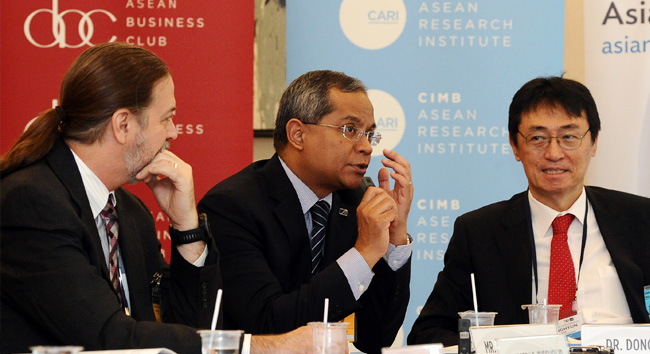
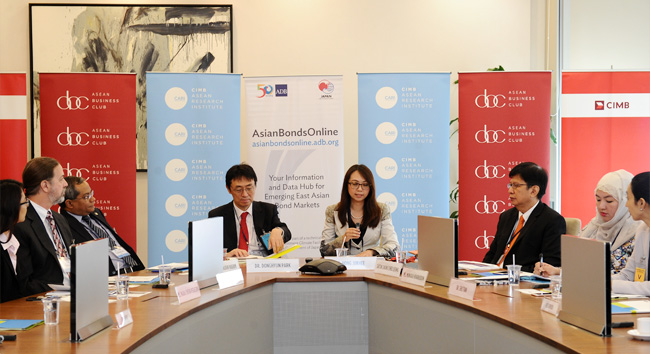
Dr. Donghyun Park, Principal Economist, Economic Research and Regional Cooperation and Ms. Maria Cynthia Petalcorin, Senior Economics Officer, both from the Asian Development Bank set the background for the subsequent presentations and discussions on broadening the investor base in ASEAN’s bond markets.

Dr. Park began by summarising the findings of the November 2017 edition of the Asia Bond Monitor. He noted that all three major markets namely the United States, Japan and the European Union all grew in the last quarter. The strengthening of these economies has led to a better outlook in emerging Asia with 10 year government bond yields in Malaysia, Thailand, Indonesia, Philippines and Singapore in the positive range. Emerging East Asia’s Local Currency (LCY) bond markets continued to expand in the third quarter of 2017, reaching a size of US$11.6 trillion at the end of September 2017, mainly driven by a recovery in issuances in China. However, he cautioned that the positive outlook is not without its risks including the ongoing monetary policy normalisation of the US Federal Reserve which may lead to tighter global liquidity conditions. More about the emerging Asia’s bond market performance can be found in the November 2017 Bond Monitor Report.

Ms. Petalcorin presented a summary of the annual AsianBondsOnline* Liquidity Survey for 2017. Survey participants noted an improvement in liquidity in five markets namely Hong Kong, Indonesia, Singapore, Thailand and Vietnam. In contrast, roughly unchanged to tighter liquidity conditions were noted in China, Korea, Malaysia and the Philippines. Additionally, she highlighted three other observations that arose from the survey: i) bid-ask spreads for government bonds and corporate bonds narrowed for this year’s survey; ii) transaction sizes were slightly lower for this year’s survey compared with 2016 for both government and corporate bonds and; iii) among qualitative indicators, hedging mechanism was identified as the area which needs the most improvement for government and corporate bonds.

*AsianBondsOnline is a website that provides information on local currency bond markets in emerging East Asian economies.

This introduction was followed by a discussion on how to broaden the investor base in ASEAN bond markets.


img-keythemes.jpg


It is important for markets to broaden their investor base in order to contribute to the development of long-term bond markets. A broad and diversified range of investors will also provide an important source of stability and liquidity to financial markets, promote the efficiency of price discovery, play a key role in reducing volatility through capital flows to emerging markets, stimulate sustainable economic growth and reduce dependence on a dominant investor group whose investment decisions could destabilise markets.
 

1. Regulator’s Perspective


Mr. Kamarudin Hashim Executive Director, Market and Corporate Supervision, Securities Commission Malaysia (SC) spoke about how regulations have been adapting to the increasing sophistication of the Malaysian bond markets which in turn has created a more accommodative environment for investors.
­­­­
Mr. Kamarudin began by giving an overview of the Malaysian markets. He explained that the Malaysian bond market makes up 41% of Malaysia’s overall capital market and that over RM300 billion (approximately US$73 billion) has been raised for infrastructure development over past decade via the markets. He also noted that Malaysia is the world’s largest sukuk market with more than 50% of global outstanding sukuk originating from the country. Malaysia has the third largest bond market in Asia as a percentage of GDP and the largest in ASEAN.

As a regulator, Mr Kamarudin noted that there are four areas that are considered when trying to broaden the investor base:

  1. Provision of a facilitative and transparent regulatory framework that encourages diverse investor participation;
  2. Provision of an attractive tax regimes for domestic and foreign investors;
  3. Adoption of comprehensive measures for investor protection; and
  4. Adoption of internationally accepted standards on documentation and practices for bond market to ensure ease of issuances and transactions.

He explained how the SC had changed regulations on issuances in line with the increasing sophistication of the market and investors. For example, before 2000, issuances required ratings but after 2015 the SC did not require ratings for issuances which streamlined the process and allowed issuers to go to market faster. He noted that Malaysia is an issuer market so regulators have to ensure that requirements are accommodative to that fact.

He recommended that another way to broaden the investor base is to develop the investor management industry. The Malaysian market is primarily wholesale so there needs to be a greater focus on encouraging the growth of the retail market by increasing awareness and education. In order to do this, the SC is reviewing primary market issuance processes and disclosure requirements and expanding the range of corporate bonds and sukuk offered to retail investors. The SC is also working on introducing a framework to facilitate retail access to existing corporate bonds and sukuk which are currently traded in the wholesale market. These initiatives will be released in Q1 of 2018.

Mr Kamarudin also touched upon the Bonds and Sukuk Information Exchange (BIX) set up by the SC. BIX is a platform created to facilitating investor access to Malaysia’s RM1.3 trillion (US$ 0.32 trillion) bond market from one platform – the first of its kind the world – which provides comprehensive price and credit information on bond and sukuk to investors.


2. Issuer’s Perspective


Datuk Chung, CEO, Cagamas Berhad, spoke about Cagamas’ experience as the largest issuer of bonds and sukuk in Malaysia. He spoke about how Cagamas had broadened its investor base by diversifying the types of issuances to access foreign currency investors, the challenges of issuing across borders and, outlined some areas for regulators to address.

In 2014, Cagamas came out with the Multicurrency Medium Term Note Programme (EMTN) to widen the company’s investors base, reduce over-reliance on single benchmark for pricing, diversify funding sources, achieve competitively priced funding from an international liquidity pool, fund the potential purchase of non-Malaysian Ringgit assets and deepen and broaden the Malaysian and international debt capital market while reduce the overcrowding effect in the domestic market. Issuances of EMTNs have been successful in not only diversifying the number of foreign investors but also the types of investors. Currently, Cagamas has investors from Hong Kong, Singapore, Taiwan, Malaysia, Europe, offshore USA markets, China, Brunei, Korea and the Middle East whereas before the introduction on EMTNs Cagamas only had investors from Malaysia and Singapore. Additionally, Cagamas has also seen a change in the mix of institutional investors since the introduction of EMTNs.

Datuk Chung also listed the challenges of issuing cross border within the region:

  1. Difference in regulations and costs which made only large foreign issues economical;
  2. Differing market features such as sovereign benchmark yield curves;
  3. Recognition of ratings and standardised pricing as obtaining several ratings both local and global can be costly; and
  4. A lack of financial linkages between ASEAN fixed income markets and intra-regional investments by ASEAN investors remain small.

Datuk Chung briefly touched upon 11 areas which are required for ease of cross-border issuances: liquid capital markets, deep cross currency swap markets, favourable interest rates environment, conducive macroeconomic fundamentals, favourable ratings, diversified investor base, a short turnaround time to market, a transparent and facilitative governing framework, a centralized clearing and settlement system, a liberal foreign exchange administration rules and application of hedge accounting. He commended Bank Negara Malaysia for coming up with a hedging mechanism which he said helps stabilise the market and allows stable flows of funds from overseas.

In order to achieve the above and broaden the investor base Datuk Chung recommended the use of technological advancement to further promote dissemination of information, further development and education on hedging tools available within the existing derivatives market to entice participation of diverse range of investors and finally, the promotion of deeper regional market integration to ensure efficient allocation of resources and facilitate access to price information regarding cross-border bonds.


3. Investor’s Perspective

 
Munirah Khairuddin, as CEO of CIMB principal, provided insights to what investors are looking for and how to attract more investors to ASEAN bond markets. She noted that CIMB Principal’s clients were nearly 60 percent retail investors who invested largely in equity markets or FD+ products. She said that in order to attract these investors the ASEAN bond markets have to be more attractive. The remaining 40 percent of their clients which are institutional such as central banks, insurance companies, and pension funds as are usually diversified into foreign investments.

Ms. Munirah noted that the region has favourable fundamentals with a large population, a growing middle class and high savings rates. She said that naturally, as the middle class grows retail participation in the markets will increase hence there will be no shortage of demand but what is important is the supply or the availability of bonds. In turn, the attractiveness of the ASEAN bond markets depends on growth prospects, relative yield, currency stability, investor base diversification and inclusion in global bond indices. Ms. Munirah was of the opinion that the region’s bond markets are attractive, therefore investors’ decision will ultimately rely on operational conduciveness or how easy it is for investors to invest in bond markets across the region. Her suggestions to improve the environment for investors are listed as follows:

  1. To set up a regional trading platform that covers the various local currencies bond market that are available across the region and globally allowing investors to have access to the regional bond markets within one platform.
  2. To establish an ASEAN-wide rating agency which assigns credit ratings on a regional rating scale which is standardised as currently many notes are still rated by local ratings agencies not global ones.
  3. To have proper transparency of trades and last done prices to be available for all.


All panelists agreed that there is a need to broaden the investor base in ASEAN bond markets in order to ensure stable economic growth. Regulators, issuers and investors both agreed that the best way to do this was to create a more conducive environment for both issuers and investors via domestic regulations, ensure that regulations across the region are more uniform, improve connectivity of markets within the region and raise more awareness and educate retail investors about the investment opportunities in regional bond markets.

Written by Tamanna Patel, Resident Research Fellow at CARI.


ASEAN Roundtable Series

ASEAN Roundtable Series

ASEAN Roundtable Series

ASEAN Roundtable Series

ASEAN Roundtable Series

ASEAN Roundtable Series

ASEAN Roundtable Series

ASEAN Roundtable Series

ASEAN Roundtable Series

ASEAN Roundtable Series

ASEAN Roundtable Series

ASEAN Roundtable Series

ASEAN Roundtable Series: Pivoting towards a new approach for Australia-ASEAN business engagement and growth in the digital age

Published on 18 December 2017

img-rtroundup-rt8.jpg

img-text-speakers

Rod Sims

Rod Sims

Chairman, Australian Competition and Consumer Commission

Aireen Omar

Aireen Omar

CEO AirAsia


Marcus Luer

Marcus Luer

Founder & Group Chief Executive, Total Sports Asia

Matt Barrie

Matt Barrie

CEO, Freelancer & CEO, Escrow


Nic Lim

Nic Lim

Executive Chairman, 8common Limited

img-tsmm.jpg

Tan Sri Dr. Munir Majid

Chairman, CIMB ASEAN Research Institute President, ASEAN Business Club


img-tsmm.jpg

Eleanor Mak

President, Australia-ASEAN Business Council


img-moderator-header.jpg

Scott

Scott Murdoch

Senior Journalist, The Australian


Australia was ASEAN’s first dialogue partner in 1974 however, the economic relation between the two has not grown to its potential, especially with the populations of both nations being so closely connected. Approximately, 896,000 people claimed heritage from ASEAN nations in the last Australian census, while over 1.3 million people from ASEAN visit Australia each year and Australians made three million trips to ASEAN countries in 2016.

ASEAN now represents around 15 percent of Australia’s total trade and is the country’s third largest trading partner, after China and the European Union, but Australian foreign direct investment to ASEAN is heavily skewed towards Singapore with approximately US$3.2 billion invested in the city-state in 2016. This signals that more can be done to drive a deeper business engagement between all ASEAN countries and Australia. Southeast Asia’s massive internet economy which is expected to be worth US$200 billion by 2025 signals changing dynamics in relations and engagement between ASEAN and Australia.

The panelists discussed these issues including how the digital age is affecting doing business across borders, dealing with competition in the digital age and the opportunities and challenges of doing business between ASEAN and Australia.


img-keythemes.jpg


1. The Digital Age and Businesses


Panelists described how their businesses were adapting to the digital age and tapping into the potential of the ASEAN market.

Marcus Luer, Founder and Group Chief Executive of Total Sports Asia began by elaborating how consumption habits have changed and how his sports content and branding solutions company is adapting. He pointed to the shift in consumption from T.V. to mobile phones observing the that days of bundling (multiple products sold as one collection of offerings) were over and the advent of over-the-top (OTT) services such as Netflix is now the norm. This has forced all content providers to search for alternative streams of revenues. He went on to explain how Total Sports Asia is adapting to the changes in the economy by providing a mobile-centric live streaming platform for sports fans in ASEAN focusing on niche sports for a demographic of fans known as displaced fans who do not follow mainstream sports.

AirAsia Berhad CEO Aireen Omar spoke about how the low cost carrier is taking advantage of the digital revolution by creating an ecosystem of services. She explained how AirAsia has embraced technology to allow the company to improve processes and operations. Examples include how the company is working with universities to research food technologies to reduce food wastage on board flights, using tech to improve productivity, exploring ways to leverage on facial recognition, block-chain technology and biometrics to make check-in seamless. Aireen also touched upon AirAsia’s involvement in the fintech industry and how they are building up a points system for AirAsia customers which will be eventually be used as a cryptocurrency. Finally, Aireen spoke about the company’s plans to create a global marketplace similar to that of Amazon as they have the advantage of an existing logistics network through their airlines business.


2. Competition in the Digital Age

 
With businesses in ASEAN adapting to the digital age and beginning to do business across borders, Rod Sims, Chairman of Australian Competition and Consumer Commission discussed the importance of competition laws in ASEAN and Australia emphasising on how the right regulation in this digital age can encourage businesses to expand further.

Rod is of the opinion that the technological age is fantastic for competition, consumers and businesses as it lowers entry barriers. He gave the example of Amazon, which is readying itself to enter the Australian market, commenting that it will bring more competition to sectors that are too concentrated and provide consumers with lower prices and better services.

He noted that nine out of 10 ASEAN countries have a competition law and agencies to implement them. He sees this as crucial to doing business as competition laws are usually similar with the aim of preventing cartel activities and mergers and agreements that substantially lessen competition saying that, “Competition laws have the real advantage of being general laws that are internationally understood”. He added that that Australia has been conducting a competition law implementation programme in ASEAN countries where experienced competition law experts are embedded into competition agencies across the region to help prepare cases, investigations and the implementation of regulations related to anti-competitive behaviour in the region.

Rod added that, “General laws are always better than specific laws or industry specific laws because those will be too intrusive and targeted at individual problems and that’s where you curb innovation. General laws encourage innovation and a framework for doing business.”

When asked about growing nationalist sentiments across the globe and the “national champion” argument put forth by certain governments pursuing protectionist measures, he responded by saying that the “national champions” arguments is invalid and not supported by any evidence. He added that the problem with this argument is that companies become good local operators but are unable to operate overseas as they are not flexible enough and that technology will it will make it increasingly difficult for countries to close their borders.


3. Opportunities and Challenges in ASEAN-Australia Business Relations in the Digital Age

 
Overall, the panelists and participants identified the following factors as challenges faced by Australian businesses in breaking into the ASEAN market:

  1. Lack of familiarity – participants believed that Australian businesses may not be ready for adapting to doing business in ASEAN and that what may make businesses successful in Aus market may not be the so in ASEAN;
  2. Lack of trust/relationship – it was highlighted that relationships are key to doing business in the region. With an increasingly volatile landscape it is difficult to identify and gauge trustworthy business partners in ASEAN;
  3. Lengthy/costly processes – roundtable participants were also concerned about the time and costs involved in obtaining approvals for licenses;
  4. Lack of understanding of free trade agreements and the ASEAN Economic Community – participants were also concerned about businesses’ awareness of free trade agreements and how those agreements may be relevant or applicable to their business within the region.

Separately, Matt Barrie, CEO of Freelancer.com and CEO of Escrow highlighted the issue of differing regulations in various jurisdictions which also affects businesses which operate largely online including data collection and retention and taxation. He noted that while businesses such as Freelancer.com are able to operate online in virtually any country with relative ease others such as Escrow, also an online financial services platform, continue to face regulatory challenges due to industry specific laws which differ in each jurisdiction of operation.

Nic Lim, Executive Chairman of 8common Limited elaborated his company’s experience in working with the New South Wales (NSW) government which he felt could be used as best practices for governments in Southeast Asia which endeavour to work with private sector in the future. He said the NSW government had made it simple to work with them by

  • i) Figuring out the contractual obligations and requirements and reducing the amount of paperwork – in this example the NSW government signed a master contract with Nic’s company meaning that any subsequent government agencies who wished to work with 8common would only have to sign a four-page contract to begin this;
  • ii) The NSW government usually make their plans known in at least 18 mont
  • hs in advance – which reduces uncertainty and allows private businesses to understand what the government has planned for the foreseeable future and;

  • iii) The NSW government is actively engaged in any projects allowing 8common and the state government to to co-own project outcomes.

Tan Sri Munir Majid commented that while there were several challenges to doing business in ASEAN that there were also many opportunities available, especially as technology continues to break down barriers. He gave the example of a Malaysian doctor who cannot practice in Indonesia due to his lack of Indonesian qualifications but who can now use telemedicine to consult with patients in Indonesia. He also gave the example of ZicoLaw which operates in 10 separate countries despite the fact that their lawyers cannot appear in court in all 10 jurisdictions but technology has facilitated this.

While he noted that bigger companies may have the clout to solve problems discussed during the roundtable, smaller companies will find it more difficult. Hence, the ASEAN Business Club and CARI conduct research and advocacy work to remove barriers for all businesses. He said that five key areas have been identified where barriers need to be removed: healthcare, e-commerce, retail, agri-food and tourism. He emphasised that with the support of and feedback from businesses within ASEAN and Australia, these organisations will work on pushing forward the changes needed to accommodate business better in ASEAN.


Tan Sri Munir Majid concluded the session by observing that there has been much progress made and that there were many practical proposals put forward by the panellists. However, he said that ASEAN countries need to be less suspicious of proposals from other member countries and this is where consultants can play a role in providing a more neutral face when proposing reforms especially in relation to harmonisation of rules. More developed nations in ASEAN need to somehow encourage less developed countries in taking on board reforms without making them feel inferior.

Written by Tamanna Patel, Resident Research Fellow at CARI.


ASEAN Roundtable Series

ASEAN Roundtable Series

ASEAN Roundtable Series

ASEAN Roundtable Series

ASEAN Roundtable Series

ASEAN Roundtable Series

ASEAN Roundtable Series

ASEAN Roundtable Series

ASEAN Roundtable Series