Mekong Monitor


Photo credit: Vietnam News


TRADE, ECONOMY, AND INVESTMENT


LAOS, VIETNAM

Laos and Vietnam to boost cooperation through infrastructure projects
(6 June 2019) Lao Prime Minister Thongloun Sisoulith’s visit to Hanoi for talks with Vietnamese Prime Minister Nguyen Xuan Phuc in early June concluded with both sides agreeing to elevate bilateral cooperation, especially in the area of large infrastructure projects. According to Lao media, the key infrastructure projects concerned were the Vung Ang seaport and Vientiane-Hanoi expressway. Both governments have agreed to jointly develop the seaport in Vietnam’s Vung Ang Economic Zone, with Laos holding a 60% stake in the project and Vietnam holding the remaining 40%. Furthermore, both sides are also looking for funding for the 707-kilometre, six-lane Hanoi-Vientiane expressway that is projected to cost over US$4.5 billion. Furthermore, both governments are also seeking funding for key projects such as a 555-kilometre railway linking Vientiane with the Vung Ang seaport. According to the report, the Lao government sees access to Vietnam’s Vung Ang seaport as a crucial component for trade as the port would serve as a key trade route for the landlocked country.
Read more>>

THAILAND, LAOS

More Thailand-Laos transportation links in the pipeline
(6 June 2019) Thailand and Laos have several transport infrastructure projects in the works to boost connectivity between the countries, said Thai transport minister Arkhom Termpittayapaisith. These projects include, firstly, the sixth Thai-Lao friendship bridge that will cost US$105.59 million for construction and land expropriation on the Thai side, and US$41.59 million on the Lao side — for the latter, the Lao government is seeking a loan from Thailand’s Neighbouring Countries Economic Development Cooperation Agency (NEDA). Secondly, the governments are also drawing up plans for a 139-kilometre, four-lane highway to facilitate the transportation of goods from Laos to Thailand’s city of Udon Thani, which would make it easier for Laotian goods to be ferried to Laem Chabang port. Once the relevant plans and assessments are finalised, construction on the US$320 million highway will likely begin in 2021 and take four years to complete. Thirdly, the governments are also planning a four-lane motorway along the Mekong River. Finally, the minister also revealed that there were plans for rail links to connect Vietnam and Thailand’s key ports through Laos.
Read more>>

THAILAND, VIETNAM

Thailand and Vietnam set to achieve US$20 billion trade target
(7 June 2019) Thailand and Vietnam are well-positioned to reach their targeted US$20 billion bilateral trade volume next year, said Thai trade counsellor to Vietnam Pannakarn Jiamsuchon. However, the trade counsellor also noted the growing competitiveness of the Vietnamese market brought about by the increasing number of free trade agreements the government has signed with other countries. Nevertheless, she said that for Thai firms to maintain a foothold in Vietnam they will have to continuously enhance the quality of their products and keep prices competitive in order to remain competitive. According to Pannakarn, bilateral trade between Thailand and Vietnam grew from US$6 billion in 2009 to US$16.6 billion in 2018, thus suggesting that the US$20 billion goal for 2020 was well within reach.
Read more>>

LAOS

Laos to increase electricity trade with neighbouring countries
(6 June 2019) The Lao government will conduct a feasibility study on electricity trading and hydropower exchanges in hopes of increasing its electricity exports to neighbouring countries, Lao energy and mines minister Khammany Inthirath said. According to the minister, its electricity export destinations would include (i) Vietnam, which Laos has agreed to sell 5,000 megawatts (MW) of electricity to by 2030, starting with 1,000MW in 2020; (ii) Thailand, which Laos will sell 9,000MW of electricity to by 2025 and which Laos has agreed to sign electricity trading pacts for four projects with; (iii) Cambodia, which Laos will sell 195MW of electricity to starting next year, with ongoing discussions for future sale of over 1,800MW; and (iv) Malaysia, which Laos is currently selling via Thailand and will continue to sell 100MW of electricity to. Furthermore, the minister revealed that studies were being conducted to increase the sale of electricity to Malaysia and begin selling electricity to Singapore by 2020.
Read more>>

MYANMAR, THAILAND

KBZ Group and PTT partner to develop Myanmar’s largest oil terminal
(10 June 2019) Myanmar’s Kanbawza Group (KBZ) and Thailand’s state-owned oil and gas company PTT announced on May 10 their plans to establish a joint venture to develop what will reportedly be the largest oil terminal in Myanmar. According to the companies’ joint press release, the venture will be established through the companies’ energy and retail subsidiaries, with investments totalling over US$200 million. The oil terminal will be located in southern Yangon’s Thilawa area and include facilities for the procurement of petroleum products, jetty management, oil storage, liquefied petroleum gas (LPG) filling and the wholesale businesses of petroleum products. Furthermore, the companies expect the oil terminal to be the largest of its kind in Myanmar, with a maximum capacity of one million barrels of oil and 4,500 metric tonnes of LPG. Construction of the oil terminal is slated for completion in 2021, while PTT subsidiary, PTT Oil and Retail Business Public Co Ltd, has plans to increase its number of fuel stations in Myanmar to 70 stations by 2023.
Read more>>


mekong-monitor-map

About Greater Mekong Subregion (GMS)

The Greater Mekong Subregion (GMS) Economic Programme was launched by the Asian Development Bank in 1992 connecting five developing ASEAN countries, namely Cambodia, Laos, Myanmar, Vietnam and Thailand, and Chinese provinces of Yunnan and Guangxi Zhuang Autonomous region. The region has some of the most robust economies sharing the Mekong River Basin thanks to its reform and liberalisation. The subregion is growing at a faster pace than the whole of East Asia and the Asia Pacific as the GDP growth rate for 2017 was at 6.4 percent, according to the World Bank. The population at the subregion as of 2016 is at 340 million while the GDP at PPP is at US$3.1 trillion in 2016. In 2015, trading within the region was at US$444 billion.

Indonesia’s headline inflation in May reaches 13-month high y-o-y


HIGHLIGHTS

May 2019 CPI inflation

  • Headline inflation in May accelerated past 3% for the first time this year, to reach a 13-month high of 3.3% yoy.
  • Seasonally-higher demand during Ramadan was the key contributor to higher food and transport inflation.
  • We are reviewing our end-2019 7DRRR forecast of 6.00% with risks to the downside. Meanwhile, we expect BI to leave policy rate unchanged in June.

May’s headline inflation at the highest since April 2018…
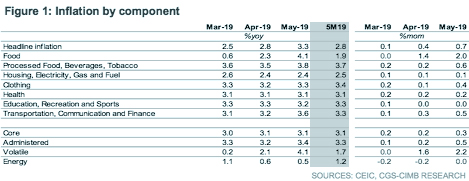
Indonesia’s headline inflation in May was higher than expected at 3.3% yoy (+2.8% yoy in April), mainly driven by food and transport components. Despite posting the strongest pace of increase since Apr 2018, price stability remained anchored within Bank Indonesia’s (BI) target range of 2.5-4.5%. Excluding administered price and volatile food inflation, however, core inflation remained steady at 3.1% yoy.

… in conjunction with seasonal festivities
Seasonally-higher demand during Ramadan, which started 11 days earlier this year vs. last year, lifted the month-on-month increase in the consumer price index (CPI) to 0.7% mom (+0.4% mom in April), the strongest rate compared to the monthly price increases during the fasting month in 2014-2018.

F&B and transport the key drivers of accelerating price increases
Among the key contributors to headline inflation were raw food (+4.1% yoy/2.0% mom in May vs. +2.3% yoy/1.4% mom in April), prepared food (+3.4% yoy/0.6% mom vs. +3.1% yoy/0.1% mom in April), and non-alcoholic beverages (+3.1% yoy/0.8% mom vs. +2.6% yoy/0.2% mom in April). Airfares and train tickets lifted transport inflation (+4.5% yoy/0.7% mom vs. +4.0% yoy/0.4% mom in April).

Dovish shift in global monetary policy outlook
Global economic developments have taken a turn for the worse over the past month, amid intensifying trade tensions between the US and China that saw both countries escalating tariffs on each other’s goods after an eight-month hiatus since the last round of tariff actions in September. Risks to global economic prospects remained tilted to the downside with the US threatening to impose tariffs on at least US$300bn worth of imports from China, prompting the US Fed to signal a willingness to lower policy rates.

Year-end forecast under review, but expect BI to stand pat in June
Potential monetary policy easing by the US Fed should bring forward rate cuts by BI, following aggressive rate hikes last year in response to Fed rate hikes, among other factors. We are currently reviewing our year-end 7-day reverse repo rate (7DRRR) forecast of 6.00%. Pending tariff decision by the US on the remaining Chinese exports to the US in Jul as well as concerns on Indonesia’s current account deficit (CAD) which tends to widen in 2Q, we expect BI to stand pat in its upcoming Board of Governors meeting on 19-20 June.


Originally published by CIMB Research and Economics on 10 June 2019.

China-ASEAN Monitor


Photo Credit: Myanmar Times


Economy, Investment and Trade


Three locations identified in Myanmar for China-Myanmar Economic Corridor
(7 June 2019) Myanmar and Chinese officials have named Muse and Chin Shwe Haw in Shan state and Kan Pite Tee in Kachin State as the three “core zones” under the China-Myanmar Economic Corridor. According to Myanmar’s commerce ministry deputy secretary U Khin Maung Lwin, the Chinese side has already started work on their side of the border, while the Myanmar side will open applications for Expressions of Interest (EOI) soon. However, he noted that only Myanmar-owned companies will be allowed to participate in the bidding, with foreign investors allowed to hold up to a 35% stake in these companies. The deputy secretary also stressed the need for “flexibility” in their plans since these are border zones that involve both countries. As such, of the three zones, only details for the Muse core zone have been fleshed out — the zone will include an export product manufacturing, processing and warehouse area, as well as an import processing and warehouse area. All three core zones will also have duty-free concessions, hotels, factories and banks.
Read more>>

Chinese firms to pump US$5 billion into Sarawak O&G complex
(10 June 2019) Malaysia’s Sarawak state government inked a memorandum of understanding (MoU) with Chinese firms Beijing BECA Sci-Tech Co Ltd and Sinopec Engineering Incorporation on June 10 for the development of an integrated oil and gas complex in the state’s northern Lawas district. Construction on the first phase of the project is expected to begin this year and end in 2022. According to Sarawak chief minister Abang Johari Openg, the chemical plant will produce basic ingredients for plastic industries such as polystyrene and polypropylene. The produce will then be exported to China, the Middle East and other Asian countries. The chief minister added that Lawas was selected as it had the necessary land, utility infrastructure and was not at risk of natural disasters such as volcanoes and earthquakes.
Read more>>

Chinese authorities greenlight imports of Malaysian durians in whole fruit form
(6 June 2019) Chinese residents will soon be able to purchase whole Malaysian Musang King durians through Alibaba’s online channels and brick-and-mortar stores following the Chinese customs’ recent decision to allow whole, frozen Malaysian durians to be brought into the country. Previously, only the pulp, paste and processed products of Malaysian Musang King durians could be imported due to quarantine restrictions. The announcement was made during Alibaba’s 618 Mid-year Shopping Festival which seeks to connect businesses with China’s less-developed regions through its Taobao and Tmall platforms. According to Malaysian agriculture and agro-based industry deputy minister Sim Tze Tzin, Malaysia produced over 350 million kilograms of durian last year, but exported only 5% of its produce.
Read more>>

Chinese visitors to Cambodia surge 37% in the first four months of 2019
(6 June 2019) Cambodia recorded a 37% year-on-year growth in Chinese tourists in the first four months of the year totalling 887,039, according to the latest figures from the Cambodian tourism ministry. China remained the largest source of foreign visitors to the country, accounting for 36.7% of the total 2.41 million visitors during the period. According to Cambodian tourism minister Thong Khon, the country hopes to attract 2.6 million Chinese tourists this year, three million next year, five million in 2025 and eight million in 2030. Across the border, Laos’ tourism minister Bosengkham Vongdara reported a 16% increase in Chinese tourists totalling 259,000 during the first quarter of this year when compared with figures from the same period in 2018. According to the minister, the ongoing Visit Laos-China Year 2019 campaign is expected to attract over one million Chinese tourists to Laos.
Read more>>

Vietnam to crack down on Chinese goods relabelled to beat US tariffs
(10 June 2019) Vietnamese customs published a statement on June 9 vowing to take action against the influx of China-made goods that have been relabelled as Vietnamese-made goods as exporters try to circumvent US tariffs on Chinese imports. According to the department, some importers have been repackaging Chinese goods with “Made in Vietnam” labels before applying for Vietnamese certificates of origin in order to export to the US, Europe and Japan. The statement further provides that these violations largely occurred in sectors that involve textile, seafood, agricultural products, minerals and timber products. As such, the department is currently enhancing its processes to identify and penalise businesses who conduct faking of origin and illegal transshipment activities.
Read more>>

CARI Captures 407


ASEAN

PH, Japan to boost economic cooperation with 26 investment agreements
(1 June 2019) Filipino President Rodrigo Duterte’s visit to Japan concluded with the signing of 26 investment agreements, as well as agreements to explore further cooperation in various sectors. Of the 26 agreements inked, 19 were letters of intent related to the manufacturing of cars, wire harnesses, printers, medical devices and electronics. According to trade secretary Ramon M. Lopez, some 120 business matching meetings were also held between Filipino and Japanese companies, and a memorandum of understanding on the supply of manpower services was also discussed. Lopez noted that these side meetings are expected to generate some US$17.45 million in potential Filipino exports to Japan in one to three years. Furthermore, agriculture secretary Emmanuel Pinol, who was also part of Duterte’s delegation to Japan, said that the Philippines is also seeking a uniform tariff for all agricultural exports to Japan, especially for bananas, pineapples and mangoes. Pinol says that they expect “positive results” from discussions with his Japanese counterpart. Meanwhile, a letter of intent was signed between the Philippines’ central bank governor Benjamin Diokno and Japanese finance minister Taro Aso to explore the establishment of a yen and peso direct trading framework. The proposed framework comes as both sides look to lower foreign exchange risks and encourage the use of local currencies in bilateral trade.

CAMBODIA-JAPAN

Cambodia seeks Japan’s help to build power lines connecting to Laos
(4 June 2019) Cambodian Prime Minister Hun Sen sought Japanese Prime Minister Shinzo Abe’s help to develop a high-voltage transmission network to transfer power from Laos to Cambodia during his recent trip to Japan to attend the Future of Asia conference held in Tokyo. According to Hun Sen, the transmission lines would transport 500 kilowatts of energy generated at Laos’ Dan Sahong hydropower dam which will begin operating in 2021. The request comes as Cambodia looks to increase its power supply through local production and imports to meet the country’s increasing appetite for power. According to Cambodian delegate minister Kao Kim Hourn, the two leaders also witnessed the inking of an extension agreement for nearly US$5 million in aid for the development of two projects, i.e. a US$1.8 million project to construct a container freight station and a US$3.1 million project to develop Cambodian human resources.

MALAYSIA-JAPAN

Japan ready to support additional samurai bonds issuance by Malaysia
(31 May 2019) Japan is willing to consider supporting the issuance of additional Samurai bonds (yen-denominated bonds issued in Tokyo by non-Japanese companies) if Malaysia wishes to do so, Japanese Prime Minister Shinzo Abe said during his bilateral meeting with Malaysian Prime Minister Mahathir Mohamad in Tokyo. Mahathir, for his part, said that doing so would certainly boost Malaysia’s financial portfolios while minimising its foreign exchange risks. According to a joint statement released after the meeting, both leaders also reviewed the progress made in other areas, such as a comprehensive study conducted by Japan on Malaysia’s transportation landscape, the establishment of the first Japanese university branch campus in Malaysia by the University of Tsukuba, as well as knowledge exchanges in the fields of defence and environmental management.

THE PHILIPPINES-ROK

PHL, South Korea commence free trade agreement negotiations
(3 June 2019) The Philippines and South Korea have started their negotiations for a bilateral free trade agreement (FTA) which they hope to complete by November before the ASEAN-ROK summit, according to a joint statement issued on June 3. Additionally, the inaugural meeting of the Republic of Korea Joint Commission on Trade and Economic Cooperation (JCTEC) was also held on the sidelines of the FTA negotiations launch. According to Filipino trade secretary Ramon M. Lopez, the JCTEC will help “tackle a broader perspective of economic cooperation between the two countries.” Meanwhile, Lopez also hosted a high-level meeting with South Korean electric vehicle companies during his trip there, where he pitched the government’s plans to modify tariffs for e-vehicle products in accordance with the ASEAN free trade agreement, as well as its considerations for full e-vehicle utilisation and registration in the future. However, according to Lopez’s ministry, the South Korean e-vehicle industry players recommended the Filipino government to go further in providing incentives, such as through the provision of tax holidays, monetary support per unit made, cost-sharing for the establishment of charging outlets and battery replacement facilities, as well as incentives to boost local e-vehicle adoption such as free registration and free parking.

SINGAPORE-INDIA

Singapore is India’s top source of foreign direct investment in last Indian financial year
(6 June 2019) Singapore was India’s largest source of foreign direct investment (FDI) in the last Indian financial year which ended on March 31, according to the latest data published by the Indian Department for Promotion of Industry and Internal Trade. According to the data, India received US$16.23 billion in FDI from Singapore during the year, which largely comprised Walmart’s US$16 billion acquisition of a 77% stake in Indian online retailer Flipkart in May 2018 (Walmart’s parent company is based in Singapore). Nonetheless, the report noted that Singapore was also the country’s top FDI source during its 2015-2016 financial year, accounting for almost a third of total inflows at the time. According to analysts, the rise in investments from Singapore can be attributed to bilateral tax treaty amendments inked in recent years, as well as Singapore’s position as a hub for firms to set up their regional base, from which to route FDI. India received a total of US$44.37 billion in FDI during the 2018-2019 financial year, with Singapore, Mauritius (US$8.08 billion), the Netherlands (US$3.87 billion), the US (US$3.14 billion) and Japan (US$2.97 billion) topping the list of FDI sources.

THAILAND-EU

EU agrees to let Thailand negotiate export quotas
(3 June 2019) The European Union (EU) has agreed to allow Thailand to renegotiate its export quota for 31 items, said Thai trade negotiations department head Auramon Supthaweethum. According to Supthaweethum, the development follows two requests submitted by Thailand to the EU and United Kingdom respectively asking for the quotas of export items to be renegotiated ahead of the UK’s departure from the EU. This was important, she said, because the EU bought US$1.4 billion worth of the 31 items to be negotiated in 2017 alone, while the UK bought US$627.6 million worth of the 30 items that Thailand hopes to renegotiate with them respectively during the same year. Separately, members from the European Commission and European External Action Service landed in Cambodia on June 3 to begin what is reportedly its last fact-finding mission as part the EU’s formal process that could lead to the withdrawal of Cambodia’s Everything But Arms (EBA) trade privileges.

THAILAND, MYANMAR

Thai-Myanmar pact to boost cross-border transport
(1 June 2019) The governments of Thailand and Myanmar will each grant 100 licences to transportation operators to travel on three routes between the countries beginning in September, said Thai land transport department head Phiraphon Thawonsuphacharoen. The three routes will connect key areas in both countries, including Myanmar’s city of Yangon and a port near the Thilawa Special Economic Zone, as well as Thailand’s city of Bangkok and Laem Chabang port in Chon Buri province. According to Thawonsuphacharoen, the licences will be processed in accordance with requirements under the Greater Mekong Subregion Cross-Border Transport Agreement. The routes start at Myawaddy-Mae Sot border checkpoint, and are aimed at boosting international tourism and logistics. He added that Thailand has also signed the same cross-border transport agreement with Laos and Vietnam as part of the country’s plans to boost economic activity in the region.

MYANMAR

Myanmar’s current fiscal year deficit falls for the first time since 2013
(3 June 2019) Myanmar’s trade deficit has been reduced to US$905 million as of May 10 in the current fiscal year, with exports reaching US$10.15 billion during the period, said deputy commerce minister U Aung Htoo. Furthermore, the country’s trade deficit is expected to reach around US$500 million by the fiscal year ending September 30, with exports projected at US$15.3 billion and imports at US$15.8 billion. According to the deputy minister, the deficit can be reduced through encouraging export promotion. For instance, the country’s garment exports almost tripled to US$2.56 billion, up from US$800 million in the 2015-2016 fiscal year. Aquaculture product exports also saw a 65% increase from US$421.4 million in 2014-2015 to US$699.04 million in 2017-2018. As such, he said, the aquaculture sector is expected to bring in as much as US$1 billion by 2020.

MALAYSIA

April trade sees 2.6% year-on-year expansion reaching US$38.35 billion
(3 June 2019) Malaysia’s trade saw a 2.6% year-on-year increase reaching US$38.35 billion in April this year, according to a statement from its Ministry of International Trade and Industry (MITI). The country’s exports recorded a 1.1% increase reaching US$20.51 billion and its imports recorded a 4.4% increase reaching US$17.89, while its trade surplus saw a 16.6% decrease to reach US$2.62 billion. According to MITI, the country’s manufactured goods exports — which accounts for 85.1% of total exports — saw a 2.7% increase reaching US$17.46 billion, fuelled by higher exports of electrical and electronic (E&E) products, petroleum products, optical and scientific equipment, iron and steel products, and processed food. However, agriculture goods exports saw a 9.3% dip to US$1.31 billion due to the decrease in palm oil exports, while exports of mining goods also saw a slight 1.5% decrease to US$1.6 billion due to a decline in crude petroleum exports.

SINGAPORE

Singapore factory activity contracts for first time in over 2.5 years
(3 June 2019) Singapore’s Purchasing Managers’ Index (PMI) dipped below 50 points for the first time since August 2016 last month, as the manufacturing industry’s activity barometer slipped 0.4 points to 49.9 in May. According to The Straits Times, a reading above 50 indicates expansion while a reading below 50 indicates a general decline. The contraction felt by Singapore’s manufacturing sector was largely attributed to the intensifying trade tensions between the US and China, although the PMI’s overall performance had already been in decline in the last 12 out of 15 months. Singapore’s electronics sector PMI also contracted for the seventh consecutive month, which according to analysts, could be due to the decline in Chinese demand for manufactured goods — especially technology goods — made in Singapore.

CARI Captures 406


ASEAN

Four ASEAN countries ranked among world’s most competitive
(29 May 2019) Four ASEAN countries and 11 Asian countries were ranked on the IMD World Competitiveness 2019 rankings, with Singapore topping the list. The rankings, which studied 63 global economies, were calculated based on four primary criteria: economic performance, government efficiency, business efficiency and infrastructure. According to IMD, Singapore’s return to the top spot was due to its advanced technological infrastructure, availability of skilled labour, favourable immigration laws, and ease of setting up new businesses. Notably, Indonesia moved up 11 spots to 32nd thanks to increased government efficiency, better infrastructure and business conditions. Thailand improved its ranking; it rose five places to 25th, fuelled by a rise in foreign direct investment and productivity. The Philippines also improved its ranking, moving up four spots to 46th. Meanwhile, Malaysia maintained its second place ranking in Southeast Asia and 22nd globally, with the report noting recent improvements in the country’s public governance. Overall, IMD noted the rise of Asian economies in the past year, calling the region “a beacon for competitiveness”.

SINGAPORE, MALAYSIA, VIETNAM

Three Southeast Asian countries added to US currency watch list
(29 May 2019) The US Treasury Department announced on May 28 that it has added Singapore, Malaysia, Vietnam and other key US trading partners to a watch list for currency manipulation. According to the Treasury, countries who meet two out of three criteria were added to the list; the three criteria are (i) a current account surplus with the US equivalent to 2% of gross domestic product, (ii) persistent intervention in markets for a nation’s currency, and (iii) a trade surplus of at least US$20 billion. Singapore was added to the list as it had a large current account surplus and net foreign currency purchases of at least US$17 billion in 2018, equivalent to 4.6% of GDP; Malaysia had a trade surplus with the US of US$27 billion in 2018 and a current account surplus of 2.1% of GDP; and Vietnam was listed for its large current account surplus and trade surplus with the US, but was at risk for meeting all three criteria. Bank Negara Malaysia responded to the Treasury’s announcement in a statement denying engaging in unfair currency practices and said that the list had no effect on the country’s economy as its currency exchange rate was determined by the market and not export competitiveness.

MALAYSIA, THAILAND

Malaysia-Thailand border may soon enjoy a one-stop inspection system
(25 May 2019) Malaysia and Thailand are currently discussing the possibility of creating a one-stop inspection system at their borders to facilitate trade between the countries, Malaysian finance minister Lim Guan Eng said. According to Lim, the system would allow goods entering and exiting either country to be inspected only once, subsequently expediting and increasing bilateral trade. The proposed system would be placed at the Bukit Kayu Hitam border checkpoint between Malaysia’s Kedah and Thailand’s Danok. However, Lim added that while initial discussions went well, Malaysia would have to wait for Thailand to form a new government after its recent national elections before discussions can resume. Nevertheless, both sides have proceeded with other initiatives in the meantime, such as Malaysia’s development of a US$6 million truck depot in Bukit Kayu Hitam as part of plans to develop a logistics hub in the area.

MALAYSIA

Malaysia to boost domestic palm oil-based biodiesel use, reduce fossil fuel dependency
(25 May 2019) Malaysia is committed to ensuring that palm oil remains a sustainable and eco-friendly commodity that can serve as a viable replacement for conventional fossil fuels in the global market, said international trade and industry minister Darell Leiking. To this end, he said, the government is working with local industry players to elevate palm oil’s position as a global renewable energy contender. According to Bernama, Malaysia is also reviewing its National Automotive Policy (NAP), and the updated policy is expected to allow for a higher percentage of biodiesel blends as part of its strategy to boost palm oil use in the domestic transportation market. Furthermore, Leiking’s ministry is also working with the Primary Industries Ministry to introduce B20 biodiesel by 2020 and ensure that vehicles are “B20/B30-ready”. Meanwhile, primary industries minister Teresa Kok said on May 27 that they are awaiting the announcement of Indonesia’s new line-up of ministers following the country’s recent elections before both sides can determine the next steps in their joint response to the European Union’s (EU) proposed biofuel restrictions. Separately, Polish ambassador to Malaysia Krzysztof Debnicki reaffirmed Poland’s position against the EU’s proposed directive banning the use of palm oil as a biofuel component, saying that the country believed the proposal was “non-systemic, selective, and do not resolve issues relevant from Poland’s point of view.”

MALAYSIA

Sarawak launches first integrated hydrogen production plant, refuelling station in Southeast Asia
(27 May 2019) Southeast Asia’s first integrated hydrogen production plant and refuelling station, as well as a fleet of hydrogen buses were launched in Malaysia’s largest state Sarawak recently. The plant and station were developed by Sarawak Energy in cooperation with a Linde Malaysia subsidiary, while the hydrogen fuel cell electric buses are owned and managed by the Sarawak Economic Development Corporation (SEDC). The launch comes as Sarawak Energy looks to hydrogen as a potential source of energy for local use and export. According to the company, the production plant can currently produce enough hydrogen to fuel up to five fuel cell buses and 10 fuel cell cars each day. The facilities, touted as Southeast Asia’s first, were launched by Sarawak chief minister Abang Johari Tun Openg on May 27 in Bintawa.

THAILAND

Thailand announces tax incentives in hopes of becoming ASEAN’s “bio-hub”
(28 May 2019) The Thai Board of Investment (BOI) announced recently that it will provide corporate income tax exemptions for manufacturers of medical robots and related automation equipment in the country. More specifically, the BOI will provide up to eight years in tax exemption for medical robotics firms producing automation equipment, as well as a five-year tax exemption for companies assembling robots, automation equipment and automation parts. The incentives come as the government looks to develop the country’s life sciences and biotechnology industries, particularly through the development of medical robotics and biotechnology. To this end, the government is also investing in the research and development of these areas, such as through state-owned oil and gas firm PTT’s recent US$32 million investment to establish the country’s first cancer drug production plant. Having said that, the Thai National Economic and Social Development Council (NESDC) is calling for the government to create even more special investment incentives to attract companies affected by the US-China trade war to relocate to Thailand. According to an AmCham China report published on May 22, over 40% of the 250 companies surveyed said that they were considering shifting their production base out of China or have already done so.

THAILAND

Thai food exports projected to grow by 5% in 2019
(29 May 2019) The Federation of Thai Industries (FTI) has downgraded the projection for the county’s food export growth rate from 8% to 5% amid the global economic slowdown caused by the US-China trade war, according to the federation’s food industry club chairman Visit Limlurcha. As such, the FTI estimates that Thai food exports will earn only US$33.9 billion in 2019, down from the US$35.18 billion projection from earlier this year. Limlurcha, who is also the Thai National Shippers’ Council (TNSC) vice chair, added that besides the trade spat, the strength of the Thai baht in the past two years has also lowered the competitiveness of its exports. Furthermore, he expects importing countries to impose more non-tariff barriers and other measures in order to address their trade deficits. Thailand’s food exports grew by 1.6% in 2018, reaching US$32.3 billion. Its top food exports were rice, chicken, sugar, processed tuna and shrimp. Its biggest export market was Japan, followed by China, Vietnam, Indonesia, Myanmar, Cambodia, Malaysia and the Philippines.

THE PHILIPPINES

12 foreign bank applications approved since July 2014
(27 May 2019) The Philippines’ central bank Bangko Sentral ng Pilipinas (BSP) has approved 12 foreign bank applications ever since the government implemented several banking sector liberalisation measures back in July 2014. As of March of this year, there were 29 offshore lenders in the country, 24 of which operate as foreign bank branches while the other five were foreign bank subsidiaries. BSP deputy governor Chuchi G. Fonacier told BusinessWorld that the country’s “strong macroeconomic fundamentals” and steady banking ecosystem growth remained as attractive points to foreign banks. This could be seen, he said, in the S&P’s upgrading of the Philippines’ Banking Industry Country Risk Assessment (BICRA) score in February 2019 to group 5 from group 6 and S&P’s upgrading of the Philippines’ long-term sovereign credit rating to “BBB+” from “BBB” – one step away from an “A” rating.

CAMBODIA-US

Cambodian exports to the US surpass US$1 billion in Q1 for the first time
(29 May 2019) Cambodian exports to the US saw a 24% year-on-year increase reaching US$1.12 billion in the first quarter of 2019, up from US$903.6 million during the same period last year, according to trade data from the US government. The surge in exports was largely fueled by a rise in demand for Cambodian-made travel goods such as suitcases and handbags. According to US embassy spokesperson Arend C Zwartjes, Cambodia’s exports under the US’ Generalised System of Preferences (GSP) more than doubled to over US$720 million in 2018, led by travel goods. He added that Cambodia’s travel goods exports to the US were only around US$50 million in 2016 when travel goods was first added to the list of GSP-eligible products, but the category saw almost US$400 million in exports last year. The Cambodian Garment Manufacturers Association concurred with Zwartjes’ comments, saying that the value of items eligible under the GSP has increased over 10 times since 2016, and that there are currently around 80 factories manufacturing travel goods.

MALAYSIA-LATAM

Malaysia sees US$200 million in investments from Latin America
(27 May 2019) Malaysian international trade and industry minister Darell Leiking’s recent investment mission to Latin American countries — Chile, Argentina and Brazil — resulted in approximately US$200 million in investment inflows from the region, with a further US$6.9 million in potential deals on the cards. According to the ministry, the delegation’s key selling points were Malaysia’s position as a regional hub and springboard into the ASEAN market, as well as the potential benefits of the Regional Comprehensive Economic Partnership (RCEP). Other notable outcomes from the trip included the launch of the Brazil-Malaysia Business Council, inking of a memorandum of understanding on business-to-business cooperation in the ICT sector, and agreements to explore the possibility of a free trade agreement between Malaysia and the South American trade bloc MERCOSUR.

Mekong Monitor


Photo credit: Vientiane Times


TRADE, ECONOMY, AND INVESTMENT


LAOS, VIETNAM

Laos aims to lower trade deficit with Vietnam to US$227 million in 2019
(24 May 2019) The Lao government hopes to lower its trade deficit with Vietnam to around US$227 million, down from last year’s US$496.2 million. According to Laos’ Ministry of Industry and Commerce, this year’s target can be achieved if it lowers its import volume to US$985.3 million from last year’s US$1.38 billion, and reaches exports of at least US$757.9 million compared with last year’s US$885.3 million. Laos primarily exports drinking water, minerals, wood products, agricultural products and cattle to Vietnam. It mainly imports petroleum, fertilisers, steel, machinery, electrical equipment, construction materials and spare parts. Furthermore, Vietnam has 409 investment projects in Laos, primarily in the areas of energy, mining, transportation, industrial tree plantations and services. The country’s investments in Laos in 2018 reportedly totalled US$4.1 billion.
Read more>>

LAOS, VIETNAM

Vietnam’s Vinamilk builds US$500 million organic milk farm in Laos
(28 May 2019) Vietnamese dairy company Vinamilk commenced construction on a US$500 million organic dairy cow farming complex in Laos’ Xiengkhouang province recently. The project, which is financed by Lao-Jagro Development Xiengkhouang Co (Lao-Jagro), will eventually span 20,000 to 25,000 hectares and house 124,000 dairy cows. Speaking at the opening ceremony, Xiengkhouang province chairman Bontone Chanthaphone said that the project will boost the local economy and improve farmers’ livelihoods. Vinamilk head Mai Kieu Lien, for his part, said that the project would leverage high-tech agriculture that could make the province the “milk capital” of Laos. Vinamilk is one of two of Vietnam’s dairy heavyweights, holding 59% of the domestic market share. The company also announced earlier this year that it has invested in its first factory in Myanmar to meet the growing demand for dairy products there.
Read more>>

VIETNAM

Wood exports reach nearly US$3.12 billion in the first four months of 2019
(28 May 2019) Exports of wood and wood products saw a turnover of almost US$3.12 billion in the first four months of the year, the Vietnamese General Department of Customs said. According to the department, the sharp rise was fuelled by stronger demand from key markets such as the US, which saw a 34.6% rise in demand year-on-year during the period reaching US$1.42 billion. The department also foresees the wood and wooden product exports in the first half of 2019 to grow by 16% to 18% compared to the same period last year. According to the Handicraft and Wood Industry Association, Vietnam generated US$9.4 billion in revenue from wood and wooden products last year, accounting for over 23% of the agriculture sector’s total export turnover. Furthermore, the local wood processing sector also recorded a trade surplus of over US$7 billion.
Read more>>

MYANMAR

Foreign trade crosses US$21 billion in first seven months of 2018-19 fiscal year
(23 May 2019) Myanmar recorded US$21.2 billion in trade with foreign countries in the first seven months of the 2018-2019 fiscal year, according to latest figures from its Commerce Ministry. Of the sum, US$10.15 billion were from exports and US$11.05 billion were from imports. The report further stipulates that US$14.8 billion were generated through maritime trade, while US$6.3 billion was generated through border trade. Meanwhile, the Directorate of Investment and Company Administration (DICA) announced that the country recorded US$2.41 billion in new investments during the period. Furthermore, the Myanmar Investment Commission (MIC) has so far approved 150 foreign projects in the current fiscal year. The investments primarily went to the transport and communication sector (US$1.16 billion) and manufacturing sector (US$668.3 million).
Read more>>

THAILAND

Digital economy minister hopes for policy continuity
(28 May 2019) Thai digital economy and society minister Pichet Durongkaveroj expressed his hope that his successor in the new government will continue implementing the government’s digital economy development roadmap that was rolled out in 2016. According to the minister, the five key areas under the roadmap are the development of digital laws, digital government, cybersecurity, technology innovation and digital talent development. This includes the development of infrastructure projects such as the Digital Park in the Eastern Economic Corridor’s Chon Buri province that aims to develop “S-curve” industries such as robotics, aviation, digital enterprise, biofuels and biochemicals. Furthermore, the ministry also hopes to create 10,000 startups in the country by 2037, of which the majority should involve new connectivity technologies such as the Internet of Things. Pichet also highlighted the Net Pracharat project which aims to provide all villages with broadband access so that they can sell their products through online marketplaces. According to him, the project will be completed by November this year.
Read more>>


mekong-monitor-map

About Greater Mekong Subregion (GMS)

The Greater Mekong Subregion (GMS) Economic Programme was launched by the Asian Development Bank in 1992 connecting five developing ASEAN countries, namely Cambodia, Laos, Myanmar, Vietnam and Thailand, and Chinese provinces of Yunnan and Guangxi Zhuang Autonomous region. The region has some of the most robust economies sharing the Mekong River Basin thanks to its reform and liberalisation. The subregion is growing at a faster pace than the whole of East Asia and the Asia Pacific as the GDP growth rate for 2017 was at 6.4 percent, according to the World Bank. The population at the subregion as of 2016 is at 340 million while the GDP at PPP is at US$3.1 trillion in 2016. In 2015, trading within the region was at US$444 billion.

China-ASEAN Monitor


Photo Credit: Ministry of Communications and Information


Economy, Investment and Trade


Singapore and Shanghai look to boost bilateral cooperation
(24 May 2019) Singapore’s newly-minted Deputy Prime Minister Heng Swee Keat made a week-long official visit to China beginning May 22 where he met senior Chinese officials and witnessed the signing of several agreements to strengthen bilateral economic and diplomatic cooperation. This included a meeting with Chinese Premier Li Keqiang, where the leaders discussed existing collaborations such as the Chongqing Connectivity Initiative and China-Singapore Guangzhou Knowledge City, as well as new areas of potential cooperation such as the development of the Greater Bay Area and Yangtze River Delta region. Furthermore, Heng co-chaired the first Singapore-Shanghai Comprehensive Cooperation Council (SSCCC) meeting — its eighth provincial-level business council in China — with Shanghai mayor Ying Yong, where they witnessed the signing of five collaboration agreements. Six key areas for cooperation were also outlined during the meeting, i.e., the Belt and Road Initiative (BRI), financial connectivity, technology and innovation, ease of doing business, urban governance and people-to-people exchanges.
Read more>>

Malaysia to leverage BRI to enter new halal markets
(22 May 2019) Malaysia will leverage China’s BRI to expand its halal offerings to 10 new markets along the Belt and Road, said Halal Industry Development Corporation (HDC) vice head Hanisofian Alias during an event organised by the Korea Trade-Investment Promotion Agency (KOTRA). According to him, the countries identified were Muslim-majority countries such as Egypt, Iran, Kazakhstan, Bosnia and Herzegovina, Uzbekistan, Tajikistan and Turkmenistan. The move was part of HDC’s internationalisation plan which includes expanding to new markets and promoting thought leadership that positions Malaysia as “a reference centre for the world’s halal industry.” Besides leveraging the BRI to expand to new markets, HDC also intends to export more halal food products to China itself as it looks to tap into its population of 26 million Muslims.
Read more>>

China steel company relocates to Cambodia
(24 May 2019) Chinese state-owned iron and steel company China Baowu Steel Group announced that it will relocate two blast furnaces from the Xinjiang Autonomous Region to Cambodia, making it the company’s first overseas production plant. The move comes as the Cambodian construction sector’s appetite for steel continues to grow rapidly — the country imported 717,572 tonnes of steel from Vietnam in the first seven months of 2018, accounting for almost 40% of Vietnamese steel exports during the period. According to a Reuters source, the blast furnaces were selected as they were “outdated” equipment in China, but were still considered to be “quite advanced” in Cambodia. While the prospect of boosting local steel production was well received by local players, a foreign analyst quoted by the media noted that the country faces great challenges in setting up steel mills as it lacked basic transportation and utility infrastructure, and had a “noncommittal” investment environment.
Read more>>

China to build rice storage facilities in Cambodia to boost rice exports by 500,000 tonnes
(26 May 2019) China’s Henan Yuguang International Economic & Technical Cooperation (HYIETC) announced plans to build new rice storage facilities to boost Cambodia’s rice exports by as much as 500,000 tonnes. According to HYIETC chairman Bi Guangmin, the facilities will include a warehouse and a silo that can store up to one million tonnes of rice. China is currently Cambodia’s top rice export destination, with the Chinese import quota set at 400,000 tonnes. Furthermore, Cambodian exports of milled rice to China saw a 59% year-on-year increase in the first quarter of 2019, reaching 75,214 metric tonnes.
Read more>>

China’s Alipay to facilitate Chinese tourist travels in Thailand
(27 May 2019) The Tourism Authority of Thailand (TAT) signed a letter of intent with Chinese mobile payment company Ant Financial Services Group for the creation of additional digital services through its Alipay platform to facilitate Chinese tourists visiting Thailand. According to Alipay general manager Zhang Kong, this will involve a new mobile application that allows Chinese tourists to enjoy services in Thailand without using cash. He added that the new service will likely be launched in September. TAT governor Yuthasak Supasorn said the new collaboration follows two others forged earlier in the month, where TAT and Alipay agreed to roll out two systems. A total of 10.5 million Chinese tourists arrived in Thailand in 2018, with Thailand topping the tourist destinations for Chinese nationals.
Read more>>

Malaysia’s headline inflation remains steady at 0.2% yoy in April 2019


HIGHLIGHTS

April 2019 consumer price inflation

  • Headline inflation was steady at 0.2% yoy in April. We revise our 2019 forecast from +1.8% to +1.0% amid weaker-than-expected inflation outturn in 4M19.
  • Trade tensions obscure Malaysia’s growth outlook heading into 2020F; further monetary easing may be required. We pencil in an OPR cut in 1H20F.

Benign price pressure in April
Headline inflation in Apr was milder than expected at 0.2% yoy, the same pace as in March. Sequentially, price levels tend to be stable in April, except in 2015 when the introduction of the Goods and Services Tax (GST) prompted a sharp mom increase in the headline CPI.

Mild fluctuations in food and transport price index
The fuel & lubricants sub-index contracted at a slower pace of 4.2% in April (-4.8% yoy in March) due to higher RON97 petrol prices (+9.5% yoy/+7.6% mom in April). Meanwhile, air transportation inflation was steeper at 6.5% yoy (+5.4% yoy in March). Food inflation remained in check (+1.1% yoy in April), but could have risen in the first weeks of the fasting month that began on 6 May and ahead of the Festive Season Price Control Scheme, which was extended to 30 days (21 May-19 June) and covers 27 items.

Stable core inflation
Excluding volatile items, core inflation was unchanged in April at 0.5% yoy. A smaller drop in non-fuel transport prices (-2.7% yoy in April vs. -3.2% yoy in March) offset steeper price declines in clothing and footwear (-3.2% yoy in April vs. -3.0% yoy in March) and healthcare (-0.3% yoy vs. -0.2% yoy in March), as well as weaker inflation in furnishing, household equipment and maintenance (+0.2% yoy vs. +0.3% yoy in March), restaurants and hotels (+0.8% yoy vs. +1.0% yoy in March), and education (+1.2% yoy vs. +1.3% yoy in March).

Confluence of factors exert downward pressure on inflation
We expect a hike in inflation in Jun as the transitory effects of the GST phase fade out. That said, headline inflation YTD has been tracking below our expectations on the back of subdued global food and energy prices keeping producer price pressures low, an extended cap on RON95 and diesel prices, and various policy measures to alleviate the high cost of living for households. Taking the weak inflation trend in 4M19 into consideration, we cut our 2019 headline CPI inflation forecast from 1.8% to 1.0%.

Dovish policy posture
The Overnight Policy Rate (OPR) cut on 7 May as pre-emptive action against an increasingly obscured growth outlook. Anticipation of a recovery in external demand appears to be stalling as the saber-rattling between the US and China lurches beyond tariff threats into restrictions on market access. Headwinds to trade and investment activity are likely to hit harder next year, in our view, and may justify a more supportive monetary policy stance. We project the OPR to remain on hold in 2019F, and pencil in a cut for 1H20F.

Originally published by CIMB Research and Economics on 24 May 2019.

This article has been edited to reflect its time-sensitivity.

Singapore’s industrial production index rises 0.1% in April, beating expectations


HIGHLIGHTS

Singapore’s industrial production index rises 0.1% in April, beating expectations

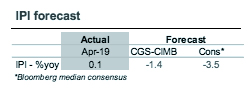
  • Singapore’s IPI increased 0.1% yoy in Apr due to sharp improvements in semiconductor output, but the rebound could be short-lived.
  • Early read-through from major economies suggests trade and manufacturing activity waned in May following renewed US-China trade frictions.

IPI makes up ground in April
The industrial production index (IPI) rose 0.1% yoy in April, beating expectations of a milder decline than March’s revised reading of -4.3% yoy (-4.8% yoy previously). IPI excluding biomed fell 2.1% yoy in April (-8.0% yoy in March). On a seasonally-adjusted basis, IPI improved to 2.4% mom in April (-2.5% mom in March).

US-China spat could kill off hopes of electronics rebound in 2H19
Electronics production stabilised (-0.6% yoy in April vs. -15.1% yoy in March), largely owing to the semiconductor cluster (+0.3% yoy vs. -16.2% yoy in March). However, there are few reasons to cheer, as US-China tit-for-tat, ranging from import tariffs, a prolonged US ban on Huawei and retaliatory curbs on market access, would hurt sentiment and spending by consumers and businesses. Barring an immediate reversal of the ban, expectations of a significant recovery in global semiconductor demand in 2H19 are now in jeopardy.

Precision engineering hampered by weak tech cycle
April marked the fifth successive month of output declines for the precision engineering segment (-10.4% yoy vs. -11.4% yoy in March), with deterioration in the machinery & systems segment (-20.6% yoy) reflecting the weak outlook for semiconductors. Transport engineering output dipped 1.1% yoy in April, the first drop since February 2018, due to a lull in offshore and shipbuilding & repairing activities. The chemical sector registered a reversal in April (+1.9% yoy) after contracting briefly in March, buoyed by increased production of ‘other chemicals’ (+9.3% yoy) namely fragrances, and specialty chemicals (+0.9% yoy).

Watch out for patchiness in biomed contributions
Biomedical manufacturing continued to record decent growth in April (+11.2% yoy vs. +13.3% yoy in March), helped by strong pharmaceutical output (+10.9% yoy in April), which has posted seven consecutive months of gains, the longest streak since 2011. However a combination of a high base and the lumpy nature of the production process could inject volatility into output growth over the next few months.

Early indicators point to renewed trade weakness in May
The early read-through from flash manufacturing PMIs for May in the US (50.6 vs. 52.6 in Apr) and Japan (49.6 vs. 50.2 in April) as well as a sharp deterioration in South Korea’s preliminary export tally for the first 20 days of May (-11.7% yoy vs. -8.7% yoy in April) suggest the return of downward pressures on Singapore’s NODX in May following the escalation of trade tensions between the US and China.

Originally published by CIMB Research and Economics on 24 May 2019.

This article has been edited to reflect its time-sensitivity.

CARI Captures 405


ASEAN

ASEAN firms among the world’s largest companies
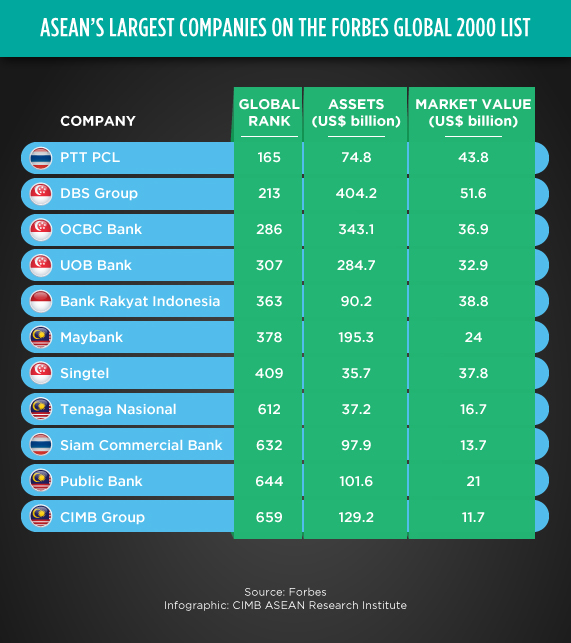
(17 May 2019) A total of 53 firms from six ASEAN countries were listed on Forbes’ annual list of the 2000 largest companies in the world. Of the 53, 15 were based in Thailand, 13 in Singapore, nine in Malaysia, six in Indonesia, six in the Philippines, and four in Vietnam. Most of the 53 companies, as with those ranked from other countries around the world, were firms from the financial and oil and gas sectors. The rankings were calculated based on four metrics of equal weighting: revenue, profits, assets and market value. Unsurprisingly, the US and China dominated the global top 10 rankings, with the Industrial and Commercial Bank of China taking the top spot again for the seventh consecutive year. Back in Southeast Asia, the list of top firms was largely represented by companies in Thailand, Singapore and Malaysia. Heading the list is Thai state-owned oil and gas company PTT Public Company Limited with a market cap of US$43.8 billion, followed by Singapore’s DBS Bank and Oversea-Chinese Banking Corporation (OCBC).

INDONESIA

Indonesia’s US$412 billion plan to rebuild the country
(17 May 2019) The Indonesian government is putting together a US$412 billion plan for the 2020-2024 period as part of President Joko Widodo’s economic growth strategy, said national development planning minister Bambang Brodjonegoro. This strategy will largely bank on infrastructure development to boost economic growth throughout the country’s 17,000 islands, such as through the construction of airports and energy projects. According to the minister, most of the US$412 billion will likely be funded by the government (40%), state-owned enterprises (25%), and the private sector. Around 60% of the budget is earmarked for transportation-related infrastructure. The minister said the government prioritised greater connectivity within the country as it was the “only way” to have higher economic growth. He added that the goal is to establish “the equivalent of a highway for the skies” such as through the 25 planned airports and related infrastructure, especially in remote regions.

THAILAND

Q1 GDP growth falls to weakest in over four years, outlook murky
(21 May 2019) The Thai economy expanded at 2.8% in the first quarter of 2019 — its slowest pace in over four years, according to the latest figures published by its state planning agency on May 21. The slower pace was largely attributed to falling exports due to external headwinds and lower public investment due to political uncertainty caused by Thailand’s recent elections. Seeing that growth in the first quarter failed to meet its forecast, the agency has also lowered its projections for the country’s 2019 growth to 3.3% to 3.8%, down from the previous 3.5% to 4.5% forecast made in February. Furthermore, the agency lowered its annual export growth projections to 2.2% from 4.1%, due to the 3.6% year-on-year drop during the first quarter of 2019. With the latest GDP data published by Thailand and Singapore, every major Southeast Asian economy has now reported slower annual growth in the first quarter in 2019.

SINGAPORE

Singapore’s economic growth slows to decade low
(21 May 2019) Singapore’s economy grew by only 1.2% year-on-year in the first quarter of 2019 — its lowest in almost a decade as manufacturing contracted due to the US-China trade war, according to government data released on May 21. Similar to Thailand, Singapore’s economy missed its government’s earlier 1.3% growth forecast for the quarter. The 1.2% growth recorded also marks the slowest annual expansion for any quarter since April to June 2009, when the country’s GDP saw a 1.7% decline from a year earlier. As such, the Singaporean government has lowered its 2019 growth forecast to 1.5% to 2.5%, from the previous 1.5% to 3.5% forecasted. Furthermore, the government has also lowered its 2019 forecast for non-oil domestic exports to 2.0%. The slowdown in Singapore’s economy has been attributed to the prolonged trade tensions between the US and China.

MALAYSIA

Malaysia records historic 94.8% y-o-y increase in FDI inflows in 1Q19
(18 May 2019) Malaysia recorded US$5.18 billion in foreign direct investment (FDI) in the first quarter of 2019, according to a statement by finance minister Lim Guan Eng. According to Lim, since FDI in the first quarter of 2018 amounted to US$2.67 billion, the 94.8% year-on-year increase to US$5.18 billion meant that the country’s FDI had just reached its “highest level ever recorded in Malaysian history for one quarter.” He further provided that the majority of the investments came from Japan (US$2 billion), followed by Austria (US$883 million) and Hong Kong (US$668 million). Furthermore, Malaysia also recorded a current account surplus of US$3.9 billion in the first quarter or 4.7% of gross national income, up from 3.0% in the previous period. Lim also touted the country’s inflow of 6.7 million tourists in the quarter, saying that it was the largest number of tourist arrivals since the fourth quarter of 2016.

MALAYSIA

Malaysia targets US$10.3 billion in M&E exports by 2020
(17 May 2019) The Malaysian government expects the country’s mechanical and electrical (M&E) products exports to reach US$10.3 billion by 2020, according to its international trade and industry deputy minister Dr Ong Kian Ming. As such, he urged more local companies to enter the sector as the industry only registered only US$9.7 billion in exports in 2018, against the US$17.6 billion worth of M&E products it imported during the same. According to Ong, Malaysian businesses should seriously consider exploring the sector, since new M&E technologies such as 3D printing devices were not only used for prototyping these days, but were also used for mass production. He also noted the manufacturing sector’s contribution to the country’s 4.5% GDP growth in the first quarter of 2019, although the sector only grew 4.2% during the period compared to the 5.2% growth recorded in the first quarter of 2018. Malaysia primarily exports M&E products to Singapore, US and Japan.

MYANMAR

Central Bank of Myanmar to allow more foreign banks to open branches and subsidiaries
(20 May 2019) The Central Bank of Myanmar (CBM) announced on May 17 that it will permit more foreign banks and their subsidiaries to open branches in the country soon. The move comes on the back of the CBM’s earlier announcement that it has granted 13 existing foreign banks licenses to open new branches and provide loans to local enterprises. According to CBM deputy governor U Soe Thein, foreign subsidiaries will be given full licenses to function as local banks, including offering retail banking services. Furthermore, existing foreign bank branches will also be allowed to operate as subsidiaries. The benefits, he explained, are that branches can be closed easily if needed, while subsidiaries can be set up as separate entities whose shares can be sold, transferred and divided. Foreign banks will also be allowed to invest up to 35% of the total capital in joint ventures with local private banks.

SINGAPORE-NEW ZEALAND

Singapore, NZ to step up cooperation in trade, defence and research
(17 May 2019) New Zealand Prime Minister Jacinda Ardern’s official visit to Singapore on May 17 concluded with the signing of the Singapore-New Zealand Enhanced Partnership declaration to deepen cooperation in four key strategic areas. The four areas are (i) trade and economics, (ii) defence and security, (iii) science, technology and innovation, and (iv) people-to-people links. Also signed during Ardern’s meeting with her Singaporean counterpart Lee Hsien Loong were five related agreements and memoranda of understanding. This included the signing of the upgraded New Zealand and Singapore on a Closer Economic Partnership (ANZSCEP), the countries’ bilateral free trade agreement which first came into force in 2001. The ANZSCEP aims to align the original agreement with newer free trade agreements such as the Comprehensive Progressive Agreement for Trans-Pacific Partnership (CPTPP). Bilateral trade between Singapore and New Zealand saw a 12.1% year-on-year increase last year, reaching US$4.1 billion. Singapore is also New Zealand’s seventh-largest trade partner.

THE PHILIPPINES-JAPAN

PH, Japan to sign investment agreements on AI and data analytics
(22 May 2019) The Philippines hopes to ink several investment agreements during President Rodrigo Duterte’s official visit to Japan next week, including two confirmed ones related to high-technology, artificial intelligence (AI) and data analytics. According to the Department of Trade and Industry (DTI) secretary Ramon Lopez, the government also hopes to arrange a high-level bilateral meeting between President Duterte and Japan Prime Minister Shinzo Abe during the trip. Also on the agenda is the review of the Japan-Philippines Economic Partnership Agreement (JPEAPA), as well as other trade and investment matters. Separately, finance secretary Carlos Dominguez III said that the Philippines is also looking to intensify cooperation with South Korea, beginning with the adoption of South Korea’s technology-based tax systems. According to Dominguez, the government found South Korea’s electronic invoicing and receipts system to be most suitable, and the Korea International Cooperation Agency (KOICA) will be assisting the Philippines’ Bureau of Internal Revenue in the adoption process.

ASEAN-ROK

South Korea to set up ASEAN finance centre in 2020
(21 May 2019) The South Korean government is planning to establish a Korea-ASEAN finance support centre in either Bangkok or Jakarta next year, said presidential economic advisor Joo Hyung-chul. Joo’s statement was made during a meeting with the heads of South Korean financial companies and other major industry players. According to Joo, the government will begin the budgeting process for the centre in June and decide on its location by October after conducting due diligence with think tanks such as the Korea Institute for International Economic Policy. This is in line with the government’s efforts in strengthening ties with Southeast Asia. Jakarta is the more financially-viable option since the South Korean government already has an ASEAN representative office in the city, while Bangkok would allow South Korea to collaborate closely with the United Nations office based there. According to the Korea Federation of Banks, there are currently 164 branches and offices of Korean financial companies located in Southeast Asia.