


CARI Captures Issue 766: Malaysia’s Anwar Ibrahim announces new cost-of-living measures in light of recent electoral defeats
Captures has widened its scope to include news related to all the members of the Regional Comprehensive Economic Partnership (RCEP) agreement which was signed towards the end of 2020. Besides the ASEAN Member States, this includes Australia, New Zealand, China, Japan, and South Korea. The other weekly newsletters under CARI, China-ASEAN Monitor and Mekong Monitor will also be consolidated into the Captures newsletter. We hope this new version of Captures will serve you better and look forward to providing a curation of stories relevant to ASEAN and its trading partners.
MALAYSIA
Malaysia’s Anwar Ibrahim announces new cost-of-living measures in light of recent electoral defeats
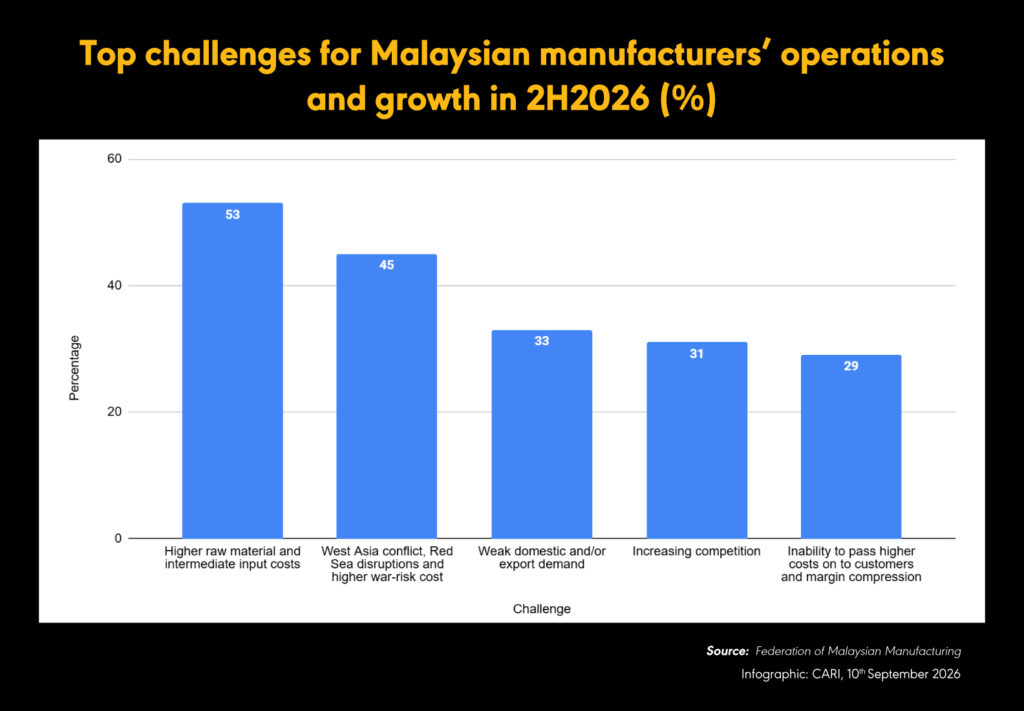
(08 September 2026) Malaysian Prime Minister Anwar Ibrahim’s latest cost-of-living measures signal a more voter-focused fiscal strategy following three successive coalition defeats in state elections in Sabah, Johor and Negeri Sembilan, with the next general election due by early 2028. Announced on 30 August and implemented days later, the measures raise the monthly subsidised fuel quota for more than 16 million Malaysians to 300 litres from 200 litres, increase diesel assistance for eligible pickup trucks and jeeps to 400 litres from 200 litres, and provide a MYR 200 million grant for hawkers, small traders and home-based businesses. The annual revenue threshold for mandatory e-invoicing was raised from MYR 1 million to MYR 3 million, which the Small and Medium Enterprises Association of Malaysia estimates will exempt another 80,000 small businesses, although many affected companies had already prepared for implementation. Anwar said cost-of-living pressures could not wait until the October 2027 Budget, despite second-quarter economic growth of 6%, record trade and investment, and a stronger ringgit. The Asia Group said political urgency was rising, but Anwar was not in a strong position to call a snap election, making the 2027 Budget a likely opportunity to rebuild support. The Federation of Malaysian Manufacturing (FMM) survey of 670 companies found softer business conditions and demand in the first half of 2026. Among companies affected by geopolitical disruptions, 74% reported raw material shortages or cost increases and 72% cited higher freight, logistics and shipping expenses, while 53% of all respondents identified higher input costs as a key second-half challenge. The FMM said economic gains were concentrated among multinational and large companies, with many SMEs unable to benefit or integrate into supply chains. The expansion of fuel assistance also highlights a trade-off between immediate cost relief and longer-term subsidy reform, with the Asia School of Business estimating that doubling the subsidised fuel quota for about 58,000 ride-hailing drivers to 600 litres could cost around MYR 32 million and weaken incentives to switch to electric vehicles.
MALAYSIA, SINGAPORE
Malaysian ringgit falls 0.2% against Singapore dollar on 09 September 2026
(09 September 2026) The ringgit fell 0.2% against the Singapore dollar to 3.2162 on 09 September, its lowest level since November, as foreign stock outflows continued for a second consecutive month. Global funds sold USD 122 million of Malaysian domestic stocks in September, following USD 486 million in August. The Singapore dollar was supported by the Monetary Authority of Singapore’s tightening stance, including a July increase in its rate of appreciation against the trade-weighted currency basket, while markets expected further tightening at the October meeting. BNY said renewed geopolitical uncertainty was also supporting the Singapore dollar’s safe-haven status. Malaysia’s strong economic growth, supported by the artificial intelligence boom, could provide ringgit support, while Bank Negara Malaysia signalled a more hawkish policy stance last week. Investor caution has increased over fiscal concerns, particularly the impact of restored subsidised fuel quotas on Malaysia’s fiscal position. Prime Minister Anwar Ibrahim is scheduled to unveil the 2027 Budget on 09 October.
CAMBODIA
Boycott of Thai products after border clashes accelerates demand for local alternatives
(08 September 2026) Cambodia’s boycott of Thai products following the July 2025 border clashes has accelerated demand for local alternatives, with Mee Chiet reporting that it has almost replaced Thai brands in the instant noodle segment. Ministry of Commerce data showed sales at soup powder maker Jie Jie’s Kitchen and snack producer Epic Chips Cambodia rose 376% and 323%, respectively, in the first half of 2026 compared with the same period of 2025. Prime Minister Hun Manet said 2,353 new Cambodian products were registered in the first five months of 2026, compared with 2,158 in all of 2024 and 3,625 in 2025. Cambodia imported USD 1.19 billion of Thai goods in the first seven months of 2026, down 37% from USD 1.91 billion in the same period of 2025. The Federation of Association for Small and Medium Enterprises of Cambodia estimated that local products’ share of the nationwide market had risen from about 2%-3% before 2025 to around 30%. In 2025, 700 new factories employing more than 100 workers opened, more than double the 2024 figure, while local SMEs reportedly hired an estimated 30,000-50,000 additional workers in the second half of last year. Kirisu Farm increased its dairy herd to 1,400 cows after bringing in 200 more from Australia in July, raising daily production from 13,000 litres to up to 18,000 litres, with a target of 21,000 litres by next year. The company said its stock, of which 25% had previously remained in storage, was now being sold to the market. New local ventures include Sabay Cinema’s acquisition of Thai-run Major Cineplex Group’s operations, Peace Petroleum Cambodia replacing PTT stations, and Cambrew’s launch of Cambodia Cola. The government’s February #MadeInCambodia campaign connects small producers with supermarket chains and mini-marts, while Hun Manet has waived certain taxes and offered free land for dairy farming. Authorities have seized products made outside Cambodia but labelled as local, while businesses have reported a proliferation of counterfeit goods. In July, Hun Manet stressed correct labelling, and the Ministry of Commerce said it would strengthen fair competition, consumer protection and intellectual property protection.
THAILAND
Consumer confidence index rises for third consecutive month in August to 53.2
(08 September 2026) Thailand’s consumer confidence index rose for a third consecutive month in August to 53.2, up from 51.8 in July and its highest level in six months, according to a University of the Thai Chamber of Commerce survey. The university attributed the improvement to the Thais Help Thais Plus co-payment scheme, steady interest rates and higher prices for key agricultural products, which supported purchasing power. The University of the Thai Chamber of Commerce said planned energy-sector reforms could help sustain growth after the consumer subsidy scheme ends on 30 September. He also said the expected passage of the 2027 budget would support the economy through public spending after September. Consumers were less concerned about the Middle East conflict, although the university said political stability and living costs remained concerns if oil prices rose again.
THE PHILIPPINES
Philippine President Ferdinand Marcos to attend BRICS Summit in India on 12-13 September
(09 September 2026) Philippine President Ferdinand Marcos Jr. will attend the BRICS Summit in India on 12-13 September as this year’s chair of the Association of Southeast Asian Nations (ASEAN), seeking closer ties between the two groupings. A spokesperson for the Foreign Affairs Department said the visit is intended to monitor emerging economic frameworks and represent regional priorities and perspectives. Marcos is scheduled to meet Indian Prime Minister Narendra Modi and business executives. Ratonel said he would seek to ensure that modern partnerships remain open, resilient and capable of delivering prosperity. China’s Xi Jinping and Russia’s Vladimir Putin are also expected to attend the summit.
VIET NAM
Mortgage rates rise sharply, putting homeownership increasingly out of reach
(10 September 2026) Vietnamese mortgage rates have risen sharply, with average rates reaching 12%–14% and floating rates as high as 15%–16%, compared with introductory rates of 5%–7% for buyers under 35 in 2025. The increase reflects growing bank funding pressures as the government accelerates infrastructure investment to support its 10% economic growth target. In August, bank lending was growing faster than deposits, with the funding shortfall estimated at USD 77 billion, increasing competition for funds. Real estate lending rose 42% in 2025, more than twice overall credit growth, but the World Bank said this mainly increased property prices rather than broader economic output. The State Bank of Vietnam has urged lenders to curb property lending, which accounts for about a quarter of outstanding advances, and prioritise small and medium-sized businesses. It warned that the credit imbalance could pose risks to financial and monetary stability, with “very limited room” for monetary policy to support growth. Agribank has tightened property-loan scrutiny, including checks on project legality and developers’ repayment capacity, while prioritising social housing over speculative and high-end projects. Higher mortgage costs and limited affordable supply contributed to a 36% year-on-year decline in property transactions in Q2, to about 100,000, increasing pressure on developers’ cash flow and inventories. More than 70% of new residential supply in the first six months of 2026 was high-end, while Hanoi’s affordable housing supply has declined by about 28% annually since 2022. Rising land-clearance and development costs and lengthy approvals are further constraining affordable supply and contributing to speculation and higher prices. For borrowers, the higher rates are making home purchases increasingly unaffordable, while existing homeowners face higher repayments when fixed-rate loans expire.
INDONESIA
Global investors cautiously returning to Indonesian assets following market stabilization measures
(10 September 2026) Global investors are cautiously returning to Indonesian assets following measures to restore market stability, with foreign funds buying local bonds for a fourth consecutive month, the rupiah up more than 3.5% from its June low and equities approaching their first quarterly inflow of 2026. Invesco, PPM America and other asset managers have reduced underweight positions, while UOB Asset Management Indonesia has moved to neutral and Allianz Global Investors has rebuilt a tactical overweight in front-end government bonds and the rupiah. President Prabowo Subianto has pledged to contain the budget deficit, regulators have introduced further measures addressing MSCI’s market-transparency concerns, and newly appointed governor of Bank Indonesia has signalled policy continuity. However, investors remain concerned about policy execution, Prabowo’s interventionist agenda and the external environment, including higher oil prices and increased expectations of US Federal Reserve rate hikes amid renewed US-Iran hostilities. Foreign investors have bought USD 296 million of Indonesian equities this quarter, compared with almost USD 4 billion of net outflows for the year. Bond inflows have also slowed from June’s USD 1.3 billion, despite Bank Indonesia measures to improve the appeal of local debt. Investors have questioned fiscal transparency because revenue and spending are increasingly being channelled through Danantara, the sovereign wealth fund established by Prabowo, outside government budget reporting. Indonesia’s market turmoil began after MSCI warned in early 2026 of a potential downgrade to frontier-market status over investability concerns, before Bank Indonesia’s off-cycle rate increase and other measures supported a recovery. MSCI subsequently delayed its review after Indonesia introduced transparency reforms, but investors are awaiting the November review and greater evidence of consistent policy implementation before materially increasing exposure.
RCEP Monitor
AUSTRALIA
Bond yields rise sharply as escalating Middle East tensions push up oil prices
(11 September 2026) Australian government bond yields rose sharply following an overnight US Treasury sell-off as escalating Middle East tensions pushed up oil prices and increased inflation concerns. The three-year Australian bond yield rose as much as 18 basis points to 5.03%, its highest level since May 2011, while the 10-year yield increased 13 basis points to 5.38%. The US sell-off accelerated after higher oil prices heightened inflation fears and the US Treasury bought fewer bonds than expected in its first expanded buyback operation. Investors are awaiting US inflation data to assess the likelihood of a Federal Reserve rate increase at next week’s meeting. The Commonwealth Bank of Australia said a lower US CPI reading or a Fed hike were the main potential circuit breakers to the current hawkish sentiment. Overnight-indexed swaps now imply an 84% probability of a Reserve Bank of Australia rate increase this month, up from 65% on Thursday.
AUSTRALIA
Consumer confidence falls 5.2% in September, returning to pessimistic levels
(08 September 2026) Australia’s consumer confidence fell 5.2% to 84.4 points in September, returning towards deeply pessimistic levels, according to Westpac Banking Corp. The “family finances vs a year ago” sub-index dropped 9.2% as cost-of-living pressures increased. Fuel prices rose above AUD 2 per litre for the first time since April, reflecting higher global energy prices and the end of the temporary fuel-excise reduction. Expectations of further Reserve Bank of Australia rate rises also weakened household sentiment following stronger July inflation and GDP data. Business confidence separately fell two points to minus eight in August, while NAB’s business-conditions index dropped five points to minus one, its first negative reading in six years. NAB attributed the deterioration partly to a 10-point fall in profitability. Mortgage holders were particularly affected, with consumer sentiment among this group falling 14%, while their assessment of whether it was a good time to buy a major item fell 18%. Housing-market weakness also contributed to concerns, with Cotality’s national home-price gauge falling 0.9% in August, its fifth consecutive monthly decline, bringing the fall from the March peak to 3.6%. HSBC raised its forecast for the peak-to-trough decline in Australian property prices to 13%, from 8% previously.
SOUTH KOREA
South Korea preparing USD 100 billion US energy investment project to support expansion of AI
(10 September 2026) South Korea is preparing a US energy investment project worth more than USD 100 billion to support the expansion of artificial intelligence infrastructure, according to the Wall Street Journal. The proposed investment would finance up to eight US nuclear power plants and a natural-gas project, with implementation expected over several years. The first nuclear reactor would use Westinghouse Electric’s design, while some subsequent reactors could use designs from South Korea’s KEPCO. A separate potential investment of about USD 20 billion would fund a natural-gas power plant in Texas to supply AI data centres. South Korea’s trade ministry said details of the US investment have not been finalised. The project would form part of Seoul’s USD 350 billion investment commitment under the October trade agreement with Washington, which secured a 15% cap on tariffs on Korean imports. Implementation of that broader commitment has been delayed, prompting US President Donald Trump to threaten higher tariffs earlier this year.
|
15 participating countries |
20 chapters |
2.2 billion |
US$26.2 trillion |
28% |
| ASEAN member states, Australia, China, Japan, South Korea, New Zealand | trade in goods and services, investment, intellectual property, e-commerce, competition, SMEs, economic and technical cooperation, and government procurement | combined population, 30% world’s population | combined GDP, 30% global GDP | global trade (based on 2019 figures) |